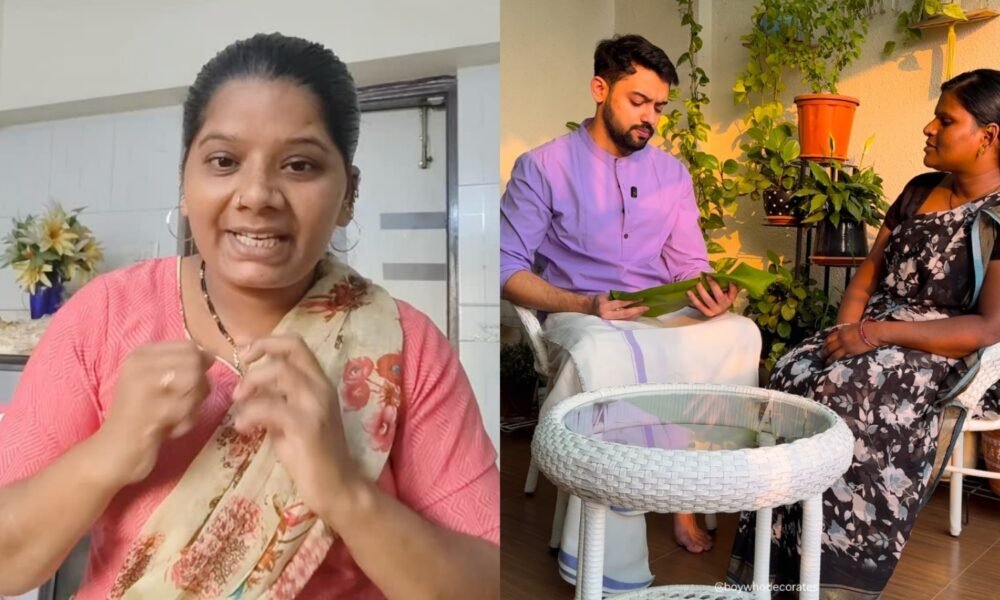
The Indian household isn’t just about the daily bustle of life; it is also a site of invisible labour. This labour is essential—encompassing elaborate kitchen management, cleaning every nook and corner almost daily, and grocery shopping—yet it often goes unacknowledged and is paid peanuts. However, sparked by social media and smartphones, that “invisible” labour is beginning to become visible. Today, domestic workers are emerging from obscurity not just as house helpers but as content creators with greater agency, audiences, and identities. The shift is often catalysed by the very households in which they work. When Archana Puran Singh first introduced her domestic worker and cook, Bhagyashree, in her Covid-era vlogs, no one could have fathomed that these casual, unscripted glimpses of their bond would provide visibility to a community often ignored. The validation did not stem from pity, but from the very formula for finding an audience online: relatability.
In 2024, another star was born out of Farah Khan’s kitchen, Dilip. The resident of Bihar became a viral phenomenon not just among celebrities in Mumbai but also in his village, Madhubani. So much so that the filmmaker also visited his native place. From bagging an ad with Shah Rukh Khan to building a three-story, six-bedroom bungalow, the internet’s favourite Dilip has now become a household name. However, these moments are not isolated to celebrities or public figures. Indian social media today has birthed several such domestic workers, who document their cooking, dancing, share slices of their daily routines, or just offer life hacks.
For Heena Ali, a domestic worker in Malad, Mumbai, it all began with a casual conversation with her employer, who suggested that she record her daily life and cooking videos for Instagram. The 35-year-old went on to appear on MasterChef India auditions. “I got a call from the MasterChef India team. They saw my videos on Instagram. I cleared two auditions but couldn’t attend the final one due to my daughter’s exams,” Ali told a national newspaper.
Platforms like Instagram and YouTube are allowing anyone with a smartphone to create and distribute content. For domestic workers—many of whom have practical knowledge, from regional cooking techniques to home-management skills—this offers a chance to monetise expertise that has long been undervalued. But the story is more layered than a simple narrative of empowerment. With the help of her employer, who later left the city, Ali managed to create her community of over one lakh followers and nearly 6,000 subscribers on her YouTube channel. However, being a domestic worker in India comes with several setbacks, inadequate wages being one of them. “I still don’t get paid enough despite being a content creator and the fact that I was part of MasterChef India. People simply say they can’t afford it. I’ve been waiting for brand collaborations, but even if they are found, there’s no guarantee of a change in content.”