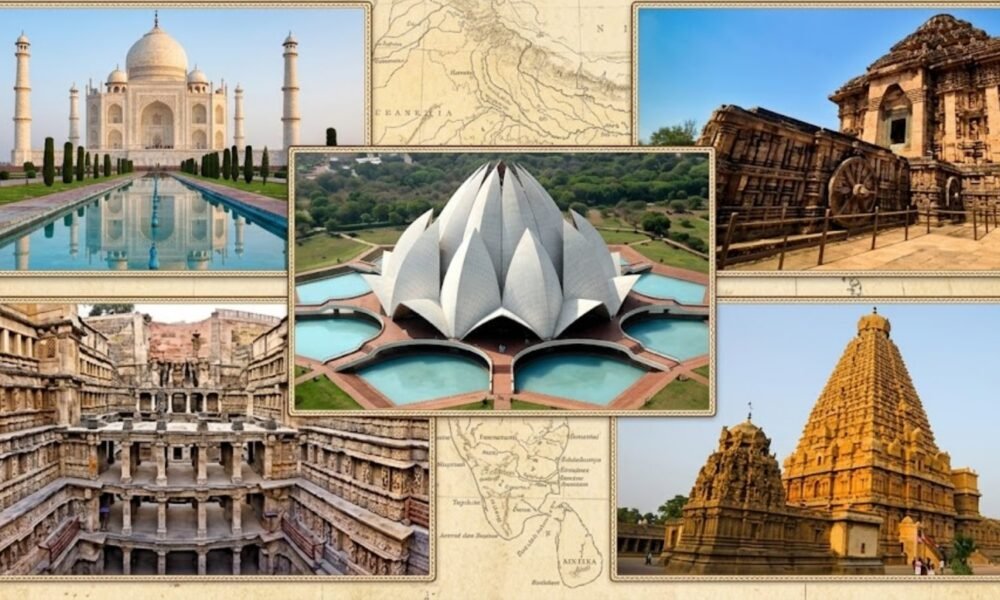
India’s architectural landscape is a sweeping timeline of innovation and cultural depth. Across centuries, rulers, artisans, and visionaries have transformed stone, marble, and space into enduring masterpieces. From temples aligned with celestial rhythms to monuments built as expressions of love and faith, Indian architecture goes far beyond aesthetics. Here are five significant structures that redefine architectural excellence itself.
Taj Mahal stands as a global icon of love and a masterclass in symmetry and precision. Commissioned by Shah Jahan in the 17th century, its flawless white marble facade shifts with the light of the day, while pietra dura inlay work, refined calligraphy, and perfect geometric alignment mark it as one of the finest examples of Mughal architecture, marrying Persian, Islamic, and Indian stylistic traditions.
Konark Sun Temple is designed as a colossal chariot for the Sun God, a 13th-century temple emblematic of symbolism and engineering. Built under King Narasimhadeva I, the temple features 24 carved wheels that double as sundials, and every inch is adorned with intricate sculptures that reflect religious themes as well as everyday life, rendering it a living canvas of medieval India.
Rani ki Vav is a stepwell unlike any other, an underground architectural marvel that fuses utility with artistry. Built in the 11th century by Queen Udayamati, it descends seven levels into the earth, lined with over 1,500 intricate sculptures. Designed as an inverted temple, it embodies the sanctity of water and stands as a pinnacle of the Maru-Gurjara architectural style.
Brihadeeswarar Temple is a towering testament to Chola grandeur. This 11th-century temple dedicated to Lord Shiva defies contemporary engineering norms, with a vimana rising over 60 meters and crowned by a single granite block weighing around 80 tonnes. The precision in stone placement and the temple’s inscriptions reveal an advanced understanding of architecture and administration.
Lotus Temple is a modern architectural icon recognized for its flower-like design and its philosophy of inclusivity. Completed in 1986 and designed by Fariborz Sahba, the structure uses 27 marble petals arranged in clusters. Beyond its aesthetic appeal, it serves as a space for silent prayer open to all faiths, embodying religious unity through design.