TravelNews
Tourism sector braces for impact after PM Modi calls for cut in overseas leisure travel

Prime Minister Narendra Modi on Sunday called on citizens to voluntarily reduce overseas travel, postpone destination weddings abroad and curb non-essential imports as India seeks to shield itself from the economic fallout of the escalating conflict in West Asia.
In a wide-ranging appeal focused on conserving foreign exchange and reducing fuel consumption, the Prime Minister urged citizens to prioritise domestic tourism, increase the use of public transport and electric vehicles, and adopt more economically responsible consumption patterns during the ongoing geopolitical crisis.
“The growing culture of weddings abroad, travelling abroad and vacationing abroad is becoming prevalent among the middle class. We must decide that during this time of crisis, we should postpone travelling abroad for at least a year,” Modi said.
The Prime Minister’s remarks come at a time when the aviation and tourism sectors are already grappling with rising operational costs triggered by the Iran-Israel-US conflict in West Asia, which has disrupted air corridors, pushed up crude oil prices and increased fuel surcharges on airline tickets globally.
Domestic tourism push amid forex concerns
Positioning tourism choices as part of a broader national economic responsibility, Modi stressed that reducing outbound leisure travel would help conserve valuable foreign exchange reserves at a time of heightened global uncertainty.He also appealed to citizens to prefer domestic destinations for holidays, weddings and celebrations, arguing that reduced dependence on imported fuel and overseas expenditure would help cushion the economy against external shocks.
Industry experts note that the statement could provide an indirect boost to India’s domestic tourism sector, particularly premium leisure destinations, wedding tourism hubs and rail-led travel circuits, even as outbound travel businesses may face short-term uncertainty if consumer sentiment shifts.
The Prime Minister also warned that prolonged geopolitical instability and global supply chain disruptions would continue to impact economies worldwide despite domestic policy interventions.
Fuel conservation takes centre stage
With global oil prices remaining volatile amid the conflict, Modi strongly advocated measures to reduce fuel consumption.
“Since petrol and diesel have become extremely expensive across the world, it is our responsibility to save fuel and thereby save the foreign exchange spent on purchasing petrol and diesel,” he said.
He urged citizens living in cities with metro connectivity to use public transport wherever possible, encouraged carpooling, recommended greater use of railways for cargo movement, and called for increased adoption of electric vehicles.
The remarks assume significance as Indian airlines continue to face mounting pressure from elevated aviation turbine fuel (ATF) costs, longer flying times due to restricted airspace over parts of West Asia, and increased operating expenditure linked to route diversions and network adjustments.
Aviation sector already under pressure
India’s aviation sector has been witnessing cascading effects from the West Asia crisis over the past several months. Airlines have had to reroute flights to Europe and parts of North America, resulting in longer flight durations, higher fuel burn and operational disruptions.
Several carriers have also introduced or increased fuel surcharge components on international tickets to offset rising costs. Industry executives say the sustained rise in crude prices and geopolitical uncertainty are likely to keep airfares elevated in the near term.
The Prime Minister’s appeal for reduced discretionary overseas travel comes against this backdrop of increasing travel costs and broader concerns around foreign exchange outflows.The tourism and aviation industry is now expected to assess the potential implications of the Prime Minister’s remarks on travel demand patterns, outbound tourism growth and domestic travel sentiment in the months ahead.
Industry backs call but also expresses concern on long-term impact
The Prime Minister’s remarks also triggered an immediate reaction across financial markets, with aviation and travel-related stocks witnessing sharp selling pressure on Monday amid concerns that discretionary outbound travel demand could weaken if consumers respond to the appeal.
Investors fear that a prolonged slowdown in international leisure travel could impact airlines, online travel companies and outbound tour operators at a time when the sector is already grappling with rising fuel costs and operational disruptions caused by the West Asia conflict.
Industry stakeholders, while backing the Prime Minister’s broader economic message, also expressed concerns over the potential impact on employment and businesses dependent on outbound tourism.
Rajiv Mehra, General Secretary of the Federation of Associations in Indian Tourism and Hospitality (FAITH), said the industry understood the rationale behind the Prime Minister’s appeal, particularly given the pressure on foreign exchange reserves and uncertainty arising from geopolitical tensions.
“We wholeheartedly endorse the sentiment behind the Prime Minister’s appeal urging Indians to reduce leisure travel abroad and avoid holding weddings overseas,” Mehra said.
He noted that outbound holidays and destination weddings abroad had grown sharply among Indian consumers in recent years, contributing to increased foreign exchange outflows.
“The Prime Minister’s statement reflects concern over the challenging foreign exchange situation the country is facing, particularly at a time when the geopolitical conflict between Iran and the USA continues to create uncertainty and pressure on global markets,” he added.
However, Mehra also stressed that while reducing outbound expenditure may help conserve foreign exchange, India must simultaneously focus on significantly increasing inbound tourism earnings.
“Equal emphasis must be placed on earning foreign exchange by attracting more international tourists to India,” he said, adding that India still attracts a relatively modest number of foreign tourists despite its natural, spiritual and cultural assets.
“It is unfortunate that a country blessed with immense natural beauty, cultural richness, spirituality and world-class historical monuments attracts only around two crore foreign tourists annually. India has the potential to emerge as one of the world’s leading tourism destinations if the right policy support and global marketing efforts are undertaken,” Mehra said.
Rohit Kohli, Joint Managing Director of theCreative Travel Family of Brands, said that while the industry understood the government’s concerns, the larger long-term opportunity lay in strengthening India’s tourism economy rather than restricting outbound travel. “Tourism globally is a major driver of foreign exchange, employment and GDP growth, yet India continues to underinvest in destination development, tourism infrastructure and international promotion,” Kohli said.
He added that several Indian destinations were already facing issues related to over-tourism, infrastructure stress and lack of long-term planning. “If India wants travellers to increasingly holiday within the country while also positioning itself as a leading global tourism destination, the focus must equally be on building sustainable infrastructure, improving connectivity, developing new tourism circuits, and recognising tourism as a strategic economic sector,” he said.
The Outbound Tour Operators Association of India also issued a statement supporting the government’s broader objective while cautioning that tourism is often among the first sectors to be hit during periods of crisis.
“Tourism is among the first sectors to be hit and, unfortunately, among the last to recover,” the association said.
OTOAI stated that while the Prime Minister’s appeal was made in the national interest, it could have a “significant impact on the outbound travel community,” particularly thousands of travel professionals, agents and allied service providers dependent on overseas leisure travel.
The association said it plans to seek an audience with the Prime Minister’s Office to present the concerns of the outbound travel trade and discuss ways to balance national priorities with industry realities.
“We hope to arrive at a balanced and reasonable way forward that protects national interest while also safeguarding the people and businesses connected with our industry,” the statement said.
KB Kachru, President of the Hotel Association of India and Chairman – South Asia at Radisson Hotel Group, while sharing his thoughts on the matter said the Prime Minister’s appeal could become a significant catalyst for India’s domestic tourism and hospitality sector. “This sentiment has the ability to accelerate a measurable boost in domestic consumption and presents a huge opportunity for India’s tourism and hospitality sector,” Kachru said.
He noted that increased domestic travel could strengthen demand for hotels, resorts and regional tourism experiences while also supporting employment generation, small tourism businesses and the growth of tier-II and tier-III destinations.
According to him, stronger domestic tourism could also help India build a more resilient travel ecosystem amid ongoing geopolitical uncertainty. At the same time, Kachru stressed that India must continue to focus on inbound tourism growth to strengthen foreign exchange reserves and position the country as a globally competitive tourism destination.
Sharing his thoughts, Shwetank Singh, MD & CEO, Chalet Hotels said, “We believe the continued focus on domestic travel and tourism will create a meaningful long-term opportunity for the Indian hospitality sector. India is already witnessing a strong shift towards leisure, experiential and destination-led travel, supported by improving infrastructure, connectivity and evolving consumer preferences.
This will further support demand across hospitality segments including leisure stays, weddings, MICE and regional tourism markets, while also accelerating interest in high-quality travel experiences within the country.”
Many other travel analysts believe that if geopolitical tensions persist and consumers begin postponing discretionary overseas travel, outbound demand growth could soften over the coming quarters, particularly in long-haul leisure, destination weddings and international group travel.
At the same time, the Prime Minister’s appeal could potentially accelerate demand for domestic tourism and local celebrations, benefiting leisure destinations, wedding venues and hospitality operators within India.


TravelNews
Barbados Appoints Businessman Peter Harris as New Tourism Chairman
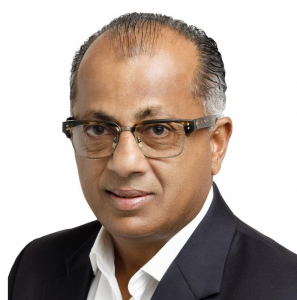
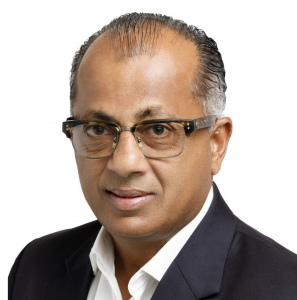
Barbados has appointed prominent businessman and former national field hockey player Peter Harris as chairman of Barbados Tourism Marketing Inc. as the island posted a solid 3.3% increase in stay-over tourist arrivals for 2025.
Harris, executive chairman of PVH Group Inc., succeeds businesswoman Shelly Williams, who served four years in the role, Tourism and International Transport Minister Ian Gooding-Edghill confirmed in a statement. The appointment is intended to accelerate the island’s tourism growth through expanded airlift and deeper penetration of emerging markets.
“The (new) board reflects a range of skills needed to further advance Barbados’ tourism success,” Gooding-Edghill stated. “The primary purpose of the board is to implement Barbados’ tourism marketing strategies to ensure consistent brand awareness globally and to achieve year-on-year growth in visitor arrivals.”
Harris will be supported by Gayle Talma as deputy chair, Sheldene Matthews-Mottley, Andrea Brome, Carol Roberts-Reifer, Ronnie Carrington, Jo-ann Roett, Patrica Affonso-Dass, Kevyn Yearwood, Nicholas Parker, Paul Collymore, Senator Ryan Forde, Cicely Callender and Permanent Secretary Francine Blackman.
Barbados recorded 727,310 stay-over visitors in 2025, up 3.3% from 2024. The island also welcomed 702,278 cruise passengers, a strong 12.9% increase.
The performance helped contribute to the Caribbean region’s overall 2.5% growth in stop-over arrivals, which reached an estimated 35 million last year. Barbados saw gains from key source markets, including an 8.1% increase from the United States and 3.5% from Canada, although European arrivals fell 3.4%.
A Combermere School alumnus, Harris co-founded CGI Insurance in 1993 and has built the PVH Group into a diversified company with interests in insurance, real estate, tourism, entertainment, media and health care. He is known for business innovations such as roadside assistance programs and remains an active sportsman who represented Barbados in field hockey at both junior and senior levels.
Minister Gooding-Edghill stressed the need to push forward amid global headwinds. “There’s a significant amount of work to be done to accelerate our tourism growth strategy, especially considering the global geopolitical climate,” the minister said. “Our successful airlift strategy will continue to be one of the key pillars central to our tourism growth strategy,” he continued, thanking Williams for her tenure.
TravelNews
JLL reports 67% rise in India hotel investments to USD 567 million in 2025

India’s hospitality investment market recorded strong growth in 2025, with hotel investments rising 67 per cent year-on-year to approximately USD 567 million across 28 transactions, according to JLL. The increase from USD 340 million in 2024 reflects growing investor confidence in India’s tourism and hospitality infrastructure, supported by demand across both metropolitan and emerging markets.
Institutional capital and private equity firms accounted for the largest share of transaction volumes at 35 per cent , followed by HNIs, family offices and private hotel owners at 27 per cent . Listed hotel companies contributed 25 per cent of activity, while real estate developers and owner-operators accounted for the remaining share.
Tier II and III cities emerged as major growth drivers, capturing nearly 40 per cent of total transaction volume. Markets including Ludhiana, Nashik, Vadodara, Udaipur and Lonavala saw increased activity across upscale and midscale segments, while luxury resort investments remained strong in destinations such as Rishikesh and Goa.
“India’s hotel investment market is reflecting a clear step-up in both investor confidence and market depth, with rising transaction activity supported by a broader mix of institutional and domestic capital. What is particularly encouraging is the continued expansion beyond gateway cities, with Tier II and III markets steadily evolving into more mature, investment-grade destinations backed by improving operating performance and scalability,” said Gaurav Sharma.
Operational hotels accounted for 69 per cent of total transaction volumes, highlighting investor preference for income-generating assets with established operating histories. Luxury hotels led the market with a 42 per cent share of transaction volume, followed closely by upscale properties at 41 per cent .
Branded hotel signings increased 23 per cent year-on-year to 51,647 keys across 424 hotels. Emerging cities accounted for 71 per cent of total branded signings by key count, underlining the continued expansion of organised hospitality beyond traditional gateway cities. Management contracts strengthened their dominance, representing 84 per cent of signings in 2025 compared to 81 per cent in the previous year.
Greenfield development also accelerated, reaching approximately 33,170 keys during the year, a 17 per cent increase over 2024 levels. Large-format hotels with more than 250 keys recorded 29 signings, up from 21 in 2024, with expansion extending beyond metro cities into Guwahati, Visakhapatnam, Indore and Pushkar.
The sector maintained momentum into 2026, with first-quarter transaction volumes reaching approximately USD 185 million, a 58 per cent increase compared to Q1 2025. Notable activity included Warburg Pincus acquiring a 41 per cent stake in Fleur Hotels, a subsidiary of Lemon Tree Hotels, with a USD 107 million commitment towards portfolio expansion.
Government-led infrastructure and land monetisation initiatives are expected to create additional opportunities across strategic micro-markets including Yashobhoomi, Neopolis in Hyderabad, Fintech City in Chennai and Jewar Airport. The FY 2027 tourism-focused budget and ongoing transport infrastructure upgrades are also expected to support future hospitality development and investment activity.
TravelNews
Adani Airport, IHG sign Five-Hotel deal; Kimpton debuts in India
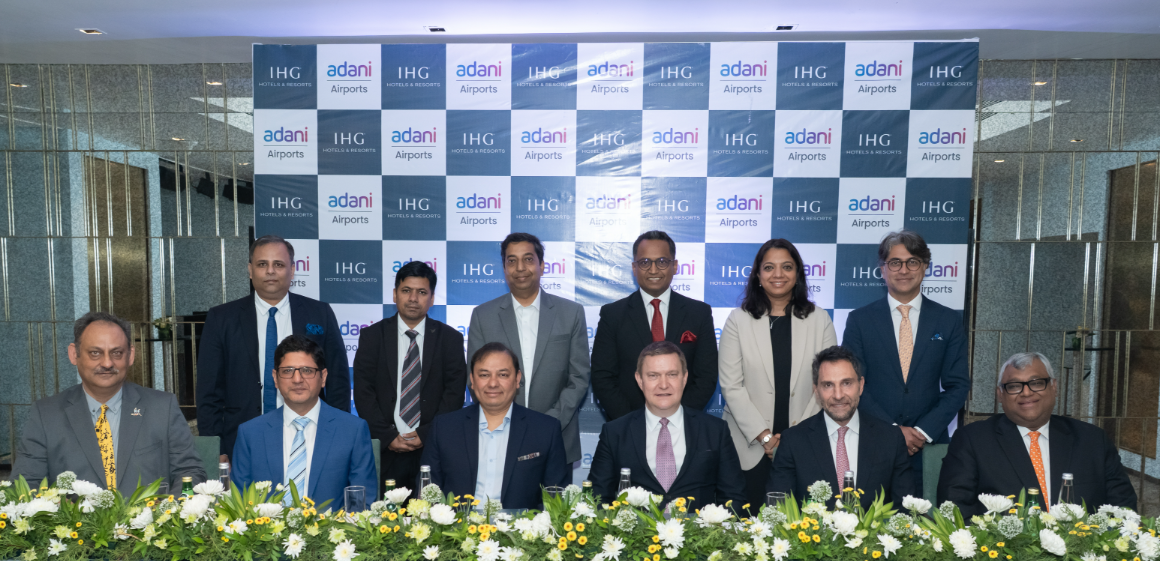
Adani Airport Holdings Limited (AAHL) and IHG Hotels & Resorts have signed a managed hotel portfolio agreement to develop five properties across airport-linked and high-growth urban destinations in India. The development will add close to 1,500 rooms across multiple brands and locations, aligned with IHG’s expansion strategy in the country.
The portfolio includes the India debut of Kimpton Hotels & Restaurants with a property in Jaipur. Additional hotels under the Holiday Inn and Holiday Inn Express brands will be developed within hospitality-led mixed-use projects linked to Adani Airport cities. These developments are planned across Navi Mumbai, Mangaluru, and Thiruvananthapuram. AAHL is also in advanced discussions with IHG to expand the partnership further.
The agreement marks the entry of Kimpton into India, a brand known for design-led properties and boutique positioning. Its launch reflects growing demand for premium lifestyle hospitality, particularly in urban and airport-centric developments. The expansion comes amid sustained growth in India’s aviation and tourism sectors, where airport-led infrastructure is emerging as a key driver of hospitality demand, supported by rising passenger traffic and business travel.
Pranav Adani, Director, Adani Enterprises Limited, said: “As the Adani Group expands its presence across hospitality and airport-led urban infrastructure, our vision is to create world-class destinations that seamlessly integrate travel, stay and urban experiences around India’s rapidly growing aviation ecosystem. We are building this platform in partnership with leading international hotel brands that bring global standards, operational excellence and scale. Our collaboration with IHG Hotels & Resorts, and the development of five hotels across key gateway destinations, marks an important step in strengthening high-quality hospitality infrastructure aligned with India’s long-term travel and economic growth.”
AAHL continues to position airports as integrated urban ecosystems, combining aviation with hospitality, retail and commercial infrastructure. Its airport city developments span approximately 663 acres across multiple locations, aimed at enhancing passenger experience while supporting long-term urban growth.
Sudeep Jain, Managing Director, South West Asia, IHG Hotels & Resorts, said: “The partnership with Adani Airport Holdings reflects the scale of opportunity we continue to see in India’s hospitality sector, particularly across gateway cities and airport-led developments that are witnessing strong demand from business, leisure and transit travellers alike. With a mix of luxury, premium and essentials brands, this portfolio allows us to meaningfully strengthen our presence across high-growth markets across the country. This agreement also marks an important milestone for us with the introduction of Kimpton Hotels & Restaurants to India.”
IHG Hotels & Resorts currently operates 52 hotels across six brands in India and has a pipeline of 98 additional properties expected to open over the next three to five years.

TravelNews
Why trust will define the future of digital travel?

Travel and tourism has historically grown at nearly twice the pace of a country’s GDP. India is no exception. As one of the fastest-expanding travel markets globally, the sector is riding on rising incomes, improving infrastructure, and a strong cultural inclination toward travel.
But while demand is accelerating, the industry is still evolving in how it builds and sustains long-term trust.
Today, more than 60-70% of Indian travellers rely on online platforms for planning and booking. What began as a utility-led transition has become the norm. Real-time comparisons, instant access to options, and seamless bookings have fundamentally reset traveller expectations.
However, that phase of differentiation is gradually maturing. These capabilities are no longer perceived as innovations; they are expected as a basic standard. The conversation is now expanding beyond access and efficiency to something more fundamental i.e. reliability across the entire travel journey.
Consumer sentiment reflects this shift. While travel intent remains strong, platform preference is increasingly shaped by how companies respond during disruptions. Service recovery and customer support have emerged as critical drivers of satisfaction. In a digital ecosystem where switching platforms takes seconds, even a single poor experience can influence long-term behaviour and brand perception.
From our booking data, this behaviour plays out across both domestic and international travel. We see similar patterns, where repeat usage is closely linked to how consistently post-booking experiences such as refunds and rescheduling are handled. On high-frequency domestic routes like Goa, repeat bookings are often driven more by past service experience than by pricing alone, especially when it comes to refunds and rescheduling.
For long-haul destinations such as Europe, travellers tend to be far more deliberate. We see higher levels of cross-platform comparison and a clear preference for platforms that offer transparency and reliability, given the higher ticket sizes and longer planning cycles. In both cases, trust becomes a stronger driver than cost.
A simple industry thumb rule is that travel and tourism grows at nearly double the pace of GDP. This momentum is also reflected in India’s broader trajectory. According to the World Travel & Tourism Council, the sector is expected to grow at around 7% annually over the next decade. This sustained expansion further reinforces the need for platforms to move beyond transactional efficiency and focus on building long-term credibility.

Consumers in smaller cities are seeking more than just basic travel options. Demand is rising for air-conditioned, safe, and technology-enabled bus services. As incomes grow, premium and reliable travel options that combine comfort with affordability are becoming increasingly important. This shift is opening the door for new business models and service improvements in intercity bus transport.
This shift is becoming even more visible among younger travellers. Discovery may begin on platforms, but decisions are increasingly influenced by reviews, shared experiences, and peer validation. At the same time, with AI becoming central to travel planning, expectations around transparency are rising. Travellers are not just looking for recommendations, now they want to understand them as well.
Despite this progress, there remains an opportunity for the industry to further strengthen the overall customer experience. Service recovery is often treated as a backend function rather than a core product experience. Areas such as refunds, customer support, and accountability remain key focus points for the industry as it works to align customer expectations with actual experience.
The implication is clear. The next phase of growth in travel will not be defined by who can acquire customers faster, but by who can retain their trust longer.
At the same time, trust today is multi-layered. It extends beyond service recovery into how platforms handle data, personalise experiences, and maintain transparency in AI-led systems. As travellers become more aware, explainability and data security are no longer optional, rather they are expected.
In this environment, reputation is no longer built through marketing alone. As platforms evolve, the focus increasingly lies in reducing friction and strengthening accountability across the travel journey. It is shaped continuously through every interaction, every review, and every shared experience. The platforms that will define the next phase of growth are not those that compete most aggressively on acquisition, but those that embed trust into every layer of their offering from product design to customer support.
Because ultimately, travel is not just a transaction. It is a commitment. And in a market defined by choice, trust is what turns that commitment into confidence and platforms into enduring brands.
The author is the CEO & Co-Founder of EaseMyTrip.
DISCLAIMER: The views expressed are solely of the author and ETTravelWorld.com does not necessarily subscribe to it. ETTravelWorld.com shall not be responsible for any damage caused to any person/organisation directly or indirectly.


Video captures stovepipe tornado in southeastern Nebraska
A visually striking stovepipe-shaped tornado was captured in Richardson County, Nebraska, as powerful storms broke out in the …


Why are US rappers getting involved in UK politics?
US rappers Nicki Minaj and Azealia Banks have both surprisingly come out in support for British politician and leader of...


Gaza amputees sail boat to Cannes Film Festival
The Gaza Sunbirds, a para-cycling team made up of amputees from Gaza, have sailed a boat to Cannes Film Festival,...


Russian drones attack CNN 14x at Ukraine's 'Road of Life'
On eastern Ukraine’s ‘road of life’, nets hang overhead for protection, robots ferry supplies and troops sprint for cover as...


ICE officer charged with assault in Minneapolis shooting
An ICE agent, Christian Castro, has been charged with four counts of second degree assault and one count of falsely...


Gov. Hochul says a deal has been reached to end the Long Island Rail Road strike. Kathy Hochul
After an incredibly hectic Monday for thousands of Long Island Rail Road passengers trying to enter and exit New York...


Two suspects found dead, three men killed in San Diego mosque shooting | BBC News
Five people have died, including three adult victims and two suspects, police say, after a deadly shooting at the Islamic...


$1.8 billion fund for Trump’s allies may put taxpayers on the hook
The Justice Department on Monday announced the creation of a $1.776 billion fund to compensate President Donald Trump’s …


Hegseth implores Kentucky voters to oust Massie in rare campaign visit
In a rare political move, Defense Secretary Pete Hegseth made a campaign stop to throw support behind Ed Gallrein, the...


Sources: Manchester City expect Guardiola exit after season
May 18, 2026, 05:02 PM ET Manchester City are resigned to losing Pep Guardiola as their manager at the end...
-

 BBC News World19 hours ago
Trump targets political rivals ahead of midterms
-
Tech1 day ago
Today's NYT Mini Crossword Answers for Monday, May 18
-
 LifestyleNews1 day ago
Can a pre-diabetic stop taking Metformin by eating garlic instead?
-

 Food2 days ago
Juneteenth Foods: 23 Recipes for a Cookout Celebration
-

 Entertainment2 days ago
Adam Driver and Kenneth Lonergan Reunite For ‘Tomorrow Is a Drag’
-
Entertainment19 hours ago
Picturehouse Entertainment acquires UK rights to A Town In Nova Scotia
-

 HealthNews2 days ago
Epidemic of Ebola Disease caused by Bundibugyo virus in the Democratic Republic of the Congo and Uganda determined a public health emergency of international concern
-

 Sports22 hours ago
Ulster SFC final: Aidan Forker delighted it all came together in Ulster final