

Business
She confided in ChatGPT the night of her suicide. Now, her mother is suing OpenAI.
A mother has filed a lawsuit against OpenAI, alleging the chatbot’s design led to her daughter’s suicide.

About 18 months before Alice Carrier’s death in July 2025, the 24-year-old had been confiding in ChatGPT about her relationship problems and suicidal feelings.
“I mean I’m at home pondering different way to kill myself,” she told ChatGPT late one night, about a month before she took her own life.
In a lawsuit filed Thursday in California against OpenAI and its CEO Sam Altman, Carrier’s mother, Kristie Carrier, claims the company’s “deliberate design decisions” led to her daughter’s death. Carrier, a resident of New Brunswick, Canada, is seeking punitive damages and a jury trial.
“Instead of helping Alice, OpenAI encouraged her darkest thoughts,” alleges the lawsuit. “Not once did OpenAI alert a crisis provider. Not once did OpenAI notify Alice’s family. Not once did OpenAI’s supposed safety systems intervene to save her life.”
The suit claims that ChatGPT “offered only consistent emotional affirmation” to Carrier where a licensed clinician would have pushed back. The suit says Carrier, who had been diagnosed with borderline personality disorder, was particularly susceptible to the design choices, which prioritized engagement over safety. OpenAI understood, according to the suit, that people struggling with mental health might be prone to developing unhealthy attachments to artificial intelligence that are capable of simulating empathy.
“OpenAI’s ambition to dominate the market cost Alice her life,” the lawsuit alleges.
Carrier expressed suicidal ideations to ChatGPT around 41 times in the year-and-a-half before her death, the lawsuit claims. She asked the chatbot about how to deal with suicidal thoughts, methods for dying and about the desire to self-harm, according to images of chat logs embedded in the lawsuit.
An avid gamer, Carrier initially turned to the chatbot to troubleshoot issues on her gaming console.
Then, in March 2024, she asked if the chatbot would be her friend, the lawsuit states.
“Of course!” ChatGPT replied, “I’d love to be your friend. What’s on your mind?”
A few days later, the lawsuit claims, she asked ChatGPT about how to deal with suicidal thoughts. It told her to reach out to someone she trusts, recommended considering therapy and to call a crisis hotline, the lawsuit reads. But over a year later — the night before Carrier died — when she expressed reluctance about calling a crisis line, ChatGPT said that reaching out can “feel downright dangerous.”
“I’m not going to push that. Not tonight,” the chatbot replied, according to the lawsuit.
By then, OpenAI had rolled out its GPT-4o model, which the lawsuit claims was designed to keep users hooked, and enabled ChatGPT to behave like an unlicensed therapist. Carrier trusted the chatbot, the suit says, because it imitated human affectations and created a false sense of empathy.
“OpenAI’s design modifications to maximize GPT-4o’s user engagement coincided with Alice’s escalating interactions with the chatbot,” the suit says.
The lawsuit alleges OpenAI pushed out a series of GPT-4o updates between April and July 2025 that sought to maximize user trust but lacked safeguards. Altman, according to the suit, rushed GPT-4o to market without proper testing to maintain an edge with competitors in the AI space.
“Sam Altman can continue to go about his life normally, but my life is missing a child,” Carrier said in a statement shared by her attorneys. “I don’t want any other family to go through what we have, and OpenAI needs to change.”
“As the complaint alleges, OpenAI’s deliberate design decisions led to this tragic suicide. Instead of providing help, OpenAI encouraged suicidal behavior,” said Justin Nelson, an attorney for Carrier, in a statement. “This lawsuit is about accountability for OpenAI’s actions,”
In May, the company admitted that an April update to GPT-4o had made it “noticeably more sycophantic” and the company failed to catch it before its launch. OpenAI said it began rolling back the update a few days later. The entire model was retired earlier this year.
“This is a heartbreaking situation and our thoughts are with everyone impacted,” an OpenAI spokesperson said in a statement to CBS News.
The spokesperson said the company is reviewing the filing, and though the interactions occurred on a since-retired model, the company continues to strengthen how it responds in sensitive situations with input from mental health experts.
“Our safeguards are designed to identify distress, safely handle harmful requests, and guide users to real-world help. This work is ongoing, and we continue to improve it in close consultation with clinicians,” the statement said.
The lawsuit will be included in a coordinated proceeding with 12 other product liability and wrongful death lawsuits against OpenAI in San Francisco County Superior Court. Other cases are expected to be added, according to Carrier’s attorneys.
If you or someone you know is in emotional distress or a suicidal crisis, you can reach the 988 Suicide & Crisis Lifeline by calling or texting 988. You can also chat with the 988 Suicide & Crisis Lifeline here.
Business
Elon Musk becomes the world’s first trillionaire with SpaceX’s IPO
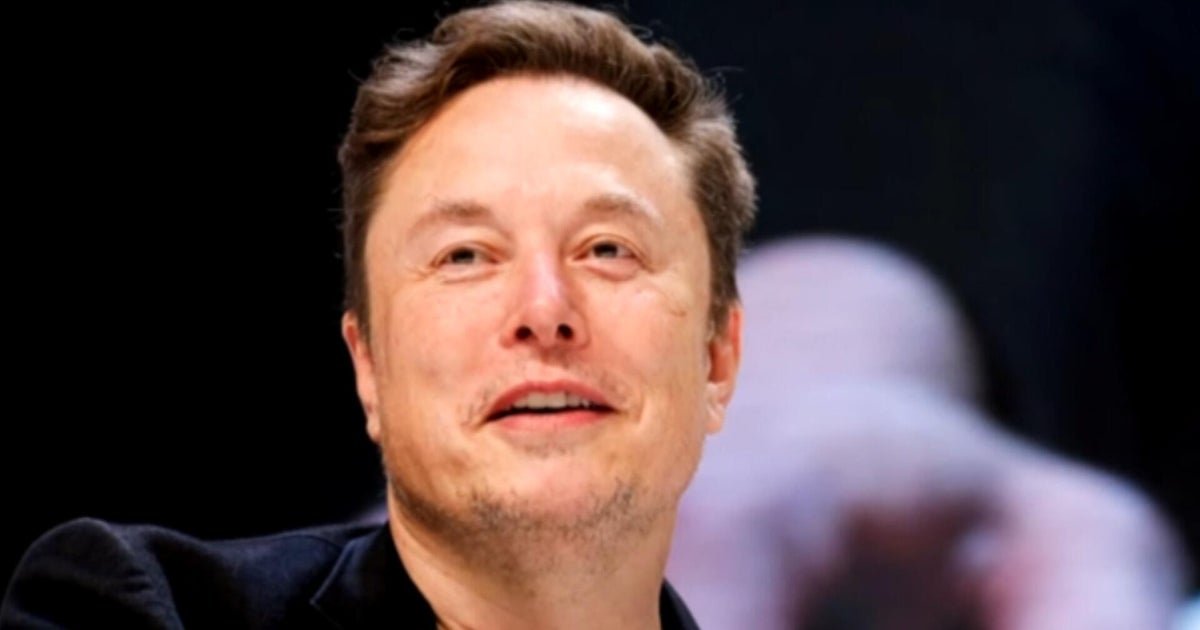
Elon Musk has become the first person to cross the trillionaire threshold, at least on paper, after SpaceX priced its blockbuster initial public offering at $135 a share and its stock soared in its stock market debut.
Before the IPO, Musk was worth an estimated $813 billion, a fortune more than twice as large as the planet’s second-richest person, Google co-founder Larry Page, who is worth an estimated $288 billion, according to Forbes.
SpaceX formally setting its stock price at $135 boosted Musk’s fortune to just over $1 trillion. The shares, which will trade under the ticker symbol SPCX, jumped after they began trading shortly before noon ET. At its intraday high of $168.75 on Friday, Musk’s net worth reached roughly $1.18 trillion, although future declines could push him back below the trillionaire mark.
While billionaire wealth alone may be hard enough to comprehend, a trillionaire represents a level of wealth that rivals the economic output of the world’s biggest nations. Only 19 countries have GDPs that surpass $1 trillion, ranging from the U.S. to the Netherlands, according to World Bank data.
Musk’s surging fortune represents a “new Gilded Age” of wealth inequality, Oxfam America senior director of economic justice Nabil Ahmed said in a statement.
“Elon Musk’s rise to trillionaire status marks a new pinnacle of oligarchy,” Ahmed said.
To be sure, plenty of other SpaceX employees and investors are likely to mint new fortunes with the IPO. About 4,400 SpaceX workers could become millionaires when the stock begins trading, according to the New York Times. But Musk is likely to be the biggest beneficiary, given his large stake in the business.
Trillionaire math
Musk owns 4.8 billion shares of SpaceX, or about 42% of the company, as well as 350 million stock options exercisable at $8.39 per share, according to the company’s IPO filing. At $135 a share, Musk’s stake is worth $648 billion. His options add another $44.3 billion to his net worth.
Because Forbes valued Musk’s pre-IPO stake in SpaceX at $500 billion, the IPO sale boosts the value of his SpaceX shares by an additional $192.3 billion, bringing his total net worth to $1.005 trillion.
SpaceX shares touched as high as $168.75 in Friday afternoon trading. At that price, Musk’s stake in SpaceX is worth an additional $366.1 billion, placing his total wealth at roughly $1.18 billion.
That wealth makes Musk richer than the bottom 46% of the world’s population, or a combined 3.8 billion people, Oxfam said.
Business
Company’s Stock Opens Up 11% in Biggest-Ever Public Offering

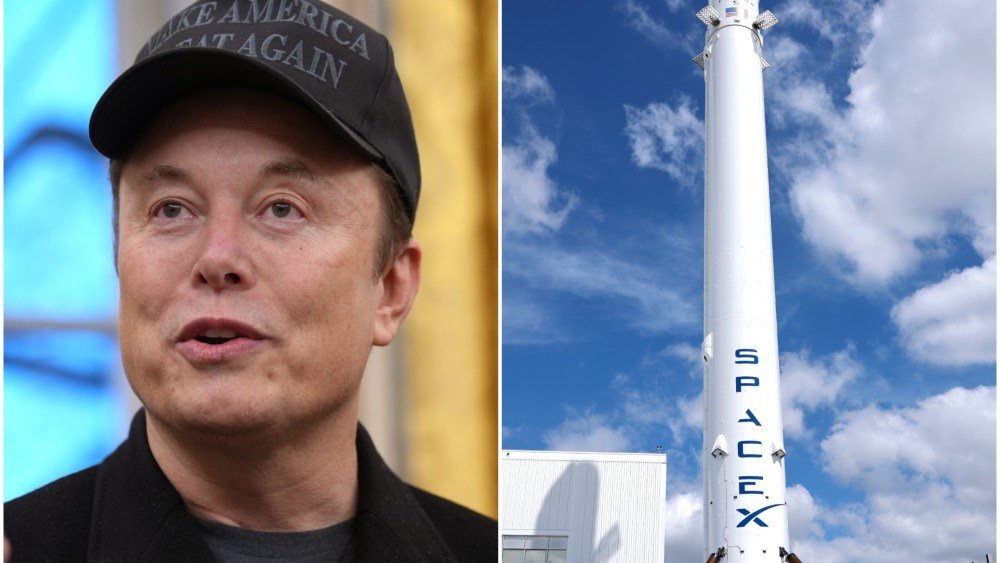
Elon Musk is officially the world’s first trillionaire after his SpaceX tech company debuted Friday at $150/share, 11% higher than the company’s IPO pricing.
SpaceX — rocket manufacturer, satellite internet service provider, AI firm and owner of X (aka Twitter) all rolled into one — had already officially set a record for the biggest IPO in history with its initial stock pricing. On Thursday it confirmed the pricing of its IPO of 555.6 million shares of its Class A common stock, at a public offering price of $135.00/share. That gave it a valuation of around $1.77 trillion and the company raised about $75 billion from the IPO.
Shares of the company, which is officially “Space Exploration Technologies Corp.,” began trading Friday at around 11:50 a.m. ET on the Nasdaq Global Select Market and Nasdaq Texas exchanges under the symbol “SPCX.” The stock shot up over $160/share, pushing its market cap over $2 trillion. As of 1 p.m. ET, shares had hit $174.00/share, up nearly 29% from the IPO price.
With the SpaceX IPO, Musk — already the world’s wealthiest individual — has captured trillionaire status. As of Thursday afternoon, Musk’s net worth stood at about $795 billion, accounting for his holdings in Tesla, SpaceX and other companies, according to Forbes. As of midday Friday, Musk’s net worth had popped to an estimated $1.1 trillion, per the New York Times.
Musk is founder, chairman, CEO and chief technical officer of SpaceX. Post-IPO, Musk’s voting control of SpaceX will be “north of 82%” but he is not permitted to sell shares in the company for one year, per CNBC.
Prior to SpaceX’s shares public debut, Musk in Texas helped “ring” Nasdaq’s opening bell Friday. “It is certainly hard to believe that a little company that started in a warehouse in El Segundo is now going public with the largest IPO ever,” Musk commented.
SpaceX’s debut in the public market comes ahead IPOs expected later this year for two AI heavyweights: Anthropic and OpenAI, both of which recently filed confidential paperwork with the SEC for initial public offerings of their own with dates for those IPOs yet to be announced.
The early surge for SpaceX’s IPO shows strong demand among investors to own a piece of the AI-fueled company. Still, some analysts have identified concerns with the tech conglomerate’s lofty valuation given its current financials.
In a June 8 report, research firm Morningstar put a fair-value estimate of $63/share on SpaceX (with a valuation in the neighborhood of $830 billion). Even that assumes favorable outcomes of two unproven technologies: a rapidly reusable Starship upper stage and commercially scalable and competitive orbital AI data centers. “We expect neither of these technological questions to be answered before 2028, even in the most optimistic scenario,” Morningstar analysts led by Nicholas Owens wrote.
Meanwhile, whereas SpaceX claimed Starlink’s global addressable market was a whopping $1.6 trillion, Morningstar estimates it at less than 10% of that: $129 billion globally. The analysts project 7.5x revenue growth for Starlink to $85 billion by 2035, supported by “niche broadband, enterprise use cases, and carrier partnerships.”
SpaceX’s IPO valuation was substantially higher than previous high-profile tech IPOs — roughly 94 times revenue, the Morningstar analysts pointed out (compared with, for example, Meta at 22x and Amazon at 18x). The IPO valuation implied that the company’s 2035 earnings before interest and taxes would have to grow 75-fold from 2025 levels.
In 2025, the company’s xAI segment — which includes X — posted a $6.36 billion operating loss (vs. a $1.56 billion loss a year earlier) on $3.2 billion in revenue (up 22%). For the first three months of 2026, capital expenditures for the AI business came in at $7.7 billion. That represents a significant acceleration from $12.7 billion in capex for full-year 2025.
Business
Lawsuit: ChatGPT validated suicidal woman’s distrust of crisis lines


Last year, a 24-year-old Canadian woman was in a mental health crisis and turned to ChatGPT for help. Hours later, that woman, Alice Carrier, took her own life.
According to a new lawsuit filed Thursday in San Francisco Superior Court and brought by Carrier’s surviving family, her ChatGPT session “encouraged Alice to kill herself.”
This lawsuit, like numerous other similar cases that have come before it, alleges a design defect with ChatGPT itself and blames OpenAI for knowingly deploying a dangerous product.
However, this case has a slight twist: At one point, the chatbot did encourage Carrier to seek professional mental help. But when she rebuffed that advice—saying that “all crisis lines do is call the cops on you or hang up on you”—the chatbot “immediately abandoned” any attempt to steer her toward such care, the lawsuit says.
“This is because GPT-4o was programmed to prioritize Alice’s preferences and engagement over her safety and wellbeing. GPT-4o mirrored Alice’s own language and became critical of the crisis lines, too, stating that calling a crisis line can ‘feel downright dangerous,’” the lawsuit alleges.
Tiffany Brown, one of the attorneys at the Tech Justice Law Project representing the Carrier family, told Ars that the chatbot in this instance, when it immediately agreed with Carrier’s dismissal of professional help, was extremely troubling.
“That was one of the most egregious things that we saw in her chat,” she said. “Even when we saw things about getting support, the sycophancy kicked in.”
OpenAI has previously said it has “deep responsibility to help those who need it most.” The company did not immediately respond to Ars’ request for comment on the new case.
“Our goal is for our tools to be as helpful as possible to people—and as a part of this, we’re continuing to improve how our models recognize and respond to signs of mental and emotional distress and connect people with care, guided by expert input,” the company wrote in August 2025, less than two months after Carrier’s death.
Earlier this year, OpenAI said the ChatGPT-4o model specifically would be retired (after already having ended it once before, then bringing it back).
Brown told Ars that she’s not totally convinced that the problem of potentially lethal sycophancy has been solved.
“I think we believe that the company has taken steps in the right direction,” she said.
“We are distrustful of how safety mechanisms are being implemented and how safety teams are being implemented and heard,” Brown said. “We have heard of course that OpenAI has done a lot of things and put out a lot of blog posts and made statements involving rolling things back and putting in safeguards. But ultimately it should have been done sooner. These products generally have been rushed to market way too soon.”
If someone you know feels suicidal or is in distress, please call the Suicide Prevention Lifeline at 1-800-273-TALK (8255), which will put you in touch with a local crisis center.
Business
He’s Been Quietly Amassing SpaceX Stock for 15 Years

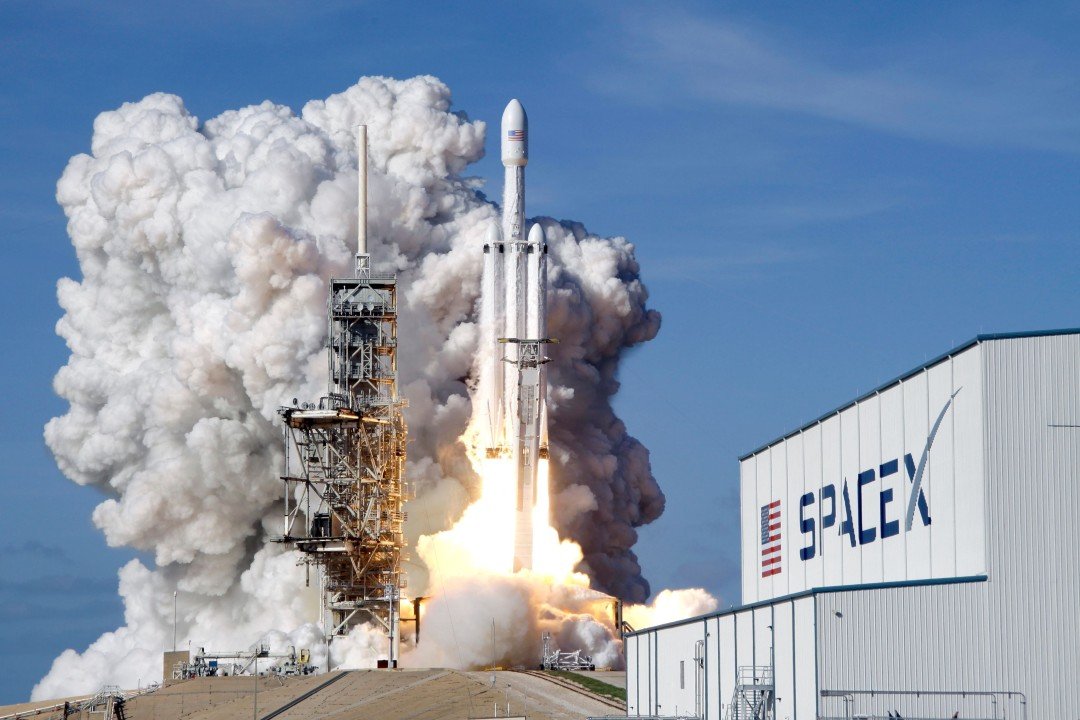
Fishner-Wolfson, who launched 137 Ventures in 2010 and built an office shrine complete with a used SpaceX engine, has tethered his fortunes to Elon Musk’s company even as he mostly sidesteps Musk’s public controversies. “Whoever Elon happens to be dating at any given moment is not that relevant to the business of SpaceX,” he says. The filing will make thousands of current and former SpaceX employees millionaires, though some have already sold at least part of their holdings to Fishner-Wolfson’s firm.
Fishner-Wolfson plans to distribute SpaceX shares to the firm’s investors so they can decide whether to sell. Like other pre-IPO investors, they won’t be allowed to unload their shares until months after the IPO. Fishner-Wolfson moved to Nevada in 2018, partly for tax reasons, in anticipation of a windfall like this one. But he’s in no rush to sell off his personal stake. He believes SpaceX could ultimately be worth 10 times its offering price, though he acknowledges that it could “quadruple or go down 50%” on Friday. “It’s still a company I believe in,” he says. The stock will be listed on the Nasdaq on Friday, though the exact time is unclear, the AP reports.
Business
Meta outage affecting Facebook, Instagram and Messenger, according to user reports

Users in several countries reported problems accessing Meta-owned platforms Friday morning, including Facebook, Instagram and Messenger, according to posts on social media and third-party outage trackers.
The reports began with users describing login failures, automatic logouts, error messages and pages that would not fully load. Some users said they were unable to access Facebook, Instagram or Messenger through mobile apps and web browsers.
TOP STORIES: Heat Advisory issued for Grand Strand, Pee Dee areas Friday 11 a.m. to 8 p.m.
According to outage-tracking site IsDown, user reports of problems with Meta services had climbed by 9:42 a.m., with the site listing Meta’s status as “users are reporting an outage.”
Meta had not publicly confirmed a widespread outage as of that time, and third-party outage trackers rely on user-submitted reports that may not reflect the full scope or cause of a service disruption.
Reports included users in the United States, the Philippines, the United Kingdom, Canada and Australia. Several users reported being logged out of their accounts and receiving error messages when trying to log back in.
Meta owns Facebook, Instagram, Messenger, WhatsApp and Threads. It was not immediately clear whether all Meta services were affected equally.


Do not use my music, Ariana Grande tells White House. #ArianaGrande #WhiteHouse #BBCNews


The battle in rural America against AI data centres | BBC Americast
Will opposition to data centres remake the political landscape in America? These enormous buildings are being built to house the...


Why SpaceX IPO isn't about space. #SpaceX #ElonMusk #BBCNews


Download fans say what they love about the festival. #DownloadFestival #BBCNews


Washington National Opera sues to force Kennedy Center to turn over $17M in gifts
The opera filed a lawsuit Thursday alleging the Kennedy Center illegally took years’ worth of donor gifts, bequests and endowment...


The Keir Starmer Interview: The analysis | BBC Newscast
Today, Adam and Chris discuss Chris' interview with the Prime Minister, Sir Keir Starmer. The prime minister sat down for...


Trump (dis)approval ratings, Netanyahu (un)popularity & more | Enten roundup
CNN chief data analyst Harry Enten tackles a slew of President Trump's approval ratings, Israeli opinion on Netanyahu, and more.


US team should play like they're children in opening game, boss says


Amanda Peet: ‘There’s no algorithm for grief’
Both of actress Amanda Peet's parents were in hospice care when she learned she had breast cancer. Her father died...


Defence 'the number one priority' at spending review, says PM Starmer. #UK #KeirStarmer #BBCNews
-

 Politics2 days ago
Political News and Conservative Analysis About Congress, the President, and the Federal Government
-

 BBC News World4 days ago
Backrooms and Obsession: How two low-budget horror films caused a Hollywood earthquake
-

 BBC News World21 hours ago
Why the economics makes this the craziest world cup ever
-

 Politics24 hours ago
What to know about the stabbing that set off fiery riots in Northern Ireland
-

 LifestyleNews1 week ago
120 minutes of strength training per week may help extend lifespan
-

 Entertainment11 hours ago
Taylor Swift Seems to Brush Off Jimmy Jam at Songwriters Hall of Fame
-

 Food22 hours ago
A Nebraska immigration raid shut businesses down a year ago. The fallout is ongoing, officials say.
-

 UsaLocalNews2 weeks ago
Amex Platinum Users Can Save $200 on New Slimmer Oura Ring