

Business
Consumer sentiment rises for the first time in three months

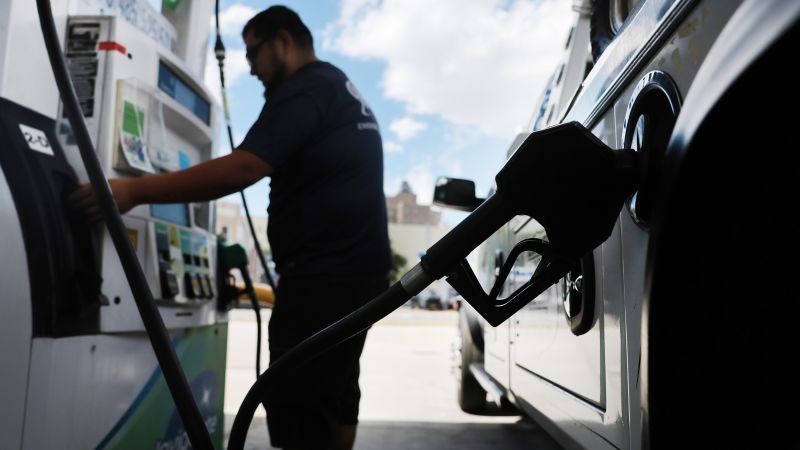
Consumer sentiment may finally be recovering after falling to historic lows due to wartime price spikes.
The University of Michigan’s latest survey of Americans, released Friday, showed that sentiment rose 9% to a preliminary reading of 48.9 early this month, the first increase since February, before the United States and Israel’s destabilizing war with Iran sent global energy prices surging.
Gas prices, which heavily influence people’s perception of the economy, climbed in the several weeks after the war began, pushing sentiment down to a record low — twice. Gas prices have declined in recent weeks, which helped sentiment recover.
“This month, consumer sentiment ticked up… with consumers experiencing some relief due to the early-month easing in gasoline prices,” Joanne Hsu, the surveys’ director, said in a release. “Lower-income consumers exhibited a particularly strong sentiment increase, consistent with the fact that gasoline comprises a larger share of their budgets.”
Sentiment is finally up from a level lower than anything seen during foreign wars, 9/11, the Great Recession, the pandemic, and any prior bouts of high inflation in the post-World War II era. But sentiment will likely remain in the dumps unless gas prices continue to fall meaningfully, likely requiring oil tankers to flow freely again through the Strait of Hormuz, a key chokepoint through which one-fifth of the world’s oil passes.
Sentiment is going through a years-long rough patch for a number of reasons, but it’s mainly due to the price shocks of recent years compounding to worsen affordability, though there are signs consumers may be getting used to it.
How is sentiment lower than during past economic crises?
Since 2020, Americans have endured several, back-to-back, historic events affecting the economy. That means there really hasn’t been a long and sustained period of rising sentiment to recover from the economic shocks of recent years.
It started with the pandemic recession, which knocked sentiment down after Americans experienced the longest economic expansion on record at the time. Then, post-pandemic inflation reared its ugly head, prompting sentiment to fall to a record low in June 2022.
In 2023, continued rate hikes from the Federal Reserve to tame inflation and a standoff in Congress over the debt ceiling weighed on sentiment again. There was a steady recovery in 2024, but all of that progress was undone in 2025 when President Donald Trump announced sweeping tariffs, making consumers fret and, in turn, pushing down sentiment yet again.
The Iran war is serving as yet another shock, largely due to its effect on gas prices. For sentiment to finally move above historically low levels, it would require a long period of the economy being stable, with low inflation.
‘They’re getting numb to it’
A separate quarterly survey from TransUnion released earlier this week showed that consumers’ optimism hadn’t wavered much from a year ago, when Trump announced his sweeping “Liberation Day” tariffs last April. However, the level of pessimism dropped, noted Charlie Wise, TransUnion’s head of global research and consulting.
“We see a lot of resilience in consumers that maybe have gotten a little bit more accustomed to the volatile times that we live in, and a lot of price uncertainty,” he said in an interview with CNN.
Inflation remained the top financial concern for consumers in the second quarter, rising to 50% from 47%, according to the credit bureau’s latest Consumer Pulse Survey.
“A cynic might say they’re getting numb to it, but I think more realistically they’re getting used to the realities that price stability is going to be a little out of normal balance for a continuing amount of time,” he said.
When inflation hit 9.1% in June 2022, many consumers weren’t used to that level of price instability, Wise said. After all, it was the highest inflation seen in four decades.
“So now, when you look at gas prices and energy prices that have increased, I think that consumers may be more likely to say at this point, ‘you know, I lived through this fairly recently and managed to come out OK on the other side; I’ll probably be OK this time too.’”
Business
Elon Musk becomes the world’s first trillionaire with SpaceX’s IPO

Elon Musk has become the first person to cross the trillionaire threshold, at least on paper, after SpaceX priced its blockbuster initial public offering at $135 a share and its stock soared in its stock market debut.
Before the IPO, Musk was worth an estimated $813 billion, a fortune more than twice as large as the planet’s second-richest person, Google co-founder Larry Page, who is worth an estimated $288 billion, according to Forbes.
SpaceX formally setting its stock price at $135 boosted Musk’s fortune to just over $1 trillion. The shares, which will trade under the ticker symbol SPCX, jumped after they began trading shortly before noon ET. At its intraday high of $168.75 on Friday, Musk’s net worth reached roughly $1.18 trillion, although future declines could push him back below the trillionaire mark.
While billionaire wealth alone may be hard enough to comprehend, a trillionaire represents a level of wealth that rivals the economic output of the world’s biggest nations. Only 19 countries have GDPs that surpass $1 trillion, ranging from the U.S. to the Netherlands, according to World Bank data.
Musk’s surging fortune represents a “new Gilded Age” of wealth inequality, Oxfam America senior director of economic justice Nabil Ahmed said in a statement.
“Elon Musk’s rise to trillionaire status marks a new pinnacle of oligarchy,” Ahmed said.
To be sure, plenty of other SpaceX employees and investors are likely to mint new fortunes with the IPO. About 4,400 SpaceX workers could become millionaires when the stock begins trading, according to the New York Times. But Musk is likely to be the biggest beneficiary, given his large stake in the business.
Trillionaire math
Musk owns 4.8 billion shares of SpaceX, or about 42% of the company, as well as 350 million stock options exercisable at $8.39 per share, according to the company’s IPO filing. At $135 a share, Musk’s stake is worth $648 billion. His options add another $44.3 billion to his net worth.
Because Forbes valued Musk’s pre-IPO stake in SpaceX at $500 billion, the IPO sale boosts the value of his SpaceX shares by an additional $192.3 billion, bringing his total net worth to $1.005 trillion.
SpaceX shares touched as high as $168.75 in Friday afternoon trading. At that price, Musk’s stake in SpaceX is worth an additional $366.1 billion, placing his total wealth at roughly $1.18 billion.
That wealth makes Musk richer than the bottom 46% of the world’s population, or a combined 3.8 billion people, Oxfam said.
Business
Company’s Stock Opens Up 11% in Biggest-Ever Public Offering

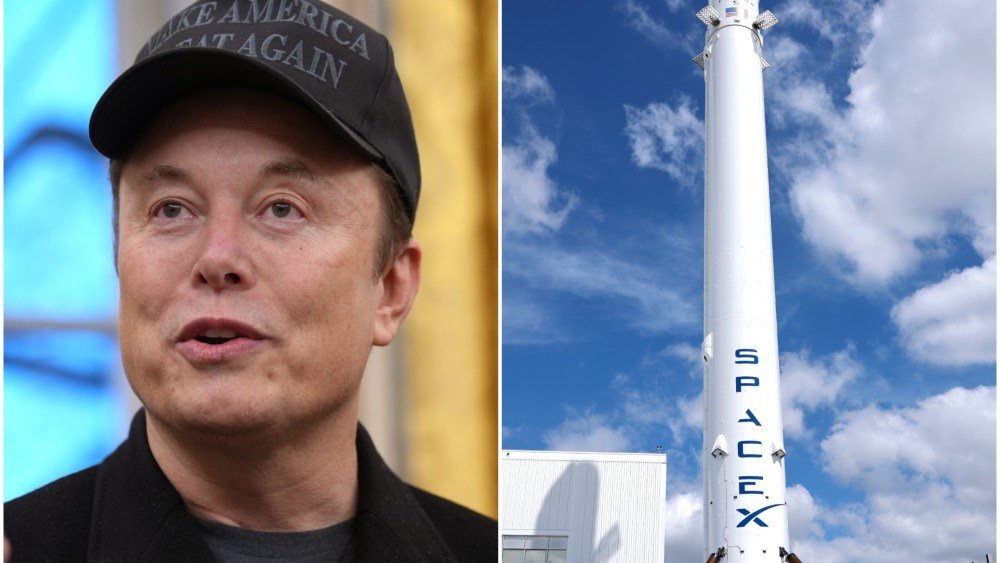
Elon Musk is officially the world’s first trillionaire after his SpaceX tech company debuted Friday at $150/share, 11% higher than the company’s IPO pricing.
SpaceX — rocket manufacturer, satellite internet service provider, AI firm and owner of X (aka Twitter) all rolled into one — had already officially set a record for the biggest IPO in history with its initial stock pricing. On Thursday it confirmed the pricing of its IPO of 555.6 million shares of its Class A common stock, at a public offering price of $135.00/share. That gave it a valuation of around $1.77 trillion and the company raised about $75 billion from the IPO.
Shares of the company, which is officially “Space Exploration Technologies Corp.,” began trading Friday at around 11:50 a.m. ET on the Nasdaq Global Select Market and Nasdaq Texas exchanges under the symbol “SPCX.” The stock shot up over $160/share, pushing its market cap over $2 trillion. As of 1 p.m. ET, shares had hit $174.00/share, up nearly 29% from the IPO price.
With the SpaceX IPO, Musk — already the world’s wealthiest individual — has captured trillionaire status. As of Thursday afternoon, Musk’s net worth stood at about $795 billion, accounting for his holdings in Tesla, SpaceX and other companies, according to Forbes. As of midday Friday, Musk’s net worth had popped to an estimated $1.1 trillion, per the New York Times.
Musk is founder, chairman, CEO and chief technical officer of SpaceX. Post-IPO, Musk’s voting control of SpaceX will be “north of 82%” but he is not permitted to sell shares in the company for one year, per CNBC.
Prior to SpaceX’s shares public debut, Musk in Texas helped “ring” Nasdaq’s opening bell Friday. “It is certainly hard to believe that a little company that started in a warehouse in El Segundo is now going public with the largest IPO ever,” Musk commented.
SpaceX’s debut in the public market comes ahead IPOs expected later this year for two AI heavyweights: Anthropic and OpenAI, both of which recently filed confidential paperwork with the SEC for initial public offerings of their own with dates for those IPOs yet to be announced.
The early surge for SpaceX’s IPO shows strong demand among investors to own a piece of the AI-fueled company. Still, some analysts have identified concerns with the tech conglomerate’s lofty valuation given its current financials.
In a June 8 report, research firm Morningstar put a fair-value estimate of $63/share on SpaceX (with a valuation in the neighborhood of $830 billion). Even that assumes favorable outcomes of two unproven technologies: a rapidly reusable Starship upper stage and commercially scalable and competitive orbital AI data centers. “We expect neither of these technological questions to be answered before 2028, even in the most optimistic scenario,” Morningstar analysts led by Nicholas Owens wrote.
Meanwhile, whereas SpaceX claimed Starlink’s global addressable market was a whopping $1.6 trillion, Morningstar estimates it at less than 10% of that: $129 billion globally. The analysts project 7.5x revenue growth for Starlink to $85 billion by 2035, supported by “niche broadband, enterprise use cases, and carrier partnerships.”
SpaceX’s IPO valuation was substantially higher than previous high-profile tech IPOs — roughly 94 times revenue, the Morningstar analysts pointed out (compared with, for example, Meta at 22x and Amazon at 18x). The IPO valuation implied that the company’s 2035 earnings before interest and taxes would have to grow 75-fold from 2025 levels.
In 2025, the company’s xAI segment — which includes X — posted a $6.36 billion operating loss (vs. a $1.56 billion loss a year earlier) on $3.2 billion in revenue (up 22%). For the first three months of 2026, capital expenditures for the AI business came in at $7.7 billion. That represents a significant acceleration from $12.7 billion in capex for full-year 2025.
Business
Lawsuit: ChatGPT validated suicidal woman’s distrust of crisis lines


Last year, a 24-year-old Canadian woman was in a mental health crisis and turned to ChatGPT for help. Hours later, that woman, Alice Carrier, took her own life.
According to a new lawsuit filed Thursday in San Francisco Superior Court and brought by Carrier’s surviving family, her ChatGPT session “encouraged Alice to kill herself.”
This lawsuit, like numerous other similar cases that have come before it, alleges a design defect with ChatGPT itself and blames OpenAI for knowingly deploying a dangerous product.
However, this case has a slight twist: At one point, the chatbot did encourage Carrier to seek professional mental help. But when she rebuffed that advice—saying that “all crisis lines do is call the cops on you or hang up on you”—the chatbot “immediately abandoned” any attempt to steer her toward such care, the lawsuit says.
“This is because GPT-4o was programmed to prioritize Alice’s preferences and engagement over her safety and wellbeing. GPT-4o mirrored Alice’s own language and became critical of the crisis lines, too, stating that calling a crisis line can ‘feel downright dangerous,’” the lawsuit alleges.
Tiffany Brown, one of the attorneys at the Tech Justice Law Project representing the Carrier family, told Ars that the chatbot in this instance, when it immediately agreed with Carrier’s dismissal of professional help, was extremely troubling.
“That was one of the most egregious things that we saw in her chat,” she said. “Even when we saw things about getting support, the sycophancy kicked in.”
OpenAI has previously said it has “deep responsibility to help those who need it most.” The company did not immediately respond to Ars’ request for comment on the new case.
“Our goal is for our tools to be as helpful as possible to people—and as a part of this, we’re continuing to improve how our models recognize and respond to signs of mental and emotional distress and connect people with care, guided by expert input,” the company wrote in August 2025, less than two months after Carrier’s death.
Earlier this year, OpenAI said the ChatGPT-4o model specifically would be retired (after already having ended it once before, then bringing it back).
Brown told Ars that she’s not totally convinced that the problem of potentially lethal sycophancy has been solved.
“I think we believe that the company has taken steps in the right direction,” she said.
“We are distrustful of how safety mechanisms are being implemented and how safety teams are being implemented and heard,” Brown said. “We have heard of course that OpenAI has done a lot of things and put out a lot of blog posts and made statements involving rolling things back and putting in safeguards. But ultimately it should have been done sooner. These products generally have been rushed to market way too soon.”
If someone you know feels suicidal or is in distress, please call the Suicide Prevention Lifeline at 1-800-273-TALK (8255), which will put you in touch with a local crisis center.
Business
Meta outage affecting Facebook, Instagram and Messenger, according to user reports

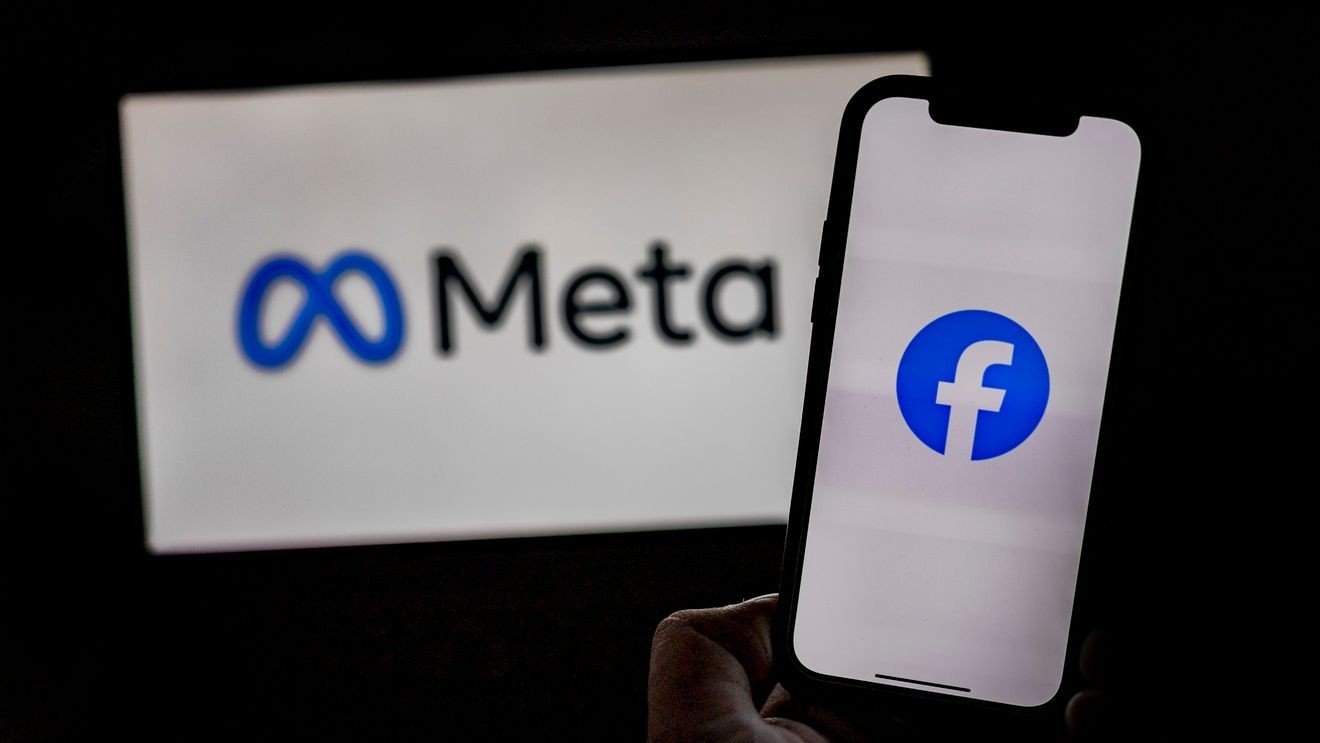
Users in several countries reported problems accessing Meta-owned platforms Friday morning, including Facebook, Instagram and Messenger, according to posts on social media and third-party outage trackers.
The reports began with users describing login failures, automatic logouts, error messages and pages that would not fully load. Some users said they were unable to access Facebook, Instagram or Messenger through mobile apps and web browsers.
TOP STORIES: Heat Advisory issued for Grand Strand, Pee Dee areas Friday 11 a.m. to 8 p.m.
According to outage-tracking site IsDown, user reports of problems with Meta services had climbed by 9:42 a.m., with the site listing Meta’s status as “users are reporting an outage.”
Meta had not publicly confirmed a widespread outage as of that time, and third-party outage trackers rely on user-submitted reports that may not reflect the full scope or cause of a service disruption.
Reports included users in the United States, the Philippines, the United Kingdom, Canada and Australia. Several users reported being logged out of their accounts and receiving error messages when trying to log back in.
Meta owns Facebook, Instagram, Messenger, WhatsApp and Threads. It was not immediately clear whether all Meta services were affected equally.
Business
SpaceX IPO: Everything you need to know

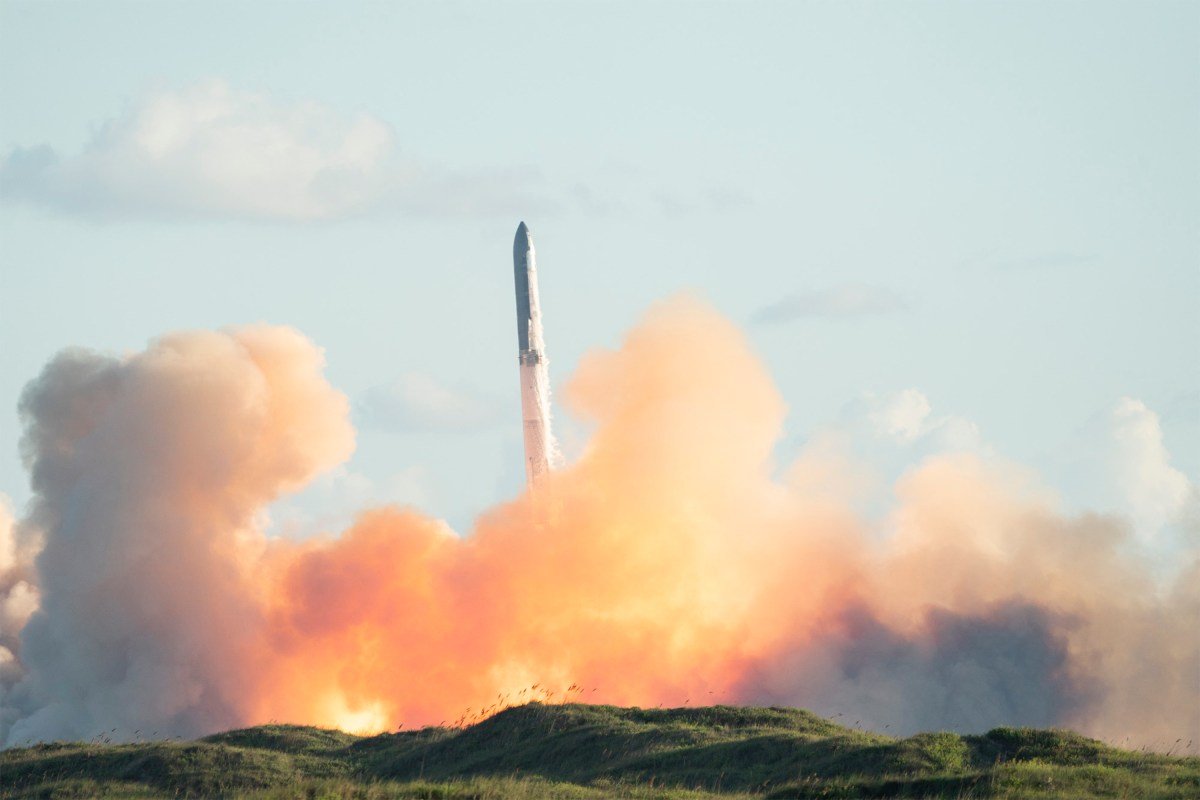
SpaceX has captured the attention of media, investors, and the public for years now — interest propelled by the company’s reusable rocket launches, the rise of its Starlink satellite network, and of course, for its founder and CEO Elon Musk.
But in its 24-year history, nothing quite compares to this initial public offering. Everyone seems to be interested, and perhaps it’s because of the sheer size of this IPO. The company priced its 555.6 million shares at $135 each to raise $75 billion, making it the largest IPO in history. At this price, the deal also looks set to make Musk the world’s first trillionaire.
TechCrunch has followed SpaceX’s start, struggles, and successes from the early days. And we’re here for what happens next too. This article will be continually updated with all of the latest SpaceX IPO news.
How to track the SpaceX IPO
With an offering this large, there is a lot of financial machinery operating behind the scenes — so the first question is just when the stock makes it to the market to start trading. SpaceX is debuting on Nasdaq and you can see the official Nasdaq listing here, which will have the price of record as soon as there is one. Nasdaq also has video of the SpaceX crew ringing the bell, if that’s your thing.
But the price is just part of the picture. For the most up-to-the-minute information, your best bet is still financial press outlets like Bloomberg and CNBC, both of which have liveblogs running and will have close coverage of any hiccups that happen in getting the stock to market.
By the numbers
Here we look at some of the bigger numbers, the consequential figures, and the eyewatering amounts that make up the company’s S-1 form.
For instance, SpaceX lost $4.9 billion on revenues of over $18 billion in 2025. That’s only a fraction of the more than $37 billion lost since SpaceX’s inception.
As CEO, Elon Musk holds about 85.1% of the company’s voting power. You can read more about that in the next section “Who wins and who doesn’t” — and we’ll continue to drop interesting numbers in here.
Here is another figure that caught our attention… 4,400. That’s the number of SpaceX employees who could become millionaires, according to the NYT.
Elon Musk can’t hear you over the sound of his $1.75 trillion IPO: The Equity podcast weighs in on the IPO.
Who wins and who doesn’t
SpaceX is the world’s largest IPO in history and means a big payday for some investors, employees, and of course, Elon Musk.
How Elon Musk will increase his power through the SpaceX IPO: Musk, who will have more than 50% of the voting power, will have a monarchical grip over the publicly traded version of SpaceX — control that goes far beyond what other tech founders enjoy.
Who will benefit most from SpaceX IPO? Mostly Elon — and a few from his inner circle: Elon Musk has the largest stake in SpaceX by billions of shares, but others also stand to win. Here’s the rundown of who owns what.
SpaceX SPV investors won’t know their true holdings until post-IPO lock-ups lift: After SpaceX makes its public debut, lower-tier SPV investors face hidden fees, lengthy payout delays, and the risk of outright fraud.
What’s in the S-1
The S-1 registration document gave the world an unprecedented look inside SpaceX, including its financials and its various businesses. The S-1 continued to be amended as the IPO date approached, and we were on it. Here is what we found.
The SpaceX IPO filing is filled with AI bets, Starship dreams, and Elon Musk at the center: The contents of the SpaceX IPO details a business dominated by its Starlink satellite internet offering, more than $37 billion in losses, and future business prospects through its xAI division.
Starship’s path to reusability looks murky after SpaceX’s S-1: SpaceX’s IPO and Starship rocket test flight delivered two big data points that offer a realistic vision for the coming years — and one that may disappoint both the company’s boosters and its critics.
SpaceX warns investors of future dilution, adding fuel to Tesla merger rumors: The company added new language to its S-1, a warning to prospective investors that a major dilution could be in the cards after it goes public.
Pre-IPO deals and events
Leading up to the IPO, SpaceX locked in a string of deals, mostly selling off compute to improve its balance sheet.
Anthropic will pay xAI $1.25B per month for compute: Initial coverage of the Anthropic deal on May 20.
How long is Anthropic’s lease with SpaceX? Opinions vary: Elon Musk keeps downplaying the duration of SpaceX’s contract with Anthropic.




Download fans say what they love about the festival. #DownloadFestival #BBCNews


The Keir Starmer Interview: The analysis | BBC Newscast
Today, Adam and Chris discuss Chris' interview with the Prime Minister, Sir Keir Starmer. The prime minister sat down for...


Trump (dis)approval ratings, Netanyahu (un)popularity & more | Enten roundup
CNN chief data analyst Harry Enten tackles a slew of President Trump's approval ratings, Israeli opinion on Netanyahu, and more.


US team should play like they're children in opening game, boss says


Amanda Peet: ‘There’s no algorithm for grief’
Both of actress Amanda Peet's parents were in hospice care when she learned she had breast cancer. Her father died...


Defence 'the number one priority' at spending review, says PM Starmer. #UK #KeirStarmer #BBCNews


Police officer shot during ‘horseplay’
A police officer in Pasadena, California, was shot after engaging in "horseplay" involving his firearm, according to Pasadena …


Trump claims deal to end Iran war near, but Tehran says 'nothing' finalised | BBC News
Iran has insisted that a final decision on an agreement to end the current conflict with the US has not...


Blake Lively to Have Legal Fees Paid for by Justin Baldoni, Wayfarer
Blake Lively will have her legal fees paid by Justin Baldoni but isn’t entitled to damages for harm caused by...


Elon Musk becomes the world’s first trillionaire with SpaceX’s IPO
Elon Musk has become the first person to cross the trillionaire threshold, at least on paper, after SpaceX priced its...
-

 Politics2 days ago
Political News and Conservative Analysis About Congress, the President, and the Federal Government
-

 BBC News World4 days ago
Backrooms and Obsession: How two low-budget horror films caused a Hollywood earthquake
-

 BBC News World19 hours ago
Why the economics makes this the craziest world cup ever
-

 LifestyleNews1 week ago
120 minutes of strength training per week may help extend lifespan
-

 Politics22 hours ago
What to know about the stabbing that set off fiery riots in Northern Ireland
-

 Entertainment9 hours ago
Taylor Swift Seems to Brush Off Jimmy Jam at Songwriters Hall of Fame
-

 Food21 hours ago
A Nebraska immigration raid shut businesses down a year ago. The fallout is ongoing, officials say.
-

 Video2 days ago
Marcello Hernández says he got in trouble in school for talking too much