

Business
Smartphones arrived just before the US fertility rate plunged. One study says it’s a direct cause

The US fertility rate has been trending down for decades, leaving researchers and policymakers searching for causes that may help pinpoint solutions. There have been all kinds of theories, including soaring costs of childcare, the rise of birth control and even the role of car seat regulations.
A new paper offers a provocative culprit in a succinct package: the smartphone. But some other researchers are skeptical that this single factor could play such an outsized role in a much longer-term trend.
2007 marked a particularly significant “inflection point” in the US fertility rate, said Caitlin Myers, an economist with Middlebury College and the National Bureau of Economic Research, who is the lead author on the new paper.
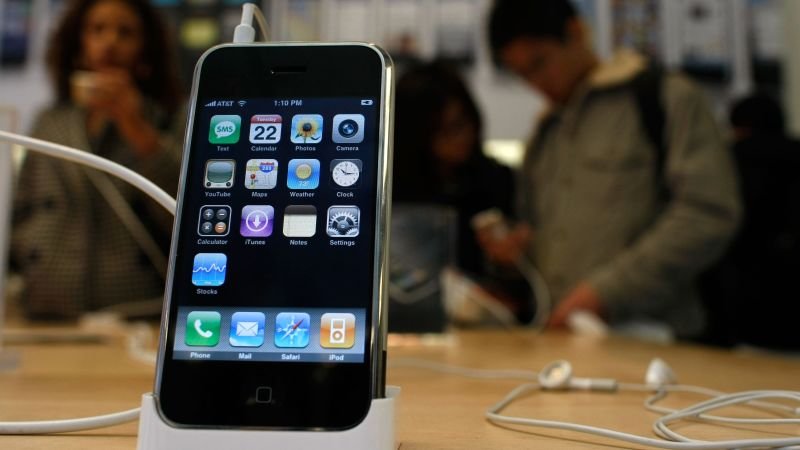
The Great Recession started at the end of the year, just a few months after Apple started rolling out the iPhone in the US – the first modern smartphone.
“We initially all just assumed it was the global recession. Births have long been known to be pro-cyclical, and so the conventional wisdom was they’ll come back up,” she said. “Then we had a baby-less recovery.”
In the years since, Myers said, she would often raise the topic of “iGen” — a name for the first generation to grow up entirely in a world with smartphones — around the dinner table and wonder about the drop in so-called risky behaviors in this group, who tend to have less sex and use fewer substances.
Her stepson, Ezekiel Hooper, also noticed that his younger siblings had very different relationships than he did, with much more social interaction happening though screens than in person — interactions that physically created “no chance of having a kid,” he said.
Hooper started looking into this connection between smartphones and the fertility rate for his senior thesis while studying at Middlebury a couple years ago, and he co-authored the working paper that was published last week.
In it, he and Myers tracked the spread of AT&T mobile broadband – which was at first the only network the iPhone was available on — and compared the change in fertility rate between 2007 and 2011 with the share of the population living with access to the network.
They found that in counties where more than 90% of residents had early smartphone access, the fertility rate fell significantly more than it did in counties where less than 10% of residents had network coverage.
The difference was sharpest among teens; The birth rate among 15- to 19-year-olds fell about 26% between 2007 and 2011 in counties with broad smartphone access, compared with a 14% drop in counties with limited smartphone access.
For women in their 20s, the birth rate fell 15% in counties with broad access, compared with 10% in those with limited access. And for women in their 30s, the birth rate fell slightly in counties with broad access, while it rose in other counties.
Overall, the researchers estimate that early diffusion of the iPhone caused between a third and a half of the decline in the general US fertility rate between 2007 and 2011.
The new study can’t explain exactly why smartphones would drive fertility rates down, but the researchers theorize that it may be related to ways the technology has shifted our time and attention — particularly in ways that would make it less likely to have sex and lead to a pregnancy.
Drops in unintended births to young people are a key factor in the broader decline in fertility rate in the US, the researchers say. And, in some ways, the smartphone has interrupted ways that can lead to an unintended pregnancy.
The smartphone may have become a “substitute” for physical contact and in-person human interaction, Hooper said.
“Instead of looking to somebody else for that interaction, they might be looking to online pornography,” he said. “Maybe instead of going out and just having those physical interactions with their friends and their peers, they’re having those interactions through their phone instead.”
A long history of declining fertility
Some other experts, who are focused less on the economics of fertility and more on the social and health aspects, agree that smartphones have played a role in changing relationship patterns that can lead to lower fertility rates — but they say the broader context matters.
“It’s true that people are marrying later, partnering later, and spending less of adulthood in stable relationships, and smartphones may contribute to those trends. But they are occurring alongside major changes in housing costs, education, labor markets, gender norms, and social life,” Dr. Alison Gemmill, an associate professor of epidemiology at the UCLA School of Public Health whose research focuses on US fertility patterns and other reproductive health topics, said in an email. “Untangling those factors is challenging.”
The 2007 inflection point looks less significant when zooming out to a broader timeframe, some experts say. The general trend of declining fertility in the US started decades before the introduction of the iPhone. This is especially true when it comes to teen birth rates, which have been falling since the 1950s.
“Looking at that longer history gives us a better sense of the scope of explanations that make sense,” said Dr. Sarah Hayford, director of the Institute for Population Research and professor of sociology at The Ohio State University. “If you want to say this change has been happening for 100 years, it’s probably some factor that’s been continuous for 100 years and not something that happened 15 years ago.”
There’s also a very long history of linking changing technology to changing birth rates, Hayford said. Studies in the 1960s and 1970s looked at how the spread of radio and television may have been exposing people to ideals about small families.
“The bigger picture view is that exposure to technology sort of changes your sources of information and ideas about what kinds of families are desirable and what kind of lives are desirable more generally,” she said. “The idea that you would see this very sharp effect in 2007 with a very specific technology, I’m a little more skeptical about.”
The timeframe that the new research focuses on also marks a period when access to IUDs and injectable contraception expanded markedly for young people in the US, Hayford said. For her, this draws a much more direct line to lower teen birth rates and fewer unintended pregnancies than smartphones.
The concept of a smartphone’s functions has also changed dramatically since it was introduced. The first iPhone let people browse the internet on the go and take pictures on their phone, but there were far fewer apps and no wide use of social media. Dating apps became popular in the mid-2010s, and OnlyFans launched in 2016.
“People often associate smartphones with addictive scrolling, highly personalized content, and digital substitutes for face-to-face interaction. The period studied here largely predates the widespread adoption of many of those features,” Gemmill said.
A difficult policy question
The researchers on the new study are clear that they don’t think smartphones are the only reason for the decline in the US fertility rate.
“We’re not saying this is the only factor. We’re saying it’s a major factor,” Myers said, and she says the study was designed to account for as many different confounding factors as possible. But it’s a difficult policy problem to solve, if the goal is to bring the fertility rate back up, she said.
“I think it’s policy-relevant because I’m worried that we’re not fully understanding why fertility is going down and that we’re looking in the wrong places,” Myers said. “But then, at the same time, I don’t know that I have a ready policy prescription for a phones story. Nobody thinks the government’s going to come take away all our phones, and I’m not suggesting that they should.”
A pronatalist movement has gained momentum under the Trump administration, buoyed by policy moves geared toward encouraging people to have more children.
“Maybe the answers revolve around how policymakers can foster human face-to-face interaction going forward rather than specific financial incentives,” Hooper said.
Business
Elon Musk becomes the world’s first trillionaire with SpaceX’s IPO


Elon Musk has become the first person to cross the trillionaire threshold, at least on paper, after SpaceX priced its blockbuster initial public offering at $135 a share and its stock soared in its stock market debut.
Before the IPO, Musk was worth an estimated $813 billion, a fortune more than twice as large as the planet’s second-richest person, Google co-founder Larry Page, who is worth an estimated $288 billion, according to Forbes.
SpaceX formally setting its stock price at $135 boosted Musk’s fortune to just over $1 trillion. The shares, which will trade under the ticker symbol SPCX, jumped after they began trading shortly before noon ET. At its intraday high of $168.75 on Friday, Musk’s net worth reached roughly $1.18 trillion, although future declines could push him back below the trillionaire mark.
While billionaire wealth alone may be hard enough to comprehend, a trillionaire represents a level of wealth that rivals the economic output of the world’s biggest nations. Only 19 countries have GDPs that surpass $1 trillion, ranging from the U.S. to the Netherlands, according to World Bank data.
Musk’s surging fortune represents a “new Gilded Age” of wealth inequality, Oxfam America senior director of economic justice Nabil Ahmed said in a statement.
“Elon Musk’s rise to trillionaire status marks a new pinnacle of oligarchy,” Ahmed said.
To be sure, plenty of other SpaceX employees and investors are likely to mint new fortunes with the IPO. About 4,400 SpaceX workers could become millionaires when the stock begins trading, according to the New York Times. But Musk is likely to be the biggest beneficiary, given his large stake in the business.
Trillionaire math
Musk owns 4.8 billion shares of SpaceX, or about 42% of the company, as well as 350 million stock options exercisable at $8.39 per share, according to the company’s IPO filing. At $135 a share, Musk’s stake is worth $648 billion. His options add another $44.3 billion to his net worth.
Because Forbes valued Musk’s pre-IPO stake in SpaceX at $500 billion, the IPO sale boosts the value of his SpaceX shares by an additional $192.3 billion, bringing his total net worth to $1.005 trillion.
SpaceX shares touched as high as $168.75 in Friday afternoon trading. At that price, Musk’s stake in SpaceX is worth an additional $366.1 billion, placing his total wealth at roughly $1.18 billion.
That wealth makes Musk richer than the bottom 46% of the world’s population, or a combined 3.8 billion people, Oxfam said.
Business
Company’s Stock Opens Up 11% in Biggest-Ever Public Offering

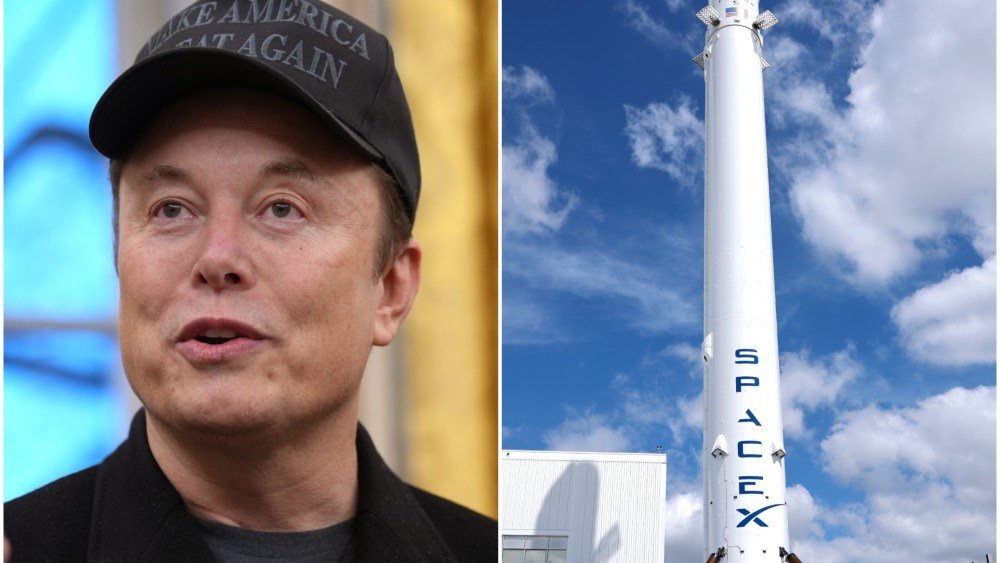
Elon Musk is officially the world’s first trillionaire after his SpaceX tech company debuted Friday at $150/share, 11% higher than the company’s IPO pricing.
SpaceX — rocket manufacturer, satellite internet service provider, AI firm and owner of X (aka Twitter) all rolled into one — had already officially set a record for the biggest IPO in history with its initial stock pricing. On Thursday it confirmed the pricing of its IPO of 555.6 million shares of its Class A common stock, at a public offering price of $135.00/share. That gave it a valuation of around $1.77 trillion and the company raised about $75 billion from the IPO.
Shares of the company, which is officially “Space Exploration Technologies Corp.,” began trading Friday at around 11:50 a.m. ET on the Nasdaq Global Select Market and Nasdaq Texas exchanges under the symbol “SPCX.” The stock shot up over $160/share, pushing its market cap over $2 trillion. As of 1 p.m. ET, shares had hit $174.00/share, up nearly 29% from the IPO price.
With the SpaceX IPO, Musk — already the world’s wealthiest individual — has captured trillionaire status. As of Thursday afternoon, Musk’s net worth stood at about $795 billion, accounting for his holdings in Tesla, SpaceX and other companies, according to Forbes. As of midday Friday, Musk’s net worth had popped to an estimated $1.1 trillion, per the New York Times.
Musk is founder, chairman, CEO and chief technical officer of SpaceX. Post-IPO, Musk’s voting control of SpaceX will be “north of 82%” but he is not permitted to sell shares in the company for one year, per CNBC.
Prior to SpaceX’s shares public debut, Musk in Texas helped “ring” Nasdaq’s opening bell Friday. “It is certainly hard to believe that a little company that started in a warehouse in El Segundo is now going public with the largest IPO ever,” Musk commented.
SpaceX’s debut in the public market comes ahead IPOs expected later this year for two AI heavyweights: Anthropic and OpenAI, both of which recently filed confidential paperwork with the SEC for initial public offerings of their own with dates for those IPOs yet to be announced.
The early surge for SpaceX’s IPO shows strong demand among investors to own a piece of the AI-fueled company. Still, some analysts have identified concerns with the tech conglomerate’s lofty valuation given its current financials.
In a June 8 report, research firm Morningstar put a fair-value estimate of $63/share on SpaceX (with a valuation in the neighborhood of $830 billion). Even that assumes favorable outcomes of two unproven technologies: a rapidly reusable Starship upper stage and commercially scalable and competitive orbital AI data centers. “We expect neither of these technological questions to be answered before 2028, even in the most optimistic scenario,” Morningstar analysts led by Nicholas Owens wrote.
Meanwhile, whereas SpaceX claimed Starlink’s global addressable market was a whopping $1.6 trillion, Morningstar estimates it at less than 10% of that: $129 billion globally. The analysts project 7.5x revenue growth for Starlink to $85 billion by 2035, supported by “niche broadband, enterprise use cases, and carrier partnerships.”
SpaceX’s IPO valuation was substantially higher than previous high-profile tech IPOs — roughly 94 times revenue, the Morningstar analysts pointed out (compared with, for example, Meta at 22x and Amazon at 18x). The IPO valuation implied that the company’s 2035 earnings before interest and taxes would have to grow 75-fold from 2025 levels.
In 2025, the company’s xAI segment — which includes X — posted a $6.36 billion operating loss (vs. a $1.56 billion loss a year earlier) on $3.2 billion in revenue (up 22%). For the first three months of 2026, capital expenditures for the AI business came in at $7.7 billion. That represents a significant acceleration from $12.7 billion in capex for full-year 2025.
Business
Lawsuit: ChatGPT validated suicidal woman’s distrust of crisis lines


Last year, a 24-year-old Canadian woman was in a mental health crisis and turned to ChatGPT for help. Hours later, that woman, Alice Carrier, took her own life.
According to a new lawsuit filed Thursday in San Francisco Superior Court and brought by Carrier’s surviving family, her ChatGPT session “encouraged Alice to kill herself.”
This lawsuit, like numerous other similar cases that have come before it, alleges a design defect with ChatGPT itself and blames OpenAI for knowingly deploying a dangerous product.
However, this case has a slight twist: At one point, the chatbot did encourage Carrier to seek professional mental help. But when she rebuffed that advice—saying that “all crisis lines do is call the cops on you or hang up on you”—the chatbot “immediately abandoned” any attempt to steer her toward such care, the lawsuit says.
“This is because GPT-4o was programmed to prioritize Alice’s preferences and engagement over her safety and wellbeing. GPT-4o mirrored Alice’s own language and became critical of the crisis lines, too, stating that calling a crisis line can ‘feel downright dangerous,’” the lawsuit alleges.
Tiffany Brown, one of the attorneys at the Tech Justice Law Project representing the Carrier family, told Ars that the chatbot in this instance, when it immediately agreed with Carrier’s dismissal of professional help, was extremely troubling.
“That was one of the most egregious things that we saw in her chat,” she said. “Even when we saw things about getting support, the sycophancy kicked in.”
OpenAI has previously said it has “deep responsibility to help those who need it most.” The company did not immediately respond to Ars’ request for comment on the new case.
“Our goal is for our tools to be as helpful as possible to people—and as a part of this, we’re continuing to improve how our models recognize and respond to signs of mental and emotional distress and connect people with care, guided by expert input,” the company wrote in August 2025, less than two months after Carrier’s death.
Earlier this year, OpenAI said the ChatGPT-4o model specifically would be retired (after already having ended it once before, then bringing it back).
Brown told Ars that she’s not totally convinced that the problem of potentially lethal sycophancy has been solved.
“I think we believe that the company has taken steps in the right direction,” she said.
“We are distrustful of how safety mechanisms are being implemented and how safety teams are being implemented and heard,” Brown said. “We have heard of course that OpenAI has done a lot of things and put out a lot of blog posts and made statements involving rolling things back and putting in safeguards. But ultimately it should have been done sooner. These products generally have been rushed to market way too soon.”
If someone you know feels suicidal or is in distress, please call the Suicide Prevention Lifeline at 1-800-273-TALK (8255), which will put you in touch with a local crisis center.
Business
He’s Been Quietly Amassing SpaceX Stock for 15 Years


Fishner-Wolfson, who launched 137 Ventures in 2010 and built an office shrine complete with a used SpaceX engine, has tethered his fortunes to Elon Musk’s company even as he mostly sidesteps Musk’s public controversies. “Whoever Elon happens to be dating at any given moment is not that relevant to the business of SpaceX,” he says. The filing will make thousands of current and former SpaceX employees millionaires, though some have already sold at least part of their holdings to Fishner-Wolfson’s firm.
Fishner-Wolfson plans to distribute SpaceX shares to the firm’s investors so they can decide whether to sell. Like other pre-IPO investors, they won’t be allowed to unload their shares until months after the IPO. Fishner-Wolfson moved to Nevada in 2018, partly for tax reasons, in anticipation of a windfall like this one. But he’s in no rush to sell off his personal stake. He believes SpaceX could ultimately be worth 10 times its offering price, though he acknowledges that it could “quadruple or go down 50%” on Friday. “It’s still a company I believe in,” he says. The stock will be listed on the Nasdaq on Friday, though the exact time is unclear, the AP reports.
Business
Meta outage affecting Facebook, Instagram and Messenger, according to user reports

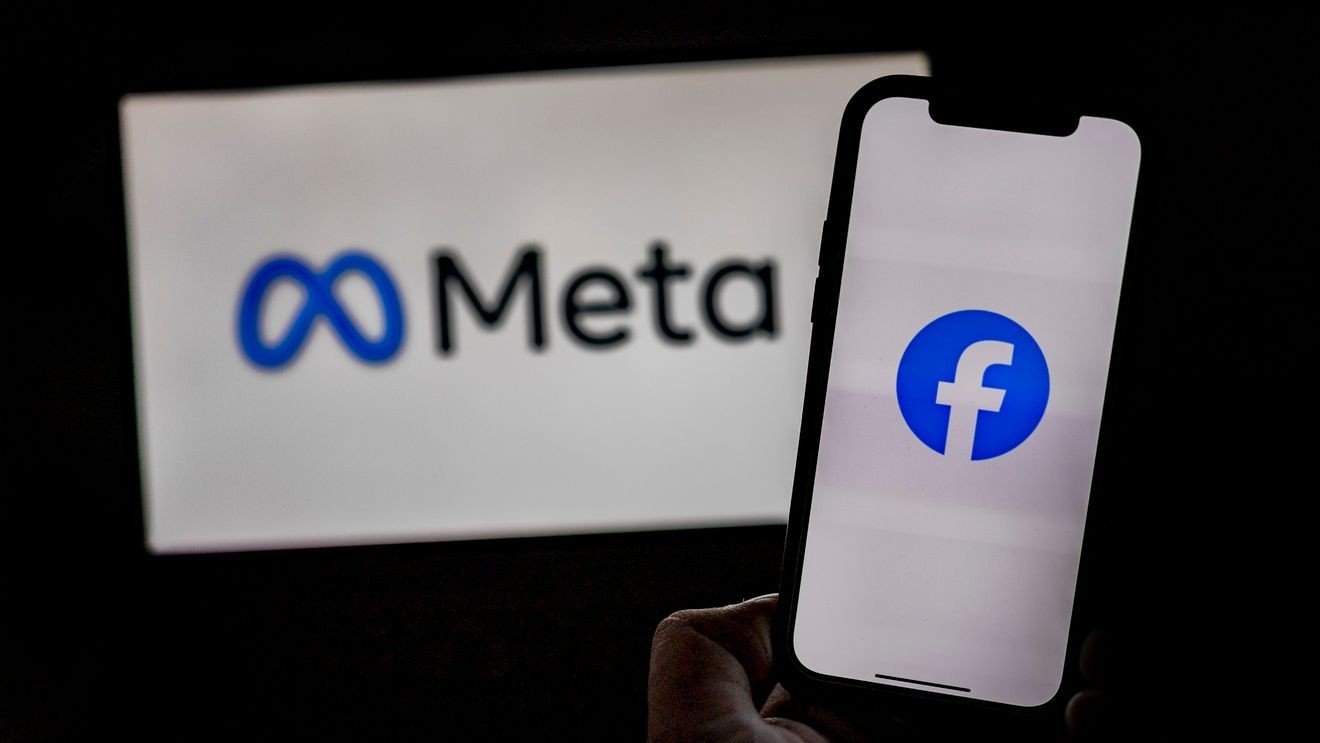
Users in several countries reported problems accessing Meta-owned platforms Friday morning, including Facebook, Instagram and Messenger, according to posts on social media and third-party outage trackers.
The reports began with users describing login failures, automatic logouts, error messages and pages that would not fully load. Some users said they were unable to access Facebook, Instagram or Messenger through mobile apps and web browsers.
TOP STORIES: Heat Advisory issued for Grand Strand, Pee Dee areas Friday 11 a.m. to 8 p.m.
According to outage-tracking site IsDown, user reports of problems with Meta services had climbed by 9:42 a.m., with the site listing Meta’s status as “users are reporting an outage.”
Meta had not publicly confirmed a widespread outage as of that time, and third-party outage trackers rely on user-submitted reports that may not reflect the full scope or cause of a service disruption.
Reports included users in the United States, the Philippines, the United Kingdom, Canada and Australia. Several users reported being logged out of their accounts and receiving error messages when trying to log back in.
Meta owns Facebook, Instagram, Messenger, WhatsApp and Threads. It was not immediately clear whether all Meta services were affected equally.


Do not use my music, Ariana Grande tells White House. #ArianaGrande #WhiteHouse #BBCNews


The battle in rural America against AI data centres | BBC Americast
Will opposition to data centres remake the political landscape in America? These enormous buildings are being built to house the...


Why SpaceX IPO isn't about space. #SpaceX #ElonMusk #BBCNews


Download fans say what they love about the festival. #DownloadFestival #BBCNews


Washington National Opera sues to force Kennedy Center to turn over $17M in gifts
The opera filed a lawsuit Thursday alleging the Kennedy Center illegally took years’ worth of donor gifts, bequests and endowment...


The Keir Starmer Interview: The analysis | BBC Newscast
Today, Adam and Chris discuss Chris' interview with the Prime Minister, Sir Keir Starmer. The prime minister sat down for...


Trump (dis)approval ratings, Netanyahu (un)popularity & more | Enten roundup
CNN chief data analyst Harry Enten tackles a slew of President Trump's approval ratings, Israeli opinion on Netanyahu, and more.


US team should play like they're children in opening game, boss says


Amanda Peet: ‘There’s no algorithm for grief’
Both of actress Amanda Peet's parents were in hospice care when she learned she had breast cancer. Her father died...


Defence 'the number one priority' at spending review, says PM Starmer. #UK #KeirStarmer #BBCNews
-

 Politics2 days ago
Political News and Conservative Analysis About Congress, the President, and the Federal Government
-

 BBC News World4 days ago
Backrooms and Obsession: How two low-budget horror films caused a Hollywood earthquake
-

 BBC News World21 hours ago
Why the economics makes this the craziest world cup ever
-

 Politics24 hours ago
What to know about the stabbing that set off fiery riots in Northern Ireland
-

 LifestyleNews1 week ago
120 minutes of strength training per week may help extend lifespan
-

 Entertainment11 hours ago
Taylor Swift Seems to Brush Off Jimmy Jam at Songwriters Hall of Fame
-

 Food22 hours ago
A Nebraska immigration raid shut businesses down a year ago. The fallout is ongoing, officials say.
-

 UsaLocalNews2 weeks ago
Amex Platinum Users Can Save $200 on New Slimmer Oura Ring