

Business
Elon Musk becomes the world’s first trillionaire with SpaceX’s IPO

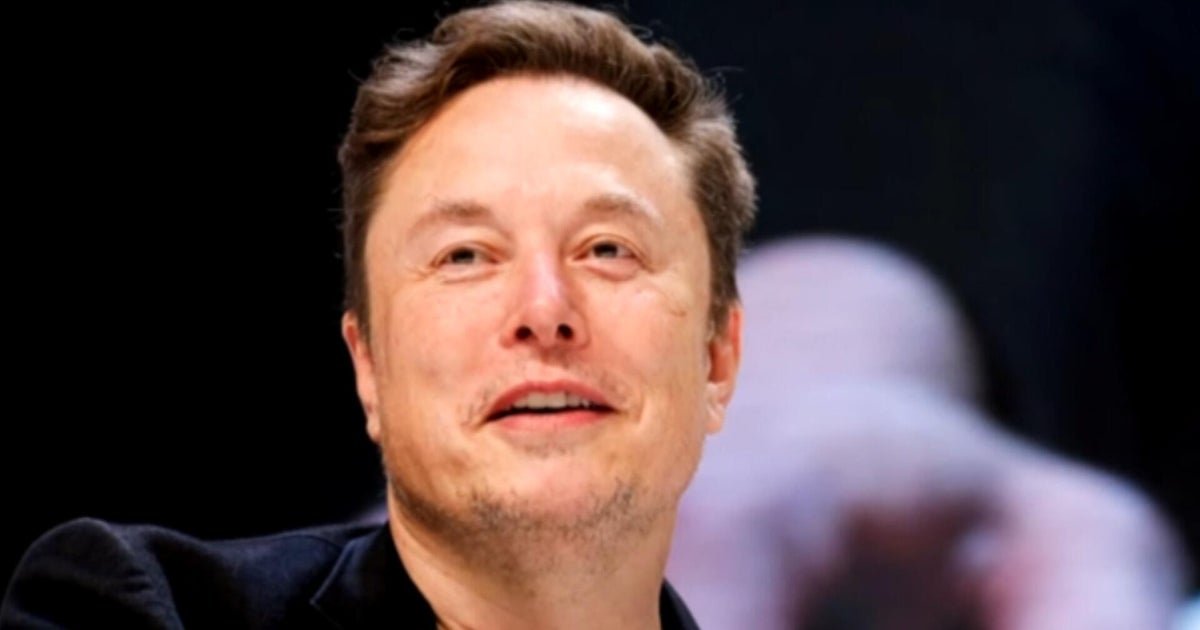
Elon Musk has become the first person to cross the trillionaire threshold, at least on paper, after SpaceX priced its blockbuster initial public offering at $135 a share and its stock soared in its stock market debut.
Before the IPO, Musk was worth an estimated $813 billion, a fortune more than twice as large as the planet’s second-richest person, Google co-founder Larry Page, who is worth an estimated $288 billion, according to Forbes.
SpaceX formally setting its stock price at $135 boosted Musk’s fortune to just over $1 trillion. The shares, which will trade under the ticker symbol SPCX, jumped after they began trading shortly before noon ET. At its intraday high of $168.75 on Friday, Musk’s net worth reached roughly $1.18 trillion, although future declines could push him back below the trillionaire mark.
While billionaire wealth alone may be hard enough to comprehend, a trillionaire represents a level of wealth that rivals the economic output of the world’s biggest nations. Only 19 countries have GDPs that surpass $1 trillion, ranging from the U.S. to the Netherlands, according to World Bank data.
Musk’s surging fortune represents a “new Gilded Age” of wealth inequality, Oxfam America senior director of economic justice Nabil Ahmed said in a statement.
“Elon Musk’s rise to trillionaire status marks a new pinnacle of oligarchy,” Ahmed said.
To be sure, plenty of other SpaceX employees and investors are likely to mint new fortunes with the IPO. About 4,400 SpaceX workers could become millionaires when the stock begins trading, according to the New York Times. But Musk is likely to be the biggest beneficiary, given his large stake in the business.
Trillionaire math
Musk owns 4.8 billion shares of SpaceX, or about 42% of the company, as well as 350 million stock options exercisable at $8.39 per share, according to the company’s IPO filing. At $135 a share, Musk’s stake is worth $648 billion. His options add another $44.3 billion to his net worth.
Because Forbes valued Musk’s pre-IPO stake in SpaceX at $500 billion, the IPO sale boosts the value of his SpaceX shares by an additional $192.3 billion, bringing his total net worth to $1.005 trillion.
SpaceX shares touched as high as $168.75 in Friday afternoon trading. At that price, Musk’s stake in SpaceX is worth an additional $366.1 billion, placing his total wealth at roughly $1.18 billion.
That wealth makes Musk richer than the bottom 46% of the world’s population, or a combined 3.8 billion people, Oxfam said.
Business
SpaceX shares soar following record-breaking $75 billion IPO
SpaceX shares opened at $150 on Friday, 11% above their $135 offering price, after the company completed the largest initial public offering in history.
The stock, which started trading on the Nasdaq Stock Exchange under the ticker symbol SPCX at 11:46 a.m. ET, rose as high as $176.52 in midday trading, up 31% from the IPO offer price. As of 2:42 p.m., shares were trading at $170.90.
“Like most IPOs, the price jumped,” Jay Ritter, an IPO expert and professor at the University of Florida’s Warrington College of Business, told CBS News. “This is not a moonshot, but given the size of the deal, if the stock price holds, there will be more dollar value of [early stock returns] than any IPO in history.”
Ritter said the opening price was “disappointing relative to what betting markets had been predicting,” but still positive since trading was well above the IPO sale price.
SpaceX on Thursday priced its shares at $135, raising $75 billion to finance its ambitious plans, including establishing a human colony on Mars and deploying solar-powered data centers in space.
The offering leapfrogs SpaceX to become the largest global IPO, surpassing the current record holder, Saudi Aramco. When the state-owned Saudi Arabian oil company went public in 2019, it raised nearly $26 billion, according to Renaissance Capital.
SpaceX’s IPO comes as the stock market continues to notch record highs, propelled by surging corporate profits and the artificial intelligence boom. SpaceX will eventually be joined by AI players OpenAI and Anthropic, which have both announced plans for their own IPOs.
Rockets, satellites and AI
SpaceX, which Elon Musk founded in 2002, develops and launches spacecraft for satellite operators, NASA, the Department of Defense and other customers. The business includes Starlink, a satellite division that provides broadband connectivity, and an artificial intelligence division focused on building data centers.
SpaceX in February also acquired Musk’s company xAI, which runs the social networking platform X and chatbot Grok.
SpaceX’s public stock offering has generated strong investor interest, with Bloomberg reporting on Thursday that the IPO received more than $100 billion in retail orders.
SpaceX’s strong start lifted its market value to $2.2 trillion, ranking it ahead of other major publicly listed players such as Meta Platforms, Samsung and Musk-owned Tesla. SpaceX still trails Nvidia, the world’s most valuable company, which has a market cap of roughly $5 trillion, according to FactSet, as well as a handful of other tech companies.
Although SpaceX has a high valuation, it lags other tech giants in terms of revenue and profitability, Ritter said. SpaceX, which is unprofitable, booked $18.7 billion in revenue last year, far less than Alphabet’s $400 billion in 2025 sales.
“Alphabet, Apple and Nvidia are producing annual after-tax profits of more than $100 billion a year,” he said prior to the IPO. “There’s a long way to go to catch up with the profitability of those mega caps.”
Indeed, SpaceX will face significant challenges in delivering on its bold plan to develop space for commercial ventures, including ringing the earth with AI-powered satellites, and to justify its massive valuation.
“I can see the argument for why this company should deserve a lower valuation,” said Matthew Kennedy, a senior market strategist at Renaissance Capital, which tracks IPOs. “At the same time, it is true that some stocks are expensive and stay expensive.”
Many experts expect SpaceX stock to be volatile in its early days of trading, as is common with other large IPOs. A Truist analysis of 30 sizable technology IPOs found that more than half the offerings posted negative returns a year after their shares started trading.
“The question on SpaceX is less about the immediate trading after IPO and more about how the price holds over the longer term,” Samuel Kerr, global head of ECM at Mergermarket, a financial intelligence company for the M&A sector, said in an email before SpaceX stock started trading.
The trillion-dollar man
The IPO has made SpaceX CEO Elon Musk, already the world’s richest person, a trillionaire — at least on paper. Musk owns 4.8 billion shares of SpaceX, or about 42% of the company, as well as 350 million stock options, according to the IPO filing. With 82.4% of the company’s voting power, he will continue to wield significant control over SpaceX’s future.
SpaceX shares are expected to launch on several indexes, including the Nasdaq 100 and Russell indices, in the coming days. That could pave the way for more investors, including Americans with 401(k) plans, to become potential shareholders.
SpaceX, which had filed for a confidential initial public offering in April, said that it sees a market opportunity of more than $28 trillion across the industries it operates in.
Of that, 90% is attributed to xAI alone, according to an analysis by Van Ha Trinh, financial markets analyst at the online broker Exness. That points to SpaceX’s belief that its AI capabilities will fuel its growth.
Business
Company’s Stock Opens Up 11% in Biggest-Ever Public Offering

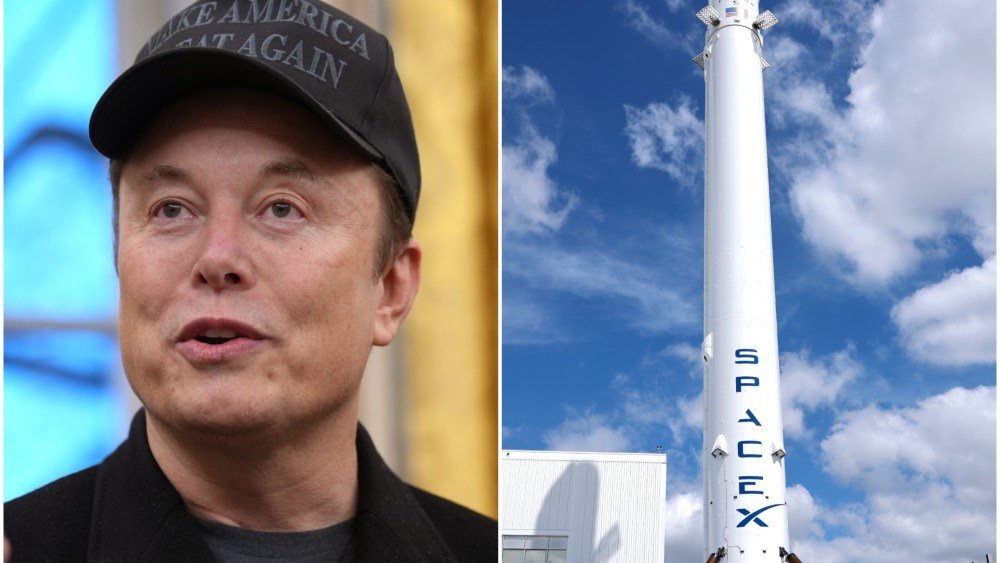
Elon Musk is officially the world’s first trillionaire after his SpaceX tech company debuted Friday at $150/share, 11% higher than the company’s IPO pricing.
SpaceX — rocket manufacturer, satellite internet service provider, AI firm and owner of X (aka Twitter) all rolled into one — had already officially set a record for the biggest IPO in history with its initial stock pricing. On Thursday it confirmed the pricing of its IPO of 555.6 million shares of its Class A common stock, at a public offering price of $135.00/share. That gave it a valuation of around $1.77 trillion and the company raised about $75 billion from the IPO.
Shares of the company, which is officially “Space Exploration Technologies Corp.,” began trading Friday at around 11:50 a.m. ET on the Nasdaq Global Select Market and Nasdaq Texas exchanges under the symbol “SPCX.” The stock shot up over $160/share, pushing its market cap over $2 trillion. As of 1 p.m. ET, shares had hit $174.00/share, up nearly 29% from the IPO price.
With the SpaceX IPO, Musk — already the world’s wealthiest individual — has captured trillionaire status. As of Thursday afternoon, Musk’s net worth stood at about $795 billion, accounting for his holdings in Tesla, SpaceX and other companies, according to Forbes. As of midday Friday, Musk’s net worth had popped to an estimated $1.1 trillion, per the New York Times.
Musk is founder, chairman, CEO and chief technical officer of SpaceX. Post-IPO, Musk’s voting control of SpaceX will be “north of 82%” but he is not permitted to sell shares in the company for one year, per CNBC.
Prior to SpaceX’s shares public debut, Musk in Texas helped “ring” Nasdaq’s opening bell Friday. “It is certainly hard to believe that a little company that started in a warehouse in El Segundo is now going public with the largest IPO ever,” Musk commented.
SpaceX’s debut in the public market comes ahead IPOs expected later this year for two AI heavyweights: Anthropic and OpenAI, both of which recently filed confidential paperwork with the SEC for initial public offerings of their own with dates for those IPOs yet to be announced.
The early surge for SpaceX’s IPO shows strong demand among investors to own a piece of the AI-fueled company. Still, some analysts have identified concerns with the tech conglomerate’s lofty valuation given its current financials.
In a June 8 report, research firm Morningstar put a fair-value estimate of $63/share on SpaceX (with a valuation in the neighborhood of $830 billion). Even that assumes favorable outcomes of two unproven technologies: a rapidly reusable Starship upper stage and commercially scalable and competitive orbital AI data centers. “We expect neither of these technological questions to be answered before 2028, even in the most optimistic scenario,” Morningstar analysts led by Nicholas Owens wrote.
Meanwhile, whereas SpaceX claimed Starlink’s global addressable market was a whopping $1.6 trillion, Morningstar estimates it at less than 10% of that: $129 billion globally. The analysts project 7.5x revenue growth for Starlink to $85 billion by 2035, supported by “niche broadband, enterprise use cases, and carrier partnerships.”
SpaceX’s IPO valuation was substantially higher than previous high-profile tech IPOs — roughly 94 times revenue, the Morningstar analysts pointed out (compared with, for example, Meta at 22x and Amazon at 18x). The IPO valuation implied that the company’s 2035 earnings before interest and taxes would have to grow 75-fold from 2025 levels.
In 2025, the company’s xAI segment — which includes X — posted a $6.36 billion operating loss (vs. a $1.56 billion loss a year earlier) on $3.2 billion in revenue (up 22%). For the first three months of 2026, capital expenditures for the AI business came in at $7.7 billion. That represents a significant acceleration from $12.7 billion in capex for full-year 2025.
Business
‘Trillionaires Shouldn’t Exist’: Obscene Musk Milestone Spurs Calls for Aggressive Wealth Tax

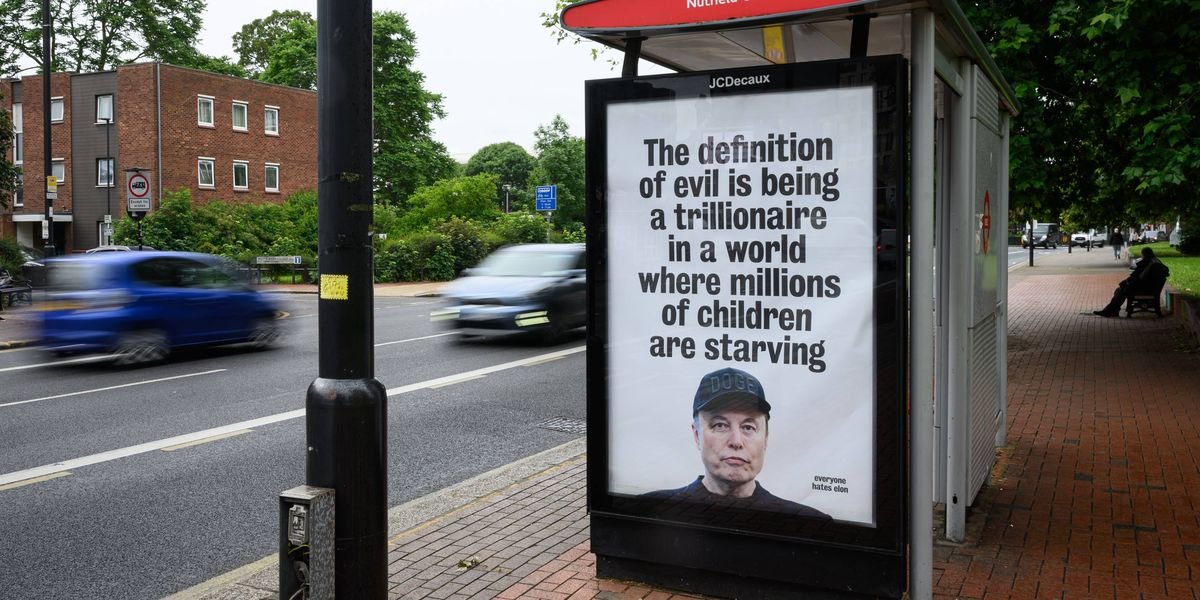
Elon Musk’s net worth surged past $1 trillion on Friday as SpaceX—the rocket company he founded and controls—made its debut on the public market, prompting global revulsion and calls for an aggressive wealth tax to rein in out-of-control inequality.
“Musk became the world’s first trillionaire because our tax system shields the wealth of the ultra-wealthy from taxation while requiring working to people pay taxes on every paycheck,” said Igor Volsky, director of the Tax the Greedy Billionaires Campaign. “Today’s milestone should serve as a wake-up call to us all.”
“Unless we plan to cede control and agency over our future to a handful of ultra-wealthy individuals, lawmakers must pursue bold tax policies that actually meet this moment—not just slowing the accumulation of extreme wealth, but reversing it,” Volsky added. “That means passing taxes on billionaire wealth ambitious enough to make the ultra-wealthy less wealthy, reduce the stranglehold they have over our economy and democracy, and restore the ideal that no one in America gets to buy their way to unchecked power.”
Reuters reported Friday that “most of Musk’s wealth now rests with SpaceX, where he holds a stake worth roughly $866 billion.”
“Along with Tesla and the rest of his properties, his net worth will exceed $1.1 trillion when the stock begins trading Friday,” Reuters noted. “The tally includes stock components that would vest over time.”
While Musk’s on-paper fortune could drop below the trillion-dollar mark if SpaceX’s stock price drops below $135 per share—which is highly possible, as experts argue the company’s valuation is absurd—campaigners said Friday that the milestone is an appalling product of a society that has allowed the mega-rich to dictate policy, funneling immense wealth to the very top while millions worldwide face hunger, violent displacement, and preventable disease. Oxfam has estimated that just a 10% tax on Musk’s fortune could lift 800 million people above the extreme poverty line.
“Eighty-six of Americans are worried about the price of food. Elon Musk is a trillionaire. These two things are deeply, inherently connected,” said Erica Payne, founder and president of the advocacy group Patriotic Millionaires. “The level of wealth that Mr. Musk has reached requires human exploitation, wage theft, wage suppression, anti-competitive markets, monopolistic control, price collusion, inadequate tax systems, and corruption. Mostly inadequate tax systems and corruption.”
Musk’s companies, including SpaceX, have relied heavily on and benefited massively from government contracts, subsidies, and research, while paying minimal taxes.
The New York Times reported last year that SpaceX “has most likely paid little to no federal income taxes since its founding in 2002 and has privately told investors that it may never have to pay any, according to internal company documents.” As for Tesla, the Institute on Taxation and Economic Policy found earlier this year that the company “avoided almost all federal income tax on over $12 billion of US income over the past three years.”
Musk, whose immense wealth is largely stock appreciation that is not taxed in the US unless shares are sold, paid nothing in federal income taxes in 2018, according to ProPublica. “Between 2014 and 2018, he had a true tax rate of 3.27%,” the investigative outlet noted.
Writer Elizabeth Spiers argued Friday that “trillionaires shouldn’t exist,” noting in a column for The Nation that “as Musk’s wealth multiplies, he continues to prosper on the public dime.”
“Musk’s cosmic-scale wealth-hoarding is particularly abhorrent when you place it against the backdrop of how much damage he’s done,” wrote Spiers. “It’s hard to quantify the scale of destruction and deprivation that he will never personally be held accountable for. How do you value the lives of the hundreds of thousands of people who have died since Musk, in his words, gleefully ‘fed [USAID] into the woodchipper’? How do you value the lives of people who will die because DOGE cut major biomedical research funding?”
“Musk has enriched himself via a rigged investment economy ensuring that those with the most contribute the least—or in many cases, nothing at all,” Spiers added.
Business
Lawsuit: ChatGPT validated suicidal woman’s distrust of crisis lines

Last year, a 24-year-old Canadian woman was in a mental health crisis and turned to ChatGPT for help. Hours later, that woman, Alice Carrier, took her own life.
According to a new lawsuit filed Thursday in San Francisco Superior Court and brought by Carrier’s surviving family, her ChatGPT session “encouraged Alice to kill herself.”
This lawsuit, like numerous other similar cases that have come before it, alleges a design defect with ChatGPT itself and blames OpenAI for knowingly deploying a dangerous product.
However, this case has a slight twist: At one point, the chatbot did encourage Carrier to seek professional mental help. But when she rebuffed that advice—saying that “all crisis lines do is call the cops on you or hang up on you”—the chatbot “immediately abandoned” any attempt to steer her toward such care, the lawsuit says.
“This is because GPT-4o was programmed to prioritize Alice’s preferences and engagement over her safety and wellbeing. GPT-4o mirrored Alice’s own language and became critical of the crisis lines, too, stating that calling a crisis line can ‘feel downright dangerous,’” the lawsuit alleges.
Tiffany Brown, one of the attorneys at the Tech Justice Law Project representing the Carrier family, told Ars that the chatbot in this instance, when it immediately agreed with Carrier’s dismissal of professional help, was extremely troubling.
“That was one of the most egregious things that we saw in her chat,” she said. “Even when we saw things about getting support, the sycophancy kicked in.”
OpenAI has previously said it has “deep responsibility to help those who need it most.” The company did not immediately respond to Ars’ request for comment on the new case.
“Our goal is for our tools to be as helpful as possible to people—and as a part of this, we’re continuing to improve how our models recognize and respond to signs of mental and emotional distress and connect people with care, guided by expert input,” the company wrote in August 2025, less than two months after Carrier’s death.
Earlier this year, OpenAI said the ChatGPT-4o model specifically would be retired (after already having ended it once before, then bringing it back).
Brown told Ars that she’s not totally convinced that the problem of potentially lethal sycophancy has been solved.
“I think we believe that the company has taken steps in the right direction,” she said.
“We are distrustful of how safety mechanisms are being implemented and how safety teams are being implemented and heard,” Brown said. “We have heard of course that OpenAI has done a lot of things and put out a lot of blog posts and made statements involving rolling things back and putting in safeguards. But ultimately it should have been done sooner. These products generally have been rushed to market way too soon.”
If someone you know feels suicidal or is in distress, please call the Suicide Prevention Lifeline at 1-800-273-TALK (8255), which will put you in touch with a local crisis center.
Business
He’s Been Quietly Amassing SpaceX Stock for 15 Years

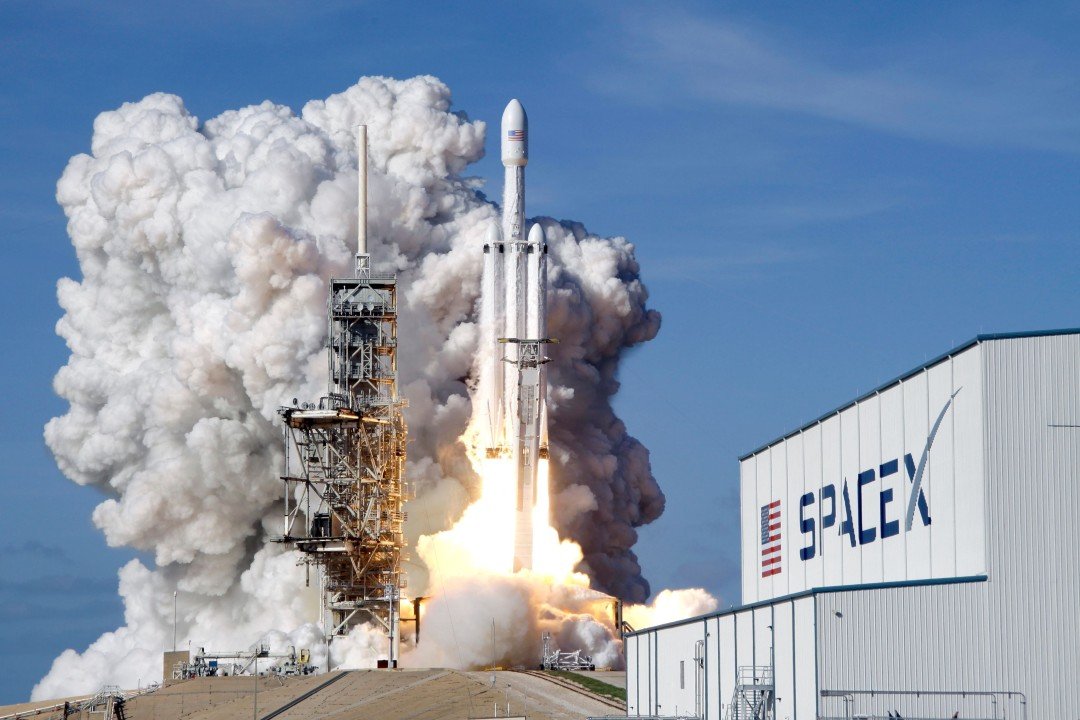
Fishner-Wolfson, who launched 137 Ventures in 2010 and built an office shrine complete with a used SpaceX engine, has tethered his fortunes to Elon Musk’s company even as he mostly sidesteps Musk’s public controversies. “Whoever Elon happens to be dating at any given moment is not that relevant to the business of SpaceX,” he says. The filing will make thousands of current and former SpaceX employees millionaires, though some have already sold at least part of their holdings to Fishner-Wolfson’s firm.
Fishner-Wolfson plans to distribute SpaceX shares to the firm’s investors so they can decide whether to sell. Like other pre-IPO investors, they won’t be allowed to unload their shares until months after the IPO. Fishner-Wolfson moved to Nevada in 2018, partly for tax reasons, in anticipation of a windfall like this one. But he’s in no rush to sell off his personal stake. He believes SpaceX could ultimately be worth 10 times its offering price, though he acknowledges that it could “quadruple or go down 50%” on Friday. “It’s still a company I believe in,” he says. The stock will be listed on the Nasdaq on Friday, though the exact time is unclear, the AP reports.




The crazy costs at this year's World Cup. #WorldCup #Football #Soccer #CostOfLiving #BBCNews


What are the costs and challenges facing World Cup 2026? | BBC News
The World Cup has officially kicked off this week – but alongside the football, there are questions around heat, cost,...

SpaceX IPO: Musk now has more money than Taiwan's GDP
SpaceX went public Friday, with shares trading at just above $150 in a hotly anticipated initial public offering that values...

The world's first trillionaire and how he built his fortune. #BBCNews


Brooklyn funeral home hosts Knicks watch party
Knicks player Karl-Anthony Towns has opened up about his late mother in the post-games of the NBA Finals. It inspired...

CNN tours a controversial oil facility in California
CNN's Elex Michaelson went on an exclusive tour to the Sable Offshore Oil Corp. facilities with US Energy Secretary Chris...


Mass shooting suspect dead after hourslong standoff in Texas
About a dozen people were shot and at least one killed in a mass shooting in Midland, Texas, according to...


Air India crash victims demand answers | Global News Podcast
Relatives of those who died in the Air India plane disaster have been marking the first anniversary by keeping vigil...


David Hockney, whose art celebrated sun-drenched Los Angeles, dead at 88
David Hockney, the innovative and prolific British artist who arrived in Los Angeles in 1964, soon celebrating its sun-drenched life...

Kiefer Sutherland’s Uber Driver Sues Actor for Threatening, Punching Him During Ride
Kiefer Sutherland is being sued by his Uber driver for assault and battery for the alleged L.A. incident that ended...
-

 Politics2 days ago
Political News and Conservative Analysis About Congress, the President, and the Federal Government
-

 Politics1 day ago
What to know about the stabbing that set off fiery riots in Northern Ireland
-
 BBC News World22 hours ago
Why the economics makes this the craziest world cup ever
-

 BBC News World4 days ago
Backrooms and Obsession: How two low-budget horror films caused a Hollywood earthquake
-

 LifestyleNews1 week ago
120 minutes of strength training per week may help extend lifespan
-

 Entertainment12 hours ago
Taylor Swift Seems to Brush Off Jimmy Jam at Songwriters Hall of Fame
-
 India Top Stories Feeds11 hours ago
India news: FM blasts Europe criticism of buying Russian oil
-

 Food23 hours ago
A Nebraska immigration raid shut businesses down a year ago. The fallout is ongoing, officials say.