

Entertainment
Medical examiner reveals details in actor James Handy’s death

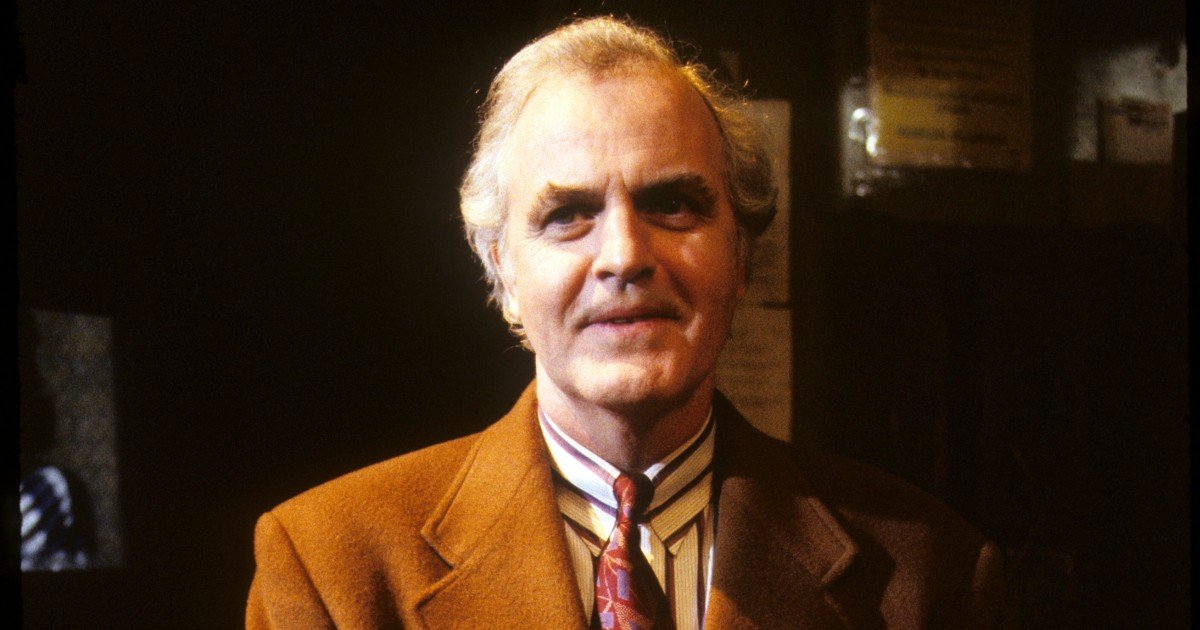
Los Angeles County’s medical examiner has revealed the cause of death for actor James Handy, who was fatally stabbed on June 3 in what prosecutors say was an attack by his girlfriend’s son.
Handy, 81, died in a homicide caused by a stab wound to the torso and neck compression, according to the medical examiner.
Police officers responded to a 911 call placed around 9:30 a.m. the morning of Handy’s death. The caller said, “I am the son of man. I just killed the man of sin,” the police department said in a statement following the incident.
Authorities said the stabbing appeared to be an isolated incident and posed no danger to the public.
Officers found Handy unconscious in the front yard of a home in the Tarzana neighborhood of Los Angeles.
The Los Angeles County District Attorney’s Office said Michael Gledhill, 44, the son of Handy’s girlfriend, Wendy Gledhill, has been charged with one count of murder, with a special allegation that a deadly weapon was used. Michael Gledhill lives at the home with his mother.
Wendy Gledhill, 76, told NBC News that she is overwhelmed and that she “loved James,” adding that it “should have never happened to him.”
Handy had a long career in Hollywood, appearing in several notable films including “Top Gun: Maverick,” “Arachnophobia” and “Jumanji.” Handy also appeared in the 2017 film “Logan,” as well as television series including “NCIS: Los Angeles,” “CSI: New York,” “NYPD Blue” and “Law & Order.”
Entertainment
David Hockney, whose art celebrated sun-drenched Los Angeles, dead at 88
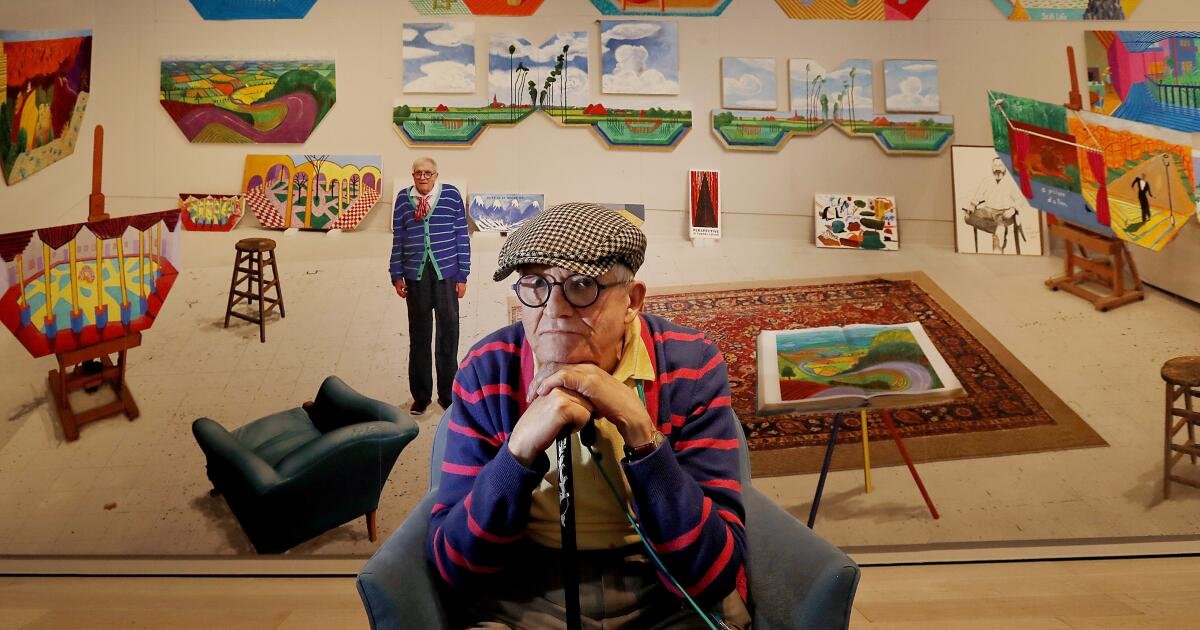
David Hockney, the innovative and prolific British artist who arrived in Los Angeles in 1964, soon celebrating its sun-drenched life and landscapes in colorful, wildly popular paintings, died Thursday at his home in London. He was 88.
His death was confirmed in a statement by his publicist Erica Bolton.
Calling himself “an English Los Angeleno,” Hockney immortalized the city’s sparkling swimming pools, palm trees and beautiful young men, then went on to experiment with intricate photo collages, portrait suites, painted and filmed images of Yorkshire landscapes, iPad drawings and more.
“Los Angeles will always be thought of by many people worldwide through the images that David created,” said Stephanie Barron, senior curator and head of the modern art department at Los Angeles County Museum of Art, which holds more than 150 works by Hockney in its permanent collection. “But for me one of David’s greatest gifts was his ability to look at the world with wonder and joy in whatever medium he decided to work in. … He was fearless in his embrace of technology, and I think that enormous curiosity ran throughout his career, and continued to the end. He was involved in looking at art history and the future simultaneously.”
Barron, who knew Hockney for 50 years, said LACMA staged more exhibitions of Hockney’s work during that time than any other artist. “David considered LACMA and the Tate his two museums,” she said.
Since his Pop Art paintings in the early ‘60s at London’s Royal College of Art, Hockney was rarely out of the limelight and, more importantly, rarely out of fresh ideas for how to draw, paint, film, print, photograph or otherwise express his creativity. The David Hockney Foundation owns more than 8,000 of his works, including about 200 sketchbooks, more than 230 self-portraits, opera designs and portraits of family and friends.
Hockney first visited Los Angeles in 1964 — attracted to its light and leisure and hopeful that it represented a less repressive atmosphere when it came to homosexuality. He moved officially to L.A. in 1976, and in 1978 he rented a multicolored home and studio complex nestled in the Hollywood Hills. There one might find a clutch of art world luminaries at the dining room table, a guest or two in the pool or on the bright blue porch, or, in the studio, a model for his newest opera set. The writer Christopher Isherwood and his partner, artist Don Bachardy, were among his many favored guests.
“For David in the 1960s, Los Angeles was an enigma — a unique city different from his native London or even from New York City where he had his first encounter with ‘America,’” his close friend and fellow artist Doug E. Roberts told The Times last year.
Hockney loved Hollywood — the people and the place — and liked to say he was brought up in England and Hollywood because of the time he spent at the movies. His peroxide blond hair reportedly was inspired when he was a student and saw Clairol TV ads claiming “blondes have more fun.” But it was his interest in everything from Elvis Presley to the Hubble Space Telescope and his sense of humor that set him apart. Time magazine art critic Robert Hughes once called him “the Cole Porter of modern art.”
He was open about being gay, even when homosexuality was outlawed in Britain. His early love affair with artist Peter Schlesinger, a younger man he met when teaching a summer drawing class at UCLA in 1966, inspired Hockney’s monumental 1972 painting “Portrait of an Artist (Pool with Two Figures),” a centerpiece of Jack Hazan’s 1974 film “A Bigger Splash.” The painting’s 2018 auction at Christie’s drew a record $90 million for a living artist.
He was a dedicated reader and student of art, paying homage in his work to Picasso and Cubism as well as to Monet, Matisse, Van Gogh and Cézanne. A lover of opera, he often had it playing loudly in the studio and enjoyed taking visitors on curated car trips through the Hollywood Hills or Malibu while listening to Wagner. He designed sets for major companies in Los Angeles, Chicago, New York, London and elsewhere over the years, and some of his set models were later shown in museums.
His solo shows drew enormous crowds to the Los Angeles County Museum of Art as early as 1988. In 2017 a major retrospective of his work, keyed to his 80th birthday, was presented at New York’s Metropolitan Museum of Art, Paris’ Centre Pompidou and London’s Tate Modern. Chronicling Hockney’s arrival as an important artist in the “ravishing” Met retrospective, the New Yorker writer Andrea K. Scott called it “a revelation.” It was, she wrote, “a retort to all the eye-rollers,” including herself, who dismissed his work “as, at best, a guilty pleasure.”
In 2012 he received the coveted Order of Merit, which Queen Elizabeth II presented to him at Buckingham Palace.
David Hockney was born the fourth of five children to a working-class family in Bradford, England, on July 9, 1937. He has said he started “making marks on paper” at 8 and received private painting lessons before moving on to Bradford School of Art in 1953. His father, Kenneth, was a pacifist and a conscientious objector in World War II, which made the family somewhat outcast in its small hometown. Hockney’s mother, Laura, was a devout Methodist who kept a detailed diary that later proved priceless to Hockney’s biographer, Christopher Simon Sykes, who noted that when Laura learned that Hockney was gay she wrote, “I commend my boy to God and leave it to Him to decide.”
The family supported their son in his passionate pursuit of art, and the first painting he sold was a portrait of his father in 1955. He later attended the Royal College of Art in London from 1959 until his graduation in 1962, receiving the school’s Gold Medal.
After college he did not slack off, noted Sykes. In his 2014 book, “Hockney: The Biography,” Sykes pointed out that the artist’s first flat had a chest of drawers near the bed on which he had painted, in large capital letters, the words “get up and work immediately.”
Hockney lived by that command for the rest of his life, turning out canvas after canvas, photo after photo. In the ’80s came his extraordinary multi-image photographic collages of friends including Isherwood and Bachardy and such landmarks as the Brooklyn Bridge, Grand Canyon and Pearblossom Highway.
“The Polaroids started oddly enough when I’d just finished a long period of work in the theater, which is of course playing with perspective and illusion,” he once told The Times. “People say, ‘You are a painter, and photography is a sideline.’ But nothing is a sideline for me.”
That included his continuing fascination with technology. The artist’s long career swept in artworks made not only on cameras and canvases, but on such things as fax machines and photocopiers. Hockney liked to experiment, whether it was with state-of-the-art printing devices or centuries-old painting techniques.
He went several times to a show of portraits by Jean Auguste Dominique Ingres at London’s National Gallery in 1999 and was greatly taken with the photographic quality of Ingres’ 19th century drawings. Certain that Ingres had used something optical to achieve that quality, Hockney bought himself a camera lucida, a small device that works like a prism. He then applied Ingres’ methods — as Hockney imagined them — to his own portraits of friends and family, and in 2001 he published “Secret Knowledge,” exploring his theories on early artistic uses of optical devices.
The artist was an accomplished draftsman, and drawings accompanied nearly every step of his career. He had his inside jacket pockets tailored to accommodate his large drawing tools of sketchbooks, pencils and, later, an iPad. In 2010, the first of several Hockney iPad drawings graced the cover of the New Yorker, and many have been featured in the artist’s exhibitions since then.
Hockney went home to England for Christmas for 30 years, often visiting his mother in the coastal town of Bridlington. It was just a few hours away from Bradford, where, as a teenager in the 1950s, Hockney would ride his bicycle to work in the fields.
In 1997, when his good friend Jonathan Silver was dying, Hockney stayed in Yorkshire for four months. It was Silver, Hockney told The Times, who suggested he paint Yorkshire again, something he hadn’t done since he was a student.
By 2005, Hockney was painting the countryside en plein air, his easel — or, sometimes, easels — set up outdoors in the midst of what he was painting. When his paintings grew larger, he would add more canvases, resulting in paintings of nine or more canvases. Later he equipped a Jeep with nine small carefully mounted high-definition cameras to film Yorkshire’s rolling hills, trees and skies, then showed the films on multiple screens for friends and, later, in exhibitions.
Based in Bridlington in the family home, with a huge studio a few miles away, Hockney went on to paint Yorkshire in every season, a project he knew would take him a long time to complete. “As we say in Hollywood,” he would quip, “I’m on location.”
Hockney returned to Los Angeles full-time in 2013 but hardly slowed down. “Most people die of boredom,” he said in 2018. “I’m not bored yet. I’m still curious. I’m still excited by pictures. I say that when I’m in the studio, I feel like I’m 30, but when I leave it, I know I’m 80. So, naturally, I stay in the studio.”
As his hearing worsened, he left his home less. Rather, he brought the world to him, inviting painting, photography and film subjects to perform for his camera or sit for portraits in his studio.
At 82, he also set up a studio in France, a country he felt was more hospitable to smokers like himself, and rented a large home in Normandy. He told reporters he wanted to be closer to the Bayeux Tapestry, his favorite artwork, where he could create work inspired by the tapestry and which he hinted might be his swansong. “It is going to be marvelous,” he told the Art Newspaper. “I can’t think of anything better than to watch the arrival of spring in Normandy in 2019. Van Gogh would have loved it.”
Entertainment
Kiefer Sutherland’s Uber Driver Sues Actor for Threatening, Punching Him During Ride


Kiefer Sutherland is being sued by his Uber driver for assault and battery for the alleged L.A. incident that ended with the actor’s arrest.
According to court docs, obtained by TMZ … Uber driver Rafael Manvelyan says Kiefer was “visibly intoxicated” on January 12 when he picked up the actor.
Rafael — who says his English is limited because he primarily speaks Russian and Armenian — claims Kiefer got “agitated” when the actor was struggling to understand him.
The lawsuit claims Kiefer became “increasingly hostile, aggressive, confrontational” during the ride, allegedly yelling and being verbally abusive.
The driver says the “24” star threatened to kill him and started attacking him while he was driving, claiming Kiefer repeatedly hit him “with closed fists” in his head, face, neck and upper body.
Rafael claims Kiefer also put him in a chokehold and continued threatening to kill him. The driver says he managed to get out of the car and start running away … but alleges the actor followed him down the street yelling, “I’m going to kill you.”
Rafael says his dashcam caught at least parts of the alleged assault, but adds there were also witnesses who saw the scary scene go down.
The driver says he suffered injuries to his head, face, neck, spine and shoulder. He says cops who responded to the scene could see his forehead was bruised and swelling.
Rafael’s lawyer, Mitra Sabouri, tells TMZ in a statement … “Mr. Manvelyan is a private citizen who did not seek public attention. He filed this action to pursue legal remedies for the injuries and damages he alleges he suffered.”
Sabouri continued … “Out of respect for his privacy, we are not releasing the dashcam footage, and we will allow the facts and evidence to be addressed through the court process.”
Entertainment
Peloton Scrubs Hudson Williams Videos Amid High School Photo Backlash
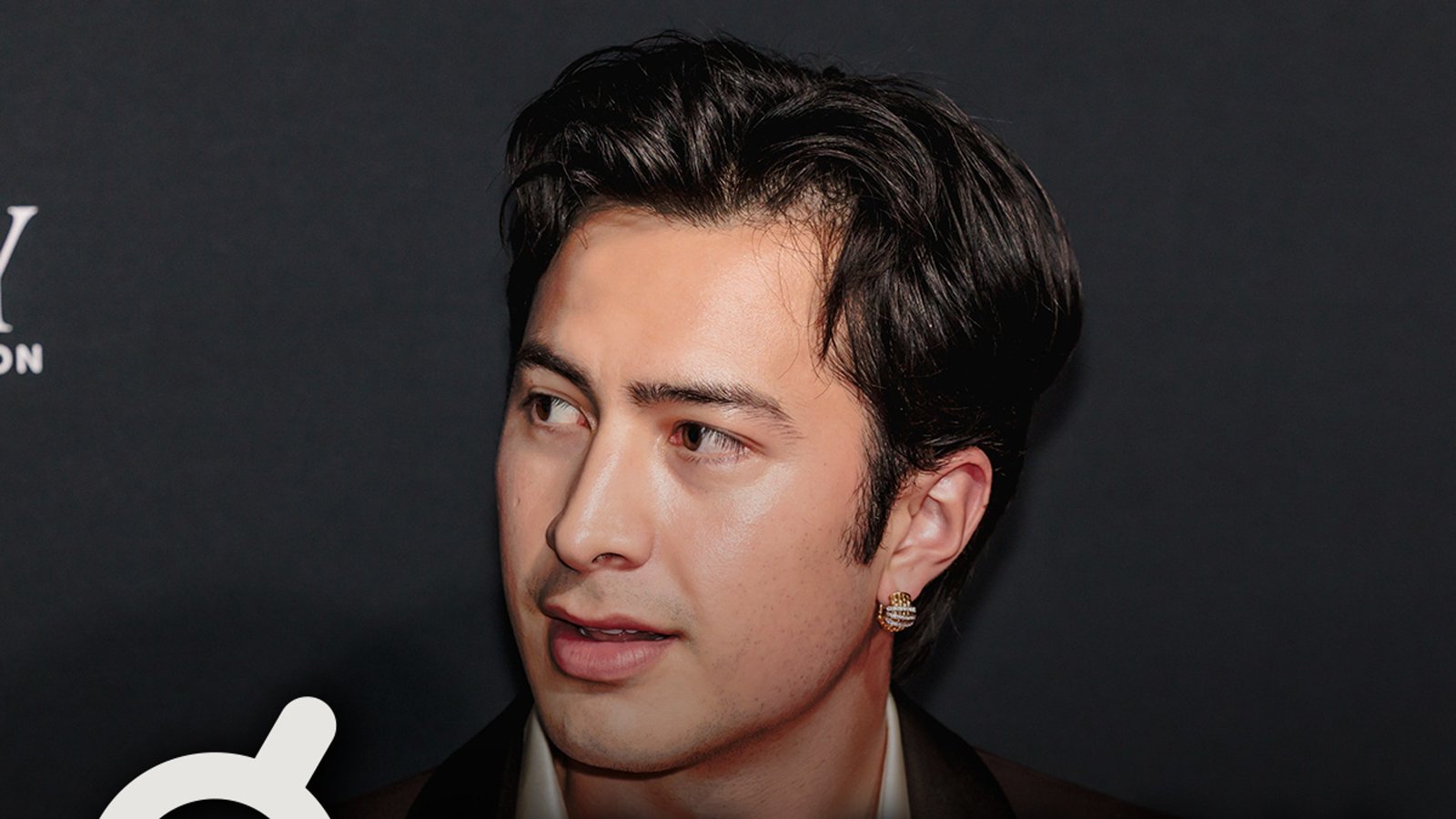
Hudson Williams’ high school swastika photo appears to have caused a stir … with Peloton scrubbing the actor from their social media after the image resurfaced online … TMZ has learned.
Posts on Peloton’s social media, including Facebook and YouTube, that used to feature Hudson are no longer active and take users to a broken link.
As we first reported, sources close to Hudson insisted he had no clue what was being drawn on him at the time … claiming the symbol was scribbled on by other intoxicated teens during an annual “campout” prank.
A friend of Hudson’s told TMZ, “The markings do not and have never reflected Hudson’s beliefs, values, or character.”
Actor Simu Liu also defended Hudson, saying … “The internet is insane. Bad actors are everywhere. If you’re here, be careful. Be smart.”
On social media, people claiming to have attended school with Hudson have defended him too … claiming lots of peers had offensive drawings on their faces during the annual camp outing.
Several users on X have also come to the actor’s defense. “I Stand With Hudson Williams” has become a trending topic on the platform, with fans voicing their support.
Entertainment
Washington National Opera sues to force Kennedy Center to turn over $17M in gifts

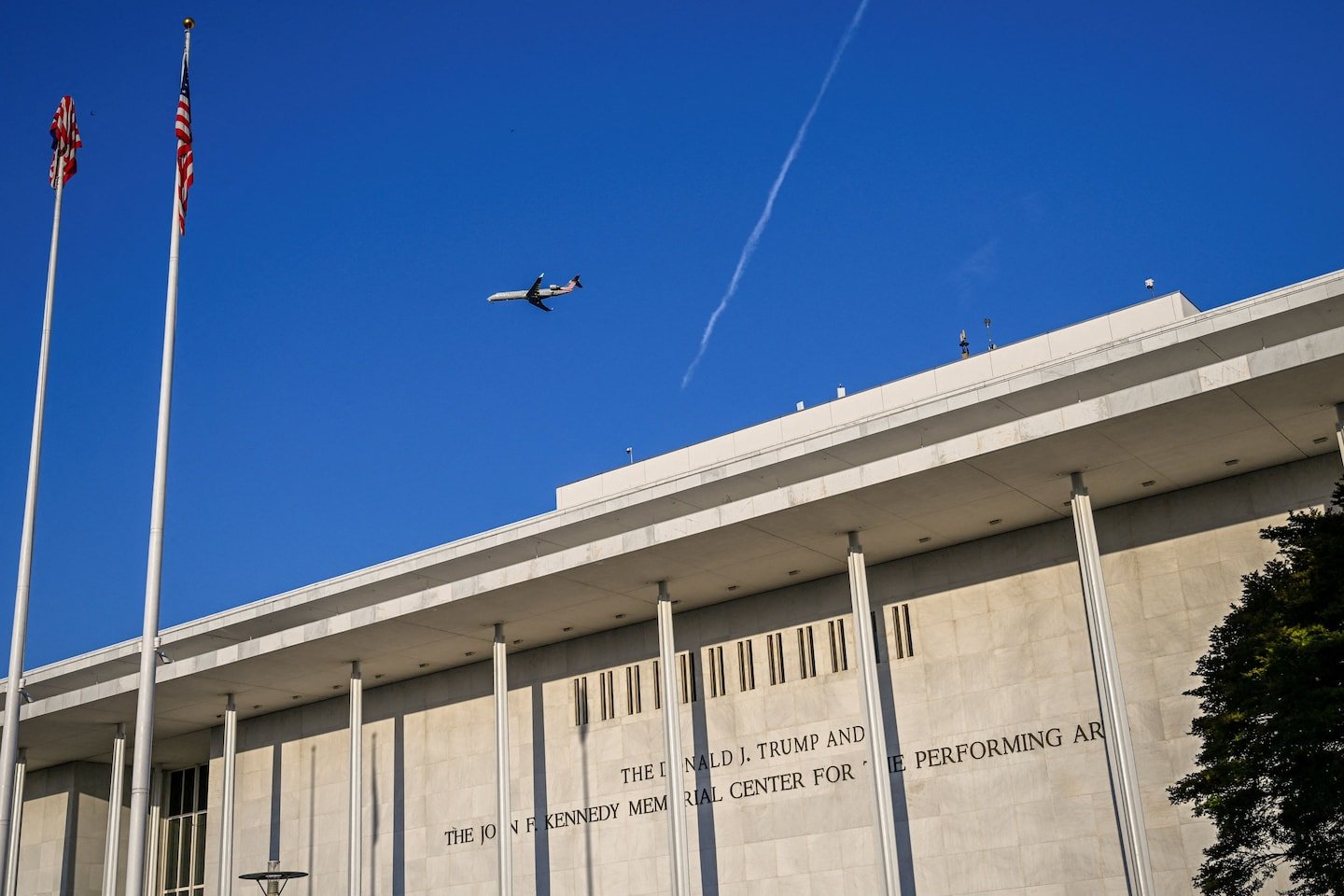
The opera filed a lawsuit Thursday alleging the Kennedy Center illegally took years’ worth of donor gifts, bequests and endowment funds. The two parties cut ties in January.
June 12, 2026 at 12:18 p.m. EDTToday at 12:18 p.m. EDT
The Washington National Opera on Thursday filed a lawsuit seeking to force the Kennedy Center to turn over $17 million in gifts and donations to the opera company.
The Kennedy Center has “wrongfully held” years’ worth of donor gifts, bequests and endowment funds that belong to the opera, according to the complaint filed in the U.S. Court of Federal Claims, five months after the two institutions ended a roughly 15-year affiliation.
Entertainment
All of ‘Moving Pictures’

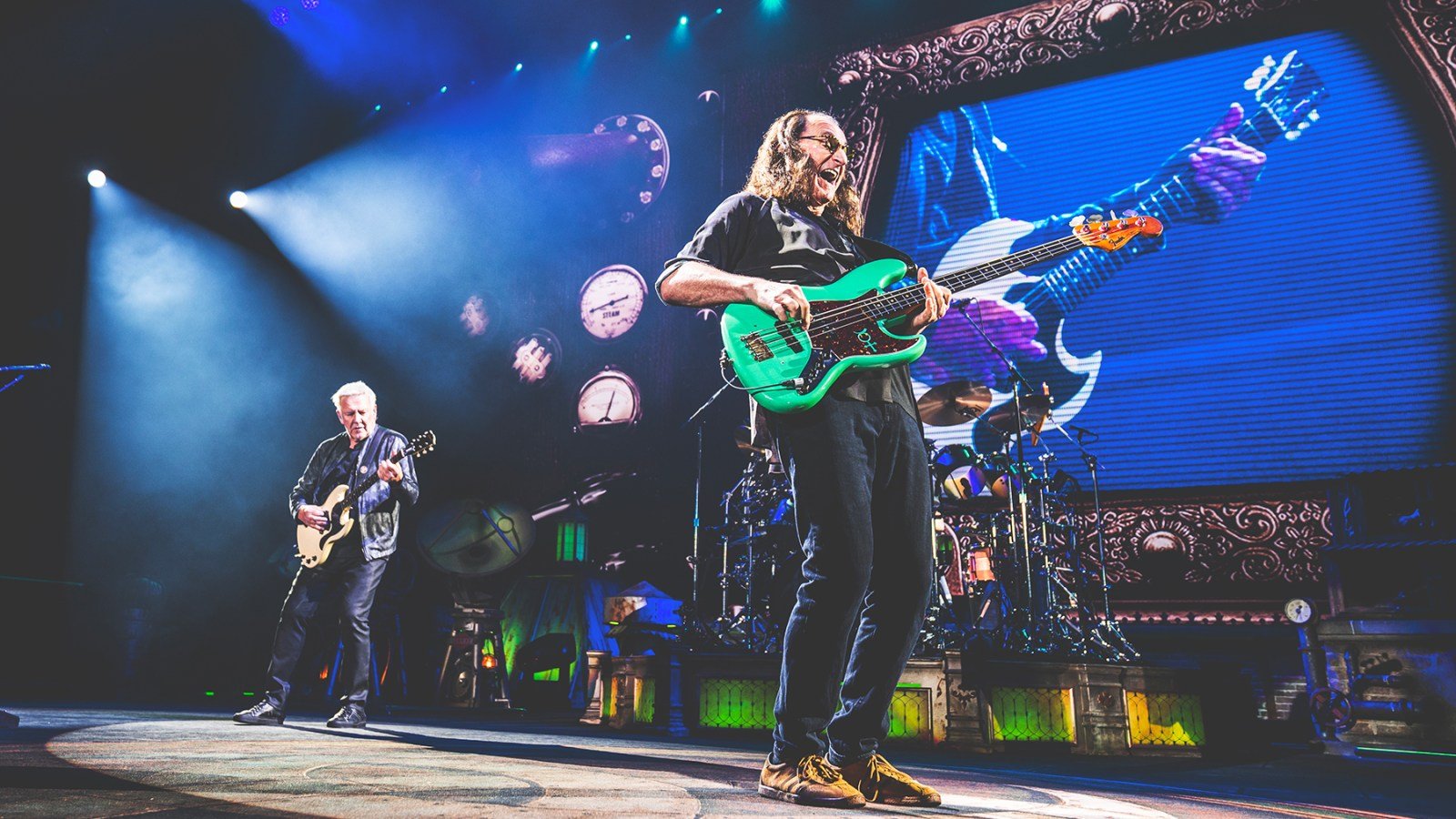
Towards of the end of the third show of Rush‘s Fifty Something Tour, the band experienced something nearly unimaginable for one of the most technically proficient and perfectionist acts of the rock era — a full musical train wreck that stopped the overture to “2112” right in its progged-out tracks. But no one actually made an instrumental mistake. Instead, two minutes in, Geddy Lee‘s bass went dead, and he whipped it off his shoulder, heading backstage for a replacement that failed to immediately arrive.
It took his bandmates a while to notice, leading to a brief, fascinating guitar-and-drums-only rendition of the track from Alex Lifeson and new touring drummer Anika Nilles. Finally, Lifeson became aware of the silence of the Geddy and signalled Nilles to stop, which felt a bit like trying to halt a Terminator mid-kill. “We’re going to take a break,” he said, looking genuinely nonplussed. Within seconds, Lee had a new instrument, and the band started again, hitting even harder.
A few hiccups for Rush in their first tour in 52 years without the late Neil Peart would be understandable, but the band’s 70-something co-founders and their new touring drummer are apparently more indefatigable than their own equipment. Here’s a look at a few key moments from Thursday night’s show at Los Angeles’ Kia Forum:
After playing the entirety of the first side of 2112 the night before, Rush brought out all of their most beloved album, 1981’s Moving Pictures, in order, at the beginning of set two. Since they had already played all but one track from Moving Pictures over the first two shows, this meant only one tour debut, an extraordinary rendition of the most sprawling and underrated track on the album, “The Camera Eye.”
In a rare and welcome moment of rearrangement for the band, keyboardist Loren Gold added some lyrical piano to the beginning, before the pulsing synths arrived. Lee once described some of the band’s early work as “soundtracks for movies that don’t exist,” and this performance was a reminder of how well “The Camera Eye” fits into the category. The instrumental passages, with their almost Neu!-like feel, viscerally evoked a sense of movement. Nilles was astonishing on her first-ever live performance of the song, somehow mastering its serpentine intricacies on top of the other 40 or so epics she’s absorbed. Throughout the rest of the album, meanwhile, you could hear her making subtle refinements, including laying back deeper into the groove of “Tom Sawyer.”
Editor’s picks
Aimee Mann came back for a third performance of “Time Stand Still.” Mann only spent a couple days with the band back in 1987 when she sang on the studio version and popped up in the (very Eighties) music video, and then somehow never sang it with them again until this week. With each performance, she seems more and more excited to be onstage with the band, exchanging smiles with Lee and relishing her harmonies with him. The performance of one of Peart’s most personal songs is paired with video from throughout his life, and under the circumstances, hearing his lyrical plea to “freeze this moment a little bit stronger” is unbearably poignant every time.
The band debuted a killer “New World Man” for the first time since 2002. Eighties Rush is a beast of its own, with walls of synths and an evolving approach from Peart, who began to embrace polyrhythms and reggae à la his friend Stewart Copeland. If anything (not to be greedy), this tour could use even more of that sometimes unfairly derided era — “Force Ten” and “The Big Money” would be particularly welcome. But it was a kick to hear Nilles show off her ability to take on every step in Peart’s evolution, seamlessly taking on the track’s radically different feel, without feeling the need to match every hi-hat pattern.
Lee’s voice is holding up. After 11 years off the road, the frontman changed his vocal approach via coaching, somehow shaving decades of wear off his voice. But even Lee himself must have wondered if he could keep it going under actual touring conditions. So far, the answer is yes, and if anything, he’s getting stronger from night to night. On the evening’s second song, “Dreamline,” he went as far as to take the chorus up an octave, just for fun, an unmistakable sign of renewed vocal swagger.
Related Content
Lifeson is having fun. From the beginning of the run, Lee’s joy was palpable — he keeps literally jumping for joy, getting some serious air for a 72-year-old, which has got to be making the tour’s insurers slightly nervous. Other than his nightly stand-up routine at the mic (he’s claimed he got into a fight with Paul McCartney and talked about a clip of a dog and a goat on Instagram), Lifeson seemed a bit more reserved the first two nights, focusing on nailing his parts. But he loosened up on night three, moving more around the stage, mugging for the cameras with his old friend, and stepping out even harder on his solos.
Trending Stories
Rush Setlist: June 11, 2026
Set One:
“Xanadu”
“Dreamline”
“Subdivisions”
“Headlong Flight”
“Bravado”
“Red Sector A”
“La Villa Strangiato”
“Anthem”
“New World Man”
“The Spirit of Radio”
Set two:
“Tom Sawyer”
“Red Barchetta”
“YYZ”
“Limelight”
“The Camera Eye”
“Witch Hunt”
“Vital Signs”
“Time Stand Still”
“Closer to the Heart”
“2112 Part I: Overture”
“2112 Part II: The Temples of Syrinx”
“2112 Part VII: Grand Finale”




The crazy costs at this year's World Cup. #WorldCup #Football #Soccer #CostOfLiving #BBCNews


What are the costs and challenges facing World Cup 2026? | BBC News
The World Cup has officially kicked off this week – but alongside the football, there are questions around heat, cost,...

SpaceX IPO: Musk now has more money than Taiwan's GDP
SpaceX went public Friday, with shares trading at just above $150 in a hotly anticipated initial public offering that values...

The world's first trillionaire and how he built his fortune. #BBCNews

Brooklyn funeral home hosts Knicks watch party
Knicks player Karl-Anthony Towns has opened up about his late mother in the post-games of the NBA Finals. It inspired...


CNN tours a controversial oil facility in California
CNN's Elex Michaelson went on an exclusive tour to the Sable Offshore Oil Corp. facilities with US Energy Secretary Chris...

Mass shooting suspect dead after hourslong standoff in Texas
About a dozen people were shot and at least one killed in a mass shooting in Midland, Texas, according to...


Air India crash victims demand answers | Global News Podcast
Relatives of those who died in the Air India plane disaster have been marking the first anniversary by keeping vigil...
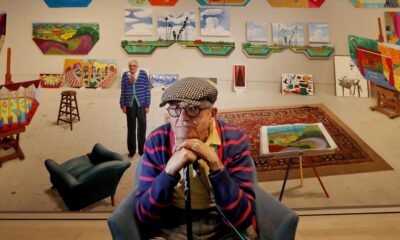

David Hockney, whose art celebrated sun-drenched Los Angeles, dead at 88
David Hockney, the innovative and prolific British artist who arrived in Los Angeles in 1964, soon celebrating its sun-drenched life...


Kiefer Sutherland’s Uber Driver Sues Actor for Threatening, Punching Him During Ride
Kiefer Sutherland is being sued by his Uber driver for assault and battery for the alleged L.A. incident that ended...
-
 Politics2 days ago
Political News and Conservative Analysis About Congress, the President, and the Federal Government
-
 Politics1 day ago
What to know about the stabbing that set off fiery riots in Northern Ireland
-
 BBC News World22 hours ago
Why the economics makes this the craziest world cup ever
-

 LifestyleNews1 week ago
120 minutes of strength training per week may help extend lifespan
-
 BBC News World4 days ago
Backrooms and Obsession: How two low-budget horror films caused a Hollywood earthquake
-
 Entertainment12 hours ago
Taylor Swift Seems to Brush Off Jimmy Jam at Songwriters Hall of Fame
-
 Video3 hours ago
Download fans say what they love about the festival. #DownloadFestival #BBCNews
-
 India Top Stories Feeds11 hours ago
India news: FM blasts Europe criticism of buying Russian oil