
LifestyleNews
The golden hour: Why every minute counts during a heart attack

Heart attack symptoms don’t always follow a predictable pattern, making it crucial to understand how long they can last and when to act. According to Dr Parin Sangoi, Consultant Interventional Cardiologist at Wockhardt Hospitals, Mumbai Central, timely recognition of symptoms can significantly reduce heart damage and save lives.
How long does a heart attack usually last?
“A heart attack can last anywhere from a few minutes to several hours,” says Dr Sangoi. “In many cases, symptoms build gradually rather than appearing suddenly.”
He explains that some individuals may experience discomfort that comes and goes over a day or two before a major episode. “Classic symptoms like chest pressure, heaviness, or pain lasting more than 15–20 minutes should never be ignored. Even shorter but recurring episodes need immediate attention,” he adds.
DISCLAIMER: This article is based on information from the public domain and/or the experts we spoke to. Always consult your health practitioner before starting any routine.
Does duration affect heart damage and survival?
Yes, and significantly so. “The longer the heart muscle is deprived of oxygen, the greater the damage,” explains Dr Sangoi. When blood flow is blocked, injury begins within minutes and continues to worsen over time.
“The first hour is often called the ‘golden window.’ If treatment is given during this period, we can restore blood flow, limit permanent damage, and improve survival outcomes,” he notes.
ALSO READ | Diabetologist shares case of 35-year-old who collapsed suddenly
 How long does a heart attack last (Photo: Freepik)
Heart attack vs mild discomfort
Story continues below this ad
“Heart-related pain typically feels like pressure, tightness, or squeezing in the chest,” says Dr Sangoi. “It may spread to the arm, jaw, neck, or back and is often accompanied by sweating, breathlessness, nausea, or a sense of unease.”
In comparison, muscle pain or acidity usually improves with rest or medication. “If symptoms persist or worsen, it’s important to treat it as a medical emergency,” he advises.
Can heart attacks be silent or prolonged?
“Yes, some heart attacks can be ‘silent,’ presenting with very mild or unusual symptoms like fatigue or slight discomfort,” warns Dr Sangoi.
These cases are particularly dangerous because they often go unnoticed, delaying treatment. “Even without dramatic symptoms, damage can still occur. Awareness and timely check-ups are crucial, especially for high-risk individuals,” he adds.
Story continues below this ad
DISCLAIMER: This article is based on information from the public domain and/or the experts we spoke to. Always consult your health practitioner before starting any routine.
LifestyleNews
Beyond Sushi: A meat lover’s guide to the best hidden izakayas in Tokyo
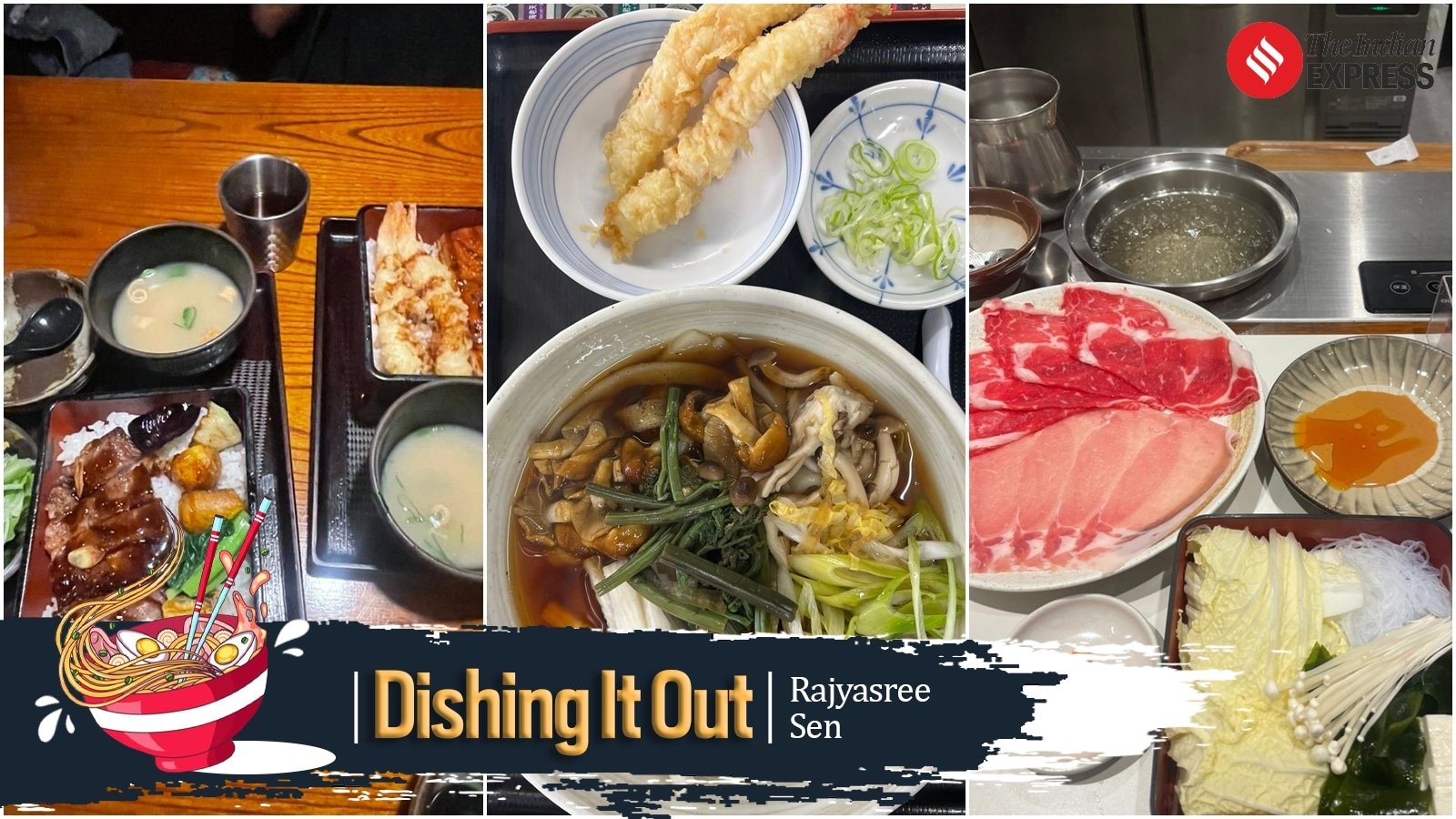
There’s so much to love and appreciate about Japan. But I’m going to restrict myself to the food for this column. The Japanese way of being and living, which you see whenever you look around the room or step out on the street or into a shop – quiet, understated, without a jarring aspect, calm and beautiful – is there in all it offers up in its food as well, with a more-than-healthy serving of taste.
And I am proud to say that in nine days in Japan, I didn’t eat a single piece of sushi. But boy, did I eat a lot of everything else. Our trip began in Tokyo, where we spent the majority of our time, and next week I will write about the food capital of Japan – Osaka. But for now, let me sing the praises of Tokyo and tell you what to eat where.
Finding Tokyo’s real flavours
First off, if you are one of those people who need to eat dal chawal even while travelling abroad, you should not read any further. If you are one of those people who believe that you learn about a country or place through its food, read on. It is impossible to have a bad meal in Tokyo – whether at a small izakaya or at a fancy 5-star. Although I would recommend that you avoid the latter, because there’s so much to experience on the streets of Japan. Go where the locals eat. That should be your guiding light.
So here’s what I ate and some tips of the eating trade. It is serious business after all. On our first day in Tokyo, we went to Omoide Yokocho in Shinjuku. A small set of slim alleys lined by tiny izakayas, there are around 80 of them, which seat 6 or 7 people at most, and are run by just one man or a woman. Omoide Yokocho is also known as Memory Lane. These are neat, simple-looking little eateries – serving anything but simple flavours.
These are mostly ramen and yakitori joints, which also serve highballs and whisky, not to mention the most delicious wagyu ever. You sit at a counter facing forward, next to each other, looking at the chef, and you choose the gyu-kushi (beef skewers) or yakitori (chicken skewers). This is then served to you, and you grill it for barely 2 minutes on a piping-hot grill, dip it in some soy, and feel blessed.
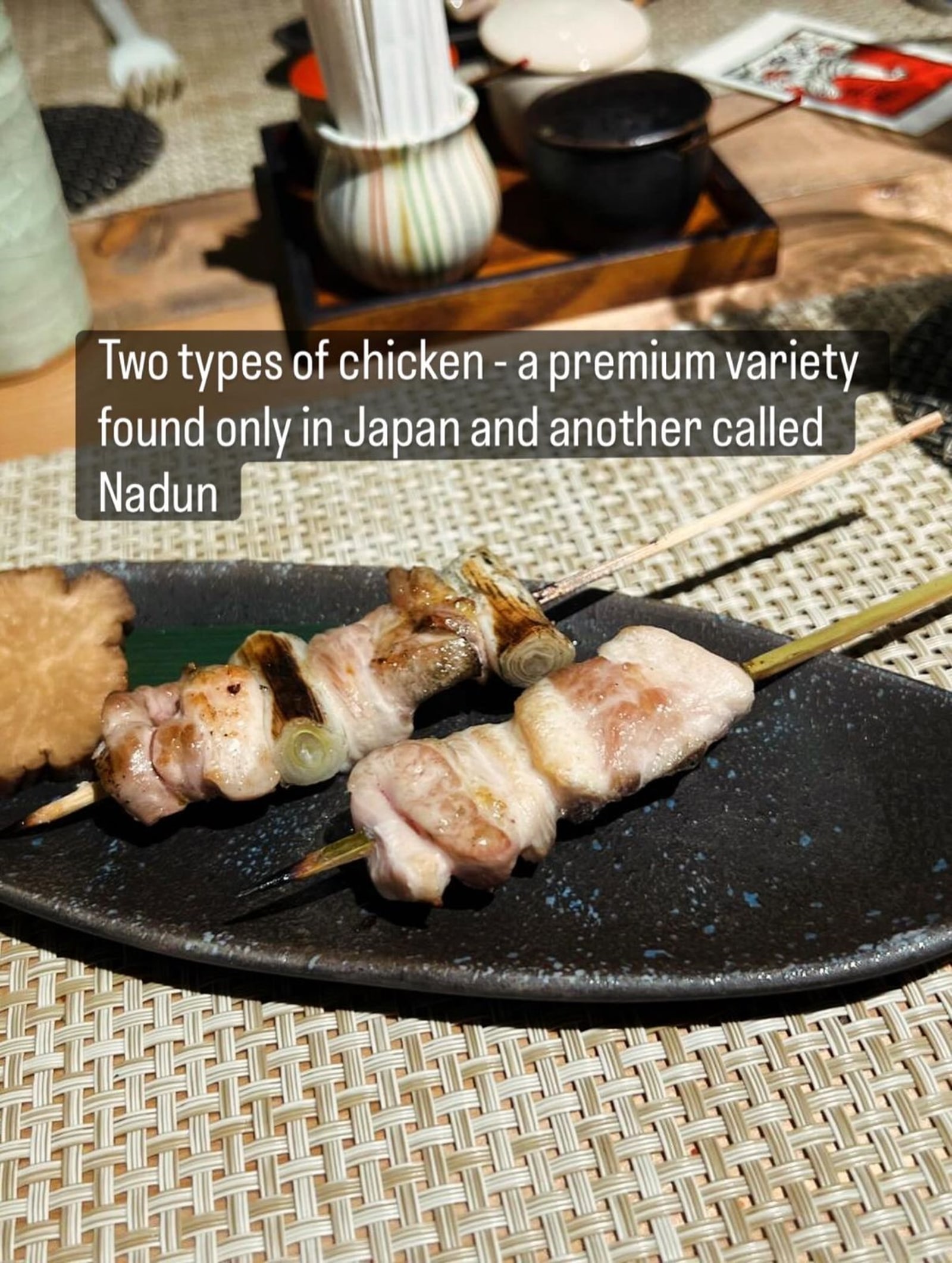 (Photo: Rajyasree Sen)
Most of these joints only take cash, but the Japanese trust your word so much that if you realise you have no cash on you, they ask you to finish your meal and then send you to the ATM down the road to bring them their payment. Nothing is more expensive than a couple of hundred yen, that’s Rs 100 or Rs 200.
Tiny alleys, massive taste
In the evening, for another taste of Tokyo life, trot over to the bars at Shinjuku Golden Gai. Located in Kabukicho, Golden Gai is a network of six narrow alleys, with over 200 tiny shanty-style bars. I’d go to Golden Gai to walk around, take a look at the very cute tiny bars – some of which can seat just 4 or 5 people – and have one drink at most. Again, carry cash as most places don’t accept cards.
Story continues below this ad
If you want to see a hipper but history-steeped part of Tokyo, you should definitely head to the Showa Era open-air bars under the flyover in Ginza. A line of restaurants frequented by locals, serving up local Japanese delicacies. These are not fancy restaurants, but you’ll definitely get delicious food here.
One of our finest meals was at the Edo Period-inspired Tokuro Izakaya, which had the most delicious beef rice and unagi rice, and a sashimi platter that we couldn’t even finish. It looks like you’ve entered a traditional Edo-period home, with Japanese-style seating.
The ritual of Shabu Shabu
A visit to Tokyo would not be complete without trying Shabu Shabu, which is what we had at Shabu Sen in Ginza. Shabu Shabu is a dish featuring thinly sliced beef and pork, which is boiled in beef broth at the table. You sit facing the restaurant’s central island, alongside each other. The focus is on the food.
You are served a platter of meat and vegetables, along with sesame and ponzu sauces, at the table. You add hot sesame oil to the sesame sauce. Add grated radish and green onions to the ponzu sauce. And then you swish the meats and mushrooms around in the boiling-hot pot, dip them in the sauces if you wish, add them to your rice, and thank the Japanese gods. The term “shabu shabu” is an onomatopoeia, derived from the sound made while cooking the produce.
Story continues below this ad
All these restaurants aim to make their food easy to understand and accessible to tourists. While Japanese families surrounded us, we were still handed a detailed English instruction manual on what we had ordered and how to eat it, leaving no room for confusion.
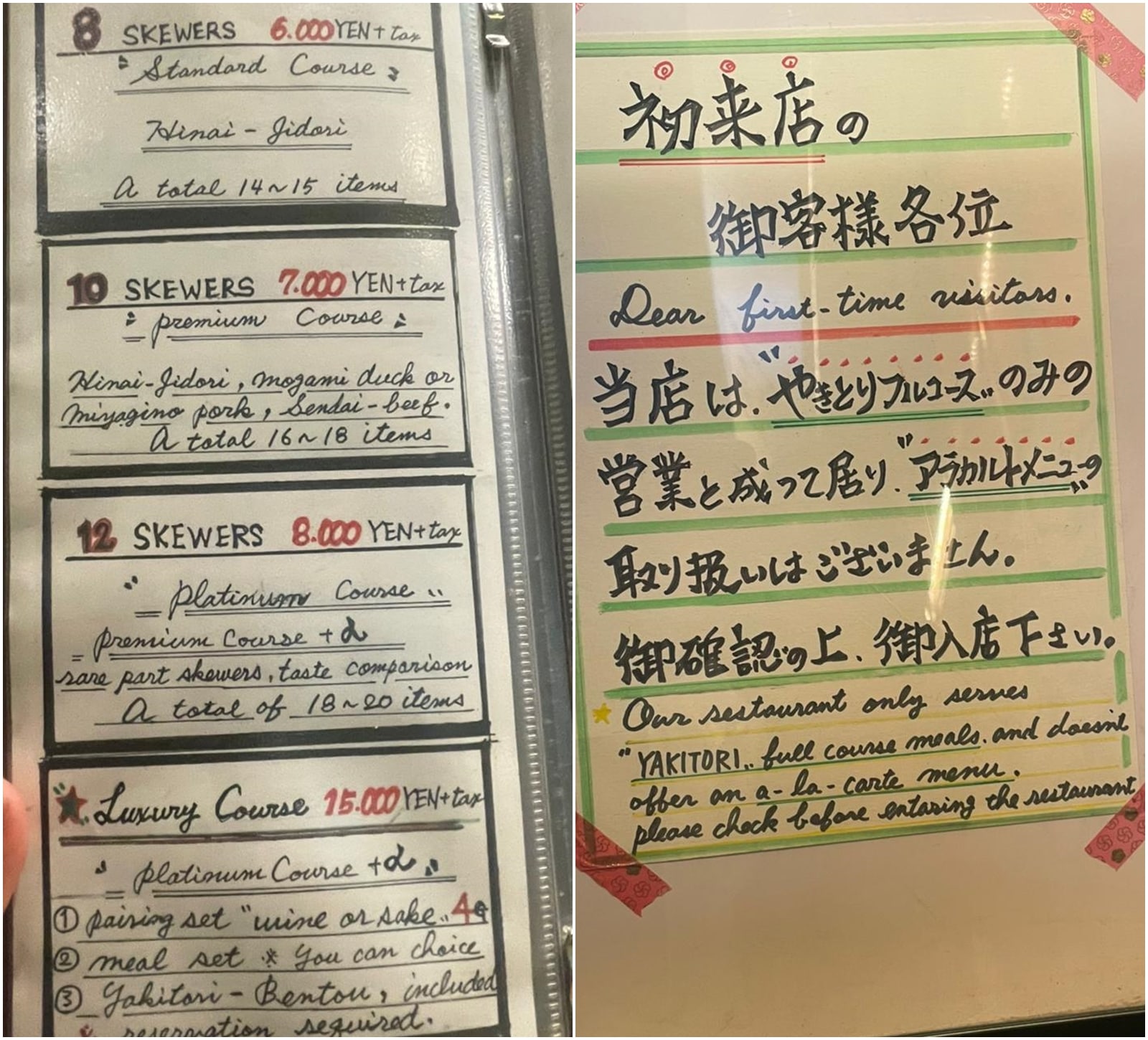 Torihan is a small yakitori restaurant run by an old couple in their Seventies. (Photos: Rajyasree Sen)
Our last supper in Tokyo was a true celebration of Japan’s attention to detail and its belief in keeping things simple. Torihan is a small yakitori restaurant run by an old couple in their Seventies. But beautifully designed, with cloak hangers and a box for your handbags – each piece of crockery used was lovely, and the food! Never has chicken tasted so good. We did 10 skewers for 8,000 yen. What I discovered is that, in India, we use the word yakitori to mean any Japanese grilled skewer, but in Japan, it means chicken skewers. Never has the chicken been so celebrated.
Of the courses I remember, there were so many, we started with the chicken pâté, and chicken chest on toast. Chicken breast skewers, skewers of meat from under the chicken wing and chicken gizzard, followed by chicken heart and chicken liver, a skewer of chicken meatball which looked like a seekh kebab with a poached egg and charred bell pepper, chicken neck skewers and chicken wing, perfectly braised duck, and wagyu to end the meal with. Each course was explained to us by the proprietor, and the only two people preparing food and serving it in the restaurant were the husband and wife.
ALSO READ | A tailor by day, a bar by night: The hidden world of Delhi’s Speakeasy scene
We had the best Pork Ramen at a local stall, which we chanced upon, where no one spoke English, there were no forks, and you paid Rs 400 for what turned out to be the most fabulous ramen possible. Even in small restaurants churning out food to hundreds of tourists, the soba noodle soup and prawn tempura are fabulous. And presented beautifully.
Story continues below this ad
My favourite discovery was the Chicken Karaage! Japan’s version of crumb-fried chicken, which you can even pick up at the corner 7/11 store. Twice-fried, boneless chicken thighs are marinated in soy, ginger, mirin, and sake, then crumbed and fried. I have never had such succulent, tasty fried chicken.
Michelin-rated Unagi
My last hurrah, though, was at the Narita airport, where I decided to eat even though I was stuffed. And tried the unagi or eel at the Michelin-rated Unagi Yondaime Kikukawa Global Gate restaurant, which was opened by a local eel seller way back in 1932. This was the best unagi I have had, that too for a princely sum of Rs 1,000!
Grilled over high-heat charcoal, the eel has a crispy, fragrant outer layer and a soft, juicy interior. This is a Kabayaki-style grilled eel experience: the eel is butterflied, skewered, grilled, and then glazed with a sweet, savoury soy-based sauce, which you eat with rice.
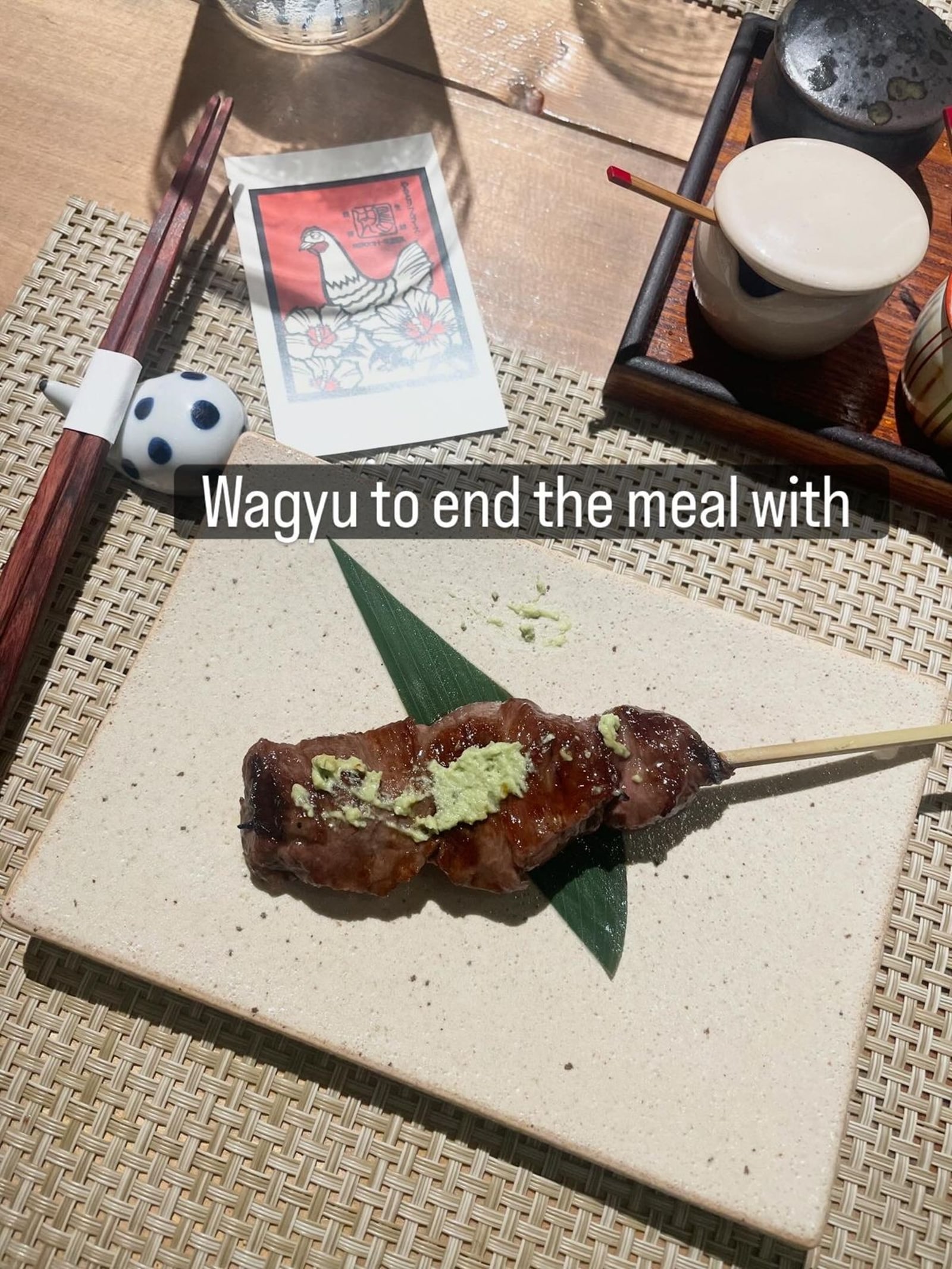 (Photo: Rajyasree Sen)
As I said, it is impossible to have an average meal in Japan. I do think the cuisine is not geared towards vegetarians – most broths are meat or fish-based. The vegetarian staple is tofu. But if you do eat meat, this is the country for you. Minimal, if not zero, spices, a celebration of the produce, and lightly grilled food, beautifully presented, at ridiculously affordable prices. What’s not to love?
Story continues below this ad
A few tips and points of appreciation – the country is obsessed with iced water, and even the smallest or most local restaurant will have jugs of iced water for customers. You are not supposed to tip in restaurants, as the Japanese believe they are paid well enough not to depend on tips to get by. Always check whether the restaurant accepts cards or cash before sitting down, even though they seem very happy to let you eat and then go pick up cash to pay them post-facto. How civilised.
All in all, I can only say: Arigato, Tokyo, you have fed me well.
Next week, I’ll be writing about my travels through “Japan’s Kitchen,” the nation’s street-food capital, Osaka. And what you definitely must try while there.
LifestyleNews
Veteran actor Ranjeet shares a glimpse of his workout at 84: ‘Toh hamesha fit rahuga…’

Actor Ranjeet, 84, recently shared a glimpse of working out with his daughter Divyanka Bedi, who happens to be his coach as well. “Ayeee… Agar aisa hi workout karuga, to hamesha fit rahuga… tnx to my coach & daughter,” (If I keep working out like this, I will stay fit…) he shared on his Instagram.
DISCLAIMER: This article is based on information from the public domain and/or the experts we spoke to. Always consult your health practitioner before starting any routine.
In the video, he can be seen doing a standing cable chest fly, where the handles are brought forward and together in front of the chest to work the pectoral muscles. “For individuals in their 80s, this exercise can be beneficial when done with proper care. It helps improve chest strength, which supports daily movements like pushing and getting up, and also enhances shoulder mobility by maintaining range of motion. Additionally, it contributes to better posture by preventing rounded shoulders and is relatively low-impact, making it more joint-friendly compared to heavier exercises,” said consultant dietitian and fitness expert Garima Goyal.
However, safety is extremely important at this age. The exercise should always be done with very light resistance, controlled movements, and without overstretching the arms. “It should be stopped immediately if there is any pain or discomfort, especially in the shoulders,” Goyal said.
From a practical perspective, while cable chest fly can be included occasionally, the main focus for people in their 80s should remain on walking, balance training, light strength exercises, and joint mobility to maintain overall functional independence, as Goyal noted. “Even simple exercises like light strength training, resistance band work, and functional movements can make a huge difference. They help in preserving muscle mass, improving bone health, and reducing the risk of falls,” said Goyal.
View this post on Instagram
Hailing his efforts, Goyal said that what stands out is not the intensity, but the consistency and intent. “At this age, the goal is not six-pack abs or heavy lifting. It’s about maintaining mobility, muscle strength, balance, and independence. And that’s exactly what his routine reflects,” said Goyal.
 Walking is beneficial (Photo: Freepik)
Training in the presence of a trainer and family member is also very important. “It ensures safety, correct form, and motivation. For older adults, supervised workouts reduce the risk of injury and build confidence,” mentioned Goyal.
Also Read | Kareena Kapoor’s fitness trainer praises actor’s efforts, says ‘that jawline isn’t gifted’
According to Goyal, from a health perspective, staying active at 84 is not just about fitness; it’s about quality of life. Regular movement supports better joint health, improved circulation, and even mental well-being. “The biggest takeaway here is that it’s never too late to start. Fitness doesn’t have an age limit. It just needs to be adapted to your body, your capacity, and your lifestyle,” said Goyal.
Story continues below this ad
DISCLAIMER: This article is based on information from the public domain and/or the experts we spoke to. Always consult your health practitioner before starting any routine.
LifestyleNews
‘How do I know if I had an early miscarriage or a period?’

An early miscarriage can feel like a heavier or more painful period (Images: Pexels)
A delayed cycle, heavier bleeding, or cramps that feel more intense than usual can make you pause and question what your body is going through. When something doesn’t feel like your usual period, the uncertainty can be hard to ignore. A similarly stressed netizen posted this query on Quora: How do I know if I had an early miscarriage or just a period? So we decided to dig deeper and find a medically rooted answer.
According to Dr Pooja Chaudhary, Consultant – Obstetrics, Gynaecology, and Laparoscopic Surgery at Motherhood Hospitals, Greater Noida, the difficulty lies in how closely the symptoms can resemble one another in the early weeks.
DISCLAIMER: This article is based on information from the public domain and/or the experts we spoke to. Always consult your health practitioner before starting any routine.
When it feels different from your usual period
The confusion is natural; however, Dr Chaudhary points out that “an early miscarriage can feel like a heavier or more painful period,” often accompanied by “stronger cramps, larger clots, and sometimes tissue-like discharge.” These signs can make a cycle feel noticeably different, but they don’t always offer a clear answer on their own.
Why it’s easy to mistake one for the other
 An early miscarriage may involve heavier bleeding than usual, larger clots or tissue, and stronger, more persistent cramping than a typical period (Image: Pexels)
Part of the confusion also comes from timing. An early miscarriage can often be mistaken for a heavy or delayed period, especially before a pregnancy is confirmed. “In many cases, it is quite common, and many women may not even realize they were pregnant,” which is why the experience may simply pass as an unusual cycle.
Signs that may point towards a difference
There are some patterns that may stand out. “An early miscarriage may involve heavier bleeding than usual, larger clots or tissue, and stronger, more persistent cramping than a typical period,” Dr Chaudhary notes.
However, since the symptoms can overlap, a pregnancy test or medical check is the “only reliable way” to confirm.
Story continues below this ad
Also Read | ‘Why do I continue to bleed after my period, and why is the blood dark brown?’
When to seek medical attention
Because of this overlap, paying attention to how your body feels is important—especially if symptoms are intense. Dr Chaudhary advises to seek medical attention if the bleeding is very heavy (soaking a pad every hour), severe pain, fever, or dizziness occurs, and also to consult a doctor “if you had a positive pregnancy test or if there is any doubt, to confirm and ensure there are no complications.”
A couple of blood tests can further help in getting a confirmed answer. You can also keep a track of your blood hCG levels, since “falling levels can indicate a miscarriage.” In addition, “an ultrasound scan is also used to see if the pregnancy is developing normally or if there are signs of pregnancy loss,” helping provide a clearer understanding of what the body has experienced.
DISCLAIMER: This article is based on information from the public domain and/or the experts we spoke to. Always consult your health practitioner before starting any routine.
LifestyleNews
Archana Puran Singh shares a glimpse of her ayurvedic journey: ‘Evening snack’

Archana Puran Singh shares a glimpse of what she is eating at an ayurveda retreat (Photo: Archana Puran Singh/YouTube)
Archana Puran Singh, 63, who is currently at an Ayurvedic retreat in Bengaluru, gave a glimpse of her simple food, in which she can be seen indulging in rice-flour momos with soy filling. “Evening snack”, she wrote on her Instagram Stories.
In another Instagram Story, she shared the morning view.
DISCLAIMER: This article is based on information from the public domain and/or the experts we spoke to. Always consult your health practitioner before starting any routine.
Taking a leaf out of her wellness diary, we asked an expert about consuming rice flour at night.
Dt Amreen Sheikh, chief dietitian at KIMS Hospitals, Thane, said rice flour snacks can be a light, easy-to-digest choice, especially in the evening when digestion naturally slows. “Compared to deep-fried or packaged snacks, they usually have fewer additives and are easier on the stomach. They provide quick energy since rice is a simple carbohydrate, but they may not keep someone full for long unless paired with some protein or healthy fats,” said Sheikh.
How do such snacks fit into an Ayurveda-style routine?
Ayurveda often focuses on eating simple, warm, and easy-to-digest foods. “Rice flour preparations, when cooked lightly with minimal oil and spices, fit well with this approach. They are gentle on the gut and suitable for people who want to avoid heavy or oily foods in the evening. The goal is to support digestion rather than overload it late in the day,” said Sheikh.
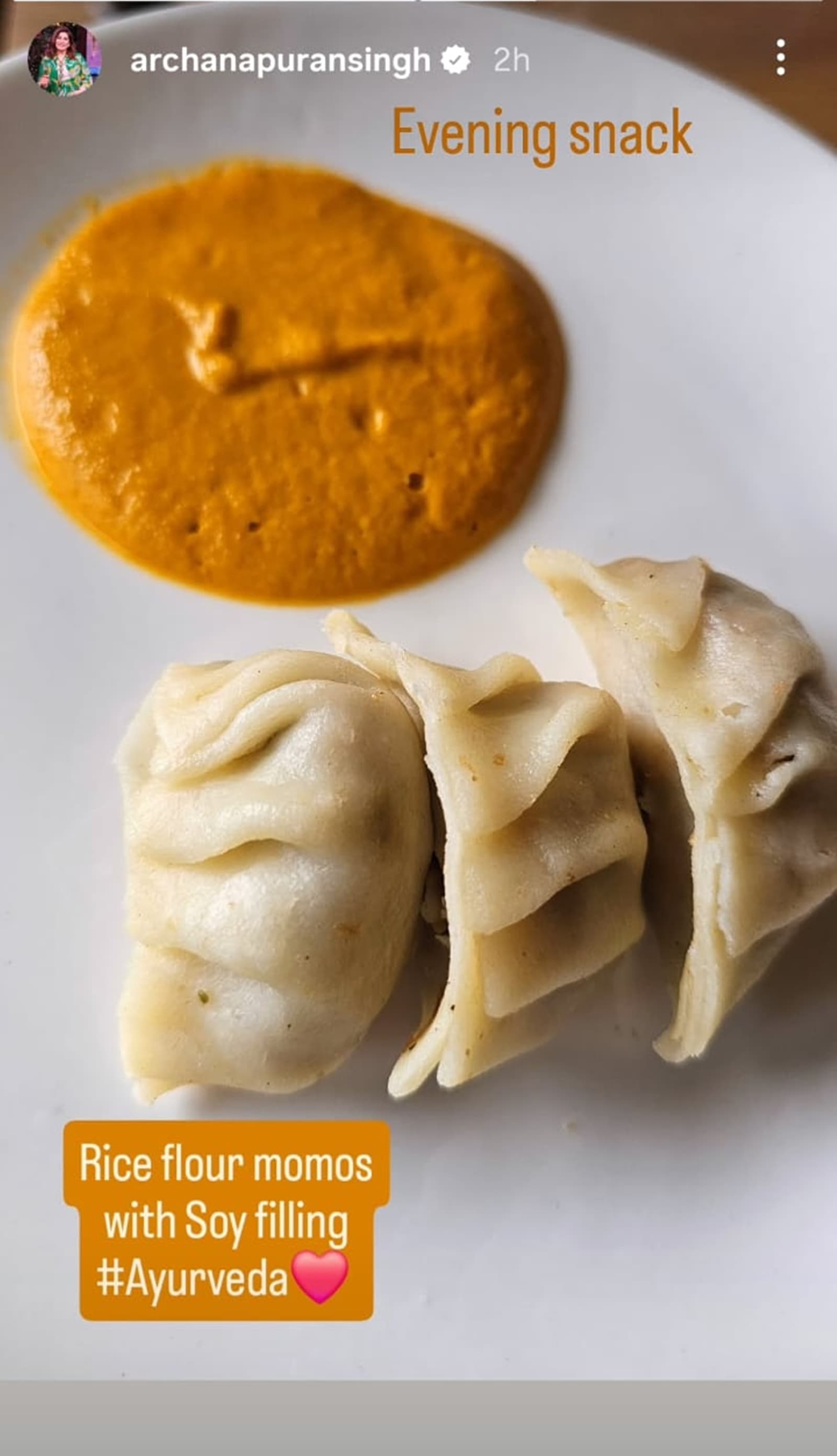 Here’s what Archana ate at the retreat (Photo: Archana Puran Singh/Instagram Stories)
Are there any downsides to regularly relying on rice flour snacks?
Since rice flour is mostly carbohydrates, eating it alone may lead to a quick bout of hunger later. “It can also cause sudden spikes in blood sugar if eaten in large portions. People working to manage weight or blood sugar levels may need to balance it with fibre or protein, such as adding vegetables or serving it with a chutney made from nuts or seeds,” said Sheikh.
Story continues below this ad
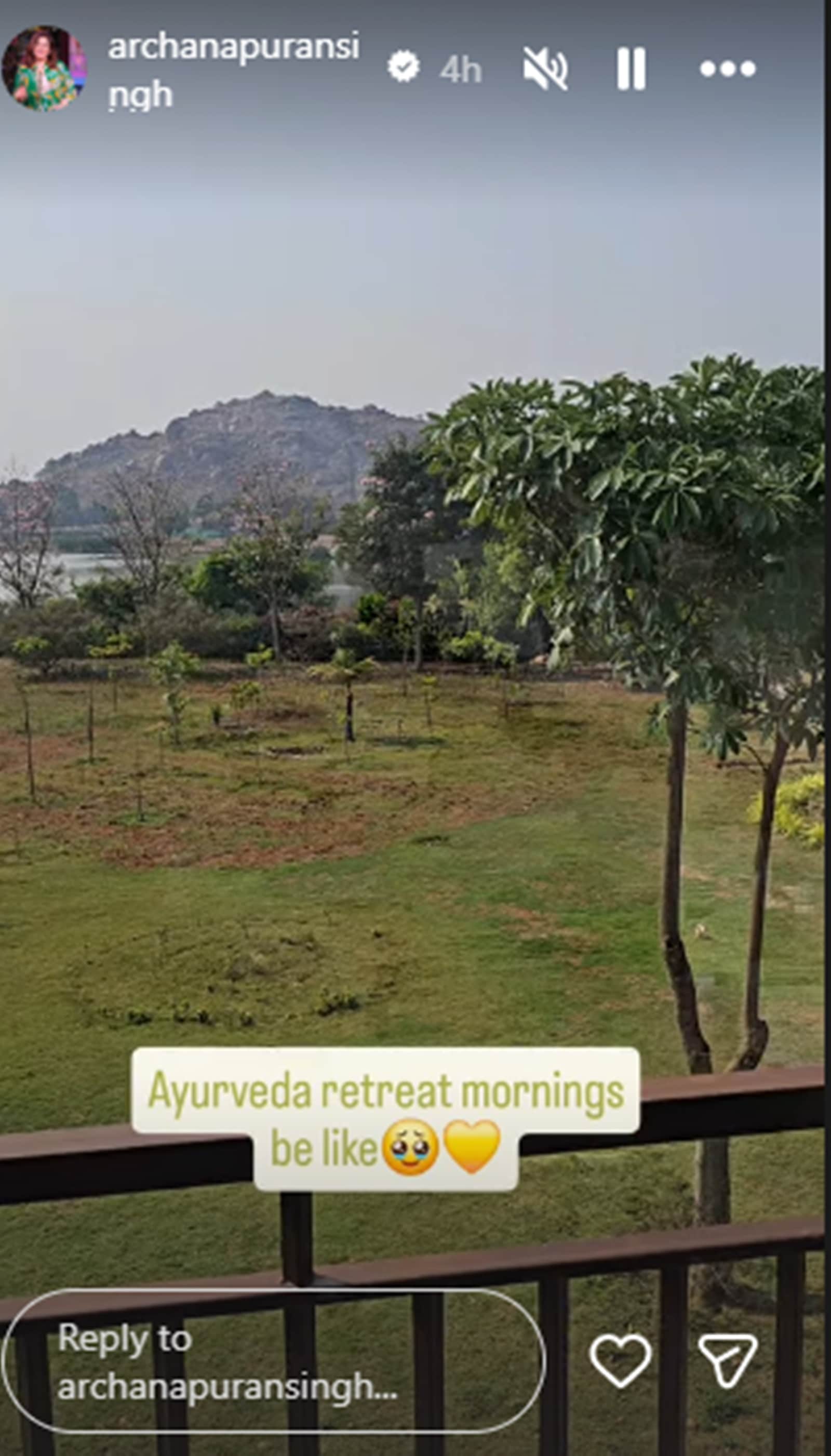 Archana Puran Singh shared a glimpse of the retreat (Photo: Archana Puran Singh/Instagram Stories)
What is the best way to make this snack more balanced?
Sheikh said that adding grated vegetables, a small amount of protein like curd on the side, or using a mix of flours can improve its nutritional value.
“Keeping portions moderate and avoiding excessive oil helps maintain its lightness. Simple tweaks can turn a basic snack into something more filling and balanced without losing its traditional appeal.”
DISCLAIMER: This article is based on information from the public domain and/or the experts we spoke to. Always consult your health practitioner before starting any routine.
LifestyleNews
Why snakes eat their own kind

The cases of snakes eating each other have dramatically risen over the past few years (Representational Image: Gemini)
Cannibalism might sound shocking—almost like something out of a horror story. But in the world of snakes, it’s not as rare or unusual as we imagine. In fact, scientists are now finding that snakes have evolved to eat their own kind multiple times across history.
In fact, according to a study published on Nov. 2, 2025, in the journal Biological Reviews, which evaluated around 500 documented cases across more than 200 species, suggests that this behaviour has evolved at least 11 times independently. That’s not random, but a pattern, with strong survival reasons.
Snakes are opportunistic feeders. They don’t always stick to one type of prey. If food is scarce and another snake is available, they may take that chance. In difficult conditions, this can provide a high-energy meal while also reducing competition.
 The research team gathered 503 cases of reported cannibalism across 207 snake species (Image: Unsplash)
Researchers believe this behaviour is often triggered by lack of food, environmental stress and competition for resources. In such situations, eating another snake isn’t unusual but an efficient diet plan.
“For us humans, we don’t think of cannibalism as something common –– it’s something weird and disgusting,” Bruna Falcão, lead author of the study and a graduate student in biology at the University of São Paulo, told Live Science. “But for snakes, it’s good for them; it’s good for their ecological fitness. … It’s strategic,” he further added.
Also Read | Six animals with incredible neck flexibility which helps them turn back their head a complete 360 degrees
It’s more common than expected
Cannibalism has been observed across multiple snake families, including Colubridae, Viperidae and Elapidae.
Some cases happen in the wild, while others are seen in captivity, where stress, space limitations, or lack of food may increase the chances of such behaviour.
Story continues below this ad
There have even been rare instances of male snakes eating females outside the mating season—something that seems unusual, but may still be linked to survival pressures.
However, not every snake can eat another snake. One key factor is their ability to stretch their jaws wide enough to consume large prey. Many of the species that show cannibalism are also generalist feeders, meaning they can adapt their diet based on what’s available. This flexibility makes it easier for them to turn to cannibalism when needed.
Isn’t it strange and fascinating how survival pushes even one of the most dangerous creatures on the planet to resort to extreme measures for survival?


Artemis astronaut describes 'powerful' moment Moon crater named after his late wife. #Nasa #BBCNews


South Korea's runaway wolf finally captured after nine-day search. #SouthKorea #Wolf #BBCNews


How hypnosis may be more real, and powerful, than you think | Chasing Life
Most people think hypnosis is stage tricks. But science says otherwise. Dr. Sanjay Gupta talks with Stanford’s Dr. David Spiegel...


The impact of no tax on tips
CNN’s Betsy Klein speaks with tip-based workers in Las Vegas as President Donald Trump paid a visit to the city...


Casago Expands Idaho Presence with New Locally Led Franchise in McCall and Boise
Casago, a premier franchise-based vacation rental management company, has expanded its Idaho presence with a new locally owned and...


Erling Haaland & Vinicius Júnior Front New Marriott Bonvoy and Visa ‘For Fans, Everywhere’ Campaign
As the FIFA World Cup™ returns to North America for the first time in more than three decades, Marriott...
Shashi Tharoor’s Demonetisation Reminder To Government Over Delimitation
Please paste your post content you want rewritten, and I’ll preserve the facts, improve readability, and optimize it for SEO...
Gautam Adani Overtakes Mukesh Ambani As Asia’s Richest, Check Full List
While Adani Group’s businesses include infra, energy & logistics. The Reliance Industries — led by Ambani — is strong in...
Opinion: Opinion | Who Wanted Amir Hamza Dead? Inside Lashkar’s ‘Succession War’ And India’s Headache
There is a churn within Lashkar for the top spot, in what is, after all, an extremely wealthy organisation. That...
Parliament Special Session LIVE: Delimitation Bill “Shift In Political Power”, Says Shashi Tharoor In Lok Sabha
Parliament’s 3-day special session Live Updates, Day 1: The government is expected to introduce three amendment Bills aimed at operationalising...
-

 Theboldnews video1 week ago
अख़बार की पन्नों में छुपी सच्चाई #documentary #shorts
-
Fashion1 week ago
Leo Horoscope Today: April 8, 2026
-
Fashion1 week ago
Cancer Horoscope Today: April 7, 2026
-

 Video4 days ago
Luxury Miami hotel demolished to make way for larger building. #Miami #Demolition #USNews #BBCNews
-

 Video3 days ago
Students flee shooting at high school in Turkey
-
BBC News World2 weeks ago
Russian attack on Ukraine market kills five
-
Fashion2 weeks ago
Horoscope Today: April 5, 2026
-

 Video3 days ago
Israel is losing US support – even among Republicans