
BBC News World
India pushes for women’s quota bill as row over parliamentary seats intensifies
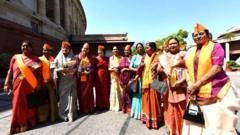
India pushes for women’s quota bill as row over parliamentary seats intensifies
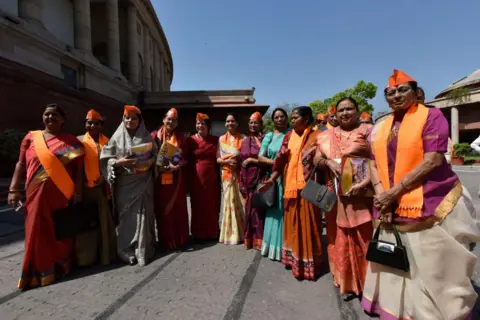 Hindustan Times via Getty Images
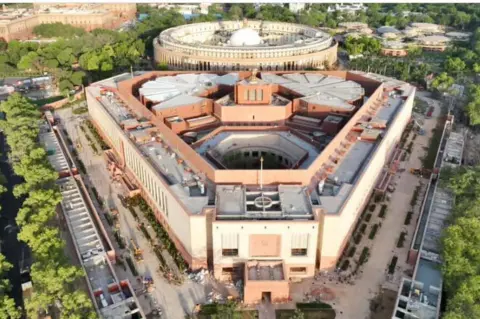
India’s government has launched a once-in-a-generation attempt to redraw the country’s political map, saying it is driven by a push to reserve a third of seats for women in parliament and state assemblies.
The government unveiled the proposed constitutional amendment – requiring a two-thirds majority – at the start of a three-day special parliament session, which began on Thursday.
Women make up only about 14% of India’s 543 lower house MPs. The reform would raise that to roughly a third, closer to global norms.
Its rollout is now tied to a population-based redraw of constituencies based on the 2011 census – likely expanding the lower house from 543 to about 850 seats.
But this has fuelled controversy, with opposition parties accusing the government of rushing changes during an election season.
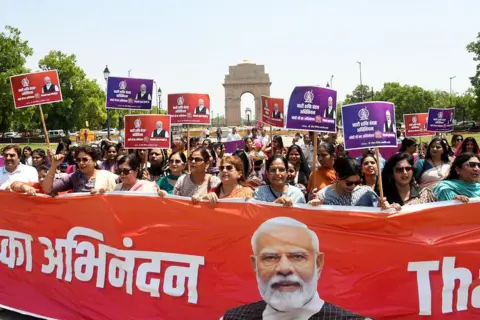 Hindustan Times via Getty Images
India already reserves 33% seats for women in village councils and municipal corporations in urban areas.
Prime Minister Narendra Modi has cast the Nari Shakti Vandan Adhiniyam (which loosely translates from Hindi to Saluting Women Power Act) as a historic leap – “among the most significant decisions of our times” – arguing it honours women’s empowerment.
He told parliament on Thursday that the proposal would move India in a “new direction”.
“A sensitivity will be infused here. The parliament will be enriched. There is no dearth of experienced and capable women in the country,” Modi said.
Modi’s National Democratic Alliance (NDA) lacks the two-thirds majority needed to pass the bills in both houses of the parliament, and is banking on smaller parties and sections of the opposition for support. He urged the opposition to not give the bills a “political colour”.
Opposition parties say a simple women’s quota is being tied to a controversial redraw of constituencies, turning a gender reform into a wider political overhaul.
“We support reserving 33% seats for women based on the current strength of parliament. We also want a further freeze on expanding overall seats in the parliament until population trends stabilise. We object to the haste in convening this session in the middle of an election season,” John Brittas, MP of the opposition Communist Party of India (Marxist), told the BBC.
India’s Constitution mandates that seats be allocated to each state based on its population, with constituencies of roughly equal size.
It requires periodic delimitation – the redrawing and reallocation of seats – after each census to reflect updated population figures.
So far, India has redrawn parliamentary seats three times based on the decennial census in 1951, 1961 and 1971. Since then, governments of all stripes paused the exercise, fearing an imbalance of representation due to varying fertility rates across states.
The Modi-led Bharatiya Janata Party (BJP) government has signalled a break from past caution, proposing a fresh delimitation based on the 2011 census.
 Getty Images
That shift has alarmed opposition parties – especially in the south – who fear it could cost them seats and influence, effectively penalising regions with lower population growth and stronger economies.
The five southern states – Tamil Nadu, Andhra Pradesh, Karnataka, Kerala and Telangana – account for about 20% of India’s 1.4 billion people.
They also outperform the rest of the country in health, education and economic prospects. A child is less likely to be born here than in the north, due to lower population growth rates.
Their leaders are worried that the more prosperous south may lose parliamentary seats in the future, a “punishment” for having fewer children and generating more wealth.
Tamil Nadu, Kerala, Karnataka and Telangana had sought to extend the freeze on seat redistribution for 25 years.
Tamil Nadu Chief Minister MK Stalin has called the delimitation plan a “massive historic injustice,” .
On Thursday, he staged a protest where he hoisted a black flag and burned a copy of the proposed bill. Stalin also urged party workers and supporters to fly black flags at their homes.
“Is punishment being meted out to Tamil Nadu and the southern states for the crime of striving for India’s growth?” he had earlier asked.
The proposed legislation also remains mired in some confusion, say experts.
Arghya Sengupta of Vidhi Centre for Legal Policy, a Delhi-based think tank, told the BBC that although the new bill raises the cap on the lower house of parliament to 850 seats – from 550 earlier – the “basis for this number is unclear and does not appear to be proportionate to population growth recorded in the 1971 and 2011 census”.
Oddly, Sengupta says, there is no similar expansion for state assemblies, “creating a mismatch: fast-growing states could gain more MPs without a corresponding rise in MLAs”.
There are also concerns about how seats will be shared between states.
BJP MP K Laxman has told reporters the government plans to carry out delimitation on a “pro-rata” basis to ensure no state – especially in the south – is disadvantaged.
This means each state’s seats would rise in proportion to its current share.
But experts remain unconvinced.
“While no state may lose seats, the absence of a clear proportional formula means outcomes could vary – and favour more populous states. This has significant federal implications,” says Sengupta.
 Reuters
It is also unclear how seats will be chosen for women in the expanded parliament.
“What criteria will be used to reserve seats for women? That’s the tricky part. How do you decide which constituencies are set aside?” Sanjay Kumar of the Delhi-based Centre for the Study of Developing Societies told the BBC.
“It can’t simply be based on population – and identifying seats for disadvantaged scheduled caste and scheduled tribe (SC/ST) women adds another layer of complexity,” he added.
In India, constituencies are already reserved for Scheduled Castes (SC) and Scheduled Tribes (ST) based on their population share.
Critics also question why the exercise is based on 2011 data – asking why rely on 15-year-old figures when a fresh census is due soon?
The government counters that waiting for new census data would push delimitation – and with it women’s reservation – well beyond 2029, delaying a long-promised reform.
BBC News World
Finance ministers and top bankers raise serious concerns about Mythos AI model

Finance ministers and top bankers raise serious concerns about Mythos AI model
 NurPhoto via Getty Images
Finance ministers, central bankers and financiers have expressed serious concerns about a powerful new artificial intelligence (AI) model that could undermine the security of financial systems.
The development of the Claude Mythos model by Anthropic has led to crisis meetings, after it found vulnerabilities in every major operating system and browser.
Experts have warned that the model potentially has an unprecedented ability to identify and exploit cybersecurity weaknesses.
The Canadian finance minister François-Philippe Champagne told the BBC that Mythos had been discussed extensively by his peers at the key International Monetary Fund (IMF) meeting in Washington DC this week.
“Certainly it is serious enough to warrant the attention of all the finance ministers… The difference with the Strait of Hormuz is that we know where it is and we know how large it is. The issue that we’re facing with Anthropic is that it’s an unknown, unknown.
It requires a lot of attention so that we have safeguards, and we have processes in place to make sure that we ensure the resiliency of our financial system”.
Top bankers are to be given access to the model in advance to test out their systems.
The chief executive of Barclays CS Venkatakrishnan told the BBC: “it’s serious enough that people have to worry. We have to understand it better, and we have to understand the vulnerabilities that are being exposed and fix them quickly”.
He added that “this is what the new world is going to be” referencing a much more connected financial system, with both opportunities and vulnerabilities.
While developer Anthropic has said the model has already exposed multiple security vulnerabilities in some critical operating systems, financial systems and web browsers, governments and banks are being offered access in advance of its public release to help protect their own systems.
Bank of England Governor Andrew Bailey also told the BBC the development had to be taken very seriously: “we are having to look very carefully now what this latest AI development could mean for the risk of cyber crime.
There is a development of AI, of modelling, which makes it easier to detect existing vulnerabilities in, sort of core IT systems, and then obviously cyber criminals that the bad actors could seek to exploit them.”
The US Treasury confirmed it had raised the issue with its major banks encouraging them to test out their systems, before any public release of Mythos by Anthropic.
Financial industry sources indicated that another prominent US AI company could soon release a similarly powerful model but without the same safeguards.
BBC News World
What we know about the ceasefire between Lebanon and Israel
What we know about the ceasefire between Lebanon and Israel
 Getty Images
US President Donald Trump has announced that the leaders of Israel and Lebanon have agreed to a 10-day ceasefire, which took effect from 17:00 EST (21:00 GMT; midnight local time) on 16 April.
There was no mention in Trump’s statement of Hezbollah, the Iran-backed militant group in Lebanon, with which Israel has been exchanging fire for the past six weeks. But in a later post on Truth Social, Trump urged the group to abide by the ceasefire, saying, “I hope Hezbollah acts nicely and well during this important period of time.”
Following the announcement, the US president also invited Israeli Prime Minister Benjamin Netanyahu and Lebanese President Joseph Aoun to the White House for further talks.
Here is what we know about the truce.
What does the agreement say?
The terms of the deal specify that the ceasefire is set to last 10 days, with the possibility it being “extended by mutual agreement” if negotiations show signs of progress.
According to further details provided by the US State Department:
- Israel retains its “right to take all necessary measures in self-defence, at any time, against planned, imminent, or ongoing attacks”
- Lebanon must take “meaningful steps” to prevent Hezbollah and all other “rogue non-state armed groups” from carrying attacks against Israeli targets
- Those involved recognise that Lebanon’s security forces have exclusive responsibility for Lebanon’s security
- Israel and Lebanon requested that the US continues to facilitate further direct talks with the objective of “resolving all remaining issues”
The statement added that the truce was a “gesture of goodwill” by Israel intended to enable “good-faith negotiations towards a permanent security and peace agreement” between the two parties.
What have the various sides said about it?
Israel and Lebanon’s leaders have both welcomed the truce, with Netanyahu calling it an “opportunity to make a historic peace agreement”.
Lebanese Prime Minister Nawaf Salam said he hopes the agreement will allow those have been displaced by the conflict to return to their homes.
Hezbollah have also signalled a willingness to participate in the ceasefire, but said it must include “a comprehensive halt to attacks” across Lebanon and “no freedom of movement for Israeli forces”.
The Iran-backed group, while deeply embedded in Lebanon, is not part of the Lebanese government’s security apparatus.
Iran’s foreign ministry welcomed the ceasefire, with spokesperson Esmail Baghaei expressing his “solidarity” with Lebanon. Tehran had insisted that its own two-week ceasefire with the US should include Lebanon while the US and Israel said it did not.
UN Secretary General António Guterres commended the role of the US in facilitating the ceasefire, and urged all parties to “fully respect” and “comply with international law at all times”.
President of the European Commission Ursula von der Leyen called the deal a “relief”, saying Europe will continue to “call for the full respect of Lebanon’s sovereignty and territorial integrity”.
EU foreign policy chief Kaja Kallas added that the ceasefire must be used to “step back from the violence” and create space for talks for “a more lasting peace”.
What is Israel’s buffer zone?
Despite the agreement, Netanyahu said Israeli troops would maintain a 10km-deep (6.2 mile) “security zone” in southern Lebanon, saying: “We are there, and we are not leaving.”
He added that the buffer zone needed to remain to “block the danger of invasion”.
Israel re-entered southern Lebanon after strikes by Hezbollah in early March, creating a buffer zone it said was necessary to protect communities in northern Israel.
A previous ceasefire deal between Israel and Hezbollah – ending 13 months of conflict – still saw near-daily cross-border strikes.
How was it negotiated?
Israel and Lebanon held rare direct talks in Washington earlier this week week aimed at easing the war, which has seen deadly air strikes on part of the Lebanese capital of Beirut and fighting in the country’s south.
Trump’s announcement said the deal came about after “excellent conversations” with Aoun and Netanyahu, but did not mention whether Hezbollah was directly involved in the talks.
He later urged Hezbollah to “act nicely and well during this important period of time” on social media.
Netanyahu, while welcoming the truce, also made clear also made clear that he was making few concessions on the ground.
He said Hezbollah had insisted on two conditions: the withdrawal of Israeli forces from Lebanon, and a principle of “quiet for quiet”.
However, it appears ceasefire announcement has taken Israel by surprise – reportedly even within the government’s own security cabinet.
A widely respected Israeli news outlet tonight described Netanyahu convening a security cabinet meeting with just five minutes notice, shortly before the ceasefire announcement was made.
Leaks from that meeting say ministers were not given a vote on the ceasefire.
What does this have to do with the war in Iran?
When the ceasefire with Iran was announced, there were mixed messages on whether Lebanon was involved. Pakistani officials, who helped negotiate the deal, and Iranian officials, said it was, but Israel said it was not. US President Donald Trump’s press secretary Karoline Leavitt also later said Lebanon was not part of the deal.
Israel launched strikes on Lebanon on 2 March in response to strikes launched by Hezbollah. This was after the US and Israel launched strikes on Iran – prompting retaliation from Tehran against US allies in the Gulf, and from Iran’s proxies, which includes the Lebanese militant group.
Israel and Hezbollah have continued to exchange fire since then, despite pleas from Lebanon’s Prime Minister for both sides to stop doing so.
More than 2,100 people have been killed and 7,000 others wounded in Israel’s attacks on Lebanon since 2 March, according to the country’s health ministry, which does not distinguish between combatants and civilians. The number includes at least 260 women and 172 children. The ministry says 91 health professionals have been killed and 208 other wounded in the war, with more than 120 Israeli attacks recorded on ambulances and medical facilities. BBC Verify analysis found more than 1,400 buildings in Lebanon had also been destroyed.
Hezbollah attacks have killed two civilians in Israel over the same period, while 13 Israeli soldiers have been killed in combat in Lebanon, Israeli authorities say.
On Thursday, the Israeli military destroyed the last bridge linking the south to the rest of the country, further isolating the region and renewing fears among many Lebanese that this could lead to a long-term occupation of some areas.
BBC News World
Singer D4vd arrested on suspicion of murdering teenage girl

Singer D4vd arrested in connection with death of missing teen girl
 Getty Images
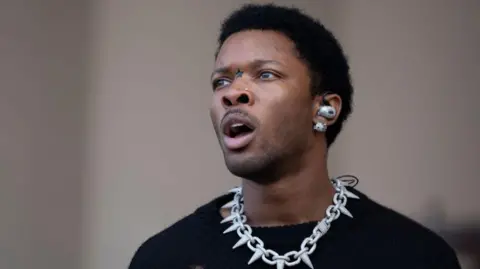
US singer D4vd has been arrested on suspicion of murdering a teenage girl who went missing last year, police say.
The TikTok star, whose legal name is David Anthony Burke, was the target of a grand jury investigation into the apparent murder of Celeste Rivas Hernandez, whose remains were found in his Tesla in September.
The Los Angeles Police Department said on Thursday that the 21-year-old was being held without bail and the case will be presented to the District Attorney’s office on Monday.
The singer has been virtually silent on the case but his representatives previously said he was cooperating with authorities. The BBC has contacted his representatives about the arrest.
Police said on Thursday they had arrested Burke “for the murder of Celeste Rivas”.
Questions had been mounting since the 8 September discovery of the 14-year-old’s remains in a Hollywood tow yard after authorities received reports of a foul odour coming from the vehicle.
On 8 September 2025, investigators found her decomposed head and torso in a cadaver bag in the front boot of a Tesla car registered to D4vd’s address in Texas, court documents said.
The county’s medical examiner said the body was “severely decomposed” and deferred on making a ruling on how she died pending the death investigation. The girl might have been dead “for several weeks” before the discovery of her body, officials said.
No cause of death in the teen’s case has been announced, with authorities only saying for months that they were treating the case as a death investigation.
A judge ordered that the teen’s death records be sealed in November to ensure officers received information from the medical examiner before the public.
Rivas Hernandez – who lived about 75 miles (120km) away from where her body was discovered – had last been reported missing by her family in April 2024, but it was not the first time she had run away from their Lake Elsinore home. A first-generation daughter of immigrant parents from El Salvador, neighbours recognised her as a girl who would visit the corner store almost daily to buy candy and soda, according to the Los Angeles Times.
The lack of information in the macabre death has fuelled intrigue and ignited an online following, with many hypothesising about the girl’s connection to the Romantic Homicide singer.
A grand jury began hearing evidence in the case in December, but D4vd’s arrest on Thursday marks the first significant development in the case in months.
 Getty Images
More details about the case emerged in court filings after the singer’s family was summoned from Texas by a California court to testify before the grand jury.
When Dawud Burke, D4vd’s father, fought against the summons in a Texas court he included material from the California case that had not been previously available to the public.
The filings, obtained by the BBC, confirmed that D4vd had been identified as a “target” of a grand jury investigation in Los Angeles and that he may be subject to proceedings for one count of murder.
Few details shared with the public before included that Rivas Hernandez was wearing a tube top, size small black leggings and jewellery, including a yellow metal stud earring and a yellow metal chain bracelet, when her body was found.
She also had a tattoo that read “Shhh…” on her index finger – a marking nearly identical to that on the singer’s own index finger.
Shortly after the body was found, the Here With Me singer cancelled his world tour, signalling the beginning of the end of his pop career and his noticeable retreat from the spotlight.
Los Angeles police previously said they had raided the Hollywood Hills mansion where he was living, just blocks from where his Tesla had been towed. He was also dropped from marketing campaigns with US retailer Hollister and footwear giant Crocs.
Telepatía singer Kali Uchis also announced she was taking down their collaboration, Crashing.
BBC News World
South Korea’s runaway wolf finally captured after nine-day search

South Korea’s runaway wolf finally captured after nine-day search
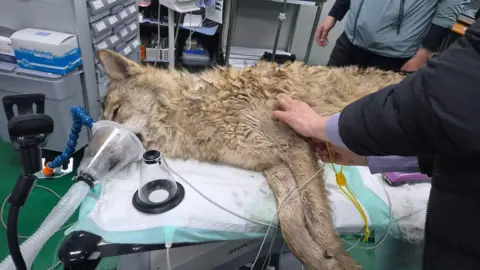
Neukgu, the two-year-old wolf who broke loose from a South Korean zoo and captured the nation’s attention, has finally been captured following a nine-day long search.
Neukgu was captured near an expressway on Friday at 00:44 local time (16:44 GMT), according to the government of Daejeon, the central city where his zoo was located.
Upon a medical examination, Neukgu’s pulse and body temperature were normal, authorities said.
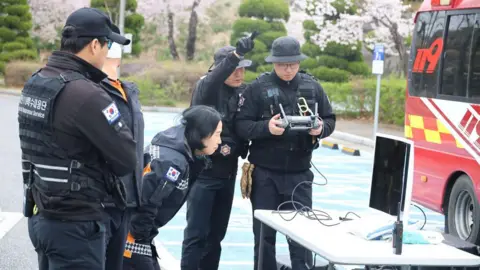
Hundreds of rescue officials had been deployed to find the wolf, and there were a couple of times when authorities came close to getting him – but each time the net seemed to be closing in, Neukgu would slink away.
 Daejeon City
Authorities had nearly caught him earlier this week, when the local fire department received a report on Monday night that Neukgu had been spotted on a mountain about 2km (1.2 miles) away from O-World, the zoo and theme park from which he had broken loose.
A video of the wolf scampering on a road in the dark, illuminated by the headlights of a vehicle, was also uploaded on social media.
Authorities pounced on the lead, launching a search-and-rescue mission, but ultimately he escaped again.
The elusive Neukgu has inspired a meme coin, hailed by its creators as a the “wolf that wouldn’t stay caged” and a “symbol of independence”.
 YONHAP/EPA/Shutterstock
Born in 2024, Neukgu is part of a programme at O-World to restore the Korean wolf, which once roamed the Korean Peninsula but is now considered extinct in the wild.
But after a life in captivity, some worried that he wouldn’t be able to survive in the wild.
Animal rights groups were also concerned that Neukgu would be killed during the capture process – something that happened to Porongi, a puma that had escaped from the same zoo in 2018.
Even South Korea’s president Lee Jae Myung publicly prayed for Neukgu’s safe return home, in a post on social media.
 Daejeon City
Those fears have been put to rest now that Neukgu has been safely caught.
Authorities launched another search operation in the Anyeong-dong area on Thursday evening after receiving a tip-off. It was there that they finally caught him, shooting him with a tranquilliser gun before whisking him back to the zoo.
A video of the capture operation, posted by the Daejeon city government, showed a limp Neukgu being hauled by rescuers and placed in a carrier. Authorities later posted photos of a sedated Neukgu being attended to in a medical facility.
“Thank you to everyone who worked hard to bring Neukgu home,” the city government wrote on social media.
“To everyone who worried about Neukgu’s safety and cheered us on, thank you all so much.”
BBC News World
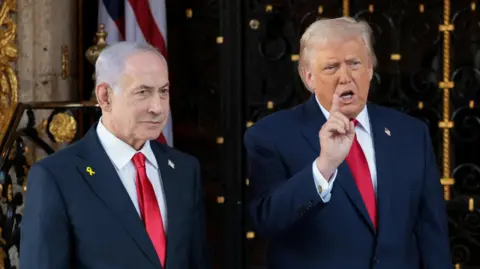
Trump’s Lebanon ceasefire takes Israel by surprise
Trump’s Lebanon ceasefire takes Israel by surprise
 Reuters
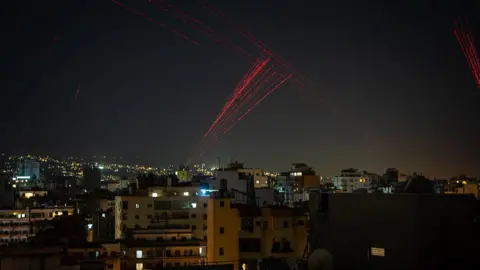
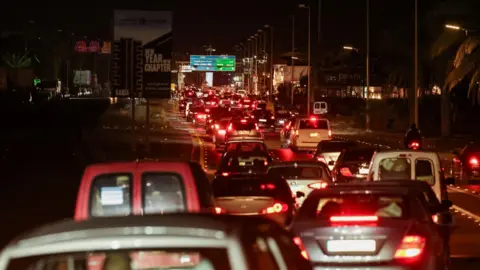
As news of the ceasefire spread through Israel’s northern communities, sirens blared three times this evening warning of incoming rockets from Lebanon.
In the sky above the northern city of Nahariya, Israel’s air defence interceptors shot up to block them, triggering loud explosions. Ambulance crews said at least three people were wounded by shrapnel in the hours before the ceasefire took effect, including two seriously.
On the ground here – and across the country – there’s scepticism about why Israel’s leader has signed up to the truce.
“I feel like the government lied to us,” said Gal, a student in Nahariya. “They promised that this time it would end differently, but it seems like we’re once again heading toward a ceasefire agreement that solves nothing.”
“We gave the Lebanese government a chance and they failed to uphold the agreement; they didn’t disarm Hezbollah,” said Maor, a 32-year-old truck driver whose house was hit by a rocket last year.
“If we don’t do it, no one will. It’s a shame they stopped. It seemed like there were significant achievements this time.”
Israel has five army divisions in southern Lebanon, and only yesterday its chief army spokesman said they would continue advancing.
This ceasefire announcement has taken Israel by surprise – reportedly even within the government’s own security cabinet.
A widely respected Israeli news outlet tonight described Israeli Prime Minister Benjamin Netanyahu convening a security cabinet meeting with just five minutes notice, shortly before the ceasefire announcement was made.
Leaks from that meeting say ministers were not given a vote on the ceasefire.
To many, this is another example of Netanyahu bowing to US President Donald Trump’s demands to halt fighting, even when the terms or the timing are not what Israel wants.
 Reuters
“A ceasefire must come from a position of strength in order to service the national interests of Israel,” said the former IDF Chief of staff and Yashar party chief, Gadi Eisenkot.
“A pattern has developed in which ceasefires are imposed upon us – in Gaza, in Iran, and now in Lebanon. Netanyahu does not know how to convert military achievements into diplomatic gains.”
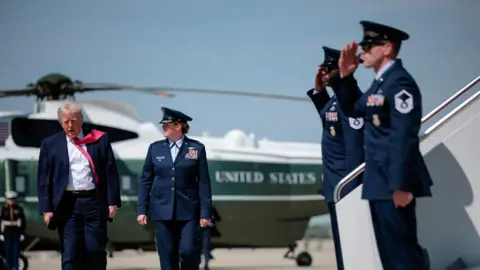
Netanyahu – while framing the ceasefire as “an opportunity to make a historic peace agreement with Lebanon” – also made clear that he was making few concessions on the ground.
He said Hezbollah had insisted on two conditions: the withdrawal of Israeli forces from Lebanon, and a principle of “quiet for quiet”.
“I agreed to neither the former, nor the latter,” he said. “These two conditions are not being met. We are remaining in Lebanon in a thickened security zone […] We are there, and we are not leaving.”
 Reuters
Iran has been demanding an end to Israeli operations against its proxy group Hezbollah in Lebanon since agreeing to a two-week ceasefire with the US earlier this month.
And after initially saying Israel’s military campaign against Hezbollah in Lebanon was “a separate skirmish”, Trump said this week he was trying to create what he called “a little breathing room between Israel and Lebanon”, as US negotiations with Iran falter, and the end of the truce period approaches next week.
Both Netanyahu and Israel’s military leaders have been keen to emphasise in recent days that the ceasefire Trump agreed with Tehran did not mean a ceasefire in Lebanon.
A poll by Israel’s Channel 12 news network last week found that almost 80% of respondents supported continued strikes on Hezbollah.
And three separate surveys suggested a majority of Israelis also opposed to two-week ceasefire Trump agreed with Iran.
“Agreements may be signed with a tie in Washington, but the price is paid in blood and destroyed homes” in northern Israel, the head of the Mateh Asher Regional council, Moshe Davidovich, told Israeli media.
“Residents of the north are not extras in an international public relations show,” he added.
The truce Israel has agreed to in Lebanon states clearly that Israel “preserves its right to take all necessary measures in self-defence, at any time, against planned, imminent or ongoing attacks” – much as it did during the last ceasefire agreed in November 2024, when Israel continued regular strikes against targets it deemed a threat.
Few Israelis see this truce as a way out of the conflict with Hezbollah.
But many see it as further proof that their leader is again under pressure to align with Washington’s interests – and that the war goals of their key US ally are not always the same as their own.

South Korea's runaway wolf finally captured after nine-day search. #SouthKorea #Wolf #BBCNews


How hypnosis may be more real, and powerful, than you think | Chasing Life
Most people think hypnosis is stage tricks. But science says otherwise. Dr. Sanjay Gupta talks with Stanford’s Dr. David Spiegel...


The impact of no tax on tips
CNN’s Betsy Klein speaks with tip-based workers in Las Vegas as President Donald Trump paid a visit to the city...


Casago Expands Idaho Presence with New Locally Led Franchise in McCall and Boise
Casago, a premier franchise-based vacation rental management company, has expanded its Idaho presence with a new locally owned and...


Erling Haaland & Vinicius Júnior Front New Marriott Bonvoy and Visa ‘For Fans, Everywhere’ Campaign
As the FIFA World Cup™ returns to North America for the first time in more than three decades, Marriott...
Shashi Tharoor’s Demonetisation Reminder To Government Over Delimitation
Please paste your post content you want rewritten, and I’ll preserve the facts, improve readability, and optimize it for SEO...
Gautam Adani Overtakes Mukesh Ambani As Asia’s Richest, Check Full List
While Adani Group’s businesses include infra, energy & logistics. The Reliance Industries — led by Ambani — is strong in...
Opinion: Opinion | Who Wanted Amir Hamza Dead? Inside Lashkar’s ‘Succession War’ And India’s Headache
There is a churn within Lashkar for the top spot, in what is, after all, an extremely wealthy organisation. That...
Parliament Special Session LIVE: Delimitation Bill “Shift In Political Power”, Says Shashi Tharoor In Lok Sabha
Parliament’s 3-day special session Live Updates, Day 1: The government is expected to introduce three amendment Bills aimed at operationalising...
MK Stalin’s Son-In-Law Steps Into Spotlight As DMK Sharpens Poll Strategy
The stakes are particularly high for the Dravidian party, which is aiming for a rare second consecutive term – something...
-
 Theboldnews video1 week ago
अख़बार की पन्नों में छुपी सच्चाई #documentary #shorts
-
Fashion1 week ago
Leo Horoscope Today: April 8, 2026
-
Fashion1 week ago
Cancer Horoscope Today: April 7, 2026
-
 Video4 days ago
Luxury Miami hotel demolished to make way for larger building. #Miami #Demolition #USNews #BBCNews
-
 Video3 days ago
Students flee shooting at high school in Turkey
-
BBC News World2 weeks ago
Russian attack on Ukraine market kills five
-
Fashion2 weeks ago
Horoscope Today: April 5, 2026
-
 Video3 days ago
Israel is losing US support – even among Republicans