Connect with us

Food

The Best Sweetened Condensed Milk, According to Our Taste Test
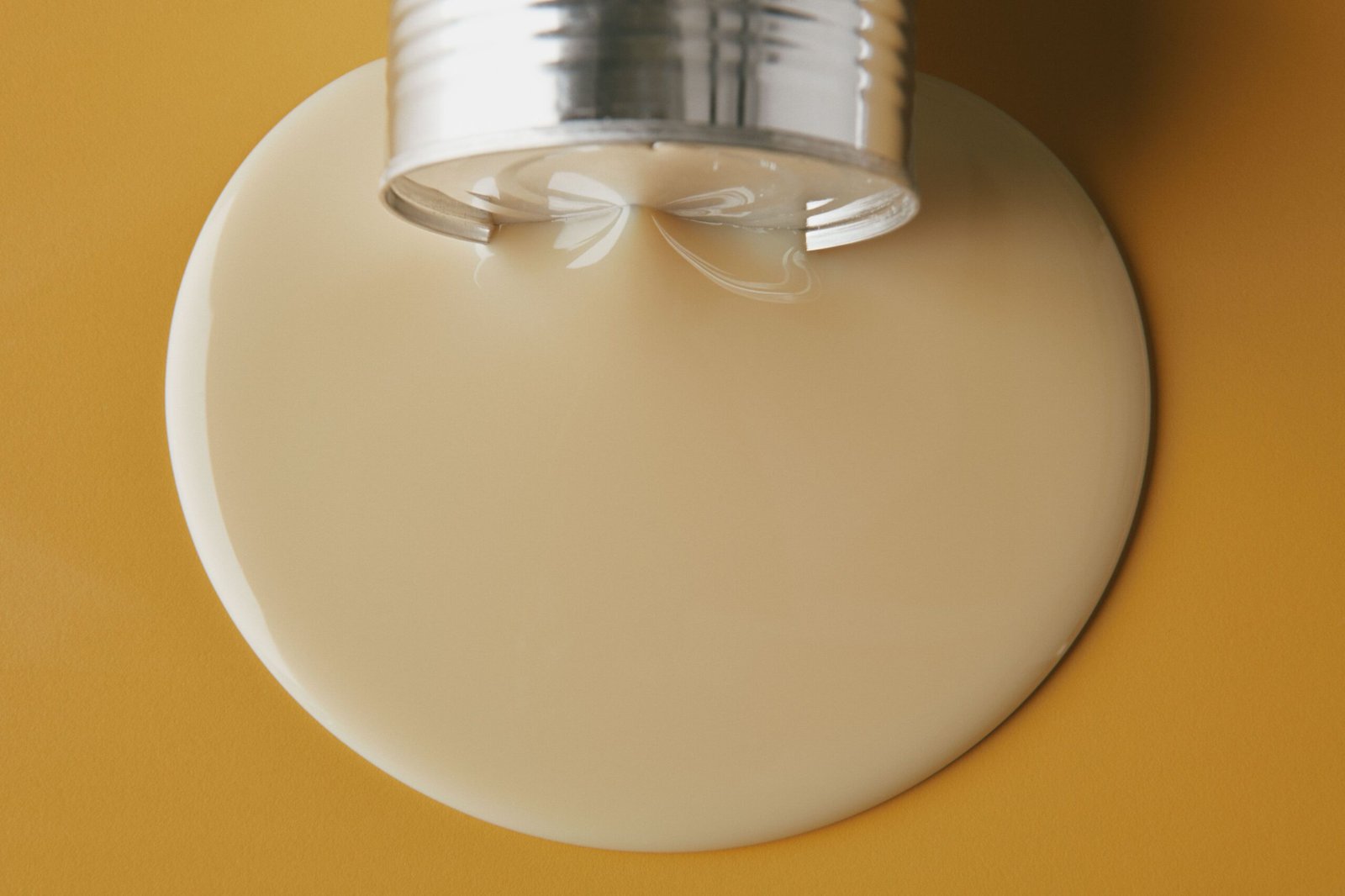
If pantry staples were ranked on Maslow’s hierarchy of needs, sweetened condensed milk would land somewhere near the top (closer to black garlic and malted milk powder than to true essentials like flour, salt, and eggs). You might not use it every day, but when you want fudge or Vietnamese iced coffee, it suddenly feels essential.

The “Father of Canning”—French chef and confectioner Nicolas Appert—invented condensed milk (the unsweetened variety, now largely known as evaporated milk) in 1810, more than 50 years before Louis Pasteur would have his way with microbes. In 1835, English civil engineer William Newton added sugar to milk before reducing it, thereby increasing its shelf stability.

Sweetened condensed milk was popularized in the US in 1858 by Gail Borden Jr.’s Eagle Brand, which you’ll still find on many store shelves. During the Civil War, the Union bought condensed milk—prized for its portability and high caloric value—in large quantities. After the war, returning soldiers helped bolster the product’s popularity.

Today sweetened condensed milk is beloved for the rich, creamy sweetness it adds to desserts like flan, halo halo, and brigadeiros and to festive drinks like coquito. But which can is best? We put 13 brands of sweetened condensed milk through a taste test to find the best for desserts, drinks, and more.

Methodology

How we picked the products

We tested 13 sweetened condensed milks, selecting brands that are widely available in grocery stores and online, including popular bestsellers. We also included a few options with smaller distributions.

How we tested

No brands were revealed to our panel during the course of tasting. They tasted each sample on its own, evaluating for sweetness, milkiness, and texture. Because sweetened condensed milk is usually used as an ingredient, we then tested the top contenders in hot tea and as the base for a simple no-churn ice cream (without the raspberry and almond add-ins) to see how each performed in real recipes.

How we evaluated each sweetened condensed milk

Our tasters focused on four main factors: sweetness, milkiness, texture, and overall flavor complexity. The ideal condensed milk is sweet but balanced with a light, creamy milk flavor. Subtle hints of vanilla or caramel were welcome, but shouldn’t dominate. The best sweetened condensed milk should be thick and lush, yet pourable enough to drizzle over desserts or to stir into drinks. Any metallic notes or grittiness would disqualify a contender; smooth, creamy, and well-balanced products rose to the top.

Our favorite sweetened condensed milk: Longevity

A staple in Vietnamese coffee, Longevity Sweetened Condensed Milk is also known as Sữa Ông Thọ, which translates to “Mr. Longevity’s Milk.” Its ingredients list is simple—just milk and sugar.


Continue Reading

Food

These Little Luxuries Under $60 Make Perfect Mother’s Day Gifts
If mid-century American advertising is to be believed, the way to your mom’s heart is through a toaster. “There’s no gift more welcome than an electric appliance,” reads a 1948 ad for Proctor toasters. Or take this gem: “Christmas morning, she’ll be happier with a Hoover.”

Oh, no thank you! Don’t get us wrong, we’re passionate about kitchen gear, but unless your mom explicitly asked for a shiny new blender (or stand mixer or juicer), it’s best to steer clear of the appliance-as-present path, lest you risk sending the message that you’d like the mom in your life to do more cooking or cleaning for you. This Mother’s Day, show your mom, grandmother, the mother of your children—whoever you’re celebrating—that you appreciate her by gifting a little luxury that helps her treat herself.

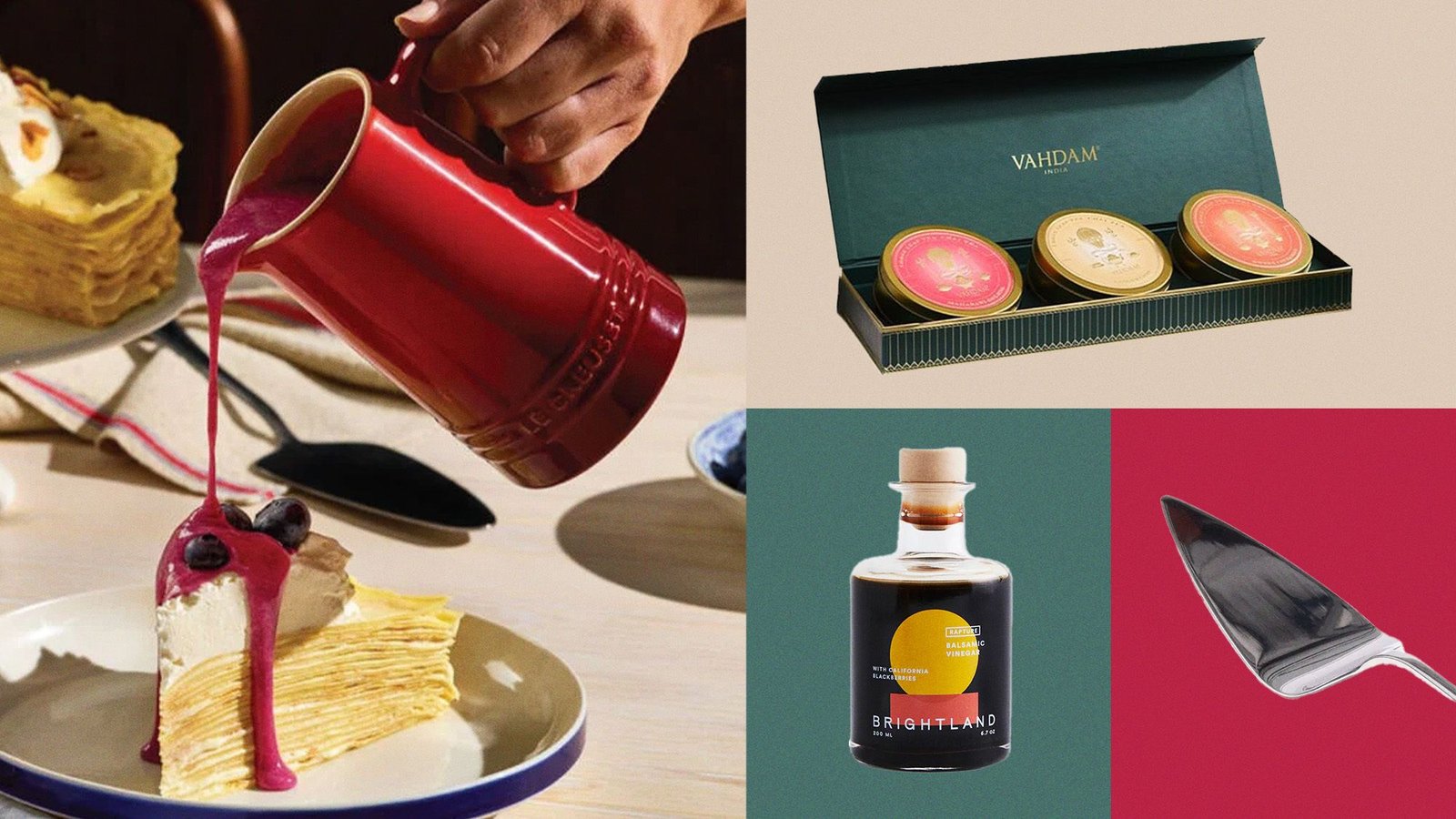
The suggestions on this list are thoughtful, creative, and a little indulgent, like a hand soap that softens your skin with each wash, black truffle popcorn from a brand beloved by Michelin-starred chefs, and whimsical cocktail napkins designed by fashion influencer Emma Chamberlain. And the best part is these fancy finds look so much more expensive than they are—everything is under $60.

Atlas Coffee Club

Atlas Coffee Club

Coffee Subscription

If your mom of the “but first, coffee” ilk? Atlas is one of the best coffee subscriptions for anyone who wants to sample single-origin coffee from around the world while supporting fair trade and sustainable practices. Recipients first choose their preferred roast level, brew type, and coffee quantity (ranging from a half bag to four bags per month), then receive freshly roasted coffee with an ID card detailing sourcing information and tasting notes. Subscription prices range from $11 for a 6-ounce half bag to $17 for a 12-ounce single bag.

For something even more special (and a bit more expensive), Atlas partnered with And Sons chocolates out of New York for a gift box pairing coffees from six different countries with a delicious box chocolates and bon bons.

Mornings at Levain Votive Candle Set

Mornings at Levain Votive Candle Set

The dreamy aromas of Levain’s famous cookies are perfectly captured in Snif’s candle trio, which has notes of caramelized chocolate, vanilla dough, sea salt, and walnuts. Packaged in a giftable blue box, the scrumptious-smelling votives have a six-hour burn time and will make any space feel as warm and inviting as the popular bakery.


Continue Reading

Food

The Best Food Processor for All Your Dinner Prep Needs (2026)
What we love: For many people, a Cuisinart food processor is the food processor. After all, they were the brand that first introduced the appliance to American markets in 1973. That half a century’s worth of brand reputation and good will from consumers is not without reason. It’s a powerful machine, with Mensa-sharp blades that slash chunky vegetables with uncompromising uniformity. It’ll puree bean dips smooth as K-beauty night creams, and mix pie crusts flaky enough to keep a family quiet and smiling through an election year Thanksgiving.

(I should say the Breville performs equally well, but I’m trying my best to give the Cuisinart its flowers because I tend to come down pretty hard on one particular aspect of using it, which I’ll speak to in a sec.)

A little more about why these machines are great: They have a nice weighted base that grounds the machine to the counter. In Cuisinart’s time producing these machines, the company has refined its attachment offerings to the most practical and functional. The components are all dishwasher-safe too (although I’d recommend hand-washing the work bowl, and other plastic components). The machines also last for decades. People pass them down for generations, and in the age of planned obsolescence it’s a rare quality for small electrics.

The biggest leg up this machine might have over our winner is its size. 14 cups really just feels like an ideal size, and other staffers, including frequent food processor user Shilpa Uskokovic, agree.

What we’d leave: The components of Cuisinart food processors are very fussy to fit together. Put anybody in front of one of these food processors and ask them to assemble it—I’ve done this with many different colleagues over years—each time, I guarantee it’ll be like watching a gibbon trying to solve a spatial reasoning puzzle. The assembly is just not intuitive. It feels like you’re forcing pieces together, and I find any instructional markings to be inadequate.

“But people have been using them for decades, obviously it’s not that big of a deal,” you say. Sure, it is far from unusable. And while there is always a learning curve to using a new appliance, I have witnessed every single Test Kitchen editor awkwardly struggle to put one of these together at one point or another —and they’re culinary professionals who use them regularly!

I get it, it is partially a safety mechanism, to make sure everything is exactly where it needs to be, but compared to the Breville, which is so seamless and intuitive and feels just as safe to use, I think it’s time that Cuisinart catches up.

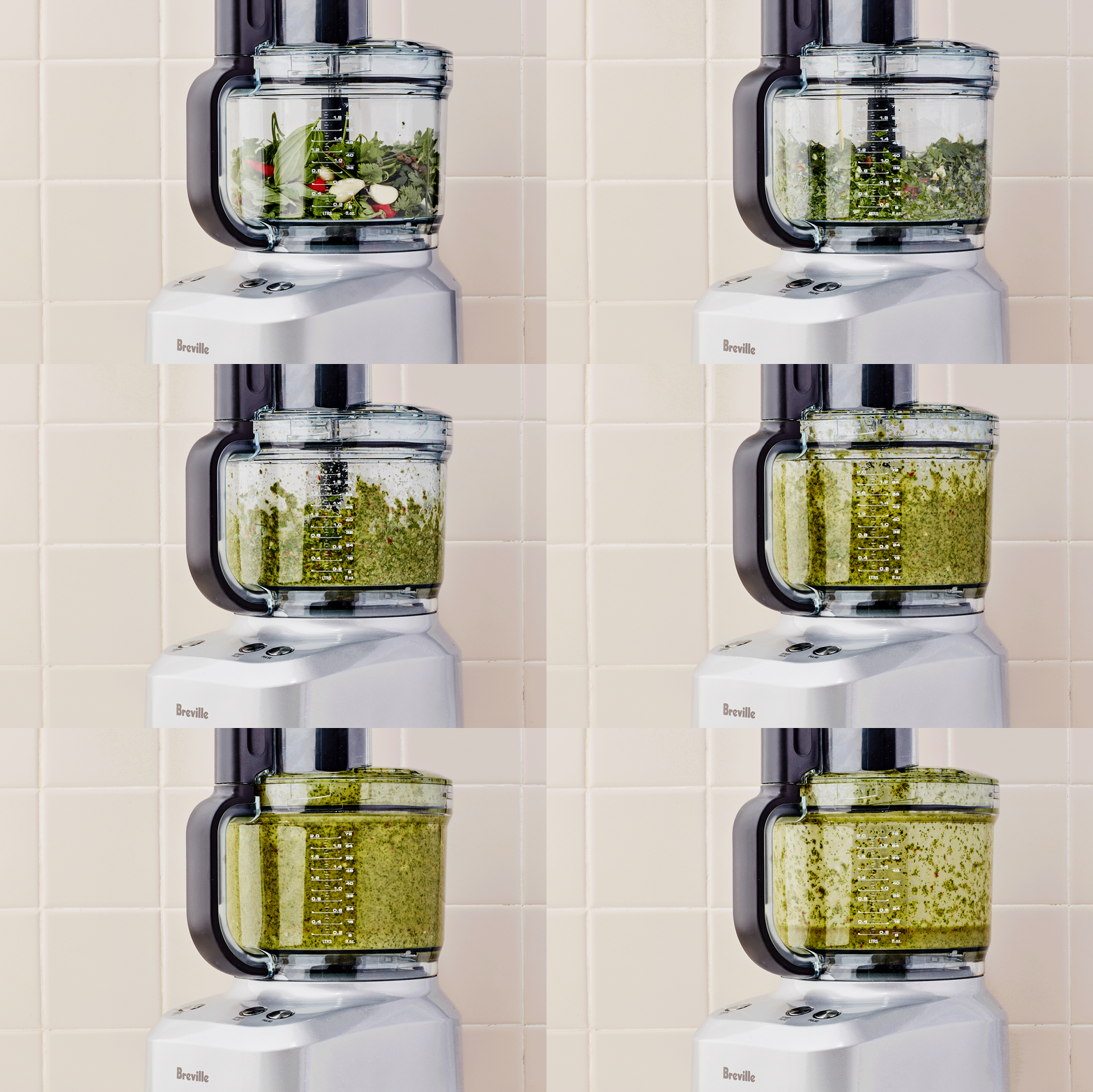
Still, if you’re suspicious of Australian ingenuity for whatever reason (maybe the blades spin backwards), I still think that the Cuisinart Custom is a buy it for life kind of appliance. Just know that also means a lifetime of feeling like an idiot for a few seconds every time you’re in the mood to make pesto.

My colleagues and I put each machine through four different tests to evaluate different aspects of its performance. I combined these observations with long-term testing notes from members of our team, who live and work with different models on a regular basis.


Continue Reading

Food

Conchas Are the New Croissant

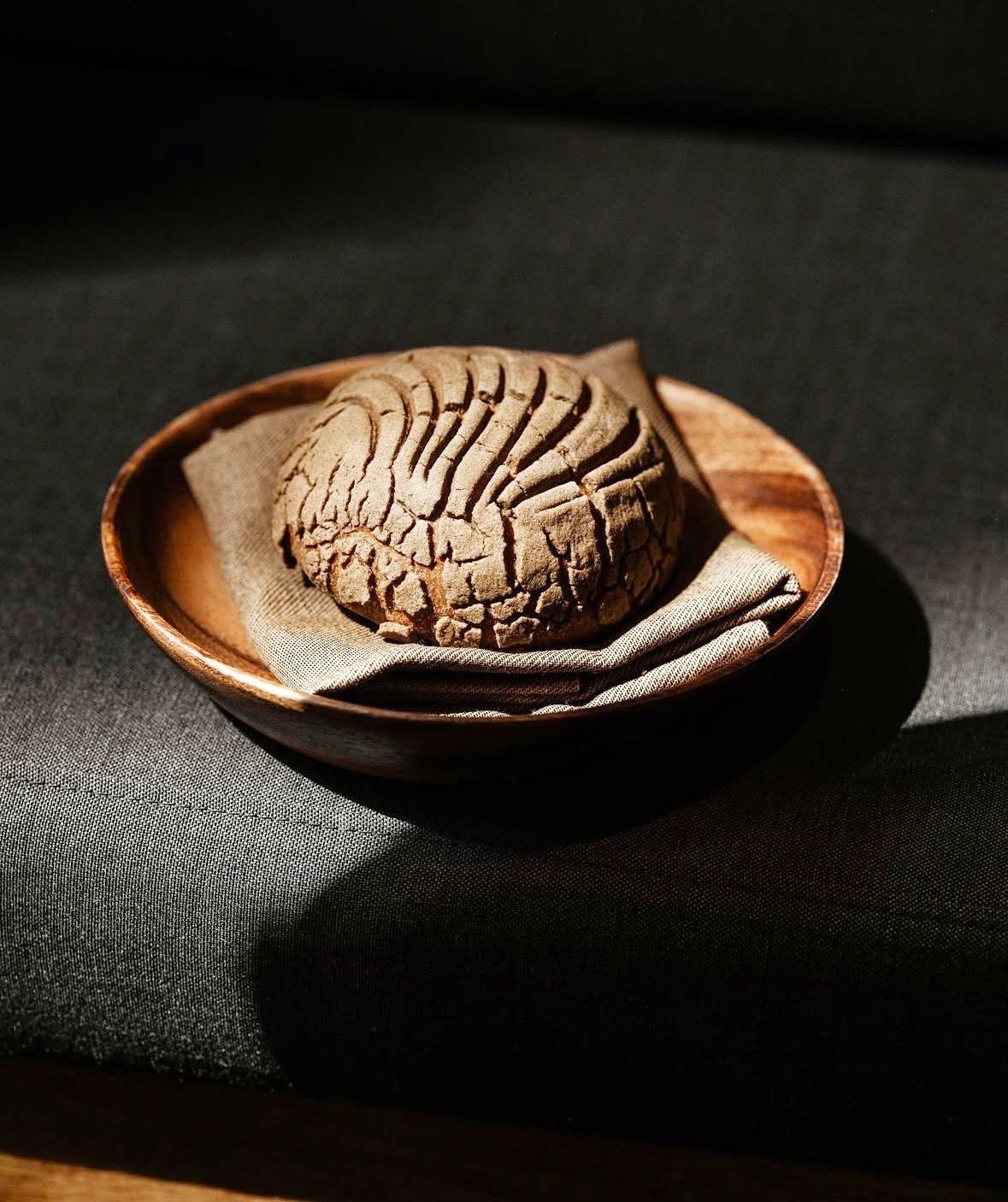
Back in 2017, Mariela Camacho, the oldest daughter of Mexican immigrant parents, was baking sourdough loaves for coffee shops in Seattle when she decided to lean into her heritage and learn to bake conchas, the catcher’s mitt-sized sweet buns commonly found in Mexican panaderias.

The problem: she had no idea how to make them. “My family cooks, but they don’t bake, so I had to figure it out myself,” she said. “Nine years ago, conchas were not cool, so I had to basically teach myself.”

Today, Camacho bakes colorful conchas in modern flavors like earl grey and vanilla, hot chocolate with saffron and guajillo, and brown butter lavender at Comadre Panadería, her bright pink shop in Austin, Texas.

A concha from Vato in Brooklyn with yuzu curd totomoxtle and craquelin.

A concha from Vato in Brooklyn with yuzu curd, totomoxtle, and craquelin.

Photo by Paco Alonso

She’s far from alone. Contemporary conchas are popping up across the country: in New York at Vato and Cosme; in Los Angeles at Santa Canela and My Panecito; in Vermont at Atla’s Conchas. Even Popeyes is in on conchas, which debuted a Tequila Don Julio–flavored concha chicken sandwich during the Super Bowl.

Perhaps the clearest sign of the concha’s ascent came last February at La Rue Doughnuts, a French bakery in Dallas, where the croissant collided with the concha. “The croncha was an organic way to bring together the cultures in our kitchen,” said owner Amy La Rue, noting her largely Mexican staff. The pastry—layered like a croissant, topped like a concha—drew TSA-length lines down the block and helped reframe the bun as a peer to French pastry.

That shift is measurable. According to food industry research group Datassential, menus featuring conchas have grown 68% in the past four years, with 53% of Gen Z diners “definitely interested” in trying one—more than any other generation.

“We’re bringing our childhood memories to the table, and now people are paying attention,” said Erick Rocha, pastry chef at Corima in Manhattan and the all-day cafe Vato, in Park Slope, Brooklyn, where conchas regularly sell out. “A lot of us are putting conchas on the map for the American public.”

Building on Tradition

The concha traces back to the 16th century, when wheat arrived in Spanish colonies. The pan dulce tradition evolved in the 19th century under French influence, with conchas becoming a staple in Mexico City’s cafés de chinos—Chinese-owned diners that proliferated in the early 20th century. Over time, the buns evolved from classic vanilla and chocolate to more expressive versions, like those scented with hoja santa at Mexico City’s acclaimed Panadería Rosetta.


Continue Reading

Food

Carnitas (Crispy, Tender Mexican Pork)
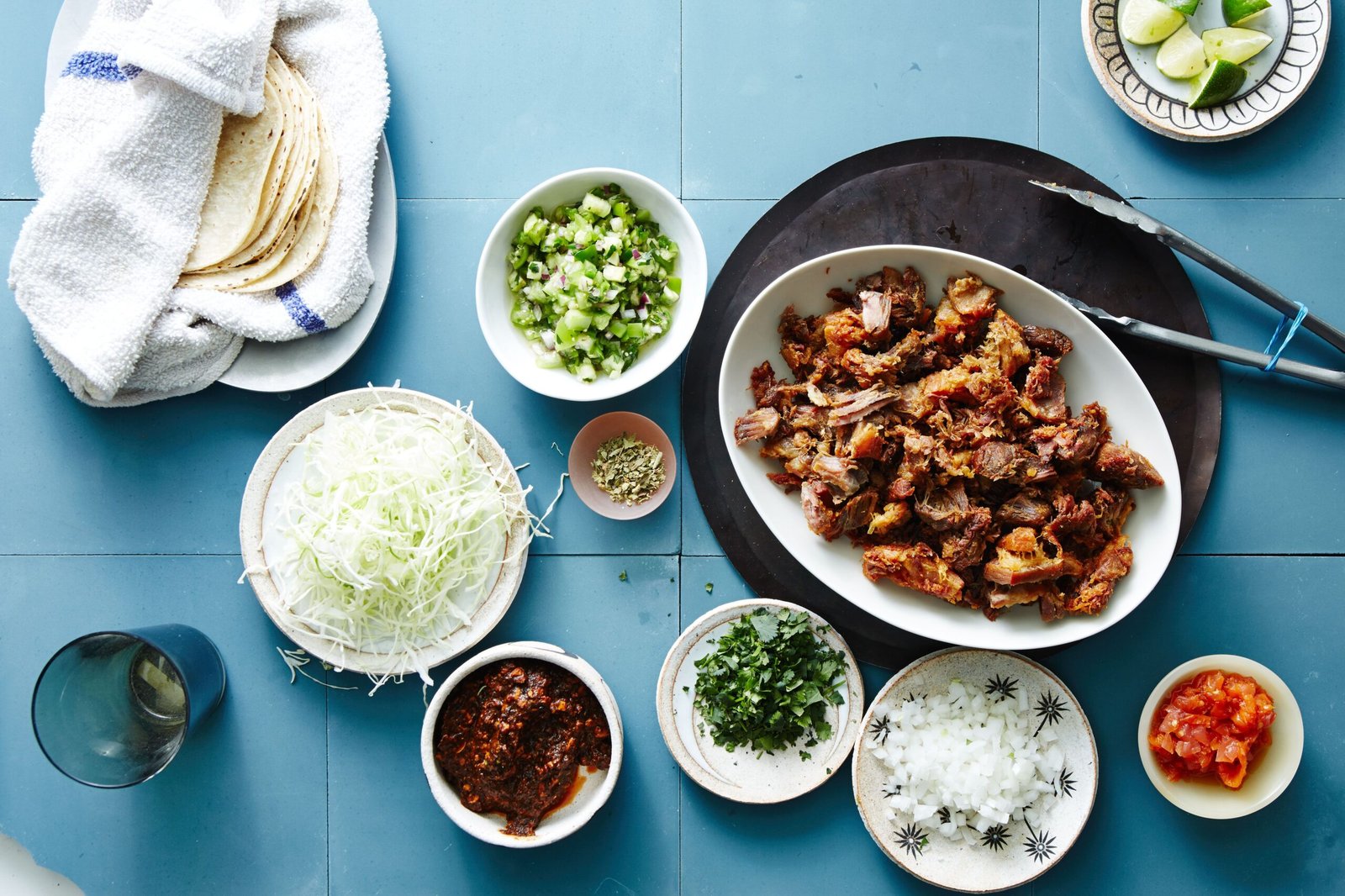
Carnitas—literally “little meats”—are one of Mexico’s most iconic pork dishes, and this double-pork carnitas recipe (belly and shoulder) delivers a flavorful, unfussy take built around two things: great meat and patience.

This streamlined recipe strips out the citrus, spices, and other aromatics typical of many carnitas recipes, keeping the braise intentionally simple. The payoff comes in the final step, when the pork is crisped in its own fat, yielding juicy, shreddy meat with deeply browned, crackly edges and concentrated pork flavor.

Once the meat is cooked, make carnitas tacos by filling warm corn tortillas with the shredded pork and topping with fresh cilantro, sliced avocado or guacamole, salsa verde or habanero jam, finely chopped white onion, or a dollop of crema.

What are carnitas?

Carnitas are a traditional Mexican dish made by slowly cooking pork—usually pork shoulder—until tender, then crisping it in its own fat. The result is meat that’s both juicy and crispy, typically served in tacos with simple toppings like onion, cilantro, and lime.

What cut is best for carnitas? Is pork belly essential?

Boneless pork shoulder (also called pork butt or Boston butt) is the classic choice for carnitas because it becomes tender and shreddable as it cooks.

Pork belly adds richness to this carnitas recipe and yields extra-delicious, crispy bits, but it’s not required. Pork shoulder alone will produce very good carnitas—just slightly leaner and less varied in texture.

Why aren’t my carnitas getting crispy?

The final frying step is essential. The pork should be cooked in batches in a wide skillet so it actually fries in rendered fat rather than steams. Overcrowding is the most common reason carnitas turn out soft instead of crisp.

Can I add spices, citrus, or aromatics?

Many carnitas recipes use cumin, bay leaf, orange, garlic, or beer in place of some of the broth. This version is designed to work without them, producing deeply flavored shreds of pork that let the meat’s flavor shine. That said, you should feel free to put your own spin on the recipe.


Continue Reading

Food

I’m Convinced Every Home Cook Needs These Chef-Approved Storage Containers
During my time at the restaurant, I proofed focaccia dough in Cambros, stored hundreds of saltine crackers in them to keep them from drying out, cracked dozens of eggs into them for French toast batter, and mixed zucchini bread batter four batches at a time so the weekend chefs could quickly measure and bake off loaves for brunch. The containers made large-scale prep logical and efficient.

My time at the restaurant didn’t last long—turns out not everyone is cut out to be a professional baker—but I brought the Cambro habit back home with me. Once you use these chef-favorite polycarbonate containers for storage and large-batch prep, going back to Ziploc bags and mismatched Tupperware just doesn’t cut it.

Whether you’re looking for a better way to organize ingredients in your kitchen or prepping for a large party, you need to use Cambros in your kitchen. Here’s why I like them so much:

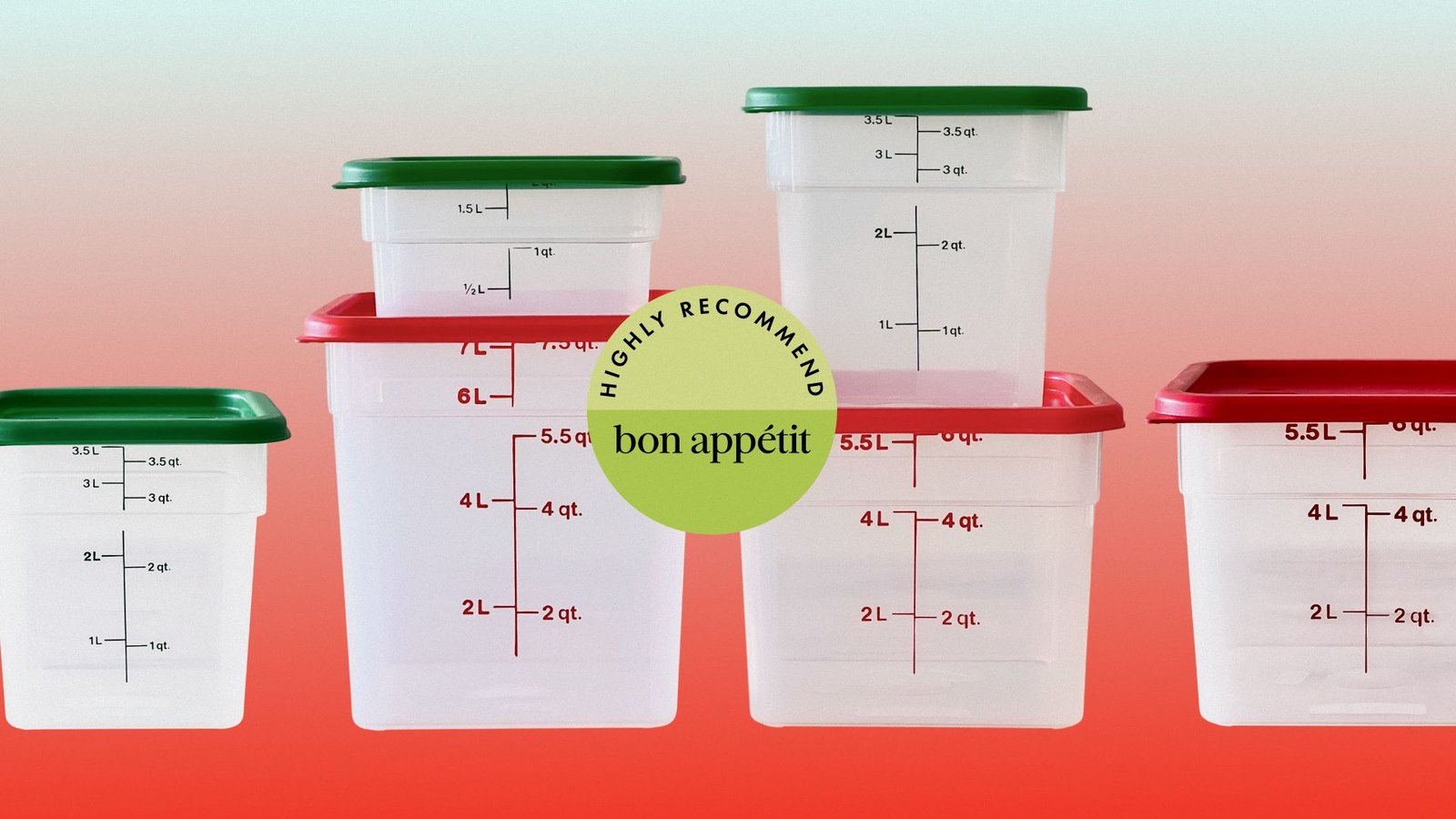
They come in a variety of sizes, so there’s probably an option for you. I picked up a four-pack of 2-quart bins at Costco that I use for storing grains and pasta, and a 6-quart tub for making a huge batch of cold brew. Smaller half-quart and quart sizes work well for prepped ingredients or leftovers, and measurements marked on the side make it easy to track quantities without pulling out a measuring cup.

They are extremely sturdy, so you don’t have to worry about any major cracks or chipping. The lids are exceptionally tight-fitting, so there’s less chance of anything sloshing out of the side, and they’re also dishwasher safe, which is key. Perhaps most importantly, they’re stain and odor-resistant (we don’t need weird odors and colors sticking around forever). You can finally say goodbye to those flimsy leftover takeout containers.

Larger containers help you buy in bulk to save money. I often buy many pounds of coffee and rice at once, and I use my 8- and 12-quart containers to store backstock in the pantry. If you bake a lot, they’re a great way to store large quantities and varieties of flour.


Continue Reading

Latest News

Video1 hour ago

Pope should understand Iran is 'threat to the world,' says Trump. #DonaldTrump #PopeLeo #BBCNews

UsaLocalNews2 hours ago

Charlie Kirk case stalls as accused shooter delays plea and eyes media limits

​ Two groups of local and national media outlets, including Fox News, have also asked the court to allow cameras...

Video2 hours ago

Artemis astronaut describes 'powerful' moment Moon crater named after his late wife. #Nasa #BBCNews

Video3 hours ago

South Korea's runaway wolf finally captured after nine-day search. #SouthKorea #Wolf #BBCNews

Video4 hours ago

How hypnosis may be more real, and powerful, than you think | Chasing Life

Most people think hypnosis is stage tricks. But science says otherwise. Dr. Sanjay Gupta talks with Stanford’s Dr. David Spiegel...

Video4 hours ago

The impact of no tax on tips

CNN’s Betsy Klein speaks with tip-based workers in Las Vegas as President Donald Trump paid a visit to the city...

TravelNews5 hours ago

Casago Expands Idaho Presence with New Locally Led Franchise in McCall and Boise

​ Casago, a premier franchise-based vacation rental management company, has expanded its Idaho presence with a new locally owned and...

TravelNews5 hours ago

Erling Haaland & Vinicius Júnior Front New Marriott Bonvoy and Visa ‘For Fans, Everywhere’ Campaign

​ As the FIFA World Cup™ returns to North America for the first time in more than three decades, Marriott...

India Top Stories Feeds5 hours ago

Shashi Tharoor’s Demonetisation Reminder To Government Over Delimitation

​  Please paste your post content you want rewritten, and I’ll preserve the facts, improve readability, and optimize it for SEO...

India Top Stories Feeds5 hours ago

Gautam Adani Overtakes Mukesh Ambani As Asia’s Richest, Check Full List

​  While Adani Group’s businesses include infra, energy & logistics. The Reliance Industries — led by Ambani — is strong in...

Trending News

Join Our Newsletter

Stay updated with breaking news and exclusive content.