I discovered Kink Cafe the way most people in the kink world find community—by word of mouth. I’d been part of the “lifestyle” in New York for a few years, finding my footing by attending sex parties and kinky bingo nights. Which is why I was in Baltimore to visit the restaurant, which has gained popularity among East Coast foodie fetishists since opening last fall.
When I arrived at the brick building, nestled between a nonprofit and a gas station, chef and owner Nicole “Daji” Aikens was bustling around, rotating between a small dining room and a smaller kitchen. She is meticulously organized, a trait she brought over from a career in law enforcement.
“My prep has to be immaculate, so I don’t get behind,” she says, the rhythmic sound of a knife dicing vegetables cutting the quiet.
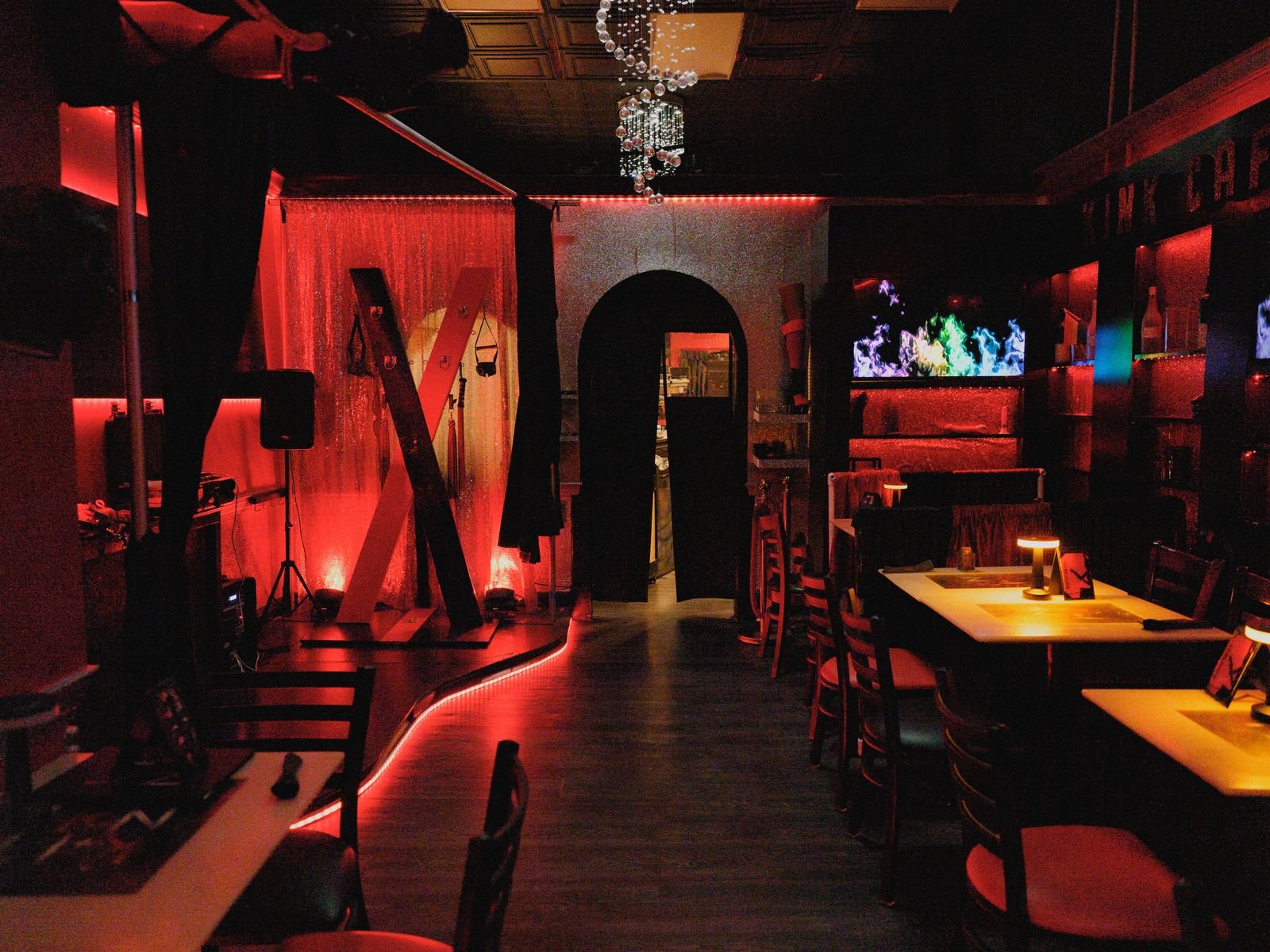
Guests who have visited a sex dungeon, or have seen one on Netflix, might notice similarities: Ruby red walls, black decor, and lots of leather. Most are Aikens’s personal touches: a collar purchased at a shop in New York’s West Village, high heels affixed to a wall, a nod to her former life as a dominatrix, and paddles of all shapes and sizes. The object that draws the eye most is the St. Andrews cross, an X-shaped structure meant to restrain, that rests in a corner near the kitchen.
The space itself emulates something akin to an actual dungeon, and the menu’s theme reflects what you’d see (or experience).
Guests who have visited a sex dungeon, or have seen one on Netflix, might notice similarities: ruby red walls, black decor, and lots of leather.
Aikens doesn’t eat meat, and most of the menu is pescatarian. There’s the “Chastity” shrimp lo mein, a take on the Baltimore carryout staple, which features broccoli, diced onions, and shrimp slathered in soy sauce. The “Shibari” jerk branzino is grilled bare with a jerk rub, a scoop of spiced yellow rice and broccoli resting atop it. The “Bondage Salmon” is baked, served with a sautéed array of zucchini, carrots, and green onions, on a bed of rice.
What the restaurant represents to its supporters (and those hesitant but curious) is a shift in public interest in, and acceptance of bondage and discipline, dominance and submission, and sadomasochism (BDSM). Indeed, a 2019 international review published in The Journal of Sex Research found that more than 40% of people surveyed had BDSM-related fantasies, and about 20% had engaged in BDSM.
People sating their desires for food and company no longer need seedy hotels or hastily arranged Facebook events, now that brick-and-mortar spaces like Aikens’s restaurant exist. However, it remains to be seen how sustainable kink-themed food establishments are.
I Tried 20 Electrolyte Powders and Drinks to Find the Tastiest Ones
If you’d rather consume your electrolytes in gummy form, allow me to introduce you to Plant People’s Wonder Hydrate. These lychee-flavored gummies have a small amount of electrolytes per two gummy serving, so they’re best used as an everyday boost rather than for post-exercise rehydration. Oh, and they taste really good. So good that we’ve taken to passing the bag around at the office when we’re in need of something sweet in the afternoon.
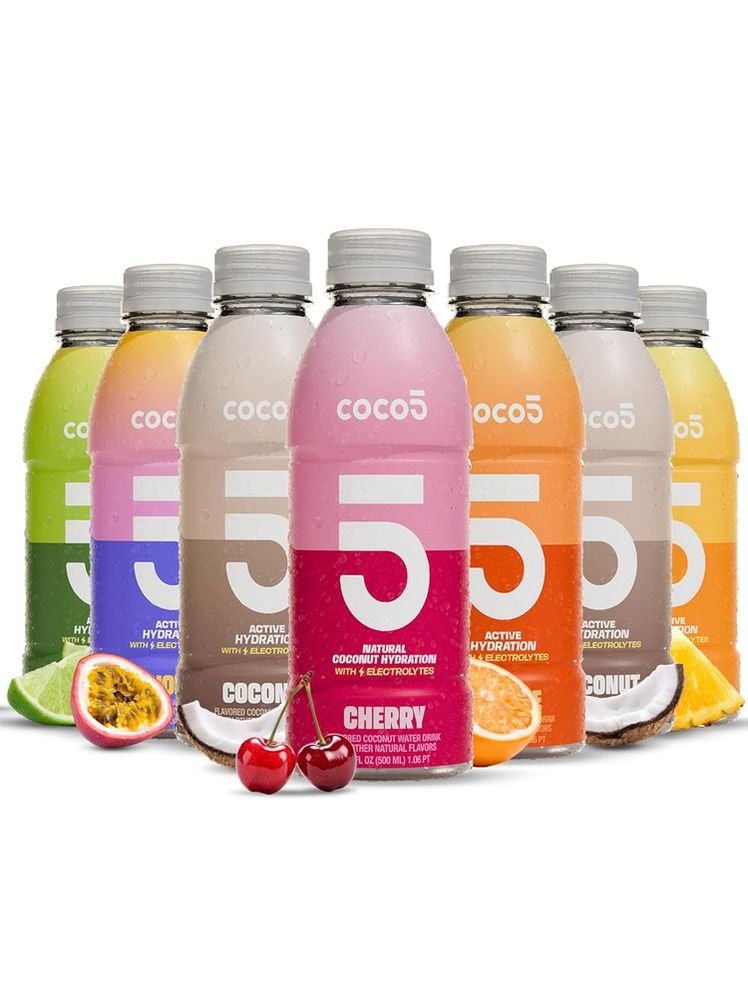
For the coconut water fiend: Coco5
Coco5
Coconut Active Hydration With Electrolytes
Type: Ready-to-drink Price: $2.50/serving Sodium: 120mg Sugar: 14g Sweetener: Cane sugar and rebiana (a form of stevia)
If you, like me, crave ice-cold coconut water the minute you feel parched, you’ll love Coco5. Made up primarily of coconut water concentrate and filtered water, you can essentially think of this as a coconut water-based sports drink. Coco5 makes use of the electrolytes found naturally in coconut water (like potassium, calcium, and magnesium) and adds salt for an extra hydration boost. Available in six flavors, I thoroughly enjoyed the taste of each one I tried. The passion fruit flavor tasted remarkably of passion fruit for something that doesn’t have, well, real passion fruit in it, and I liked the addition of citric acid for the welcome tartness it brings.
For athletes and intense exercisers: Gatorade
There is a time and place for this OG sports drink. It contains more than triple the amount of added sugar as Liquid I.V., with 34 grams per 20-ounce bottle, but for serious athletes, pro football players, and the like—that is, people who are exercising for hours at a time every day—Grasso says that sugar is absolutely necessary.
Another option from the Gatorade family is Gatorlyte. With far less sugar than traditional Gatorade (12 grams versus 34) and more sodium (490 milligrams versus 270), it’s a great pick for those looking for a widely available, ready-to-drink hydration solution. Do note that the extra sodium does mean Gatorlyte tastes a bit saltier than normal Gatorade.
The best hydration powder for kids: Hiya
Type: Bag/canister or sticks Price:$1.93/serving Sodium:85mg Sugar:2g Sweetener: Fruit, stevia, monk fruit
Each spring Spencer Huey brings thousands of homegrown heirloom tomatoes to a parking lot in Berkeley, California, for a one-day community sale. “I grow 50 varieties of tomatoes and 2,500 plants,” says Huey, a cook at Chez Panisse and creator of the Tomato Club substack. “It’s a little crazy.”
Fortunately, there are plenty of enthusiasts who share his devotion. As temperatures rise, heirloom tomatoes—open-pollinated varieties grown from seeds that have been passed down for generations—headline backyard plots, farmstands, Michelin-starred kitchens, and beyond. For devotees, the juicy flavors, rainbow colors, and irregular shapes and sizes of heirloom tomatoes are worlds away from the blandly homogenous red armies sold in supermarkets.
But what are heirloom tomatoes, exactly? And how are they different from the ones your nearest grocery chain stocks all year long? Here’s everything you need to know.
In this article
What are heirloom tomatoes?
Heirloom tomatoes are flavorful varieties grown from seeds that farmers have saved and handed down from farmer to farmer, usually for at least 50 years. “They’re created by a specific community or culture because they like the traits, the color, or the way the tomato tastes,” Huey says.
To be clear, the tomatoes themselves aren’t antiques. They’re called heirlooms because their seeds predate the grim march of industrial hybridization. In the 20th century, many farmers began crossing tomato varieties to create hybrids that looked uniform, resisted disease, and could withstand long-haul shipping to retailers miles away. Taste was less of a priority.
Meanwhile, “heirloom tomatoes are grown for flavor,” Huey says. Their generations-old seeds are open-pollinated—fertilized by insects, wind, and the like—rather than being manipulated by breeders.
The term heirloom isn’t regulated, though. A savvy marketer can use that word to sell any fruit or vegetable, regardless of whether its seeds were around during the Nixon administration.
Heirloom tomatoes versus ‘regular’ tomatoes
Most tomatoes you’ll find in the produce sections of grocery chains are hybrids. They tend to be uniformly red and evenly sized, with thick skins designed to withstand transit.
Heirloom tomatoes are more diverse. Some are the size of cherries or golf balls, while others are charmingly bulgy and weigh up to three pounds. Depending on the variety, they may taste intensely sweet, tangy, smoky, savory, or almost citrusy. Colors include scarlet, orange, green, yellow, blue, deep purple, or a combination; insiders describe the stripey ones as tomatoes with “shoulders.” In any case, expect heirloom tomatoes to have thin skins and juicy, flavorful interiors.
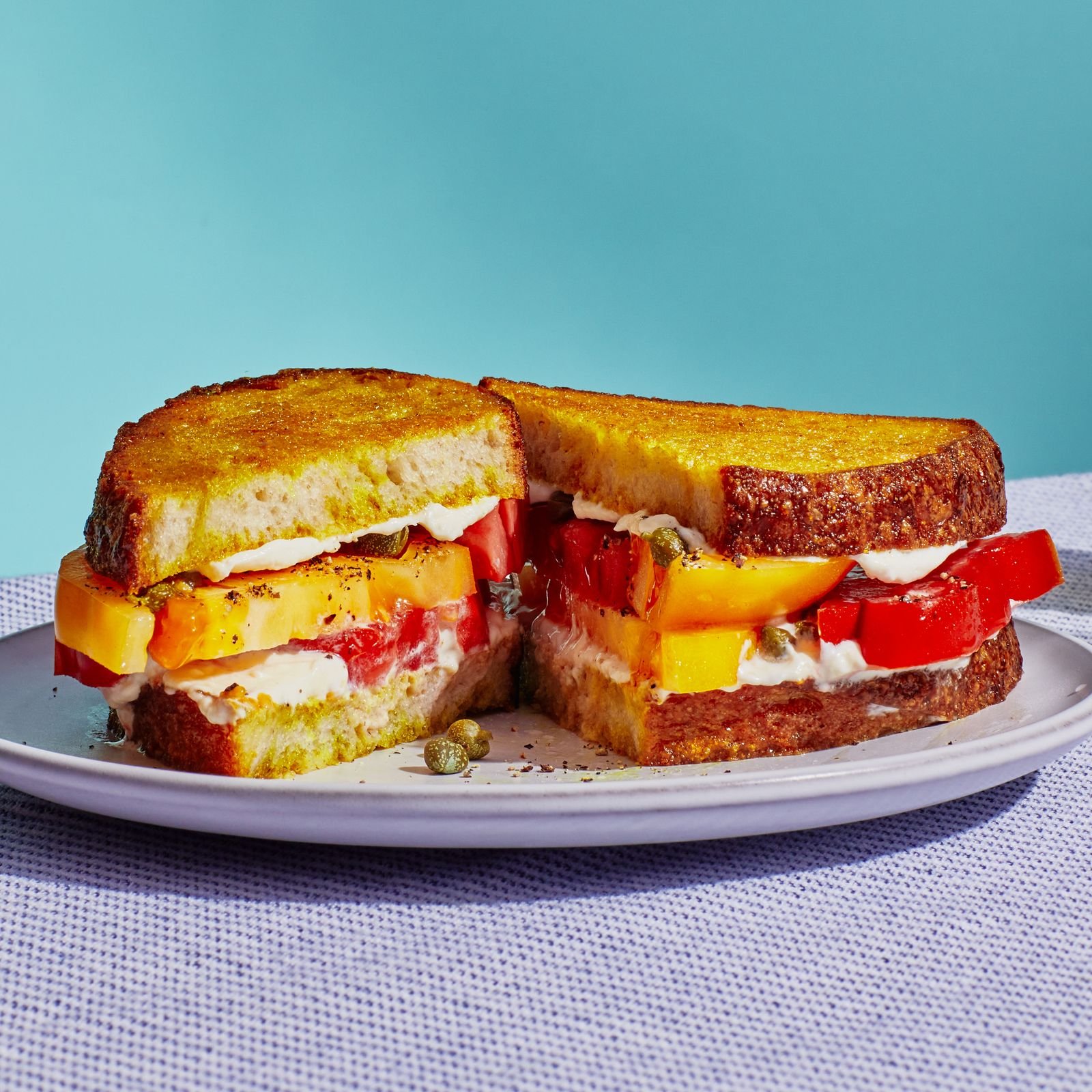
A thick slab of heirlooms makes for a superior tomato sandwich.
Photo by Isa Zapata
Are heirloom tomatoes genetically modified?
One reason why heirloom tomato varieties vary so much is that they’re not genetically modified. Their generations-old seeds haven’t been altered by human hands eager to sell more produce to far-flung shoppers year-round. Open-pollination preserves the plants’ distinctive family characteristics, so heirloom tomatoes taste like, well, tomatoes.
This 15-minute meal is our take on the viral “smash taco” trend. Similar to Turkish lahmacun in architecture, miniaturized and on a tortilla, the concept is simple: Spread a thin layer of ground meat on flatbread, then cook.
This version uses seasoned pork and flour tortillas and is dressed like al pastor tacos with pineapple, onion, and lime. (If you’re not a pork person, swap in ground beef, turkey, or chicken.) Instead of searing meat-side down in a skillet, then flipping to crisp the tortilla (which looks cool on camera but takes a while and runs the risk of the meat sliding off when turned), here you’ll make eight at once in the broiler on a wire-rack–lined baking sheet. Make sure to press the filling all the way to the edges of the tortillas; as the meat broils, it may shrink a bit, but will be no less tasty. This recipe makes eight small tacos, which comfortably serves two to four depending on how hungry everyone is. On the plus side, since they take barely 5 minutes to cook, it’s a snap to make another batch.
The Travel Must-Haves BA Editors Swear by for Stress-Free Trips
Whether I’m traveling for business or for pleasure, my itinerary is basically a string of restaurant reservations. And after a couple multi-course tasting menus, I need to move by body. Balance, right? But when I’m traveling with just a carry-on (see above), luggage space is precious, so I choose workout apparel that does double-duty. Sleek sneakers look cute when walking around town but also work in the gym, and my favorite Left On Friday bike shorts fold up super tiny in my suitcase. —AS
A wireless headphone adaptor for the plane
The AirFly Pro 2 seamlessly connects wireless headphones (or earbuds) to the in-flight entertainment system without glitching or cutting out. Plus it’s got a decently long battery life and is small enough to pack right inside my headphone case, so I never forget it. No more fighting with tangled cords when I lower the tray table to eat my in-flight meal or attempt to extricate myself from the window seat to pace the aisles in my compression socks. —Kelsey Youngman, senior cooking editor
The only good neck pillow
The Trtl Neck Pillow genuinely changed the way I fly. I can actually sleep on planes now. It holds my head securely in place (no more jolting awake mid-bob) and offers real support without feeling bulky. The soft fabric adds a bit of warmth on colder flights, and it packs down flat, making it easy to slip into a carry-on. —Ali Inglese, senior director of video
Place one 10–12-lb. whole beef brisket, fat trimmed to ¼” thick, on a rimmed baking sheet. Mix ⅓ cup Diamond Crystal or 3 Tbsp. plus 1¾ tsp. Morton kosher salt and ⅓ cup freshly ground pepper in a small bowl to combine and sprinkle all over meat (it should look like sand stuck to wet skin but without being cakey). Let sit at room temperature 1 hour.
Step 2
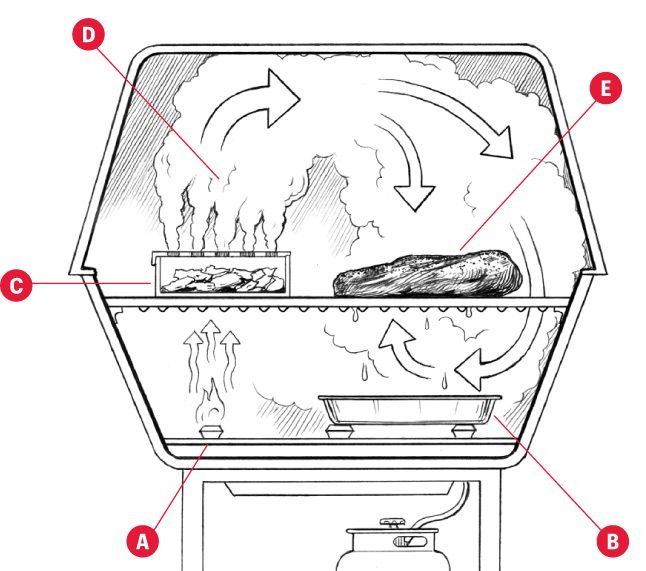
If using a gas grill: While meat is sitting, place 6 cups wood chips in a large bowl and pour in water to cover. Let soak at least 30 minutes and up to 12 hours before using. (Leave in water throughout the cooking process.) Keep remaining 2 cups wood chips dry. Light 1 burner to medium (A; if using a 3-burner grill, light burner on either end). Make sure drip tray (B) is empty, as a lot of fat will render. Place smoker box (C) over the lit burner, add ½ cup soaked wood chips to box, and close grill. Adjust heat as needed to keep temperature at 225–250°. We recommend using a stand-alone thermometer, even if your grill has one, to ensure an accurate reading. Stick it through the gap between lid and base of grill (or set it on the grill’s upper shelf (D), though this is not ideal, as it requires opening the lid more often). The wood chips should begin to smolder and release a steady stream of smoke. How long this takes depends on how wet your chips are and the heat of your grill. To get more smoke without increasing grill heat, add a few dry chips to the soaked ones.
Illustration by Joe McKendry
If using a charcoal grill or smoker: While meat is sitting, fill a chimney starter with charcoal; light and let burn until coals are covered with a thin layer of ash. Pour contents of chimney into one side of grill or smoker. Place 3 chunks of wood next to (not on top of) coals. (You want the wood to catch slowly and smolder. Placing them on top of the coals will cause them to burn too quickly.) Place grate on grill or smoker and cover, positioning vent on lid as far from heat source as possible. (This will help draw the smoke up and over meat as it rises). Stick thermometer through top vent. Heat until thermometer registers 225–250°, adjusting vents on bottom and top of grill or smoker as needed to maintain temperature.
Step 3
If using a gas grill: Place brisket, fatty side up, on grate over indirect heat (E), arranging as far away from lit burner as possible. Cover grill and smoke brisket, adjusting heat as needed to keep temperature between 225–250°, checking wood chips every 45 minutes or so and adding more soaked chips by ½-cupfuls as needed to keep smoke level constant, and rotating meat every 3 hours and turning as needed if top or bottom is coloring faster than the other, until very tender but not falling apart and an instant-read thermometer inserted into thickest part of meat registers 195°–205°, 10–12 hours total.* (Resist the urge to open grill often, as this will cause the temperature to fluctuate.)
If using a charcoal grill or smoker: Place brisket, fatty side up, on grate over indirect heat, arranging as far away from lit burner as possible. Cover grill or smoker and smoke brisket, adjusting vents as needed to control temperature, checking coals and hardwood about every 45 minutes, and rotating meat every 3 hours and turning as needed if top or bottom is coloring faster than the other, until very tender but not falling apart and an instant-read thermometer inserted into thickest part of meat registers 195°–205°, 10–12 hours total.* (Open lid as little as possible; check and replenish coals and hardwood at the same time.) For the coals, once you have checked them and decided to add more (they’ve burned down enough that you’ll need more to keep your fire going and maintain your grill temperature), fill a chimney halfway with coals, then add coals to grill once they’re covered with a thin layer of ash. (If you have a hinged grill grate, you can remove 1 lit coal from grill with a pair of long tongs and place at bottom of chimney to quickly light more coals.) If you control the heat well, you shouldn’t need more than 4–6 chimneyfuls of coals to cook brisket (2–4 chimneyfuls if finishing brisket in the oven). When checking hardwood, move it around to a hotter spot if needed, or replenish extinguished chunks to keep level of smoking constant. Make sure to reposition top vent on lid over meat and away from heat source when replacing.
*Note: If you don’t want to spend your entire day tending the grill, here’s a fail-safe Aaron Franklin–endorsed alternative method that will deliver similarly glorious results: Smoke brisket on grill or smoker as instructed until an instant-read thermometer inserted into thickest part of meat registers 150–170°, about 5–6 hours. Wrap brisket in foil, place on a rimmed baking sheet, and bake in a 250° oven until an instant-read thermometer inserted into thickest part of meat registers 195–205°, 4–6 hours. What’s important is getting that smoky flavor into the meat, and 5–6 hours on the grill should do it. After that point, you’re simply getting the meat cooked through.
Step 4
Transfer brisket to a carving board and let rest at least 30 minutes. Slice brisket against the grain ¼” thick. Transfer to a platter and serve with coleslaw, potato salad, and pinto beans alongside if desired.
Do ahead: Brisket is best shortly off the grill, but you can still get good results smoking it up to 3 days ahead. Let cool 1 hour, then wrap in foil and chill. Reheat, still wrapped, in a 325° oven until warmed through.
Photo by Christopher Testani
Editor’s note:This smoked brisket recipe was first printed in our July 2013 issue; it has been updated for style. Head this way for our favorite BBQ side dishes →
































 Tech3 days ago
 Entertainment2 days ago
 Food3 days ago
 Sports4 days ago
 UsaLocalNews3 days ago
