

HealthNews
A 1998 Boston party photo shows a woman with her boyfriend. Her future husband is in it too.
Some old photos get better with age, and a film snapshot from a Boston house party in May 1998 might be the best recent example.
As Newsweek reported, Brenna Jennings posted the picture to social media last spring under her handle @ogbrenna, and the caption turned it into something much bigger than a throwback. “I was dating the guy in the chair, but I married the guy in the window,” she wrote.
The photo shows a young Jennings perched on the arm of a chair, laughing beside her boyfriend at the time. Off to the side, seated quietly near a window, is Steve, the man who would eventually become her husband. The post struck a nerve, racking up more than 9 million views and 238,000 likes, according to Newsweek.
The picture, likely snapped by her sister, came from the last party Jennings and her roommates threw before leaving their first apartment after college, with everyone about to scatter into new lives. She had been dating the man in the chair for about a month after meeting him at a live music show that spring. “We were young, tan, living in the city and enjoying each other’s company,” she told Newsweek.
The man in the window was just her roommate then, and not one she saw much. They worked opposite schedules and crossed paths rarely. “I thought he was quirky and did not for a minute consider him to be my ‘type,’” Jennings said. He did have one running bit she remembered: when her boyfriend left phone messages, her roommate would relay them by announcing that “the model called.”
The chair relationship fizzled within months as their lives pulled in different directions. Around the same time, the window guy left Boston for a month in California and asked Jennings to hold onto his stereo while he was gone. They started talking more, and the talking started to mean something. “At some point, I realized how funny, smart, and even-keeled he is,” she said. By December, they were officially together, and he moved in soon after.
Nearly three decades of marriage later, the couple lives in New England, where they have raised a daughter who is now approaching high school graduation, fostered dozens of puppies, and weathered the usual run of life’s highs and lows together.
Asked what she would tell the young woman on the arm of that chair, Jennings did not hesitate. “I’d say first of all, look at how pretty you are! Stop imagining yourself to be too tall, too loud, too much,” she said. The guy in the chair was great-looking, she admitted, but as she put it, “I was no slouch!”
For more entertainment and lifestyle content, you can follow @ogbrenna on Threads.
HealthNews
Californian Dies from Rare Disease After ‘Trapping, Feeding and Breeding Wild Rats’ in an RV
NEED TO KNOW
A California resident died from leptospirosis after living in an RV infested with wild rats
The bacterial disease, spread through infected animals’ urine, is very rare in humans but can spread through contact with infected body fluids
Berkeley, Calif., city manager Paul Buddenhagen said there is very little risk to public health, as person-to-person infection is extremely uncommon
A California resident has died after coming into contact with several rats.
On June 10, Berkeley city manager Paul Buddenhagen warned of the existence of leptospirosis in some of the city’s rats after the first human death was linked to the rare disease last month, per his memo shared with Berkeley officials on June 10. Though leptospirosis poses very little public health risk, Buddenhagen proposed several measures to increase awareness and research around the city’s rats to prevent future infections.
Leptospirosis is a treatable bacterial disease that is spread through the body fluids of infected animals and can be contracted if humans come into contact with infected body fluids, according to the Centers for Disease Control and Prevention.
The risk of a human contracting the disease is higher for people experiencing homelessness or living in a space with rats or animal urine, per the CDC. This was likely the case with the Berkeley individual who died of leptospirosis, and their living partner who also contracted the disease, Buddenhagen wrote.
“Both individuals lived together in a recreational vehicle in which they had been trapping, feeding and breeding wild rats,” Buddenhagen wrote in the memo. “In addition, the vehicle was severely infested with wild rats that were not in cages.”
Both of the residents in the RV, parked near the Harrison Street encampment, grew sick, but neither sought out medical treatment “for weeks and possibly months.” Both were eventually transported to a hospital to receive care.
Never miss a story — sign up for PEOPLE’s free daily newsletter to stay up-to-date on the best of what PEOPLE has to offer, from celebrity news to compelling human interest stories.
One individual died not long after they were hospitalized, Buddenhagen wrote, while the other recovered with treatment.
During their hospitalization, Alameda County Vector Control laid rat traps in and around the RV and sealed the vehicle, only opening it to remove the dead rats. They repeated the process several times over many days until they were certain no rats remained, and then the vehicle was towed and destroyed.
“Continuous trapping and testing by Alameda County Vector Control revealed a persistently high prevalence of leptospirosis in wild rats around the RV, exceeding expected urban baselines,” the memo read.
Buddenhagen reiterated that there is an “extremely low” risk to the public, and the recent death was the result of an “extreme situation.” Person-to-person infection is rare, and there have been no recorded cases at the Harrison Street encampment and no evidence of transmission from rats to other animals.
HealthNews
‘They’ll pay anything to feel better’: why pelvic pain is so expensive to treat


Any time Jennifer Vargas, a 35-year-old sex educator in Bushwick, attempted sex, she felt stabbing pain in her vagina so severe her body ached for hours. Nothing helped. Tight clothing exacerbated the “intense, grating sensation”.
Vargas’s symptoms began after a bacterial vaginosis (BV) infection, but the burning and itching persisted beyond a course of antibiotics. Then, she experienced extreme PMS for two weeks. “I was cycling through symptoms of severe anxiety and depression and low energy,” she said. “I was just like, something’s not right here.”
She returned to her gynecologist many times to resolve the lingering pain. Vaginal swab tests came back negative for BV, but they kept treating her for it without seeking other causes.
After about two years of searching, Vargas was exhausted from appointments and feeling dismissed. Then, she was laid off from her job in early childhood education and placed on Medicaid. Finding providers who understood pelvic pain was already a challenge, but finding ones who took Medicaid was nearly impossible – and she gave up on a diagnosis.
It has now been six years since her symptoms started. Vargas estimates that gynecologists, pelvic floor therapists and nutritionists have cost her about $15,000 in out-of-pocket medical bills. Yet she has had no relief.
Vargas’s experience isn’t rare: for the estimated 26% of women who experience vulvovaginal pain, treatment and diagnosis are costly. The estimated economic burden of vulvodynia, an umbrella term for vulvar pain, in the US ranges from $31bn to $72bn annually, accompanied by a lower quality of life.
Some of the expense results from a delay in diagnosis. Almost 60% of the patients who seek care for vulvovaginal pain saw at least three different providers, most of whom could not diagnose them. Additionally, patients pay for treatments that may or may not work, and seek relief via lifestyle adjustments or supplements, said Elizabeth Hintz, an assistant professor of health communication at the University of Connecticut. Negative experiences with providers also “erodes the sense of self”, leading patients to seek mental health support, she said.
“People, especially in this space, will pay – if they can – anything to feel better,” Hintz said. “That also perpetuates this idea that this is a mostly wealthy white woman problem. Because those are the only women who can actually afford to solicit this.”
Kimberly Ellis, 33, a non-profit worker in Washington DC, also had symptoms that began after yeast and BV infections. When treating them didn’t resolve the burning and stabbing, she saw her primary care doctor, then several OB-GYNs and even a dermatologist. She found a vaginal disorders specialist in the area who took insurance, but had a year-long waitlist.
“I went to her a few times,” Ellis said. “But she was pretty honest that my issues are out of her depth.”
Ellis ended up searching for answers on Reddit. She found more providers who specialized in vulvovaginal health through local and online communities and eventually was able to get a diagnosis for pudendal neuralgia, or pain caused by damage or irritation of the pudendal nerve located in the genital and anal region, along with fibroids.
She estimates that she’s spent a minimum of $12,000 out-of-pocket on pelvic floor physical therapy and doctor visits. This number doesn’t account for services like therapy and acupuncture, which she started in order to cope with the pain and frustration.
“It has wreaked havoc on my mental health as well,” she said.
Systemic issues often prevent patients with vulvovaginal pain from getting a diagnosis and affordable, effective care.
To begin with, in the US, many vulvovaginal pain specialists operate outside of the insurance system due to low reimbursement rates, administrative barriers and appointment time constraints. This means an initial consultation with a specialist can cost $500 to $2,500.
Providers receive low or no insurance reimbursement rates because the insurers deem many sexual health conditions – including pain – a mental health issue, said Dr Corey Babb, a vulvovaginal specialist and medical director of the Haven Center in Tulsa, Oklahoma. Insurance companies also often limit appointment times to as little as 15 minutes, Hintz said. Many patients deal with overlapping conditions like vestibulodynia and hypertonic pelvic floor dysfunction, which require multi-disciplinary knowledge and significant time to properly diagnose and form a treatment plan.
“It’s a dumpster fire of brokenness,” said Dr Rachel Rubin, a urologist and sexual medicine specialist who runs a private practice in Bethesda, Maryland. Patients are a volume game, she said; larger institutions work with a large number of patients to make the low insurance reimbursement rates worthwhile, “and nobody is happy.”
Vulvovaginal pain is not covered in typical medical training, and specialists must seek out additional education on their own. Even obstetrics and gynecology students focus on pregnancy complications and surgeries like hysterectomies, Babb explained. Early in his practice as an OB-GYN, Babb had patients with questions about vulvar conditions like lichen sclerosus or low sex drive, which he did not know how to treat. As he researched answers, he learned about the International Society for Studying Women’s Sexual Health (ISSWSH) and decided to become a fellow to fill gaps in his knowledge and ended up specializing in sexual medicine, vulvovaginal pain and menopause.
Specializing in vulvovaginal pain spans beyond traditional gynecology, obstetrics and urology into hormonal, nerve, skin and muscle-related issues. Training and growing the field entails plenty of labor: publishing new research, teaching other practitioners, and spending hours with patients other doctors cannot help. But someone has to pay for it, and these scarce specialists charge a premium.
“If you were highly specialized in something that a lot of people could do, you wouldn’t charge $2,000 for a visit,” said Hintz. “Nobody would pay for it. You can make a lot of money off of desperate people, it turns out. That’s more of a cynical hot take.”
Research into vulvovaginal pain is also sparse. While there are more than 30 different treatment options for the symptoms of vulvodynia, almost none have been the subject of controlled research. This means patients and doctors must often figure out what works via trial and error. In 2024, the National Institutes of Health allocated just $2m of funding for vulvodynia. By comparison, headaches received $50m.
“No one is coming to save the day,” said Rubin. “Not the NIH. No academic centers. We are the grownups here, and we have to do the work.”
Vargas attended an event in 2023 held by Tight Lipped, an advocacy group for patients with vulvovaginal and pelvic pain disorders. She joined their online community and saw a post about the Aziza Project, which provides gynecological pain patients with funding. Within days, Vargas was on the phone with the executive director, Stephanie Berman, and applied to be a client.
The Aziza project connected Vargas to Babb – Berman refers clients to Babb, who had treated her own issues – and covered her appointment fees and travel to Tulsa. Babb diagnosed her with hypertonic pelvic floor dysfunction; depleted levels of estrogen and testosterone, which can cause pain in the vaginal opening; and melanosis, or discoloration of the skin. It also covered several pelvic floor physical therapy sessions.
“It was like a weight had been lifted, to have somebody else come in and say you’re not alone and I’m going to help you carry this,” said Vargas.
Berman, 41, who lives in British Columbia, started the Aziza Project during her battle with vulvovaginal pain. In 2010, she could barely get off the couch. An ever-present itch burned her vulva, and her back throbbed throughout every menstrual cycle. She constantly felt bloated; the pain made it hard to think. One evening, she looked at her husband and said: “I’m going to be bedridden eventually.”
In July 2020, an ultrasound indicated that she might have endometriosis. That October, almost nine years after the onset of her symptoms, Berman had a hysterectomy, which relieved the severe cramping. But the vulvar stinging and burning persisted. The surgeon suggested lichen sclerosus, an inflammatory skin condition, might be the cause.
Multiple practitioners agreed with the lichen sclerosus diagnosis, including a dermatologist, though no one had confirmed it via biopsy. For two years, Berman used prescribed biologics and topical steroids, but nothing relieved the prickling, stinging, knife-like feeling. When she lived in Washington state, she saw a pelvic floor physical therapist who recommended a vulvar pain clinic in Seattle. At the clinic, the doctor offered no diagnoses, advice or treatment; he merely told Berman’s husband to “be gentle” and sent the couple on their way.
Berman was looking online for lichen sclerosus support groups when she came across an Instagram interview with Babb. She scrolled through his page, impressed by his knowledge, and wondered if he could help her. Berman booked a virtual consultation, which cost $250. She also booked a $500 in-person appointment, flights from Washington to Tulsa, and a hotel – a total spend of $8,000.
“The pain just takes over your ability to function,” she said. “I’d been used to my body betraying me for so long.”
At the appointment, Babb examined Berman and said the issue was nerve-related, not lichen sclerosus. He diagnosed her with hypertonic pelvic floor dysfunction and pudendal neuralgia. Berman received Botox injections for muscle pain and a nerve-block injection. “I had the best three days after that,” she said.
Since the initial appointment, Berman has returned to Tulsa seven times. The medical costs alone add up to $24,000. If you add travel, pelvic floor physical therapy, water aerobics for low-impact movement and specialist care costs, she estimated that her pain has cost almost $40,000 to date.
“That’s so scary,” she said. “For perspective, we owe $48,000 on our mortgage.”
Before her first consultation with Babb, Berman wondered how someone without means could access this caliber of care. Three months later, she launched the Aziza Project, named for the Hebrew and Arabic words meaning beloved, precious and mighty. She asked her community for donations of $5 a month that would go toward covering specialist appointments for patients who couldn’t afford it otherwise.
All of Berman’s extra income goes toward medical expenses. She takes 5% of donations from the Aziza Project – about $30 a month – as an operational fee and works as a budgeting coach. She and her husband live frugally: they share a car and spend about $40 on date nights.
The Aziza Project has been able to cover just over $8,000 in medical and travel expenses, split between four different patients. Berman hopes to raise enough in the future to cover follow-up visits, Botox injections and five to six nights of hotel stays – at a cost of $5,100 per patient.
Without the Aziza Project, Vargas said she would have been unable to pay for treatment. Medicaid wouldn’t cover the estrogen and testosterone compound cream that she needs for relief, nor has she found a local, pelvic pain-informed gynecologist to continue managing her care.
“It makes me really angry,” Vargas said. “There’s so many people who need this care and can’t get it.”
In the meantime, she said she had taken a break from treatment after several negative experiences with providers back home.
“I can’t continue to see practitioners that are just seeing me as a muscle that needs to be pushed through.” she said. “The rest of me needs to feel safe and comfortable.”
HealthNews
Mumbai doctor shares the symptoms people commonly ignore before receiving a hypertension diagnosis


Today, high blood pressure (hypertension) is a common condition, but many people remain unaware that they may already be living with it. In an interview with HT Lifestyle, Dr Murtaza S Bagwala, head of emergency medical services at Saifee Hospital, Mumbai, shared symptoms that may signal high blood pressure.
Also read | Want to control blood pressure naturally? Heart surgeon shares the first steps you should know
Symptoms of hypertension
Dr Murtaza said, “One of the biggest reasons why people are not diagnosed early because the symptoms are not obvious in the early stages of the condition, and it develops slowly and quietly.” This means that people are more likely to ignore minor physical symptoms and proceed through their day without being aware that their blood pressure is already on the rise.
According to Dr Murtaza, most people would overlook minor health warning signs, thinking they are simply caused due to stress, fatigue, and lack of sleep. These symptoms may be attributed to a busy life and overlooked, such as frequent headaches, dizziness, getting tired easily, head heaviness, blurred vision, irritation, poor sleep, or getting short of breath when walking.
But in some people, these symptoms could be a sign of hypertension, or high blood pressure. It’s common to hear people say things like, “I’m just stressed,” “I didn’t get a good night’s sleep,” or “It’s due to work pressure.”
According to Dr Murtaza, these symptoms are mild and non-specific, leading many individuals to delay getting themselves checked. However, when their blood pressure is monitored, the levels are likely to be significantly high.
Hypertension is a silent killer
Hypertension is sometimes called a “silent killer” because, in the early stages, it can cause minute or no symptoms, even though it is a serious condition that can lead to damage to vital organs in the body.
Eventually, unchecked high blood pressure can damage the heart, brain, kidneys, and eyes, and it can lead to serious health problems. Often, people may have very high blood pressure without even knowing it, which is one of the major problems with hypertension. This is why routine testing is very important, even for those who think they’re healthy.
HealthNews
Vitamin A Overdose Cases Increased After RFK Jr. Promoted It For Measles

LOADINGERROR LOADING
Measles is a major problem throughout the United States. Outbreaks are causing high rates of sickness in communities across the country, where unvaccinated people are largely impacted; more than 90% of measles cases this year and last year in the U.S. have been in people who are not vaccinated.
In 2025, there was a large measles outbreak in West Texas where two children died, and recently there have been additional outbreaks in South Carolina, Utah and more. The country is currently at risk of losing its measles elimination status, which happens when there’s 12 consecutive months of continuous measles transmission.
Advertisement
As the U.S. (and neighboring countries Mexico and Canada) continues to see outbreaks, the disease remains a fear among medical professionals ― especially as the World Cup comes to the country this summer. And for a good reason: Research shows that people are growing more hesitant of the MMR vaccine, which protects against measles, due in large part to the vaccine hesitancy coming from the top.
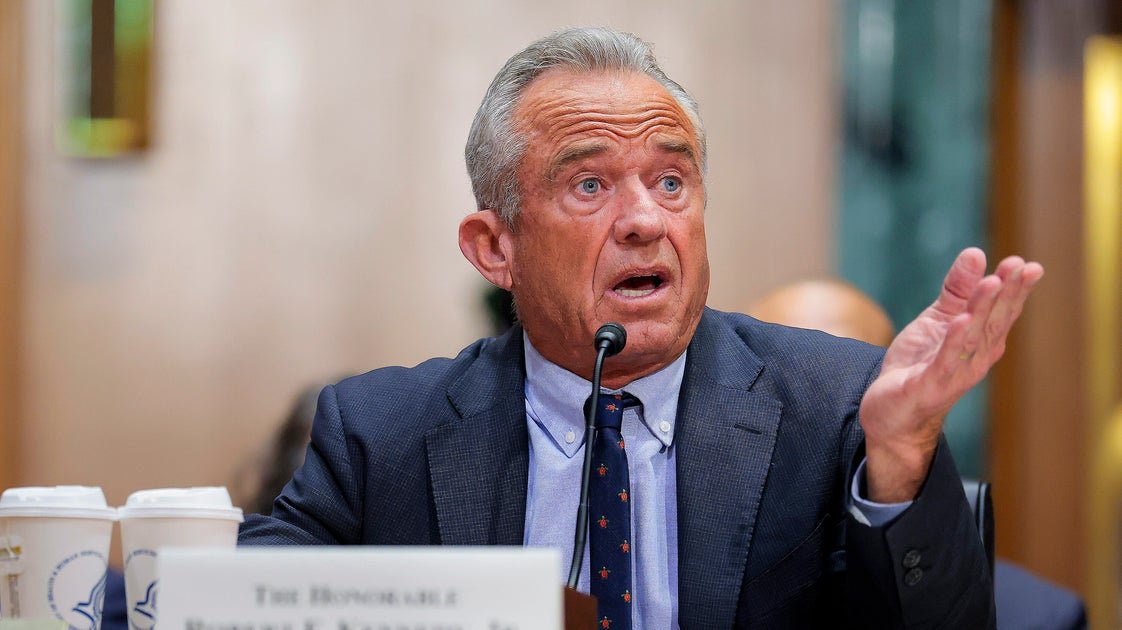
Health and Human Services Secretary Robert F. Kennedy Jr. has a history of making anti-vaccine remarks and false claims that the MMR vaccine has not been safety tested (this is not true). During the height of the outbreak in Texas, Kennedy touted vitamin A and cod liver oil as treatments for measles, but did not mention the most important prevention tool: the MMR vaccine.
Kennedy’s vitamin A claim seems to have directly impacted people’s health. Research published in the Journal of American Medicine found that online searches of “vitamin A” and “measles” increased in 2025. Vitamin A searches increased by 44% on Feb. 26, 2025, and 100% on March 22, 2025.
Advertisement
At the same time, there was also an increase in vitamin A exposures, or overdoses, according to the American Poisons Center. Between Jan. 1 and March 31, 2025, there was a 38.7% increase of vitamin A exposures in children when compared to the same time frame in 2024. Kennedy was interviewed during this time period — on March 4, 2025 — on Fox News where he made the vitamin A measles treatment claim.
Much of the claims that Kennedy makes are rooted in a grain of truth, but are exaggerated, which then leads to confusion — and, in this case, outcomes of vitamin A toxicity.
“He never actually claims that vitamin A would prevent measles. He talked about vitamin A being a treatment for measles, and so on face value, that’s actually true,” said Dr. Elizabeth Soda, an infectious disease doctor and volunteer with the National Public Health Coalition. Vitamin A can be used to treat severe measles in hospital settings.
Advertisement
“But there’s all this missing context that he neglected to share, and that’s where it becomes an issue,” Soda said.
In this, Kennedy downplayed “the role that vaccination has at actually preventing people from getting measles,” Soda explained. “So, he sort of shifts the narrative away from something that we know is a very good way of preventing yourself from measles, and instead is focusing it on this vitamin A for treatment.”
If anything, the statistics and recent research show that Kennedy’s claims are powerful.
“It’s really important to emphasize that these kind of uninformed, evidence-free claims have a real-world impact, and there have been a number of studies now that have … demonstrated this impact,” said Timothy Caulfield, the co-founder of ScienceUpFirst, an organization that combats misinformation, and author of “The Certainty Illusion.”
Advertisement
“This information can kill people, and it creates trends that can be very difficult to reverse once the belief or even the doubt sets in. It can be very, very difficult to reverse,” Caulfield added.
Health misinformation affects everyone, whether you believe it or not.
Health misinformation has already impacted health outcomes of this country and will continue to do so, according to Soda.
Advertisement
“Without a doubt, it is affecting the way individuals are thinking about health right now, 100%,” Soda noted. An example? Childhood vaccination rates are declining throughout the country.
“I think it’s important to recognize that these forces that are pushing misinformation, it has an impact on all of us,” Caulfield said. “We shouldn’t be finger pointing. We should really view this as a systemic problem that is impacting our entire community.”
Even if you don’t necessarily believe Kennedy’s rhetoric or anti-vaccine messaging on social media, you are still tangentially affected. Public health only works if everyone who is able opts in, which is evident with these measles outbreaks.
Advertisement
Communities that have low vaccination rates go on to have a measles spread, which puts babies who are too young to get the vaccine at risk, along with other immunocompromised groups, such as people receiving chemotherapy and those with advanced HIV. And, like all viruses, measles can travel as infected people get on planes or trains.
This invasive, anti-science rhetoric isn’t expected to just stop anytime soon, and even if it magically did, the distrust in these systems is already established.
“It’s amazing how it’s so hard to build up — think about all the time, effort, people, years that went into building up some of these public health systems for them to be decimated in months,” Soda said.
Advertisement
“I do think we’re going to continue to see the misinformation have a profound impact,” Caulfield noted, before adding that new technology could make it even worse.
Messaging, whether it’s true or not, moves fast on social media, Soda explained. Research shows that 36% of people get health information from social media.
“Layer on top of that now the ability to make AI content that can be incredibly persuasive,” he said. “This is going to be a generational issue.”
HealthNews
The people of Okinawa, Japan only eat until they are about 80 percent full, then stop — and the practice has been linked in multiple peer-reviewed studies to lower rates of cardiovascular disease, slo


There is a phrase that Okinawans of an older generation often murmur to themselves before sitting down to eat: hara hachi bu. The Chinese characters mean, more or less, “stomach eight parts,” and the full sense of the saying is “eat until your stomach is eight parts out of ten full, then stop.” The practice has been embedded in Okinawan daily life for several centuries, traceable to a Confucian moral teaching that arrived in the Ryukyu islands from China and gradually evolved into a domestic dietary habit. It is not, in any strict sense, a diet. There is no list of approved foods, no calorie target, no exclusion of any particular food group. It is a habit of paying attention — of stopping eating at a specific subjective point well before the dinner plate is empty and the body has actively registered fullness — that, applied across decades of life, produces meaningfully different metabolic outcomes from the standard Western pattern of eating until completely full or somewhat beyond.
The biological logic behind hara hachi bu is straightforward and now well-documented. According to Northwell Health’s review of the practice and its supporting science, the human stomach communicates fullness to the brain through a combination of stretch receptors and hormonal signals that operate on a delay of approximately 15 to 20 minutes. The body, in other words, does not register fullness in real time. By the time you feel completely full at the end of a fast meal, your stomach already contains roughly 15 to 20 minutes’ worth of additional food beyond what it needed. Stopping at subjective 80 percent fullness allows the lag to catch up: by the time the digestive signal reaches the brain, the food that has already been eaten has been recognised, and the subjective experience converges toward “comfortable” rather than “stuffed.” The net caloric reduction, integrated across all meals of all days, is approximately 10 to 20 percent below what the same person would eat if they stopped only when fully satiated.
Why moderate caloric restriction matters
A 10 to 20 percent reduction in daily caloric intake is, by the standards of any clinical study of caloric restriction in animals or humans, a substantial intervention. The CALERIE trial — Comprehensive Assessment of Long-term Effects of Reducing Intake of Energy, the most rigorous human study of moderate caloric restriction ever conducted — randomised 220 healthy non-obese adults at three US sites to either 25 percent caloric restriction or normal ad libitum eating for two years. The actual restriction achieved by participants averaged closer to 12 percent over the full duration, partly because long-term 25 percent restriction is difficult to sustain in a Western dietary environment. The 12 percent figure is, not coincidentally, in the same range as the caloric reduction that hara hachi bu produces through changes in subjective eating cues alone.
The CALERIE results, published across several papers in Nature Aging, Aging Cell, and other journals, have provided the first direct randomised-controlled evidence in humans that moderate caloric restriction slows biological aging. According to a 2023 paper in Nature Aging by Raghav Waziry and colleagues at Columbia, two years of caloric restriction slowed the pace of biological aging by approximately 2 to 3 percent as measured by the DunedinPACE epigenetic clock, a DNA-methylation-based biomarker that quantifies the rate at which a person’s body is accumulating age-related cellular damage. The effect size is modest in absolute terms but, the authors note, is associated in independent studies of older adults with approximately a 15 percent reduction in all-cause mortality. Additional CALERIE papers have documented improvements in cardiometabolic markers, liver function, skeletal muscle quality, inflammation, and immune function, providing a coherent biological picture in which moderate caloric restriction modulates multiple systems associated with healthy aging.
What the Okinawan data show
The CALERIE evidence is the strongest available human RCT data, but it is not the original source of the longevity-and-caloric-restriction connection. That observation came from epidemiological work in Okinawa itself. Bradley Willcox and Donald Craig Willcox, both at the University of Hawaii and the Okinawa Centenarian Study, published a 2007 paper in the Annals of the New York Academy of Sciences titled “Caloric restriction, the traditional Okinawan diet, and healthy aging,” which documented that traditional Okinawans consumed approximately 1,800 to 1,900 calories per day — substantially below the 2,200 to 3,300 calories consumed by Americans, and approximately 20 percent below ad libitum intake — while maintaining excellent nutritional status, low body mass indexes of 18 to 22, and historically the highest rates of centenarian longevity in Japan. The combination of moderate caloric restriction, a plant-heavy diet, and high physical activity was identified by the Willcoxes as the most plausible explanation for Okinawa’s exceptional longevity record through the second half of the 20th century.
The Okinawan longevity picture has, however, become more complicated in recent decades. Younger Okinawan generations, particularly men, have substantially abandoned the traditional dietary practices in favour of Western-style ad libitum eating, partly under the influence of US military bases that have introduced fast food and high-calorie convenience meals into the local food environment. Okinawan male life expectancy, which historically led Japan, has fallen substantially behind the national average — in 2015, Okinawa ranked 36th of 47 Japanese prefectures for male life expectancy. The longevity advantage appears to be a generational artifact, retained by Okinawans born before the 1950s who grew up with the traditional dietary practices and lost rapidly in the subsequent generations who did not. The pattern provides indirect support for the causal role of diet and lifestyle, since the genetic background of the population has not changed but the outcomes have.
The methodological caveat
Intellectual honesty requires noting that the broader Blue Zones framework within which Okinawa is often discussed has been substantially challenged in recent years. According to the University College London press release on the 2024 Ig Nobel Prize in Demography, the demographer Saul Justin Newman has argued that many of the alleged supercentenarian populations of the Blue Zones, including Okinawa, are partly artifacts of poor birth registration, clerical errors, and pension fraud rather than genuine biological longevity. Japan’s own 2010 audit famously found that approximately 230,000 of its supposed centenarians were missing, imaginary, dead, or the result of clerical errors. The implications for Okinawa specifically are still being debated. Even if the magnitude of the Okinawan longevity advantage has been overstated, however, the specific finding that moderate caloric restriction produces measurable benefits is supported by the CALERIE RCT data independent of any Blue Zones claims, and the biological mechanism (the stomach-brain satiety lag) is well-established.
Whether the practice transfers
For non-Okinawans considering whether hara hachi bu can be adopted as a practical longevity habit, the available evidence is encouraging but limited. The biological mechanism transfers — the stomach-brain satiety lag is universal human physiology, not an Okinawa-specific trait. The CALERIE results, conducted on American volunteers, demonstrate that moderate caloric restriction produces the predicted aging-slowing and cardiovascular benefits in non-Okinawan populations. The cultural context, however, is much harder to transfer. Hara hachi bu in Okinawa is supported by a built food environment that includes small serving sizes, multiple small dishes per meal, slow eating customs, and family meal structures that pace eating across longer periods than typical Western fast-food contexts allow. The same intent applied in a setting of large portions, rapid eating, and high-calorie processed foods may produce smaller effects than the Okinawan original.
The medical professionals who have publicly endorsed hara hachi bu — including practitioners at Cleveland Clinic, Mayo Clinic, and Northwell Health — generally frame it as a mindful-eating practice with substantial supporting evidence and minimal risk for typical adults, rather than as a strict dietary protocol. The Northwell summary notes appropriate cautions: the practice is not appropriate for children, pregnant women, individuals with eating disorders or a history of disordered eating, or those who are already underweight. For typical Western adults overeating in a calorie-rich food environment, however, the practice of stopping at subjective 80 percent fullness appears to be one of the lowest-risk and best-supported longevity interventions currently available — partly because it is not, technically, an intervention at all. It is a habit of pausing, paying attention, and stopping before the brain has fully caught up with what the body has already received.




Iran-US peace deal has been agreed says Pakistan’s Prime Minister | BBC News
A “final, agreed upon text of the peace deal has been reached” between the US and Iran, according to Pakistan's...

"Backrooms" has us wondering if the kids are alright | Engagement Party
"Backrooms" left us with a lingering question: Are the kids alright? Watch Audie Cornish and Ari Shapiro break down what...


The 2026 FIFA Men’s World Cup schedule and how to watch
Tickets to the 2026 FIFA Men’s World Cup may be scarce and very expensive, but there are several ways soccer...


The crazy costs at this year's World Cup. #WorldCup #Football #Soccer #CostOfLiving #BBCNews


What are the costs and challenges facing World Cup 2026? | BBC News
The World Cup has officially kicked off this week – but alongside the football, there are questions around heat, cost,...


Chinese cybercrime operation that used AI to scam ‘hundreds of thousands of victims’ sued by Google
Google is suing to dismantle the infrastructure behind an alleged massive AI-powered cybercrime operation. On Friday, the tech giant announced...


SpaceX IPO: Musk now has more money than Taiwan's GDP
SpaceX went public Friday, with shares trading at just above $150 in a hotly anticipated initial public offering that values...


Former SpaceX welder becomes a millionaire after historic IPO
Before Juan Hernandez became a welder at SpaceX, he had never heard of the company. “It was just another contract...


The world's first trillionaire and how he built his fortune. #BBCNews


Brooklyn funeral home hosts Knicks watch party
Knicks player Karl-Anthony Towns has opened up about his late mother in the post-games of the NBA Finals. It inspired...
-

 Politics3 days ago
Political News and Conservative Analysis About Congress, the President, and the Federal Government
-

 Politics1 day ago
What to know about the stabbing that set off fiery riots in Northern Ireland
-

 LifestyleNews1 week ago
120 minutes of strength training per week may help extend lifespan
-

 BBC News World23 hours ago
Why the economics makes this the craziest world cup ever
-

 BBC News World4 days ago
Backrooms and Obsession: How two low-budget horror films caused a Hollywood earthquake
-

 Video4 hours ago
Download fans say what they love about the festival. #DownloadFestival #BBCNews
-

 Entertainment13 hours ago
Taylor Swift Seems to Brush Off Jimmy Jam at Songwriters Hall of Fame
-

 Politics2 days ago
How Trump’s intel chief pick risks key spy tool : NPR