

Business
Here’s what Jeff Bezos’ new startup Prometheus will do

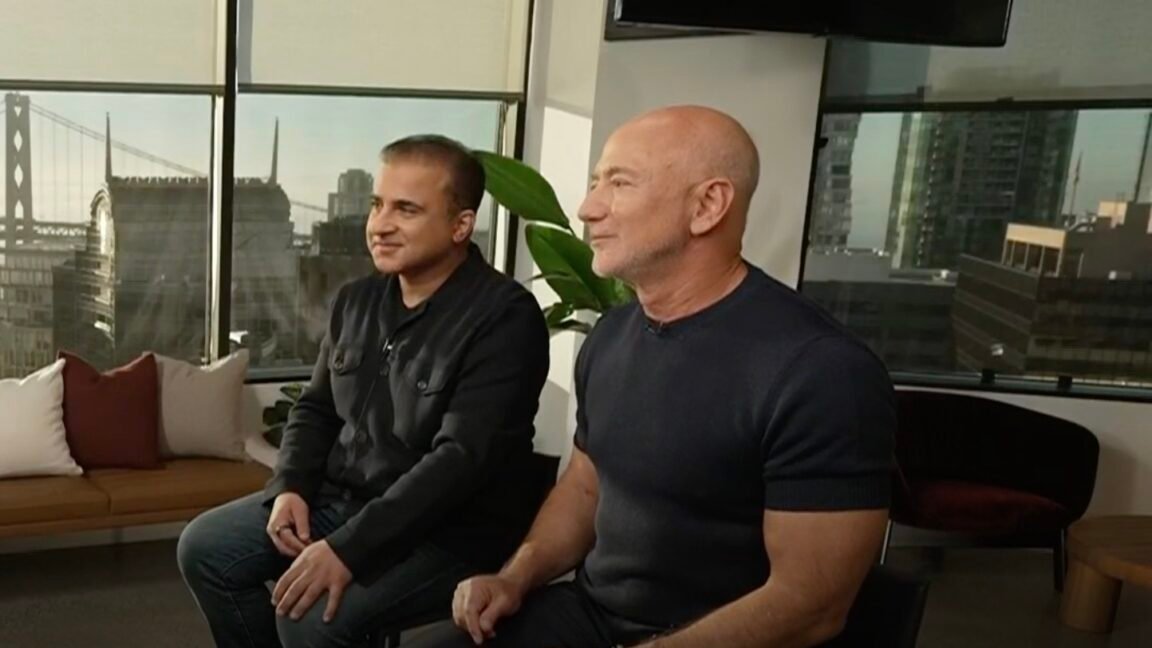
In November, Jeff Bezos announced that he would become co-CEO of a new startup called Prometheus. At the time, the startup said it would focus on “physical AI”—an increasingly common term for applying the same deep learning principles behind large language models or generative AI to things like robotics and manufacturing—but specifics were scarce. Now, with a major new round of funding, Bezos and co-founder Vik Bajaj have talked about it in slightly more detail.
The funding round is significant—$12 billion now, after an initial round of $6.2 billion last year, for a valuation of $41 billion. The funding comes from JPMorgan Chase, Goldman Sachs, BlackRock, and others, plus a sizable amount from Bezos’ coffers. The startup currently employs 150 people.
Much of that funding will be put toward buying compute. “O ne of the reasons we’ve had to raise a significant amount of funding is because… what we’re doing is very compute-intensive and we need to create that data,” Bezos told CNBC.
So what exactly are they doing? Bezos summarized a significant portion of the company’s focus as creating an “artificial general engineer.”
“All societal wealth is driven by invention,” Bezos told The New York Times. “Six thousand years ago, somebody invented the plow, and we all got wealthier. Then, much later, somebody invented the steam engine, and we all got wealthier.” He went on to say that “what Prometheus seeks to do is to offer a set of tools that dramatically accelerates that invention loop.”
Speaking to CNBC, he used the same examples but described the company’s goal in loftier terms. He said the objective is to produce technological breakthroughs that will produce “civilizational wealth,” not just wealth for a single individual or company.
Bajaj described the team’s goals in slightly more pragmatic terms. He said designing new technologies “takes a thousand human minds creatively working together” and is “one of the most complex things we do as a species.” He added that the engineers behind those breakthroughs “use tools that really haven’t changed for decades. Part of what we want to do is arm them with tools that allow them to come up with those designs much more quickly.”
A couple of months ago, The New York Times reported that Bezos and Bajaj are working to raise a $100 billion investment fund to go into companies that could leverage and benefit directly from what Prometheus may produce. That could include some of Bezos’ own other ventures, such as Blue Origin.
It’s still early for Prometheus, and no specific new products or technologies have been announced. Prometheus is not operating in a vacuum, either. There are numerous other startups exploring AI’s applications in the physical world, from training world models to drive policies for robotics, to overhauling manufacturing with more robust and capable automation. With this round, though, Prometheus has a significant funding advantage over most competitors.
Business
Chinese cybercrime operation that used AI to scam ‘hundreds of thousands of victims’ sued by Google

Google is suing to dismantle the infrastructure behind an alleged massive AI-powered cybercrime operation.
On Friday, the tech giant announced a lawsuit against an alleged Chinese cybercrime network called Outsider Enterprise, which Google says uses AI in its campaigns to send scam text messages impersonating Google and other brands to steal passwords and credit card numbers.
Outsider Enterprise has financially scammed “hundreds of thousands of victims” with losses “estimated in the millions.” The group deployed 9,000 fake websites, one million fraudulent web domains, and 2.5 million texts sent to Android users in a two-week period, according to Google.
The company said, “55,000 spam texts were flagged by Android users in just two weeks this past May — that’s more than two text spam complaints a minute.”
Google said it uses “AI-powered tools to fight AI-powered scams,” which enable the company to detect scams and alert users of suspicious calls and text messages, leading to the interception of more than 10 billion scam messages a month.
The company said it has been collaborating with AT&T, T-Mobile, and Verizon to block the scam text messages, and said it is coordinating with the FBI.
An FBI spokesperson told TechCrunch that the bureau, in coordination with Google and Lumen’s Black Lotus Labs, seized several domains used by the cybercriminals, as well as Shopify storefronts and accounts used to test the operation’s phishing service.
The spokesperson said that since July 2023, Outsider Enterprise’s phishing platform enabled cybercriminals to steal “at least an estimated 3,870,000 stolen credit cards and a corresponding estimated $1.9B in losses.”
Inside Outsider Enterprise
In its complaint filed as part of the lawsuit, Google laid out the evidence it gathered against people involved in the Outsider Enterprise operations, whom the company said are foreign-based cybercriminals whose real identities are unknown. This group “built, maintains, and uses a turn-key, online software suite that enables criminals, regardless of technical skill, to publish fraudulent websites designed to rob victims and enrich themselves,” according to the complaint.
Google said this “phishing-for-dummies” software called Outsider, which costs $88 per week or $200 per month, allows operators to create fake websites with the help of AI platforms, including Google’s own Gemini. The fake sites impersonate several services and companies, such as telecom providers, financial institutions, government agencies, and retailers.
To lure people to the fake websites, the cybercriminals collaborate with one another to send victims malicious text messages, or purchase ads. The common goal is to steal passwords and corresponding multi-factor codes as well as financial information, which the scammers can do by receiving the data that victims input into the fake websites, with the information being transmitted through Outsider’s platform in real time.
“Part of the Outsider software’s appeal is the ease with which someone with limited technical expertise — like many members of the Enterprise— can purchase the software, execute various phishing attacks, and, upon purchase, meet other members of the Enterprise who are proficient in other areas,” Google wrote, referring to Telegram channels where the cybercriminals can collaborate, train each other, discuss strategies, and develop phishing attacks. “The Enterprise brazenly coordinates its efforts in open and largely uncoded discussions on Telegram.”
According to Google, the Outsider platform allegedly offers cybercriminals “more than 290 pre-built templates that mimic the legitimate websites” that generate replicas of real websites “in minutes,” along with guides on how to “weaponize AI-generated code,” as well as a dashboard to track progress of phishing campaigns. The cybercriminals have allegedly used Google Drive and Google Cloud infrastructure to host the phishing websites.
“The Outsider software has been used to create over a million phishing websites to swindle innocent victims out of millions of dollars,” Google wrote in the complaint.
To give an idea of the scale of Outsider Enterprise’s operation, Google said that over a five-month period, from November 14, 2025 to April 14, 2026, the company detected more than 1.59 million URLs connected to it.
Google said the Outsider Enterprise operation is made up of several groups of cybercriminals: those who develop and maintain the phishing software and website templates; those who supply lists of targets curated from public records, social media, and data breaches; a “spammer group” that provides tools and the infrastructure to send scam texts in bulk, which includes smartphone banks, SIM cards, and modems; and those who monetize the stolen credentials and launder the stolen money.
The cybercriminals have stolen “at least 36,000 payment cards issued by financial institutions in 95 countries,” according to Google.
The company accused the people behind Outsider Enterprise of impersonating Google and its brands, of infringing its copyright, of racketeering activities, of committing wire fraud, and false advertising. With the lawsuit, Google is seeking compensatory and punitive damages, and an order to stop the criminals from carrying out their activities.
This story was originally published at 10:26 a.m. PDT and has since been updated with new information from Google’s complaint, and the FBI’s comment.
Business
Paramount-WBD merger wins approval from DOJ

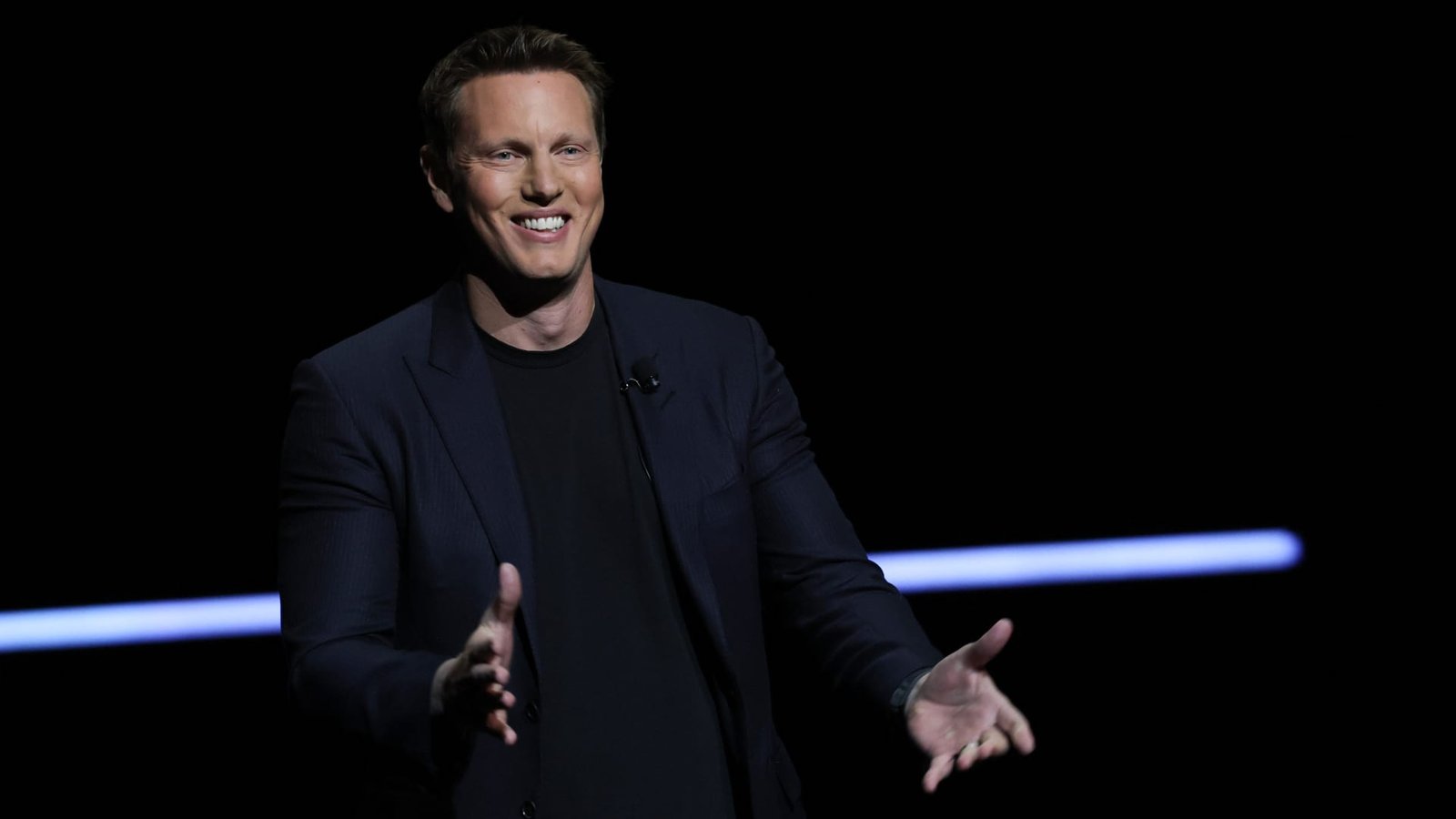
The U.S. Department of Justice has signed off on Paramount Skydance’s proposed acquisition of Warner Bros. Discovery , clearing the merger of federal antitrust concerns.
“The Division has completed its analysis of the proposed merger of Paramount and Warner Bros. and determined based on the evidence received in its investigation that the transaction is not likely to result in harm to competition or American consumers,” the department said in its determination.
A Paramount spokesperson said in a statement the company was “grateful for the Department of Justice’s thorough review of this transaction, as well as the work of the other agencies that have completed their reviews and provided clearance to date.
“This deal is pro-competitive, resulting in a stronger company better positioned to compete against dominant technology platforms in an industry increasingly defined by intense competition for audiences, talent, technology, and investment,” the spokesperson said. “We remain focused on completing the transaction as soon as possible and delivering its benefits to consumers, creators, and the entertainment industry as a whole.”
It’s an important milestone for the roughly $110 billion deal, though it could still face legal challenges from state attorneys general. California AG Rob Bonta has been among the officials reviewing the proposal, and the deal “remains under investigation by the California Department of Justice,” his office said in a statement Friday.
Paramount’s stock was up about 3% in after-hours trading. Politico first reported the government approval.
Paramount CEO David Ellison told investors during the company’s April earnings call that the deal was on track to close by September, after which point a so-called “ticking fee” kicks in, making the deal more expensive. The proposed merger has already received WBD shareholder approval.
In late February, Paramount offered $31 per share to acquire all of WBD’s assets, which includes cable TV networks like CNN and TBS, the Warner Bros. film studio and streaming platform HBO Max. The proposal came following multiple offers and upended a deal with Netflix for that company to acquire WBD’s streaming and film assets.
Paramount is still awaiting regulatory approval from European officials. Earlier this week the European Union’s regulator arm began reviewing the proposed deal and set a July 14 deadline for vetting, according to a notice on its website.
Business
Former SpaceX welder becomes a millionaire after historic IPO

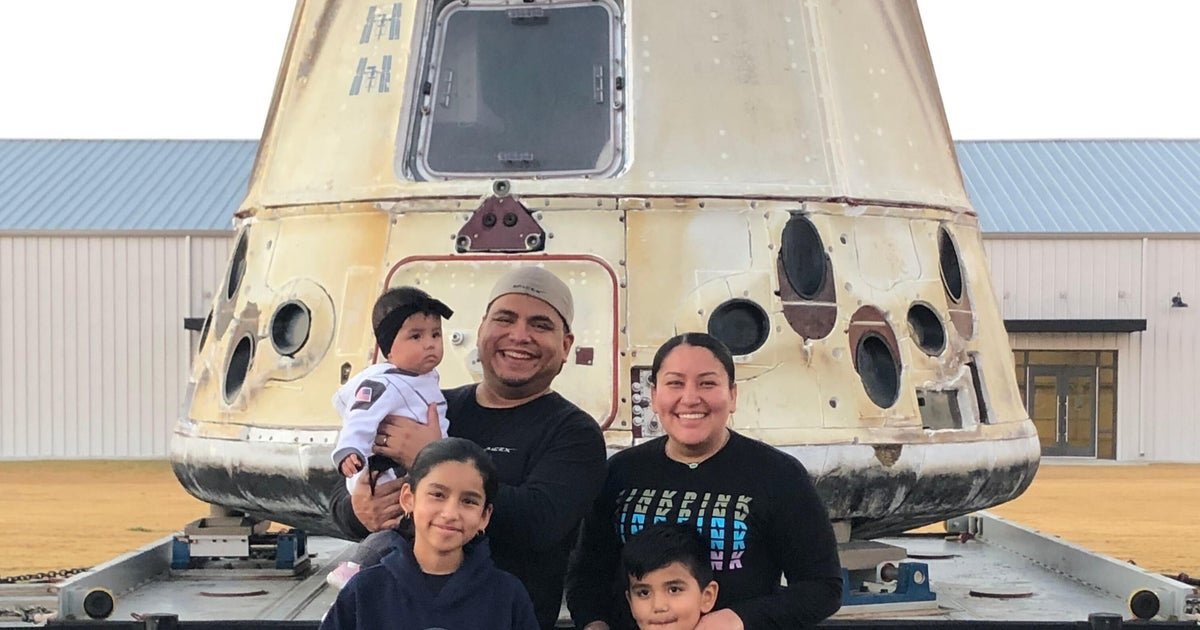
Before Juan Hernandez became a welder at SpaceX, he had never heard of the company.
“It was just another contract job for me at the time,” he told CBS News correspondent Jo Ling Kent in a broadcast exclusive interview.
Now, just over 10 years later, that leap of faith is paying off following the company’s $75 billion initial public offering. Hernandez, who now works at Jeff Bezos-owned rocket startup Blue Origin, has roughly 6,500 SpaceX shares. On Friday, SpaceX stock closed at $160.95, valuing his holdings at $1,046,175.
SpaceX shares started trading on the Nasdaq late Friday morning under the ticker symbol SPCX, marking the long-awaited Wall Street debut of the rocket and satellite company.
Hernandez first heard about SpaceX from a friend who was hired as a welder there. He knew Hernandez’s background and figured he’d be a good fit for the job.
“I thought in my head, I don’t know what SpaceX is, but let’s go,” Hernandez said.
When SpaceX hired Hernandez in 2015, he said they offered him $10,000 worth of stock. At the time, he didn’t think much of it. His other jobs, for which he was paid hourly, had never offered him stock before.
“It wasn’t a big deal. I didn’t know anything about it then,” he told CBS News. “I didn’t know it was gonna be this big, at this point.”
Rising through the ranks
During his ten-year run at SpaceX, Hernandez worked as a welder, preparing rockets for takeoff by building the structures that lifted them onto the launch pad and the infrastructure that held them in place. He eventually rose through the ranks to become a supervisor.
He said offering employees a stake in the company helps them feel they have skin in the game and pushes them to succeed.
“They will perform a lot better because, I mean, it is, it’s their company as well,” he said.
Even through the life-changing event, he’s staying humble.
As an immigrant, Hernandez said he was taught to work hard, something his newfound wealth won’t get in the way of. He said he plans to keep working and pass on the lessons he’s learned to his children.
He’s now teaching his three kids, including his 16-year-old daughter, how to invest based on what he learned owning SpaceX stock. His daughter is already a stakeholder in Meta and a handful of other companies.
“She’s a little entrepreneur herself,” he said.
If given the chance to talk to Musk, Hernandez said he’d thank him for helping him realize a dream he didn’t know he had.
“He made it a possibility for somebody like us, you know, the cook or … electrician,” he said. “He’s making all these lives much better and meaningful for their families as well.”
Business
SpaceX shares soar following record-breaking $75 billion IPO
SpaceX shares opened at $150 on Friday, 11% above their $135 offering price, after the company completed the largest initial public offering in history.
The stock, which started trading on the Nasdaq Stock Exchange under the ticker symbol SPCX at 11:46 a.m. ET, rose as high as $176.52 in midday trading, up 31% from the IPO offer price. As of 2:42 p.m., shares were trading at $170.90.
“Like most IPOs, the price jumped,” Jay Ritter, an IPO expert and professor at the University of Florida’s Warrington College of Business, told CBS News. “This is not a moonshot, but given the size of the deal, if the stock price holds, there will be more dollar value of [early stock returns] than any IPO in history.”
Ritter said the opening price was “disappointing relative to what betting markets had been predicting,” but still positive since trading was well above the IPO sale price.
SpaceX on Thursday priced its shares at $135, raising $75 billion to finance its ambitious plans, including establishing a human colony on Mars and deploying solar-powered data centers in space.
The offering leapfrogs SpaceX to become the largest global IPO, surpassing the current record holder, Saudi Aramco. When the state-owned Saudi Arabian oil company went public in 2019, it raised nearly $26 billion, according to Renaissance Capital.
SpaceX’s IPO comes as the stock market continues to notch record highs, propelled by surging corporate profits and the artificial intelligence boom. SpaceX will eventually be joined by AI players OpenAI and Anthropic, which have both announced plans for their own IPOs.
Rockets, satellites and AI
SpaceX, which Elon Musk founded in 2002, develops and launches spacecraft for satellite operators, NASA, the Department of Defense and other customers. The business includes Starlink, a satellite division that provides broadband connectivity, and an artificial intelligence division focused on building data centers.
SpaceX in February also acquired Musk’s company xAI, which runs the social networking platform X and chatbot Grok.
SpaceX’s public stock offering has generated strong investor interest, with Bloomberg reporting on Thursday that the IPO received more than $100 billion in retail orders.
SpaceX’s strong start lifted its market value to $2.2 trillion, ranking it ahead of other major publicly listed players such as Meta Platforms, Samsung and Musk-owned Tesla. SpaceX still trails Nvidia, the world’s most valuable company, which has a market cap of roughly $5 trillion, according to FactSet, as well as a handful of other tech companies.
Although SpaceX has a high valuation, it lags other tech giants in terms of revenue and profitability, Ritter said. SpaceX, which is unprofitable, booked $18.7 billion in revenue last year, far less than Alphabet’s $400 billion in 2025 sales.
“Alphabet, Apple and Nvidia are producing annual after-tax profits of more than $100 billion a year,” he said prior to the IPO. “There’s a long way to go to catch up with the profitability of those mega caps.”
Indeed, SpaceX will face significant challenges in delivering on its bold plan to develop space for commercial ventures, including ringing the earth with AI-powered satellites, and to justify its massive valuation.
“I can see the argument for why this company should deserve a lower valuation,” said Matthew Kennedy, a senior market strategist at Renaissance Capital, which tracks IPOs. “At the same time, it is true that some stocks are expensive and stay expensive.”
Many experts expect SpaceX stock to be volatile in its early days of trading, as is common with other large IPOs. A Truist analysis of 30 sizable technology IPOs found that more than half the offerings posted negative returns a year after their shares started trading.
“The question on SpaceX is less about the immediate trading after IPO and more about how the price holds over the longer term,” Samuel Kerr, global head of ECM at Mergermarket, a financial intelligence company for the M&A sector, said in an email before SpaceX stock started trading.
The trillion-dollar man
The IPO has made SpaceX CEO Elon Musk, already the world’s richest person, a trillionaire — at least on paper. Musk owns 4.8 billion shares of SpaceX, or about 42% of the company, as well as 350 million stock options, according to the IPO filing. With 82.4% of the company’s voting power, he will continue to wield significant control over SpaceX’s future.
SpaceX shares are expected to launch on several indexes, including the Nasdaq 100 and Russell indices, in the coming days. That could pave the way for more investors, including Americans with 401(k) plans, to become potential shareholders.
SpaceX, which had filed for a confidential initial public offering in April, said that it sees a market opportunity of more than $28 trillion across the industries it operates in.
Of that, 90% is attributed to xAI alone, according to an analysis by Van Ha Trinh, financial markets analyst at the online broker Exness. That points to SpaceX’s belief that its AI capabilities will fuel its growth.
Business
Elon Musk becomes the world’s first trillionaire with SpaceX’s IPO
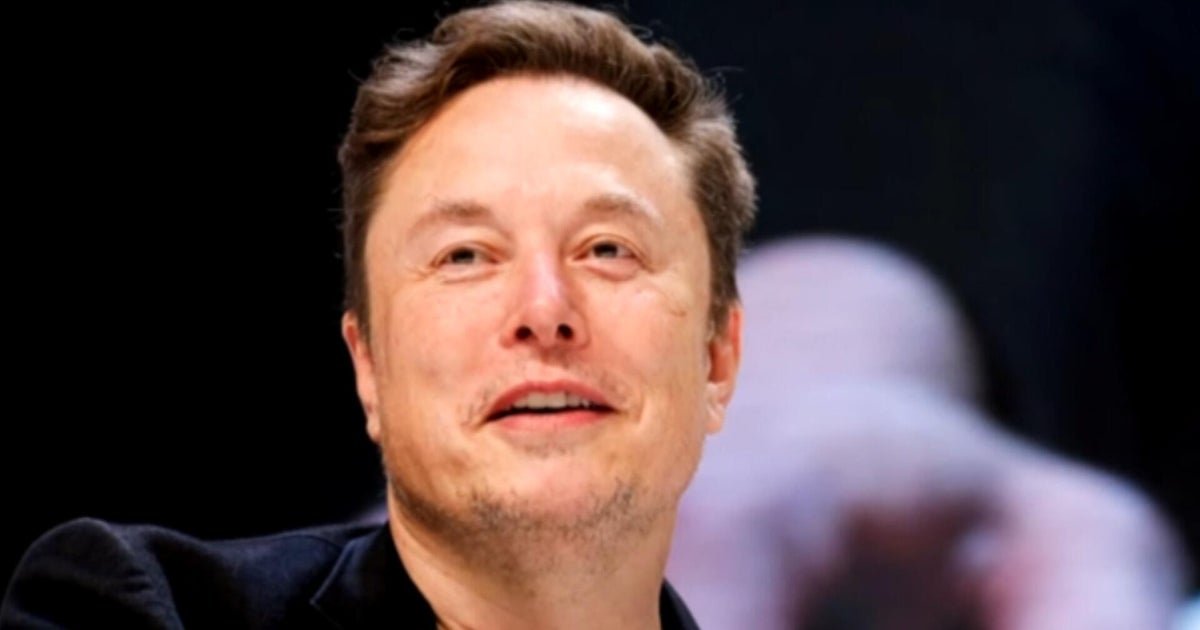
Elon Musk has become the first person to cross the trillionaire threshold, at least on paper, after SpaceX priced its blockbuster initial public offering at $135 a share and its stock soared in its stock market debut.
Before the IPO, Musk was worth an estimated $813 billion, a fortune more than twice as large as the planet’s second-richest person, Google co-founder Larry Page, who is worth an estimated $288 billion, according to Forbes.
SpaceX formally setting its stock price at $135 boosted Musk’s fortune to just over $1 trillion. The shares, which will trade under the ticker symbol SPCX, jumped after they began trading shortly before noon ET. At its intraday high of $168.75 on Friday, Musk’s net worth reached roughly $1.18 trillion, although future declines could push him back below the trillionaire mark.
While billionaire wealth alone may be hard enough to comprehend, a trillionaire represents a level of wealth that rivals the economic output of the world’s biggest nations. Only 19 countries have GDPs that surpass $1 trillion, ranging from the U.S. to the Netherlands, according to World Bank data.
Musk’s surging fortune represents a “new Gilded Age” of wealth inequality, Oxfam America senior director of economic justice Nabil Ahmed said in a statement.
“Elon Musk’s rise to trillionaire status marks a new pinnacle of oligarchy,” Ahmed said.
To be sure, plenty of other SpaceX employees and investors are likely to mint new fortunes with the IPO. About 4,400 SpaceX workers could become millionaires when the stock begins trading, according to the New York Times. But Musk is likely to be the biggest beneficiary, given his large stake in the business.
Trillionaire math
Musk owns 4.8 billion shares of SpaceX, or about 42% of the company, as well as 350 million stock options exercisable at $8.39 per share, according to the company’s IPO filing. At $135 a share, Musk’s stake is worth $648 billion. His options add another $44.3 billion to his net worth.
Because Forbes valued Musk’s pre-IPO stake in SpaceX at $500 billion, the IPO sale boosts the value of his SpaceX shares by an additional $192.3 billion, bringing his total net worth to $1.005 trillion.
SpaceX shares touched as high as $168.75 in Friday afternoon trading. At that price, Musk’s stake in SpaceX is worth an additional $366.1 billion, placing his total wealth at roughly $1.18 billion.
That wealth makes Musk richer than the bottom 46% of the world’s population, or a combined 3.8 billion people, Oxfam said.




See how MAGA is inspiring Britain's swing to the right
CNN's Jomana Karadsheh went to multiple anti-immigration rallies in England and spoke to an expert who had infiltrated far-right …


Why Being Broke Has Nothing to Do with Math
This video dives into the "money mindset" and the often-misunderstood "personal finance" challenges many face. We explore why …


Tracking the Knicks vibe shift at New York bodegas
CNN stopped by New York City bodegas to hear from New Yorkers about the mood during the Knicks' Finals run,...

Trump and Iran say an agreement is close
A senior US administration official spelled out several points in the prospective agreement between the US and Iran, framing the...


Crowd cheers as crew prepares to remove Trump's name from Kennedy Center
Spectators gathered outside the Kennedy Center and cheered as construction crews are set to remove President Donald Trump's …


Peruvian Police dress as World Cup mascots to arrest suspect
Peruvian police burst into the home of a suspected drug trafficker in Lima on Thursday dressed as World Cup mascots.


Iran-US peace deal has been agreed says Pakistan’s Prime Minister | BBC News
A “final, agreed upon text of the peace deal has been reached” between the US and Iran, according to Pakistan's...


"Backrooms" has us wondering if the kids are alright | Engagement Party
"Backrooms" left us with a lingering question: Are the kids alright? Watch Audie Cornish and Ari Shapiro break down what...


A key spy authority, Section 702, is expiring due to inaction in Congress. Here’s what happens next.
Washington — A key surveillance tool that lets the government collect foreign intelligence without a warrant is again at the...


The 2026 FIFA Men’s World Cup schedule and how to watch
Tickets to the 2026 FIFA Men’s World Cup may be scarce and very expensive, but there are several ways soccer...
-

 Politics3 days ago
Political News and Conservative Analysis About Congress, the President, and the Federal Government
-

 Politics1 day ago
What to know about the stabbing that set off fiery riots in Northern Ireland
-

 LifestyleNews1 week ago
120 minutes of strength training per week may help extend lifespan
-

 Video5 hours ago
Download fans say what they love about the festival. #DownloadFestival #BBCNews
-

 BBC News World1 day ago
Why the economics makes this the craziest world cup ever
-

 BBC News World4 days ago
Backrooms and Obsession: How two low-budget horror films caused a Hollywood earthquake
-

 Entertainment15 hours ago
Taylor Swift Seems to Brush Off Jimmy Jam at Songwriters Hall of Fame
-

 Video5 hours ago
Why SpaceX IPO isn't about space. #SpaceX #ElonMusk #BBCNews