

Entertainment
Kiefer Sutherland’s Uber Driver Sues Actor for Threatening, Punching Him During Ride


Kiefer Sutherland is being sued by his Uber driver for assault and battery for the alleged L.A. incident that ended with the actor’s arrest.
According to court docs, obtained by TMZ … Uber driver Rafael Manvelyan says Kiefer was “visibly intoxicated” on January 12 when he picked up the actor.
Rafael — who says his English is limited because he primarily speaks Russian and Armenian — claims Kiefer got “agitated” when the actor was struggling to understand him.
The lawsuit claims Kiefer became “increasingly hostile, aggressive, confrontational” during the ride, allegedly yelling and being verbally abusive.
The driver says the “24” star threatened to kill him and started attacking him while he was driving, claiming Kiefer repeatedly hit him “with closed fists” in his head, face, neck and upper body.
Rafael claims Kiefer also put him in a chokehold and continued threatening to kill him. The driver says he managed to get out of the car and start running away … but alleges the actor followed him down the street yelling, “I’m going to kill you.”
Rafael says his dashcam caught at least parts of the alleged assault, but adds there were also witnesses who saw the scary scene go down.
The driver says he suffered injuries to his head, face, neck, spine and shoulder. He says cops who responded to the scene could see his forehead was bruised and swelling.
Rafael’s lawyer, Mitra Sabouri, tells TMZ in a statement … “Mr. Manvelyan is a private citizen who did not seek public attention. He filed this action to pursue legal remedies for the injuries and damages he alleges he suffered.”
Sabouri continued … “Out of respect for his privacy, we are not releasing the dashcam footage, and we will allow the facts and evidence to be addressed through the court process.”
Entertainment
Olivia Rodrigo’s new album references another artist repeatedly. It’s not Taylor Swift.


How do you review an artist like Olivia Rodrigo right now? She’s arguably the biggest twentysomething pop star today, ahead of even Sabrina Carpenter and Billie Eilish. Intelligent, charming, even politically outspoken, Rodrigo writes or co-writes all her songs and has had eight top 10 hits in the past five years, including the two advance singles from her new album, and a whopping four No. 1s. Her 2021 debut Sour (“Drivers License,” “Good 4 U”) recently became the first album by any female artist, including Taylor Swift, to reach 17 billion streams on Spotify. The punky kiss-off anthems of her 2023 album Guts were embraced by critics as much as the public, and the former Disney teen TV star has also won three Grammys and about 100 other prizes.
Her third album, You Seem Pretty Sad for a Girl So in Love, was released Friday morning. Her Gen Z and alpha fans already know what they think no matter what I might say. I’m not even sure I would disagree with them that much, except that I think the album is too long at 51 minutes, compared to Sour’s roughly 35 and Guts’ 39—the title isn’t the only place YSPS4AGSIL abandons her previous admirable concision.
So I’m going to address a constituency whose views on the subject may be less preformed, who might even be a little perplexed. By which I mean fans of legendary postpunk/goth band the Cure, whose lead singer Robert Smith appears here as the first guest feature on any Rodrigo album. The 67-year-old duets with the 23-year-old on 10th track “What’s Wrong With Me” and even contributes a part on his signature six-string bass. Last week, the two premiered the song live at the Primavera Sound festival in Barcelona. “I just can’t believe that this song exists with the person that it exists with, and I’m just so fuckin’ over the moon,” Rodrigo said. This was not the first time they’d performed together. Last summer at Glastonbury, Smith took the stage to sing “Friday I’m in Love” and “Just Like Heaven” with Rodrigo during her set, helping make it one of the festival’s most talked-about events. She introduced the Gothfather as “perhaps the best songwriter to come out of England.”
It doesn’t stop there. Rodrigo also invokes the Cure on the album opener and lead single “Drop Dead,” singing to her prospective new love, “You know all the words to ‘Just Like Heaven,’ / And I know why he wrote them now that you’re standin’ right here.” Then, what was the second single called, which comes two songs before the Smith cameo on the album? That’s right, “The Cure.” Mind you, it uses cure in the conventional sense, as in the thing for what ails you, not mentioning the band at all. Still, please observe the multicolored strings thumbtacked to the wall behind me—the title was clearly no coincidence. Even when it’s unverbalized, sonic nods to the Cure and the new wave in general are (almost) all over the album.
Why? To start, it’s a family affair. Rodrigo said on Jimmy Kimmel’s late-night show this week that her father has seen the Cure about 30 times. When she introduced him to Smith, her dad was in tears, she said, and he now uses a shot of them together as “his screen saver on his phone.” (Meanwhile, she said, laughing, her metal-loving mom skipped her daughter’s set at Lollapalooza to go to the other stage and watch Korn.) But on another level, I think she’s turned to Smith as a muse, to help inspire her to take her songwriting to more complex zones beyond the conventional love or breakup song. As she told British Vogue in March, “I realized all my favorite romantic love songs were beautiful because they had a tinge of fear or yearning in them.”
For his part, Smith told Vogue that he’d been a fan since he first heard “Drivers License,” and he bought both her previous albums on CD. “Although most of the songs on those two albums are not really ‘aimed at my demographic’ (!), they are all so good that it is hard not to fall in love with them.” And to BBC6, he said, “I genuinely love what she does. I’m slightly in awe of how easy she finds it all.”
But Rodrigo isn’t the only young female American songwriter to call upon the Cure as a familiar. On the 2023 single “Not Strong Enough,” the indie supergroup Boygenius (Phoebe Bridgers, Lucy Dacus, and Julien Baker) described “drag-racing through the canyon / Singing ‘Boys Don’t Cry.’ ” Somewhat longer ago, Paramore’s “Caught in the Middle” opened with a lyrical echo of “In Between Days.” And Bridgers recorded her own cover of “Friday I’m in Love” as a Spotify Single back in 2018.
It makes sense that a cohort interrogating toxic masculinity and the givens of gender identity might reach back to Smith. “Boys Don’t Cry” blazed trails defying machismo, and “Just Like Heaven” set up its romance from the woman’s POV by narrating what “she said” well before the protagonist spoke for himself. And long before these artists were born, like many in the goth, New Romantic, and other subcultures of postpunk London, Smith was teasing his hair and wearing lipstick and eyeliner, as he still does, while remaining happily married to his high school girlfriend Mary Poole since 1988. Smith told Vogue that after they recorded together, Rodrigo continued to call him up “quite a bit to talk about clothes and fashion.”
But the lunar pull of Smith and the Cure on Rodrigo’s new album is in tension with an even longer-standing, much sunnier and blonder influence—which is, of course, Taylor Swift. Even though the two had an infamous falling-out years ago, “Taylor Swift” is the essential genre Rodrigo (like many other young pop women today) has been working in since the start of her recording career, from the personal-confessional-love-story mode of most of her songs to her fondness for shout-singing bridges.
The pop-punk, angry-sarcastic songs on Guts were so influenced by riot grrrl and other feminist rock foremothers (such as the Breeders, whom she toured with) that their angry and sardonic energy swept away much of the Swiftiness. But on this new album, Rodrigo’s story also includes the first rush of new love; the pangs of long-distance romance, growing doubts, and slow-imploding heartbreak; and the rueful aftermath—all subjects that tend to draw her back into the Swiftian stylistic universe.
At the album’s best, the Cure influence in many ways helps her and longtime producer and co-writer Dan Nigro (with occasional help from songwriter Amy Allen and others) keep intact Rodrigo’s edge, her darker viewpoint, and her weirder sense of humor. It’s as if there is a figurative, stylistic battle being waged here for Olivia Rodrigo’s artistic soul.
It sounds as if the initial version of the album might have leaned more to taffeta and sparkles, in fact, were it not for the relationship in question (with some British actor, another echo of Swift) breaking up somewhere during the writing and recording process. At which point, Rodrigo told the New York Times Popcast, “we had the fun challenge of going back and actually tweaking some of the love songs on the record and making them a little more honest and more sad and creepy.”
Advantage goths!
To judge which one stands victorious, let’s go through the 13 tracks—a very goth number, but also a very Taylor Swift number!—and ask where they fall on the Smith-vs.-Swift scale. I’ll rate each 1 out of 5 batwings (Cure, of course) and/or 5 cardigans (Swift).
1. “Drop Dead”
Starting strong for the Cure side with the direct reference, of course, even if there are some Swiftian “Aren’t we grown-up to be at a bar?” overtones here too. The “angel on the wall of Versailles” line is solid New Romantic stuff (and I don’t mean the 1989 song), while the unfortunate astrological-sign stuff about a “Pisces and a Gemini” leans Swiftward. But the mock-morbidity of “Kiss me and I might drop dead,” additionally calling to mind classic Cure album Kiss Me, Kiss Me, Kiss Me, ultimately wins the song 3 BATWINGS and 1 CARDIGAN.
2. “Stupid Song”
The overwrought metaphors and melodrama and singspoken-then-shouted bridge are totally Swiftcore. The video that dropped Friday is even full of cats. (But wait, could they be lovecats?) Still, Swift would never pay all that off by mocking her own verbosity and even the very capacity of a song to capture real feelings, while Rodrigo sings, “I want you more than any stupid song could ever say.” 2 CARDIGANS, 1 BATWING.
3. “Honeybee”
Stylistically, this isn’t that much like either of our lodestars, but while I can’t begrudge Rodrigo her gooey love-drunk feelings here, I’m not much interested in them nor in the trite piano arpeggios and string swirls that accompany them. This is more in Rodrigo’s theater-kid wheelhouse; it could almost be a third-tier outtake from Wicked. The Cure would never. 1 CARDIGAN.
4. “Maggots for Brains”
Now this is more like it! From the opening beatbox-plus-drums rhythm track and twangy, reverb-heavy guitar riff, Cure lovers will be head-nodding at the least. And then we get to the ultragothy chorus: “I’m a zombie in my body, I’m a train off of the track / I feel dirty, I feel rotten, and the colors are all flat.” Then the titular maggots! But I especially love how she rounds that off with the kicker, “But that’s just a thing that happens when my / When my baby goes away.” An amusingly anticlimactic and self-consciously classic-pop punch line that’s less Robert Smith than Stephin Merritt of the Magnetic Fields or, more relevant in this context, of the Gothic Archies. 4 BATWINGS.
5. “U + Me = <3”
One of the album’s most appealing tracks but also a dilemma for our purposes, as it is kind of a perfect union of Swiftian and Smithic values. Both thematically and musically, it could almost be one of the more upbeat coupledom songs on Lover, Swift’s own album about crushing on a London boy, but it also has some very Cure-like guitar and bass tones, and maybe a little “Friday I’m in Love” in the chorus’s chord progression. The very funny fake-out of “I like your big … sister!” is a better dick joke than anything Swift got within screaming distance of on her most recent album’s embarrassing “Wood.” But also the wink at Swift’s “Cruel Summer” is masterful in the lines “They say modern love’s a cruel endeavor / And to that I say fuck it, whatever.” (As Kurt Cobain adds, “Never mind,” from beyond the grave.) Besting your bully at her own game is the dream of all the tender goth children, and also that line is rhymed with leather, so this gets another 3 BATWINGS, plus a consolation 1 CARDIGAN.
6. “My Way”
This self-declared “petty bitch” song about some girl who’s trying to poach her man is very mid-2010s Taylor-does-Avril, pouty and unworthy of Rodrigo’s general outside-the-lines thinking on this album. The oddball new-wave arrangement does not distract enough to prevent me from wincing at lines like “That’s it! I win!” 3 CARDIGANS.
7. “Purple”
The color-coding is one of several Swiftlike tropes in here, but it’s got some fine narrative details, and it’s in a spacious musical mode that doesn’t feel boilerplate. In a real goth song, the troubling line “We fought about who I’m hanging out with, like a real couple” would have deeper consequences. But the repeated “I’ll melt with you” lines are clearly a reference to the Modern English ’80s-night classic, which she’s told the BBC she wants as her wedding song, so big new-wave credit there. 2 BATWINGS, 2 CARDIGANS.
8. “The Cure”
Again, not about the band, but still. And the video (like Rodrigo’s website) does use one of the vintage Cure typefaces, from the cover of the aforementioned Kiss Me, Kiss Me, Kiss Me. It’s also probably the album’s most successful realization of the paradox articulated in the title, asking how someone can be in love and still unhappy. Maybe, she realizes, the mistake was in expecting a relationship to fix deeper problems in the first place. But also, when she sings the line “It’ll never be the cure,” she could mean that no matter how much he loves her, it’ll never be as good as a Cure song, couldn’t she? One of the album’s best, sounding mostly just like Rodrigo and no one else, but for the goth themes of poisons and apothecaries, 3 BATWINGS.
9. “Begged”
The one “Drivers License”–esque torch song on the album, although there’s going to be a little pileup of slow ones in the back end here. Still, Nigro’s fingerpicked acoustic guitar, as well as the unusual style of Rodrigo’s own stacked background vocals (which reminded me of the great cult sister trio the Roches), prevents it from feeling like a retread, and the relationship insight in this one is killer: “I’ll take what you’re giving / But nothing’s quite enough / When I know that to get it / I begged.” The beginning of the end. There’s a filigree of the melody of “Landslide” in the chorus (matched with a later lyrical reference to snow melting in the mountains), so for Stevie Nicks’ witchiness, if nothing else, 2 BATWINGS.
10. “What’s Wrong With Me”
The Smith duet, so the outcome is a given here. But also a turning point from where we were at with “The Cure,” when Rodrigo reconsiders and realizes that maybe the sick one isn’t her, but him after all. 5 BATWINGS.
11. “Less”
Instead of either of our emblems, this Tin Pan Alley–style jazz-piano ballad maybe should get a Billie Holiday–style white gardenia. But let’s not get ahead of ourselves—the influence here is more likely to be the young Icelandic jazz-pop singer Laufey. Still, there’s a mildly goth anti-love sentiment underlying the key line, the clever “If loving means letting go and wishing me the best … then I wish you loved me less.” More importantly, I choose to take the nicely thrown-away line “Let’s just go to bed or something” as a reference to the Cure’s own “Let’s Go to Bed,” so that’s an automatic 2 BATWINGS.
12. “Expectations”
I just know there’s a more exact reference for the ’80s-pastiche synth line here, but the file’s been deleted from my memory bank—it’s equal parts Gary Numan, New Order, maybe Visage. The song as a whole ventures into B-52s and Cyndi Lauper territory, plus “Material Girl”–style male backup vocals. It concerns mostly trust-fund guys with fake consultancy jobs at showbiz parties: “Don’t think my future husband’s at this bar in Silver Lake,” sings a sadder-but-wiser Rodrigo. The burst of fun the album needs at this point. 4 BATWINGS.
13. “Cigarette Smoke”
It’s an inevitability of the story’s wind-down that there are too many slow songs in the final third, but this one is fine too, and not especially Taylorlike—with its callbacks to multiple previous songs on the album, it’s actually more like a song from the denouement of a musical, down to the fade-out on the “memories go dark” refrain. But for that line—and because cigarettes are very goth—2 BATWINGS.
And so our totals are …
Cardigans: 10
Batwings: 31
I honestly wasn’t expecting such a blowout! But especially if you skip a few tracks (“Honeybee,” “My Way,” one or two of the late ballads as you see fit), I think we can declare YSPS4AGSIL a very goth-safe zone.
Children of the night, please prepare to spider dance!
Entertainment
David Hockney, whose art celebrated sun-drenched Los Angeles, dead at 88

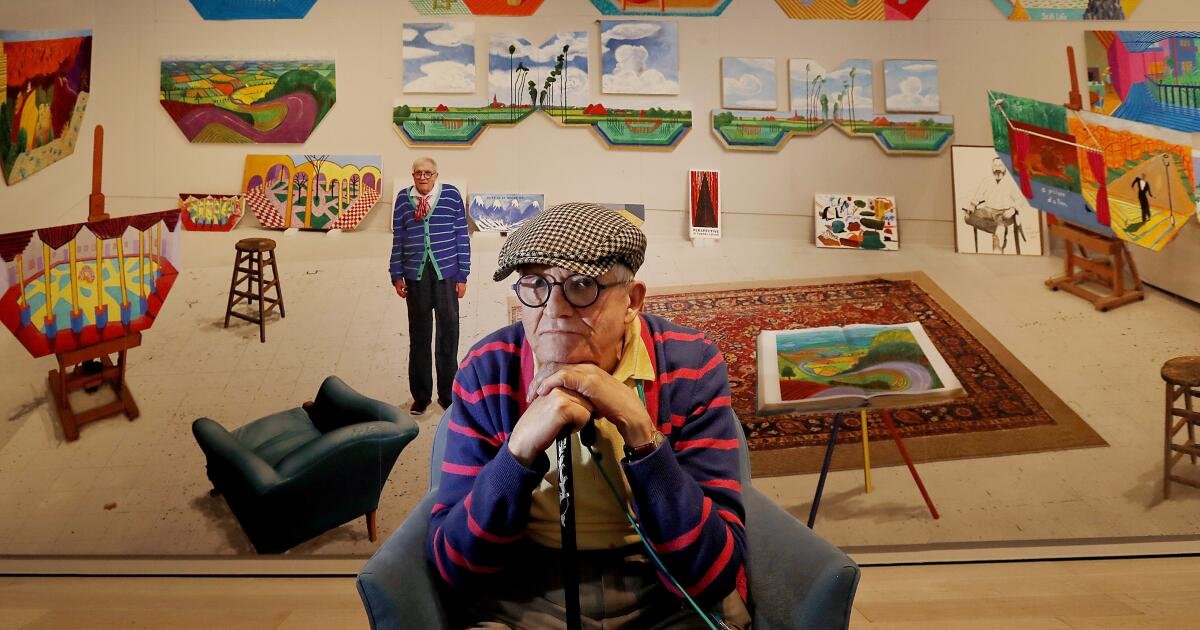
David Hockney, the innovative and prolific British artist who arrived in Los Angeles in 1964, soon celebrating its sun-drenched life and landscapes in colorful, wildly popular paintings, died Thursday at his home in London. He was 88.
His death was confirmed in a statement by his publicist Erica Bolton.
Calling himself “an English Los Angeleno,” Hockney immortalized the city’s sparkling swimming pools, palm trees and beautiful young men, then went on to experiment with intricate photo collages, portrait suites, painted and filmed images of Yorkshire landscapes, iPad drawings and more.
“Los Angeles will always be thought of by many people worldwide through the images that David created,” said Stephanie Barron, senior curator and head of the modern art department at Los Angeles County Museum of Art, which holds more than 150 works by Hockney in its permanent collection. “But for me one of David’s greatest gifts was his ability to look at the world with wonder and joy in whatever medium he decided to work in. … He was fearless in his embrace of technology, and I think that enormous curiosity ran throughout his career, and continued to the end. He was involved in looking at art history and the future simultaneously.”
Barron, who knew Hockney for 50 years, said LACMA staged more exhibitions of Hockney’s work during that time than any other artist. “David considered LACMA and the Tate his two museums,” she said.
Since his Pop Art paintings in the early ‘60s at London’s Royal College of Art, Hockney was rarely out of the limelight and, more importantly, rarely out of fresh ideas for how to draw, paint, film, print, photograph or otherwise express his creativity. The David Hockney Foundation owns more than 8,000 of his works, including about 200 sketchbooks, more than 230 self-portraits, opera designs and portraits of family and friends.
Hockney first visited Los Angeles in 1964 — attracted to its light and leisure and hopeful that it represented a less repressive atmosphere when it came to homosexuality. He moved officially to L.A. in 1976, and in 1978 he rented a multicolored home and studio complex nestled in the Hollywood Hills. There one might find a clutch of art world luminaries at the dining room table, a guest or two in the pool or on the bright blue porch, or, in the studio, a model for his newest opera set. The writer Christopher Isherwood and his partner, artist Don Bachardy, were among his many favored guests.
“For David in the 1960s, Los Angeles was an enigma — a unique city different from his native London or even from New York City where he had his first encounter with ‘America,’” his close friend and fellow artist Doug E. Roberts told The Times last year.
Hockney loved Hollywood — the people and the place — and liked to say he was brought up in England and Hollywood because of the time he spent at the movies. His peroxide blond hair reportedly was inspired when he was a student and saw Clairol TV ads claiming “blondes have more fun.” But it was his interest in everything from Elvis Presley to the Hubble Space Telescope and his sense of humor that set him apart. Time magazine art critic Robert Hughes once called him “the Cole Porter of modern art.”
He was open about being gay, even when homosexuality was outlawed in Britain. His early love affair with artist Peter Schlesinger, a younger man he met when teaching a summer drawing class at UCLA in 1966, inspired Hockney’s monumental 1972 painting “Portrait of an Artist (Pool with Two Figures),” a centerpiece of Jack Hazan’s 1974 film “A Bigger Splash.” The painting’s 2018 auction at Christie’s drew a record $90 million for a living artist.
He was a dedicated reader and student of art, paying homage in his work to Picasso and Cubism as well as to Monet, Matisse, Van Gogh and Cézanne. A lover of opera, he often had it playing loudly in the studio and enjoyed taking visitors on curated car trips through the Hollywood Hills or Malibu while listening to Wagner. He designed sets for major companies in Los Angeles, Chicago, New York, London and elsewhere over the years, and some of his set models were later shown in museums.
His solo shows drew enormous crowds to the Los Angeles County Museum of Art as early as 1988. In 2017 a major retrospective of his work, keyed to his 80th birthday, was presented at New York’s Metropolitan Museum of Art, Paris’ Centre Pompidou and London’s Tate Modern. Chronicling Hockney’s arrival as an important artist in the “ravishing” Met retrospective, the New Yorker writer Andrea K. Scott called it “a revelation.” It was, she wrote, “a retort to all the eye-rollers,” including herself, who dismissed his work “as, at best, a guilty pleasure.”
In 2012 he received the coveted Order of Merit, which Queen Elizabeth II presented to him at Buckingham Palace.
David Hockney was born the fourth of five children to a working-class family in Bradford, England, on July 9, 1937. He has said he started “making marks on paper” at 8 and received private painting lessons before moving on to Bradford School of Art in 1953. His father, Kenneth, was a pacifist and a conscientious objector in World War II, which made the family somewhat outcast in its small hometown. Hockney’s mother, Laura, was a devout Methodist who kept a detailed diary that later proved priceless to Hockney’s biographer, Christopher Simon Sykes, who noted that when Laura learned that Hockney was gay she wrote, “I commend my boy to God and leave it to Him to decide.”
The family supported their son in his passionate pursuit of art, and the first painting he sold was a portrait of his father in 1955. He later attended the Royal College of Art in London from 1959 until his graduation in 1962, receiving the school’s Gold Medal.
After college he did not slack off, noted Sykes. In his 2014 book, “Hockney: The Biography,” Sykes pointed out that the artist’s first flat had a chest of drawers near the bed on which he had painted, in large capital letters, the words “get up and work immediately.”
Hockney lived by that command for the rest of his life, turning out canvas after canvas, photo after photo. In the ’80s came his extraordinary multi-image photographic collages of friends including Isherwood and Bachardy and such landmarks as the Brooklyn Bridge, Grand Canyon and Pearblossom Highway.
“The Polaroids started oddly enough when I’d just finished a long period of work in the theater, which is of course playing with perspective and illusion,” he once told The Times. “People say, ‘You are a painter, and photography is a sideline.’ But nothing is a sideline for me.”
That included his continuing fascination with technology. The artist’s long career swept in artworks made not only on cameras and canvases, but on such things as fax machines and photocopiers. Hockney liked to experiment, whether it was with state-of-the-art printing devices or centuries-old painting techniques.
He went several times to a show of portraits by Jean Auguste Dominique Ingres at London’s National Gallery in 1999 and was greatly taken with the photographic quality of Ingres’ 19th century drawings. Certain that Ingres had used something optical to achieve that quality, Hockney bought himself a camera lucida, a small device that works like a prism. He then applied Ingres’ methods — as Hockney imagined them — to his own portraits of friends and family, and in 2001 he published “Secret Knowledge,” exploring his theories on early artistic uses of optical devices.
The artist was an accomplished draftsman, and drawings accompanied nearly every step of his career. He had his inside jacket pockets tailored to accommodate his large drawing tools of sketchbooks, pencils and, later, an iPad. In 2010, the first of several Hockney iPad drawings graced the cover of the New Yorker, and many have been featured in the artist’s exhibitions since then.
Hockney went home to England for Christmas for 30 years, often visiting his mother in the coastal town of Bridlington. It was just a few hours away from Bradford, where, as a teenager in the 1950s, Hockney would ride his bicycle to work in the fields.
In 1997, when his good friend Jonathan Silver was dying, Hockney stayed in Yorkshire for four months. It was Silver, Hockney told The Times, who suggested he paint Yorkshire again, something he hadn’t done since he was a student.
By 2005, Hockney was painting the countryside en plein air, his easel — or, sometimes, easels — set up outdoors in the midst of what he was painting. When his paintings grew larger, he would add more canvases, resulting in paintings of nine or more canvases. Later he equipped a Jeep with nine small carefully mounted high-definition cameras to film Yorkshire’s rolling hills, trees and skies, then showed the films on multiple screens for friends and, later, in exhibitions.
Based in Bridlington in the family home, with a huge studio a few miles away, Hockney went on to paint Yorkshire in every season, a project he knew would take him a long time to complete. “As we say in Hollywood,” he would quip, “I’m on location.”
Hockney returned to Los Angeles full-time in 2013 but hardly slowed down. “Most people die of boredom,” he said in 2018. “I’m not bored yet. I’m still curious. I’m still excited by pictures. I say that when I’m in the studio, I feel like I’m 30, but when I leave it, I know I’m 80. So, naturally, I stay in the studio.”
As his hearing worsened, he left his home less. Rather, he brought the world to him, inviting painting, photography and film subjects to perform for his camera or sit for portraits in his studio.
At 82, he also set up a studio in France, a country he felt was more hospitable to smokers like himself, and rented a large home in Normandy. He told reporters he wanted to be closer to the Bayeux Tapestry, his favorite artwork, where he could create work inspired by the tapestry and which he hinted might be his swansong. “It is going to be marvelous,” he told the Art Newspaper. “I can’t think of anything better than to watch the arrival of spring in Normandy in 2019. Van Gogh would have loved it.”
Entertainment
‘F**k ICE’: Ariana Grande Goes Off On White House After They Pull Annoyingly Familiar Move

LOADINGERROR LOADING
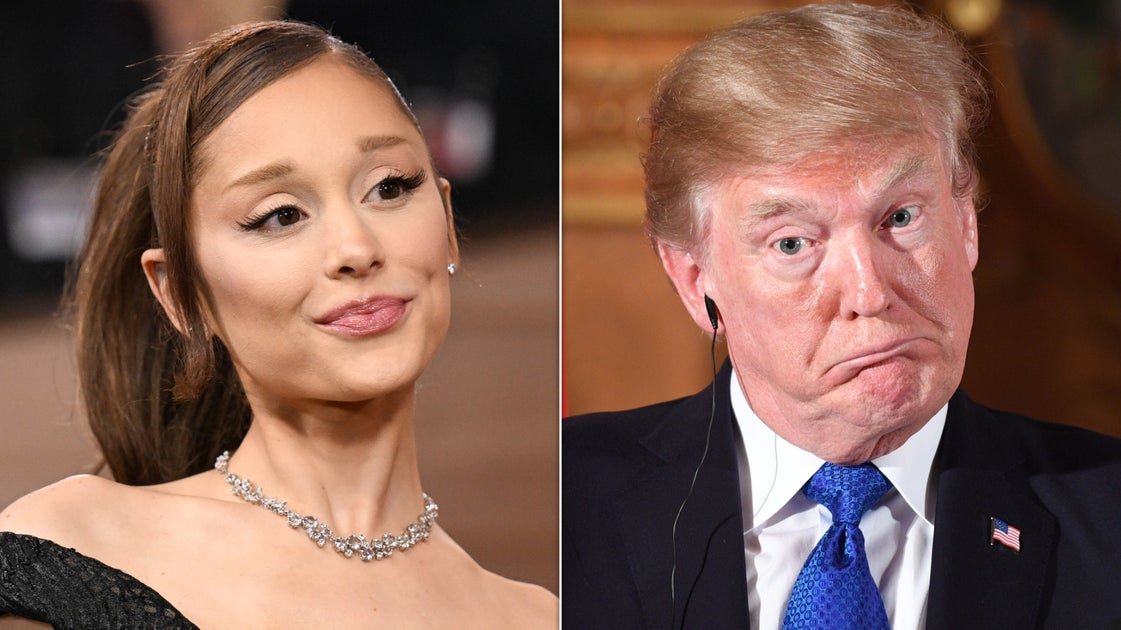
It’s pretty clear Ariana Grande would like to “Thank U, Next” the Trump administration.
On Thursday, the pop star left a savage message on the White House’s TikTok page after it posted an Immigration and Customs Enforcement propaganda video using her 2024 song, “Bye,” Reuters reports.
The White House’s TikTok — which as of Friday is completely silent on the platform — featured the chorus in which Grande croons “Bye-bye, boy, bye” while footage rolls of ICE arrests.
Advertisement
“please do not ever use my music in relation to this barbaric, inhumane, heinous nonsense. fuck ICE,” Grande wrote in a now-deleted comment for the video, per a screenshot published by TMZ.
It is unclear why the Grammy winner’s comment was deleted, who deleted it, or why the “Into You” singer’s song no longer plays in the video on the platform.
Advertisement
HuffPost has reached out to Grande for comment. White House spokeswoman Abigail Jackson, however, did respond to the “Wicked” star’s earlier words, telling HuffPost in a statement:
“We’ll say this one last time: what’s actually barbaric, inhumane, and heinous are the criminal illegal aliens who have injured and murdered innocent American citizens,” Jackson said.
Grande has been a vocal critic of President Donald Trump and his aggressive immigration crackdown. In September, she posted a heated question to Trump supporters on her Instagram Story.
Advertisement
“it’s been 250 days,” she said in part. “now that immigrants have been violently torn from their families and communities have been destroyed, now that trans people have been blamed for virtually everything and live in fear, now that free speech is on the brink of collapse for us all ― has your life gotten better?”
Despite Grande’s comment being deleted, she still seems fired up. On Friday, she launched The Brighter Days Ahead Foundation, which supports several vulnerable communities. One of the grantees includes the Defending Our Neighbors Fund, which raises money for organizations that provide legal representation and bond assistance to immigrants facing detention and deportation.
Entertainment
Peloton Scrubs Hudson Williams Videos Amid High School Photo Backlash
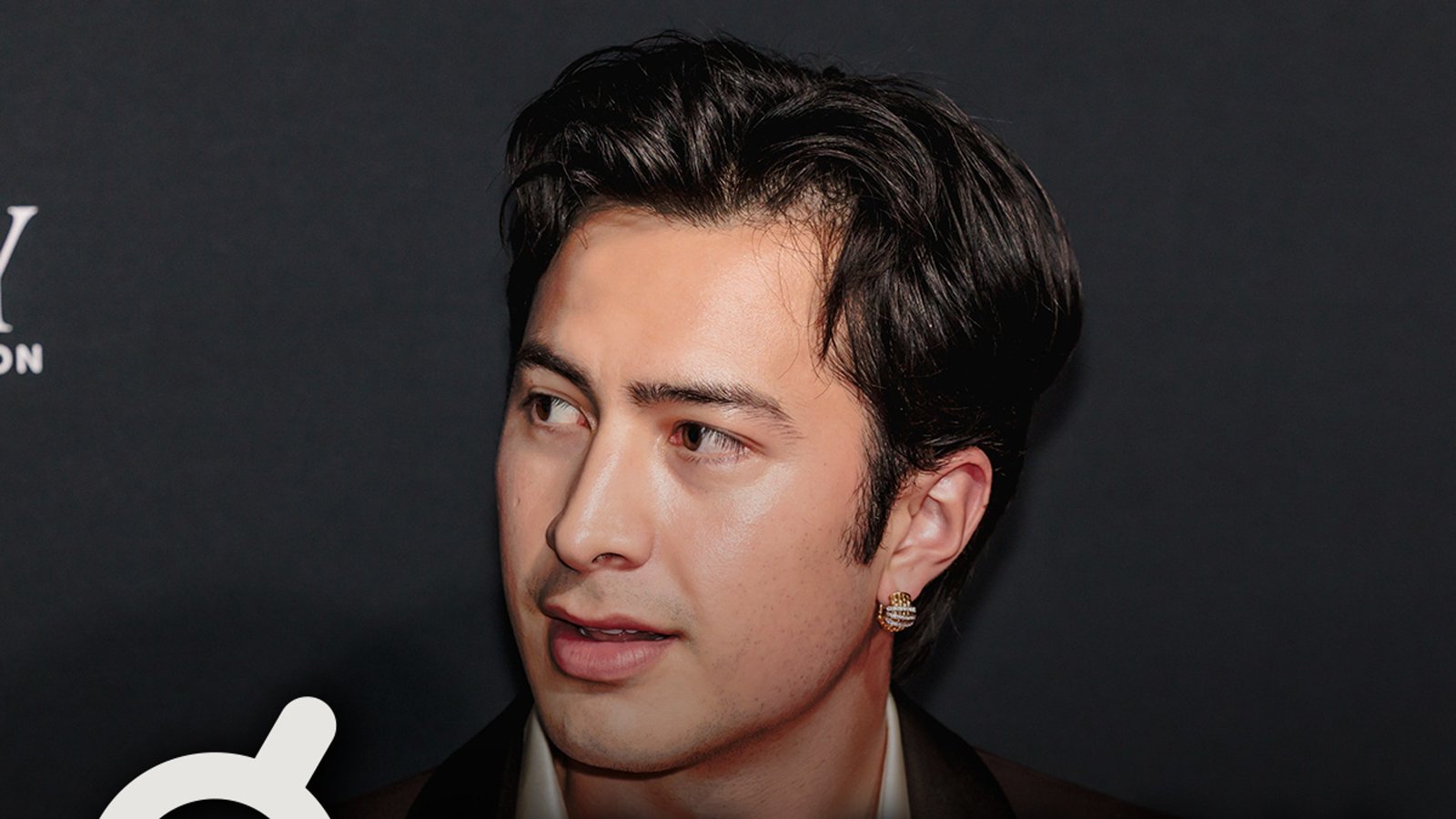
Hudson Williams’ high school swastika photo appears to have caused a stir … with Peloton scrubbing the actor from their social media after the image resurfaced online … TMZ has learned.
Posts on Peloton’s social media, including Facebook and YouTube, that used to feature Hudson are no longer active and take users to a broken link.
As we first reported, sources close to Hudson insisted he had no clue what was being drawn on him at the time … claiming the symbol was scribbled on by other intoxicated teens during an annual “campout” prank.
A friend of Hudson’s told TMZ, “The markings do not and have never reflected Hudson’s beliefs, values, or character.”
Actor Simu Liu also defended Hudson, saying … “The internet is insane. Bad actors are everywhere. If you’re here, be careful. Be smart.”
On social media, people claiming to have attended school with Hudson have defended him too … claiming lots of peers had offensive drawings on their faces during the annual camp outing.
Several users on X have also come to the actor’s defense. “I Stand With Hudson Williams” has become a trending topic on the platform, with fans voicing their support.
Entertainment
Washington National Opera sues to force Kennedy Center to turn over $17M in gifts

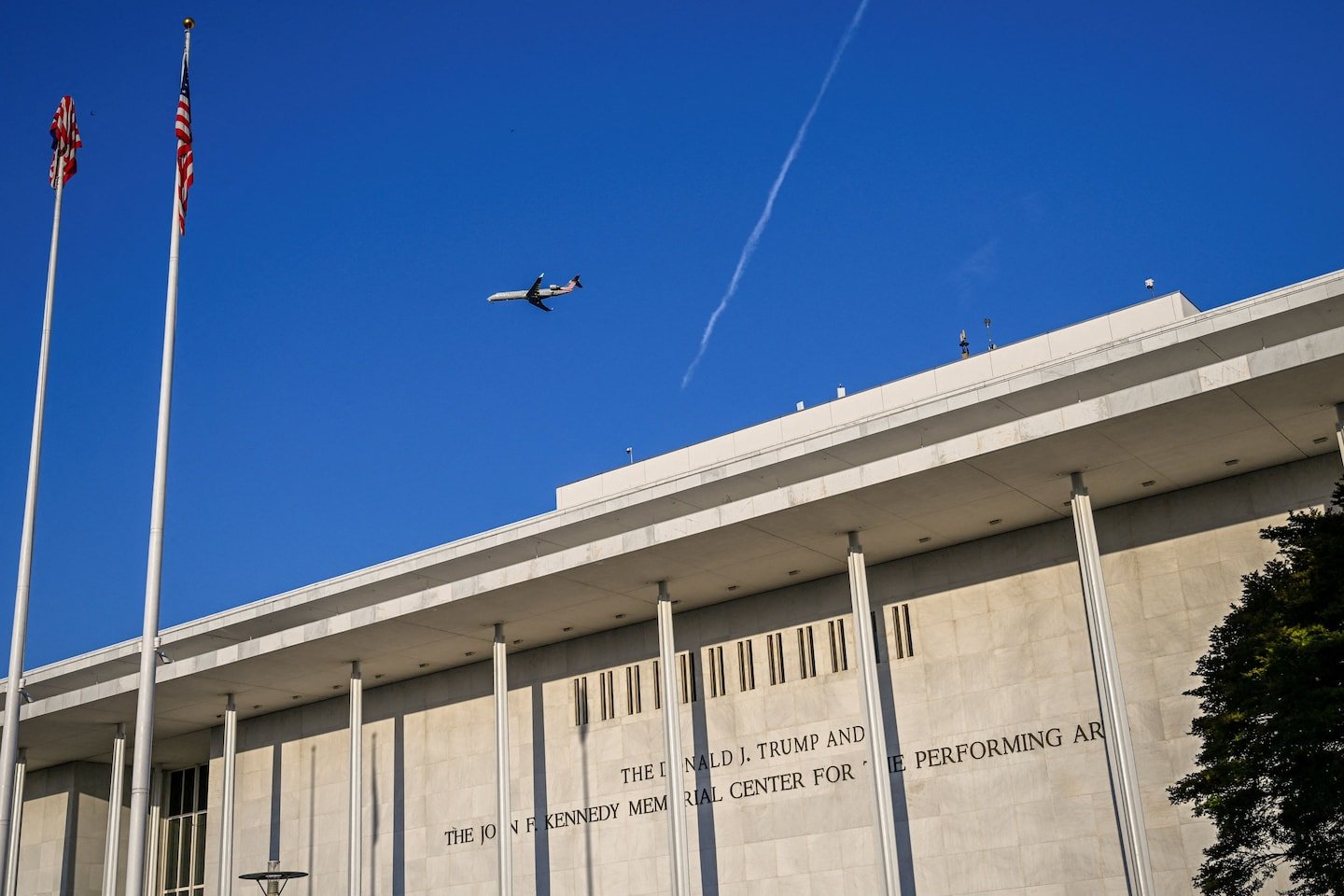
The opera filed a lawsuit Thursday alleging the Kennedy Center illegally took years’ worth of donor gifts, bequests and endowment funds. The two parties cut ties in January.
June 12, 2026 at 12:18 p.m. EDTToday at 12:18 p.m. EDT
The Washington National Opera on Thursday filed a lawsuit seeking to force the Kennedy Center to turn over $17 million in gifts and donations to the opera company.
The Kennedy Center has “wrongfully held” years’ worth of donor gifts, bequests and endowment funds that belong to the opera, according to the complaint filed in the U.S. Court of Federal Claims, five months after the two institutions ended a roughly 15-year affiliation.




See how MAGA is inspiring Britain's swing to the right
CNN's Jomana Karadsheh went to multiple anti-immigration rallies in England and spoke to an expert who had infiltrated far-right …


Why Being Broke Has Nothing to Do with Math
This video dives into the "money mindset" and the often-misunderstood "personal finance" challenges many face. We explore why …


Tracking the Knicks vibe shift at New York bodegas
CNN stopped by New York City bodegas to hear from New Yorkers about the mood during the Knicks' Finals run,...


Trump and Iran say an agreement is close
A senior US administration official spelled out several points in the prospective agreement between the US and Iran, framing the...


Crowd cheers as crew prepares to remove Trump's name from Kennedy Center
Spectators gathered outside the Kennedy Center and cheered as construction crews are set to remove President Donald Trump's …


Peruvian Police dress as World Cup mascots to arrest suspect
Peruvian police burst into the home of a suspected drug trafficker in Lima on Thursday dressed as World Cup mascots.


Iran-US peace deal has been agreed says Pakistan’s Prime Minister | BBC News
A “final, agreed upon text of the peace deal has been reached” between the US and Iran, according to Pakistan's...

"Backrooms" has us wondering if the kids are alright | Engagement Party
"Backrooms" left us with a lingering question: Are the kids alright? Watch Audie Cornish and Ari Shapiro break down what...


A key spy authority, Section 702, is expiring due to inaction in Congress. Here’s what happens next.
Washington — A key surveillance tool that lets the government collect foreign intelligence without a warrant is again at the...


The 2026 FIFA Men’s World Cup schedule and how to watch
Tickets to the 2026 FIFA Men’s World Cup may be scarce and very expensive, but there are several ways soccer...
-

 Politics3 days ago
Political News and Conservative Analysis About Congress, the President, and the Federal Government
-

 Politics1 day ago
What to know about the stabbing that set off fiery riots in Northern Ireland
-

 LifestyleNews1 week ago
120 minutes of strength training per week may help extend lifespan
-
 Video6 hours ago
Download fans say what they love about the festival. #DownloadFestival #BBCNews
-
 BBC News World1 day ago
Why the economics makes this the craziest world cup ever
-
 BBC News World4 days ago
Backrooms and Obsession: How two low-budget horror films caused a Hollywood earthquake
-
 Entertainment15 hours ago
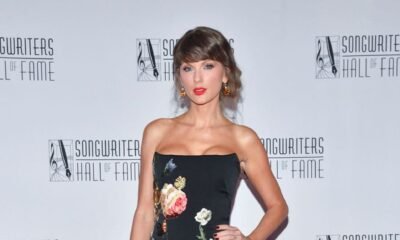
Taylor Swift Seems to Brush Off Jimmy Jam at Songwriters Hall of Fame
-

 Video5 hours ago
Why SpaceX IPO isn't about space. #SpaceX #ElonMusk #BBCNews