

Tech
Physicists Just Built the First-Ever Nuclear Clock
The best timekeepers today—atomic clocks—work off the quantum vibrations of an atom, specifically its electrons. But physicists have long dreamt of even better clocks that run on atomic nuclei, which are less sensitive to environmental disturbances. According to new research, that dream might soon become reality.
Last week, two independent teams based in Europe and China reported the first set of results from experiments using an atomic nuclei clock based on crystals of calcium fluoride containing thorium-229. Both papers, which have yet to be peer reviewed, are available as a preprint on arXiv. In the European experiment, researchers compared how well the clock fared against leading atomic clocks involved in the search for dark matter. The Chinese team, on the other hand, demonstrated the clock’s operation to compare its performance with atomic clocks.
“These results establish a solid-state platform for compact nuclear clocks, nuclear quantum sensing, and precision tests of fundamental physics,” the European team wrote in its paper.
Advanced timekeeping
According to a column by physicists Eric Hudson and Andrei Derevianko, ultraprecise clocks are “more than scientific curiosities,” as they are vital for smooth navigation, communications, and international timekeeping. Hudson and Derevianko, from the University of California, Los Angeles, and the University of Nevada, Reno, respectively, contributed to research from last December that demonstrated the potential of thorium-229 in atomic nucleus clocks.
In atomic clocks, scientists zap and excite the electrons in an atom to push the electrons from one energy level to another. That absorption “happens at an exquisitely precise frequency,” they explained, adding that these patterns are “set by the laws of physics” and give the world a fairly consistent standard for keeping time.
Meanwhile, a nucleus is 10,000 times smaller than an atom and less prone to disturbances from temperature, electric fields, and other environmental disturbances, the pair wrote—hence, physicists’ long-time interest in atomic nucleus clocks.
A concept comes to life
The challenge, then, was to find an atom that scientists could most effectively manipulate. For instance, it should be responsive to the laser that scientists use to trigger the “ticks,” so to speak, to tell time. In that sense, thorium-229 was an “exceptionally rare case” in which it has two different states, which scientists can induce using lasers to excite the nucleus from one state to another, explained Hudson and Derevianko.
The latest pair of papers build upon their work, among many others from the past couple decades. Importantly, the recent demonstrations implement a feedback loop that stabilizes the clock’s operations. This represents an improvement from the European team’s own work from 2024 and 2025.
“This was the final missing step before calling it an actual clock,” Lars von der Wense, a physicist at Johannes Gutenberg University Mainz in Germany, told Science News. With forthcoming improvements to laser and crystal technology, nuclear clocks should advance rapidly, added von der Wense, who wasn’t involved in either work.
At the frontier of physics
Setting aside nuclear clocks’ practical benefits, researchers believe they could test the fundamental constraints of nature and new physics, according to Hudson and Derevianko. And indeed, that’s what the European team immediately set out to do with its latest iteration of a nuclear clock. The latter half of its paper describes how well the clock fared in evaluating constraints for ultralight dark matter—a hypothetical form of matter that could explain a whole bunch of cosmic mysteries.
To Science News, Thorsten Schumm, a physicist at TU Wien in Austria from the European team, reported that the nuclear clock already outperformed all atomic clocks in certain types of measurements. All that said, the technology is still at its first stages, he added. But it looks like nuclear clocks are off to a good start.
Tech
A key spy authority, Section 702, is expiring due to inaction in Congress. Here’s what happens next.

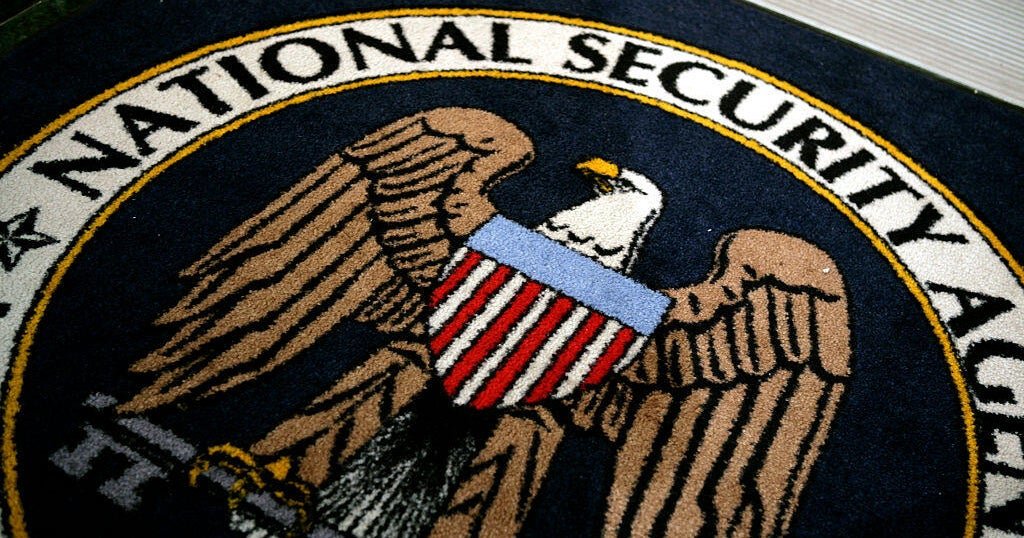
Washington — A key surveillance tool that lets the government collect foreign intelligence without a warrant is again at the brink of expiration. Barring an 11th-hour intervention, the spy authority, known as Section 702 of the Foreign Intelligence Surveillance Act, is set to lapse at 12 a.m. Saturday after President Trump’s pick to oversee the nation’s intelligence agencies complicated its renewal.
Democrats have opposed extending the authority since the president announced that he had selected Bill Pulte, the head of the Federal Housing Finance Agency, to temporarily serve as director of national intelligence. In addition to his lack of national security experience, Democrats railed against Pulte for his efforts to go after some of Mr. Trump’s political foes on allegations of mortgage fraud.
Lawmakers have long sounded the alarm about the risks of letting Section 702 expire. Those who serve on congressional intelligence committees say that about 60% of the president’s daily intelligence briefing is derived from information collected under the law, and they consider it a tool that is critically important to national security.
But it’s still controversial: the provision already faced stiff opposition from civil liberties-minded lawmakers in both parties who have unsuccessfully pushed for years to implement a requirement for a warrant to search Americans’ data that’s incidentally swept up in the collection. Demands for reforms led Congress to punt the issue twice since its initial expiration in April.
Here’s what to know about what happens next.
What does Section 702 do?
Section 702 was first authorized in 2008 and allows the government to sweep up the electronic communications of foreigners abroad without a warrant.
Senate Majority Leader John Thune has noted that policymakers across the federal government rely on the information it provides on a regular basis.
“It is a program that makes Americans more safe,” the South Dakota Republican said on the Senate floor Thursday. “The intelligence derived from the 702 program is something that has saved American lives — in theaters of conflict, preventing terrorist attacks, preventing drug runners from getting drugs into this country.”
Documents prepared by the intelligence community and sent to House Republicans earlier this year said “no other foreign intelligence authority can replicate Section 702’s speed, agility, and insights.”
“FISA Section 702 is often the primary or only source of intelligence in areas where access to other sources of collection would be extremely dangerous and/or costly,” the documents said. They were first reported by Politico, and the White House confirmed sending them.
While Congress reauthorizes the legal framework that allows for the collection of the communications, a secretive court known as the Foreign Intelligence Surveillance Court authorizes the government to conduct the surveillance programs under certain parameters for up to a year.
After the court greenlights what categories of foreign intelligence information can be collected and determines the government is following appropriate targeting procedures, the government decides whom to target and gathers that data from U.S.-based electronic communications service providers, who are legally compelled to assist.
What happens if Section 702 expires?
The Foreign Intelligence Surveillance Court’s recertification of the program through March provides cover after the law sunsets, according to some Democratic lawmakers and legal experts.
“Section 702 will not go dark,” said Elizabeth Goitein, the senior director of the Brennan Center’s Liberty and National Security Program. “That is a myth.”
Democratic Sen. Dick Durbin of Illinois said the statute “makes it clear that the authorities of FISA are going to be positive and enforceable” until the recertification runs out next year.
“It will not lapse,” Durbin told reporters this week. “That doesn’t mean we shouldn’t do this on a timely basis.”
Rep. Jamie Raskin of Maryland, the top Democrat on the House Judiciary Committee, argued that “government surveillance activities will continue unchanged” after Friday.
“Everything that’s already been authorized and certified is already in motion, and current FISA authorizations will continue unaffected, at least through March 17, 2027,” he said.
Sen. Mark Warner, the vice chairman of the Senate Intelligence Committee who has opposed the extension due to his concerns over Pulte’s leadership, acknowledged Thursday that the expiration could be dangerous. But he noted, when asked about implications for major events like the World Cup, that it’s “not the only tool the intelligence community has.”
Communications providers may not cooperate with the government once Section 702 expires
Warner, a Virginia Democrat, said there are questions around whether communications providers would cooperate with the government’s requests after Friday, calling the scenario “a high-risk proposition.” Warner said a couple major companies threatened to stop participating in 2024 before Congress reached a deal to renew Section 702 for two years after a series of abuses by the FBI caused the program to nearly expire.
“I think they don’t mind participating as long as they get indemnification,” Warner said. “If the indemnification goes away — that’s why we’ve always tried to not get into this territory of having it expire.”
But others have pointed to the uncertainty surrounding a lapse, which has never occurred since Section 702 was authorized.
Republican Rep. Rick Crawford of Arkansas, the chairman of the House Intelligence Committee, also cited the potential for service providers to refuse to comply with the government’s requests for data if the statute lapses.
The Brennan Center’s Goitein said the law makes clear that the program’s existing certifications and directives remain in force until their expiration date, regardless of whether Section 702 lapses. She said the legal effect of the grandfathering clause was tested in 2008 when the statute preceding Section 702 lapsed and the intelligence court ordered Yahoo to comply with a directive.
“After that lawsuit, Congress strengthened the grandfathering provision, meaning that the law is even clearer today,” she said.
702 database “will become increasingly out of date”
Crawford said Wednesday that a lapse in the spy power would be “uncharted territory.”
“Once this authorization expires, the clock starts ticking,” he said on the House floor. “The implications get worse every single day. While the 702 database would remain available to search, the data in that database will become increasingly out of date.”
House Speaker Mike Johnson, a Louisiana Republican, warned Thursday after the House failed to pass a short-term extension that Democrats risked “a serious calamity on our shores.” Nineteen Republicans also voted against the extension.
Rep. Keith Self of Texas, who was one of those Republicans, called such rhetoric “scare tactics.”
“FISA isn’t going dark. We have the law. We have precedent from 2008,” he said.
Jake Laperruque, the deputy director of the Center for Democracy and Technology’s Security and Surveillance Project, said it was notable that the House is heading home for a weeklong recess instead of staying in Washington to find a resolution.
“They would not be flying off to go home if they actually thought it was a real threat,” he said.
He added, “We feel really confident at this point that there is not going to be any change to operational activities when we hit [the] sunset period.”
The House is not due to return to Washington until June 23.
Tech
Justice Department Approves Paramount’s $111B Warner Bros Acquisition


UPDATED with Paramount statement: The Department of Justice has approved Paramount’s pending $110 billion purchase of Warner Bros Discovery.
The signoff Friday by the Paramount-friendly Trump administration was confirmed to Deadline by multiple sources. No significant concessions by Paramount to the DOJ appear to have been made in order to gain the regulatory signoff, the sources indicated.
“We are grateful for the Department of Justice’s thorough review of this transaction, as well as the work of the other agencies that have completed their reviews and provided clearance to date,” a Paramount spokesperson in a statement provided to Deadline. “This deal is pro-competitive, resulting in a stronger company better positioned to compete against dominant technology platforms in an industry increasingly defined by intense competition for audiences, talent, technology, and investment. We remain focused on completing the transaction as soon as possible and delivering its benefits to consumers, creators, and the entertainment industry as a whole.”
The antitrust hurdle cleared by Paramount comes as state attorneys general in California, New York and almost a dozen other states are contemplating an antitrust suit to put the brakes on what would become a mega-studio.
Paramount CEO David Ellison and his management team have promised to close the WBD deal by September 30. If they fail to do so, they have pledged to pay shareholders a “ticking fee” of several million dollars a day. In recent days, regulators in the UK and Europe have signaled their plans to take a closer look at the transaction. Particularly with the shape of summers on the continent, if clarity is not reached by the start of August, the process will likely drag into September.
News leaking out of the approval comes the same day Paramount and the UFC (who have a $7.7 billion deal of their own) got a gift when a federal judge killed an eleventh-hour lawsuit to stop a UFC event at the White House on Sunday. The set of mixed-martial-arts matches, streaming live on Paramount+, will be contested on Donald Trump‘s 80th birthday.
Among opponents to the merger, Sen. Elizabeth Warren has been in the forefront, and Friday she was quick to react to DOJ green light.
“This is terrible news for every American who doesn’t want Trump-aligned billionaires to control what they watch and how much they pay,” the New England senator said. “The Paramount-Warner Bros. deal has reeked of corruption and influence-peddling. This fight isn’t over. State AGs must block this merger.”
Out West, Golden State AG Rob Bonta’s office has long stuck to its line that the “Paramount acquisition of Warner Brothers remains an active investigation, and we do not have any updates to share at this time.” The CA DOJ did not respond to Deadline’s request for comment.
Overseas, the much debated deal is hitting some roadblocks with UK regulators.
Earlier this week, the UK’s Competition and Markets Authority declared that it had opened a “merger inquiry” into the deal. With an August 7 deadline of sorts, the CMA intends to examine if the Paramount-WBD meld could present a “realistic prospect of a substantial lessening of competition.” If the Brits believe that such a prospect is real, then a second phase in their probe will kick off — a Phase 2 that could last up to five months and gummy up the works for the merger.
After a months-long death match with Netflix, a bid-raising Paramount succeeded in efforts to acquire Warner Bros. Discovery in late February, with streamer co-CEO Ted Sarandos literally at the White House for meetings as news of the deal broke. Soon after, Team Ellison said it expected to close the deal in the third quarter, which would have been a remarkably quick turnaround of a deal this size.
That turnaround that looks to be well on track now, at least in America.
Additionally, even as Australia signed off just recently on the deal, more antitrust work is ongoing in the European Union, where a Phase 1 investigation is underway with a deadline of July 7. Experts have predicted a Phase 2 investigation is likely.
Separately, the European Commission is examining the deal under Foreign Subsidies Regulations and will decide by July 14 whether to clear it or open a full investigation. Saudi Arabia’s Public Investment Fund, Qatar Investment Authority and Abu Dhabi’s L’imad Holding are providing $24 billion in equity funding, joining the Ellisons, RedBird Capital and LionTree as investors. Paramount says the Middle Eastern sovereign wealth funds will be purely passive investors.
Back in the U.S., where the Ellisons’ closeness to “good friend” Donald Trump has cast a shadow on the merits of the potentially disruptive merger, Democratic lawmakers have asked Treasury Secretary Scott Bessent, in his role as chair of the Committee on Foreign Investment in the United States, to review potential national security risks of foreign ownership. One issue some have raised is a congressionally mandated 25% cap on foreign ownership of American broadcast stations.
The Justice Department’s approval was expected, which is why many opponents of the transaction had set sights on state attorneys general. Still, the DOJ’s decision to sign off on could have an impact on a state legal challenge, as judges may question why the transaction is problematic at the state level but not for federal authorities.
Democrats have charged that the DOJ has been politicized, including on antitrust matters. They have pointed to the Ellisons’ ties to the administration, and to corporate lobbying from officials close to the White House on another merger and antitrust lawsuit.
Politico was first to report on the DOJ approval of the Paramount-WBD merger.
Ted Johnson contributed to this report.
Tech
Number of arrests after riots in Northern Ireland rises to 19


Police said 19 people, including a 16-year-old boy, had now been arrested after two nights of rioting in Northern Ireland following a knife attack earlier in the week.
The violence broke out after far-right activists called for demonstrations in response to the attack, which was captured in a graphic video.
Masked men burned vehicles and houses and blocked roads hours after Elon Musk, Tommy Robinson and other agitators encouraged people to take to the streets on Tuesday. On Wednesday, police used plastic bullets and water cannon after crowds attacked police with rocks and petrol bombs.
Concerns have been raised about messages encouraging disorder being spread online and forwarded over messaging apps. A committee of MPs on Friday warned that the government had failed to tackle the spread of misinformation online.
Chi Onwurah, the chair of the science, innovation and technology committee, said: “Unrest in Belfast shows that the government hasn’t done enough to tackle the scale and speed of the algorithmic amplification of misinformation online.”
In a letter to the technology secretary, Liz Kendall, Onwurah accused the government of ignoring the committee’s warning that social media algorithms had driven previous violent unrest in Southport by amplifying harmful and misleading content.
Onwurah said: “My committee warned in a report last year that the Online Safety Act was inadequate and riddled with regulatory gaps.”
The letter said: “The government and Ofcom should now force social media companies to take steps during crises to tackle the viral algorithmic amplification of not just illegal content, but also content that may help to drive unrest – such as by spreading false information about an incident – without meeting the bar for illegality.”
The Police Service for Northern Ireland (PSNI) said Thursday night was “much calmer” with only “lower-level disturbances” compared with the disorder of the previous two nights, and along with Police Scotland appealed for calm before anti-racist demonstrations planned in Belfast and Glasgow.
The PSNI assistant chief constable Ryan Henderson said: “Thankfully, the situation was much calmer than we have seen in recent days. Our policing operation will remain over the weekend to ensure public order is maintained.”
The victim of the knife attack, Stephen Ogilvie, who suffered deep cuts and lost an eye, remained in an induced coma on Friday but his condition was said to be improving. A Sudanese national, Hadi Alodid, 30, appeared in court on Wednesday charged with attempted murder over the attack.
A number of anti-racism events have been organised in response to this week’s unrest. A gathering billed as a community solidarity rally was due to take place in west Belfast on Friday evening, while a Together Against Hate demonstration is due to be held at Belfast City Hall on Saturday.
Police are also expecting large numbers to join a protest in Glasgow organised by Stand Up to Racism Scotland. The protest is in response to unrest in the city on Tuesday when five people including two police officers were injured, and Glasgow’s central mosque was forced to lock worshippers inside.
Police Scotland’s assistant chief constable Alan Waddell said there would be a large police presence at the demonstration. He said: “There must be no repeat of the disorder and violence seen in the city earlier this week, when members of our communities were targeted because of the colour of their skin and officers working to keep people safe were injured.
“My message is clear. Those attending must do so lawfully and the police will support public safety.”
The lawyer Aamer Anwar was among those supporting Saturday’s demonstration. He said: “Saturday is about reclaiming our streets, not a day for hate, but a celebration of our city and many cultures. Those who wish to cause the mayhem are not welcome.”
Tech
SpaceX soars 23% in Wall Street debut and makes Elon Musk the first trillionaire
NEW YORK (AP) — SpaceX shares shot 23% higher as the rocket maker’s shares soared in their debut on Wall Street and made CEO Elon Musk the first-ever trillionaire.
The shares opened at $150 and kept rising, reaching $166.90 around 12:.20 p.m. ET. That price gave the company a market value of $2.18 trillion. Forbes is now estimating Musk’s net worth at $1.1 trillion.
Institutional and retail investors jumped at the opportunity to buy 555.6 million shares of SpaceX at the offering price of $135 apiece. The $75 billion in proceeds easily topped the previous record IPO from oil giant Saudi Aramco in 2019.
Musk says SpaceX is going public now because it needs money to fund its ambitions of putting satellites and data centers in space and eventually establishing a colony of people on Mars.
Musk earlier marked the opening of trading on Nasdaq, where the company’s are trading under the symbol “SPCX,” by joining a ceremonial bell ringing from Starbase, the South Texas home of SpaceX.
He reiterated his lofty goals “to make life multi-planetary.”
“Not just a few astronauts, I mean literally you,” Musk said. “Whoever you are watching this, SpaceX wants to be able to take you to the moon, take you to Mars and ultimately beyond.”
Known for his brilliant technology breakthroughs, as well as wild claims and missed deadlines, Musk is expected to break that trillion dollar mark in the biggest initial public offering ever as investors place bets on a company with losses as big as its ambitions. Ahead of the first trade in SpaceX, Forbes puts Musk’s net worth at $982.6 billion.
In addition to establishing a one-million person Martian colony, the company has promised to save humanity by establishing other outposts in space, launch data centers the size of football fields into orbit and outdo rivals Anthropic and OpenAI in the race to make money from artificial intelligence.
To reach its goals, SpaceX needs billions more than it currently takes in from its rocket and satellite business. Between the start of 2025 and March 31, 2026, the company lost $8.7 billion.
Wall Street bankers that helped take SpaceX public are enthusiastic about the company — and the big fees they will earn — but not everyone thinks the stock price is justified.
Analysts at research firm Morningstar, which doesn’t earn any investment banking fees, wrote that the IPO is “significantly overvalued” because of SpaceX’s unproven technology and massive capital needs.
They estimate the company is only worth $780 billion — less than half its IPO value.
Still, Musk has pulled off the seemingly impossible before.
The soon-to-be trillionaire — on paper at least — made his fortune by creating two companies, Zip2 and PayPal, that netted him about $200 million at sale. He used that money to start SpaceX and invest in Tesla, and defied the odds by creating a space company that figured out how to reuse rockets and a car company that made electric vehicles cool.
Musk has realized vast sums of wealth for himself, much of it in stock he has yet to cash in or grants for shares he’ll only receive if Tesla or SpaceX hit ambitious performance targets. His recent pay package from Tesla drew criticism from the Vatican. At Tesla, he’s worried shareholders by fighting with regulators or dividing his attention between multiple companies and last year by taking a role in the Trump administration.
But a rising stock price has cured all ills: Since it went public in 2010, Tesla has returned 20,000% for shareholders, or more than $1.2 trillion in investor wealth. That has helped lift Musk’s pre-SpaceX IPO worth to $795 billion, according to Forbes magazine.
SpaceX is the first of three “megacap” companies expected to go public this year, with Anthropic and OpenAI to follow. Nasdaq even revised its rules to allow SpaceX to gain entry into funds tied to its indexes in 15 days, which means investors will end up buying the rocket maker’s shares much earlier.
Not all investors are thrilled about SpaceX potentially showing up in their holdings of index funds. Officials from pension funds for firefighters, teachers and other workers in California and New York sent a letter to SpaceX last month decrying some of the provisions in its IPO, including the “super voting shares,” mandatory arbitration of shareholder claims instead of the possibility of lawsuits and how much power Musk will hold over the company.
__
AP reporters Stan Choe and Wyatte Grantham-Philips contributed from New York.
Tech
David Hockney: Celebrated British artist dies at 88


British painter David Hockney, whose vibrant portraits and sun-drenched depictions of the everyday made him one of contemporary art’s most beloved figures, has died at 88.
The artist died “peacefully at home” on Thursday, one month short of his 89th birthday, according to a statement provided to CNN by his longtime publicist Erica Bolton.
Born in Bradford, UK, in 1937, Hockney attended his local art school before studying at the prestigious Royal College of Art in London. Successful from the earliest stages of his career, he soon relocated to Los Angeles, where he would spend much of the 1960s and eventually settle.
While teaching at various US colleges, he established himself as a key figure in the Pop Art movement. Like many of his contemporaries, Hockney injected his work with bright colors and dancing lines. But while the likes of Andy Warhol (who was just nine years his senior) turned their focus to commercialism and consumer society, Hockney appeared more concerned with his immediate surroundings.
His deeply personal realist style was characterized by self-portraits, still lives and depictions of friends and lovers (and, later, his dachshunds Stanley and Boodgie, whom he immortalized in a series of paintings and an accompanying book). Having come out as gay in his early 20s — a time when homosexuality was still outlawed in England — he also explored sexuality through playfully explicit images and almost mundane snapshots of domestic life: men showering or quietly sitting together.
Among his best-known works from this period are a series of light-filled swimming pool paintings that seemed to freeze a moment in time. But his oeuvre was diverse, spanning photography, printmaking and stage design for ballet and opera productions. He went on to produce photocollages in the 1980s, and many of his later — and often more abstract — landscape paintings were also well received.
Hockney held onto much of his own work, and established an eponymous foundation to manage it. Those paintings that did go to market have soared in value in recent years.
In 2018, “Portrait of an Artist (Pool with Two Figures)” fetched $90.3 million to become (if only briefly) the most expensive work by a living artist ever to sell at auction. The next year, his double portrait “Henry Geldzahler and Christopher Scott” went for $49.5 million at Christie’s, while his 1980 landscape painting “Nichols Canyon” went on to fetch over $41 million.
Yet, Hockney never appeared especially interested in the commercial success of his work. Nor did he reap all the benefits — his record-breaking swimming pool painting was sold by his New York dealer for just $18,000 in 1972. And despite his achievements, he continued working throughout his later years. When CNN visited his California studio in 2017, a then-80-year-old Hockney said he still painted for six or seven hours every day.
“I’m perfectly happy doing this,” he said at the time. “I feel 30 when I’m in the studio, so I come in every day and work, because then I feel 30.”
By this time, Hockney, who was never afraid to experiment with technology, had begun creating art using an iPad. Spending much of the Covid-19 pandemic in Normandy, France, he produced a series of digital renderings of the surrounding countryside that were later printed and exhibited at London’s Royal Academy and the de Young Museum in San Francisco, among others.
With his mop of blond (then gray) hair, large glasses and, oftentimes, a cigarette in hand, Hockney was one of art’s most recognizable figures. During his lifetime he was the subject of several major retrospectives, including one in 2017 that traveled between Tate Britain, the Pompidou Centre in Paris and New York’s Metropolitan Museum of Art.
A statement from Tate Britain director Alex Farquharson praised Hockney for being an “endlessly inventive artist,” who “taught us about the joy of looking, seeing things the rest of us failed to notice — his witty and sharp observations a constant presence in his work and in person.”
He was also among the UK’s most decorated artists, having been invited to join the Royal Academy and, among other honors, awarded the John Moores Painting Prize and the Japan Art Association’s Praemium Imperiale prize for painting.
While he famously turned down a knighthood, he went on in 2012 to accept Queen Elizabeth II’s invitation to the Order of Merit, a group of celebrated public figures that is limited to no more than 24 members at any given time. (In true Hockney style, he turned up to one of the Order’s luncheons at Buckingham Palace in a pair of bright yellow Crocs — to the apparent delight of Elizabeth’s successor, King Charles III.)
In her statement announcing Hockney’s death, Bolton described him as “one of the most important figures in contemporary art in both the 20th and 21st centuries.” The publicist added that his “enduring legacy reflects his underlying enthusiasm for life, his outstanding sense of humor, his immense generosity and his investigative curiosity encapsulated by his signature phrase, ‘love life.’”




See how MAGA is inspiring Britain's swing to the right
CNN's Jomana Karadsheh went to multiple anti-immigration rallies in England and spoke to an expert who had infiltrated far-right …


Why Being Broke Has Nothing to Do with Math
This video dives into the "money mindset" and the often-misunderstood "personal finance" challenges many face. We explore why …


Tracking the Knicks vibe shift at New York bodegas
CNN stopped by New York City bodegas to hear from New Yorkers about the mood during the Knicks' Finals run,...

Trump and Iran say an agreement is close
A senior US administration official spelled out several points in the prospective agreement between the US and Iran, framing the...


Crowd cheers as crew prepares to remove Trump's name from Kennedy Center
Spectators gathered outside the Kennedy Center and cheered as construction crews are set to remove President Donald Trump's …


Peruvian Police dress as World Cup mascots to arrest suspect
Peruvian police burst into the home of a suspected drug trafficker in Lima on Thursday dressed as World Cup mascots.


Iran-US peace deal has been agreed says Pakistan’s Prime Minister | BBC News
A “final, agreed upon text of the peace deal has been reached” between the US and Iran, according to Pakistan's...


"Backrooms" has us wondering if the kids are alright | Engagement Party
"Backrooms" left us with a lingering question: Are the kids alright? Watch Audie Cornish and Ari Shapiro break down what...


A key spy authority, Section 702, is expiring due to inaction in Congress. Here’s what happens next.
Washington — A key surveillance tool that lets the government collect foreign intelligence without a warrant is again at the...


The 2026 FIFA Men’s World Cup schedule and how to watch
Tickets to the 2026 FIFA Men’s World Cup may be scarce and very expensive, but there are several ways soccer...
-

 Politics3 days ago
Political News and Conservative Analysis About Congress, the President, and the Federal Government
-

 Politics1 day ago
What to know about the stabbing that set off fiery riots in Northern Ireland
-

 LifestyleNews1 week ago
120 minutes of strength training per week may help extend lifespan
-

 Video6 hours ago
Download fans say what they love about the festival. #DownloadFestival #BBCNews
-
 BBC News World1 day ago
Why the economics makes this the craziest world cup ever
-

 BBC News World4 days ago
Backrooms and Obsession: How two low-budget horror films caused a Hollywood earthquake
-

 Entertainment15 hours ago
Taylor Swift Seems to Brush Off Jimmy Jam at Songwriters Hall of Fame
-

 Video5 hours ago
Why SpaceX IPO isn't about space. #SpaceX #ElonMusk #BBCNews