

HealthNews
First West Nile Virus-Positive Mosquitoes Reported In Chicago This Year

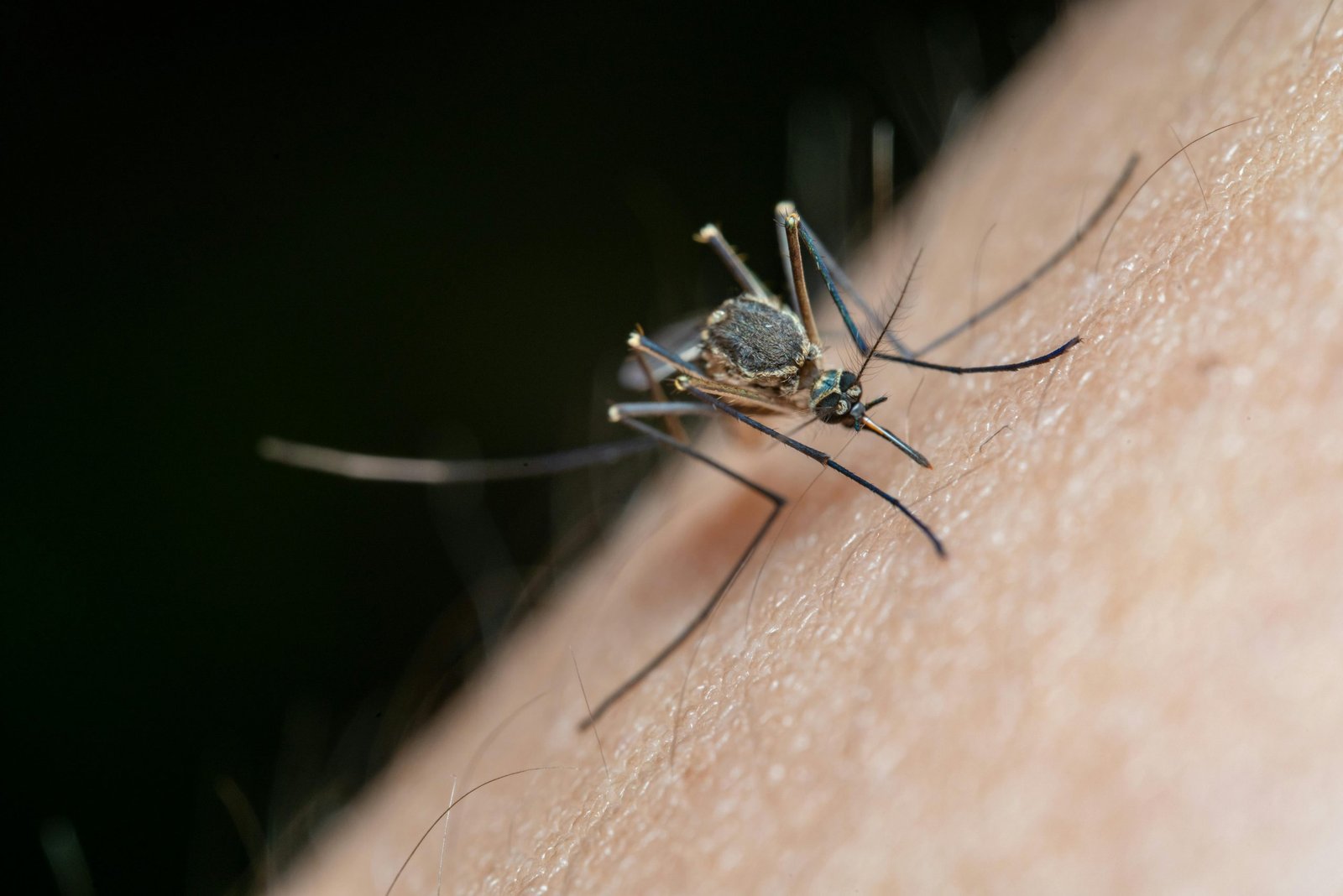
CHICAGO — West Nile virus-positive mosquitoes have been reported in Chicago for the first time this year, the Chicago Department of Public Health announced Friday.
Mosquitos can transmit the potentially serious virus to humans via bites, but no cases of West Nile have been reported in humans in Chicago this year, according to a city health department news release.
In mid-May, the state’s health department reported West Nile-positive mosquitos had been found elsewhere in Illinois.
Most mosquitoes do not carry the virus. The risk of getting West Nile via mosquito bite is highest June through October, during peak mosquito season, according to the Centers for Disease Control and Prevention.
Most people infected with the virus don’t feel sick, but about 1 in 5 people develop a fever and flu-like symptoms, according to the city health department. Severe illness can occur in 1 in 150 people, mostly in people older than 55 who have weakened immune systems.
Symptoms — which typically show two to six days after an infected mosquito bite — include fever, headache, body aches, vomiting, diarrhea and rashes, according to the CDC. Some people who get the virus will feel fatigued and weak for months, and people with severe cases can die or may need hospitalization.
While most people with mild illness recover completely, fatigue and weakness can last for weeks or months. Severe cases can also impact the central nervous symptom and result in hospitalization or death.
There aren’t licensed medications or vaccines to prevent or treat West Nile virus, according to the CDC and Chicago Department of Public Health, so preventing mosquito bites is the best way to protect yourself.
“One of the best ways for Chicagoans to have a safe and healthy summer is by protecting themselves from mosquito bites,” Dr. Janna Kerins, Chicago Department of Public Health medical director, said in a press release.
According to the department, Chicagoans can prevent mosquito bites by:
Using EPA-registered insect repellent according to its label instructions.
Wearing long-sleeved shirts and pants when outside between dusk and dawn.
Making sure windows and door screens don’t have holes.
Using air conditioning at home if possible to control mosquitos indoors.
Keeping grass and weeds short to eliminate hiding places for mosquitoes.
Emptying items that hold water like flowerpots or birdbaths once weekly.
The Chicago Department of Public Health has a “robust program to prevent and control” West Nile Virus, according to the agency. This includes treatment of over 80,000 catch basins — or specialized storm drains that collect surface water — with larvicide, doing weekly collecting and testing of mosquitoes, spraying to kill adult mosquitoes and monitoring infections in humans.
HealthNews
Californian Dies from Rare Disease After ‘Trapping, Feeding and Breeding Wild Rats’ in an RV
NEED TO KNOW
A California resident died from leptospirosis after living in an RV infested with wild rats
The bacterial disease, spread through infected animals’ urine, is very rare in humans but can spread through contact with infected body fluids
Berkeley, Calif., city manager Paul Buddenhagen said there is very little risk to public health, as person-to-person infection is extremely uncommon
A California resident has died after coming into contact with several rats.
On June 10, Berkeley city manager Paul Buddenhagen warned of the existence of leptospirosis in some of the city’s rats after the first human death was linked to the rare disease last month, per his memo shared with Berkeley officials on June 10. Though leptospirosis poses very little public health risk, Buddenhagen proposed several measures to increase awareness and research around the city’s rats to prevent future infections.
Leptospirosis is a treatable bacterial disease that is spread through the body fluids of infected animals and can be contracted if humans come into contact with infected body fluids, according to the Centers for Disease Control and Prevention.
The risk of a human contracting the disease is higher for people experiencing homelessness or living in a space with rats or animal urine, per the CDC. This was likely the case with the Berkeley individual who died of leptospirosis, and their living partner who also contracted the disease, Buddenhagen wrote.
“Both individuals lived together in a recreational vehicle in which they had been trapping, feeding and breeding wild rats,” Buddenhagen wrote in the memo. “In addition, the vehicle was severely infested with wild rats that were not in cages.”
Both of the residents in the RV, parked near the Harrison Street encampment, grew sick, but neither sought out medical treatment “for weeks and possibly months.” Both were eventually transported to a hospital to receive care.
Never miss a story — sign up for PEOPLE’s free daily newsletter to stay up-to-date on the best of what PEOPLE has to offer, from celebrity news to compelling human interest stories.
One individual died not long after they were hospitalized, Buddenhagen wrote, while the other recovered with treatment.
During their hospitalization, Alameda County Vector Control laid rat traps in and around the RV and sealed the vehicle, only opening it to remove the dead rats. They repeated the process several times over many days until they were certain no rats remained, and then the vehicle was towed and destroyed.
“Continuous trapping and testing by Alameda County Vector Control revealed a persistently high prevalence of leptospirosis in wild rats around the RV, exceeding expected urban baselines,” the memo read.
Buddenhagen reiterated that there is an “extremely low” risk to the public, and the recent death was the result of an “extreme situation.” Person-to-person infection is rare, and there have been no recorded cases at the Harrison Street encampment and no evidence of transmission from rats to other animals.
HealthNews
‘They’ll pay anything to feel better’: why pelvic pain is so expensive to treat


Any time Jennifer Vargas, a 35-year-old sex educator in Bushwick, attempted sex, she felt stabbing pain in her vagina so severe her body ached for hours. Nothing helped. Tight clothing exacerbated the “intense, grating sensation”.
Vargas’s symptoms began after a bacterial vaginosis (BV) infection, but the burning and itching persisted beyond a course of antibiotics. Then, she experienced extreme PMS for two weeks. “I was cycling through symptoms of severe anxiety and depression and low energy,” she said. “I was just like, something’s not right here.”
She returned to her gynecologist many times to resolve the lingering pain. Vaginal swab tests came back negative for BV, but they kept treating her for it without seeking other causes.
After about two years of searching, Vargas was exhausted from appointments and feeling dismissed. Then, she was laid off from her job in early childhood education and placed on Medicaid. Finding providers who understood pelvic pain was already a challenge, but finding ones who took Medicaid was nearly impossible – and she gave up on a diagnosis.
It has now been six years since her symptoms started. Vargas estimates that gynecologists, pelvic floor therapists and nutritionists have cost her about $15,000 in out-of-pocket medical bills. Yet she has had no relief.
Vargas’s experience isn’t rare: for the estimated 26% of women who experience vulvovaginal pain, treatment and diagnosis are costly. The estimated economic burden of vulvodynia, an umbrella term for vulvar pain, in the US ranges from $31bn to $72bn annually, accompanied by a lower quality of life.
Some of the expense results from a delay in diagnosis. Almost 60% of the patients who seek care for vulvovaginal pain saw at least three different providers, most of whom could not diagnose them. Additionally, patients pay for treatments that may or may not work, and seek relief via lifestyle adjustments or supplements, said Elizabeth Hintz, an assistant professor of health communication at the University of Connecticut. Negative experiences with providers also “erodes the sense of self”, leading patients to seek mental health support, she said.
“People, especially in this space, will pay – if they can – anything to feel better,” Hintz said. “That also perpetuates this idea that this is a mostly wealthy white woman problem. Because those are the only women who can actually afford to solicit this.”
Kimberly Ellis, 33, a non-profit worker in Washington DC, also had symptoms that began after yeast and BV infections. When treating them didn’t resolve the burning and stabbing, she saw her primary care doctor, then several OB-GYNs and even a dermatologist. She found a vaginal disorders specialist in the area who took insurance, but had a year-long waitlist.
“I went to her a few times,” Ellis said. “But she was pretty honest that my issues are out of her depth.”
Ellis ended up searching for answers on Reddit. She found more providers who specialized in vulvovaginal health through local and online communities and eventually was able to get a diagnosis for pudendal neuralgia, or pain caused by damage or irritation of the pudendal nerve located in the genital and anal region, along with fibroids.
She estimates that she’s spent a minimum of $12,000 out-of-pocket on pelvic floor physical therapy and doctor visits. This number doesn’t account for services like therapy and acupuncture, which she started in order to cope with the pain and frustration.
“It has wreaked havoc on my mental health as well,” she said.
Systemic issues often prevent patients with vulvovaginal pain from getting a diagnosis and affordable, effective care.
To begin with, in the US, many vulvovaginal pain specialists operate outside of the insurance system due to low reimbursement rates, administrative barriers and appointment time constraints. This means an initial consultation with a specialist can cost $500 to $2,500.
Providers receive low or no insurance reimbursement rates because the insurers deem many sexual health conditions – including pain – a mental health issue, said Dr Corey Babb, a vulvovaginal specialist and medical director of the Haven Center in Tulsa, Oklahoma. Insurance companies also often limit appointment times to as little as 15 minutes, Hintz said. Many patients deal with overlapping conditions like vestibulodynia and hypertonic pelvic floor dysfunction, which require multi-disciplinary knowledge and significant time to properly diagnose and form a treatment plan.
“It’s a dumpster fire of brokenness,” said Dr Rachel Rubin, a urologist and sexual medicine specialist who runs a private practice in Bethesda, Maryland. Patients are a volume game, she said; larger institutions work with a large number of patients to make the low insurance reimbursement rates worthwhile, “and nobody is happy.”
Vulvovaginal pain is not covered in typical medical training, and specialists must seek out additional education on their own. Even obstetrics and gynecology students focus on pregnancy complications and surgeries like hysterectomies, Babb explained. Early in his practice as an OB-GYN, Babb had patients with questions about vulvar conditions like lichen sclerosus or low sex drive, which he did not know how to treat. As he researched answers, he learned about the International Society for Studying Women’s Sexual Health (ISSWSH) and decided to become a fellow to fill gaps in his knowledge and ended up specializing in sexual medicine, vulvovaginal pain and menopause.
Specializing in vulvovaginal pain spans beyond traditional gynecology, obstetrics and urology into hormonal, nerve, skin and muscle-related issues. Training and growing the field entails plenty of labor: publishing new research, teaching other practitioners, and spending hours with patients other doctors cannot help. But someone has to pay for it, and these scarce specialists charge a premium.
“If you were highly specialized in something that a lot of people could do, you wouldn’t charge $2,000 for a visit,” said Hintz. “Nobody would pay for it. You can make a lot of money off of desperate people, it turns out. That’s more of a cynical hot take.”
Research into vulvovaginal pain is also sparse. While there are more than 30 different treatment options for the symptoms of vulvodynia, almost none have been the subject of controlled research. This means patients and doctors must often figure out what works via trial and error. In 2024, the National Institutes of Health allocated just $2m of funding for vulvodynia. By comparison, headaches received $50m.
“No one is coming to save the day,” said Rubin. “Not the NIH. No academic centers. We are the grownups here, and we have to do the work.”
Vargas attended an event in 2023 held by Tight Lipped, an advocacy group for patients with vulvovaginal and pelvic pain disorders. She joined their online community and saw a post about the Aziza Project, which provides gynecological pain patients with funding. Within days, Vargas was on the phone with the executive director, Stephanie Berman, and applied to be a client.
The Aziza project connected Vargas to Babb – Berman refers clients to Babb, who had treated her own issues – and covered her appointment fees and travel to Tulsa. Babb diagnosed her with hypertonic pelvic floor dysfunction; depleted levels of estrogen and testosterone, which can cause pain in the vaginal opening; and melanosis, or discoloration of the skin. It also covered several pelvic floor physical therapy sessions.
“It was like a weight had been lifted, to have somebody else come in and say you’re not alone and I’m going to help you carry this,” said Vargas.
Berman, 41, who lives in British Columbia, started the Aziza Project during her battle with vulvovaginal pain. In 2010, she could barely get off the couch. An ever-present itch burned her vulva, and her back throbbed throughout every menstrual cycle. She constantly felt bloated; the pain made it hard to think. One evening, she looked at her husband and said: “I’m going to be bedridden eventually.”
In July 2020, an ultrasound indicated that she might have endometriosis. That October, almost nine years after the onset of her symptoms, Berman had a hysterectomy, which relieved the severe cramping. But the vulvar stinging and burning persisted. The surgeon suggested lichen sclerosus, an inflammatory skin condition, might be the cause.
Multiple practitioners agreed with the lichen sclerosus diagnosis, including a dermatologist, though no one had confirmed it via biopsy. For two years, Berman used prescribed biologics and topical steroids, but nothing relieved the prickling, stinging, knife-like feeling. When she lived in Washington state, she saw a pelvic floor physical therapist who recommended a vulvar pain clinic in Seattle. At the clinic, the doctor offered no diagnoses, advice or treatment; he merely told Berman’s husband to “be gentle” and sent the couple on their way.
Berman was looking online for lichen sclerosus support groups when she came across an Instagram interview with Babb. She scrolled through his page, impressed by his knowledge, and wondered if he could help her. Berman booked a virtual consultation, which cost $250. She also booked a $500 in-person appointment, flights from Washington to Tulsa, and a hotel – a total spend of $8,000.
“The pain just takes over your ability to function,” she said. “I’d been used to my body betraying me for so long.”
At the appointment, Babb examined Berman and said the issue was nerve-related, not lichen sclerosus. He diagnosed her with hypertonic pelvic floor dysfunction and pudendal neuralgia. Berman received Botox injections for muscle pain and a nerve-block injection. “I had the best three days after that,” she said.
Since the initial appointment, Berman has returned to Tulsa seven times. The medical costs alone add up to $24,000. If you add travel, pelvic floor physical therapy, water aerobics for low-impact movement and specialist care costs, she estimated that her pain has cost almost $40,000 to date.
“That’s so scary,” she said. “For perspective, we owe $48,000 on our mortgage.”
Before her first consultation with Babb, Berman wondered how someone without means could access this caliber of care. Three months later, she launched the Aziza Project, named for the Hebrew and Arabic words meaning beloved, precious and mighty. She asked her community for donations of $5 a month that would go toward covering specialist appointments for patients who couldn’t afford it otherwise.
All of Berman’s extra income goes toward medical expenses. She takes 5% of donations from the Aziza Project – about $30 a month – as an operational fee and works as a budgeting coach. She and her husband live frugally: they share a car and spend about $40 on date nights.
The Aziza Project has been able to cover just over $8,000 in medical and travel expenses, split between four different patients. Berman hopes to raise enough in the future to cover follow-up visits, Botox injections and five to six nights of hotel stays – at a cost of $5,100 per patient.
Without the Aziza Project, Vargas said she would have been unable to pay for treatment. Medicaid wouldn’t cover the estrogen and testosterone compound cream that she needs for relief, nor has she found a local, pelvic pain-informed gynecologist to continue managing her care.
“It makes me really angry,” Vargas said. “There’s so many people who need this care and can’t get it.”
In the meantime, she said she had taken a break from treatment after several negative experiences with providers back home.
“I can’t continue to see practitioners that are just seeing me as a muscle that needs to be pushed through.” she said. “The rest of me needs to feel safe and comfortable.”
HealthNews
A 1998 Boston party photo shows a woman with her boyfriend. Her future husband is in it too.
Some old photos get better with age, and a film snapshot from a Boston house party in May 1998 might be the best recent example.
As Newsweek reported, Brenna Jennings posted the picture to social media last spring under her handle @ogbrenna, and the caption turned it into something much bigger than a throwback. “I was dating the guy in the chair, but I married the guy in the window,” she wrote.
The photo shows a young Jennings perched on the arm of a chair, laughing beside her boyfriend at the time. Off to the side, seated quietly near a window, is Steve, the man who would eventually become her husband. The post struck a nerve, racking up more than 9 million views and 238,000 likes, according to Newsweek.
The picture, likely snapped by her sister, came from the last party Jennings and her roommates threw before leaving their first apartment after college, with everyone about to scatter into new lives. She had been dating the man in the chair for about a month after meeting him at a live music show that spring. “We were young, tan, living in the city and enjoying each other’s company,” she told Newsweek.
The man in the window was just her roommate then, and not one she saw much. They worked opposite schedules and crossed paths rarely. “I thought he was quirky and did not for a minute consider him to be my ‘type,’” Jennings said. He did have one running bit she remembered: when her boyfriend left phone messages, her roommate would relay them by announcing that “the model called.”
The chair relationship fizzled within months as their lives pulled in different directions. Around the same time, the window guy left Boston for a month in California and asked Jennings to hold onto his stereo while he was gone. They started talking more, and the talking started to mean something. “At some point, I realized how funny, smart, and even-keeled he is,” she said. By December, they were officially together, and he moved in soon after.
Nearly three decades of marriage later, the couple lives in New England, where they have raised a daughter who is now approaching high school graduation, fostered dozens of puppies, and weathered the usual run of life’s highs and lows together.
Asked what she would tell the young woman on the arm of that chair, Jennings did not hesitate. “I’d say first of all, look at how pretty you are! Stop imagining yourself to be too tall, too loud, too much,” she said. The guy in the chair was great-looking, she admitted, but as she put it, “I was no slouch!”
For more entertainment and lifestyle content, you can follow @ogbrenna on Threads.
HealthNews
Time May Not Exist Everywhere in the Universe
Here’s what you’ll learn when you read this story:
Past attempts to reconcile quantum theory with relativity have led to the “problem of time,” where time behaves differently in each regime.
A new study suggests that in a “geometric clock,” time may flow as we expect in curved regimes, but wind down in flatter ones.
This is yet another mind-bending take on time that shows that the concept is much more complex than the simple tick-tock of a physical clock.
For most of us, time is an intuitive concept. Sixty seconds in a minute, 1,440 minutes in a day, 28,835 days in an average lifetime. But as science has progressed from water clocks to atomic clocks, we’ve gained a more nuanced understanding of time. Within the framework of General Relativity, for example, time is a dynamic dimension woven through space-time. That means time is relative, since it’s warped by mass and energy. In quantum physics, however, time is more of a constant and external backdrop to changes in a system (mathematically speaking, it’s a parameter rather than an operator).
In 1967, American theoretical physicists John Wheeler and Bryce DeWitt created what’s regarded as the first attempt to reconcile these two theories. Known as the Wheeler-Dewitt equation, it essentially contains no time variable at all, forming what’s known today as “the problem of time.”
“There were no great mysteries except at the interface between gravitation and quantum theory,” Wheeler (who also coined the term “black hole”) said in an interview in 1996. “It’s one thing to have an equation, another thing to solve it, and so another thing to interpret the solution […]. That’s a continuing enterprise.”
The latest attempt to understand that solution comes from Anderson Gama Fernandes de Freitas of the Universidade Federal de Itajubá in Brazil. In a paper published in the journal Classical and Quantum Gravity, Fernandes de Freitas argues that the phenomenon of time might be intrinsically tied to the geometry of space itself. He introduces a “geometric clock”—a mathematical construct derived from the curvature properties of three-dimensional spatial slices—that determines whether time can function as a meaningful ordering parameter. When space is intensely curved, as in the conditions immediately following the Big Bang, this clock is rigid and the universe evolves just as standard physics predicts. But as the universe expands and flattens, the curvature weakens, and Fernandes de Freitas’ geometric clock winds down with it, meaning time itself gradually loses its operational meaning.
“The analysis of solvable sectors demonstrates that this geometric notion of time naturally reproduces standard results in strongly curved regimes, such as the early [u]niverse, while predicting a smooth weakening of temporal ordering in weakly curved or asymptotically flat regions,” Fernandes de Freitas wrote. “This behavior offers a coherent interpretation of why time-based descriptions are effective in some regimes and cease to be meaningful in others.”
Fernandes de Freitas’ theory argues that time is neither “fundamental nor universally available.” Crucially, this mathematical theory moves the philosophical question of time into the more concrete realm, developing testable predictions. However, the author points out that his theory was only tested on simplified cosmological models. It’ll take more than that to unify the two greatest scientific theories of the modern age—a quest that’s perplexed the greatest scientific minds in history, Wheeler included.
“We still haven’t got a full insight into what the solutions mean and how to speak about them,” Wheeler said in the 1996 interview. “It’s strange that the two greatest developments of theoretical physics—quantum theory and relativity—should take so long to come into a union.”
You Might Also Like
HealthNews
Mumbai doctor shares the symptoms people commonly ignore before receiving a hypertension diagnosis

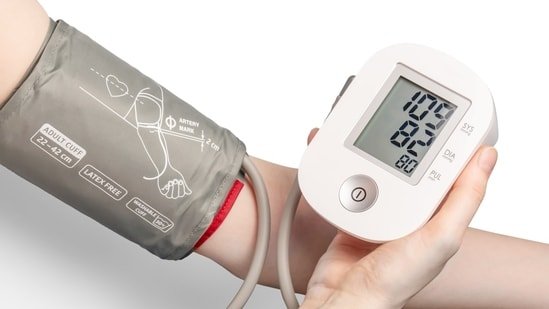
Today, high blood pressure (hypertension) is a common condition, but many people remain unaware that they may already be living with it. In an interview with HT Lifestyle, Dr Murtaza S Bagwala, head of emergency medical services at Saifee Hospital, Mumbai, shared symptoms that may signal high blood pressure.
Also read | Want to control blood pressure naturally? Heart surgeon shares the first steps you should know
Symptoms of hypertension
Dr Murtaza said, “One of the biggest reasons why people are not diagnosed early because the symptoms are not obvious in the early stages of the condition, and it develops slowly and quietly.” This means that people are more likely to ignore minor physical symptoms and proceed through their day without being aware that their blood pressure is already on the rise.
According to Dr Murtaza, most people would overlook minor health warning signs, thinking they are simply caused due to stress, fatigue, and lack of sleep. These symptoms may be attributed to a busy life and overlooked, such as frequent headaches, dizziness, getting tired easily, head heaviness, blurred vision, irritation, poor sleep, or getting short of breath when walking.
But in some people, these symptoms could be a sign of hypertension, or high blood pressure. It’s common to hear people say things like, “I’m just stressed,” “I didn’t get a good night’s sleep,” or “It’s due to work pressure.”
According to Dr Murtaza, these symptoms are mild and non-specific, leading many individuals to delay getting themselves checked. However, when their blood pressure is monitored, the levels are likely to be significantly high.
Hypertension is a silent killer
Hypertension is sometimes called a “silent killer” because, in the early stages, it can cause minute or no symptoms, even though it is a serious condition that can lead to damage to vital organs in the body.
Eventually, unchecked high blood pressure can damage the heart, brain, kidneys, and eyes, and it can lead to serious health problems. Often, people may have very high blood pressure without even knowing it, which is one of the major problems with hypertension. This is why routine testing is very important, even for those who think they’re healthy.




Trump's DOJ approves Paramount- Warner Bros. merger
The Trump administration has given the green light for Paramount Skydance to take over Warner Bros. Discovery in a …


How a city in Kansas became some of team Algeria’s biggest fans
As the World Cup begins and national teams from around the world find a homebase to train in, Team Algeria...


Nick Reiner’s Trustee Launched Investigation Into Trust Rules Before Agreeing to Pay
The person in control of Nick Reiner’s trust initially refused to pay out money until an investigation was complete, according...


'We are the victor': Iran celebrates deal as Trump stays quiet on details
Iran's foreign minister declared victory on state TV after announcing a new deal with the U.S. But the unsigned agreement...


John Turturro says he asked Spike Lee for Knicks tickets for movie roles
Actor John Turturro tells CNN's Omar Jimenez that he asked Spike Lee for tickets to Knicks games in exchange for...


Longtime ‘Today’ Show Movie Critic Was 100
Gene Shalit, the longtime film critic for Today, known for his quirky puns and signature walrus mustache, has died. He...


‘Today Show’ Critic Was 100
Shalit, the bushy-haired mustachioed television personality who reviewed books and movies on “The Today Show” for 40 years, died Friday....


Debating Trump's victory over Iran claim… from April to June
It's been more than two months since President Donald Trump announced a ceasefire with Iran, saying at the time that...


See how MAGA is inspiring Britain's swing to the right
CNN's Jomana Karadsheh went to multiple anti-immigration rallies in England and spoke to an expert who had infiltrated far-right …


Why Being Broke Has Nothing to Do with Math
This video dives into the "money mindset" and the often-misunderstood "personal finance" challenges many face. We explore why …
-

 Politics3 days ago
Political News and Conservative Analysis About Congress, the President, and the Federal Government
-

 Politics1 day ago
What to know about the stabbing that set off fiery riots in Northern Ireland
-

 LifestyleNews1 week ago
120 minutes of strength training per week may help extend lifespan
-

 BBC News World1 day ago
Why the economics makes this the craziest world cup ever
-

 Video8 hours ago
Download fans say what they love about the festival. #DownloadFestival #BBCNews
-

 BBC News World5 days ago
Backrooms and Obsession: How two low-budget horror films caused a Hollywood earthquake
-

 HealthNews17 hours ago
The people of Okinawa, Japan only eat until they are about 80 percent full, then stop — and the practice has been linked in multiple peer-reviewed studies to lower rates of cardiovascular disease, slo
-

 Entertainment17 hours ago
Taylor Swift Seems to Brush Off Jimmy Jam at Songwriters Hall of Fame