Lakshadweep simplifies entry permit rules to boost tourism
Image credit – ISTOCK
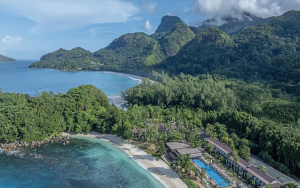
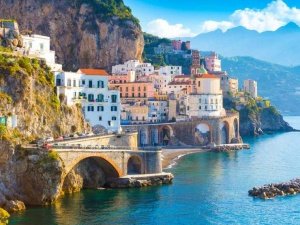
The Union Territory of Lakshadweep has eased its entry permit process for tourists, removing key requirements to make travel to the islands simpler and more convenient.
According to a circular issued by the island administration on Wednesday, tourists will no longer need a local sponsor to apply for entry permits. The administration has also done away with the requirement for prior police clearance certificates from applicants’ home locations.
Instead, security checks will be handled by the Lakshadweep Police after applications are submitted. The changes are said to be aimed at encouraging more tourists to the islands while maintaining security.
However, travellers must still apply for permits at least 14 days in advance and clearly mention the specific islands and travel dates in their application. The administration has also made it mandatory for applicants to include all islands they plan to visit or pass through.
Visitors will not be allowed to enter islands not listed in their permits. Transit points will be limited to Kavaratti or Agatti, with a maximum transit time of 12 hours, the circular said.
Authorities advised travellers to book flight tickets only after receiving their entry permits to avoid cancellations. All applications will be processed based on eligibility and completeness of documents, the circular added.
Published On Apr 30, 2026 at 12:24 PM IST
Join the community of 2M+ industry professionals.
Subscribe to Newsletter to get latest insights & analysis in your inbox.
All about ETTravelWorld industry right on your smartphone!
Expedia Group Unveils AI Travel Experiences at Explore 2026
Expedia Group announced at its Explore 2026 event an important expansion of its artificial intelligence strategy, including new AI-powered travel experiences, ecosystem partnerships and a new philanthropy initiative focused on sustainable and inclusive travel.
As competition heats up in the travel and AI spaces, the travel technology giant showed how AI is becoming key to the future of trip planning, booking and traveler engagement.
AI Takes Center Stage in Expedia’s Travel Strategy
Expedia Group announced new AI experiences to personalize, streamline and build trust in travel planning at Explore 2026. The company highlighted how generative AI and intelligent assistants are transforming the traveler journey from discovery to booking.
Chief AI and Data Officer Xavi Amatriain highlights the growing importance of trust in AI-driven travel experiences. Expedia also released new research showing that travelers want trustworthy, transparent, and personalized AI recommendations before booking.
The company has invested heavily in AI technologies over the past year. Earlier, Expedia introduced AI-powered trip-planning tools that work with conversational assistants. These tools let users describe their dream vacation in natural language and receive curated suggestions.
Expedia Expands Its Global Travel Ecosystem
In addition to its AI announcements, Expedia Group expanded its travel ecosystem through new partnerships and technology integrations. These efforts aim to improve traveler experiences and create more partner growth opportunities.
The company is also positioning itself as more than a booking platform. Instead, it is building a wider connected ecosystem that includes hotels, airlines, creators, advertisers, and technology partners.
Expedia’s strategy combines AI personalization with its large travel marketplace data. The company says it processes about 1 billion travel searches a month, giving it strong visibility into global travel behavior and emerging tourism trends.
Expedia Trails Fund to Boost Sustainable Tourism
One of the biggest announcements at Explore 2026 was the launch of the Expedia Trails Fund, a new philanthropy initiative to help protect destinations and boost sustainable tourism.
The program underscores Expedia Group’s increasing emphasis on responsible travel and community impact, the company said. The initiative will help fund projects that protect natural environments, support local economies and increase accessibility for travelers, it said.
The move is part of Expedia’s broader sustainability and social impact efforts, including previous grant programs to improve equity and access in travel communities around the world.
Travel’s AI Race Intensifies
Expedia’s recent announcements come as travel companies are scrambling to embed generative AI into their customer experiences. AI-powered itinerary builders, smart booking assistants, predictive pricing, and automated customer support are becoming major competitive differentiators across the industry.
The company has also been expanding internal AI adoption. Reports indicate Expedia launched an “AI playground” that gives employees access to dozens of large language models for building internal AI agents and automation tools.
As AI continues transforming online search and digital commerce, travel companies are under pressure to create AI systems travelers can trust while maintaining strong customer engagement and direct bookings.
The Future of AI-Powered Travel
Expedia Group’s Explore 2026 event highlights how artificial intelligence is rapidly becoming embedded in every stage of the travel experience. AI is now at the core of Expedia’s long-term strategic roadmap, from conversational trip planning to ecosystem-wide personalization and sustainable tourism efforts.
As Expedia invests more heavily in AI research, automation and travel intelligence, it is positioning itself among the top tech-driven companies shaping the future of global travel.
Minor Hotels Celebrates the Spirit of Shared Horizons This Africa Day
This Africa Day, Minor Hotels invites travellers to discover the richness and diversity of Southern Africa through a portfolio of distinctive properties spanning vibrant cities, remote wilderness, coastal escapes and island retreats.
While Africa is often viewed through the lens of bush safaris and catching a glimpse of the Big Five from a Land Cruiser; the continent promises any number of extraordinary journeys. Today’s high-value travellers are increasingly seeking multi-destination itineraries that combine varied experiences into one seamless journey. From the dramatic coastlines of Mozambique to Mahé, from the waterways of Zambia to the cultural energy of Johannesburg and Windhoek, Minor Hotels presents journeys that connect travellers more deeply with the landscapes, communities and heritage of each destination.
Across Southern Africa, Minor Hotels’ portfolio of twelve properties allows guests to move effortlessly between nature, culture, conservation and contemporary urban life. This spirit of connection reflects the essence of Africa Day, which celebrates unity, cultural pride and collective identity across the continent.
Iconic escapes begin at Royal Livingstone Victoria Falls Zambia Hotel by Anantara, set on the banks of the Zambezi River within Mosi-oa-Tunya National Park. Guests can enjoy breakfast alongside roaming zebras and giraffes, take to the skies above Victoria Falls by helicopter, or step aboard the Royal Livingstone Express for a nostalgic rail journey inspired by a bygone era of opulence.
In Zimbabwe, Anantara Stanley & Livingstone Hotel offers an intimate gateway to conservation-led travel. Set within the Victoria Falls Private Game Reserve, the boutique property features just 16 suites, providing visitors with the opportunity to participate in the Black Rhino conservation programme that has existed for over two decades. Conscious visitors embark on guided game drives and walks with specialists that connect visitors to the reserve’s ongoing preservation efforts and wildlife heritage.
Further west, Anantara Tented Camp Kafue River opening this summer, offers a deeply immersive safari experience defined by privacy and remoteness. Nestled along the banks of Zambia’s life giving Kafue River, the camp features a limited number of luxurious tents designed to blend seamlessly into the surrounding landscape, placing guests at the heart of one of Africa’s most untouched wilderness areas.
Along Mozambique’s coastline, Anantara Bazaruto Island Resort delivers a contrasting vision of barefoot luxury. Set within an untouched archipelago, the resort offers marine exploration, coral reef discovery and expansive ocean views that define island seclusion serenity. Whilst Avani+ Barbarons Seychelles Resort introduces contemporary coastal escape, where relaxed beachfront living meets vibrant island culture, offering travellers a stylish yet unpretentious gateway to the Indian Ocean.
Urban experiences form an essential part of modern African journeys. Minor’s African city hotels such as Avani Gaborone, Avani Windhoek and NH Johannesburg Sandton position cities as dynamic cultural and economic hubs where heritage and modernity intersect. In Gaborone, travellers find a growing urban landscape where creativity and commerce converge.
Whether teeing off at the golf course, sipping cocktails with the locals or spinning the wheel at the casino, an air of glamour. Visit the cultural monuments of Windhoek before admiring striking views from the sky deck over a meal at Stratos. In the heart of the cosmopolitan Sandton district, NH Johannesburg Sandton is the perfect address for holidaymakers to enjoy high-end shopping in Africa’s richest square mile and watch live theatre.
Together, these properties reflect a more contemporary perspective on African travel, shaped not by a single narrative, but by contrast, connection and cultural depth. This Africa Day, Minor Hotels celebrates the spirit of a continent defined by diversity, heritage and shared experiences, inviting travellers to engage with Africa in all its modern expressions.
Discover Africa’s most exceptional destinations with Minor Hotels Africa:
South Mediterranean tourism shows 59% summer dependence
A new report by Data Appeal Mabrian (Almawave/Almaviva Group), highlights how European destinations can strategically boost low-season demand by expanding and diversifying their offerings beyond traditional peak periods, signalling the need for a coordinated shift in how destinations design and promote year-round travel experiences.
The study, presented by Emilio Inés, Tourism Global Director at The Data Appeal Company at the Seasonality Summit 2026 in Rimini, analyses low-season inbound demand trends across Italy, Spain, Greece, Croatia and Portugal within the South Mediterranean context. It examines seasonality patterns, traveller profiles, air connectivity, pricing trends and demand drivers across key Southern European destinations, providing strategic insights to support the development of more balanced year-round tourism models.
Key findings show that destinations are progressing at different speeds in addressing seasonality. According to the Summer Dependence Rate*, Spain records the lowest peak-season dependence (52.8%), well below the South Mediterranean average of 59.1%, followed by Portugal (54.5%) and Italy (58.7%). By contrast, Greece (72.9%) and Croatia (79.1%) remain significantly more reliant on summer demand, although Greece is showing early signs of extending tourism activity into the shoulder seasons.
The report identifies distinct low-season traveller profiles. From January to March, demand is largely driven by couples from nearby markets in midscale accommodation; whereas October to December sees a shift towards established European markets, with travellers more likely to extend summer and opt for upscale hotels.
According to the analysis, in-destination events are also playing a key role in driving low-season demand. As Emilio Inés noted at the Seasonality Summit: “Organically counter-seasonal, between 53% and 72% of events already take place outside peak months, while 58% to 73% of total attendance is concentrated in the low season, effectively turning events into a demand powerhouse for low season periods.”
Connectivity, Climate, Pricing and Experiences: Key Levers for Seasonality Mitigation The report highlights that improving low-season performance requires a deeper understanding of traveller motivations, better alignment between event calendars and tourism products, and stronger targeting of high-connectivity source markets. Climate perception, pricing advantages and curated experiences are identified as key levers to redistribute demand more evenly throughout the year.
Air connectivity across the five destinations studied is set to expand further in late 2026. Between October and December 2026, a total of 96.64 million seats will connect Italy, Spain, Greece, Croatia and Portugal, representing a +4.6% increase compared with the same period in 2025. All destinations are expected to record growth in Q4 2026 except Portugal (-2.5%). Greece leads expansion with +10.7%, followed by Spain (+5.4%) and Italy (+4.2%).
According to the Data Appeal expert, “leveraging inbound markets with increasing low-season connectivity is essential, alongside strengthening airline networks that extend beyond peak months.” This includes both low-cost carriers—particularly relevant in Italy and Spain—and traditional airlines, which are expanding seat capacity in the low season across Italy, Spain and Greece. In Croatia and Portugal, low-season connectivity accounts for an average of 58.5% of total capacity.
The report identifies climate perception as a growing competitive advantage for low season travel, particularly among short- and medium-haul repeat visitors, as well as flexible segments such as young adults, digital nomads and senior travellers. Based on the Perception of Climate Index (PCI), the study unveils “windows of climate opportunity” when actual weather conditions exceed traveller expectations. Italy, Spain and Greece typically show two such windows—late winter/early spring and autumn—while Croatia and Portugal benefit from an additional spring window.
“When aligned with inbound holiday calendars, these periods present significant opportunities to stimulate low-season demand,” highlights Data Appeal’s Tourism Global Director. Data indicates that the UK, Germany and France represent a structural base for low season travel, with 63%, 60% and 53% of holidays respectively taking place outside peak periods.
Pricing also plays a key role in shaping demand. In winter 2026, hotel rates across the destinations analysed are significantly lower than in summer 2025, with average reductions of 24.6% for 3-star hotels, 22.4% for 4-star hotels, and close to one-third for 5-star properties.
Finally, the report highlights that many of the most engaging tourism activities for travellers visiting the studied European destinations—including cultural, nature-based, gastronomy and active experiences—are inherently less seasonal and highly adaptable throughout the year, offering strong potential to further redistribute demand beyond peak periods.
* Summer Dependance Rate: Proprietary indicator that measures the concentration of tourist activity during the summer period. It represents the percentage of total annual tourism activity — based on reviews from verified and completed accommodation stays — that occurs between May and September (inclusive), relative to overall year-round activity.
MakeMyTrip crosses USD 10 Billion in annual gross bookings for FY26
MakeMyTrip Limited has announced its unaudited financial and operating results for the fourth quarter and full year ended March 31, 2026, reporting record annual gross bookings and continued growth across its travel segments.
The company recorded gross bookings of USD 10.4 billion in FY26, representing a 10.4 per cent year-on-year increase in constant currency. Revenue for the financial year rose 10.7 per cent year-on-year in constant currency, while results from operating activities grew 30.1 per cent to USD 156 million.
MakeMyTrip stated that adjusted margins recorded double-digit growth across all major business verticals during the year. Air Ticketing adjusted margins grew 13.4 per cent year-on-year in constant currency, while Hotels and Packages increased by 15.7 per cent. Bus Ticketing recorded the highest growth at 29.3 per cent, followed by the ‘Others’ category, which grew 37.1 per cent year-on-year.
The company said the performance was achieved despite external factors affecting overall travel sentiment during the year.
Commenting on the results, Rajesh Magow, Group Chief Executive Officer, MakeMyTrip, said:
“We surpassed our annual Gross Bookings milestone of USD 10 billion and strengthened our position as the travel platform of choice. Despite a challenging market environment, it is encouraging to see double-digit, year-on-year growth in Adjusted Margins in constant currency across all our major verticals.”
He added that the company’s ancillary and non-core offerings also contributed significantly to growth during the financial year.
MakeMyTrip also highlighted advancements in its artificial intelligence initiatives through its AI-powered travel assistant, Myra. According to the company, the conversational AI platform is now capable of handling the entire booking journey, from travel search to completed paid booking, including voice-based interactions.
During Q4 FY26, Myra handled more than 54,000 daily conversations, with over 45 per cent of usage originating from Tier-2 and smaller cities.
The company stated that Myra also contributed to operational efficiency by autonomously resolving approximately 55 per cent of post-booking customer queries across Flights and Hotels during the quarter.
“Our focus on enhancing our AI capabilities is beginning to show results and shape how consumers experience the platform. Myra is unlocking first-time users from Tier-2 cities and beyond and resolving over 55% post-booking queries across Flights and Hotels in Q4 FY26,” Magow added.
MakeMyTrip continues to invest in technology-led customer experiences as competition intensifies in India’s online travel sector and digital adoption expands across emerging markets.
Published On May 20, 2026 at 11:58 AM IST
Join the community of 2M+ industry professionals.
Subscribe to Newsletter to get latest insights & analysis in your inbox.
All about ETTravelWorld industry right on your smartphone!
Wild Wakati Camp: Where Wine Meets Wilderness in the heart of the Serengeti
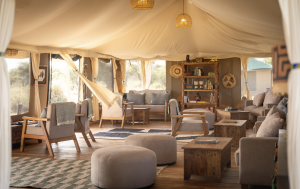
At Enduata Camps’ Wild Wakati Camp, which opened in 2026 by Tanzanian guide Michael Shayo and British hospitality expert Matt Wilkey, the sundowners are recognised as a central part of the safari experience, elevating remote wilderness hospitality with a curated and highly considered wine and cocktail offering.
Far beyond the expectations of a typical safari lodge, the wine list is carefully selected to bring balance, freshness and depth to life in the bush – from crisp, expressive whites enjoyed at long, open-air lunches to structured reds poured as the sun sets over the Serengeti. Each selection is chosen to complement both the climate and the moment, reinforcing a sense of place without compromise on quality. Alongside this, a creative cocktail programme draws on local ingredients and premium spirits, reimagining the classic sundowner as a tailored, sensory ritual. The result is an experience that feels both immersive and refined, a reflection of Enduata’s wider ethos of low-impact luxury delivered with precision, character and quiet sophistication.
HOW: Enduata Camps offers full board and game packages with prices per person based on sharing or single occupancy. Ranging from: $510 – $630 (£381 – £471) in the green season, $610 – $730 (£456 – £546) in the shoulder season and $810 – $1,395 (£605 – £1,043) in the high season. For more information please see