

Business
New Research: Healthspan Is a Growing Priority for Senior Living


DENVER, Colo., June 11, 2026 (SEND2PRESS NEWSWIRE) — AgingIN, a nonprofit advancing innovation in eldercare, is hosting a Longevity Summit that will unite leading voices in senior living, healthcare, and aging research to explore how communities can better support longer, healthier lives. Featuring keynote speaker Dr. Shelly Chadha of the World Health Organization, the summit will be held Aug. 10 and is part of AgingIN’s annual conference, Peak Purpose: Redefining How We Live and Age, which runs through Aug. 13.

Image caption: Dr. Shelly Chadha of the World Health Organization, will discuss how senior living communities can address healthspan and longevity at the “Longevity Summit: Living Longer, Living Better” on August 10, 2026, in Denver, Colo.
At the summit, Dr. Chadha will discuss the WHO’s focus on practical ways senior living organizations can operationalize healthspan principles using evidence-based frameworks. Using its Integrated Care for Older People (ICOPE) community-based approach, organizations can work to preserve functional ability through early intervention in areas such as mobility, cognition, nutrition, vision, hearing, and emotional well-being.
According to a newly released national survey from Ziegler, 85.8% of senior living leaders say healthspan will be “very important” to the next generation of residents, reflecting growing demand for communities that support mobility, brain health, independence, social connection, and preventative care. The findings point to a major shift in how operators are thinking about aging, wellness, and long-term resident engagement.
The Ziegler research found that senior living leaders most closely associate healthspan with:
- Healthy aging (81.8%)
- Independence (77.3%)
- Mobility (74.5%)
- Brain health (72.7%)
- Strength and physical function (65.5%)
- Social connection (53.6%)
“Closing the gap between healthspan and lifespan is one of the most important opportunities in aging today. It’s not enough to simply add years to life; we must add life to those years. This means reimagining senior living as a place where people can maintain purpose, independence, and well-being for as long as possible,” said Susan Ryan, AgingIN CEO. “At AgingIN, we are committed to helping organizations move beyond longevity as a metric and toward quality of life as the true measure of success.”
The survey also revealed that organizations are already investing in healthspan-focused initiatives, including strength and mobility programs, cognitive engagement, fall prevention, preventative health assessments, purpose-driven programming, and lifestyle interventions designed to maintain function and reduce decline.
Yet significant challenges remain. More than 60% of respondents cited workforce capacity as the biggest barrier to expanding healthspan initiatives, while nearly half identified uncertainty around cost and return on investment.
Topics at the summit include:
- The global healthspan framework shaping the future of aging
- Practical strategies to embed well-being into care delivery
- How healthspan influences consumer preference and market relevance
- Workforce well-being as a driver of retention and quality outcomes
- Memory care and higher acuity applications rooted in dignity
- Lifestyle interventions that help prevent decline
- Innovation models that translate research into operational results
- Scalable actions organizations can implement immediately
Registration is now open for interested senior living executives, clinicians, wellness leaders, operators, board members, and professionals interested in the future of aging services. To learn more and secure your spot, visit: https://aginginnovation.org/events/annual-conference/.
About AgingIN
AgingIN is a global nonprofit dedicated to being the catalyst for person-directed living and empowered cultures in the community of one’s choice. Their consulting, technical assistance, and education services empower aging services providers to implement lasting change and transformation that is meaningful and measurable. Formerly known as the Center for Innovation, AgingIN was born from the merging of two of the most influential voices in eldercare transformation: Pioneer Network and THE GREEN HOUSE® Project. For more information, visit: https://aginginnovation.org/.
MULTIMEDIA
Image links for media:
World Health Organization logo: https://www.Send2Press.com/300dpi/26-0611-s2p-whologo-300dpi.webp
AgingIN logo: https://aginginnovation.org/wp-content/uploads/2025/07/AgingIN_logo_rgb-1.png
News Source: AgingIN
To view the original post, visit: https://www.send2press.com/wire/new-research-healthspan-is-a-growing-priority-for-senior-living/.
This press release was issued by Send2Press® Newswire on behalf of the news source, who is solely responsible for its accuracy. www.send2press.com.
Source: https://www.send2press.com/wire/new-research-healthspan-is-a-growing-priority-for-senior-living/
Business
Anthropic to Disable Fable 5, Mythos 5 After US Export-Control Order


Anthropic said it would disable access to its latest top AI models, Fable 5 and Mythos 5, following a government export control that would bar foreign individuals and entities from using the products.
The company said in a blog post on Friday evening that it had received a letter from the US government at around 5:21 p.m. ET, citing national security concerns regarding Anthropic’s models.
Anthropic said the government’s order included any foreign national inside or outside the US, “including foreign national Anthropic employees,” and that the “net effect” of the order is to disable the models for everyone to ensure compliance.
The company added that the letter “did not provide specific details of its national security concern.”
Anthropic said it believes the government’s concern is a potential way to “jailbreak” Fable 5, but disputed the issue’s severity. The company said the technique appeared narrow, not universal, and involved known vulnerabilities that could be identified by other publicly available models.
The move marks the latest escalation in Anthropic’s clash with the Trump administration over AI safety, national security, and the extent of government control over frontier AI models.
In February, the Pentagon moved to designate Anthropic as a supply chain risk after the startup sought limits on its AI model for certain defense applications.
Anthropic sued the Defense Department over the designation. Two lawsuits related to the government’s supply-chain risk label remain pending.
A White House spokesperson did not immediately respond to a request for comment. The Pentagon’s chief information officer expressed support for the move in an X post, writing, “Some things are simply more important than revenue cycles, clickbait, and pre-IPO valuation.”
Anthropic said it was complying with the order but disagreed with the government’s finding. An Anthropic spokesperson did not say when exactly the company would disable access.
Access to Anthropic’s other models will not be affected, the company said.
Business
Anthropic disables Fable and Mythos AI models following U.S. government export ban

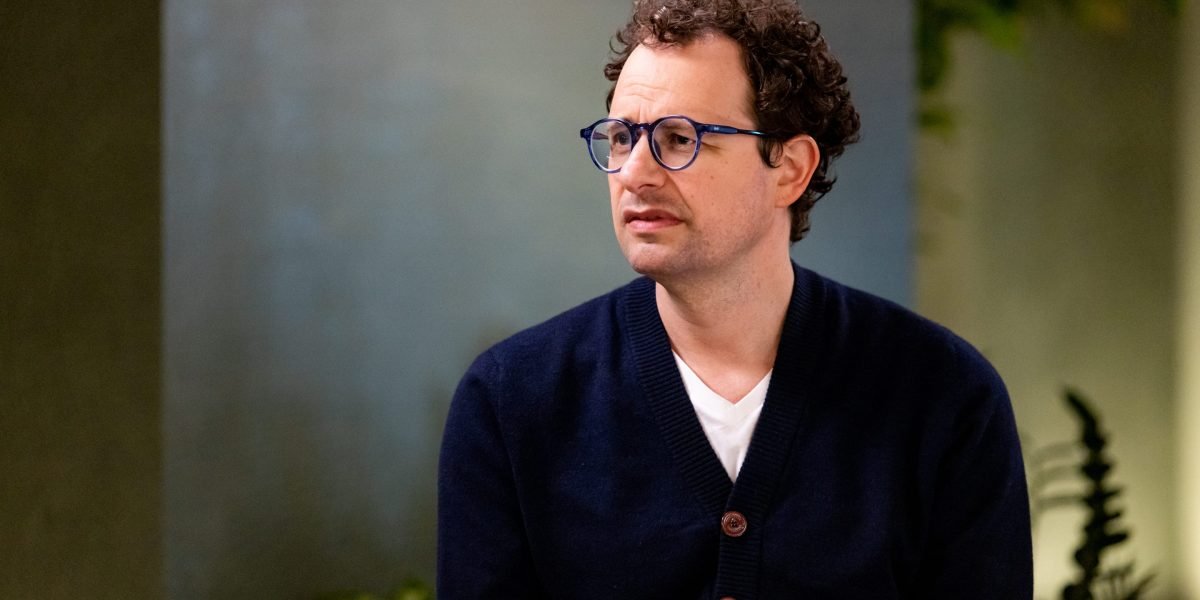
The directive includes not just people located outside the U.S., but also any foreign national in the U.S., including Anthropic’s own non-citizen employees.
Given the scope of the directive, Anthropic argued it had no choice but to disable the models for all users. It clarified that access to its less powerful Claude models, including its latest Claude Opus 4.8 model, was not affected.
“We apologize for this disruption to our customers,” Anthropic wrote in a post on X. “We believe this is a misunderstanding and are working to restore access as soon as possible.”
Anthropic said in a blog post that it received the directive at 5:21 pm Eastern Time. It said the letter it received “did not provide specific details” of the government’s national security concern.
But the company also said that officials had told Anthropic that the government made the decision after learning of a technique to bypass Fable 5’s safeguards. These safeguards were designed to prevent users from accessing the powerful cybersecurity abilities of Mythos, the underlying AI model on which Fable 5 is built.
Anthropic said it believed the jailbreak the government was citing was a narrow one that would unlock Mythos’s cybersecurity capabilities in only one specific instance and not a universal one that would defeat all of Fable 5’s safeguards. It also said it believed the same jailbreak could be used to elicit similar capabilities from other publicly available models, including OpenAI’s GPT-5.5, that are not subject to similar national security export controls.
“We disagree that the finding of a narrow potential jailbreak should be cause for recalling a commercial model deployed to hundreds of millions of people,” Anthropic wrote in its blog post. “If this standard was applied across the industry, we believe it would essentially halt all new model deployments for all frontier model providers.
“As we have stated publicly, we believe the government should have the ability to block unsafe deployments, as part of a statutory process that is transparent, fair, clear, and grounded in technical facts. This action does not adhere to those principles,” Anthropic said.
AI industry insiders and policy experts reacted with disbelief to the unprecedented U.S. directive.
Some saw the move as a further attempt by the Trump administration to punish Anthropic. U.S. President Donald Trump in February ordered all federal agencies to stop using Anthropic’s models after the company refused to agree to the Pentagon’s preferred contract terms for AI vendors, which stipulated that any AI models it purchased could be used “for any lawful purpose.” Anthropic had been seeking exemptions from having its models used for autonomous weapons systems or mass domestic surveillance.
The Pentagon declared Anthropic a “supply chain risk” in early March, requiring the U.S. military to cease using its models and prohibiting defense contractors from using them for government contracts. Anthropic is challenging that designation in federal court.
Anthropic confidentially filed for a public listing earlier this month. A recent funding round valued the company at $965 billion. The government export control decision could make investors less enthusiastic about an Anthropic IPO, causing them to question whether it will be able to stay at the cutting-edge of AI model development if the government continues to single out its models for various restrictions.
Several key Trump technology policy advisors, most notably former AI and crypto czar David Sacks and Pentagon undersecretary of defense for research and engineering Emil Michael, have publicly attacked Anthropic and its executives. Sacks has accused Anthropic of being “woke” and “leftist” as well as engaging in “a sophisticated regulatory capture strategy based on fear-mongering.”
Dean Ball, an AI policy expert who briefly served in the Trump administration but is highly critical of its recent decisions around Anthropic, said on X that “I can’t tell if this is lawfare against Anthropic in particular or extreme national-security hawkery. Regardless, it is simply cartoonish.”
He added: “An administration whose posture is that we *should* export advanced AI chips to China, which also wants to ban… Britain (and every other non-American on Earth)… from using our best models? I have no words.”
But others said that Anthropic was simply reaping what it had sown. When Anthropic first debuted its Mythos model, the company argued the model was too dangerous to release broadly. When it released its Fable 5 model, which is based on Mythos, the company highlighted the safeguards it had put in place to prevent users from accessing Mythos’s full capabilities.
“If you describe your product as a munition in every press release, eventually a government takes you at your word,” Peter Girnus, a cybersecurity researcher who describes himself in his X handle as a “cyber populist,” said on X. “They wrote the legal predicate themselves and called it a brand.”
Girnus also noted that previous government efforts to limit the export of software, such as the attempt to put restrictions on powerful encryption techniques in the 1990s, have generally failed.
Gary Marcus, a frequent critic of the AI industry, said in a social media post that he thought the government’s action made little sense, especially given its oft-stated position that the U.S. must stay ahead of China in the development of powerful AI systems. The national security directive would likely convince many Chinese-born AI researchers who currently work for labs such as Anthropic and OpenAI to return to China, he said. He added it would make investors question whether American AI companies were a safe bet, given the apparently capricious nature of the Trump administration’s AI policy.
Business
Anthropic shuts down Fable, Mythos models following Trump admin directive

Anthropic completely shut off access to its Mythos 5 and Fable 5 models Friday night, just days after they were launched.
The move comes after Anthropic’s receipt of a US Commerce Department directive Friday evening, subjecting the new models to export controls restricting their use anywhere outside the United States. In a message posted Friday night, Anthropic said the only way for it to ensure compliance with that government order in the immediate term “is that we must abruptly disable Fable 5 and Mythos 5 for all our customers.” Access to other Anthropic models is not affected.
An Axios report cited an administration official saying that the administration is concerned by reports of a jailbreak that reportedly gets around broad classifier-based safeguards meant to block Fable 5 prompts regarding cybersecurity, chemistry, and biology. The administration reportedly requested a pause in the release of these models to gain time for the “national security apparatus” to be “hardened” against this kind of threat. That hardening could be complete “in the next few weeks,” Axios’ source suggested.
In its Friday night announcement post, Anthropic said the government has only provided it with “verbal evidence of a potential narrow, non-universal jailbreak” that involves getting Fable 5 to review a specific codebase for software flaws. The company says it has only seen evidence of this kind of jailbreak being used to find “minor” and “relatively simple” software vulnerabilities, and that other publicly available models like GPT-5.5 has similar capabilities on this score.
“We are complying with the government’s legal directive and are removing access to Fable 5 and Mythos 5 for all users,” Anthropic writes. “However, we disagree that the finding of a narrow potential jailbreak should be cause for recalling a commercial model deployed to hundreds of millions of people. If this standard was applied across the industry, we believe it would essentially halt all new model deployments for all frontier model providers.”
Earlier this month, President Trump signed an executive order urging AI model makers to submit to voluntary government security testing. That order came after an initial signing ceremony planned for last month was abruptly postponed amid reported concerns of disagreements about it within the administration.
Anthropic apologized to customers for a “disruption” that it said is the result of a “misunderstanding,” and said it will release more details about the situation in the next 24 hours.
Business
Anthropic’s safety warnings may have just backfired – the government has pulled the plug on its most powerful AI

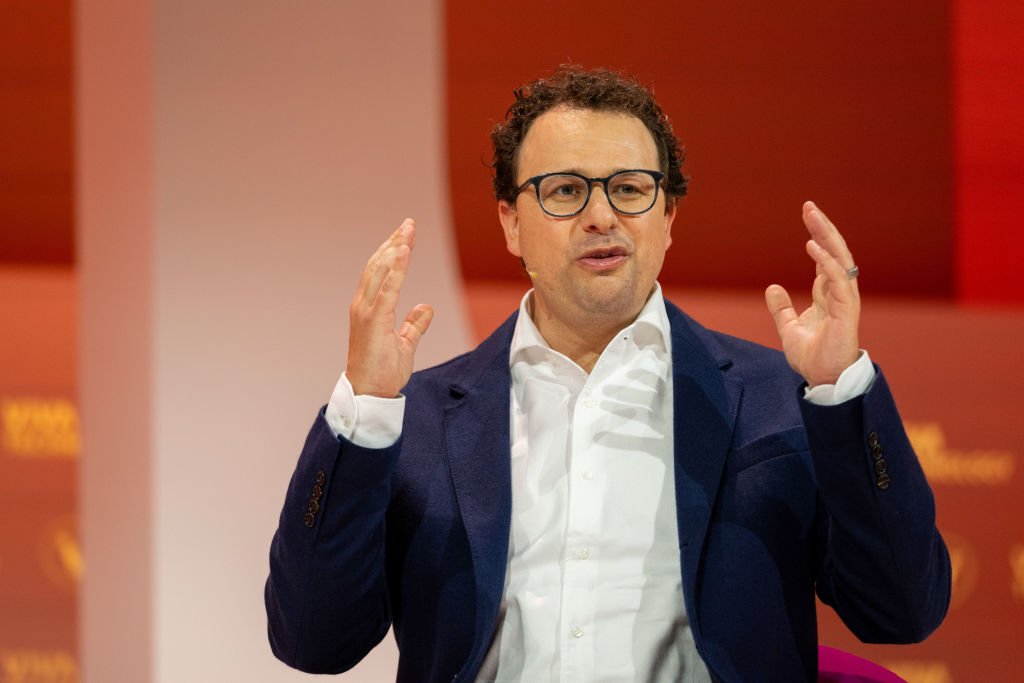
The U.S. government on Friday ordered Anthropic to immediately shut off access to two of its most powerful AI models — Claude Fable 5 and Claude Mythos 5 — citing national security concerns. Anthropic announced on X that it has complied, but it made clear it thinks the government got this one wrong.
The directive, which Anthropic said it received on Friday at 5:21 pm ET, forces the company to disable both models for all users worldwide — not just the foreign nationals the government’s export control order was nominally aimed at. Access to Anthropic’s other models isn’t affected.
Why does any of this matter? Mythos is Anthropic’s most capable AI model, one the company previewed in early April and has kept tightly restricted ever since because of what Anthropic described as its exceptional ability to find security vulnerabilities in software. According to Anthropic, Mythos identified flaws in every major operating system and web browser it tested, so rather than release it broadly, the company launched a controlled program called Project Glasswing, sharing it with roughly 50 vetted organizations, including Amazon, Apple, Google, Microsoft, and CrowdStrike, to use for defensive cybersecurity work.
Fable 5, released just three days ago, was Anthropic’s answer to the obvious commercial pressure: a version of Mythos fitted with guardrails that block responses in high-risk areas like cybersecurity and biology, making it safe enough for general release, the company argued. It was immediately the most capable AI model available to the public, according to benchmark tests from Vals AI, a company that tracks AI tech performance.
The government’s directive is framed as an export control action, restricting foreign national access to the models. But in a lengthy blog post, Anthropic says its understanding is that the underlying concern is a claimed jailbreak of Fable 5. So far, the company says, the government has provided only verbal evidence of a “potential narrow, non-universal jailbreak” — one that, as Anthropic describes it, amounts to prompting the model to read a specific codebase and identify software flaws. And by the way, adds the company, it’s a “level of capability” that’s already widely available in other publicly accessible models, including OpenAI’s GPT-5.5. It’s also used routinely by cybersecurity professionals for defensive purposes, says Anthropic.
Anthropic’s broader argument is that its strongest safeguards operate through independent classifier systems that function separately from the model itself, meaning that even if someone convinces Fable to keep talking past a refusal, the underlying protections against the most dangerous outputs remain in place.
Clearly, none of that was enough to stop the government from acting, and Anthropic isn’t hiding its frustration. “We disagree that the finding of a narrow potential jailbreak should be cause for recalling a commercial model deployed to hundreds of millions of people,” the company wrote. “If this standard was applied across the industry, we believe it would essentially halt all new model deployments for all frontier model providers.”
Anthropic is widely expected to pursue an IPO this year and has staked much of its public identity on being the safety-conscious alternative to its rivals. The irony isn’t lost on observers that the very caution Anthropic displayed in restricting Mythos — which it promoted as a model so dangerous it couldn’t be released publicly — has now apparently attracted exactly the kind of government scrutiny that could disrupt its business most.
Business
Justice Dept. approves Paramount’s acquisition of Warner Bros. Discovery


The Justice Department on Friday approved Paramount’s proposed $111 billion takeover of Warner Bros. Discovery.
After concluding its antitrust investigation into the pending merger, the department said in a statement that it found that the deal posed no threat to competition or consumers of film, broadcast television or streaming.
The decision clears the way for a merger of two rival Hollywood studio titans: Paramount, the owner of CBS, including CBS News, will swallow the much larger Warner, which includes HBO and CNN.
The DOJ”s Antitrust Division concluded that a union of two studio giants isn’t anti-competitive because the streaming market has expanded the competition for conventional Hollywood studios, which includes Netflix, Apple and Amazon, as well as smaller streamers. The Justice Department’s view is that, for the same reason, consumers won’t lose out because there are plenty of other places to get entertainment.
Several states, including California, have raised antitrust concerns. The European Union is investigating as well.
California Attorney General Rob Bonta, who has been investigating the deal for antitrust violations, said in a post on social media following the Justice Department’s approval: “The merger of Warner Bros and Paramount is not a done deal and remains under investigation by my office.”
In a statement following the decision, Paramount described the deal as “pro-competitive,” and would result in “a stronger company better positioned to compete against dominant technology platforms in an industry increasingly defined by intense competition for audiences, talent, technology, and investment.”
The company said it planned to complete the merger as soon as possible, “delivering its benefits to consumers, creators, and the entertainment industry as a whole.”
The consolidation will put media mogul David Ellison — son of Oracle co-founder Larry Ellison — at the helm of Warner Bros. studio as well as its cable and streaming properties, including CNN and HBO. The Ellison family took over Paramount and CBS last summer.
In the months leading up to the regulatory approval, critics in Hollywood feared the deal would consolidate an already concentrated media landscape and lead to fewer jobs and less creative content.
In April, thousands of directors, actors, writers and other industry talent — including Kristen Stewart, Pedro Pascal and Javier Bardem — signed an open letter opposing the merger.
The elder Ellison is also a financial backer and adviser to President Trump on artificial intelligence. Critics of recent changes at CBS under the Ellisons’ control are concerned that, as they say has happened with CBS News, the acquisition would make CNN more friendly to Trump.
NPR’s Carrie Johnson and Mandalit del Barco contributed to this story.





Why is Donald Trump not at the World Cup? #WorldCup #DonaldTrump #BBCNews


Why one area could decide Britain’s next PM | BBC News
People in Makerfield made up 0.1% of the vote at the last general election. Now – they're potentially choosing the...


Watch model scout explain why he sent young women to Epstein
A professional model scout in Paris explains to CNN why he referred young women to Jeffrey Epstein. DOJ files show...


Why is there a 'claw' on the White House lawn? #UFC #MMA #BBCNews


Is this AI's moment of truth? | BBC News
A year ago, artificial intelligence was being sold as something close to science fiction — a technology that could transform...


Scenes at Lincoln Memorial ahead of Trump's UFC night
President Trump's much anticipated UFC fight at the South Lawn of the White House is going ahead as planned, despite...


SpaceX shares started trading at $150 (£112) shortly before noon on Friday. #BBCNews
Woman hears ringing in her ears, blames stress-then learns terrifying truth
Melony Aponte was just 20 when she first noticed subtle changes to her health—symptoms she would later realize were early...


A year after Air India crash, families still wait for answers | BBC News
More than a year ago on 12 June 2025, a London-bound Air India flight crashed just 32 seconds after take-off...


Anthropic to Disable Fable 5, Mythos 5 After US Export-Control Order
Anthropic said it would disable access to its latest top AI models, Fable 5 and Mythos 5, following a government...
-

 LifestyleNews1 week ago
120 minutes of strength training per week may help extend lifespan
-

 Politics2 days ago
What to know about the stabbing that set off fiery riots in Northern Ireland
-

 Video19 hours ago
Download fans say what they love about the festival. #DownloadFestival #BBCNews
-

 Video19 hours ago
Why SpaceX IPO isn't about space. #SpaceX #ElonMusk #BBCNews
-

 HealthNews1 day ago
The people of Okinawa, Japan only eat until they are about 80 percent full, then stop — and the practice has been linked in multiple peer-reviewed studies to lower rates of cardiovascular disease, slo
-
Politics16 hours ago
Zohran Mamdani Pushes Tax on Rich After Elon Musk Becomes Trillionaire
-

 Food10 hours ago
Pope Leo’s plane was grounded. Then the King of Spain stepped in to help
-
 BBC News World2 days ago
Why the economics makes this the craziest world cup ever