

Politics
Graham Platner’s nomination reflects Democrats’ quest to regain power
WASHINGTON (AP) — Minnesota Sen. Tina Smith came to the Senate at a very different moment for Democrats.
Appointed in late 2017 to replace Sen. Al Franken after fellow Democrats demanded his resignation amid allegations of unwanted touching and kissing, Smith entered Washington during the height of the #MeToo movement. Democrats were pushing members from office and contrasting their approach with Republicans’ willingness to stand by Donald Trump through scandal and controversy.
Nearly a decade later, Smith says Democrats are focused on something simpler.
“Democrats want to win,” she said.
As the party aims to flip both chambers of Congress in the midterms, Smith and other Democrats have backed Maine U.S. Senate candidate Graham Platner despite a growing list of controversies, including a tattoo recognized as a Nazi symbol, sexting with other women shortly after he married and allegations, which Platner denies, that he locked an ex-girlfriend in a room and forcefully twisted her arm. Platner cruised to victory in this week’s primary after Gov. Janet Mills suspended her campaign.
The support for Platner is about more than one candidate. It reflects a Democratic Party increasingly willing to overlook behavior it might once have deemed disqualifying, and instead judge candidates by whether they can energize voters and help the party regain power.
“Voters are looking for candidates that are speaking their language and talk about the things that matter to them,” said Smith. “That’s the standard that we have to hit in order to win.”
Democrats grapple with the reality of a big tent
The support for Platner comes at a fraught moment for Democrats, who are in the minority in both chambers of Congress while Trump once again occupies the White House.
In the wake of their sweeping losses in 2024, many Democrats argued the party needed a bigger tent with fewer purity tests and more room for candidates and voters who don’t fit neatly within the party’s traditional coalition.
But expanding that tent has raised difficult questions about where Democrats should draw the line. In Virginia, Democrat Jay Jones won election as attorney general after reports surfaced during the campaign that he had texted a fellow delegate suggesting the then-House speaker should get “two bullets to the head.”
Some in the party also condemned Michigan Senate candidate Abdul El-Sayed for appearing with progressive streamer Hasan Piker for a campaign event. Piker, a 34-year-old streamer with 3.1 million followers on Twitch and 1.8 million on YouTube, has made many controversial remarks, including that “America deserved 9/11.”
Platner’s candidacy has become one of the clearest examples. While some Democrats view his controversies as disqualifying, others argue that voters made their choice.
“He won the nomination. That was the decision of Maine voters. And I respect that decision,” said Sen. Adam Schiff, D-Calif.
Arizona Sen. Ruben Gallego, who has endorsed Platner, agreed the decision lies with voters.
“It’s not up to the politicians to decide,” he said.
For some Democrats, the shift reflects lessons learned during the Trump era. Republicans stood by Trump through scandals, impeachments and criminal convictions, often without paying a lasting political price at the ballot box. Many Democrats now argue voters care more about whether a candidate speaks to their concerns than whether they meet traditional expectations for personal conduct.
“I think what the people of this country and the people of Maine are interested in is how we’re going to have a government that represents all of us and addresses the many crises we face. Not the marriage problems of a campaign,” said Sen. Bernie Sanders, an early Platner supporter.
The voters decide
Progressives who have long argued that Democrats spend too much time policing candidates and not enough time channeling voter frustration see Platner’s victory as evidence that the party’s base is hungry for something different.
Maine voter Elizabeth Massey, a Platner supporter from Penobscot, said she took the allegations seriously and remains troubled by parts of Platner’s past. But she said his willingness to apologize and the issues facing the country ultimately mattered more to her vote.
“So do I care more about texts that he sent or the war in Iran and what that’s doing to gas prices?” Massey said. “Pretty clearly the latter.”
Massey said Platner’s appeal is that he speaks directly to voters’ concerns, not that he is without flaws.
“He owns them. He has apologized for them,” she said of the allegations.
Other supporters argue that Republicans are holding Platner to standards they have not applied to Trump.
“The Republicans don’t have much moral high ground to stand on when they’re criticizing him for what he’s done when Trump is a convicted felon,” said Annette Babcock, who is from Platner’s hometown of Sullivan.
The willingness to embrace candidates with baggage comes as many Democrats remain deeply dissatisfied with their party.
Only about two-thirds of Democrats had a “somewhat” or “very” favorable view of their party in an April AP-NORC poll, a decline from 85% in September 2024. In a separate AP-NORC poll in August 2025, many Democrats described their political party as “weak” or “ineffective.”
But while Platner may fire up the base, questions linger about whether that will translate to general election wins. Platner now faces Republican Sen. Susan Collins, one of the GOP’s most durable incumbents and a politician with a long history of attracting independents and crossover Democratic voters.
“The test is never going to be who wins the primary,” said Michigan Sen. Gary Peters, who led the Senate Democrats’ campaign arm in 2022 and 2024. “It’s going to be who wins the general election.”
Not everyone is on board
Many Democrats have not given full throated support of Platner’s candidacy.
Among them is New York Sen. Kirsten Gillibrand, the chair of the Senate Democrats’ campaign arm, who has primarily focused on defeating Collins rather than embracing Platner. Gillibrand helped lead the push for Franken’s resignation, saying “enough is enough” and that she believed the women who accused him.
Other Democrats have been more openly skeptical. Pennsylvania Sen. John Fetterman and New Jersey Rep. Josh Gottheimer have spoken out against Platner, while some lawmakers have offered only qualified endorsements after his primary victory.
“Well, Maine supports him. So yes,” Sen. Peter Welch, D-Vt., responded when asked if he supports Platner.
Emily Cherniack, the executive director of New Politics, an organization that recruits military veterans and national service leaders to run for office, said she has been “stunned” by some Democrats’ willingness to downplay allegations of aggression and volatility against Platner.
“Democrats are saying, we think it’s actually more important to win the majority and protect democracy, regardless of what he did. That to me is what the message is,” Cherniack said.
“Just be honest and explicit about that choice.”
___
Associated Press reporter Patrick Whittle in Maine contributed to this report.
Politics
Zohran Mamdani Pushes Tax on Rich After Elon Musk Becomes Trillionaire
New York City Mayor Zohran Mamdani used SpaceX’s historic IPO — and founder Elon Musk’s newly minted status as a trillionaire — to push policy.
“Reason #1,000,000,000,000 why we should tax the rich,” Mamdani wrote on X in response to Musk becoming the world’s first trillionaire on Friday.
Musk reached the financial milestone after SpaceX stock popped upon hitting the market on Friday, trading at $150 per share, above the company’s initial offering of $135.
Already the world’s richest man, the windfall put Musk leagues ahead of the next richest person, Google’s Larry Page, who now has a quarter of Musk’s wealth.
Mamdani’s response was in line with his politics. The progressive New York City mayor campaigned on taxing the rich, and the city’s new pied-à-terre tax on multimillion-dollar second homes sparked backlash from some rich residents.
Musk has spoken out against Mamdani and backed his challenger, Gov. Andrew Cuomo, in the New York mayoral race last year.
Politics
Texas GOP Chair Abraham George loses reelection at convention

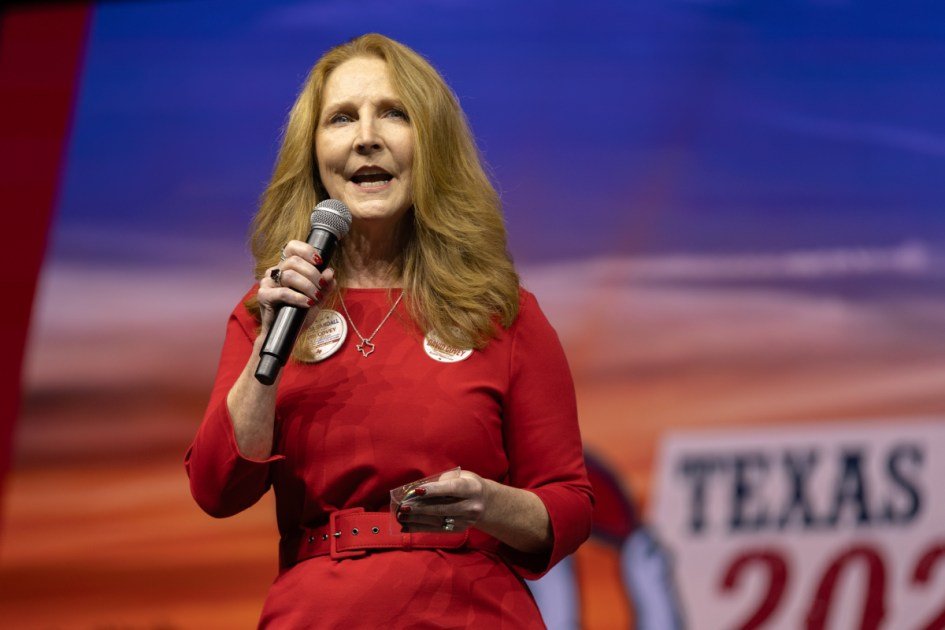
HOUSTON — Republican Party of Texas Vice Chair D’rinda Randall became the party’s new leader Friday after defeating her former running mate, incumbent Chair Abraham George, shaking up the top of the state’s majority party ahead of the fall midterm elections.
Randall, who first became involved in GOP politics nearly two decades ago, campaigned on her accomplishments as the party’s second-in-command during the last two years, touting financial wins like the return of certain convention corporate sponsors and her support for grassroots members, pointing to volunteer training she led.
George conceded in a social media post shortly before Friday’s general session at the convention began, after delegates overwhelmingly backed Randall in an initial round of votes among each Senate district caucus.
“While this race has come to an end, our mission continues,” he said. “Now is the time to come together, unite behind our Republican nominees, support the entire Republican ticket in November, advance our legislative priorities in the next session, and continue standing firmly for the conservative principles outlined in our platform.”
George’s tenure came to an end after a memorable two-year run that saw the party claim long-sought legislative victories in Austin, including private school vouchers and a variety of socially conservative new laws. That productivity, driven by a hard-right turn in the Texas House, reduced the infighting that has plagued the Texas GOP in recent years. Attorney General Ken Paxton led a long list of elected officials and activists lining up behind George, while Randall touted a much narrower stable of backers.
Yet as the convention kicked off in earnest Thursday, the George R. Brown Convention Center in downtown Houston remained sparsely populated, with many of the over 7,000 registered delegates appearing to skip the event despite Gov. Greg Abbott’s incentive program for county parties to fill their allotted delegate seats. The convention also fell just before FIFA World Cup games kicked off in Houston, driving up the cost of lodging in a city that was hundreds of miles from many would-be delegates’ home towns.
Amid the grassroots apathy, George also faced criticism earlier this week from a member of the State Republican Executive Committee, the party’s governing board, who claimed the party was taking a $651,000 loss to run the convention. In a response, George said the deficit was closer to $100,000 and would end up in the black “when you factor in the registrations that will be paid over the next couple of days.” But that did not appear to allay concerns about the state of the party’s finances heading into the fall midterms.
Randall’s victory arrives at a crucial juncture for the party, as it tries to write its next chapter and unite voters behind Paxton, the Senate nominee who defeated incumbent John Cornyn after a bruising primary that has left behind scars within the GOP.
Trey Trainor, a longtime GOP operative who was tapped to lead the convention’s platform committee, which drafts the party’s planks, said George’s ousting stemmed from financial woes and a struggle to engage members.
“Look, I think everybody’s incredibly nervous about what happened during the primaries,” Trainor said. “They see that the Democrat Party is incredibly engaged. I think the low turnout that you see here shows some apathy of Republican voters, and they really look to the party leadership to create that enthusiasm and drive people to the polls.”
The removal of George, the Texas GOP’s first Indian American chair, also arrived at a time when the party is experiencing a wave of anti-Indian sentiment, particularly in George’s backyard of North Texas. Much of the same faction that has targeted Muslims for what they see as the proliferation of Sharia law is also raising alarm about the state’s fast-growing Indian community, urging a halt to legal immigration to combat alleged H-1B visa exploitation and labor competition.
George regularly draws racist replies to his social media posts, even when pushing for conservative priorities such as abolishing the H-1B visa program; yet, delegates at the convention did not indicate that topic surfaced in deliberations about the chair election.
The mix of headwinds facing George created the opening for Randall and her running mate, David Covey, a hard-right activist who previously served on the state party’s governing board and unsuccessfully ran against former House Speaker Dade Phelan of Beaumont in 2024. Covey also previously ran for party chair in 2021, finishing as the runner-up to George’s predecessor, Matt Rinaldi.
Some of Randall’s supporters also charged that the incumbent chair has been too welcoming to establishment Republicans, after he warmed up to Phelan’s successor, House Speaker Dustin Burrows, following initial reservations over his election aided by Democrats. That line of criticism laid bare the challenge faced by party chairs, who must balance the delegates’ appetite for a grassroots fighter while also raising money from the party’s establishment ranks.
Burrows was set to address the convention — the first sitting speaker ever to do so — Friday afternoon.
In a statement, Burrows congratulated Randall and Covey and said he looked forward to “working together to strengthen our party and advance the conservative principles Texans value.”
Politics
To Defeat Democrats, Texas Governor Embraces the Hard Right

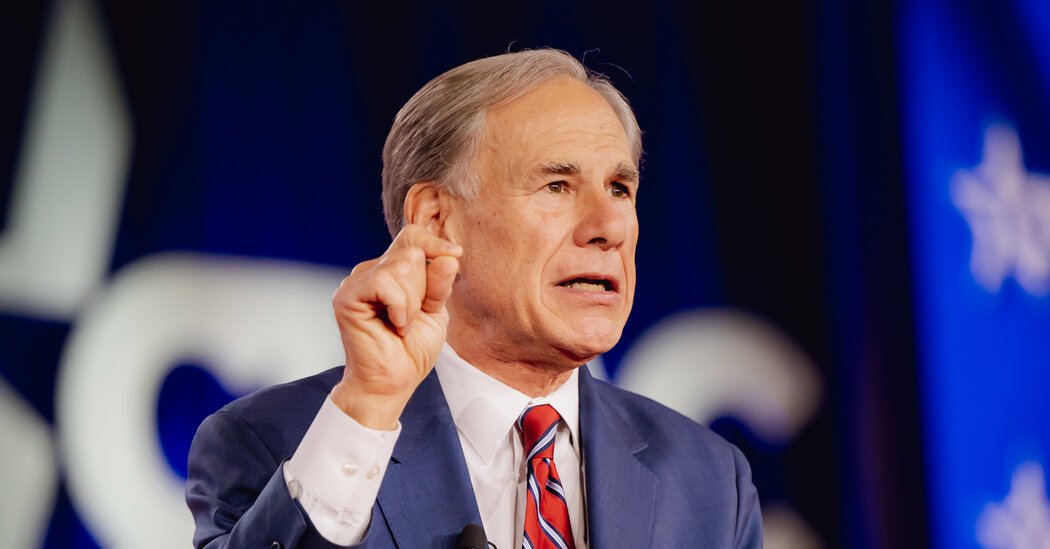
When the Republican Party of Texas held its convention in Houston four years ago, Gov. Greg Abbott did not deliver a speech. Instead, he held his own gathering nearby.
In 2024, he appeared remotely by video instead of speaking before thousands of the most hard-line Texas Republican activists.
But after years of keeping the gathering at arms length, Mr. Abbott is set to offer his full embrace on Friday, delivering a keynote speech for the first time since 2018 and, in the process, positioning the party’s hard right at the center of Texas politics.
Mr. Abbott’s speech, set for 1:30 p.m. local time, follows decisive primary election victories by a slate of hard line candidates, some of whom the governor opposed. They include some who have pledged to rid the state of Muslims, further restrict voting access and end any remaining semblance of bipartisan comity in the state’s politics.
At the top of the ticket is Ken Paxton, the state attorney general who defeated the state’s sitting Republican senator, John Cornyn, using an unapologetic, anti-incumbent MAGA message.
Despite years of not appearing in person at the full convention, Mr. Abbott is no moderate. During his decade as governor, he’s helped set the conservative policy agenda, most recently as the lead supporter of the state’s new $1 billion school voucher program.
Thank you for your patience while we verify access. If you are in Reader mode please exit and log into your Times account, or subscribe for all of The Times.
Thank you for your patience while we verify access.
Already a subscriber? Log in.
Want all of The Times? Subscribe.
Politics
Trump has backed away from renewed war with Iran – here’s why

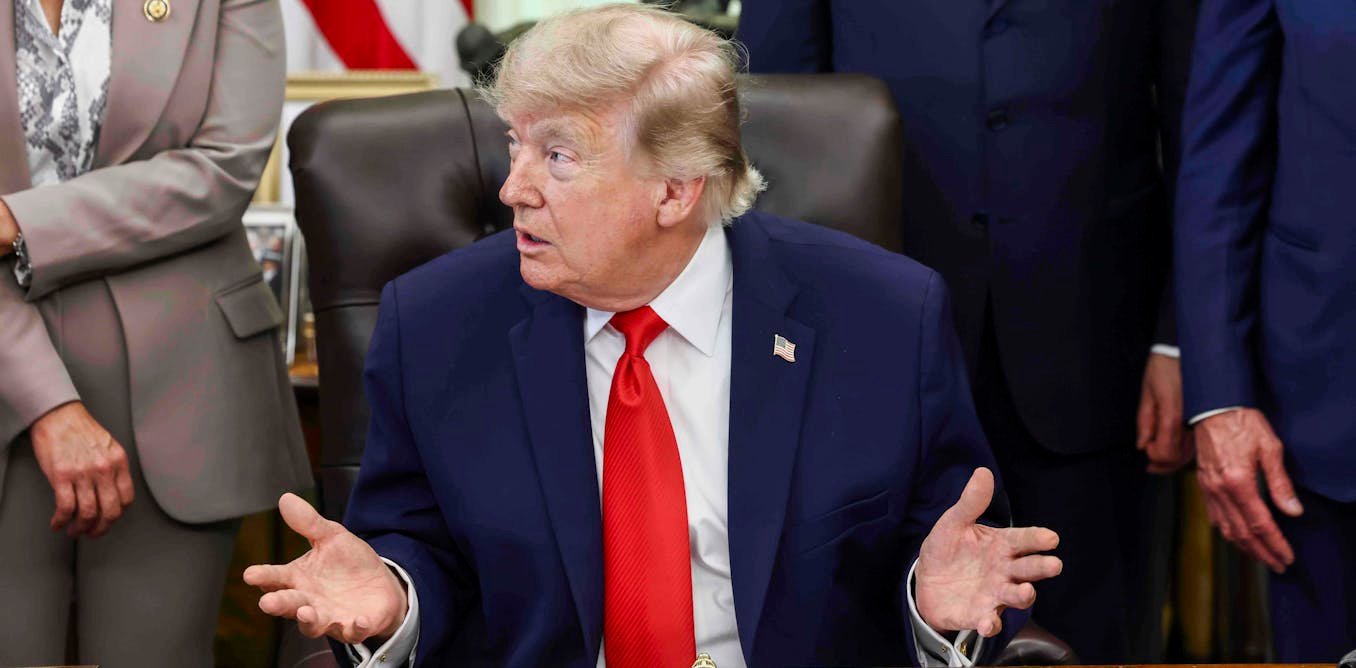
The US and Iran stepped back from the brink of returning to all-out war on June 11. Hours after saying the US military would carry out strikes against Iran for a third consecutive night, Donald Trump postponed the attack. The Iranian military had said the US would “receive a more severe response than before” if it followed through on its threats.
Trump claimed to have cancelled the strikes because of progress in negotiations between the two countries. In a statement posted on social media, Trump said: “Discussions and final points have been, in both concept and great detail, approved by all parties involved.” He later added that the deal is set to be signed over the “next few days”.
Whether this will happen remains to be seen. Trump has declared that a deal between the US and Iran is imminent on numerous occasions only for no agreement to be signed. Iran’s foreign ministry has also called claims that an agreement has been reached speculative, insisting that “nothing has been finalised”.
And, even if it is signed, the agreement Trump is talking about is far from a final peace deal. It appears to be a memorandum of understanding, establishing a framework for the two countries to talk about unresolved issues. These include Iran’s ballistic missile capabilities and nuclear programme.
Rather than the supposed diplomatic progress, perhaps more significant in persuading Trump to pull back from renewing an all-out war with Iran was that a return to conflict simply would not have been in the interests of the US.
War, as Prussian military strategist Carl von Clausewitz observed in his 1832 book, On War, is the continuation of politics by other means. Its enormous costs can be justified only when they are tied to a coherent strategy and when there is a clearly defined political objective that there is a reasonable prospect of achieving.
Measured against this standard, there was no argument for returning to war with Iran. The difficulty begins with the absence of any discernible plan in Washington. Trump has articulated no strategy and no definition of victory beyond a vague aspiration to prevent Iran from obtaining nuclear weapons.
He was drawn into prosecuting a war based on intelligence about the fragility of the regime in Tehran that proved flawed and on scenarios that were overconfident and have not come to pass. These scenarios suggested the decapitation of Iran’s leadership would lead to sudden regime collapse and a popular uprising that would see the country transition to democracy.
There is also very little a return to all-out war could have accomplished. The reason for this is that the Iranian regime is not a conventional state that can be brought down by overwhelming firepower. The regime, which is now dominated by the powerful Islamic Revolutionary Guard Corps, can best be described as a militia with a state.
It is operating through a dispersed network of forces across air, land and sea, which were designed as an asymmetric instrument of power capable of absorbing, scattering and outlasting precisely the kind of concentrated military pressure the US military was built to deliver.
Weeks of intensive bombing earlier in the war did not shatter the regime’s centre of gravity. Rather, it consolidated the regime and has left it more cohesive and determined than it was before. In contrast to the more cautious regime of Iran’s late supreme leader, Ayatollah Ali Khamenei, which tended to wait and to respond, the new regime has become assertive.
It has been quick to retaliate against US and Israel attacks with severity and to set the pace of escalation. On June 8, for example, Iran launched barrages of missiles towards Israel in protest at the Israeli military’s escalating campaign in Lebanon.
Costs of war
Iran also retains the capacity to impose intolerable costs on everyone while retaining a high threshold of pain itself. If an all-out war returned, there was a very real risk that Iran would have moved to close the Bab al-Mandab Strait between Yemen and the Horn of Africa by mobilising its ally, the Houthis.
This threat is already on the table. The Houthis paused their attacks on shipping in the region after a ceasefire was signed in Gaza in October 2025, but have warned these will resume if the Iran war escalates. The Bab al-Mandab Strait serves as the principal bypass route for Saudi oil and for much of Gulf maritime trade, both of which are currently unable to transit the closed Strait of Hormuz.
Iran is also likely to have resumed direct attacks on the Gulf states with greater scope and intensity than before, which could have converted an already severe global energy crisis into something far worse. Perhaps the most consequential impact of returning to all-out war, therefore, was the prospect that it would have cost the US its valuable Gulf partners.
Every Iranian strike that American installations in the region attract reinforces a lesson the Gulf monarchies are increasingly inclined to draw, which is that the presence of American bases on their soil makes them targets rather than affording them protection.
Politics
Welcome to America, the problematic host of the World Cup

The Athletic has live coverage of the latest 2026 FIFA Men’s World Cup news.
The boy honed his legend on dirt fields. Sandlots were all those little Americans had back then, patches of a dream, open spaces that looked like decoration between the factories. He was the dusty son of Italian immigrants before the game took him places, a kid from Harrison, N.J., who would one day crack jokes on a steamship bound for Montevideo.
Soccer was his passion. Before he turned pro, he served in the Navy during World War I. Then he served the United States again, this time on playful terms. He was a jokester. He was among the best players of his generation. In the summer of 1930, he went to Uruguay for the inaugural World Cup with a fitting designation: the first captain of America.
His name was Tom Florie. He led a team of textile mill workers and first-generation Americans and naturalized citizens, all of them sporting blue collars and following the direction of a Scottish-born coach. They made it to the semifinals of the nascent tournament, still the best World Cup showing in American soccer history.
Ninety-six years later, what that very American assortment accomplished on a muddy field in Montevideo sits undisturbed. It is largely unexamined, another indictment that further clarifies the nation’s current dysmorphic state. On Friday, the men’s World Cup returns to the United States for the first time since 1994, arriving in a country that seeks to impress the world despite being in its most ferocious dispute in modern history about who belongs here.
Welcome to America, the problematic host. It wouldn’t be a World Cup without one. Russia in 2018. Qatar in 2022. Now the U.S. is on a slide under humanity’s microscope, the oddest member of this continuum. The America that sees itself as a paragon now must stomach being seen as an antagonist. We are raised to feel differently, to feel exceptional, righteous. Free.
As we welcome the world’s game, as we celebrate the nation’s 250th anniversary, this is the stage America built for itself. Now it’s time to perform.
But the host cannot agree on what it represents. One America sees a grand, hospitable version of itself. Another America sees diverse crowds filling its stadiums and feels threatened by their flags and languages and hyphenated identities, by the very diversity that is supposed to make American soil fertile for this tournament. All the while, the rest of the world watches the country’s crisis with bewilderment and dread, aware of the dangers of America in its current disposition, still powerful but turning inward — turning hostile — distorting and weaponizing its mythology.
It’s the nightmare infesting the dream that the 1930 team embodied. What a motley, glorious Team USA. They were the Italian-American captain, the immigrants playing in industrial leagues, the working-class amateurs from New England and St. Louis and Detroit, the Scottish coach. They were all on board, and for 18 days, on a ship called the SS Munargo. They traveled with Mexico. There were no disruptive debates about who belonged. They played. Florie told his best jokes. And those Americans set a standard that subsequent teams have yet to reach.
The promise of America was stitched into their jerseys. That promise is almost a quarter of a millennium old now. As the World Cup begins, is it still a binding commitment?
Is this still Tom Florie’s country?
They’re making fun of us overseas. The jokes coat the fear. On Wednesday, the French sports daily L’Équipe published an alarming front page. It was a foreboding image of President Donald Trump, dangling a puppet of FIFA president Gianni Infantino in his right hand and holding the World Cup trophy in his left. The illustration also featured banned Somali referee Omar Artan lifting a yellow card and a U.S. law enforcement officer with the flag wrapped around his face and neck.
“Welcome to the USA,” the headline read.
It was sharp. It cut deep. This is the perception, and a significant faction of the country proudly proclaims it a reality. What a strange time to be alive. The French sports press is now a moral conscience.
Aggressive and rigid government policies have made the run-up to the World Cup cumbersome, at best. Among the avalanche of issues: ICE enforcement, travel bans and visa denials. The climate has left hotels in host cities with significantly fewer international bookings than projected, according to the American Hotel and Lodging Association. Detainment is the biggest worry.
The denied entry of Artan has dominated headlines for the past few days, but there have been several reports of headaches with border officials. It seems our invitation to the world came with some punitive fine print.
Of course, this was not part of the plan. For more than a decade, the U.S. sought the chance to host the men’s tournament again. It lobbied FIFA with some of its most influential voices. In 2010, Barack Obama, Bill Clinton and Morgan Freeman were all part of the pitch for the 2022 edition. Shockingly, Qatar won the vote, leading to a fresh round of controversy and corruption probes. A revised United 2026 bid with Canada and Mexico clinched it. Thinking back to that long process, the most persuasive words came from Clinton in 2010 when he articulated the nation’s strength.
“Maybe America’s best claim to this World Cup is that we have the only nation … that can guarantee, no matter who makes the final, we can fill a stadium with home-nation rooters.”
Victoria Jackson, a sports historian and clinical associate professor at Arizona State University, likes to revise the former president’s words and say, “There are no away teams in America.”
She says it with reverence. In this country of immigrants, every qualifying team has a community waiting to receive it. When America hosted the 1994 World Cup, it defied skeptics predicting national indifference. A record 3.6 million fans attended the 52 matches, an average of nearly 69,000 per game. At the Rose Bowl, the final drew 94,194. Questions of whether Americans would embrace soccer deferred to evidence that passion for the sport already resided within us, in our multiculturalism.
That’s the feeling America chased for so long, continuing to lobby, refusing to let cynicism about FIFA’s decision-making take control.
It’s here again, finally. And it’s complicated.
“It’s bittersweet,” Jackson said. “This could have been amazing.”
The U.S. opener of the 2026 World Cup commences Friday where the 1994 version ended: in Southern California.
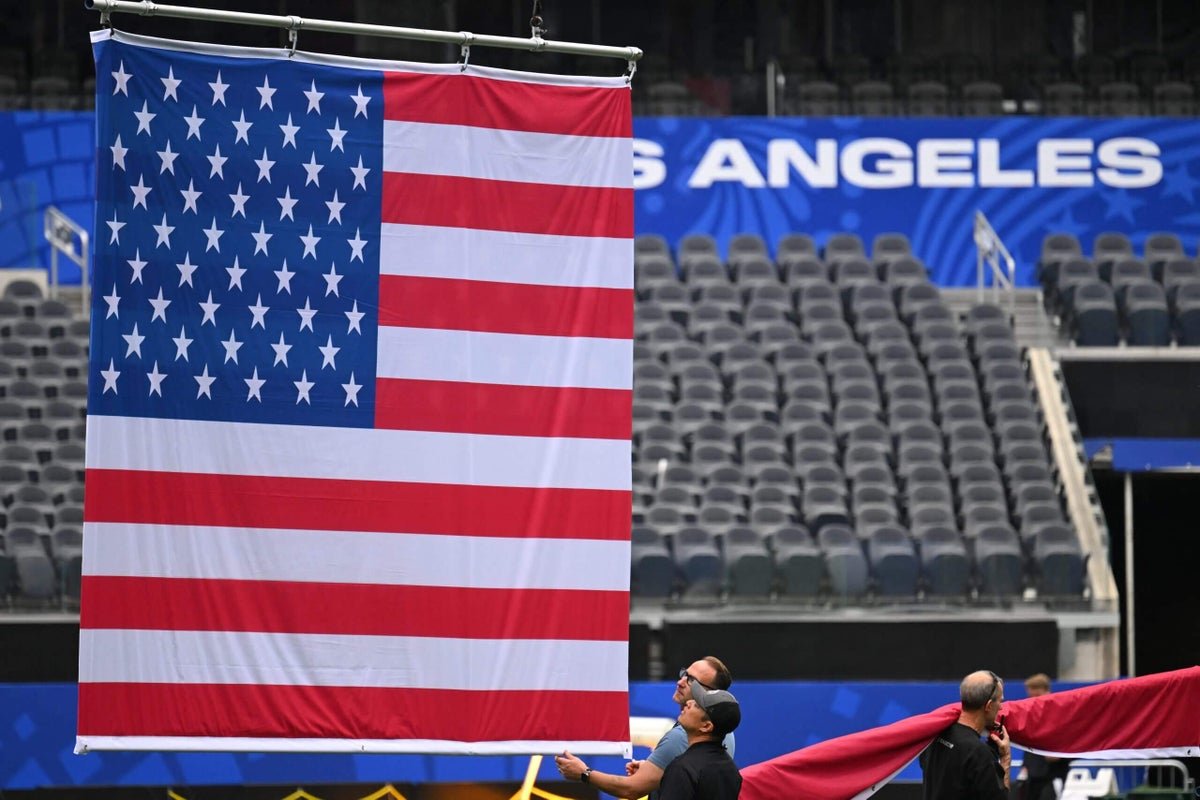
In the Los Angeles neighborhood of Boyle Heights, vendors along 1st Street stack jerseys and hang the flags of competing nations. Screens for a watch party are being set up at Mariachi Plaza. SoFi Stadium gleams over in Inglewood, looking like $5.5 billion. Renamed Los Angeles Stadium for the summer, it is adorned with tournament branding, prepared to greet the planet.
Just a year ago this week, the area braced for something different. After ICE raids sparked protests across Los Angeles, Trump deployed 700 Marines and thousands of National Guard troops in a distressing show of power. They stood in Boyle Heights. They posted up downtown, South L.A., Westwood. On streets famous for children playing pickup soccer, on streets where generations of immigrants have turned the game into a universal language, the government sent an army. It federalized fear.
Twelve months later, the world turns its eyes here to watch the U.S.-Paraguay match and to search for clues about whether the country can tame its big, bad wolf for the next 39 days.
Los Angeles outlasted the rage. The people here endured.
But as problematic hosts go, America is disorienting because it genuinely prospered from a belief it now destroys. And it does so in full view of a world that it alienates. The World Cup lens shows an unflattering image.
“I think it’s definitely revealing the strangeness of our domestic politics,” Jackson said. “Sports diplomacy is something that really matters. You’d think the U.S. would be doing all sorts of things around this narrative. Hosting an international sporting event amplifies your connection to the rest of the world, or it exposes how you’re pulling inward. It’s surprising, or telling, what we are doing.
“It’s like we want to make money off the party we’re hosting, but we’re not willing to leverage it to talk about how the world can be more interconnected, which is sad.”
Next week, for the Mexico-South Korea game, Boyle Heights will close 1st Street. A giant LED screen will go up near Mariachi Plaza. The soldiers are gone. The restaurants will be open. A neighborhood that absorbed raids and trauma will gather in the street to watch its game, live its story, hold its ground.
“Soccer brings unity,” said Miriam Rodriguez, the president of the Boyle Heights Chamber of Commerce. “We want to let our community know that, even in hard times, we’re still here.”
In Boyle Heights, 1st Street is America.
Another patch of a dream.




Anthropic’s safety warnings may have just backfired – the government has pulled the plug on its most powerful AI
The U.S. government on Friday ordered Anthropic to immediately shut off access to two of its most powerful AI models...


Justice Dept. approves Paramount’s acquisition of Warner Bros. Discovery
The Justice Department on Friday approved Paramount’s proposed $111 billion takeover of Warner Bros. Discovery. After concluding its antitrust investigation...


Gene Shalit, longtime ‘Today’ show movie critic, dies at 100
NEW YORK — Gene Shalit, a movie critic and arts reporter for the “Today” show over four decades who was...


Trump's DOJ approves Paramount- Warner Bros. merger
The Trump administration has given the green light for Paramount Skydance to take over Warner Bros. Discovery in a …
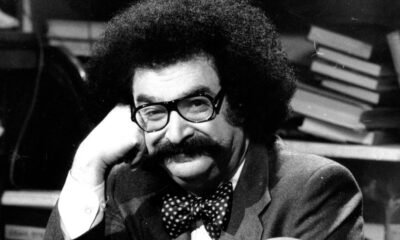

Gene Shalit, Film Critic Bristling With Hair and Puns, Dies at 100
Gene Shalit, the Muppet look-alike who reviewed movies and other cultural arts with a whimsical bent and a shtick for...


How a city in Kansas became some of team Algeria’s biggest fans
As the World Cup begins and national teams from around the world find a homebase to train in, Team Algeria...


Nick Reiner’s Trustee Launched Investigation Into Trust Rules Before Agreeing to Pay
The person in control of Nick Reiner’s trust initially refused to pay out money until an investigation was complete, according...


'We are the victor': Iran celebrates deal as Trump stays quiet on details
Iran's foreign minister declared victory on state TV after announcing a new deal with the U.S. But the unsigned agreement...
FIFA blames empty seats at World Cup match on fans in concourses
GUADALAJARA, Mexico (AP) — FIFA on Friday blamed the empty seats during the World Cup match between South Korea and...


John Turturro says he asked Spike Lee for Knicks tickets for movie roles
Actor John Turturro tells CNN's Omar Jimenez that he asked Spike Lee for tickets to Knicks games in exchange for...
-

 Politics3 days ago
Political News and Conservative Analysis About Congress, the President, and the Federal Government
-

 Politics1 day ago
What to know about the stabbing that set off fiery riots in Northern Ireland
-

 LifestyleNews1 week ago
120 minutes of strength training per week may help extend lifespan
-

 Video10 hours ago
Download fans say what they love about the festival. #DownloadFestival #BBCNews
-

 HealthNews19 hours ago
The people of Okinawa, Japan only eat until they are about 80 percent full, then stop — and the practice has been linked in multiple peer-reviewed studies to lower rates of cardiovascular disease, slo
-

 BBC News World1 day ago
Why the economics makes this the craziest world cup ever
-

 Video10 hours ago
Why SpaceX IPO isn't about space. #SpaceX #ElonMusk #BBCNews
-

 BBC News World5 days ago
Backrooms and Obsession: How two low-budget horror films caused a Hollywood earthquake