
HealthNews
Deadly bacteria discovered at LA office as employee tests for disease

The airborne bacteria that causes deadly Legionnaires’ disease was discovered at the Los Angeles County Medical Examiner’s Office, with an employee later testing positive for the disease.
The bacteria, legionella, was detected in a cooling system at the office near downtown LA, according to NBC 4.
The identity of the worker who tested positive the person’s condition remain undisclosed.
Officials have not publicly established whether the employee’s infection was connected to the contaminated system.
“The Los Angeles County Department of Public Health was notified of one Los Angeles County employee who tested positive for Legionnaire’s Disease,” a department spokesperson told NBC.
The discovery dates back to May 2026, when the bacteria was found during maintenance work.
Employees in the affected buildings were notified later in the year, according to officials.
A spokesperson for the Medical Examiner’s office declined to answer questions, referring inquiries to the Department of Public Health.
The county reported no other infections involving people with shared exposure to the employee.
Download The California Post App, follow us on social, and subscribe to our newsletters
“To date, no additional cases have been identified with shared common exposures to this individual,” officials said.
Legionnaires’ disease is a serious form of pneumonia caused by the Legionella bacteria. People can become infected by breathing in contaminated water droplets or mist, which can originate in cooling equipment and building plumbing systems.
County health officials described the bacteria as “commonly found in building plumbing systems, especially in older buildings.”
The illness can cause fever, chills, headaches, coughing and breathing difficulties. Symptoms generally emerge two to 14 days after exposure, and the US Centers for Disease Control and Prevention says it is usually treatable with antibiotics.
The infection does not typically spread directly between people. Instead, contaminated water systems can release droplets that carry the bacteria into the air.
HealthNews
Deadly bacteria discovered at LA medical office as employee tests positive for airborne disease

The airborne bacteria that causes deadly Legionnaires’ disease was discovered at the Los Angeles County Medical Examiner’s Office, with an employee later testing positive for the disease.
The bacteria, legionella, was detected in a cooling system at the office near downtown LA, according to NBC 4.
The identity of the worker who tested positive the person’s condition remain undisclosed.
Officials have not publicly established whether the employee’s infection was connected to the contaminated system.
“The Los Angeles County Department of Public Health was notified of one Los Angeles County employee who tested positive for Legionnaire’s Disease,” a department spokesperson told NBC.
The discovery dates back to May 2026, when the bacteria was found during maintenance work.
Employees in the affected buildings were notified later in the year, according to officials.
A spokesperson for the Medical Examiner’s office declined to answer questions, referring inquiries to the Department of Public Health.
The county reported no other infections involving people with shared exposure to the employee.
Download The California Post App, follow us on social, and subscribe to our newsletters
California Post News: Facebook, Instagram, TikTok, X, YouTube, WhatsApp, LinkedIn
California Post Sports Facebook, Instagram, TikTok, YouTube, X
California Post Opinion
California Post Newsletters: Sign up here!
California Post App: Download here!
Home delivery: Sign up here!Page Six Hollywood: Sign up here!
“To date, no additional cases have been identified with shared common exposures to this individual,” officials said.
Legionnaires’ disease is a serious form of pneumonia caused by the Legionella bacteria. People can become infected by breathing in contaminated water droplets or mist, which can originate in cooling equipment and building plumbing systems.
County health officials described the bacteria as “commonly found in building plumbing systems, especially in older buildings.”
The illness can cause fever, chills, headaches, coughing and breathing difficulties. Symptoms generally emerge two to 14 days after exposure, and the US Centers for Disease Control and Prevention says it is usually treatable with antibiotics.
The infection does not typically spread directly between people. Instead, contaminated water systems can release droplets that carry the bacteria into the air.
County officials said healthcare providers must report “symptomatic cases” and that public health authorities monitor high risk settings.
HealthNews
5 Common Medications That Can Mess With Your Sleep

Whenever Dr. David Neubauer sees patients with sleep complaints, his first question is about whether they are taking any prescription or over-the-counter medications.
Dr. Neubauer, a psychiatrist and sleep specialist at Johns Hopkins Medicine, said that in many cases, he can quickly figure out which drug is causing the issue — whether it’s trouble falling or staying asleep, or feeling drowsy during the day.
There are many medications that can disrupt sleep, Dr. Neubauer said, including those for colds, allergies, high blood pressure, mental health issues and more.
Here are some of the most common medications that can keep you awake — and what to do if you’re struggling with sleep while taking them.
1. Certain A.D.H.D. Drugs
There are two main categories of medication that treat attention deficit hyperactivity disorder: stimulants and nonstimulants. The stimulants, which include Adderall, Vyvanse, Ritalin and Concerta, are very good at improving focus, said Julie Dopheide, a professor of clinical pharmacy at the University of Southern California. But they are notoriously disruptive to sleep, she said.
Stimulant medications increase dopamine and norepinephrine levels in the brain, causing many people to feel alert. The drugs are so good at keeping people awake that they are sometimes prescribed for narcolepsy, a sleep disorder that causes extreme daytime sleepiness.
Thank you for your patience while we verify access. If you are in Reader mode please exit and log into your Times account, or subscribe for all of The Times.
Thank you for your patience while we verify access.
Already a subscriber? Log in.
Want all of The Times? Subscribe.
HealthNews
How the Boy in the Bubble Died at Age 12 from a Procedure That Was Supposed to Save His Life
NEED TO KNOW
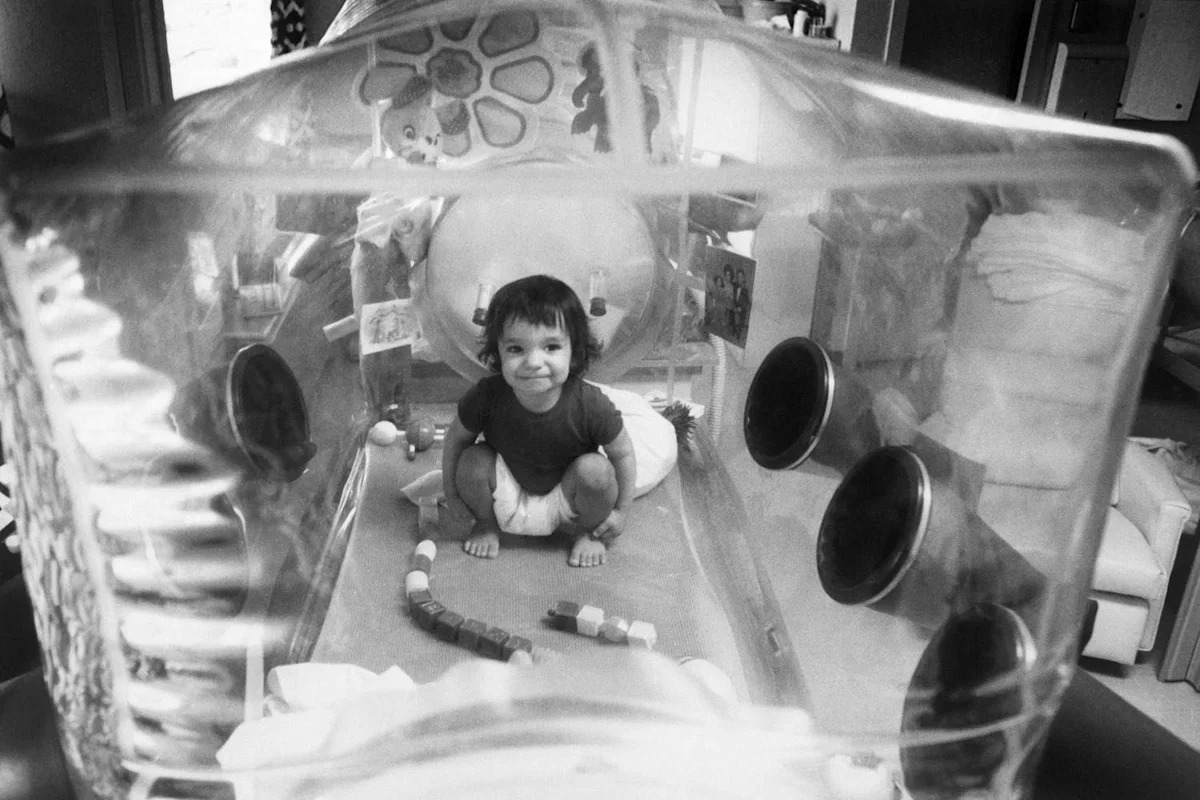
David Vetter lived with severe combined immunodeficiency, requiring an ultra-sterile plastic isolator from birth
He became known nationwide as “Bubble Boy” and later wore a NASA-designed containment suit
Texas Children’s Hospital established the David Center in his honor, advancing research into immune disorders
David Vetter’s family hoped for years that he would be cured.
Born Sept. 21, 1971 at Texas Children’s Hospital, the boy was was diagnosed with Severe Combined Immunodeficiency (SCID), a life-threatening disorder where people cannot fight infections due to a lack of T-cells or B-cells. With no immune system, even the common cold or flu could be fatal.
To keep him alive, David was forced to live in an isolated, ultra-sterile environment. The only way he could interact with loved ones was through a clear plastic bubble. He became known as “Bubble Boy” or “The Boy in the Bubble.”
He was eventually granted more mobility by wearing containment suits designed by NASA that resembled space suits.
His story seized the attention of the American public. As his mom Carol Ann Vetter recalled, once he became aware of his fame, David “told me that he was a star because his picture was in the paper the day before and stars don’t have to clean up toys. I told him that his picture wasn’t in the paper today, so today you clean up your bubble!””
When David was 7 years old, he met Dr. William T. Shearer, chief of allergy and immunology at Texas Children’s, who writes that David “put his arms in the gloves extending from his plastic isolator system to shake my hand and began quizzing me to make sure I understood that he was special and was competent enough to care for him.”
He continued, “At 7 years old, David was a very bright young man who had a vocabulary as advanced as some of my peers and enjoyed learning. He was very brave and courageous handling his situation and fighting germs and brought a great sense of humor that lightened up the room.”
Then an experimental treatment became available — one that doctors hoped would allow David to live outside the confines of his bubble. It was possible that a bone marrow transplant could help him develop an immune system.
“Our doctors told us that the operation was proving very successful, and that it was 99 percent safe. They said it would either work or not work. But if it didn’t work, we would simply be back to square one,” Carol Ann said, per PBS.
On October 21, 1983, David received a bone marrow transplant from his sister Katherine. Because he was in the bubble, he actively participated in giving himself injections.
But by Christmas, David began to get extremely ill. It turned out that his sister’s bone marrow had not been screened for the Epstein-Barr Virus, and it was now inducing a form of lymphoma in David.
As his condition continued to decline, he told his mother, “I’m tired. Why don’t we just pull all the tubes out and let me go home?”
On February 7, 1984, as death drew near, David came out of the bubble and was able to be physically embraced by his family.
Take PEOPLE with you! Subscribe to PEOPLE magazine to get the latest details on celebrity news, exclusive royal updates, how-it-happened true crime stories and more — right to your mailbox.
On February 22, David spoke his last words — first to his friend and psychologist, Mary Murphy. As she was leaving, he told her, “Remember, I love you, Mary. Goodbye.” Then, he turned to his mother and said, “I love you all too.”
Carol Ann removed her mask and kissed her son for the first time. Moments later, David died.
“David was an incredible young man whose legacy has contributed to an even greater accomplishment and my life and has certainly been changed because of David and his family,” Shearer wrote, adding that Texas Children’s established the David Center at Texas Children’s in the late boy’s honor.
HealthNews
Women can’t find this medication. The problem isn’t going away
Sen. Kirsten Gillibrand, D-New York, is calling for accountability from the Food and Drug Administration as women struggle to fill estrogen patch prescriptions more than a year into supply problems.
Demand has increased for the popular menopause medication after the FDA’s removal of the black box warning label on estrogen products.
Experts say demand will go up with the American College of Obstetricians and Gynecologists’ recently announced new guidelines for hormone replacement therapy, which will increase the number of women eligible for treatment.
“Estradiol patches are a first line, widely used, and highly effective treatment for managing menopause symptoms, and FDA should be doing everything in its power to make sure this therapy is available to all women who need it,” Gillibrand told USA TODAY. “This is an urgent women’s health priority, and I will not rest until we have answers.”
Gillibrand is sending a letter to the FDA on Oct. 21 demanding that the agency share its plan to make estrogen patches available, including enacting emergency measures. She shared an advance copy of the letter with USA TODAY.
The agency has acknowledged that women are struggling to find patches, but the FDA has not labeled it as a shortage, which could trigger the agency to speed up reviews to allow manufacturers to use new facilities, help them resolve supply issues and in some cases even allow the compounding of drugs.
Health and Human Services Secretary Robert F. Kennedy Jr. met with physicians and manufacturers to increase access to estrogen patches and teach physicians other options, such as estrogen gels and sprays, on Sept. 15.
USA TODAY has reached out to Kennedy and the FDA for comment.
In the meantime, the FDA is telling women to talk to their pharmacist or doctor about options.
“Passive monitoring and generic advice fail to adequately mitigate a nationwide manufacturing deficit,” Gillibrand wrote in the letter, signed by Sens. Tammy Duckworth, D-Illinois, and Adam Schiff, D-California.
Women say they are frustrated that they are still struggling to get access to the medication they need. The American Society of Health-System Pharmacists, which represents more than 65,000 pharmacists, documents that there are almost 20 estrogen patch formulations impacted by the shortage, double the number from earlier this year.
Hormone replacement therapy plummeted from 27% of menopausal women in 1999 to 5% in 2020, according to the National Institutes of Health.
The FDA’s black box warning kept many women away from hormone replacement therapy after a 2002 Women’s Health Initiative study linked it to a higher risk of breast cancer, heart attacks and strokes in postmenopausal women. It was recognized later that the risks were mostly found in women who were older when they started hormone therapy.
As more physicians became certified in menopause care in the past decade, use of hormone replacement therapy increased. Estradiol patch prescriptions went from about 594,000 in June 2024 to 1.6 million in May 2026, according to HealthVerity, a data company. Mark Cuban, owner of CostPlus drugs, said in a recent podcast with Dr. Mary Claire Haver on menopause that patch volume has increased at least tenfold in the past few years.
The shortage was getting worse even before the FDA changed its labeling, Kathleen Jordan, the chief medical officer and cofounder of Midi, a women’s telehealth menopause provider, told USA TODAY earlier this year. “The problem isn’t an increase in demand of the patch, the problem is the manufacturers. The demand is only going up as access to care is improving. It could take years to solve it.”
What can women do if they can’t find the patch
Sharon Malone, an obstetrician and gynecologist and medical adviser for Alloy, says women should not skip treatment, but also not panic. “We want them to remain symptom-free,” she says.
Physicians offer these suggestions for patients grappling with the ongoing shortage:
HealthNews
Stanford scientists invent AI immune system to prevent early labor

New research shows two common over-the-counter medications could potentially help combat premature labor, a top cause of death for children under five.
The study, published Wednesday in the Science Advances medical journal, shows new evidence that taking the combination of low-dose aspirin and a common heartburn medication may lower the risk of a pregnant woman going into early labor. Scientists based at Stanford University conducted the study using “digital twin” immune systems via artificial intelligence models to simulate how certain drugs could affect pregnancy outcomes.
Advertisement
Article continues below this ad
In the U.S., about 1 in 10 pregnant women will go into preterm labor, defined as delivering before 37 weeks gestation, with many having no warning signs prior to delivery. The problem is even more pronounced globally where, depending on the country, up to 16% of infants are born early.
Currently, there are few options to stop early labor once it starts, but one potential cause may lie in the immune system. During pregnancy, the immune system of the pregnant individual changes dramatically. First, it will weaken to allow the fetus to survive and, toward the end of pregnancy, “pro-inflammatory” markers will naturally increase in preparation for labor and birth.
It’s these late-stage markers that experts believe are linked to an increased risk of preterm labor if they develop too soon.
Dr. Brice Gaudilliere, professor of anesthesiology, perioperative and pain medicine at Stanford, is the senior study author and said his lab has been studying pregnancy immunology for more than 10 years.
Advertisement
Article continues below this ad
“In the last decade, there hasn’t been a new drug or pharmacological intervention that has been proposed for the treatment of preterm birth,” he told SFGATE, pointing out that clinical trials for complicated conditions like preterm birth are difficult. “It’s lengthy, it’s challenging, it’s costly.”
In this study, Gaudilliere and his team used AI models trained on data from a quarter of a billion immune cells in order to create what is essentially an immune system “atlas.” They also enrolled 11 pregnant and eight nonpregnant individuals in the study, and took blood samples from them over a period of time. From these samples, they exposed actual immune cells to different drugs. They then took that data and plugged it into the AI model to see how a specific pregnant individual’s immune system might react to the different medications.
“We’re creating a virtual representation of the mother’s immune system so that we can first test how different drugs are going to change the immune system without giving the drug to the patient and … on top of that simulate how the drug is going to change the outcome here,” he said.
The team found evidence that a combination of low-dose aspirin and the heartburn medication lansoprazole, known by the brand name Prevacid, showed clear signs of combating the immune system dysfunction linked to preterm labor.
Advertisement
Article continues below this ad
“In the digital twin system, these two drugs in combination had a large effect on the delay of labor, 15 times higher than aspirin alone,” Gaudilliere said in a statement.
While the research is in the early stages, Gaudilliere said this AI model could be beneficial for use in future studies by opening a new frontier of personalized care for patients.
One drug not fitting all patients is “likely the reason why drugs have failed so far in preterm birth,” he explained, calling preterm birth a “complex multifactorial process.”
The team has already received approval from the U.S. Food and Drug Administration to start a Phase 2 trial with human patients in the coming months. The team plans to use the AI-modeled data to determine who could benefit most from the drug combination, and then administer the drugs to the patients to see whether they are less likely to go into preterm labor.
Advertisement
Article continues below this ad
Dr. Avish Arora, an obstetrician-gynecologist and maternal-fetal medicine specialist at UCLA, who did not take part in the study, called the research “fascinating.”
The researchers’ approach to studying preterm birth and preterm labor through the use of the digital immune system was “really novel,” he said. In many cases, doctors are unable to isolate a specific reason a pregnant individual goes into early labor, although there are known risk factors, including having a short cervix.
Arora cautioned more research is needed to prove these medications will actually lower the risk of preterm birth.
Advertisement
Article continues below this ad
“It’s certainly not causation, but it’s definitely something that’s very interesting,” he said.


Musk says Tesla FSD demand is outpacing production at earnings call
Tesla CEO Elon Musk said demand for the company’s electric vehicles is significantly outpacing production, pointing to growing interest in...


Musk’s public endorsement of SpaceX-Tesla deal may throw a wrench in talks
The disclosure created a “mess” for the process, as it could lead to questions about how well Tesla shareholders’ interests...


Amazon Prime customers could get $200 refund following $2.5B FTC settlement: Here’s who qualifies
SAN FRANCISCO — If you’re an Amazon Prime customer, you could be getting up to $200. Amazon started sending out...


Hackers Exploited the PHP Vulnerabilities Days Before They Were Patched
The internet’s mad scramble on Wednesday to patch a pair of critical vulnerabilities in PHP, a widely used web scripting...


Abdul El-Sayed and Mike Rogers’ second debate clash sets up final sprint in Michigan
The second Michigan Senate debate Wednesday featured several heated clashes between Democratic nominee Abdul El-Sayed and Republican former Rep. Mike...


Meta strikes deal to keep Zuckerberg in California after wealth tax concerns
Under the deal, Zuckerberg will get non-voting shares he can sell to potentially foot a multi-billion-dollar tax bill in the...


‘Curious Case of Benjamin Button’ review: A sweet and folksy musical that wants to go to Broadway
Much as Benjamin Button ages backwards from elderly to infant, the new musical “The Curious Case of Benjamin Button” also...


Airbnb cracks down on checkout chores with new rules for hosts
Airbnb is taking aim at checkout chore lists, telling hosts that guests generally shouldn’t have to strip beds, wash dishes...


John Anderson, Country Music Hall of Fame Vocalist, Dead at 71
John Anderson, a Country Music Hall of Fame member known for his distinct, idiosyncratic singing style, died Wednesday. He was...


CEOs In Town Hall Address Executive Shakeup & Layoffs
A day after Netflix co-CEOs Ted Sarandos and Greg Peters faced anxious investors on the company’s Q3 earnings call after...
-

 Business4 days ago
‘Black Monday’ fears intensify as prediction markets shrug off 2026 crash
-

 HealthNews2 weeks ago
Des Moines clinics stumped by unidentified virus
-

 Entertainment2 weeks ago
Taylor Swift and Travis Kelce hold hands on NYC date night amid bitter feud with neighbors
-

 Business2 weeks ago
Vistra Stock, Constellation Soar On AI Nuclear Energy Deals
-

 Business2 weeks ago
OpenAI, Anthropic, Meta, Google stop short of AI safety guarantee
-

 Tech2 weeks ago
CIA officer arrested with gold bars admits he exposed secret intelligence source to a foreign official
-

 Business2 weeks ago
Mistral’s new 1T model aims to leapfrog closed and open rivals
-

 Entertainment2 weeks ago
Taylor Swift Celebrates Travis Kelce’s 37th Birthday in a Plunging Lace LBD and Outfit Worth Over $10,000