
Entertainment
The Social Reckoning
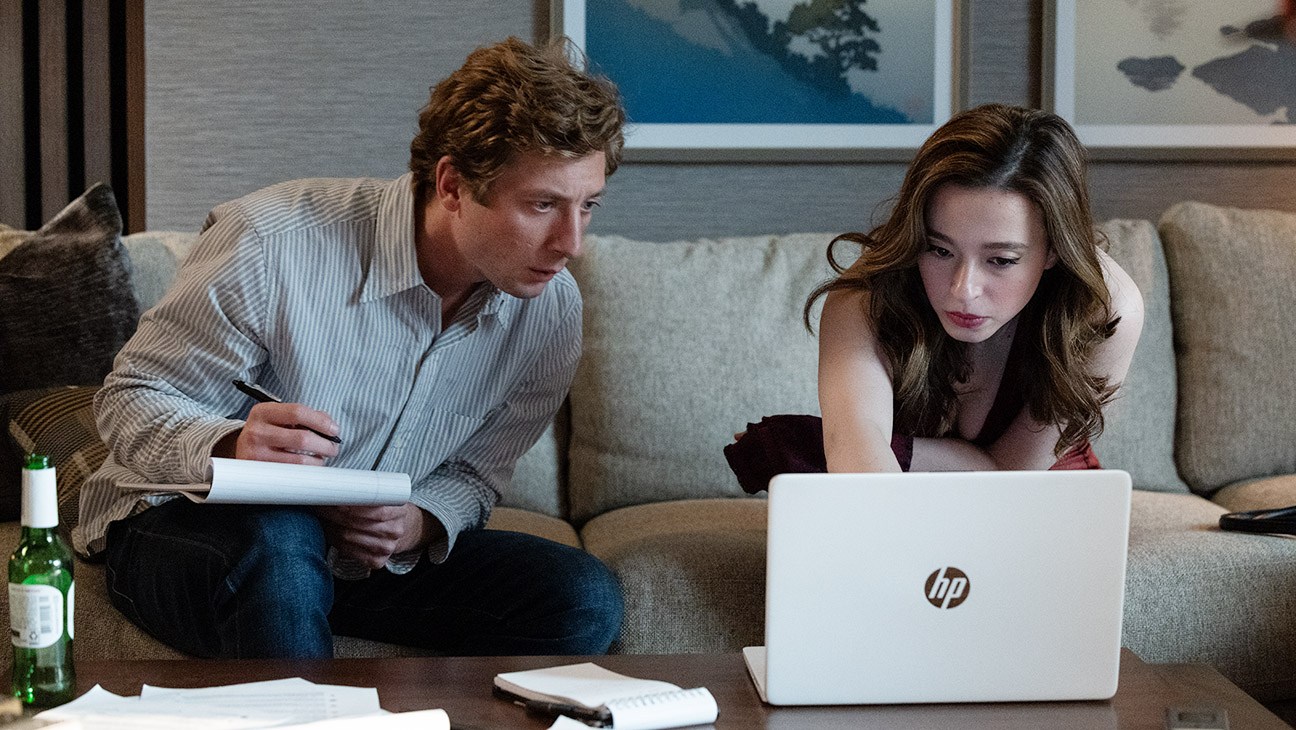
Early in The Social Reckoning, a douchey finance bro on a joyless date with the protagonist makes the preposterous claim that chlorophyll is “an internal deodorant,” stating this as fact because he read it on . “You drink it and your sweat smells like flowers!” he enthuses. While the scene is played for low-key cringe comedy, it nails two key issues at the heart of Aaron Sorkin’s engrossing whistleblower thriller — one is the irresponsible spread of misinformation on the supposedly smiley-happy social media service, while the other is the public’s willingness to buy whatever gets fed to them.
When Jeremy Strong’s cartoonishly affectless but mordantly funny Mark Zuckerberg — whose founding of Facebook was chronicled with needling perspicacity in David Fincher’s 2010 drama The Social Network — describes himself as “a free-speech absolutist,” what he means is that his opposition to fact checking is company policy. That applies whether we’re talking organized hate groups, politicians slamming their opponents in negative campaigning, or teenage mean girls bullying and body-shaming their peers.
Sorkin won an Oscar with his adapted screenplay for The Social Network, and if his follow-up, coming 16 years later and seeing him step up to writer-director responsibilities, doesn’t measure up to its critically lauded predecessor, well, that’s an awfully high bar to clear. But this nominal sequel makes for sharp entertainment, even if it sticks you with the depressing takeaway of a cautionary tale addressing a blight that’s too late to fix.
Along with his signature rapid-fire, garrulous dialogue, Sorkin’s tendency for self-righteous indignation is very much in evidence. But the material provides him with plenty of legitimate reasons to be pissed, and the movie is never at risk of becoming a pedantic lecture.
It’s also acted with galvanizing conviction. Mikey Madison plays Frances Haugen, the introverted Facebook data engineer who believes in the company’s mission to give everyone a voice — until she sees the profit-driven ways in which that freedom of expression is giving a mouthpiece to extremists. And Jeremy Allen White is Jeff Horwitz, the Wall Street Journal tech reporter with whom Haugen collaborates on an explosive series of articles informally titled The Facebook Files, exposing the toxic culture behind the company’s stratospheric reach.
There’s a fascinating synchronicity between the current real-world anxiety and the film industry’s sudden interest in dense studies of the tech world’s dark underbelly. A week after Sony releases The Social Reckoning, Bleecker Street will open Musk, Alex Gibney’s head-spinning documentary, running close to four hours, about the rise and rise of Tesla titan Elon Musk. On Christmas Day, Neon will weigh in with the best of the three, Luca Guadagnino’s Artificial, a humorous and ultimately horrifying account of 20 years of AI evolution and a scorching portrait of OpenAI founder Sam Altman. (There’s also Nathan Fielder and Lance Oppenheim’s Elizabeth Holmes documentary, You Can See Everything — a different beast entirely.)
What all three films have in common, aside from various intersections and overlaps in their stories, is their repositioning of tech billionaires as the new screen villains. Lawyers and finance traders must feel so relieved. Zuckerberg, Musk and Altman to some extent are all exceedingly skilled, ethically dubious con men, all of them able to sell their insatiable hunger for astronomical wealth as a service to humanity, while also selling themselves, not as technocrats so much as creative visionaries.
Sorkin opens with a tartly funny prologue whose title, “White Girl Wasted,” refers to a motorist (Portia Doubleday) who has pulled over to the side of the road, where she stands behind the vehicle scrolling through her phone. When two cops approach asking if she needs assistance, she is curtly dismissive but becomes hostile and racially abusive once they ask her — with good reason — to take a sobriety test.
A double-whammy monster of entitlement and victimhood, the drunk woman films the events leading to her arrest and later posts the video under the header “Voice of Reason,” including the screeching outburst: “This is what happens when you’re white in America, you get treated like a fucking immigrant!” It’s later revealed that Frances knew the woman in the viral video back when she was a mellow progressive, learning that she was radicalized by an alt-right group on Facebook.
Frances’ data research has already turned up a bunch of similar cases, including the alarming statistic that 64 percent of Facebook users who recently joined extremist groups were directed to those organizations’ sites by the algorithm.
Sorkin briskly paints a portrait of a company with an uncongenial working environment and little transparency. Frances’ attempt to raise her concerns at a team meeting where Zuckerberg addresses the assembled staff is cut off when there’s no time left for questions. And when she tries talking to colleagues, one smirks at her quaint use of index cards while another warns her against drawing negative attention.
At the same time, Jeff transfers from a political beat in Washington to become the new San Francisco tech reporter, getting a barbed reception from bureau chief Christina (Betty Gilpin) when he’s late for their first meeting because he couldn’t work the car’s GPS system. While brittle Christina rolls her eyes at being stuck with an analog guy to cover Big Tech, Jeff’s editor Andy (Gbenga Akinnagbe) is a far more chill ally. Jeff is assigned two social media-savvy interns and instructed to get up to speed on Facebook, where he has already noticed the improbably low number of negative comments about user satisfaction.
In another thread, Strong’s Zuckerberg twitches with irritation through mock congressional hearings, with a PR team headed by crisis management specialist Raya (Wunmi Mosaku), whose task is to make the Facebook CEO likeable. Given that he’s a warmth-free zone who can’t even settle on the right tie, that job is no walk in the park. Media relations exec Teddy Marks (Billy Magnussen) looks in from time to time, and Raya has also invited someone guaranteed to ruffle Mark’s feathers, his former colleague Charlie Garrigan (Bill Burr), who just published an unsparing op-ed piece in a major newspaper condemning Facebook’s lax safeguards.
Hoping to sniff out someone inside Facebook willing to talk, Jeff sends personal letters to almost every employee and given that Frances has hit a wall trying to bring what she believes are algorithmic glitches to anyone’s attention, she replies. When they meet in an isolated park location, she is nervous about breaking the terms of her contractual NDA. But she gives Jeff some basics about content violations on which to build a story.
As Jeff continues to dig, with further intel from the reluctant Frances, his findings gradually point to Zuckerberg and members of his executive team having full knowledge of the harmful side-effects of their business strategy — deprioritizing “likes” and instead pushing for reshares, with rage bait driving traffic in exponential numbers.
Important-sounding acronyms are batted about to suggest internal guardrails — like MSI (Meaningful Social Interactions), CIT (Civic Integrity Team) or SATF (Soft Action Task Force). But at the prospect of engagement dropping by even one percent, Zuckerberg rules out any serious measures against content violation, making Charlie furious by refusing to consider policing political ads for falsehoods. “We’re a corkboard,” says Zuckerberg with unwavering impassivity. “We don’t control what people pin on it.”
Without ever naming the sitting U.S. president, Sorkin hits hard by showing footage (which appears to be largely re-enacted) of the Capitol riots on Jan. 6, 2021. Staffers urge Zuckerberg to take down videos of the insurrection posted by POTUS, enduring an agonizing wait before he finally gives the order — deleting posts being the last-resort “hard action.”
There’s nothing terribly subtle about The Social Reckoning, though sometimes its blunt force can take your breath away, for instance when Teddy, with cold, smug efficiency, responds to the threat of congressional scrutiny by saying, “We’re not frightened by Congress. We are post-government around here.” With Facebook currently counting north of 3 billion monthly active users worldwide, and 43 percent of adults now getting their news from the platform, it’s grim knowing that even after the WSJ stories ran and Haugen testified before Congress nothing changed in terms of fact checking.
Sorkin gonna Sorkin, so the hectoring superiority creeps in at times, even if he keeps the speechifying to a minimum. But he presents a persuasive case for this monolithic “community forum” as a 21st-century plague that stokes division, harms children and weakens democracies.
The movie looks terrific, with DP Jeff Cronenweth returning to provide visual consistency with The Social Network and Alexandre Desplat’s elegant score feeding the tension without working too hard at it.
Strong’s decidedly peculiar performance is likely to be divisive, maybe leaving some to wonder whether he’s intentionally trying to be funny at times. But he gets the emotionless reptilian aspect of a man who can look the other way while his money-making machine is being instrumentalized by drug cartels and human traffickers or used as a tool to influence elections or causing a significant spike in teen mental health issues.
Entertainment
This year’s provocative Palme d’Or winner deserves to be a major Oscar contender.
The Romanian director Cristian Mungiu specializes in naturalistic dramas whose low-key aesthetic choices—long takes, few close-ups, no use of extradiegetic music—leave it to the viewer to navigate the dense ethical thickets his films set out to explore. Mungiu’s movies often depict people in harrowing circumstances, while maintaining a respectful distance from the drama. Though he’s fascinated by ideological extremes, his own point of view as a filmmaker is intentionally hard to pin down.
Mungiu’s latest film, Fjord, won this year’s Palme d’Or at Cannes—Mungiu’s second time taking the festival’s top prize, after the brilliant abortion-themed drama 4 Months, 3 Weeks, and 2 Days in 2007. Like that film (which would easily make my Top 10 list for the 21st century to date), Fjord takes on a hot-button issue while going out of its way not to guide the audience’s hand toward any specific button. Fjord may not have the harrowing power of the director’s very best work, but it’s an exacting study of a contemporary social issue that’s rigorous without being clinical.
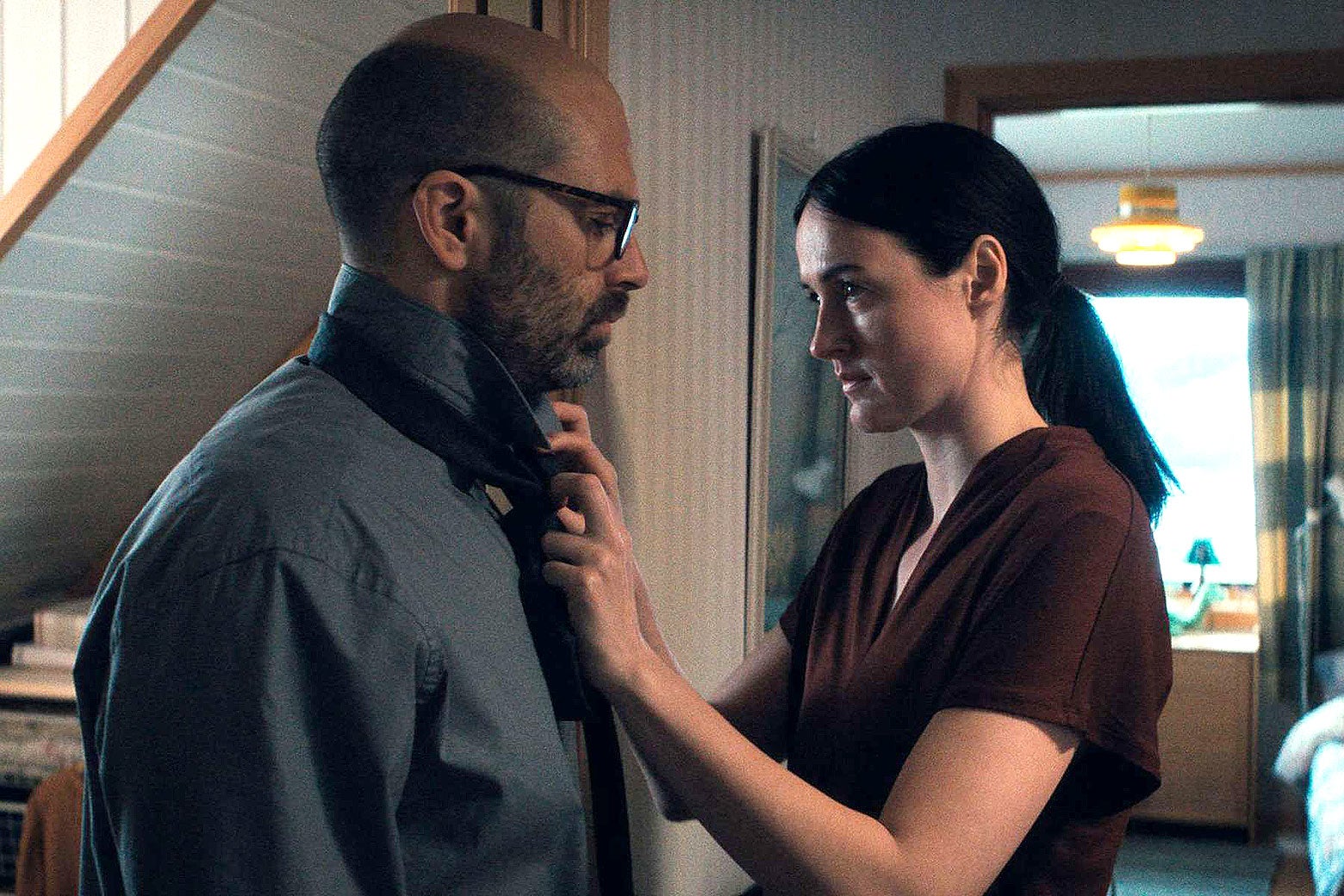
This time around the subject, loosely inspired by real-life events, is the clash of cultural values that can emerge in the wake of immigration. The Gheorghiu family has recently relocated from Bucharest, Romania, to a remote village in northern Norway. Mihai (Sebastian Stan) is Romanian, while his wife Lisbet (Renate Reinsve) is Norwegian-born. They’re returning to her hometown so that her mother can help care for the couple’s five children, who range in age from mid-teens to infancy.
The Gheorghius are Christian fundamentalists whose lives are organized around their faith. Though we never learn exactly what religious sect they belong to, it’s established early on that Mihai and Lisbet are strict but loving parents whose children are forbidden to use the internet, play video games, or dance. As the film opens, their oldest child, teenage Elia (Vanessa Ceban) is apologizing to her father for some infraction she’s committed, the nature of which the audience is never shown. “You need to learn to admit when you’re wrong,” he tells her sternly as she gives him a tearful hug. That will prove to be a tough assignment for every character in this movie, child or adult, especially since, as the viewer is soon to find out, the question of who exactly is in the wrong gets increasingly harder to resolve.
The Gheorghius enroll their children in the local public school, a seemingly welcoming and progressive institution whose principal is their friendly next-door neighbor Mats (Markus Scarth Tønseth). Mats’ rebellious teen daughter Noora (Henrikke Lund-Olsen) takes a shine—possibly a romantic one—to the pious Elia and persuades her and her younger brother Emmanuel (Jonathan Ciprian Breazu) to sneak out of their house for stealthy late-night joyrides on her family’s motorboat.
The family seems to be settling well into their secular but close-knit new community, until the school gym teacher notices some bruises on Elia’s back during wrestling class. It’s never clear that these are the results of parental abuse—earlier on we witness a shoving match between Elia and Noora’s jealous ex-best friend, and the gym class itself seems rough enough to have potentially caused the marks. But Norwegian laws about child abuse are strict enough that within days a representative from the state child welfare office (Ellen Dorrit Petersen) has ordered the placement of not just Elia but all of the Gheorghiu children, including the still-breastfeeding baby, into three different foster homes while the parents’ child-rearing practices are investigated.
This setup is established less than an hour into Fjord’s two-and-a-half-hour run time; with pacing that’s deliberate but never drags, Mungiu’s patient camera (the cinematographer is Tudor Vladimir Panduru) observes the repercussions of these events, both within the Gheorghiu family and throughout the broader community. Eventually that scope will expand to include the global religious right, as the outraged Mihai begins to attract a large social-media following protesting what he perceives to be faith-based persecution. During a civil hearing to assess their parental fitness, Mihai and Lisbet are cross-examined not only about their attitudes toward spanking as a form of parental discipline—a practice Mihai defends as a part of his traditional culture—but about their refusal to give their children cellphones and their insistence on daily prayer. Even as you start to believe it’s true that the couple’s conservative beliefs might be harmful to their kids’ development, you find yourself taking their side against the officious child-welfare bureaucrats who seem convinced that a single interview with two confused teenagers—both of whom say that they love their parents and want to return home—constitutes evidence enough to make all five Gheorghiu children wards of the state and possibly put their parents in prison.
Sebastian Stan may be most familiar to your average American moviegoer as Captain America’s sidekick–turned–Winter Soldier Bucky Barnes (a role he will be reprising in the upcoming Avengers: Doomsday), but he has since made his name as a serious and ambitious actor, delivering a performance of great comic brio as Tommy Lee in the miniseries Pam & Tommy and bringing an unexpected pathos to the thankless role of a young Donald Trump in 2024’s The Apprentice, a role that earned him his first Oscar nomination. Stan spent the first eight years of his life in Romania and subsequently grew up around an extended family of Romanian-speaking immigrants; without knowing the language, I can only say that he switches with utter believability between that language, which Mihai speaks to his family, and the Romanian-accented English he uses to communicate with his Norwegian neighbors. Stan’s resolutely unglamorous performance as Mihai, a soft-spoken but steel-willed man with huge reserves of pride and occasional flashes of frightening anger, is what gives the film its fascinatingly unstable center of gravity, and it’s not hard to see why he might be on his way to nomination No. 2.
As for Renate Reinsve, while she doesn’t disappear physically into her role as completely as Stan does into his—she’s still recognizable as the gorgeous, willowy star of The Worst Person in the World and Sentimental Value—Lisbet is a very different character from the kind we’re used to seeing Reinsve play, not a spiky individualist but a devout and dutiful wife and mother. Her big scene, a sit-down with child-welfare authorities during which she gradually comprehends that her whole world is about to be ripped apart, is a master class in acting as reacting, and may very well earn her a second Oscar nod as well.
Mungiu’s script economically establishes that, though the Gheorghius’ marriage operates by more or less traditional gender roles, the couple’s bond to each other and to their children is genuine and deep. In the film’s most affecting scene, the camera observes Mihai from behind as he looks out the window at his wife in their driveway, buckling their infant son into his car seat as he’s about to be taken away by a worker for child protective services. Neither the father’s nor the mother’s face is visible during this long take; it’s only through their body language (his rigid stance, her slumping shoulders) that we see how wrenching the moment is for them both.
Fjord is less concerned with reconciling the tension between secular and faith-based value systems than with making the audience sit with the fact that even the most nominally progressive modern democracies are constructed around what may be an unbridgeable gulf. Like the beautiful but threatening snowdrifts that cover the mountains around the village—avalanches are frequent enough that the school has a fire drill–like protocol for hustling the kids indoors when the snow starts to slide—the social order Mungiu shows us appears constantly on the verge of collapse. In the film’s final shot, the sacred and the profane seem to converge in an image of quasi-supernatural beauty. You’ll come out of the movie wondering what the filmmaker was asking you to believe about that closing image, and suspecting that his real goal all along was just to keep you asking.
Entertainment
Why Skydance Will Remake the Illustrious Culture of Warner Bros.
There have been many quiet Mondays at the Burbank offices of Warner Bros. Pictures, usually following a bomb like the one the studio just suffered with Tom Cruise’s “Digger.” The cryptic eco-disaster project will represent a loss of hundreds of millions when all is said and done.
But the silence this past Monday was compounded by a familiar wave of merger-induced grief, multiple sources told Variety, especially as employees observed WB Motion Picture Group co-head Pamela Abdy packing up her office in boxes. In a move that shocked some, Abdy and co-head Michael De Luca were dismissed last week as David Ellison finally homed in on his acquisition of Warner Bros. Discovery. De Luca and Abdy had been at the head of Warner’s film business for four years, delivering a wild series of strikes (“A Minecraft Movie”) and gutters (“The Bride!”). In addition to family photos and movie props, Abdy may have boxed up the remnants of a workplace tradition diluted by acquisitions and corporate unions over the past three decades.
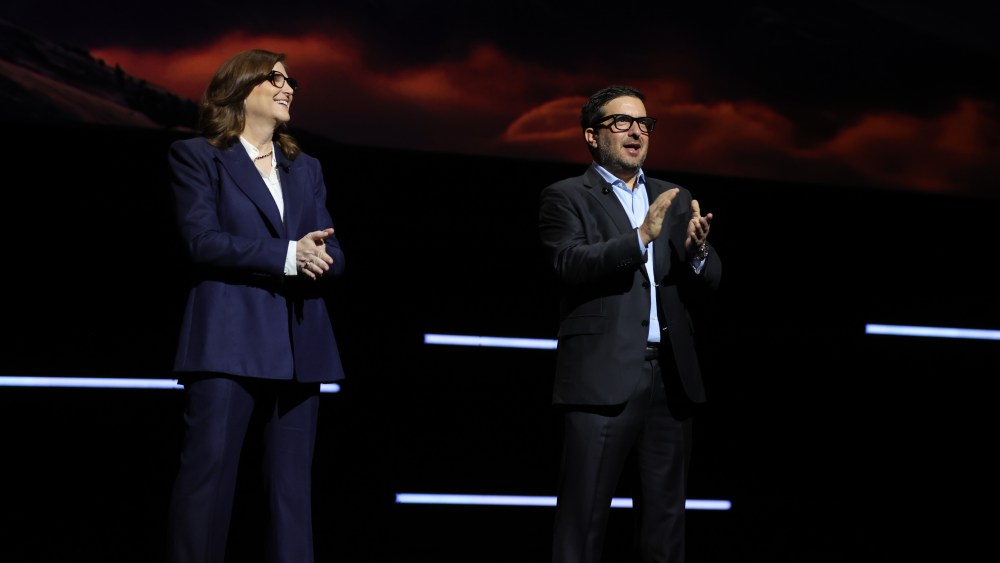
Warner Bros. Pictures is poised to undergo its most dramatic cultural transformation since the 1980s under the new leadership of Skydance CEO Ellison — and specifically, his motion picture group co-chairs Dana Goldberg and Josh Greenstein. The Ellison regime has revealed itself thus far as a shirtsleeve operation, one zeroed in on lowering costs and boosting profits. The preciousness and luxuries that made Warner Bros. a desirable home for creatives will be rightsized with tech ruthlessness, multiple high-level sources suggest.
Goldberg and Greenstein had only spent a year (albeit a productive one) as the heads of Paramount Pictures before this week’s announcement that they will preside over all film labels at the combined company. This means that De Luca and Abdy’s replacement will report into Goldberg and Greenstein, not the office of the CEO (as was the case under David Zaslav’s Discovery and John Stankey’s AT&T, for example).
“On the film side, the scale of this combination, particularly its commitment to theatrical, puts Dana and Josh at the center of the movie business,” Richard Weitz, co-chairman of WME Group, says. The power agent is alluding to Ellison’s commitment to release 30 theatrical films per year across both studios, an agreement he had to put in writing to get his merger over the finish line.
Lorenzo Di Bonaventura, who served as a top WB film executive from 1989 to 2002 before moving to Paramount to produce huge IP like “Transformers,” says the Skydance team’s dedication to movies is not just on paper.
“Looking at the two companies and their slates, I don’t think they have done 30 movies between the two in a very long time,” he says. “That is a net plus for our business, because that means more movies are getting made and more capital is being expended in creating them.”
Goldberg and Greenstein are respected by industry peers, hailing from Village Roadshow (“The Matrix,” “Ocean’s Eleven” series) and Sony Pictures, respectively. They’re now faced with the daunting task of further defining distinct identities for multiple WB labels like New Line and Clockwork.
“I worked with Josh for more than a decade, and I have a great deal of respect for him,” says Tom Rothman, Sony Pictures chief and Greenstein’s former boss. “What you need in that job is a combination of IQ and EQ. It’s managing capital allocation, but in a much more important sense, it’s managing artistic temperaments. He’s extremely capable in both regards.”
While detractors of Goldberg and Greenstein say they do not enjoy the kind of profile some competitors do on the byways of Los Angeles and in coastal elite circles, they’ve greenlit 20 films since taking office at Paramount. They’ve also signed talent deals with the Duffer Brothers, Will Smith, James Mangold, Jon M. Chu and Issa Rae (on top of a distribution pact with Legendary Entertainment).
Any successful film executive’s job comes down to superior talent relations and responsible budgeting. De Luca and Abdy certainly had the former covered (De Luca was a groomsman in Paul Thomas Anderson’s wedding; Abdy was considered a whisperer to filmmakers like Alejandro Iñárritu). “Irresponsible” spending is likely what helped them court the premium filmmakers for which Warner Bros. is renowned, one source says. “It’s easy to say yes when you don’t care what the price is,” they add.
With some $80 billion in debt on the Skydance balance sheet, carte blanche is over. But it’s not just about fiscal prudence. Unlike “carpetbaggers” Zaslav and Stankey, as another top industry player calls them, Ellison and his team consider themselves obsessed lovers of film. The pomp and “platinum” aura of Warner Bros., as one former WB exec phrases it, may be sacrificed quickly.
The lingering magic (and occasional arrogance) of Warner Bros. were holdovers from a culture built by Bob Daly and Terry Semel, insiders say. They ran the company as co-CEOs for almost two decades starting in 1980. The pair prioritized elevated popcorn hits made by substantial filmmakers. Clint Eastwood and Christopher Nolan kept bungalows on the WB lot without having overall deals. “They just wanted to be there,” one former employee says.
While the TV group at WB often was peeved that it brought in all the revenue while the film group got all the attention, the pecking order remained. A collection of Warner vets, many now in high-ranking posts elsewhere, describe a kind of “heart pull” that the studio inspires in its graduates. A crowded text chain of former employees called the “Gate 4 Club” (referring to the entrance many used to access the lot) is active across the industry. They wistfully discuss the days of Daly and Semel parking a row of brand-new Range Rovers as gifts to the cast and filmmakers of “Lethal Weapon” after a sequel hit big.
It’s doubtful any shiny SUVs will be wrapped in ribbons at Warner Bros. anytime soon. Besides, Ellison prefers the sky.
Entertainment
‘Pretty Little Liars’ actor Keegan Allen posts video with bloody face saying he was mugged in West Hollywood
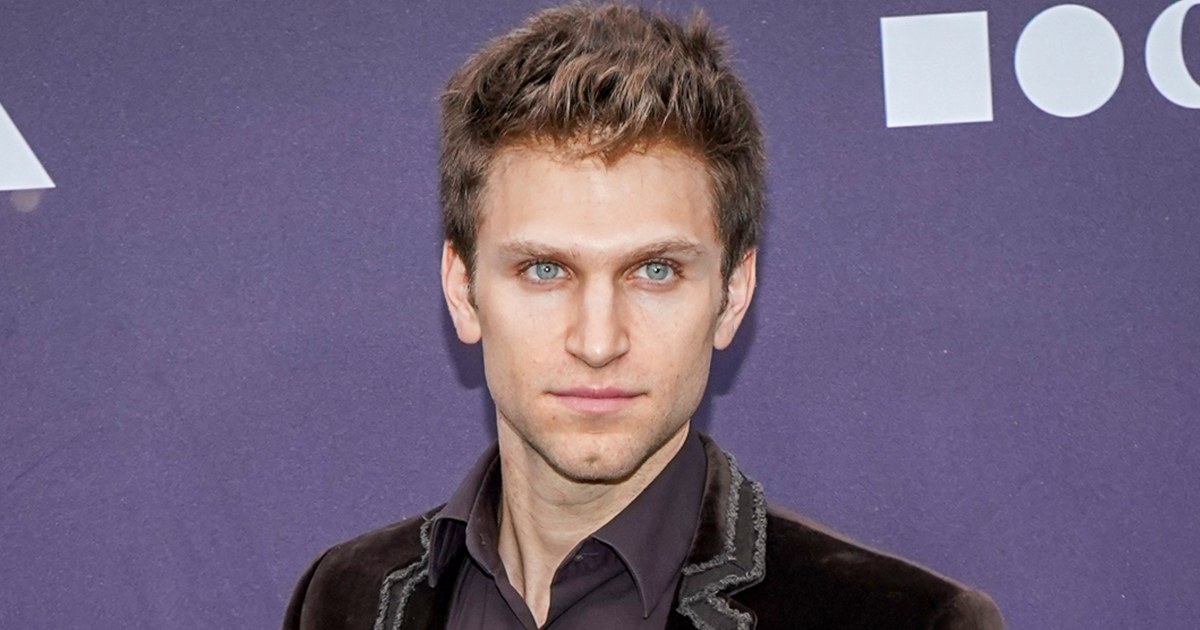
“Pretty Little Liars” actor Keegan Allen was mugged in the parking lot of a West Hollywood grocery store by two masked men who beat him up and stole his watch, the Los Angeles County Sheriff’s Department said Friday.
In the aftermath of the Thursday evening attack, Allen posted video of himself with blood on his face and his left arm.
“I was just, I was just robbed of my watch outside of Laurel Supply,” the rattled actor can be heard saying. “Can you call the police?”
Allen, who is 37, also gave his account of what happened.
00:43
Actor Keegan Allen describes violent mugging incident
00:0000:00
“But these two dudes hit me in the head and pointed a gun at me with, with a knife, and then took off,” Allen said in the footage. “I ah — They had masks on.”
“Took my watch, though,” he added. “Damn it! “
Allen, according to investigators, had just returned to his vehicle from the upscale grocery store on Santa Monica Boulevard when he was confronted by two men.
“One suspect pointed a silver handgun at the victim while the other pointed a knife and demanded the victim’s watch and bracelet,” the sheriff’s department said in a statement. “Shortly after, the victim was struck in the face with the handgun. The suspects obtained the victim’s watch and fled the scene in an unknown vehicle.”
Allen “sustained a laceration to his forehead” but was not hospitalized, the department said, adding that they are “actively investigating this incident” and additional patrols will sent to the area.
In the caption to his Instagram post, Allen wrote, “West Hollywood is not safe anymore.”
“Robbed at gunpoint and knifepoint by two young men that threatened to KILL me over my watch and would have! God said no tonight. My life for a watch,” he wrote.
He then called out Los Angeles Mayor Karen Bass and California Gov. Gavin Newsom, writing, “Let’s hope all these flock cameras … everyone thinks will stop crime can find these very dangerous criminals.”
The city of West Hollywood released a statement in response to the incident, insisting it is “a compassionate and engaged community.”
“The City wants community members to know that community concerns are heard and taken seriously, and that public safety remains the City’s top priority,” the statement said.
Entertainment
The Most Amazing Cosplay of New York Comic Con 2026, Day 1
Given that New York Comic Con hosts a regional qualifier for the Cosplay Central Crown Championships every year, it’s no surprise that cosplayers bring their A-game to the convention. Marvel characters got plenty of love (as always), but we also saw a beautifully detailed Qifrey from Witch Hat Atelier, Firion from Final Fantasy II (in his Dissidia costume, for an extra deep cut), and even a gorgeous take on Krampus. Here’s the best cosplay we saw at New York Comic Con 2026 day one.
Want more io9 news? Check out the best movies and TV shows to stream this month and all the upcoming sci-fi, fantasy, and horror books that should be on your radar.
Entertainment
Seven Havens’ Renewed For 2 More Seasons At Paramount+
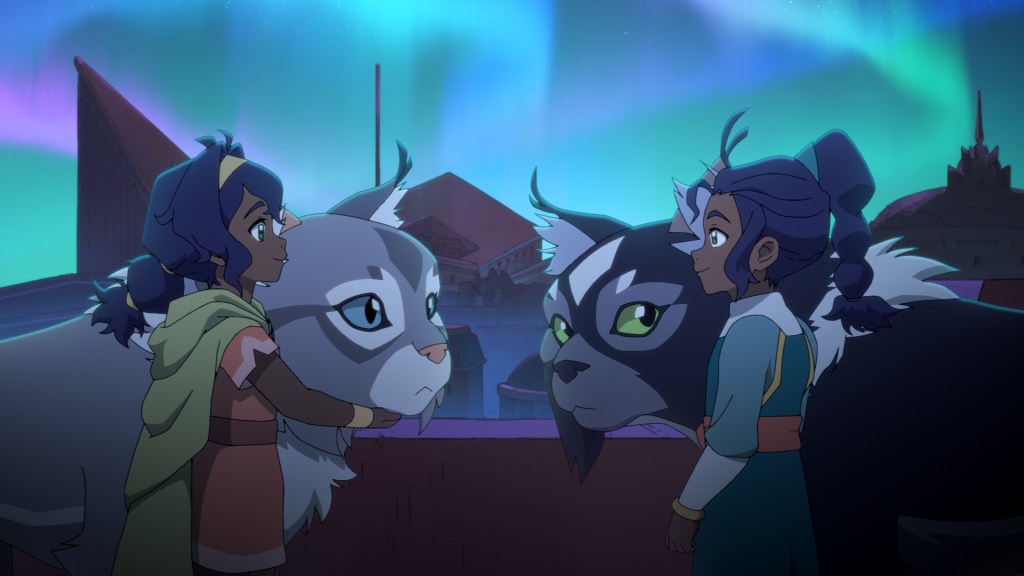
Avatar: Seven Havens has been renewed for two more seasons at Paramount+.
The news was revealed during Friday’s New York Comic-Con panel to coincide with the release of Book 1, confirming that the story of Avatar Pavi and her twin sister Nisha will continue through Books 3 and 4.
Avatar: The Last Airbender co-creators Michael Dante DiMartino and Bryan Konietzko were on hand at the Javits Center to make the announcement, along with fellow Avatar: Seven Havens executive producer Ethan Spaulding and co-executive producer Sehaj Sethi. They were joined by the voices of Pavi, Nisha and Jae: Saheli Khan, Aishu Devan and Major Curda.
The panel, which was moderated by the original voice of Korra, Janet Varney, also gave the audience a peak at the making of the series and a special script-to-screen clip. The latter is embedded below.
Set in the world of Avatar: The Last Airbender, the animated sequel series centers around a young Earthbender who discovers she’s the new Avatar, after Korra from Legends of Korra, in a world shattered by a devastating cataclysm.
Avatar: Seven Havens debuted October 9 with the first three episodes of Book 1. Those will be followed by episodes four through six on Friday, October 16, episodes seven through nine on Friday, October 23, and episodes 10 through 13 on Friday, October 30.
More details on Books 2, 3 and 4 will follow at a later date.
Meanwhile, Avatar Kuruk: Wave of Chaos follows a rebellious teenage Avatar, who bucks thousands of years of tradition by choosing to learn the four elements through globetrotting adventures, staying one step ahead of his angry teacher, rowdy pirates, and chaotic spirits – all while helping the world in his own unique ways.
The series is produced by Avatar Studios and Nickelodeon Animation Studios with co-creator Bryan Konietzko serving as showrunner.


Trump selects Katie Zacharia as White House press secretary
WASHINGTON, Oct 9 (Reuters) – US President Donald Trumpsaid on Friday that he has appointed Katie Zacharia, a communications adviser...

This year’s provocative Palme d’Or winner deserves to be a major Oscar contender.
The Romanian director Cristian Mungiu specializes in naturalistic dramas whose low-key aesthetic choices—long takes, few close-ups, no use of extradiegetic...

Mike Ditka, legendary Chicago Bears coach, dies at 86
Legendary Chicago Bears coach Mike Ditka, who led the team to its only Super Bowl victory in 1986, has died,...


Outrage grows as CDC reportedly poised to fund “unethical” vaccine trial
Outrage has erupted among health experts over news that the Centers for Disease Control and Prevention is still eager to...


‘Pure insanity’: Mathematicians will need years to make sense of OpenAI’s latest drop
“Staggering.” “Overwhelming.” “Unprecedented.” “Surreal.” “Pure insanity.” Those were among the descriptions more than three dozen mathematicians reached for in conversations...


Why Skydance Will Remake the Illustrious Culture of Warner Bros.
There have been many quiet Mondays at the Burbank offices of Warner Bros. Pictures, usually following a bomb like the...


Katie Zacharia will be the next White House press secretary
WASHINGTON — Conservative commentator Katie Zacharia is expected to be named the next White House press secretary, replacing Karoline Leavitt,...


Mike Ditka, legendary Bears coach who led Chicago to its only Super Bowl title, dies at 86
Mike Ditka, a football legend who went from a star tight end for the Chicago Bears to its most famous...


REM sleep linked to lower risk of dementia and Parkinson’s disease
Not all stages of sleep are equal in terms of benefits for the brain. Greater amounts of rapid eye movement...


A Great Home Theater Option All By Itself
I get it: There’s not a ton of room for innovation when it comes to the design of soundbars. They...
-

 Sports2 weeks ago
The Case Keenum game? Veteran QB delivers for Chicago. Bears vs. Eagles takeaways
-

 Entertainment1 week ago
‘Verity’ Posts $4.5M Previews, ‘Digger’ $1.2M
-

 Entertainment1 week ago
Rick Devens Wins In Season 28 Finale
-

 Business2 weeks ago
A 46-foot tunnel boring machine grinding 110 feet under a Virginia harbor chewed a mastodon loose from the seabed and pumped it toward land as slurry, and an operator watching the mud for metal spotte
-

 Business6 days ago
Tesla Cybercab pressure to expand after rocky first month in Austin
-

 Video1 week ago
Meta's Muse: Cute AI Agent Or 'AI Trojan Horse'? | BBC News
-

 Business6 days ago
OpenAI safety employee resigns, claiming the company’s ‘culture is broken’
-
Business1 week ago
Leaked Anthropic IPO prospectus: The US government could hurt our business