
Business
Specs, Horsepower, Charging And Range

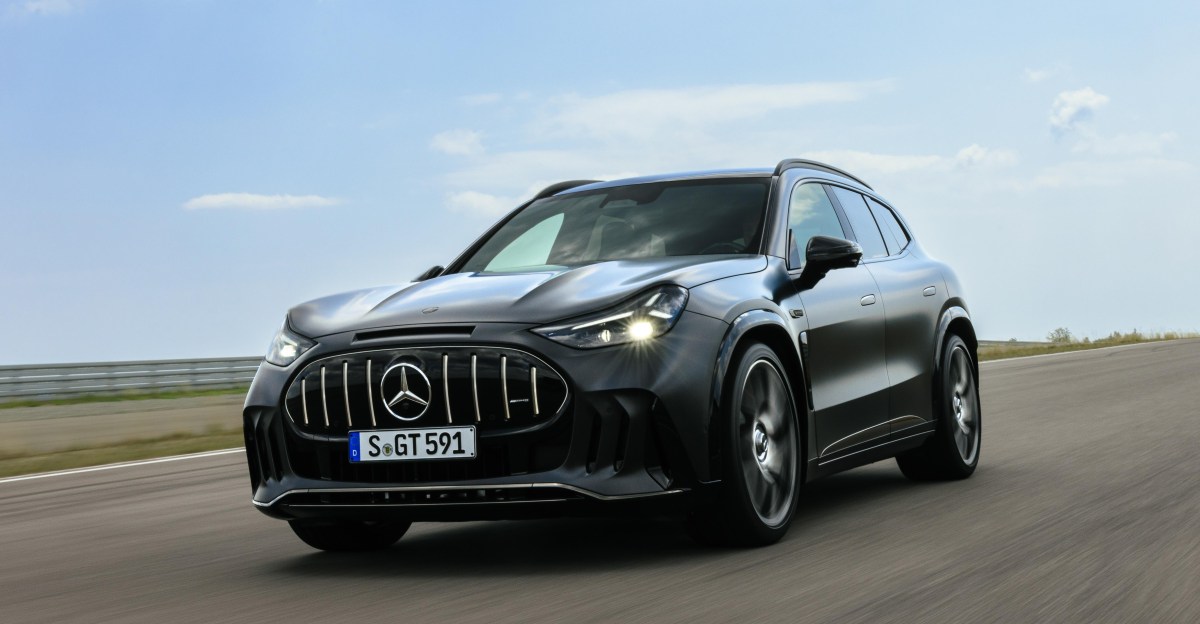
Mercedes-AMG is bringing its sports car DNA to the full-size electric SUV segment. The new GT SUV is officially here with up to 1,153 horsepower, a 0-60 mile-per-hour time of 2.4 seconds, and DC fast charging at up to 710 kilowatts.
The 2028 Mercedes-AMG GT SUV is the first full-size SUV developed entirely in-house by AMG. It’s also the second model based on the brand’s new AMG.EA electric performance platform, following the recently unveiled AMG GT 4-Door Coupe.
Three versions will be available at launch: the GT53 SUV, GT55 SUV, and range-topping GT63 SUV. The electric SUV is expected to arrive at US dealerships in summer 2027.
Three Models, Up To 1,153 HP
Photo by: Mercedes-Benz
The GT55 and GT63 pack three electric motors—one at the front and two at the rear. The front motor can switch off when it’s not needed to save energy, then kick in when extra power or traction is required.
The entry-level GT53 takes a simpler approach, with two electric motors, one at each axle. It also gets a two-speed transmission at the rear, with a shorter first gear for quick acceleration and a taller second gear for more efficient highway driving.
All three models feature AMG Performance 4MATIC+ all-wheel drive, while the GT55 and GT63 can also send power to individual rear wheels for better traction and handling and traction.
Here’s how the three models compare:
280 Miles In 10 Minutes
Photo by: Mercedes-Benz
The AMG GT SUV uses an 800-volt electrical system and comes with one of two battery packs, depending on the model:
GT53 SUV: 106.0 kWh
GT55 SUV: 128.0 kWh
GT63 SUV: 128.0 kWh
The GT55 and GT63 will charge at up to 710 kilowatts, while the GT53 tops out at 600 kilowatts. Mercedes says the GT53 can add up to 236 miles of WLTP-rated range in 10 minutes. The GT55 and GT63, meanwhile, can add up to 280 miles in the same amount of time.
The GT63 has a projected WLTP range of around 385 to 435 miles, depending on the configuration. US EPA estimates haven’t been announced, but the final US ratings will likely differ from the European figures.
A Big SUV That Handles Like An AMG
Photo by: Mercedes-Benz
The GT SUV gets a new AMG Active Ride Control+ suspension system, standard on the GT63 and optional on the GT55. It uses hydraulic dampers and adjustable air springs to control body movements without traditional anti-roll bars.
The setup helps keep the SUV flatter through corners, reduces nose-dive under braking, and limits body lift during acceleration. Mercedes says it also delivers a comfortable ride on longer trips and rough roads.
The GT63 comes standard with the AMG Dynamic Plus Package, which is optional on the GT55. It includes the AMG Race Engineer Control Unit, allowing drivers to adjust motor response, handling, and traction using three rotary controls.
Fake V8 Sounds, Real AMG Drama
Photo by: Mercedes-Benz
Mercedes knows that electric performance cars need more than just quick acceleration to be exciting. That’s where AMGForce Sport+ comes in, adding simulated V8 sounds to the GT55 and GT63, and six-cylinder sounds to the GT53.
AMG says it recorded real engines using more than 100 measurements and 16 microphones. The sounds change with acceleration and driving style, while simulated gear changes add another layer of drama.
Drivers can also “shift” gears using the steering-wheel paddles, while seat vibrations and a custom display help recreate the feel of driving a traditional AMG. The SUV offers seven AMG Dynamic Select drive modes:
Comfort: Smooth driving and better efficiency.
Sport: Sharper responses and more engaging handling.
AMGFORCE Sport+: Simulated AMG engine sounds and gear changes.
Race: Track-focused settings, including Drift Mode, Drag Race, and Launch Control.
Slippery: Extra traction for wet, snowy, or icy roads.
Eco: Reduced power output and settings designed to save energy.
Individual: Customizable settings to suit the driver.
Sporty Looks, Lots Of Tech
Photo by: Mercedes-Benz
The GT SUV looks a lot like its sedan sibling, only… bigger. It has a sharp roofline, a wide stance, muscular wheel arches, and frameless side windows. Six circular rear lights give it a distinctive look (just like on the sedan), while active aerodynamics help balance performance and efficiency.
The Aerokinetics Airpanel system uses movable louvers in the front bumper to manage cooling airflow. The louvers stay closed when extra cooling isn’t needed to reduce drag. An active rear spoiler on the GT55 and GT63 adjusts automatically to improve stability and traction.
Inside, the driver-focused cabin features a pair of large displays, with an optional screen for the front passenger. Here’s how the setup breaks down:
Digital instrument display: 10.2 inches
Central infotainment screen: 14.0 inches
Front passenger display: 14.0 inches, optional
The SUV also gets a three-person rear bench, folding rear seatbacks, and a panoramic glass roof that switches between transparent and opaque modes. Buyers can personalize the cabin and exterior through Mercedes’ Manufaktur program.
There’s room for luggage, too. The GT SUV offers 21.4 cubic feet of cargo space behind the rear seats, plus another 2.8 cubic feet in the front trunk.
Mercedes hasn’t announced US pricing or EPA range estimates yet. More details should arrive closer to the GT SUV’s dealership debut in summer 2027.
Business
TSA quietly reverses benefit for travelers at some US airports
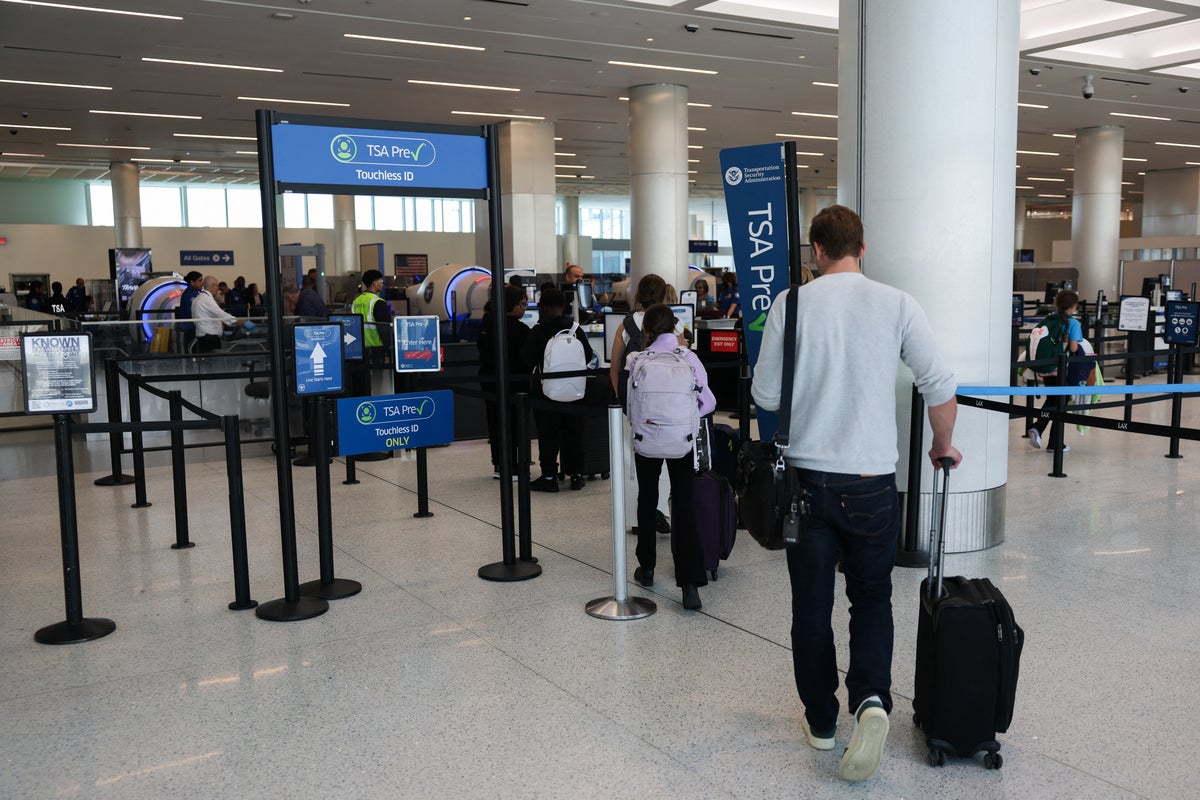
A recently expanded program that allowed TSA PreCheck members to go through airport security without a ticket has been abruptly rolled back, according to officials at affected airports.
The initiative, known as “Gateside by TSA PreCheck,” was reintroduced in September at 13 locations before being rolled out to hundreds of additional airports across the country earlier this month.
It was brought back 25 years after the Sept. 11, 2001 attacks led to increased airport security protocols. The perk allowed members without plane tickets to clear security and access gate areas at certain U.S. airports, reviving a tradition that largely vanished after the attacks.
However, airport officials say the expansion was reversed within days without public notice, including at Denver International Airport, which was among the newly added locations. News outlet KUSA successfully tested the service last week.
“TSA recently returned Gateside by TSA PreCheck operations to the original 13 participating airports, at least for the time being,” Denver airport said in a statement.
Some aviation hubs were left unaware of the change until passengers raised concerns.
At Norfolk International Airport in Virginia, administrators learned the service had been withdrawn after passengers reported issues accessing the booking system.
“We received a few comments on social media and emails from people who said they recently tried to apply via the TSA’s online portal but found ORF was not among the available airports,” the airport’s Chief Marketing and Communications Officer Chris Jones told CNN. “I logged in to check these claims and likewise did not see ORF in the pulldown menu.”
TSA announced the return of the policy with fanfare last month.
“This new program makes it easier to return to the gate for welcomes and send-offs, meet friends during a layover, and enjoy dining and shopping along the way, bringing back the moments that once defined air travel,” TSA said on its website.
But without an airport listed on the official website, prospective applicants cannot request a pass. The TSA has not publicly explained the sudden reduction in service.
The Independent has contacted the TSA for comment.
At present, online booking is restricted to the original 13 participating locations:
Business
Mercedes-AMG’s first ground-up SUV is a 1,150hp electric beast
It may even out-muscle the Porsche Cayenne Turbo Electric and Lucid Gravity.
It may even out-muscle the Porsche Cayenne Turbo Electric and Lucid Gravity.
The Verge Daily
A free daily digest of the news that matters most.
Email (required)
By providing your information, you agree to our Terms of Use and our Privacy Policy. We use vendors that may also process your information to help provide our services. This site is protected by reCAPTCHA and the Google Privacy Policy and Terms of Service apply.
Business
US debt interest costs hit $3 billion a day and jumped 8% in 2026-faster than spending, revenue, GDP

According to Treasury Department data released on Friday, the federal budget deficit widened to $1.99 trillion, 12% worse than the $1.78 trillion gap in fiscal 2025.
That came as revenue increased 3% to $5.4 trillion, lagging behind the 6% bump in spending to $7.4 trillion. Social Security and Medicare were the biggest line items, but in third place was interest payments on the national debt, topping defense spending and Medicaid.
Gross interest costs for fiscal 2026 came in at $1.36 trillion, Treasury data show, with an average interest rate of 3.53%. That’s more than double the rate in 2021, just before the Federal Reserve embarked on an aggressive tightening cycle to rein in inflation.
Net interest payments rose 8% to $1.05 trillion, outpacing increases in total spending, revenue and GDP. In fact, it exceeds real GDP growth of about 2% as well as nominal GDP growth of about 6%.
Fiscal 2026’s net interest costs translate to about $2.9 billion a day, and the Peter G. Peterson Foundation estimated they represent 3.2% of GDP, breaking the previous record set in 1991.
With gross U.S. debt at $40 trillion, publicly held debt at 100% of GDP, and borrowing costs up, interest payments are projected to be the fastest growing portion of the federal budget in the coming years.
At the same time, the debt burden is being increasingly exposed to market volatility that threatens to make interest costs even steeper.
Treasury Secretary Scott Bessent has been issuing more short-term debt to finance the deficit and is retiring long-term obligations.
Now, about one-third of publicly held debt, or more than $10 trillion, is due to mature within the next 12 months, meaning the federal government must roll it over at today’s higher rates.
In February, the Congressional Budget Office projected annual debt interest expenses will reach $2.1 trillion by 2036. But then President Donald Trump launched the Iran war, which sent oil prices and bond yields soaring.
The 10-year Treasury yield is now above 5%, blowing past the CBO’s forecasts for 4.1% this year, 4.2% in 2027, 4.3% from 2028 to 2031, and 4.4% from 2032 to 2036.
If bond yields remain about 1 percentage point above the CBO’s estimates, interest costs will surge to $2.8 trillion, or 5.9% of GDP, by the end of the decade, according to the Committee for a Responsible Federal Budget.
“Higher interest begets more debt, and greater debt begets higher rates and higher interest. Eventually, the whole thing could come crashing down,” CRFB President Maya MacGuineas said last month.
“That’s why Washington needs a fiscal intervention now, before it’s too late. The President, the Treasury Secretary, and Congressional leadership need to understand the severity of this issue. There are no easy fixes, and we can’t just wish this problem away.”
But so far, there’s no sign of much willingness to tackle spending or revenue. Trump has even called for a $5,000 “dividend” check to Americans if Republicans win the midterm elections and is already handing out “rebates” to millions of Medicare and Affordable Care Act enrollees.
Meanwhile, Bessent has argued that heating up the economy further can get the debt under control.
“With 3% growth, we grow our way out of this,” he said at Southern Methodist University last month. “We’ll get to the other side of this Iran conflict, and the underlying economy is very, very strong, and I think reaccelerating.”
But CBO Director Phillip Swagel said last week that faster economic growth is unlikely to keep U.S. debt in check. While stronger economic growth will help by bringing in more revenue for the federal government, it’s not that simple.
Federal spending also boosts growth, which lifts wages that in turn affect outlays on Social Security benefits, he pointed out. A robust economy also tends to send interest rates higher, which adds to debt interest costs.
Assuming interest rates of 4% to 5%, Swagel estimated that nominal GDP growth would have to reach 7%-8%, and real GDP growth would have to hit 5%-6% in order to stabilize the debt.
That’s more than double the latest real GDP pace of 2.2% in the second quarter. Meanwhile, even bullish Wall Street forecasts put full-year GDP growth at 2.5%.
“So growth will help, but it’s probably not plausible that growth alone will stabilize our fiscal trajectory,” he said. “So then we’re left with changes in revenues and changes in spending, and those are political choices.”
Business
Tesla Flying Car’s 4 Thrusters Meet Aerospace’s Bar [2026]
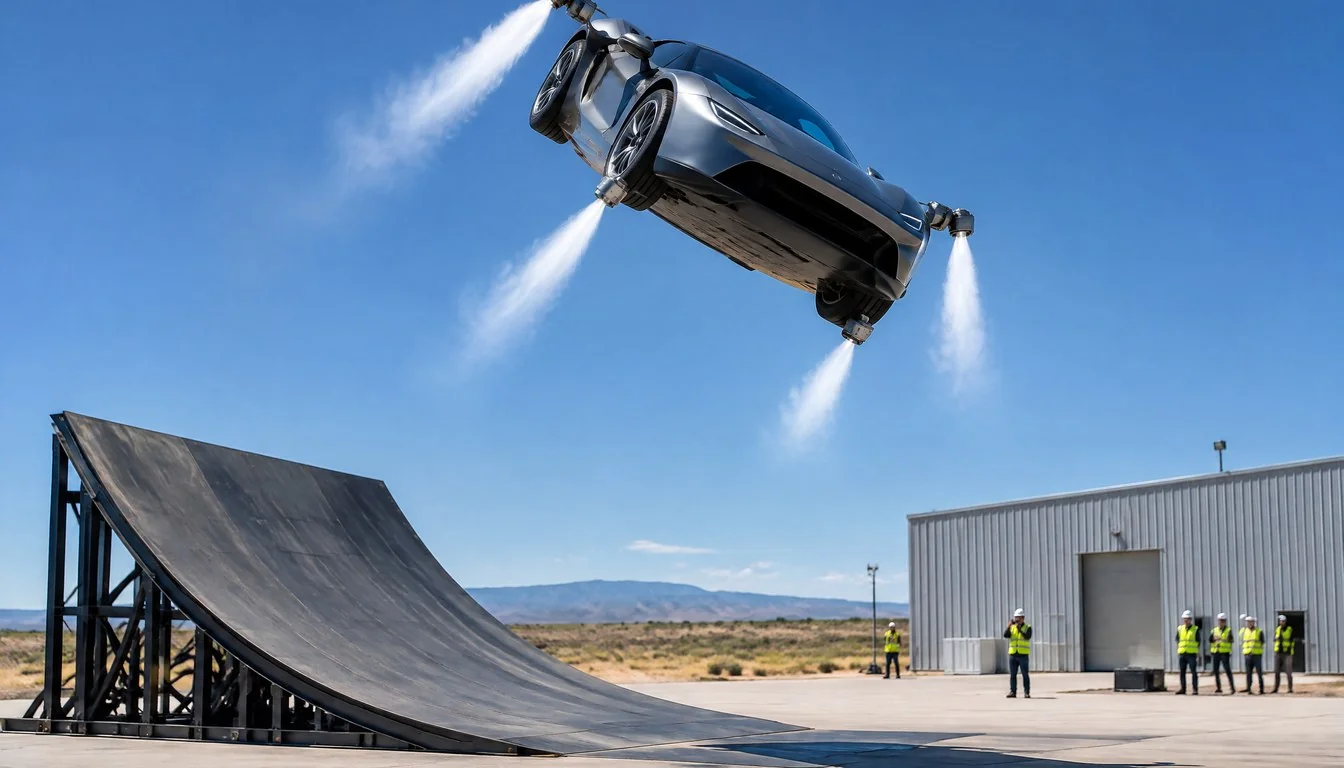
Tesla’s Roadster left the ground for a few seconds on October 15, 2026, at a SpaceX test facility in McGregor, Texas. Elon Musk called it proof that “flying cars are real,” according to Yahoo. What hasn’t gotten nearly as much attention in the day since the demo is the much harder question sitting underneath the viral clip: does a car that can hop off a ramp using thrusters have anything close to the hardware a regulator would ever certify for repeated, occupied flight?
That is the gap this piece digs into. Not the stunt itself, not the nozzle count, not the price tag Tesla still hasn’t disclosed, but the actual aerospace engineering standard the Roadster’s thruster system would need to clear before Tesla’s stated 2028 production target becomes real. It is a standard that NASA and SpaceX themselves have spent six decades building, and it is a standard that every flying-car hopeful before Tesla, from Moller’s Skycar to Klein Vision’s AirCar, eventually ran into and could not fully clear.
·
Google · Preferred Sources
Don’t miss new tech stories on Google
Add Tech Insider once in the Google app and our stories appear in your news suggestions.
Add Now
What Tesla Actually Showed on October 15
According to CNN, the two-person Roadster drove up a curved, inverted ramp at the SpaceX site, launched briefly into the air, performed a midair flip, and landed using thrusters. Reports describe ten thrusters firing during the maneuver, built on compressed-air, SpaceX-inspired technology rather than a conventional combustion rocket engine. Musk and Tesla executives have pointed to 2028 as the target for production, though Tesla has not disclosed a price.
One report put the car’s acceleration at 0 to 60 mph in 0.81 seconds during the thruster-assisted segment of the demo, and certain versions were said to be capable of exceeding 230 mph. Those are eye-catching figures, and they are the numbers that have dominated coverage. But acceleration and a single successful flip tell you almost nothing about whether the underlying hardware is safe to repeat a thousand times, in the rain, with a battery already partially depleted, carrying two occupants who did not sign up to be test pilots.
Tesla has not published the thruster system’s working pressure, per-nozzle thrust output, valve response time, or a failure-mode analysis for what happens if one thruster underperforms mid-maneuver. Without that data, outside engineers cannot independently verify how close this hardware actually is to something a regulator could sign off on. That’s not a knock on Tesla specifically. It is simply how every aerospace certification process starts.
Reaction Control Systems: The Standard Nobody’s Measuring Tesla Against
The compressed-air thrusters strapped to the Roadster belong to a hardware category aerospace engineers call a reaction control system, or RCS. It’s the same category of hardware that lets a spacecraft rotate, translate, and dock without relying on aerodynamic surfaces. The Roadster’s demo, using SpaceX-derived cold-gas thruster hardware at the McGregor facility, is conceptually the same idea NASA and SpaceX have used for decades. The difference is in how that hardware is engineered for redundancy.
In aerospace engineering, redundancy isn’t about simply bolting on more thrusters. It’s about failure tolerance: proving that a single stuck valve, a blocked nozzle, a leaking line, a pressure-regulator fault, or a flight-computer glitch does not result in loss of control. A vehicle that rotates freely in the air needs control across six degrees of freedom, three axes of translation and three of rotation, which is an entirely different control problem than anything a car’s brakes, tires, or suspension were ever designed to solve.
NASA’s Apollo spacecraft addressed this by arranging its reaction-control engines in separate, isolatable quads, so that a failed engine or a failed component in one cluster could be shut off without stripping the vehicle of control authority. The Space Shuttle orbiter split its RCS hardware between forward and aft sections with multiple propellant-feed paths, allowing control to survive specific failures, at the cost of extensive qualification testing, leak detection protocols, and mission-specific fault procedures. Neither program treated “it worked once” as evidence of anything. Both treated redundancy as the entire point of the exercise.
SpaceX’s Own Dragon Capsule Shows the Distance Still to Travel
The most relevant comparison may not be a 1960s NASA program at all. It’s the company that built the Roadster’s own thrusters. SpaceX’s Dragon capsule uses redundant Draco thrusters alongside redundant avionics, independent computers, independent sensors, and separate power distribution paths, all layered specifically so that no single hardware fault can end a crewed mission. That architecture is the product of years of design iteration and government oversight, not a single demonstration flight.
A ten-thruster layout on a car has far less physical room for that kind of separation than a capsule built around propulsion redundancy from the start. If thrusters are split between lift and attitude control, losing one could be survivable in a minor way, or it could remove most of the vehicle’s vertical thrust or pitch authority entirely, depending on which thruster fails and when. Tesla has not published the kind of single-point failure analysis that would answer that question, which means it remains an open one rather than a settled one.
It’s also worth noting that no FAA approval has been granted for the thruster system, and the demo itself was reportedly performed without anyone inside the vehicle during the airborne portion, removing occupant survival, egress, and crash protection from what was actually tested on October 15.
Flying Cars That Flew Before Tesla, and What Stopped Them
Tesla is not the first company to get a vehicle off the ground and call it a breakthrough. The history of flying-car hardware is mostly a history of successful demonstrations followed by years, sometimes decades, of certification purgatory. Paul Moller’s Skycar program spent years as a working prototype that never cleared normal operational certification for sale. AeroMobil built several generations of roadable aircraft that could genuinely fly, but each one still had to satisfy full aircraft-certification requirements and solve the control-transition problem between road and air modes. PAL-V took the gyrocopter route, which flies, but requires the owner to hold an actual pilot’s license and comply with aviation regulation on top of ordinary driving rules. Klein Vision’s AirCar demonstrated a working road-to-flight transformation and completed test flights, yet it too remains bound by the same certification and production path every aircraft must clear before it reaches a general buyer.
What links all four programs is not a lack of ambition or even a lack of working hardware. Each one proved a vehicle could leave the ground. None of them proved, to a regulator’s satisfaction, that the vehicle could do so safely, repeatably, and with a maintenance and failure record that justifies putting an ordinary buyer inside it without a pilot’s license. That is the exact test Tesla’s Roadster has not yet taken.
The Checklist Between a Demo and a Certified Flying Car
Strip away the showmanship and the list of what still needs to be shown is fairly concrete. It includes tank working and proof pressures with a defined burst margin, total vehicle mass at maximum gross weight during flight, per-nozzle thrust and flow-rate data, a demonstrated thrust-to-weight ratio at both maximum and minimum tank pressure, and a control-authority analysis for what happens after each individual thruster, valve, sensor, or flight-computer failure. It also includes repeated-cycle reliability data, since a single successful flight proves a system can work once, not that it will work on the thousandth attempt.
Some of this has already been catalogued elsewhere. Reporting on the Roadster’s compressed-air tanks has focused on the packaging and weight burden those tanks add before they produce any usable lift, and a separate breakdown of confirmed versus unproven claims from the event lays out exactly how much of the demo remains undocumented. None of that reporting has closed the certification gap. It has only made the size of the gap more visible.
Nine Years From Promise to Demo
Musk’s flying-Roadster idea is not new. In 2017, shortly after Tesla first unveiled the second-generation Roadster, Musk said the car might “maybe” be able to fly “short hops,” adding that it was “certainly possible” and calling it “just a question of safety,” framing rocket technology applied to a car as opening up “revolutionary possibilities,” according to CNBC’s Make It. That framing is worth remembering now: even Musk, at the time, described the safety question as the open one, not the flight capability itself. Nine years later, after a demo that proved the car can leave the ground, the safety question he raised in 2017 is still the one without a public answer.
At the October 15 reveal itself, Musk described the result differently, telling the crowd “it can basically fly like a rocket,” according to Car and Driver. He also framed the achievement as a joint engineering effort, saying the demo was “the culmination of incredible work by Tesla and SpaceX engineers working closely together to make something that you haven’t seen in any movie,” per USA Today, and telling the audience they were about to see “the results of what happens when you have a collaboration with the world’s best car company and the world’s best rocket company,” according to Investor’s Business Daily.
Those quotes capture the tone of the night. They do not, on their own, substitute for the pressure, failure-mode, and reliability data that separates a demo from a certified product.
What One Aviation Expert Told the Public
Not everyone who watched the demo came away describing it as flight in the aviation sense. One aviation expert quoted in coverage of the event described the maneuver as closer to “hopping” than genuine, sustained flight, and no long-range flight was demonstrated during the event. That distinction matters for anyone trying to size up how far along this hardware actually is. A hop proves thrust and control for a few seconds under controlled conditions. Flight, in the certified sense regulators use the word, means sustained, repeatable, fail-safe operation across a defined envelope. Those are not the same claim, even if they produce similar footage.
Separately, one report noted that Tesla’s own website includes language indicating the planned flying model is not approved for public road use, which is itself a signal about how far the regulatory picture still has to move before 2028.
Market Impact: What Investors Are Actually Pricing In
The demo landed at a moment when Tesla and SpaceX’s technical and corporate ties are already under scrutiny, and reports note the reveal has fueled ongoing speculation about a potential Tesla-SpaceX merger. For investors, the near-term read is less about whether the Roadster flies and more about what the hardware collaboration signals about Tesla’s broader positioning as an engineering company rather than a pure automaker. A halo-car demo that generates global headlines has real marketing value regardless of the certification timeline, and coverage of the event from the Washington Post framed it as a deliberate spectacle built to dominate the news cycle rather than a near-term product rollout.
Component suppliers in the high-pressure vessel and pneumatic valve space stand to benefit from any serious move toward production, since the certification checklist above requires exactly the kind of tank, valve, and regulator qualification work that specialized aerospace suppliers already do for other clients. The scale of that opportunity depends entirely on whether Tesla treats 2028 as a hard production date or, as happened with the original second-generation Roadster announced in 2017, a target that slips repeatedly while the underlying hardware matures.
Competitive Landscape: How Tesla’s Approach Differs From eVTOL Makers
Dedicated eVTOL companies, the firms building electric vertical-takeoff aircraft meant to operate as air taxis, have spent years working through FAA certification processes specifically because they know a demo flight and a certified aircraft are different products entirely. A comparison of Tesla’s approach against established eVTOL rivals shows those companies have generally prioritized certification groundwork before public spectacle, the inverse of what Tesla did on October 15.
That inversion is arguably the whole point of Tesla’s strategy. A splashy demo generates attention and reinforces Tesla’s brand as a technology leader well before any certification paperwork is filed, while dedicated eVTOL developers build credibility slowly and quietly with regulators first. Both strategies carry risk. Tesla’s risk is a credibility gap if the certification work does not materialize on anything like the stated 2028 timeline. The eVTOL industry’s risk is that years of quiet certification work generates far less public excitement and investor attention along the way.
Other hardware-driven flying-car efforts outside the eVTOL category, including air-racing ventures built around similar thruster and lift concepts, face a version of the same tradeoff, chasing spectacle and sponsorship dollars while the harder certification work happens in parallel or gets deferred.
Historical Context: Why Cold-Gas Thrusters Are a Known Quantity
It’s worth separating what’s genuinely new here from what isn’t. Cold-gas, compressed-air thruster technology itself is not new; it has been used in spacecraft reaction control systems for decades precisely because it avoids the combustion hazards of a hot-gas rocket engine. What’s novel about the Roadster demo is packaging that kind of hardware into a road-legal, two-person car chassis and firing it in front of a live audience. The underlying physics is familiar to aerospace engineers. The application is not.
That familiarity is also why the redundancy standard exists in the first place. Cold-gas systems are simple relative to combustion rockets, but low specific impulse means useful thrust duration requires meaningful tank volume and pressure, which is exactly the packaging and weight problem engineers flagged after the Roadster’s tank specifications became public. Simplicity in the propulsion chemistry does not translate into simplicity in the redundancy engineering required to make that propulsion safe for repeated, occupied use.
Five Predictions for the Road to 2028
Tesla will face pressure to publish propulsion performance and failure-mode data well before 2028, as independent engineers and regulators push back on the lack of disclosed specifications from the October 15 demo.
A dual regulatory track, covering both road-vehicle rules and aviation-style oversight of the thruster system, will emerge as the single biggest determinant of whether 2028 holds as a real production date.
Expect additional public demonstrations before 2028, each likely showing incremental capability (longer airtime, more complex maneuvers) rather than a jump straight to sustained flight.
Aerospace component suppliers specializing in pressure vessels, valves, and redundant avionics are likely to see inbound interest from Tesla and its contractors regardless of whether the Roadster itself ships on schedule.
The “is it really a flying car” debate will keep running in parallel with the certification process, since public perception of what happened on October 15 is already diverging from the far narrower set of facts Tesla has actually confirmed.
Why This Matters Beyond One Viral Demo
The Roadster demo is a genuinely significant hardware moment, not because a car flew for a few seconds, but because it put SpaceX-derived reaction control hardware in front of a global audience and framed it as a near-term consumer product rather than an aerospace research project. That framing raises the bar for how Tesla’s claims will be judged going forward. Every future Roadster update will now be measured against the aerospace redundancy and certification standard this piece lays out, whether Tesla chooses to engage with that standard publicly or not.
For now, the honest summary is the one NBC 5 Dallas-Fort Worth and other outlets have converged on: Tesla showed a car that can briefly leave the ground using thruster hardware borrowed from SpaceX. Whether that hardware can be engineered, tested, and certified to the standard a mass-produced flying car would require by 2028 remains, in the most literal sense, unproven.
Frequently Asked Questions
Did the Tesla Roadster actually fly on October 15, 2026?
The Roadster drove up an inverted ramp, launched briefly into the air, performed a midair flip, and landed using thrusters at a SpaceX facility in McGregor, Texas, according to reports. One aviation expert described the maneuver as closer to “hopping” than sustained flight, and no long-range flight was demonstrated.
How many thrusters does the Roadster use?
Reports describe four thrusters firing during the demonstration, built on SpaceX-inspired compressed-air, cold-gas technology.
What is a reaction control system, and why does it matter here?
A reaction control system, or RCS, is the thruster hardware spacecraft use to rotate and translate without aerodynamic surfaces. It matters because the redundancy and failure-tolerance standards aerospace engineers apply to RCS hardware, as seen on Apollo, the Space Shuttle, and SpaceX’s own Dragon capsule, are the standard the Roadster’s thruster system has not yet publicly been shown to meet.
Has the Roadster’s flying system been approved by the FAA?
No FAA approval for the thruster system has been disclosed. One report also noted Tesla’s own website indicates the planned flying model is not approved for public road use.
When will the flying Roadster go into production?
Musk and Tesla executives have pointed to 2028 as the production target. Tesla has not disclosed a price.
Have other companies built flying cars before Tesla?
Yes. Moller’s Skycar, AeroMobil, PAL-V, and Klein Vision’s AirCar all demonstrated working flight hardware in prior years. None has reached mass-market certification and sale in the way a conventional car or aircraft would require.
Was anyone riding inside the Roadster during the airborne portion of the demo?
Reports indicate the demonstration’s airborne segment was performed without an occupant, which means occupant safety, egress, and crash protection were not part of what was publicly tested.
How does this compare to SpaceX’s own thruster technology?
SpaceX’s Dragon capsule uses redundant Draco thrusters paired with redundant avionics, sensors, and power systems, an architecture built over years of design iteration and regulatory review. The Roadster’s four-thruster demo has not publicly been shown to carry the same level of redundancy or failure-tolerance engineering.
Related Coverage
Business
The Iran war has cost the average U.S. household the equivalent of almost $2,000, top economist says

Motorists and airline passengers have borne the clearest consequences as the fighting disrupts Middle East oil shipments. Some companies have raised delivery charges or prices on selected products. Yet the higher cost of making and moving goods has not translated into across-the-board price increases at stores.
Shoppers may not be spared indefinitely, though. Many companies have absorbed at least part of their higher production and transportation costs. A September jump in wholesale prices suggests some businesses may eventually charge more if fuel prices stay elevated.
The chief economist at Moody’s Analytics, Mark Zandi, estimated this week that the war has cost the average U.S. household the equivalent of almost $2,000, including $1,100 in higher energy prices, $540 in higher interest rates and $360 in military costs. The energy portion is growing by $50 a week at current fuel prices, Zandi said.
Here’s a look at price changes since the war began and which goods and services could be most susceptible to increases in the months ahead:
Filling up fuel tanks is noticeably more expensive
BEFORE THE WAR: Regular gasoline averaged $2.98 a gallon nationwide and diesel $3.76 almost eight months ago, according to AAA. Gas peaked at $4.56 in May, below its 2022 record, while diesel reached a record $6.53 in September.
WHAT’S REACHED CONSUMERS: On Friday, the national average stood at $4.33 a gallon for gasoline, or 45% above its prewar level, and was up 68% for diesel at $6.33, AAA reported. Gas typically costs less in the fall, and this is the first October a gallon of regular gas has cost more than $4 on average, it said.
Expensive diesel is less apparent to most U.S. residents but contributes to overall inflation by raising the cost of moving goods.
WHAT COULD COME NEXT: Shipping through the Strait of Hormuz remains dangerous and constrained, prolonging uncertainty over oil supplies and fuel prices. The Energy Information Administration said this month that it expected winter heating costs to be 21% higher for the roughly 3% of households that rely on heating oil, most of them in the Northeast, assuming the weather is mild.
Higher airfares are hard to escape too
BEFORE THE WAR: Jet fuel averaged $99 a barrel worldwide before the war, doubled to $209 in April and climbed back to nearly $195 in September after a spring decline, according to the International Air Transport Association.
WHAT’S REACHED CONSUMERS: Airlines have raised ticket prices and fees, trimmed schedules and shelved plans to add flights. Airfares cost about 22% more in September than they did a year earlier, the consumer price index showed. Average domestic airfares rose from $405 in late 2025 to $445 in the April through June period of this year, excluding optional fees, according to the U.S. Bureau of Transportation Statistics.
WHAT COULD COME NEXT: Fuel price volatility makes it harder for airlines to plan and could discourage them from lowering fares even when fuel prices start to fall, analysts said. United Airlines pulled some December flights and warned of further possible cuts in 2027. Fewer available seats could mean less pressure to hold ticket prices down.
Higher fares have covered substantial portions of higher fuel costs for domestic airlines but not enough to prevent a squeeze on their third-quarter profits, according to consensus estimates.
Any growth in grocery prices pains Americans after multiple years of food inflation
BEFORE THE WAR: The U.S. Department of Agriculture initially expected grocery prices to rise 1.7% this year, below the historical annual average. USDA now expects a still comparatively modest 2.4% increase.
WHAT HAS REACHED CONSUMERS: Individual food prices can be volatile, and it’s not clear how much of this year’s expected increase is due to the war and how much is due to other factors, including tariffs, unfavorable weather and higher labor costs.
Cornell University economics professor Chris Barrett said he was surprised grocery prices haven’t risen faster given higher costs for diesel, fertilizer and refrigeration. USDA revised its 2026 fertilizer cost estimates for major crops upward by 9% to 13% and fuel, lubricant and electricity estimates by 33% to 41%.
Barrett suspects retailers are absorbing some increases to avoid alienating fed-up customers after multiple years of food inflation. Grocery prices in September were about 22% higher than five years earlier.
WHAT COULD COME NEXT: Experts have warned that fresh produce and other frequently replenished perishables could respond quickly to higher transportation and refrigeration costs. Barrett sees “very little prospect” of a significant reduction in fuel prices that could ease the pressure on farmers and truckers.
A strengthening El Niño weather pattern could damage crops through drought, heat or flooding, the U.N. Food and Agriculture Organization warned. That could lift commodity prices, although ample inventories and good harvests elsewhere may limit the impact on groceries.
Rubber meets the road when it comes to shoe prices
BEFORE THE WAR: Nearly all shoes sold in the U.S. are imported, and roughly 70% of the materials in a synthetic shoe are petrochemical-based, according to Footwear Distributors and Retailers of America. The industry trade group opposed Trump administration tariffs last year.
WHAT HAS REACHED CONSUMERS: Footwear prices were 3.4% higher in September compared to 12 months earlier, according to the consumer price index. Men’s shoes went up the most, by 4.5%.
WHAT COULD COME NEXT: While import costs are down from a year ago, the footwear trade group said oil prices, tariffs and geopolitical uncertainty are likely to keep retail shoe prices rising into 2027.
“Footwear companies are working hard to keep shoes affordable, but there is a limit to how much additional cost businesses can absorb before those pressures reach consumers,” FDRA President and CEO Matt Priest said.
Transportation costs add up throughout product supply chains
BEFORE THE WAR: The cost of moving goods and delivering packages was already increasing and depended on more than fuel.
WHAT HAS REACHED CONSUMERS: It’s not clear. September producer-price data showed that transportation and warehousing of goods sold to businesses as inputs cost 10.2% more than a year earlier. Prices for truck and water freight services each rose 19.3%. The indexes measure what transportation providers charged but do not show how much of the increase appeared in retail prices.
Consumers have felt the higher costs most directly when sending packages. The U.S. Postal Service raised base prices 8% in April for Priority Mail Express, Priority Mail, Ground Advantage and Parcel Select, citing increased transportation costs. UPS, FedEx and DHL also impose fuel surcharges on many shipments.
WHAT COULD COME NEXT: Shipping costs could remain elevated during the holiday season even if oil prices ease. Third-party provider AFS Logistics and financial services company TD Cowen project record parcel costs this quarter and the highest truckload rates since early 2022.
“We expect fuel to drive elevated transportation costs for the foreseeable future,” AFS Logistics CEO Andy Dyer said.
Although UPS and FedEx surcharges could decline if diesel and jet fuel prices fall, changes to carrier surcharge formulas, holiday fees and tight trucking capacity could keep total shipping bills elevated, AFS said.


Trump stumps in deep-red Kentucky as GOP tries to hold its turf
President Donald Trump continues to rally in conservative strongholds ahead of the midterm elections, amid growing signs that some deeper...


Sean ‘Diddy’ Combs transferred to new prison in Pennsylvania: BOP
Rap mogul Sean “Diddy” Combs was moved from a New Jersey prison to one in Pennsylvania, the Federal Bureau of...


TikTok bans Musk documentary account
Larry Ellison’s TikTok has shut down the promotional account for Alex Gibney’s Elon Musk documentary. Larry Ellison’s TikTok has shut...


ALDS postponement leaves Guardians ticket holders upset with altered game assignments
Some Cleveland Guardians fans got screwed by the rain in more ways than one on Friday night. For starters, Game...

TSA quietly reverses benefit for travelers at some US airports
A recently expanded program that allowed TSA PreCheck members to go through airport security without a ticket has been abruptly...


Harry Styles Concert Doc Coming From John Wilson
Harry Styles has invited one of the buzziest documentary filmmakers on the market behind the curtain of his historic Madison...


Josh Brolin says he became a full-time stock trader after Hollywood stopped calling
Josh Brolin said he wasn’t taken seriously as an actor until 2007’s Oscar-winning “No Country for Old Men” — and...


Tyler Perry Purchases Puerto Rico Home For $30 Million
Madea may soon pop up in Puerto Rico … because Tyler Perry bought a massive mansion on the island —...


Urgent warning as drug 10 times more powerful than fentanyl claims first LA victim
Los Angeles health authorities have issued an urgent warning about an opioid that is 10 times more powerful than fentanyl...


Callum and Jake Robinson killers get 158-year sentences in Ensenada
NEWYou can now listen to Fox News articles! Three men in Mexico received 158-year prison sentences Friday for the murders...
-

 Entertainment2 weeks ago
‘Verity’ Posts $4.5M Previews, ‘Digger’ $1.2M
-
 Business2 weeks ago
Tesla Cybercab pressure to expand after rocky first month in Austin
-

 Business2 weeks ago
OpenAI safety employee resigns, claiming the company’s ‘culture is broken’
-

 Business2 weeks ago
Energy Secretary Chris Wright says Trump was “well aware of the risks to energy flows” before launching Iran war
-
 Entertainment2 weeks ago
Disney pays $115 million for Yamaha’s Orange County headquarters
-

 HealthNews2 weeks ago
Des Moines clinics stumped by unidentified virus
-

 Business2 weeks ago
Vistra Stock, Constellation Soar On AI Nuclear Energy Deals
-

 Entertainment1 week ago
Taylor Swift and Travis Kelce hold hands on NYC date night amid bitter feud with neighbors