
Tech
How a photo of a person’s face could help predict whether they’ll survive cancer treatment

A simple selfie could hold surprising clues to your overall health and longevity, especially among people with cancer.
Researchers at Mass General Brigham in Boston have developed artificial intelligence models that they say can predict a cancer patient’s biological age and chances of survival using nothing more than a single photograph of their face.
The research, published Monday in the journal The Lancet Digital Health, suggests that facial analysis could become an additional tool for doctors to consider when evaluating a patient’s chances of survival and when deciding which treatment approaches may work best for their cancer patients.
“I was pretty surprised to find out that we could pick up signs of mortality risk from just a facial photograph,” said study author Dr. Raymond Mak, a radiation oncologist at Mass General Brigham Cancer Institute and a faculty member in the Artificial Intelligence in Medicine program at Mass General Brigham.
The AI models – trained on more than 40 million facial images – specifically assess different aspects of the face to gauge a cancer patient’s overall health and biological age. Unlike chronological age, which measures the number of years a person has lived, biological age reflects how well the body has aged at the cellular and physical level.
“The age estimation algorithm is looking at the area around the temples, the area on the forehead, above the eyes and then what we call the nasolabial fold, the line that connects the nose down to the corner of your mouth,” Mak said of what parts of the face the AI models consider when assessing biological age.
“In contrast, the mortality risk prediction algorithm is looking at a totally different part of the face,” Mak said. “It’s looking at the bridge of the nose and the area under the eyes.”
Eerily, the same regions of the face that the AI model assesses to predict biological age and survival are the same parts that Greek physician and philosopher Hippocrates referenced in the Book of Prognostics, written around 400 B.C., when he described “the nose sharp, the eyes sunken, the temples fallen in” as signs of muscle wasting and mortality risk.
“To think that our algorithms might be replicating that wisdom of Hippocrates from millennia ago was mind-blowing to us,” Mak said.
The AI algorithms had no awareness of Hippocrates’ ancient texts, because “our algorithms are trained purely on face photographs and then whether somebody died or not, or their age,” Mak said.
“It does not factor in the text, knowledge or wisdom that’s aggregated on the internet,” he added. “So hearing Hippocrates echo over millennia in our algorithms was very eerie.”
Mak and his colleagues originally built a robust AI model called the Foundation Artificial Intelligence for Health Recognition-Face (FAHR-Face) that was trained on more than 40 million facial images spanning diverse ages and ethnic backgrounds.
The model was then fine-tuned and used as a foundation to build two other models that could perform specific tasks: The FAHR-FaceAge model estimates the biological age of someone based on a single photo, and the FAHR-FaceSurvival model predicts a cancer patient’s chances of survival by combining facial features with other clinical information.
With the FAHR-FaceSurvival model, the researchers found that among 122 cancer patients who were indicated by the model to have a high risk of death, more than half – 52.5% – died within 90 days of the assessment, as predicted. In comparison, only about 2% of the 975 patients in the lowest-risk FAHR-FaceSurvival group died within 90 days.
When evaluating the FAHR-FaceAge model, the researchers found that 21% of the 1,060 patients whose biological age was more than 20 years above than their chronological age died within 90 days. In comparison, about 6% of the 4,195 patients with biological ages at least 10 years younger than their chronological age died within 90 days.
The researchers found that cosmetic changes to the face – such as surgery, injectables like Botox or makeup – did not affect the AI models’ performance.
‘A promising proof of concept’
The study authors emphasize that their AI models are not intended to replace physicians or existing clinical evaluations. Instead, they describe the technology as an emerging tool that could someday help inform a doctor’s assessment of a patient’s health or their decision-making around treatment options.
“If we can pick up accelerated aging or higher mortality scores early, we might be able to screen for those or identify patients who may benefit from further testing for serious conditions earlier,” Mak said.
And while the new study was conducted only among cancer patients, Mak said more research could reveal whether similar findings may emerge among otherwise healthy people who may be interested in their longevity.
The study’s use of AI technology is fascinating but still needs to be evaluated clinically, said Dr. Wilbur Lam, research chair and professor of pediatrics and biomedical engineering at Emory University.
“This is an extremely compelling study that stems from a large data set and its associations between facial images and biological age as well as cancer survival risk appear to be robust. Its true clinical utility, however, will need to be demonstrated prospectively,” Lam, who was not involved in the study, said in an email.
“Moreover, as the authors themselves allude to, whether this tool can be accurately used for specific subpopulations remains a question,” he said. “For example, how strong the effects are for people with specific facial features, skin color, age groups will also need to be prospectively tested in order for the technology to be clinically implemented.”
The study provides “convincing evidence” of a statistical link between facial appearance and survival in cancer patients receiving radiotherapy, Miroslaw Bober, professor of video processing and machine intelligence at the University of Surrey, said in a statement distributed by the UK-based Science Media Centre.
But “predicting an outcome is not the same as explaining it. Despite the references to ‘biological age’, the AI estimates age from facial appearance rather than directly measuring any underlying biological ageing process,” said Bober, who was not involved in the study.
“The authors link the facial regions the AI relies on to the ‘look of dying’ described by doctors. However, the study did not test whether the AI recognises anything a doctor would not,” Bober said.
“It has not shown that these predictions add clinically useful information beyond doctors’ assessments of a patient’s general health and fitness, which were not measured in the study,” he said. “This is a promising proof of concept, but it is not ready for clinical use. The tool still needs testing against doctors’ own judgement and across different hospitals and patient groups.”
Tech
Trump administration asks Supreme Court to allow border wall construction to resume in Big Bend region
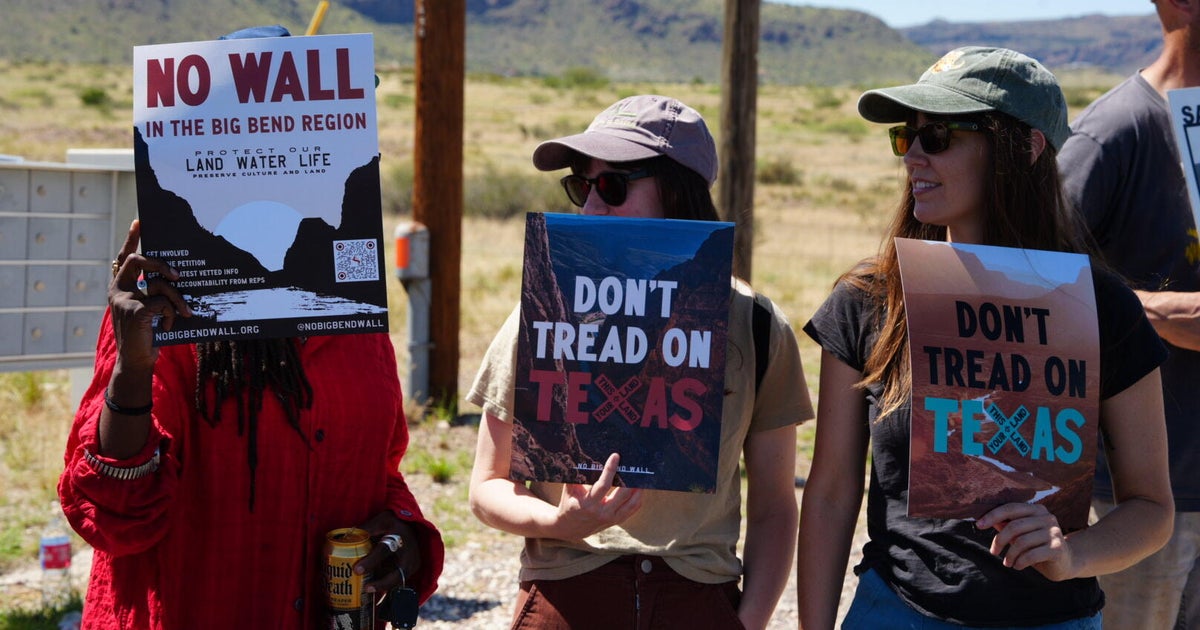
Washington — The Trump administration on Wednesday asked the Supreme Court to allow it to resume for now construction of a border wall and other infrastructure through a remote area of West Texas that includes Big Bend National Park.
The Justice Department urged the high court to lift a lower court injunction that temporarily bars the Department of Homeland Security from building the barrier or related infrastructure in the Big Bend Sector, which covers more than 500 miles of the U.S.-Mexico border and 77 counties in Texas.
“The district court’s injunction significantly frustrates the government’s ability to stop the flow of illegal aliens and drugs across the southern border,” Solicitor General D. John Sauer wrote in the request for emergency relief. “The Secretary identified the Big Bend project areas at issue because of the high rates of illegal-alien crossings and drug smuggling in the region over the past several years.”
President Trump’s promise to build a wall along the southern border has been a hallmark of his immigration agenda for the last decade. But earlier this year, the president’s plans were met with significant pushback from lawmakers in both parties, cattle ranchers and local law enforcement officials in Texas when photos and videos shared to social media showed bulldozers arriving at Big Bend National Park.
In response to the backlash, Customs and Border Protection Commissioner Rodney Scott paused construction inside the park until the end of September. The agency has said that the proposed border wall will not cut through Big Bend National Park, but other infrastructure would, including patrol roads, detection technology and roughly 17 miles of vehicle barriers.
Construction of a 47-mile-long stretch of wall in the Big Bend region began last month, according to CBP. The government has awarded contracts for five border-barrier projects in that area along the U.S.-Mexico border, the Justice Department said.
The Trump administration announced in February that the Department of Homeland Security would build barriers and roads in the Big Bend Sector. The project includes the construction of 30-foot-tall bollard walls stretching from Fort Quitman, Texas, to Closed Canyon, which is located in Big Bend Ranch State Park. Border walls and roads would span more than 300 miles, according to the government.
Because of the project’s impact on cultural, recreational, wildlife and environmental resources, the federal government would typically have to ensure compliance with federal environmental protection and historical preservation laws before moving forward.
But when then-Secretary of Homeland Security Kristi Noem announced the project earlier this year, she invoked a 1996 federal immigration law that gives the secretary the authority to waive all legal requirements deemed necessary to ensure quick construction of physical barriers and roads in the vicinity of the southern border to “deter illegal crossings in areas of high illegal entry.” Secretary Markwayne Mullin, who succeeded Noem after her firing, issued two more waivers allowing CBP to construct barrier systems.
In response to the move, an environmental nonprofit, a professional riverboat guide and a religious organization dedicated to preserving the Sacred Heart of the Church of Jesus along the Rio Grande filed a lawsuit in April seeking to stop the Trump administration from implementing the project.
The Trump administration argued that the stretch of land at issue in the case is an area of “high illegal entry” given the rates of illegal crossings and drug smuggling. The government said more than 89,000 people were apprehended trying to cross into the U.S. illegally in the Big Bend Sector between 2021 and 2025.
But the plaintiffs said that the Big Bend Sector ranks last for apprehensions compared to the other six sectors along the southern border. While the area covers more than 25% of the U.S.-Mexico border, annual apprehensions in the Big Bend Sector ranged between 0.3% and 2.2% of total border-wide apprehensions, according to court filings.
Earlier this month, U.S. District Judge Kathleen Cardone granted the challengers’ request for a preliminary injunction and barred the Department of Homeland Security from building border barriers or related infrastructure, or engaging in “any construction or ground disturbing activities” in the Big Bend Sector.
Cardone found that Noem and Mullin exceeded their authorities when issuing the waivers between February and July that allowed construction to proceed.
Just before the Justice Department sought the Supreme Court’s intervention, Cardone rejected the Trump administration’s request to pause her decision.
Tech
Trump issues AI, data center position; Anthropic CEO defends safety record, sales to China
Breaking News1 hour ago
Pinned
Trump demands data centers make their own power, pay community ‘dividends’
President Donald Trump said early Wednesday morning that large data centers should generate their own electricity and provide financial benefits to the communities where they are built.
“New and large, in some cases gigantic, Data Centers are mandated by me to make their own electricity,” Trump wrote in a Truth Social post.
“As the President of the United States, I have been watching Data Centers very closely, and have come to a very strong conclusion. New and large, in some cases gigantic, Data Centers are mandated by me to make their own electricity, and give or sell any excess back to the local community, or grid, and therefore there is electric price increase. In fact, there could be a substantial decrease. Other elements likewise! If companies want to make their Data Centers popular, pay the community, and/or individuals within the community, a ‘dividend.’ I have watched the process closely, and Data Centers that were highly unpopular in a certain area, have become extremely popular when a financial deal is struck. MAKE DEALS, and get them built!!! GREAT FOR THE U.S.A. President DJT”
– President Donald Trump on Truth Social
He said facilities should sell or return excess power to local communities or the electric grid, potentially lowering electricity prices.
Trump also urged technology companies to offer residents a “dividend” to build support for data center projects, which have faced opposition over their substantial power and water demands.
“MAKE DEALS, and get them built!!! GREAT FOR THE U.S.A.,” Trump wrote.
The president said the administration’s policy is intended to prevent consumers from absorbing the cost of powering the AI industry.
The comments follow similar proposals from Anthropic and Elon Musk to distribute some of the financial gains from artificial intelligence to the public.
Posted by Eric Mack
18 seconds ago
OpenAI says frontier AI found PHP vulnerabilities before attackers
OpenAI said its frontier AI models discovered the critical PHP vulnerabilities before attackers did, adding a new dimension to a security scramble that has already prompted government agencies to take websites offline.
The flaws affect PHP, which underpins much of the web, including WordPress sites. PHP developers have released a fix, while cybersecurity agencies have urged site operators to update or temporarily take vulnerable websites offline.
Security experts have warned that AI could help attackers exploit such flaws at scale.
Dutch and Finnish government services were among those taken offline as a precaution.
Reuters contributed to this report.
Posted by Eric Mack
8 mins ago
AI could accelerate PHP flaw attacks as government websites go offline
Government websites in Europe and elsewhere went offline Wednesday as agencies scrambled to address critical vulnerabilities in PHP, a widely used programming language.
PHP developers released a fix and urged users to update.
Cybersecurity agencies in Europe, Australia, Japan and Britain advised operators to patch their systems or take vulnerable sites offline. Dutch and Finnish government services were among those disrupted, while the Netherlands’ cybersecurity agency also took its website offline as a precaution.
Security experts warned attackers could scan for vulnerable servers at scale.
AI may speed up that process, said Lukasz Olejnik, a visiting senior research fellow at King’s College London: “With AI exploitation may happen instantly, on a large scale.”
Reuters contributed to this report.
Posted by Eric Mack
20 mins ago
AI uncovers ‘most severe vulnerabilities ever discovered,’ cybersecurity firm says
Cybersecurity company Wiz said its AI tools uncovered a flaw in the PHP programming language, describing the vulnerabilities as “the most severe” ever discovered by AI.
Wiz is a cloud security company that helps organizations find and fix security risks across their cloud environments.
Posted by Eric Mack
Developing Story26 mins ago
Super Micro stock jumps 11% as forecast signals resilient AI demand
Super Micro Computer shares surged Wednesday after the AI server maker forecast quarterly revenue and profit margins well above Wall Street expectations, signaling continued demand for data center equipment.
The stock rose 11.6% to $36.25, its highest level in a week. Super Micro expects first-quarter revenue of $18.5 billion to $19.5 billion, compared with analysts’ average estimate of $15.23 billion, and projected margins of 12% to 12.5%.
Dell shares gained 5.1%, while Hewlett Packard Enterprise rose 3.2%. Major technology companies are expected to spend more than $700 billion on AI infrastructure this year, though investors remain focused on whether those investments will deliver lasting returns.
Reuters contributed to this report.
Posted by Eric Mack
Developing Story43 mins ago
AI stocks rise as SpaceX and Super Micro results lift Wall Street
Wall Street opened higher Wednesday, with AI stocks gaining after quarterly results from SpaceX and Super Micro Computer boosted investor appetite.
The Dow Jones Industrial Average rose 0.30% at the open, while the S&P 500 gained 0.31% and the Nasdaq Composite climbed 0.67%. Netflix shares slipped after its forecast disappointed investors.
Reuters contributed to this report.
Posted by Eric Mack
Breaking News1 hour ago
AT&T CEO says customers will control whether AI agents can manage their accounts
AT&T customers will decide whether AI agents can manage their accounts, CEO John Stankey said, responding to Meta’s new Muse Spark AI model.
Any account transactions made by an AI agent would still need to pass the company’s validation and authentication checks, Stankey said.
Reuters contributed to this report.
Posted by Eric Mack
2 hours ago
OpenAI president backs AI safeguards as political group he funded fights regulation
OpenAI President Greg Brockman has publicly pushed for AI safeduards while a political group backed by a $25 million donation from Brockman and his wife campaigns against regulations that could “unduly constrain or delay AI development.”
Leading the Future is spending millions in at least 48 House and Senate races, backing candidates who support limiting state-level AI laws and creating a single federal standard.
AI safety advocates say the political spending raises questions about whether OpenAI executives genuinely support rules that could slow model releases or reduce industry profits. OpenAI said the donation was made in Brockman’s personal capacity.
Reuters contributed to this report.
Posted by Eric Mack
2 hours ago
AI regulation fight pits national standards against state rules
A political group funded by OpenAI President Greg Brockman and major venture capital investors is backing candidates who support a federal AI standard that could override state regulations.
Leading the Future and an affiliated nonprofit have promoted federal pre-emption, a policy that would prevent states from passing or enforcing their own AI rules.
The group is spending millions in congressional races, including contests involving candidates who oppose “heavy-handed” regulation.
OpenAI rival Anthropic has taken the opposite position, giving at least $40 million to a political action committee opposed to federal pre-emption.
Anthropic CEO Dario Amodei has called the proposal “too blunt.”
Reuters contributed to this report.
Posted by Eric Mack
2 hours ago
OpenAI executive’s political giving sparks AI regulation questions
A $25 million donation from OpenAI President Greg Brockman and his wife to a pro-AI political group has drawn scrutiny as OpenAI executives call for federal safety safeguards.
The group, Leading the Future, opposes regulations that “unduly constrain or delay AI development” and is targeting at least 48 congressional races.
Critics accuse tech executives of supporting AI safety rhetoric while backing candidates opposed to restrictions on the industry.
“There are leaders in industry who want to pay lip service to regulation,” said Charlie Blaettler of the Guardrails Alliance, a group formed to oppose Leading the Future.
Reuters contributed to this report.
Posted by Eric Mack
3 hours ago
El-Sayed backs govt ownership of half of AI industry as Rogers vows to block ‘big government’ agenda
Democratic Senate candidate Abdul El-Sayed called for sweeping government control of the artificial intelligence industry, including public ownership of roughly half its value, drawing a sharp rejection from Republican rival Mike Rogers.
“And I think the government should hold about 50% of the value,” El-Sayed said during a Detroit Economic Club event, arguing that AI companies should be rebuilt as public-interest corporations.
El-Sayed said the proposal would help protect workers from AI-driven job losses and direct more wealth toward schools, child care and other public services.
He also called for stronger regulation of large technology companies, arguing that a handful of corporations have become too dominant to face meaningful competition.
Rogers rejected El-Sayed’s approach, warning that government ownership, higher taxes and additional regulations would raise costs for Michigan families and discourage investment.
“I’ll be damned if I’m going to let Detroit become a Democratic socialist city,” Rogers said. “They’re talking about big government, government control, more rules, more regulation, another Green New Deal.”
Rogers said Michigan should focus on lowering utility and auto insurance costs, expanding manufacturing and rebuilding its defense industrial base.
“We need to open up a sign and say, Michigan is open for business again,” Rogers said. “Let’s be the work belt of the Midwest again.”
Posted by Eric Mack
4 hours ago
Anthropic CEO touts China sales restrictions in fiery defense of AI safety record
Anthropic CEO Dario Amodei defended the company’s AI safety record Tuesday while highlighting its decision to restrict sales of AI services to Chinese state-controlled companies.
“We were the first, and still only, frontier company to restrict the sale of AI services to PRC-controlled companies,” Amodei wrote in a nearly 2,000-word post on X overnight, using the Chinese name for its country (People’s Republic of China).
Amodei was responding to Nathan Calvin, chief strategy officer for AI-safety nonprofit Encode, who accused Anthropic of undermining its safety commitments through more than $500 billion in computing deals, increased reliance on Claude to develop new models and changes to its safety policy.
The Anthropic CEO countered by listing nine decisions he said were commercially costly but advanced safety, including limiting access to the company’s Mythos model, dedicating 5% of Anthropic to a public-benefit fund and using stringent safeguards against biological-weapons misuse.
Amodei acknowledged that Anthropic had made mistakes, including how it communicated a draft federal AI safety bill. The proposal would allow the government to seek a court order halting a model posing an imminent risk of more than 50 deaths or serious injuries, or more than $1 billion in damage.
He said Anthropic remains committed to proposing options for regulating the pace of AI research by Jan. 15, 2027, or explaining why it will not do so.
Posted by Eric Mack
Tech
Netflix Stock Drops. Why Wall Street Is Still Worried After Earnings Beat.
You are now leaving Barron’s website
By clicking on the “Proceed” button below, you will be redirected to a third-party website owned and operated by Hong Kong Tiimoot Information Technology Co., Limited. (“HKT”), which is located in Hong Kong. That website operates independently from Barron’s and Barron’s does not control the website. The privacy practices of HKT are subject to its Privacy Statement, so please read it closely. We are not responsible for HKT’s privacy or other data-related practices.
Tech
Data centers should pay communities ‘dividend’ to win support
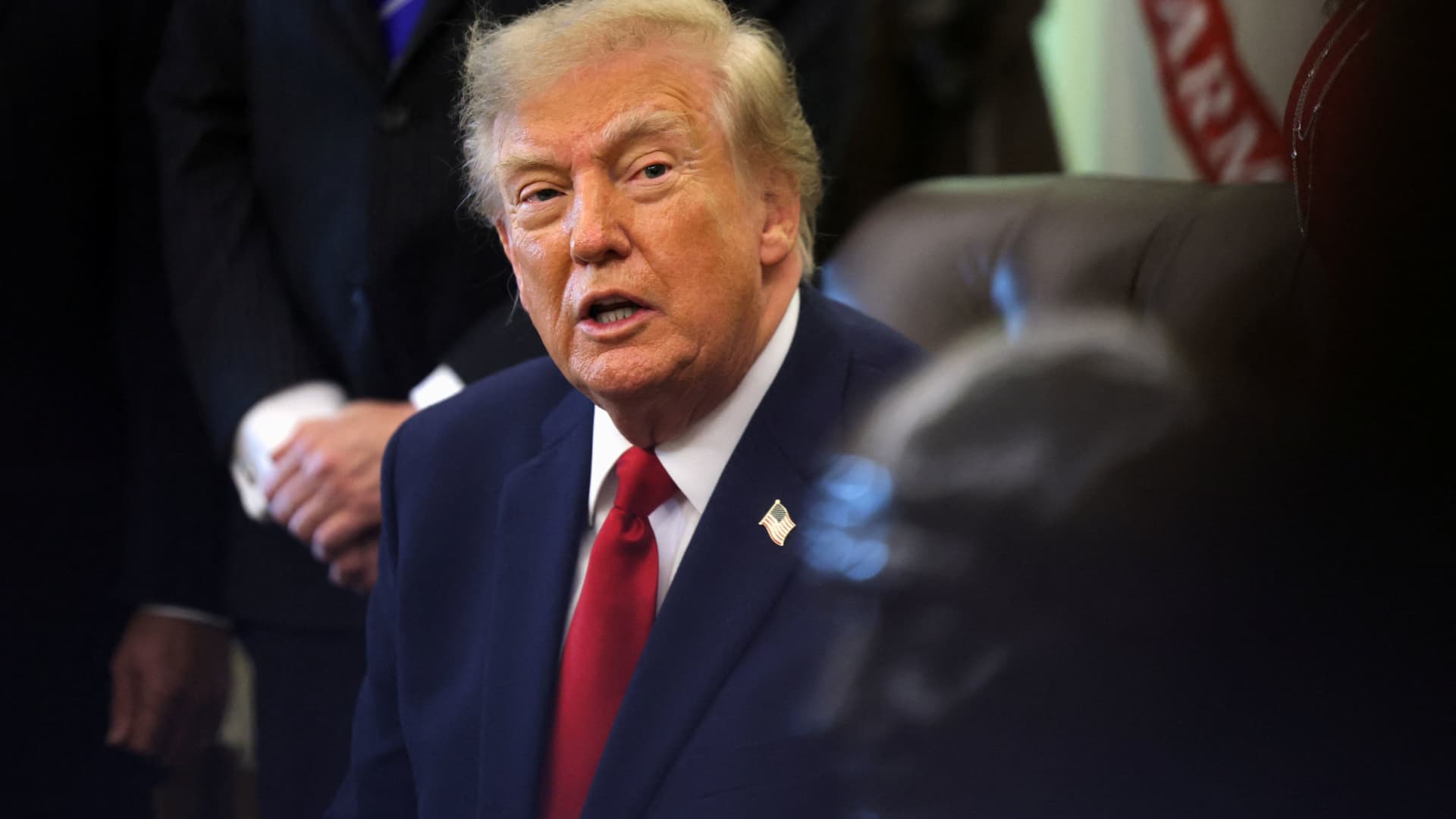
U.S. President Donald Trump on Wednesday urged data center companies to “MAKE DEALS” with local communities to ensure their support for the costly facilities.
Trump said that to make them more popular, data center operators should pay the community, “and/or individuals within the community, a ‘dividend.'”
“I have watched the process closely, and Data Centers that were highly unpopular in a certain area, have become extremely popular when a financial deal is struck. MAKE DEALS, and get them built!!! GREAT FOR THE U.S.A.,” the president said in a post on Truth Social.
Data centers have become a hot-button issue ahead of the midterm elections in November. Public opposition to the buildout of the facilities and their environmental impact has been growing, with multiple states considering moratoriums.
AI infrastructure company Nebius is “100% in principle” having discussions about investing in communities, the company’s Chief Revenue Officer Marc Boroditsky told CNBC when asked about Trump’s suggestion of a dividend.
There could be “some sort of way where the rewards are actually funneled back to the community,” Boroditsky told CNBC’s Arjun Kharpal on the sidelines of Nvidia ‘s GTC Berlin conference.
“We see it today in terms of the tax revenue that are arriving. I could see something like a benefit of some sort that’s more direct economic opportunity for the community as well,” he said.
Boroditsky added: “A dividend is being paid in different forms — investing in education, job development, overall economic development. The concept that the president identified… it’s not crazy to consider something like that.”
Data center stocks have also come under pressure this week amid growing concerns about the financial health of the sector. As the AI infrastructure buildout grows more costly, companies are increasingly turning to debt markets to finance deals.
When it comes to investing in infrastructure underpinning the technology, HSBC CEO Georges Elhedery advised discernment over an all-in approach.
“One has to be selective,” Elhedery told CNBC’s Dan Murphy on Tuesday. “You have to look at the quality of the tenancy agreements. You have to look at the pricing of these contracts. Not all of them are of that level of virtuosity that you can support strongly. Some of them may be more challenging.”
Much of the concern centers around water usage, power consumption, electricity prices, and the sheer amount of space that some centers require. Access to power is a major constraint on the sector, as power grids in the U.S. and Europe become overwhelmed with applications from large energy users like data centers.
“Energy is always a bottleneck, and trying to find powered land and areas that we can build large-scale AI factories is a big focus for us,” Chase Lochmiller, CEO of compute infrastructure firm Crusoe, told CNBC Wednesday in Berlin.
“Increasingly there’s a lot of policy permitting and just working through local communities to make sure that everything can come online effectively,” he said.
Trump, a long-time supporter of data centers, said Wednesday that he has been watching them “very closely” and has now come to a “very strong conclusion.”
“New and large, in some cases gigantic, Data enters are mandated by me to make their own electricity, and give or sell any excess back to the local community, or grid, and therefore there is electric price increase. In fact, there could be a substantial decrease,” Trump said, in a post around 1.37 a.m. ET.
In some cases, data centers can operate as flexible loads, adjusting their electricity use to help stabilize the grid.
Hyperscalers have secured deals where they agree to help finance badly needed updates to local power grids. However, some experts have warned that the AI boom will ultimately result in higher electricity prices.
Tech
Christina Applegate reveals she was misdiagnosed with MS in heartbreaking health update
Christina Applegate has shared that she has been misdiagnosed with multiple sclerosis.
Applegate, 54, was diagnosed in 2021 with the incurable autoimmune disease that affects the brain and spinal cord, and has spoken openly about the debilitating pain of the condition. She revealed the health update Tuesday on her MeSsy podcast, returning after a seven-month hiatus due to health issues.
Citing new technology that contributed to the finding, Applegate said: “This may come as great news, but to me, I’m back at square one.
“It’s hard to say that [my doctor] came into my room and she said, ‘Congratulations, you don’t have MS.’”
The Married… with Children actor said she was “not happy at all” to hear the news.
“You don’t get misdiagnosed and then all of the sudden I’m better. I haven’t gotten better … If anything, I’ve gotten worse in some ways,” she said. “So I’m back at square one, that I don’t know what’s going on with me.”
After announcing her diagnosis in 2021, Applegate retired from acting in 2022 following the finale of the hit Netflix drama series Dead to Me.
Now, she said, her illness is a mystery. “I have every symptom of someone with MS. Every single one,” she said. “Now, we both know that there are many things that mirror MS — many different things.”
Applegate added that “there’s a pretty damn high number of misdiagnoses with MS,” so this is not a rare occurrence.
“It’s clear now that they’re finding something different,” Applegate continued. “Something else is going on.”
Expanding on her feelings, Applegate said she’s in a “state of shock.”
“It’s a mindf***, for sure. It’s this weird feeling because I became this — you and I, the poster children for MS,” she said to her podcast co-host Jamie-Lynn Sigler, who has MS. “I had a reason. I had a f***ing reason as to why my day sucked every day. And now I don’t have a reason and it’s very unnerving and it’s really confusing for me.
“I’ve gone through a great depression because of it,” she continued. “But I lost everything. I lost my job … It stopped my life. I still have to use wheelchairs when I go to the doctor’s office. I can’t walk from the car to the room. I’m still in this. Nothing magical happened when she said, ‘You don’t have MS.’ Nothing magical happened.”
Speaking earlier this year ahead of the release of her memoir, You With The Sad Eyes, Applegate told People she spends a big part of each day in her bed because her chronic pain makes it hard to move around.
Applegate said despite the excruciating discomfort, she is committed to her routine of taking her 15-year-old daughter, Sadie, to school and activities.
“I want to take her; it’s my favorite thing to do. It’s the only time we have together by ourselves,” Applegate told the outlet. “I tell myself, ‘Just get her there safely and get home so you can get back into bed.’ And that’s what I do.”
Why is your power bill so high? What to check and where to find help
Higher electric bills are reaching into Americans’ grocery budgets, according to a Consumer Reports survey released Wednesday, as North Carolina...


5 Common Medications That Can Mess With Your Sleep
Whenever Dr. David Neubauer sees patients with sleep complaints, his first question is about whether they are taking any prescription...


John Goodman reveals what led him to weigh nearly 400 pounds
John Goodman admitted that “eating alcoholically” led him to weigh nearly 400 pounds when he quit drinking. The actor told...


Airbnb Hosts Are Furious They Can No Longer Make Guests Do Their Chores
Airbnb hosts are melting down over a new policy banning them from making guests complete tasks that “would typically be...


How the Boy in the Bubble Died at Age 12 from a Procedure That Was Supposed to Save His Life
NEED TO KNOW David Vetter lived with severe combined immunodeficiency, requiring an ultra-sterile plastic isolator from birth He became known...


Meta’s Muse AI agent achieves strong growth, company introduces new shares to power investments
Shares of the company rose more than 4% in extended trading, as it also forecast fourth-quarter revenue above Wall Street...


Meta says Muse has over 10M users, with shopping a top activity
Meta said during its third-quarter earnings call on Wednesday that its AI app Muse has been adopted by more than...


Sean ‘Diddy’ Combs Faces New Prison Reality After Solitary Confinement Drama
Sean ‘Diddy’ Combs is settling into his new prison surroundings after being moved from FCI Fort Dix in New Jersey...


Stick Run creator Otto Manuel dies after setting himself on fire
An influencer who created the popular multiplayer game Stick Run died at age 30 after reportedly setting himself on fire...


SpaceX Tesla Merger: Elon Musk Just Called it a Good Idea
A possible merger between Space Exploration Technologies Corp (SPCX +7.80%) and Tesla (TSLA +3.41%) has been rumored for months. Ever...
-

 Business4 days ago
‘Black Monday’ fears intensify as prediction markets shrug off 2026 crash
-

 HealthNews2 weeks ago
Des Moines clinics stumped by unidentified virus
-

 Entertainment2 weeks ago
Taylor Swift and Travis Kelce hold hands on NYC date night amid bitter feud with neighbors
-

 Business2 weeks ago
Vistra Stock, Constellation Soar On AI Nuclear Energy Deals
-

 Business2 weeks ago
OpenAI, Anthropic, Meta, Google stop short of AI safety guarantee
-

 Tech2 weeks ago
CIA officer arrested with gold bars admits he exposed secret intelligence source to a foreign official
-

 Business2 weeks ago
Mistral’s new 1T model aims to leapfrog closed and open rivals
-

 Entertainment2 weeks ago
Taylor Swift Celebrates Travis Kelce’s 37th Birthday in a Plunging Lace LBD and Outfit Worth Over $10,000