
PM office canada
What does Alberta’s referendum on separation from Canada mean?

OTTAWA, October 15 – Alberta is holding a nonbinding referendum on Monday to ask residents if they want to remain part of Canada, marking the first time the oil-rich province has ever put the question of separation to the public. Polls have consistently shown most Albertans — about 70% — want to stay in Canada, with roughly a quarter of residents supporting an independent Alberta.
WHAT WILL RESIDENTS BE ASKED?
There are 10 questions, each with its own color-coded ballot. The last ballot voters see is question 10, on whether Alberta should remain a Canadian province or start the legal process required to hold a binding referendum on separation. A simple majority in favor of separation could trigger that process. There are nine other nonbinding questions about immigration, access to provincial services — including education, social care and healthcare — and voter identification requirements.
Sign up here.
WHY IS ALBERTA HAVING THIS REFERENDUM?
Alberta Premier Danielle Smith said in May it was “time to have a vote, understand the will of Albertans on this subject, and move on,” when she announced the government would add a question on separation. Smith’s decision followed months of campaigning by a small but vocal group of separatists, who argue Alberta’s energy wealth is subsidizing poorer parts of the country and that bureaucracy in Ottawa has stifled the province’s economy. Some members of the group had backed Smith’s candidacy for premier. Smith says she voted for Alberta to remain in Canada during advance polling, according to a video she posted on social media on Wednesday.
HAVE THERE BEEN PREVIOUS SEPARATIST REFERENDUMS IN CANADA?
Yes, but not in Alberta. The majority French-speaking province of Quebec has had two referendums, in 1980 and 1995. Quebecers voted to remain in Canada both times, but by the slimmest of margins in 1995. The separatist Parti Quebecois won a provincial election earlier this month and has pledged to hold a third referendum, but only after US President Donald Trump has left office and if the party holds a majority. The PQ was elected with a minority government on October 5, meaning it will rely on smaller parties to pass legislation.
Canada is a federation of 10 provinces and three territories. While Ottawa is responsible for matters of national interest, such as defense, trade and foreign policy, the provinces and territories hold significant power over medical care, education and land rights.
WHEN WILL THE RESULTS BE KNOWN?
Polls are scheduled to close at 8 p.m. on Monday (0200 GMT on Tuesday). Elections Alberta says it will count ballots by hand and that the question on separation will be counted first.
It will publish results on the Elections Alberta website as they are received, and unofficial results are expected within 48 hours after voting ends.
WHAT HAPPENS IF MOST ALBERTANS VOTE TO START THE PROCESS OF LEAVING CANADA?
Smith has said she will respect the result and quickly begin the process to hold a legally binding referendum. But separation would not happen imminently. After the 1995 Quebec referendum, Canada’s Parliament passed the Clarity Act in 2000, which says talks about secession can only be triggered if there is a clear majority from the public, without specifying the necessary threshold. The act also states provinces and territories have no unilateral right to leave Canada and that a constitutional amendment negotiated by provincial, territorial and federal governments is required.
First Nations groups have objected to the idea of an independent Alberta, as their land treaties with Canada predate Alberta’s entry into Confederation. In May, an Alberta court judge ruled the province’s chief electoral officer was wrong to allow separatists to collect signatures requesting a referendum, because the process should have prompted a consultation with Indigenous peoples whose rights might be violated by separation. Alberta has appealed the decision.
WHAT HAS PRIME MINISTER MARK CARNEY SAID ABOUT THE REFERENDUM?
Carney, who was largely raised in Alberta, has previously said “the best place for Alberta is in Canada” and that the country cannot succeed if it’s divided. He released a video on Canadian Thanksgiving, October 12, saying national unity is critical as Canada fights threats from abroad, including a trade war with the US. Carney has campaigned for Alberta to remain in Canada.
Reporting by Maria Cheng; Editing by Caroline Stauffer and Rod Nickel
PM office canada
Stelco standoff escalates, McCain Foods’ bet on Indian potatoes and mapping Canada’s data centres: Must-read business and investing stories for the week of Oct. 17
Getting caught up on a week that got away? Here’s your weekly digest of The Globe’s most essential business and investing stories, with insights and analysis on the biggest headlines, stock tips, personal finance strategies and more.
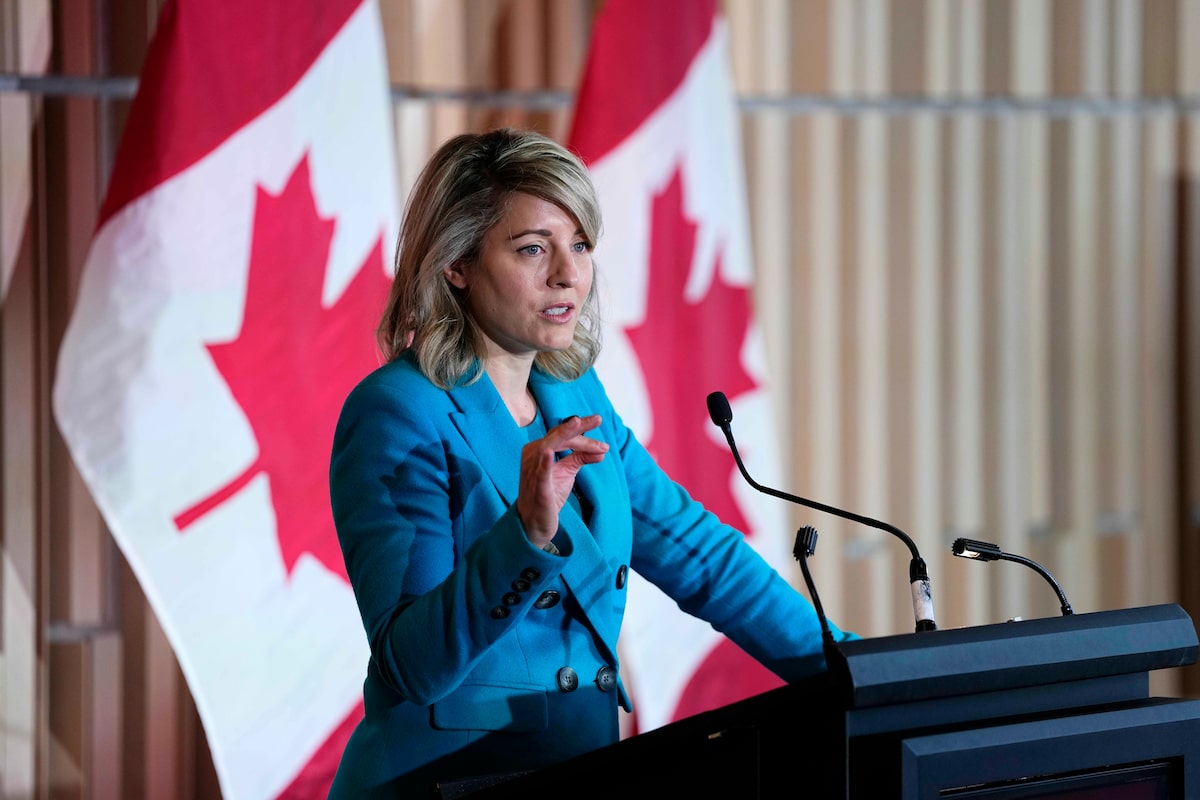
Joly warns Stelco owner of forced divestment if Ontario layoffs go ahead
The Stelco standoff continued this week after the company said it is proceeding as planned with hundreds of layoffs in Canada. The steelmaker also told Ottawa that it isn’t in violation of its Investment Canada Act job commitments, citing a legal provision around the promises, and the government’s own guidelines under the act.
But Industry Minister Mélanie Joly warned Wednesday that Cleveland-Cliffs Inc., the U.S. company that owns Stelco, could face financial penalties or be forced to divest its Canadian operations if it proceeds with the layoffs. Ms. Joly reiterated similar statements in a speech to the Canadian Club in Toronto on Friday.
On Sept. 28, Stelco said that it was laying off up to 500 workers in Hamilton and Nanticoke, Ont., because it couldn’t compete in the galvanized steel market as a result of the trade war with the U.S.
TD, BMO among nine banks accused of discriminating against U.S. customers for political reasons
Toronto-Dominion Bank and Bank of Montreal are among nine lenders identified by a major U.S. banking regulator as having “denied, debanked and discriminated” against customers and businesses on political grounds.
The Office of the Comptroller of the Currency (OCC) said Wednesday that between 2020 and 2025, nine banks maintained practices and policies that denied or limited access to financial services due to political or religious beliefs.
The regulator’s report includes examples at each lender of discrimination it deems unacceptable, including BMO’s approach to firearms. In one example, the OCC said payment processor WePay – which was used by JPMorgan – closed the account of a merchant in 2021 that was selling merchandise promoting the Make America Great Again (MAGA) brand.
U.S. President Donald Trump requested an investigation into the alleged discrimination last year, and has accused banks of also discriminating against him in the past.
McCain Foods acquires Indian frozen food company
McCain Foods is acquiring a 450-employee potato-processing business from family-controlled conglomerate Falcon Group as Canada thaws its relationship with India. The Toronto-based French fry giant announced Monday it agreed to acquire Falcon Agrifriz Foods’ potato operations in Gujarat, a state in northwestern India.
McCain began operating in India in 1998 and currently has 1,800 employees in the country. McCain also plans to build a potato-processing plant in the central Indian state of Madhya Pradesh, and completed a $135-million expansion of its facilities in Gujarat earlier this year.
Another Canadian company also placed its bets on India this week. Fairfax Financial Holdings Ltd. is acquiring control of India’s IDBI Bank for US$5.6-billion. The deal ranks as the largest foreign investment ever made in the South Asian country’s financial services sector. Fairfax has previously made significant profits by taking stakes in troubled banks in Ireland and Greece.
Mapping Canada’s data centres
Data centres have become a hot topic across North America. These facilities require substantial resources, including electricity, storage space and sometimes, water. As a result, they can have a significant impact on the communities in which they’re built.
The pace of data centre announcements has picked up across the country, raising a question for many Canadians: Where are all those data centres going to be built? To answer that question, Dexter McMillan, Jason Kirby and Christopher Manza mapped the locations of current and future data centres in Canada, with the help of Vancouver-based research firm Aterio. You can try the tool out here.
Is Carney ready to go big on corporate tax reform?
Last month, Prime Minister Mark Carney unveiled the biggest swing Ottawa has taken in two decades to make Canada’s business tax regime more competitive.
In his keynote speech at the Canada Investment Summit, Mr. Carney outlined what he called the “productivity mega deduction,” which will allow companies to immediately write off the cost of a wide range of new capital investments.
The proposal has corporate Canada buzzing. Business groups have applauded the change, economists have generally given it a thumbs up (with caveats), and accountants are talking to clients about investment opportunities that were previously off the table. Still, there’s a belief among tax experts that Ottawa needs to go further if it’s going to reverse decades of underinvestment by Canadian companies and turn the country into a magnet for global capital.
Is it the beginning of a broader business tax reform effort, or the end-point? As part of the Globe’s Tax and Effect series, Mark Rendell and James Bradshaw take a deep dive into the mega deduction and other ideas for change.
PM office canada
From ‘killing the golden goose’ to better than ever: Has Alberta’s relationship with Ottawa changed?
The relationship between Alberta and the federal government has faced its share of political and economic conflict over the years. Some Albertans would argue more than its fair share.
From the drawing of the province’s boundaries to natural resource control to the creation of the National Energy Program to pipeline cancellations and political representation, generations of Albertans have expressed feelings of alienation.
Last year, Alberta Premier Danielle Smith added to the litany of rebukes of Ottawa from Alberta leaders over the years. (Her predecessor, Jason Kenney, once said the federal government was “killing the golden goose”.)
After launching a panel tour to hear citizens’ frustrations, Smith said, “You know what Ottawa can’t help but be fixated on? … Punishing our energy sector and layering on policies to keep it in the ground.”
She made those remarks nearly two months after the Liberals won a fourth-consecutive election under new leader Mark Carney.
Fast forward to this fall, with Albertans poised to go to the polls in a referendum that could ultimately lead to a separation vote, and Smith is expressing a very different view.
“I do think Canada is working better than it ever has,” Smith told CBC News, noting she will be voting for the province to stay put.
The remarks follow months of Smith saying that, in her view, working out the differences between Alberta and Ottawa would be the key to quelling separatist sentiment, a blueprint she said is shared by Carney.
So what changed in the relationship between the province and Ottawa? Is Alberta really in a better place than a year ago? And if so, for how long?
For her part, Smith said that Alberta has “finally” found a government willing to move swiftly on major projects, such as the Pacific Link pipeline, while not “standing in the way” of Alberta developing its resources.
Carney, the premier said, is a “different type of leader.”
“I think he understands the Constitution. I think he respects the constitutional division of powers,” she said. “There’s areas that are federal jurisdiction, and areas of provincial jurisdiction.”
That’s why, the premier argued, Albertans should vote to remain in Canada, with a newfound belief that federation can function fairly.
But those who say the province needs to go its own way to realize its true potential see Carney’s promises as mere window dressing after years of policy that stymied economic growth and personal freedoms.
“They’re just saying, ‘Hey, we’re getting along.’ Well, what if they stop getting along?” said Keith Wilson, one of the most prominent leaders in the Alberta separatist movement.
“I am not satisfied to have the future of my children’s success and prosperity hinge upon whether the prime minister and a premier have a good personal relationship.”
No to the nine (‘bad laws’)
In addition to the proposed Pacific Link pipeline and other federal investments, Smith has praised federal movement around what she calls the “nine bad laws” that she demanded be addressed in order to avoid an “unprecedented national unity crisis.”
As detailed by Smith in March 2025, they were, in brief:
the oil and gas emissions cap;
returning oversight of the industrial carbon tax to the provinces;
the net-zero power regulations;
the EV mandate;
repealing Bill C-69, otherwise known as the Impact Assessment Act;
guaranteeing Alberta “full access” to oil and gas corridors;
lifting the B.C. tanker ban;
ending the prohibition on single-use plastics; and
“halting the federal censorship” of energy companies.
A spokesperson in the premiers’ office said it considers seven of the nine “scrapped or reformed.”
“Investment is soaring and major projects are moving forward again. This is proof of progress and a more collaborative relationship,” Ryan Fournier wrote in an email.
The federal government revised those policies amid criticism from some that the moves would claw back environmental protections and concern from others surrounding Indigenous consultation.
Wilson isn’t satisfied with progress to date, citing, among other developments, a recent Alberta Court of Appeal ruling that stated the federal government’s Impact Assessment Act is still unconstitutional.
“I’m sorry, but this is just … political platitudes, absent substantive action. If the prime minister was serious about these things, he would offer to change equalization,” he said.
“He would announce that he’s going to follow the court decision, and repeal Bill C-69 [the Impact Assessment Act]. Surely, people aren’t this gullible. But maybe they are?”
Heather Exner-Pirot, director of energy, natural resources and environment at the Macdonald-Laurier Institute in Ottawa, said that Canada had a “terrible reputation” for investment due to policies implemented under former prime minister Justin Trudeau.
“The corrections to the ‘nine bad laws’ … those are all meaningful, in that they have attracted investment,” she said.
“You can always say that things aren’t perfect, or there’s things we can still do to improve competitiveness, but I don’t think anyone would have anticipated two years ago that we could be where we are here today.”
Earlier this month, the federal and Alberta governments announced that the proposed Pacific Link pipeline, which would carry one million barrels of oil a day from Alberta to the B.C. coast, had become the first project designated in the national interest. That classification means that federal approvals and regulatory reviews will be fast-tracked.
Prominent separatists, meanwhile, have argued that the Pacific Link pipeline is not a point in Carney’s favour.
“This is a nationalized pipeline. Is that really the only way to get something done in Canada, is to have the government do it?” said Cory Morgan, who heads the third-party advertiser Pathway to Independence, in a recent video. “That’s not a good sign, guys.”
Exner-Pirot said government de-risking is necessary for West Coast pipelines given challenges tied to past projects.
After Kinder Morgan halted construction on the Trans Mountain pipeline, the federal government under Trudeau took over, buying the troubled project for $4.5 billion in 2018. The project cost eventually spiralled to $34 billion.
“The particular circumstances of a west coastal pipeline are terrible,” Exner-Pirot said. “I think, [it is] justified for government to de-risk it, and to show that it can be done.”
However, Exner-Pirot said many other energy projects, including other pipelines, are moving forward successfully without government subsidies — like LNG Canada’s Phase 2 expansion in Kitimat, B.C.
“So, the idea that we’re not building anything else except for this one project with government funding or backing is simply not true.”
Fault lines
In the eyes of the Alberta government, the “nine bad laws” may be well on their way to a resolution under Canada’s new prime minister.
But Carney’s comments tied to the “No to the Nine” campaign drew prompt opposition from the provincial government on Thursday.
“No to the Nine” is a prominent federalist advertising campaign that urges Albertans to reject the nine referendum ballot questions not concerned with separation. Five of those questions deal with immigration, while four are aimed at constitutional reforms, like abolishing the Senate.
At a Thursday event, Carney suggested Albertans should vote “No to the Nine.” The premier then posted on X that despite the two finding common ground on many issues, it appeared Carney “had yet to fully understand just how damaging the open-border policies” of his predecessor were.
Ian Brodie, a political scientist at the University of Calgary who was chief of staff to former prime minister Stephen Harper, called Carney’s comments a “miss.”
“The winning federalist campaign here is to acknowledge that Alberta has had a short shrift from Confederation over the last few years, and that changes are needed if the province is going to get a fair deal,” Brodie said on CBC Radio’s Calgary Eyeopener.
For his part, Carney said Thursday that he didn’t “need a referendum” to co-operate more with the provinces on immigration.
“The province is closer to the needs of the industries here, where the shortages are,” Carney told Global News, adding the federal government had already taken “control” on changes to immigration.
Despite the potential awkwardness, Carney made a campaign stop with Smith at a brewery in Red Deer on Friday, where he made a point of characterizing the relationship between the two as involving “tough collaboration.”
“In our time working together, the premier has consistently put the most difficult issues on the table, with the intention of finding a common way forward,” Carney said.
The conversations to come
“Ottawa may be 2,000 miles away, but destructive federal policy travels on winged feet and strikes like the wrath of God.”
That’s how Monte Solberg, an Alberta MP from 1993 to 2008 for the Reform Party, Canadian Alliance and Conservative Party of Alberta, characterized the relationship between the West and Ottawa in a 2018 column on alienation written for CBC News.
Today, he’s pushing for the federalist side in the referendum, as part of the Vote to Stay campaign. In his view, now is not the time to separate, as Canada is locked in negotiations with the United States.
“That doesn’t mean that, over time, there shouldn’t be a discussion about how we address some of the unfairness in Confederation,” he said.
As to whether the prime minister is the person who will have that conversation?
“Well, I think it’ll be a priority for the premier [of Alberta], and for some other premiers. They’ll have their chance to make their case that this needs to be addressed,” Solberg said.
“I think there is a potential to do so with this prime minister that there wasn’t with, certainly, Justin Trudeau.”
For Wilson, who believes in an independent Alberta, none of what’s been offered up can be seen as a win.
In his view, there’s been no offer whatsoever to address what he sees as the “structural unfairness” of how Alberta is treated within Confederation.
“None of what [Smith] is doing is addressing those core issues. I don’t know what’s happened to her. I just don’t,” he said.
Some separatists have argued that Albertans should consider Option 2 — to commence the process to hold a future binding referendum on whether Alberta should leave Canada — so as to preserve leverage in negotiations with Ottawa.
Others say they’re opposed to both options on the ballot.
“What Canada needs — is a middle-ground path into the future — a set of constitutional reforms that restore the legal primacy of provincial governments for policies in health, education and social services,” wrote Ted Morton, an Ed Stelmach-era cabinet minister and one of the authors of the well-known “Alberta firewall” letter, which advocated for Alberta to exit the Canada Pension Plan, among other ideas.
Polling has suggested that Carney is the most popular politician in Alberta, ahead of Smith and federal Opposition Leader Pierre Poilievre.
Duane Bratt, a political science professor at Calgary’s Mount Royal University who has argued for the federalist side at events during the referendum campaign, said it is inevitable, as political gravity kicks in, that the prime minister won’t be able to hang onto that level of support forever.
“There�’s always frictions between the federal and provincial governments,” Bratt said.
“The question is: are we going to see that same friction that we saw in the Trudeau era?”
PM office canada
Prime Minister Mark Carney says U.S. is trying to break Canada as Alberta votes on separation path
CALGARY, Alberta (AP) — Canadian Prime Minister Mark Carney warned Thursday that the United States is trying to break Canada so it can “own us” as he urged oil-rich Alberta not to begin a process toward separation in Monday’s referendum.
The vote is not a direct referendum on independence. Alberta, which has the world’s fourth-largest proven oil reserves, will decide whether to remain a province or instruct the government to begin the legal process toward a future referendum on separation.
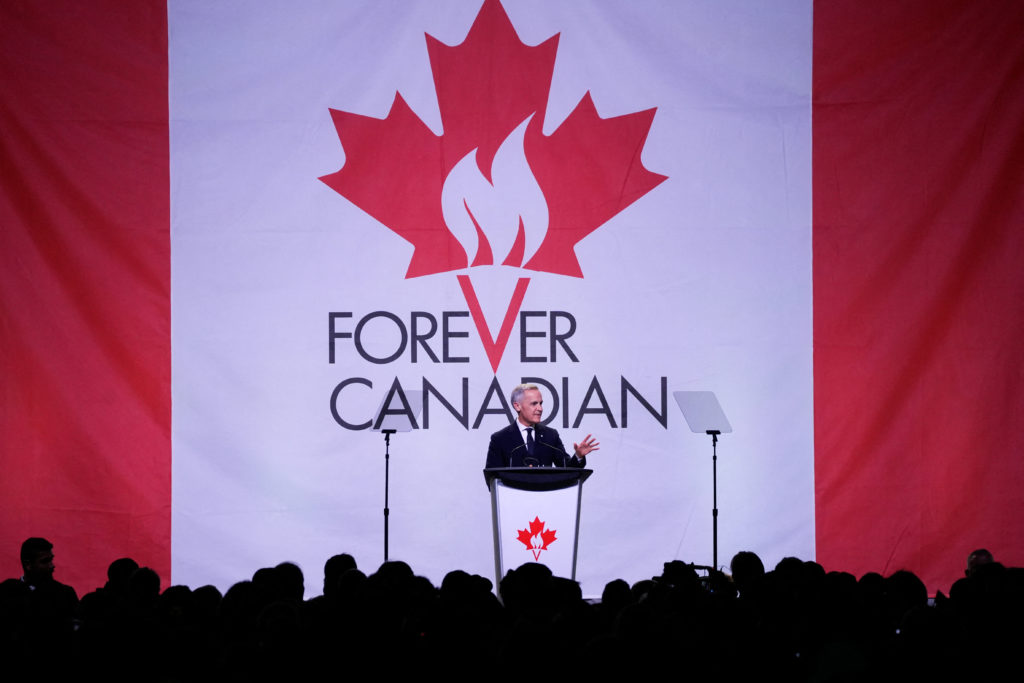
“This referendum comes at the worst possible time,” Carney told a large pro-Canada rally in Calgary. “The world has become more dangerous and divided. Some outside our borders are working to break us so they can own us.”
READ MORE: Carney and Macron deepen ties as Canada turns toward Europe and away from U.S. dependence
He did not directly mention the U.S. or its President Donald Trump in that passage, but has done so in similar past speeches. Carney’s warning came as U.S. President Donald Trump wages a trade war with Canada and after his repeated threats to make Canada the 51st U.S. state. Carney has argued that Canada needs to become more economically resilient and less dependent on the United States.
Carney urged Albertans not to use the vote simply to send Ottawa a message, saying a decisive result could settle the separation question.
“Don’t be fooled by the idea you can ‘send a message’ with your vote,” Carney said. “This is not poker. A vote against Canada is a dangerous bluff that will lead to years of deep division and great uncertainty.”
Carney makes the case for Canada
Carney, who grew up in Alberta, spent Thursday campaigning in Calgary before addressing the Forever Canadian rally at the BMO Centre. His office estimated about 5,000 people attended, with some waiting more than two hours to get through security. Organizers were also holding a second rally with Carney in Edmonton on Friday.
Earlier Thursday, he pointed to the many Albertans who were born or educated elsewhere in Canada and to firefighters who come from across the country to help Alberta during wildfires as examples of the ties binding the province to the rest of Canada.
At the rally, Carney also acknowledged the grievances that have fueled alienation in Alberta.
“The frustrations that many Albertans have felt are real,” he said. Carney said that while growing up, Ottawa made Albertans feel “like our resources weren’t our own” and that more recently the province was made to feel its energy contributions were “against the tides of history.”
A Liberal prime minister finds unlikely support
The setting is striking for a Liberal prime minister. Alberta has spent decades feuding with Liberal governments in Ottawa, particularly over energy and federal power. But Carney has broken with some of the policies associated with his predecessor, Justin Trudeau, fast-tracked a proposed new oil pipeline to the Pacific and called Canada an energy superpower.
READ MORE: Carney says Canada can emerge from Trump’s trade war with a stronger and independent economy
Carney pointed to the Pacific Link pipeline as evidence of a changed relationship, saying it would create more than 140,000 jobs and generate revenue for social programs.
His biggest cheer came when he said the pipeline would reduce Canada’s dependence on the United States.
“Careful, they might think that’s election interference. A little touchy,” Carney joked, drawing laughter. He was referring to U.S. Ambassador Pete Hoekstra’s warning to Canadian politicians not to interfere in the U.S. midterm elections.
Tanya Clemens, co-chair of the pro-independence group Let Alberta Decide, acknowledged Carney presents a challenge.
“He’s formidable for sure,” Clemens told The Associated Press.
Clemens argued, however, that Carney’s agreements with Alberta Premier Danielle Smith amount to “pinky promises” that do not resolve long-standing grievances with Ottawa.
Keith Wilson, another leader of Let Alberta Decide, rejected Carney’s argument that global instability made this the wrong time for the vote.
“The worst timing for this, why? I don’t understand what’s the logic,” Wilson said. “Then it’s the best time for him to get back to Ottawa.”
Wilson said Carney should ask Parliament to repeal federal measures that separatists say have hurt Alberta, including authority he says could be used to tax oil exports in retaliation against the United States. He predicted Carney would eventually impose such a tax despite Carney saying he sees no value in using Canadian energy exports as leverage against the U.S.
“It’s one cabinet meeting away,” Wilson said. “He’s gonna do it. He has to do it.”
READ MORE: Carney pitches Canada to global investors amid trade war with Trump
Smith, who called the vote but supports remaining in Canada, cast her ballot Wednesday and said she voted for Alberta to remain in Canada. She has said support for separation remains too high for her liking.
“Canada can still work,” Smith said after voting. “We just need to make some changes.”
Daniel Béland, a political science professor at McGill University, called Carney’s popularity in Alberta “highly unusual” for a Liberal prime minister. He said Carney has also benefited from a “Trump effect,” as Trump’s trade war and 51st-state threats have rallied Canadians around their leader — even in Alberta.
From the political fringe to a provincewide vote
The referendum marks a remarkable rise for a cause long relegated to Alberta’s political fringes. After the COVID-19 pandemic and the 2022 Freedom Convoy, activists who had organized against vaccine mandates and other restrictions turned their attention to Alberta independence.
The convoy began over vaccine requirements for cross-border truckers but grew into a broader protest against pandemic restrictions, paralyzing downtown Ottawa and blocking major Canada-U.S. border crossings.
Clemens said COVID accelerated the movement by teaching people how to organize politically and become more involved in party politics. She said separatists also see Monday’s vote not simply as a step toward independence but as a way to give Alberta leverage in negotiations with Ottawa.
Advance voting runs through Saturday, with the final vote Monday.
PM office canada
What you need to know about Bill C-39, Canada’s most consequential economic legislation in decades
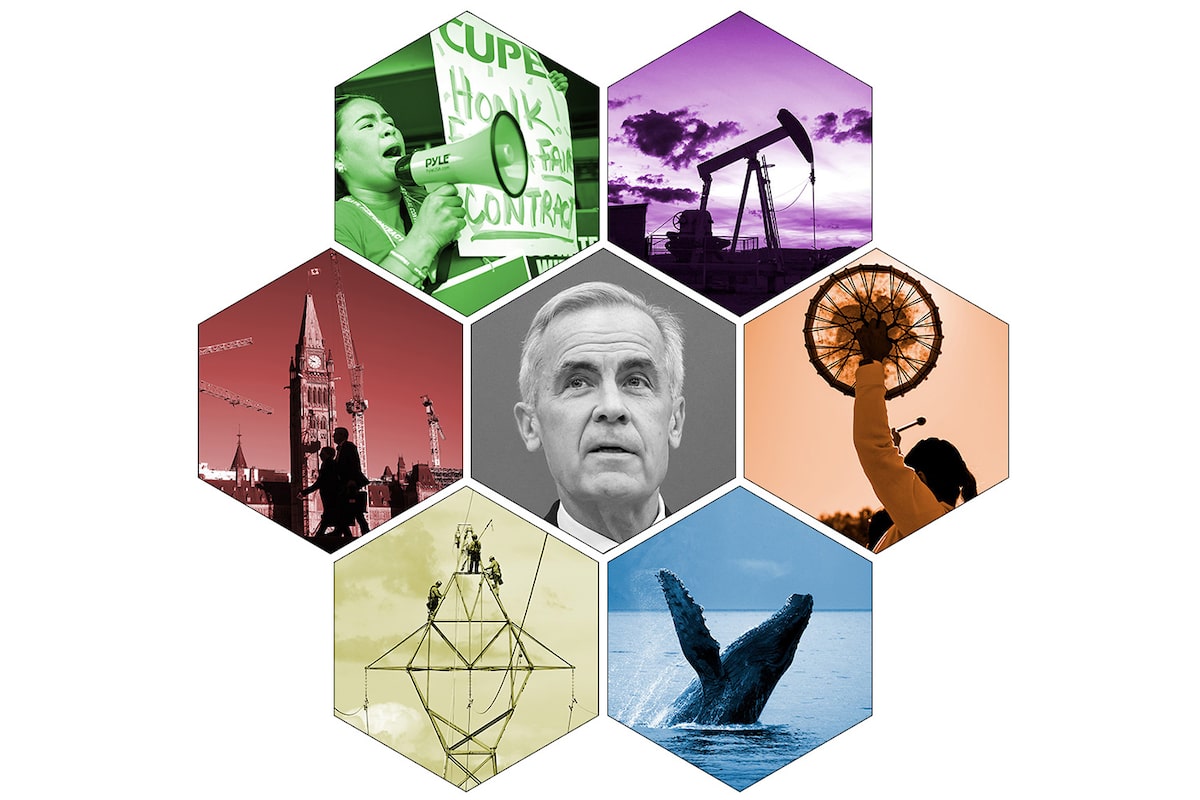
The Building Canada Strong Act, Bill C-39, is what Prime Minister Mark Carney calls the most consequential economic legislation of this Parliament. Ottawa says it will get major projects built faster without lowering standards.
Critics, including environmental groups, unions and some First Nations leaders, say it hands ministers sweeping new powers at the expense of nature, workers’ right to strike and Indigenous consultation. At more than 240 pages, it amends 19 laws plus four regulations. It also repeals the Shipping Conferences Exemption Act, which shielded ocean shipping lines from parts of competition law, and creates the Enabling Digital Trade Act, which lets companies use electronic trade documents instead of paper.
The bill is still being debated in the House of Commons, where it passed second reading and was referred to a special Legislative Committee on Bill C-39. It must pass a third reading and clear the Senate before it becomes law. Here’s what it would change.
Ministerial powers
One of the most contentious aspects of Bill C-39 is that it grants cabinet ministers many new powers in the name of speeding up approvals.
For instance, under the current Impact Assessment Act, several ministers have a role in issuing permits under various federal laws. Under C-39, the Minister of Environment issues a single decision covering all required permits, after consulting with cabinet colleagues.
The Minister of Environment will also be empowered to approve some site preparation work on a project before the entire assessment process is complete. They can also add, remove, or amend conditions that had previously been imposed on a project.
Bill C-39 would also add this power to change past environmental conditions to the Building Canada Act, or C-5, which was approved by Parliament last year to fast-track projects deemed by cabinet to be in the national interest.
Bill C-39 also expands the scope of C-5 powers by allowing the government to prioritize projects in regions of national interest. The bill itself provides few details as to how these regions would be defined and how such designations would work in practice. Nor does it detail how much work on a project can proceed before the assessment process is complete.
Bill C-39 also removes a sunset clause in Bill C-5 that limited to five years cabinet’s powers to designate projects as being in the national interest.
Another section of the latest bill gives the Minister of Transport expanded powers related to security clearances at airports and ports. The government said the existing program is more than 40 years old and the new system is needed to consider broader risks, such as organized crime or suspicious activity.
Many environmental organizations strongly oppose C-39, saying it effectively removes a wide-range of existing protections for the environment. “We’re going to explicitly allow the regulatory regime under a variety of acts to be overridden at ministerial discretion, and the implications of this for the public, I think, are going to be dramatic,” said Tim Gray, executive director of Environmental Defence, in an interview.
Mr. Gray said some environmental reviews involve studying species migration patterns that can’t be properly analyzed in a single year. “So you will just make decisions without knowing what the consequences are going to be, and just hope for the best,” he said. Environmental Defense is also opposed to the bill’s removal of the sunset clause on Bill C-5. “I don’t think the bill should pass at all. But a sunset clause is better than no sunset clause,” he said.
Industry groups, including the Canadian Association of Petroleum Producers, have welcomed the legislation. CAPP President and CEO Lisa Baiton said in a statement that her organization “supports the Government of Canada’s steps forward to streamline approvals processes, reduce regulatory duplication, and recognize provincial jurisdiction in project approvals.”
Claire Seaborn, a lawyer with Torys and former chief of staff to former Liberal Natural Resources Minister Jonathan Wilkinson, recently co-authored a technical analysis of the bill. In an interview, she said some of the commentary on the government’s one year timeline ignores the point that there is an additional year-and-a-half of preparatory work by the proponent of a project that must take place before the clock begins on the government review.
“I think [the legislation] walks a careful line, and I think it’s kept a lot of the nuts and bolts of the federal process intact,” she said. “We’re getting through those processes more quickly, but I don’t think that necessarily means that those corners are being cut or that we’re losing on quality.”
– Bill Curry
Federal labour law
The federal government’s Building Canada Strong Act also proposes substantial amendments to the Canada Labour Code – changes that have sparked controversy amongst many in the labour movement who feel the propositions are heavy handed.
Broadly speaking, Ottawa intends that these changes do three things to federal labour law: modernize the collective bargaining process such that negotiations start and end at the bargaining table; clarify how and when the Minister of Jobs and Families (formerly known as the Minister of Labour) can intervene in a labour dispute; and strengthen worker protections.
However, the Canada Labour Code does not govern worker rights across the country; it dictates labour laws for 1.4 million federal workers. They include employees in the federal public service, and those in federally-regulated industries such as telecommunications and transportation. But labour experts are concerned that there could be a trickle-down effect of these changes of the Code to provincial labour laws, thus potentially impacting a far larger group of workers.
There are more than 10 proposed changes to the various clauses in the Code. But by far, the most controversial are additions to Section 107, a clause that empowers the minister to “take any measure” to end a strike or a lockout of workers stemming from a labour dispute.
Bill C-39 leaves the existing language of the clause in place, but adds criteria that the minister must consider before enacting Section 107. Specifically, before invoking the clause, the minister needs to evaluate the contents of a special mediator’s report on a labour dispute. If the minister is of the opinion that a strike or lockout “may adversely affect the national interest,” the minister can invoke the clause.
Ottawa’s position on the changes to Section 107, including the creation of a special mediator role, is that they add guardrails to how and when a minister intervenes in a labour dispute. Unions have, for years, been critical of Ottawa’s repeated use of section 107 to quell strikes by directing the federal labour board to impose arbitration of a contract, solely on the judgment of the minister of labour. The proposed changes are, to the federal government, a way of addressing this criticism.
But unions are now saying that these changes effectively entrench Section 107 in the labour code, instead of removing it altogether (which is what they had pushed for). In particular, they say that the changes will dilute federal employees’ right to strike, because the government now has expanded power to decide if a particular strike impacts the “national interest.” Unions also say that the inclusion of that language alters the dynamic at the bargaining table. If employers go into a negotiation knowing that a group of workers has a lessened right to strike, it changes the calculation of their offer, unions say.
According to the Canadian Labour Congress, Bill C-39, if passed, would give the Canadian government the broadest strike intervention powers in the G7, because the minister retains the final say on whether or not to quash a strike.
“The legislation does give the minister huge power to order an end to a strike. And the way in which it is worded being ‘in the national interest’ means there is not much of a restriction on how that power will be used,” said Eric Tucker, professor emeritus of law at York University’s Osgoode Hall Law School.
– Vanmala Subramaniam
Canada Energy Regulator mandate
Another significant change under Bill C-39 is how much it would broaden the mandate of the Canada Energy Regulator.
The new powers granted to the CER would be two-pronged: Making it the single assessor for pipeline projects, and empowering it to make final approval decisions for conduits that are less than 300 kilometres long. (In the case of longer pipelines, the CER would prepare a report to the federal government, which issues or dismisses a project certificate.)
That’s not to say the CER has carte blanche when it comes to setting the conditions under which pipelines can be built.
Under a provision in the bill, the regulator will have to consider the technical, economic and practical feasibility of any conditions it wants to impose, and a proponent can challenge any of those terms that it believes are technically or economically unfeasible. A recent analysis from Dentons law firm said this new requirement “should reduce the risk of impractical or unworkable conditions being imposed on pipeline projects.”
Making the CER the lead agency responsible for co-ordinating the entire approval process “has the potential to really impact timelines,” said Gitane De Silva, the executive director of the Peter Lougheed School of Politics and Democracy.
“In the past you would have had the CER responsible for the hearing process, then making a recommendation to cabinet, then moving forward and overseeing the construction. But now they can actually make sure that fisheries permits, navigable water permits and species at risk permits are being issued in a timely way,” she said in an interview.
Ms. De Silva, who served as the regulator’s CEO from 2020 to 2023, said the ability to co-ordinate permitting will make the CER’s life much easier.
“When I was CEO, I would have to pick up the phone and call another government department and say, ‘Your permit on X is due by this date,’ and ‘Your decision on the permit application is due by this date, and if you don’t make that decision the company is going to lose a month of construction time,’” she said. “Now there’ll be that oversight from the outset.”
Consternation around the changes has centred on the one-year timeline, rather than the CER taking the reins of the approval process.
Energy and Natural Resources Minster Tim Hodgson said in a recent interview he’s confident that the CER can handle its extended powers, particularly because the regulator has been involved in every pipeline approval process since 2019.
It is a “very competent regulator,” he said, adding that he is “quite confident” that the agency is up to the challenge of a broadened mandate.
– Emma Graney
Nuclear power
Bill C-39 would assign responsibility for conducting federal impact assessments of nuclear and uranium projects entirely to the Canadian Nuclear Safety Commission, a federal regulator which already supervises nuclear activities. (Currently, it works alongside the Impact Assessment Agency of Canada to conduct joint impact assessments.) The existing Impact Assessment Act includes a time limit of 600 days for such reviews.
The impetus to speed up isn’t new: Under a 2019 agreement, the CNSC and IAAC committed to avoiding “unnecessary delays or duplication of effort” and targeted a 300-day time limit. Bill C-39 preserves that; the clock starts ticking once the proponent has submitted finalized studies and requested information.
In a recent commentary, lawyers from the law firm Gowling WLG concluded this stipulation does not mean less work. “Proponents will need greater design maturity, earlier environmental studies, and earlier Indigenous engagement before they enter the formal process,” they wrote. “Faster decisions will require work that is better co-ordinated and front-loaded.”
Dean Haslip, a vice president with the CNSC, said impact assessments will be completed concurrently with the first license often sought for a nuclear project, known as a license to prepare site. However, proponents will still need other licenses – including one to construct the plant and another to operate it, and the timelines for those processes remain unaffected by C-39.
Dr. Haslip said the CNSC is “doing some hiring” in preparation for its new responsibilities. But the organization is already responsible for reviewing safety, security and environmental protections associated with nuclear projects, he added, “so it’s not a question of the CNSC needing to develop new capabilities.”
Supporters of the rule changes include the Saskatchewan government, which asserted in a document in late September that “a single-regulator model would improve clarity for proponents, but it would not remove the information, assessment or licensing requirements that a nuclear proponent must satisfy.”
Theresa McClenaghan, executive director of the Canadian Environmental Law Association, said in an interview that by assigning impact assessments to the CNSC alone, Bill C-39 effectively returns to how things were done prior to 2019 – an arrangement her organization opposed.
“The CNSC is a captured regulator,” she said. “They’re very accustomed to acceding to what the industry is asking for. They don’t have a track record of giving the same weight and attention to public concerns.”
Several nuclear projects are at early stages in impact assessments, including two proposed large nuclear plants in Ontario and one in Alberta.
Bruce Power is planning a new block of up to four reactors known as Bruce C. Spokesperson Maggie Tieman wrote in a statement that the CNSC was “uniquely positioned to oversee nuclear projects.” She noted that C-39 provides for a transition intended to preserve progress already made while allowing proponents to benefit from new efficiencies.
Also being assessed is a proposal to store radioactive spent nuclear fuel in an underground facility known as a Deep Geological Repository. The Nuclear Waste Management Organization plans to build one near Ignace, in northwestern Ontario. That project was referred to the Major Projects Office in June.
Canada’s proposed reforms are less aggressive than those pursued in the United States, where the Trump Administration has instigated wholesale revision of the Nuclear Regulatory Commission’s practices. Among them: The NRC has been instructed to finish reviews of new reactor designs within 18 months. And in an effort to pare down on what the Trump Administration regards as outdated regulations, it has also been ordered incorporate sunset provisions into all of its regulations concerning nuclear power so that they expire automatically within five years unless the NRC actively extends them.
– Matthew McClearn
Species at risk, fisheries
Bill C-39 gives Canada’s laws protecting fish, endangered species and their habitat new conservation tools, but falls short of what environmental groups say is needed to reverse species declines.
“We’re in a nature deficit, and we can’t let projects go forward at just a no net loss rate,” said Amanda Reed, interim chief executive officer of the Canadian Wildlife Federation, in an interview.
In May, Ottawa proposed letting cabinet exempt projects from a key rule in the Species at Risk Act: that no permit can be issued if it would jeopardize a species’ survival. After pushback from groups including the federation, the government left the proposal out of C-39.
On Wednesday, a coalition including West Coast Environmental Law, the Canadian Parks and Wilderness Society and the union representing federal scientists called on Ottawa to scrap C-39. The groups said the Building Canada Act already lets cabinet exempt national interest projects from the Species at Risk Act, while job cuts at Fisheries and Oceans thin the ranks of scientists who assess threats and plan recovery.
The wildlife federation, by contrast, welcomed parts of the bill – particularly Fisheries Act changes that allow companies to buy habitat credits from third parties that restore habitat in advance, or pay fees into a federal fund. But Bill C-39 stops short of what the federation calls “nature positive”: requiring companies that damage fish habitat to restore more than they destroy.
Today, Fisheries and Oceans requires companies that harm fish habitat to build replacement habitat, a practice known as offsetting, and to monitor it and post a financial guarantee.
“It’s done on a case-by-case basis, and it’s not super effective,” Ms. Reed said, adding that companies are rarely conservation experts. Federal scientists argue that offsets should be at least twice the size of the damage to break even, yet a 2017 study found two-thirds of permits required companies to restore less than they destroyed.
Under the bill, companies could also meet the requirement by buying credits from conservation groups, land trusts or Indigenous organizations that restore habitat in advance, a system called habitat banking. The changes “will provide more tools and reduce red-tape,” Naomi Librach, a spokesperson for Fisheries and Oceans Canada said in a statement.
Fees would apply only to projects the department deems low-risk or to have minor impacts; bigger projects would still have to offset. Fees would go to the Environmental Damages Fund and must go to fish and fish habitat.
But the bill doesn’t limit fees to minor impacts or define them, leaving it to the fisheries minister to determine in regulations. Pooling fees from smaller projects “could support larger, more strategic habitat restoration initiatives that deliver meaningful benefits at an ecosystem scale,” said Ms. Librach.
Under revisions to the Species at Risk Act and Fisheries Act, for major projects, ministers would have to weigh whether conditions protecting fish and listed species are “technically, economically and practically” feasible for companies, a test C-39 adds to five laws.
Regulators already work with companies to make sure conditions are achievable, but the amendments “codify this existing practice into law,” Ms. Librach said. “The objective is not to lower environmental standards.”
“It tips the scale in favour of approval, even when that approval could cause much greater harm,” said Anna Johnston, a staff lawyer with West Coast Environmental Law, in an interview.
Under a “one-window” approach for projects under federal impact assessment, the environment minister, rather than Fisheries and Oceans, would issue fish and species permits along with a project’s approval. Conditions on national interest projects could be loosened, including killer whale protections at the Roberts Bank Terminal 2 port expansion, if it were designated a project of national interest.
Cabinet could also create regions of national interest, which West Coast Environmental Law calls environmental deregulation zones. Ms. Reed sees potential in planning development region by region, but says the details remain unsettled. “We’re making it up as we go,” she said.
The changes are meant to speed up approvals, with decisions on major projects due within a year of a company submitting all required studies. The work before that, including species surveys and consultation with Indigenous nations, “still needs to take as long as it needs to take, and that’s on the developer,” Ms. Reed said.
– Jenn Thornhill Verma
Indigenous consultation
The government is proposing a new Crown Consultation Hub as a centralized federal co-ordinator for federal agencies and departments consulting with Indigenous peoples.
Failed attempts by developers and governments to satisfy constitutional requirements to consult First Nations have led to multiple costly legal cases and other protests that have forced delays and cancellations in the past, most prominently with pipelines.
The hub will be under the umbrella of the Impact Assessment Agency of Canada. It is aimed at spotting and addressing Indigenous concerns early, assisting provincial consultation and providing guidance to federal officials, the government said. It may also set up funding for some consultations with Indigenous groups.
The new body would take the lead, except where the Canada Energy Regulator or the Canadian Nuclear Safety Commission are the sole assessors of projects, or if the project is being co-ordinated by the Transportation Project Office, Northern Projects Management Office, or the Major Projects Office, according to the legislation.
The government says the goal is to streamline consultation efforts, not remove any requirements or add new steps for Indigenous communities as they raise questions about proposed developments.
Under the legislation, project proponents would be required to describe how they will address adverse impacts on Indigenous peoples, set out in section 35 of the constitution.
Some Indigenous leaders have expressed concerns about the impact of shorter approval timeline on the consultation process for major projects on traditional territories, and some have criticized what they say was insufficient consultation in developing the legislation itself.
When Bill C-39 was unveiled in September, Cindy Woodhouse Nepinak, National Chief of the Assembly of First Nations, said consultations on major projects should not be time-limited. “The truth is, any predetermined timeline principally designed to attract investment subordinates the honour of the Crown to commercial imperatives,” she told reporters.
In the Senate on Oct. 6, Senator Brian Francis cited the National Chief’s concerns and asked whether the government would give Indigenous peoples adequate time to propose amendments, and be open to changes aligning the bill with the UN Declaration on the Rights of Indigenous Peoples Act. Steven MacKinnon, the Transport Minister and Government House Leader, said the government received “403 submissions from Indigenous groups, rights holders, stakeholders and others” and held more than 30 meetings with First Nations groups during its consultations. “We will obviously carefully consider all of their feedback and advice,” he said. He did not commit to amendments.
However, proposed changes to the Canadian Energy Regulator Act and the planned rules of the Impact Assessment Act will allow extensions to the 12-month approval timeframe if more Indigenous consultation are needed, the law firm Torys noted in a legal assessment of the legislation. Nevertheless, the firm is advising developers to start their engagements early in light of the accelerated timeline.
Terry Teegee, regional chief of the British Columbia Assembly of First Nations, warned that changes within the legislation, including to the Fisheries Act, will have direct impact on consultation where environmental issues are key to a decision. “There’s been this ongoing issue of management, not only the issues of habitat restoration, or habitat up in the far reaches of many rivers and streams, but also in the oceans, that need to be addressed,” he said in an interview.
Blake, Cassels & Graydon LLP said that it expects legal challenges to the new rules, as was the case with several Ontario First Nations that launched a constitutional challenge to previous legislation, the Building Canada Act, along with a similar provincial act, last year.
That action remains before the Ontario Superior Court of Justice with a hearing expected in the first half of 2027. Kate Kempton, a lawyer with the firm Woodward & Co. LLP, representing the First Nations, said they are considering adding a challenge to aspects of C-39 to the case.
– Jeffrey Jones
Constructing Canada: More from The Globe and Mail
The Decibel podcast
Commentary
Keith Creel: Labour stability is an economic imperative. Parliament must strengthen Bill C-39
Rachel Doran: Is it really a good idea for the government to subsidize a pipeline?
PM office canada
‘Vote like Canada depends on it’: Carney tells Alberta referendum rally
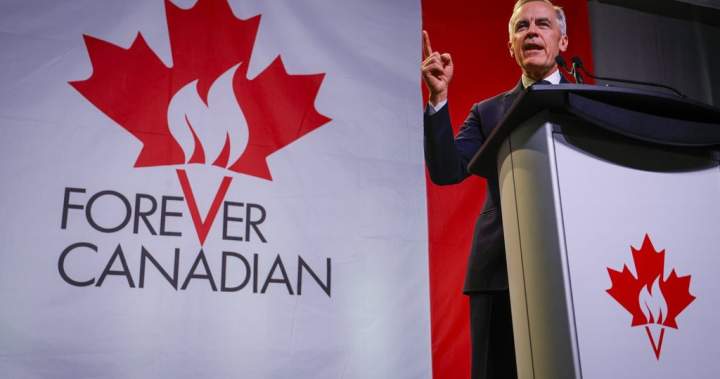
Prime Minister Mark Carney told thousands rallying in Calgary on Thursday night that Albertans should vote to keep the province in Canada, arguing that failing to do so will cause “deep division and great uncertainty.”
Carney spoke at a Forever Canadian rally ahead of Monday’s referendum on the whether the province should stay in Confederation or hold a second, binding referendum on separation.
Many in the cheering crowd wore red and white, hoisted hockey sticks with Canadian flags and sported Team Canada jerseys. The Prime Minister’s Office estimated at least 5,000 in attendance.
“The stakes are high,” said Carney adding the referendum comes at the worst possible time.
The world has become more dangerous and divided, he said, and some outside Canada’s borders are working to “break us so they can own us.”
“At this pivotal moment, Albertans have a choice: to build a stronger Alberta and an even greater Canada to leave for our children or we can burden them with years of deep division and great uncertainty.
“What we need is a decisive result on Monday to settle this question.”
The Forever Canadian campaign, launched by former Alberta deputy premier Thomas Lukaszuk, seeks to encourage Albertans to vote to stay in Canada.
Carney said frustrations in Alberta are real but that Canada is working in a spirit of co-operative federalism. A vote against Canada is a dangerous bluff that could lead to years of lost opportunities, he said.
“Don’t let anyone tell you this is already decided,” he said. “Turnout will determine the outcome.”
Carney is scheduled to attend another Forever Canadian rally in Edmonton on Friday, as well as meet with business leaders alongside Premier Danielle Smith in Red Deer.
Federal Conservative Leader Pierre Poilievre is set to deliver his own speech supporting Canadian unity Friday during a Canada Strong and Free Network conference in Calgary. Smith is also to address the event.
Earlier on Thursday, Carney was swamped by selfie-seeking well-wishers as he made several stops in Calgary.
At one event, he urged Albertans to not only vote for Confederation but also to reject the nine other questions on the referendum ballot involving immigration and the Constitution.
Smith has said she needs a yes to those nine to send a message to Ottawa that provinces need more autonomy and respect.
The nine questions focus on giving Alberta more power over immigration while also erecting restrictions, and perhaps fees, for some newcomers and temporary workers who want to access health care, education and other social services.
Smith has said immigration costs are prohibitively expensive, but critics have called her questions an anti-immigrant dog whistle.
The nine questions ask Albertans to give their blessing for the government to work with other provinces to change the Constitution in order to wrest power from Ottawa and abolish the Senate.
Smith’s government committed $4 million to an advertising campaign pushing voters to support the nine, and a “strong and sovereign Alberta within a united Canada.”
The Prime Minister’s Office said it’s spending about $250,000 on its “O Canada” ad campaign.
At the same time Carney was scheduled to attend the Calgary rally, Smith was set to headline a $500-a-plate United Conservative Party fundraiser also in Calgary.


Trump stumps in deep-red Kentucky as GOP tries to hold its turf
President Donald Trump continues to rally in conservative strongholds ahead of the midterm elections, amid growing signs that some deeper...


Sean ‘Diddy’ Combs transferred to new prison in Pennsylvania: BOP
Rap mogul Sean “Diddy” Combs was moved from a New Jersey prison to one in Pennsylvania, the Federal Bureau of...


TikTok bans Musk documentary account
Larry Ellison’s TikTok has shut down the promotional account for Alex Gibney’s Elon Musk documentary. Larry Ellison’s TikTok has shut...


ALDS postponement leaves Guardians ticket holders upset with altered game assignments
Some Cleveland Guardians fans got screwed by the rain in more ways than one on Friday night. For starters, Game...


TSA quietly reverses benefit for travelers at some US airports
A recently expanded program that allowed TSA PreCheck members to go through airport security without a ticket has been abruptly...


Harry Styles Concert Doc Coming From John Wilson
Harry Styles has invited one of the buzziest documentary filmmakers on the market behind the curtain of his historic Madison...


Josh Brolin says he became a full-time stock trader after Hollywood stopped calling
Josh Brolin said he wasn’t taken seriously as an actor until 2007’s Oscar-winning “No Country for Old Men” — and...


Tyler Perry Purchases Puerto Rico Home For $30 Million
Madea may soon pop up in Puerto Rico … because Tyler Perry bought a massive mansion on the island —...


Urgent warning as drug 10 times more powerful than fentanyl claims first LA victim
Los Angeles health authorities have issued an urgent warning about an opioid that is 10 times more powerful than fentanyl...


Callum and Jake Robinson killers get 158-year sentences in Ensenada
NEWYou can now listen to Fox News articles! Three men in Mexico received 158-year prison sentences Friday for the murders...
-

 Entertainment2 weeks ago
‘Verity’ Posts $4.5M Previews, ‘Digger’ $1.2M
-

 Business2 weeks ago
Tesla Cybercab pressure to expand after rocky first month in Austin
-

 Business2 weeks ago
OpenAI safety employee resigns, claiming the company’s ‘culture is broken’
-
 Business2 weeks ago
Energy Secretary Chris Wright says Trump was “well aware of the risks to energy flows” before launching Iran war
-

 Entertainment2 weeks ago
Disney pays $115 million for Yamaha’s Orange County headquarters
-

 HealthNews2 weeks ago
Des Moines clinics stumped by unidentified virus
-

 Business2 weeks ago
Vistra Stock, Constellation Soar On AI Nuclear Energy Deals
-

 Entertainment1 week ago
Taylor Swift and Travis Kelce hold hands on NYC date night amid bitter feud with neighbors