
Entertainment
Diversity Now Seen as “Optional”
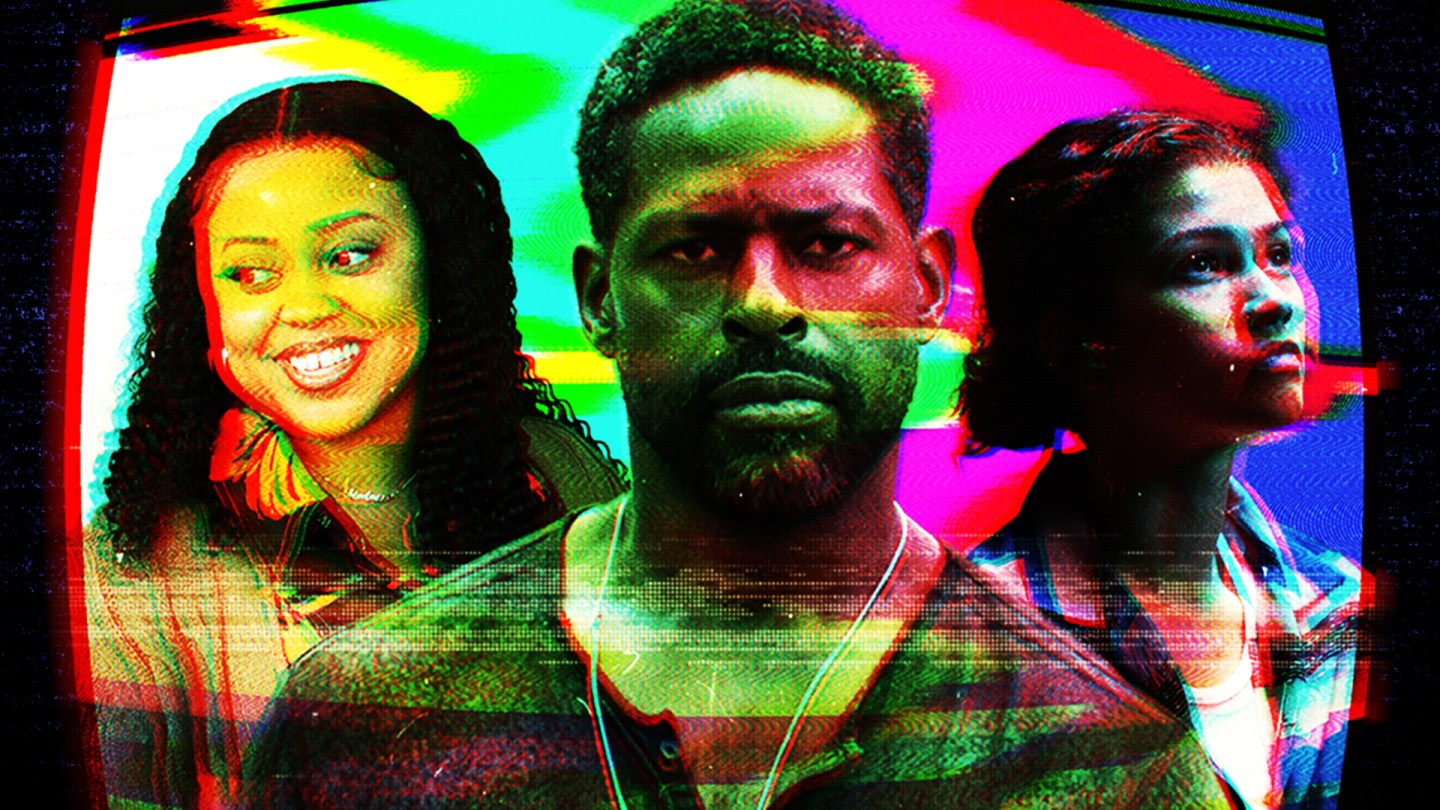
When #Emmyssowhite began trending after white actors swept the lead and supporting acting categories during the Sept. 14 ceremony, it unearthed a reality deeper than the demand for equal acclaim: Actors of color can’t win accolades for roles that don’t exist.
“The Emmys ultimately reflect the work that makes it to our screens, and this year’s results are another reminder that progress is not linear,” Television Academy chair Cris Abrego says in a statement to The Hollywood Reporter. “We have seen meaningful gains in representation across our industry, but we have also seen real regression, and we cannot take progress for granted.”
UCLA documented the backsliding in its Hollywood Diversity Report, released in June, which noted, for the first time in three years, the proportion of lead actors of color on streaming fell below their proportion of the U.S. population, from a high of 51 percent in 2024 to 36 percent in 2025. Streaming films featuring casts with a majority of people of color slipped from 41 percent to 25.8 percent.
“It’s always two steps forward, one step back, but this time it feels like two steps back,” says Gloria Calderón Kellett, creator of the Prime Video series With Love. “It feels like four steps back, if I’m honest.”
When Black Lives Matter protests erupted across America in 2020, Hollywood positioned itself as an ally, and for a short while it appeared the industry had done more than offer lip service regarding its commitment to representing marginalized communities.
Netflix tweeted, “To be silent is to be complicit. Black lives matter. We have a platform, and we have a duty to our Black members, employees, creators and talent to speak up.” Bob Iger wrote in a letter to Disney employees published on the Walt Disney Company website, “While we don’t have all the answers, we resolve to use our compassion, our creative ideas and our collective sense of humanity to ensure we are fostering a culture that acknowledges our people’s feelings and their pain. We also realize that now more than ever is the time for us all to further strengthen our commitment to diversity and inclusion everywhere.”
The Academy of Motion Picture Arts and Sciences took what, arguably, seemed to be the most meaningful step, instituting diversity and inclusion requirements for best picture nominees — more on that come winter when we, inevitably, find ourselves in another #Oscarssowhite race, given the limited frontrunners of color in the earliest nominee predictions.
UCLA’s 2022 Hollywood Diversity Report showed the share of digital scripted series created by people of color increased from 14.7 percent in the 2019-20 season to 25.6 percent in 2020-21 — the largest year-to-year gain seen in the report’s nine-year history. Yet as the writers and actors strikes of 2023 brought an industry still reeling from the financial losses of the pandemic to a halt, a familiar trend emerged. UCLA’s Streaming Television in 2023 report found of the 228 scripted shows analyzed, only 25 (11 percent) had a BIPOC creator. One year later, that portion nominally increased to 12.2 percent.
“It oftentimes happens that diversity, in terms of race or ethnicity, is seen as something that’s optional or something that’s not essential when the research that we’ve done really has shown that it should be woven into all the decisions made because of the fact that audiences are more and more racially and ethnically diverse, and so they are also very much interested in seeing that reflected on screen,” says Ana-Christina Ramón, director of the Entertainment and Media Research Initiative at UCLA and co-author of the Hollywood Diversity reports.
That outlook is how the Emmys went from a year of no winners of color in 2021 to a historic number in 2023 (five out of 12, tying the record set 32 years earlier) and back down to zero in 2026, says Ben Watkins, creator of Prime Video’s Cross and the upcoming Muhammad Ali drama The Greatest. “It’s important for us to acknowledge and say out loud that this isn’t an anomaly, it is a pattern … this is a reflection of a foundational issue.”
According to UCLA’s Ramón, that issue is two-fold. “It is part of a systemic bias that I think exists,” she says comparing the decline in racial parity to the underrepresentation of women in total streaming film actors, writers and directors seen across streaming in the past year, despite women making up the largest demographic of viewers. “There’s this all-across issue of relying on an old mindset and going back to a culture where it’s just this boys club,” she says. (UCLA’s 2020 report found that 92% of the chairs or CEOs of 11 major studios were white; 68% were men.) “A lot of people think, ‘oh, that’s probably long gone because of the advances that have been made,’ but there are stories about this resurgence of being able to be openly misogynistic, openly racist, from what I’ve heard from people behind the scenes.
The day he was sworn into his second term as president on Jan. 20, 2025, Donald Trump issued an executive order that terminated all diversity, equity, inclusion and accessibility offices and programs within federal agencies. Shortly after Trump’s mandate, Disney, in its filing to regulators, removed all references to its Reimagine Tomorrow initiative, launched in 2021 to amplify underrepresented voices; Amazon Studios eliminated policies aimed at increasing diversity in its TV shows and films; Paramount abolished staffing goals tied to race, ethnicity and gender and Warner Bros. Discovery announced that it was dropping the “D” and “E” in its recruitment efforts to now solely focus on inclusion.
“The rollback of DEI exposed how performative the effort always was, as if our opportunity to create was a result of a box being checked,” says Deli Boys creator Abdullah Saeed.
More perplexing is the industry’s retreat despite evidence that diversity is in its economic interest. The Latino Donor Collaborative’s 2024 Latinos in Media Report found that the industry could generate an additional $12 billion to $18 billion a year if it were to achieve proper Latin representation in TV and film.
A study released in January by USC’s Norman Lear Center Latino representation initiative ¡Pa’lante!, found Latinos accounted for only 6 percent of credited characters in the top broadcast series for the 2024-2025 TV season, despite making up 20 percent of the U.S. population. UCLA’s 2026 Hollywood Diversity Report also found streaming films with casts that were 21 percent-30 percent BIPOC had the second-highest median rating across all household and viewer groups and that in 2025, six of the top 10 streaming films and ten of the top 20 streaming films by total household ratings featured casts that were more than 30 percent BIPOC.
It also can’t be overlooked that HBO’s The Pitt, with its notably multi-ethnic cast, led all Emmy nominations this year, with 25, and won best drama for the second year in a row, and Abbott Elementary, the most diverse network Emmy contender, remains one of ABC’s most-watched comedies as it approaches its 100th-episode milestone in its sixth season this fall.
“I feel a fear that I did not feel before,” admits With Love creator Calderón Kellet. “I came into Hollywood and UPN had started and there were more shows that centered stories about people of color, comedies and dramas, and it felt like a very hopeful time. And then certainly when I had One Day at a Time, for a minute there, it was incredible. There was Gentefied and Vida, and we really were seeing this onslaught of all of these Latine-led shows, which was so exciting. And then the graveyard of those shows slowly started filling up.”
After doing some digging, Calderón Kellett found a common denominator. “Our budgets were not the same,” she says, qualifying the latest UCLA data that found fewer than one-fifth of streaming films directed by BIPOC filmmakers had a budget of more than $50 million, compared with slightly more than one-quarter of those directed by white men. “It’s like, oh, there are opportunities and that’s great, but we’re still starting the marathon five miles behind. It’s very difficult to win the race when you’re starting at such a disadvantage.”
When Saeed began shopping his Hulu crime drama centered on two Pakistani American brothers (Asif Ali and Saagar Shaikh), he says, “Deli Boys was passed on by everybody except for Onyx Collective,” Disney’s content brand for creators of color and underrepresented voices launched in 2021. “While I’m very grateful for there being a platform specifically for us, I wish we didn’t live in a world where we needed that separate water fountain and that we just have access to the actual spaces,” he says.
The series, which premiered in March of 2025 aired for two seasons and submitted for 28 Emmy nominations across 22 categories this year — though it ultimately didn’t land any noms — before being canceled in August.
“The saddest thing about Deli Boys’ cancellation is that it eliminates at-bats for Brown creatives in every position, and the decision to end it was not made by Brown people,” says Saeed, who notes he was told viewership was the basis for the decision, though he also noticed a shift in attitude toward his post.
Calderón Kellett has felt that shift, too. “These are the same problems that were here in the ’90s; the difference is I did not feel the fear factor of this moment where suddenly by virtue of being Latina, my identity is political.”
The Paramount Warner Bros. merger harkens another reality of the ‘90s, considered the golden age of Black television before CBS and Warner Bros. Entertainment merged UPN and The WB to form The CW, dropping many of the predominately Black shows that aired on UPN with its founding. Earlier this year, Paramount phased out BET’s streaming platform BET+ and merged its content onto the Paramount+ app after buying out Tyler Perry Studios’ equity stake. The cable channel could also face divestiture if Paramount violates key terms of its settlement during the Warner Bros. Discovery acquisition.
Bleak realities aside, creators of color remain focused on the bigger issues #Emmyssowhite brought into view and hopeful of a tide that will once again turn in their favor. “Times like this is when actually we got to get to work,” says Kellet. “This is when we have to reflect society. This is when we do have to tell the stories of what’s happening in our communities. This is when we should be challenging things that are keeping us down or atrocities that we’re seeing. I want to find a way to continue to do that and also support the next generation to do that. Everything is storytelling: the stories we tell ourselves, the stories we tell each other, the stories that politicians tell us, we need to become masters of it so that we can use it for good.”
With his upcoming Muhammad Ali sports drama, The Greatest, launching Nov. 4, Watkins is hopeful more studios will pay greater attention to internal metrics than fluctuating external political attitudes when making content decisions. “[Prime Video] having confidence in me as a storyteller, combined with the success of Cross, made their decision on The Greatest, I think, easier. And I’ve seen that in other pockets too,” he says.
Adds Saeed, “We are inevitable. Just by nature of diffusion, we are going to end up in the positions of power. We are going to end up with the microphone, with the platform. Resistance to diversity and storytelling is a fool’s errand because storytelling is an uncontrollable river of energy, and you can’t constrain that. We’ve seen what happens to art and creativity when you restrain it; it ceases to be art and creativity. I believe that we are in that transitional time, not just in the business, but our whole world is making that shift, and we just have to be patient and hold onto each other and get through it,” says Saeed. “The golden age for the Browns is coming.”
Entertainment
This year’s provocative Palme d’Or winner deserves to be a major Oscar contender.
The Romanian director Cristian Mungiu specializes in naturalistic dramas whose low-key aesthetic choices—long takes, few close-ups, no use of extradiegetic music—leave it to the viewer to navigate the dense ethical thickets his films set out to explore. Mungiu’s movies often depict people in harrowing circumstances, while maintaining a respectful distance from the drama. Though he’s fascinated by ideological extremes, his own point of view as a filmmaker is intentionally hard to pin down.
Mungiu’s latest film, Fjord, won this year’s Palme d’Or at Cannes—Mungiu’s second time taking the festival’s top prize, after the brilliant abortion-themed drama 4 Months, 3 Weeks, and 2 Days in 2007. Like that film (which would easily make my Top 10 list for the 21st century to date), Fjord takes on a hot-button issue while going out of its way not to guide the audience’s hand toward any specific button. Fjord may not have the harrowing power of the director’s very best work, but it’s an exacting study of a contemporary social issue that’s rigorous without being clinical.
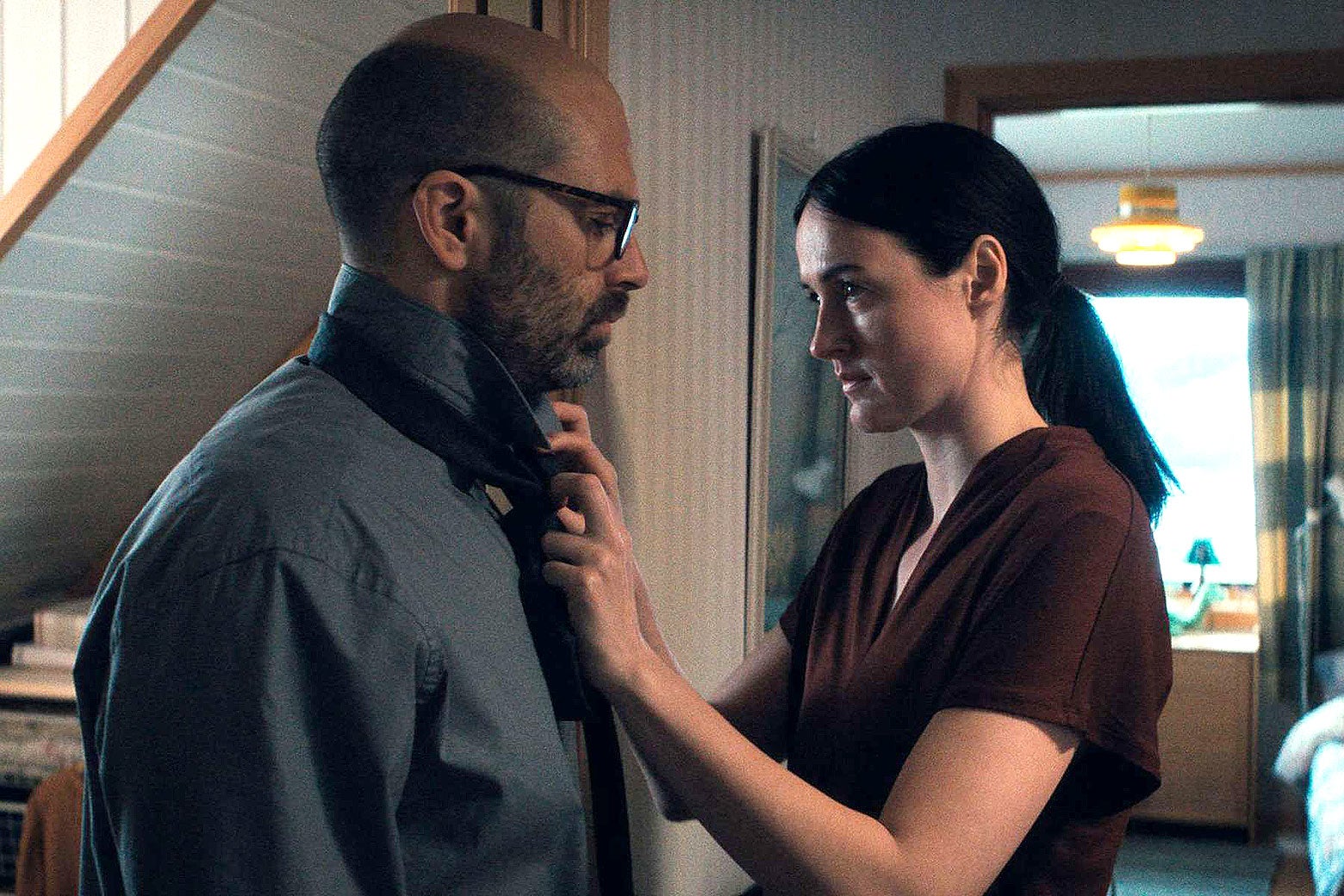
This time around the subject, loosely inspired by real-life events, is the clash of cultural values that can emerge in the wake of immigration. The Gheorghiu family has recently relocated from Bucharest, Romania, to a remote village in northern Norway. Mihai (Sebastian Stan) is Romanian, while his wife Lisbet (Renate Reinsve) is Norwegian-born. They’re returning to her hometown so that her mother can help care for the couple’s five children, who range in age from mid-teens to infancy.
The Gheorghius are Christian fundamentalists whose lives are organized around their faith. Though we never learn exactly what religious sect they belong to, it’s established early on that Mihai and Lisbet are strict but loving parents whose children are forbidden to use the internet, play video games, or dance. As the film opens, their oldest child, teenage Elia (Vanessa Ceban) is apologizing to her father for some infraction she’s committed, the nature of which the audience is never shown. “You need to learn to admit when you’re wrong,” he tells her sternly as she gives him a tearful hug. That will prove to be a tough assignment for every character in this movie, child or adult, especially since, as the viewer is soon to find out, the question of who exactly is in the wrong gets increasingly harder to resolve.
The Gheorghius enroll their children in the local public school, a seemingly welcoming and progressive institution whose principal is their friendly next-door neighbor Mats (Markus Scarth Tønseth). Mats’ rebellious teen daughter Noora (Henrikke Lund-Olsen) takes a shine—possibly a romantic one—to the pious Elia and persuades her and her younger brother Emmanuel (Jonathan Ciprian Breazu) to sneak out of their house for stealthy late-night joyrides on her family’s motorboat.
The family seems to be settling well into their secular but close-knit new community, until the school gym teacher notices some bruises on Elia’s back during wrestling class. It’s never clear that these are the results of parental abuse—earlier on we witness a shoving match between Elia and Noora’s jealous ex-best friend, and the gym class itself seems rough enough to have potentially caused the marks. But Norwegian laws about child abuse are strict enough that within days a representative from the state child welfare office (Ellen Dorrit Petersen) has ordered the placement of not just Elia but all of the Gheorghiu children, including the still-breastfeeding baby, into three different foster homes while the parents’ child-rearing practices are investigated.
This setup is established less than an hour into Fjord’s two-and-a-half-hour run time; with pacing that’s deliberate but never drags, Mungiu’s patient camera (the cinematographer is Tudor Vladimir Panduru) observes the repercussions of these events, both within the Gheorghiu family and throughout the broader community. Eventually that scope will expand to include the global religious right, as the outraged Mihai begins to attract a large social-media following protesting what he perceives to be faith-based persecution. During a civil hearing to assess their parental fitness, Mihai and Lisbet are cross-examined not only about their attitudes toward spanking as a form of parental discipline—a practice Mihai defends as a part of his traditional culture—but about their refusal to give their children cellphones and their insistence on daily prayer. Even as you start to believe it’s true that the couple’s conservative beliefs might be harmful to their kids’ development, you find yourself taking their side against the officious child-welfare bureaucrats who seem convinced that a single interview with two confused teenagers—both of whom say that they love their parents and want to return home—constitutes evidence enough to make all five Gheorghiu children wards of the state and possibly put their parents in prison.
Sebastian Stan may be most familiar to your average American moviegoer as Captain America’s sidekick–turned–Winter Soldier Bucky Barnes (a role he will be reprising in the upcoming Avengers: Doomsday), but he has since made his name as a serious and ambitious actor, delivering a performance of great comic brio as Tommy Lee in the miniseries Pam & Tommy and bringing an unexpected pathos to the thankless role of a young Donald Trump in 2024’s The Apprentice, a role that earned him his first Oscar nomination. Stan spent the first eight years of his life in Romania and subsequently grew up around an extended family of Romanian-speaking immigrants; without knowing the language, I can only say that he switches with utter believability between that language, which Mihai speaks to his family, and the Romanian-accented English he uses to communicate with his Norwegian neighbors. Stan’s resolutely unglamorous performance as Mihai, a soft-spoken but steel-willed man with huge reserves of pride and occasional flashes of frightening anger, is what gives the film its fascinatingly unstable center of gravity, and it’s not hard to see why he might be on his way to nomination No. 2.
As for Renate Reinsve, while she doesn’t disappear physically into her role as completely as Stan does into his—she’s still recognizable as the gorgeous, willowy star of The Worst Person in the World and Sentimental Value—Lisbet is a very different character from the kind we’re used to seeing Reinsve play, not a spiky individualist but a devout and dutiful wife and mother. Her big scene, a sit-down with child-welfare authorities during which she gradually comprehends that her whole world is about to be ripped apart, is a master class in acting as reacting, and may very well earn her a second Oscar nod as well.
Mungiu’s script economically establishes that, though the Gheorghius’ marriage operates by more or less traditional gender roles, the couple’s bond to each other and to their children is genuine and deep. In the film’s most affecting scene, the camera observes Mihai from behind as he looks out the window at his wife in their driveway, buckling their infant son into his car seat as he’s about to be taken away by a worker for child protective services. Neither the father’s nor the mother’s face is visible during this long take; it’s only through their body language (his rigid stance, her slumping shoulders) that we see how wrenching the moment is for them both.
Fjord is less concerned with reconciling the tension between secular and faith-based value systems than with making the audience sit with the fact that even the most nominally progressive modern democracies are constructed around what may be an unbridgeable gulf. Like the beautiful but threatening snowdrifts that cover the mountains around the village—avalanches are frequent enough that the school has a fire drill–like protocol for hustling the kids indoors when the snow starts to slide—the social order Mungiu shows us appears constantly on the verge of collapse. In the film’s final shot, the sacred and the profane seem to converge in an image of quasi-supernatural beauty. You’ll come out of the movie wondering what the filmmaker was asking you to believe about that closing image, and suspecting that his real goal all along was just to keep you asking.
Entertainment
Why Skydance Will Remake the Illustrious Culture of Warner Bros.
There have been many quiet Mondays at the Burbank offices of Warner Bros. Pictures, usually following a bomb like the one the studio just suffered with Tom Cruise’s “Digger.” The cryptic eco-disaster project will represent a loss of hundreds of millions when all is said and done.
But the silence this past Monday was compounded by a familiar wave of merger-induced grief, multiple sources told Variety, especially as employees observed WB Motion Picture Group co-head Pamela Abdy packing up her office in boxes. In a move that shocked some, Abdy and co-head Michael De Luca were dismissed last week as David Ellison finally homed in on his acquisition of Warner Bros. Discovery. De Luca and Abdy had been at the head of Warner’s film business for four years, delivering a wild series of strikes (“A Minecraft Movie”) and gutters (“The Bride!”). In addition to family photos and movie props, Abdy may have boxed up the remnants of a workplace tradition diluted by acquisitions and corporate unions over the past three decades.
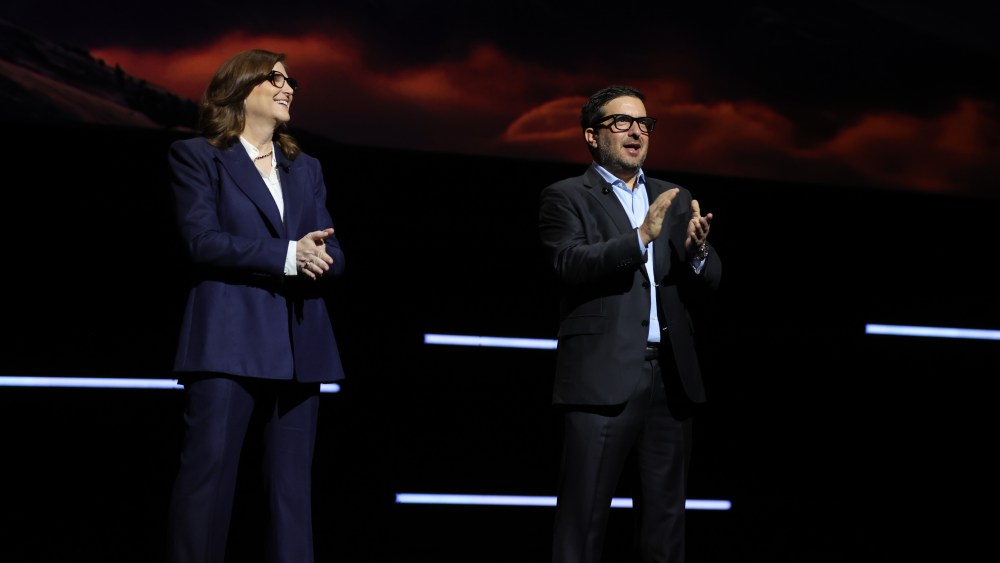
Warner Bros. Pictures is poised to undergo its most dramatic cultural transformation since the 1980s under the new leadership of Skydance CEO Ellison — and specifically, his motion picture group co-chairs Dana Goldberg and Josh Greenstein. The Ellison regime has revealed itself thus far as a shirtsleeve operation, one zeroed in on lowering costs and boosting profits. The preciousness and luxuries that made Warner Bros. a desirable home for creatives will be rightsized with tech ruthlessness, multiple high-level sources suggest.
Goldberg and Greenstein had only spent a year (albeit a productive one) as the heads of Paramount Pictures before this week’s announcement that they will preside over all film labels at the combined company. This means that De Luca and Abdy’s replacement will report into Goldberg and Greenstein, not the office of the CEO (as was the case under David Zaslav’s Discovery and John Stankey’s AT&T, for example).
“On the film side, the scale of this combination, particularly its commitment to theatrical, puts Dana and Josh at the center of the movie business,” Richard Weitz, co-chairman of WME Group, says. The power agent is alluding to Ellison’s commitment to release 30 theatrical films per year across both studios, an agreement he had to put in writing to get his merger over the finish line.
Lorenzo Di Bonaventura, who served as a top WB film executive from 1989 to 2002 before moving to Paramount to produce huge IP like “Transformers,” says the Skydance team’s dedication to movies is not just on paper.
“Looking at the two companies and their slates, I don’t think they have done 30 movies between the two in a very long time,” he says. “That is a net plus for our business, because that means more movies are getting made and more capital is being expended in creating them.”
Goldberg and Greenstein are respected by industry peers, hailing from Village Roadshow (“The Matrix,” “Ocean’s Eleven” series) and Sony Pictures, respectively. They’re now faced with the daunting task of further defining distinct identities for multiple WB labels like New Line and Clockwork.
“I worked with Josh for more than a decade, and I have a great deal of respect for him,” says Tom Rothman, Sony Pictures chief and Greenstein’s former boss. “What you need in that job is a combination of IQ and EQ. It’s managing capital allocation, but in a much more important sense, it’s managing artistic temperaments. He’s extremely capable in both regards.”
While detractors of Goldberg and Greenstein say they do not enjoy the kind of profile some competitors do on the byways of Los Angeles and in coastal elite circles, they’ve greenlit 20 films since taking office at Paramount. They’ve also signed talent deals with the Duffer Brothers, Will Smith, James Mangold, Jon M. Chu and Issa Rae (on top of a distribution pact with Legendary Entertainment).
Any successful film executive’s job comes down to superior talent relations and responsible budgeting. De Luca and Abdy certainly had the former covered (De Luca was a groomsman in Paul Thomas Anderson’s wedding; Abdy was considered a whisperer to filmmakers like Alejandro Iñárritu). “Irresponsible” spending is likely what helped them court the premium filmmakers for which Warner Bros. is renowned, one source says. “It’s easy to say yes when you don’t care what the price is,” they add.
With some $80 billion in debt on the Skydance balance sheet, carte blanche is over. But it’s not just about fiscal prudence. Unlike “carpetbaggers” Zaslav and Stankey, as another top industry player calls them, Ellison and his team consider themselves obsessed lovers of film. The pomp and “platinum” aura of Warner Bros., as one former WB exec phrases it, may be sacrificed quickly.
The lingering magic (and occasional arrogance) of Warner Bros. were holdovers from a culture built by Bob Daly and Terry Semel, insiders say. They ran the company as co-CEOs for almost two decades starting in 1980. The pair prioritized elevated popcorn hits made by substantial filmmakers. Clint Eastwood and Christopher Nolan kept bungalows on the WB lot without having overall deals. “They just wanted to be there,” one former employee says.
While the TV group at WB often was peeved that it brought in all the revenue while the film group got all the attention, the pecking order remained. A collection of Warner vets, many now in high-ranking posts elsewhere, describe a kind of “heart pull” that the studio inspires in its graduates. A crowded text chain of former employees called the “Gate 4 Club” (referring to the entrance many used to access the lot) is active across the industry. They wistfully discuss the days of Daly and Semel parking a row of brand-new Range Rovers as gifts to the cast and filmmakers of “Lethal Weapon” after a sequel hit big.
It’s doubtful any shiny SUVs will be wrapped in ribbons at Warner Bros. anytime soon. Besides, Ellison prefers the sky.
Entertainment
‘Pretty Little Liars’ actor Keegan Allen posts video with bloody face saying he was mugged in West Hollywood
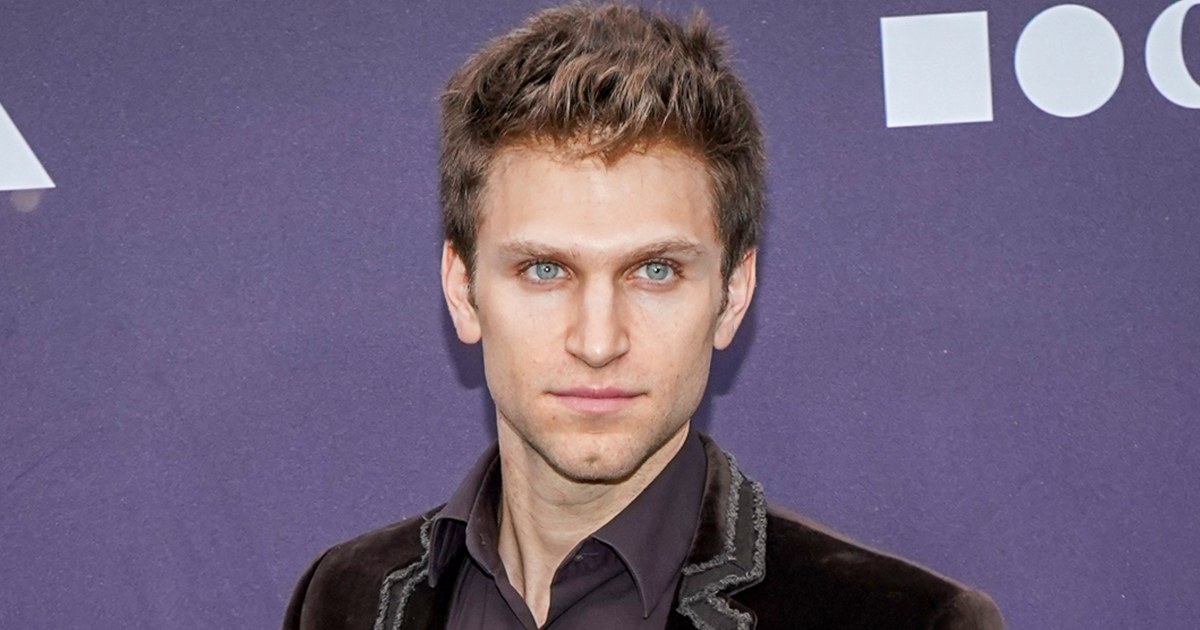
“Pretty Little Liars” actor Keegan Allen was mugged in the parking lot of a West Hollywood grocery store by two masked men who beat him up and stole his watch, the Los Angeles County Sheriff’s Department said Friday.
In the aftermath of the Thursday evening attack, Allen posted video of himself with blood on his face and his left arm.
“I was just, I was just robbed of my watch outside of Laurel Supply,” the rattled actor can be heard saying. “Can you call the police?”
Allen, who is 37, also gave his account of what happened.
00:43
Actor Keegan Allen describes violent mugging incident
00:0000:00
“But these two dudes hit me in the head and pointed a gun at me with, with a knife, and then took off,” Allen said in the footage. “I ah — They had masks on.”
“Took my watch, though,” he added. “Damn it! “
Allen, according to investigators, had just returned to his vehicle from the upscale grocery store on Santa Monica Boulevard when he was confronted by two men.
“One suspect pointed a silver handgun at the victim while the other pointed a knife and demanded the victim’s watch and bracelet,” the sheriff’s department said in a statement. “Shortly after, the victim was struck in the face with the handgun. The suspects obtained the victim’s watch and fled the scene in an unknown vehicle.”
Allen “sustained a laceration to his forehead” but was not hospitalized, the department said, adding that they are “actively investigating this incident” and additional patrols will sent to the area.
In the caption to his Instagram post, Allen wrote, “West Hollywood is not safe anymore.”
“Robbed at gunpoint and knifepoint by two young men that threatened to KILL me over my watch and would have! God said no tonight. My life for a watch,” he wrote.
He then called out Los Angeles Mayor Karen Bass and California Gov. Gavin Newsom, writing, “Let’s hope all these flock cameras … everyone thinks will stop crime can find these very dangerous criminals.”
The city of West Hollywood released a statement in response to the incident, insisting it is “a compassionate and engaged community.”
“The City wants community members to know that community concerns are heard and taken seriously, and that public safety remains the City’s top priority,” the statement said.
Entertainment
The Most Amazing Cosplay of New York Comic Con 2026, Day 1
Given that New York Comic Con hosts a regional qualifier for the Cosplay Central Crown Championships every year, it’s no surprise that cosplayers bring their A-game to the convention. Marvel characters got plenty of love (as always), but we also saw a beautifully detailed Qifrey from Witch Hat Atelier, Firion from Final Fantasy II (in his Dissidia costume, for an extra deep cut), and even a gorgeous take on Krampus. Here’s the best cosplay we saw at New York Comic Con 2026 day one.
Want more io9 news? Check out the best movies and TV shows to stream this month and all the upcoming sci-fi, fantasy, and horror books that should be on your radar.
Entertainment
Seven Havens’ Renewed For 2 More Seasons At Paramount+
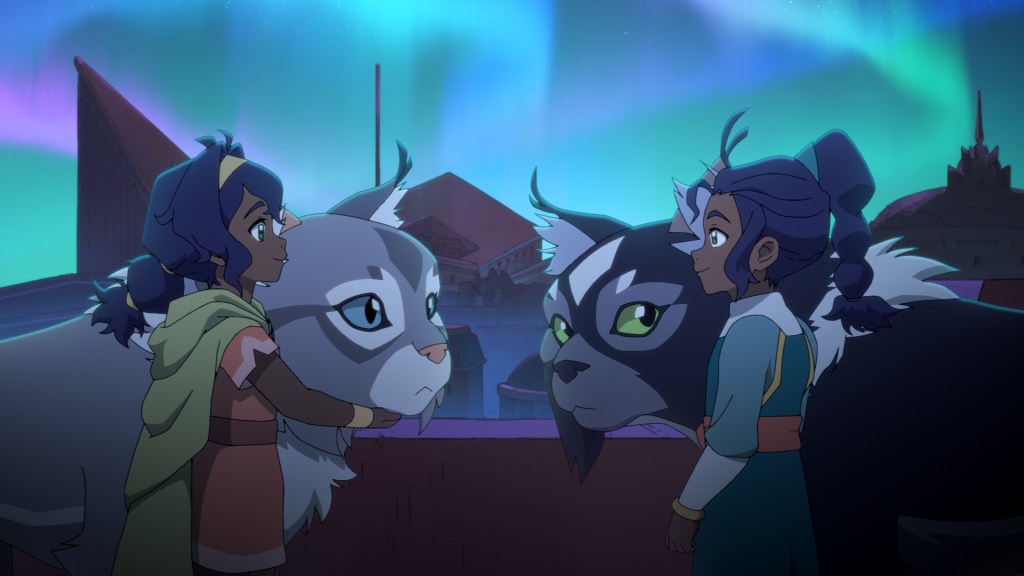
Avatar: Seven Havens has been renewed for two more seasons at Paramount+.
The news was revealed during Friday’s New York Comic-Con panel to coincide with the release of Book 1, confirming that the story of Avatar Pavi and her twin sister Nisha will continue through Books 3 and 4.
Avatar: The Last Airbender co-creators Michael Dante DiMartino and Bryan Konietzko were on hand at the Javits Center to make the announcement, along with fellow Avatar: Seven Havens executive producer Ethan Spaulding and co-executive producer Sehaj Sethi. They were joined by the voices of Pavi, Nisha and Jae: Saheli Khan, Aishu Devan and Major Curda.
The panel, which was moderated by the original voice of Korra, Janet Varney, also gave the audience a peak at the making of the series and a special script-to-screen clip. The latter is embedded below.
Set in the world of Avatar: The Last Airbender, the animated sequel series centers around a young Earthbender who discovers she’s the new Avatar, after Korra from Legends of Korra, in a world shattered by a devastating cataclysm.
Avatar: Seven Havens debuted October 9 with the first three episodes of Book 1. Those will be followed by episodes four through six on Friday, October 16, episodes seven through nine on Friday, October 23, and episodes 10 through 13 on Friday, October 30.
More details on Books 2, 3 and 4 will follow at a later date.
Meanwhile, Avatar Kuruk: Wave of Chaos follows a rebellious teenage Avatar, who bucks thousands of years of tradition by choosing to learn the four elements through globetrotting adventures, staying one step ahead of his angry teacher, rowdy pirates, and chaotic spirits – all while helping the world in his own unique ways.
The series is produced by Avatar Studios and Nickelodeon Animation Studios with co-creator Bryan Konietzko serving as showrunner.


Trump selects Katie Zacharia as White House press secretary
WASHINGTON, Oct 9 (Reuters) – US President Donald Trumpsaid on Friday that he has appointed Katie Zacharia, a communications adviser...

This year’s provocative Palme d’Or winner deserves to be a major Oscar contender.
The Romanian director Cristian Mungiu specializes in naturalistic dramas whose low-key aesthetic choices—long takes, few close-ups, no use of extradiegetic...

Mike Ditka, legendary Chicago Bears coach, dies at 86
Legendary Chicago Bears coach Mike Ditka, who led the team to its only Super Bowl victory in 1986, has died,...


Outrage grows as CDC reportedly poised to fund “unethical” vaccine trial
Outrage has erupted among health experts over news that the Centers for Disease Control and Prevention is still eager to...


‘Pure insanity’: Mathematicians will need years to make sense of OpenAI’s latest drop
“Staggering.” “Overwhelming.” “Unprecedented.” “Surreal.” “Pure insanity.” Those were among the descriptions more than three dozen mathematicians reached for in conversations...


Why Skydance Will Remake the Illustrious Culture of Warner Bros.
There have been many quiet Mondays at the Burbank offices of Warner Bros. Pictures, usually following a bomb like the...


Katie Zacharia will be the next White House press secretary
WASHINGTON — Conservative commentator Katie Zacharia is expected to be named the next White House press secretary, replacing Karoline Leavitt,...


Mike Ditka, legendary Bears coach who led Chicago to its only Super Bowl title, dies at 86
Mike Ditka, a football legend who went from a star tight end for the Chicago Bears to its most famous...


REM sleep linked to lower risk of dementia and Parkinson’s disease
Not all stages of sleep are equal in terms of benefits for the brain. Greater amounts of rapid eye movement...


A Great Home Theater Option All By Itself
I get it: There’s not a ton of room for innovation when it comes to the design of soundbars. They...
-

 Sports2 weeks ago
The Case Keenum game? Veteran QB delivers for Chicago. Bears vs. Eagles takeaways
-

 Entertainment1 week ago
‘Verity’ Posts $4.5M Previews, ‘Digger’ $1.2M
-

 Entertainment1 week ago
Rick Devens Wins In Season 28 Finale
-

 Business2 weeks ago
A 46-foot tunnel boring machine grinding 110 feet under a Virginia harbor chewed a mastodon loose from the seabed and pumped it toward land as slurry, and an operator watching the mud for metal spotte
-

 Business6 days ago
Tesla Cybercab pressure to expand after rocky first month in Austin
-

 Video1 week ago
Meta's Muse: Cute AI Agent Or 'AI Trojan Horse'? | BBC News
-

 Business6 days ago
OpenAI safety employee resigns, claiming the company’s ‘culture is broken’
-
Business1 week ago
Leaked Anthropic IPO prospectus: The US government could hurt our business