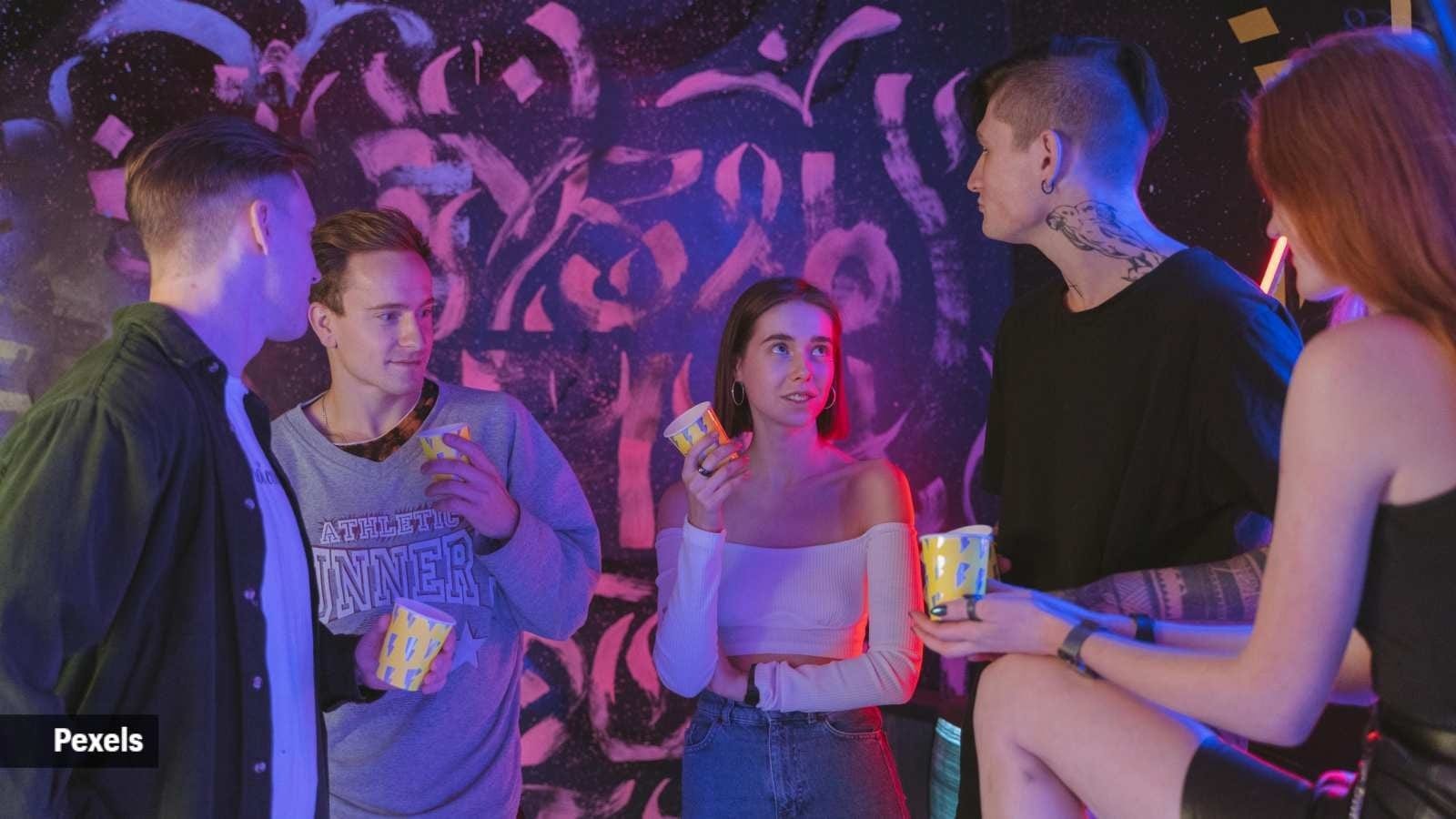
BuzzBallz is a hard drink sold in bottles that look like phosphorescent billiard balls. They contain 15% alcohol by volume which is more than twice the amount of beer. Lucy Rocca, a mother of a 13-year-old girl, first heard about these balls from her daughter. It was December and Rocca and her daughter were discussing a shopping list for a New Years Eve party. Rocca, 50, remembered that when the girls mentioned BuzzBallz she was “like, ‘Whoa! No way'”. She asked her daughter where she got the idea. Rocca, a woman from Sheffield, England who runs a women’s sobriety program, was shocked by the exchange. Why Gen Z believes matcha, makeup, concerts are essential self-careRocca had flashbacks to drinking similar sweet, flavored beverages like Castaway, a wine cooler, when she began binge drinking as an adolescent. (She stopped drinking in 2011) Her daughter’s age group seems to have found an equivalent. BuzzBallz are a 2009 invention, but they have become almost ubiquitous. You can find them scattered like confetti at college parties and stacked near the checkout in convenience stores. The fluorescent orbs can be easily spotted on a Florida Beach during Spring Break; in a crowded Facebook feed, they shine like beacons. The brand was acquired by spirits company Sazerac in that same year, Forbes estimated its annual revenue to be about $500 million. Forbes estimated that the brand’s annual revenue was about $500 million. Story continues below this adAndrew Pentland is a manager and buyer for Gator Beverage in Gainesville. He said he noticed a spike in sales of BuzzBallz and other strong, ready to drink beverages like BeatBox, Cutwater, and other. Pentland, a manager and buyer at Gator Beverage in Gainesville, Florida, said he had noticed a surge in sales of BuzzBallz over the past two years. He also noted that college students are always cautious to card BuzzBallz because they believe it offers “more bang-for-your buck”. He said that there are definitely people who come in underage and this is what they would be trying to buy. Sazerac says it is careful to not market to people under the legal drinking age, and that the company takes measures to prevent BuzzBallz getting into too young hands. As the brand has grown so have the frustrations from watchdog groups who claim that the drinks are deliberately positioned to appeal towards minors. According to Pam Pearce of Community Living Above in Oregon, a nonprofit dedicated to preventing young substance abuse, BuzzBallz follows a familiar playbook to attract young people. The toy-like packaging makes the product look more like an energy drink than a alcoholic beverage. “And now they’re everywhere.”BuzzBallz contain about 15% alcohol by volume, more than double that of the average beer (Photo: Pexels)The Dry Generation? Hold My BuzzBall. BuzzBallz were created by Merrilee Kick, an ex-high school teacher from Texas. She says she was drinking a cocktail by the pool while grading papers when she had her first idea of a drink packaged in a ball-shaped plastic container. She was inspired by the spherical votive she kept nearby. “I thought it would really cool to make round, party-ball types of beverage,” she stated in an interview. The idea, initially called “Party Balls,” became her thesis project for her master’s degree in business administration.BuzzBallz sold in liquor stores contain spirits like vodka and rum, while BuzzBallz Chillers, available in gas stations and convenience stores, contain a base of wine made from oranges or agave. This allows them to be available in stores with wine licenses, rather than the more restrictive liquor licenses. Story continues below this advertisementVictor Lopez, a 24-year-old San Diego resident, loves the Berry Cherry Limeade, and Grapes Gone Wild flavours. He said the drinks are easy to drink and lend themselves to social media stunts. He has posted multiple TikTok clips in which he chugs 3 BuzzBallz at once. “Whenever you go to party, you’re bound to see a BuzzBall,” said he. He said that people his age pass around supersized BuzzBallz at parties called Biggies. The company released a larger version in December called Boulders. It contains 3 liters and has about the same amount of alcohol as 25 standard beer cans. BuzzBallz is reaching a group of people who are known for being hesitant to drink. According to a Gallup study, the rate of adults aged 18 to 34 who drink alcohol has fallen 9 percentage points between 2023 and 2025. This trend began more than 10 years ago. Jess Scheerhorn is the president of BuzzBallz. She said in an exclusive interview that the drink’s appeal was “about as simple as you can make it.” Story continues below this advertisement. “I think that’s why I think we buck the trends a little bit.” BuzzBallz has leaned into a more rambunctious image than your typical hard drink brand. It sold basketballs that were designed to be filled up with the drinks. They are called Big Blue BBallz. BuzzBallz announced in 2024 that it would partner with athletic programs from Louisiana State University and Texas Tech University, to offer its drinks at stadiums. But Scheerhorn pushed against the idea that BuzzBallz is courting underage consumers, despite the drinks being sweet, colorful, and flavorful. “The new trends will always be favored towards young, influential consumers. So I think that’s always going be a thin line around that. Story continues below this advertisement. She said the company is “relentless” in making sure that its marketing events comply with federal, local, state, and local laws, as well as the advertising standards set forth by the Distilled Spirits Council of the United States. She said that events on and around college campus require strict ID checks. The company also employs a “community manager” who monitors the appropriateness of online discussions about BuzzBallz. She and her friends dressed as different flavors at a recent pub crawl. “The marketing is really good,” Inman added, adding that “Because of the constant bringing out of new flavors, it is always topical.” Story continues below this advertisementInman, who is of legal drinking ages in Britain, said that younger teens in her area “100%” get their hands on these drinks. Since years, critics have claimed that the branding and marketing of the products can lead to dangerous territory. They say that it increases a young person’s risk for alcoholism and negative health consequences. In 2016, advocacy group Alcohol Justice accused BuzzBallz intentionally targeting youth. In 2022, the British alcohol industry regulator dismissed an appeal from a consumer who claimed that BuzzBallz had been designed and marketed as toys. (A panel stated that the branding of the drink was “close to acceptable” but did cross it. “You have bright colors and a sugary beverage with a high alcohol content in a container that is easily concealable,” said Jonathan Noel. He is a professor at Johnson & Wales University, the lead author of a study on digital alcohol advertising. “I’m not saying that it was their intention, but the design of the bottle and the product is conducive to youth consumption.” In one dangerous, but common challenge, people mix BuzzBallz and two other beverages with high alcohol content and then down the entire combination. Story continues below this advertisementBuzzBallz offers free drinks to people over 21 who promote the brand, but says it has not encouraged videos about drink mixing. “We don’t engage in or promote these types of challenges overtly, and our position is that any challenge of this nature should be done always through the lens of measured and responsible consumption,” Scheerhorn said in an email.Alcohol-drenched recklessness is not a new phenomenon nor is it a result of BuzzBallz alone. Pentland said that he didn’t think the brand is any more dangerous than other brands that have attracted young drinkers. “There’s always the ability to abuse something and not use it the way it was intended,” he said. At least some fans have cut back on the drinks. Lopez, a 24-year-old San Diego resident, still enjoys the BuzzBall every now and then. He said that it has been some time since he had three consecutive wins, as he was paying more attention to health. “I just wanted better choices,” said Lopez. This article originally appeared in The New York Times





















 Theboldnews video2 weeks ago
 Video5 days ago
 Video6 days ago
 Entertainment2 days ago
 Theboldnews video4 days ago