

Politics
Justice Department clears Paramount’s acquisition of Warner Bros.

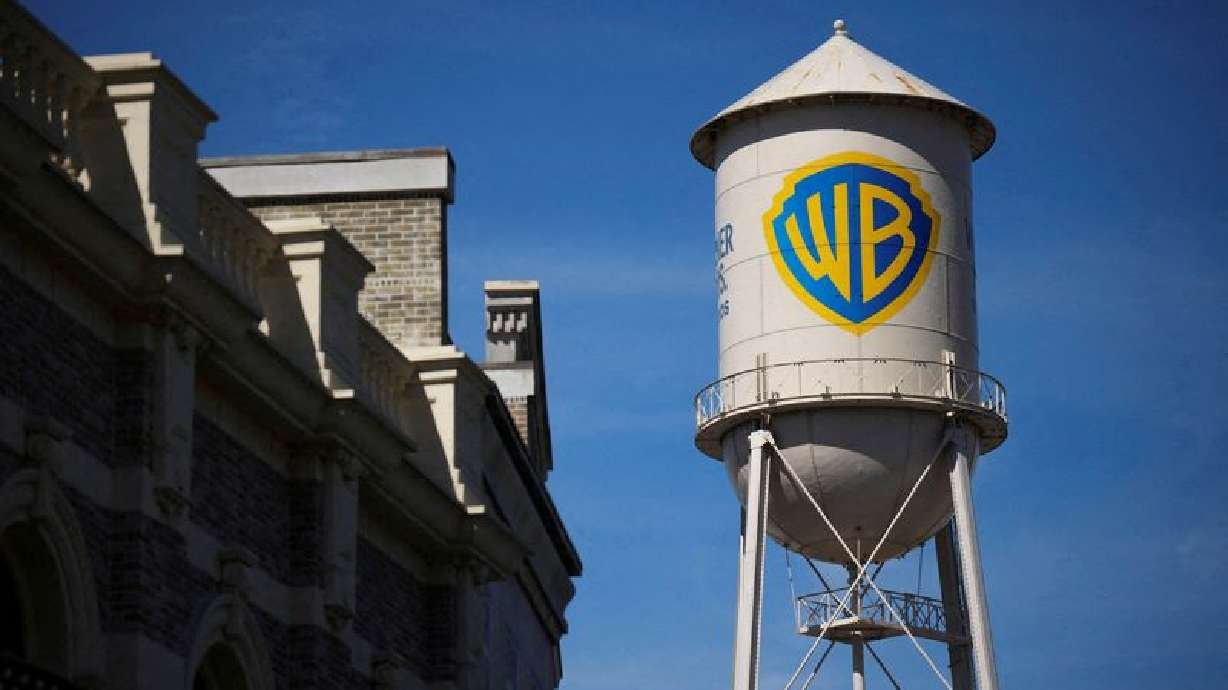
WASHINGTON — The Justice Department’s Antitrust Division said it has cleared Paramount Skydance Corp’s planned $110 billion acquisition of Warner Bros. Discovery, saying it was unlikely to harm competition or consumers.
The DOJ said it spent eight months evaluating how the transaction would affect streaming video services, traditional television and the film industry, weighing input from across the entertainment industry.
“The extensive investigatory record reviewed by the division suggests that the impact of the transaction will be to increase competition across the media and entertainment ecosystem, with benefits for American consumers and workers,” the Justice Department wrote in a statement released on Friday.
Paramount CEO David Ellison’s father, billionaire Oracle co-founder Larry Ellison, has cultivated ties with President Donald Trump, and the company has hired former Trump officials.
Assistant Attorney General Omeed Assefi had said that politics would “absolutely not” drive the DOJ’s review of the transaction.
Competition for audience, talent, investment
Paramount issued a statement thanking the DOJ for its review of the transaction, which it said would allow the company to better compete in an industry defined by an intense scramble for audiences, talent, technology and investment.
“We remain focused on completing the transaction as soon as possible and delivering its benefits to consumers, creators and the entertainment industry as a whole,” Paramount said.
The Federal Communications Commission has not yet approved a petition seeking approval for foreign interests, including Gulf sovereign wealth funds, to own up to 100% of the debt in the proposed $110 billion deal.
Democratic senators raised concerns about Middle Eastern sovereign wealth funds and Chinese companies taking part in the deal. They noted that it involves sovereign wealth funds from Saudi Arabia, Qatar and Abu Dhabi investing in a company that would control CBS stations, as well as major cable news operations including CNN. They also cited media reports that China’s Tencent may take part.
The family of Paramount CEO David Ellison will continue to control voting shares. Paramount said in a filing on Thursday that the “new foreign investors, which will receive only non-voting equity, will not have any ability to influence the company’s editorial decision-making.”
The DOJ said it reviewed more than 2 million documents obtained from 80 sources in evaluating the deal’s impact on various segments of the entertainment industry.
It concluded that a combined Paramount+ and HBO Max would create a stronger alternative to larger streaming services, and increase competition in a way that would benefit consumers.
The deal is unlikely to harm the traditional television business, where there is vigorous competition for live sports, news and political commentary, the DOJ found.
The theatrical business is similarly seeing more robust competition, as Paramount and Warner Bros compete not only with traditional Hollywood rivals, but with smaller independent studios such as A24 and newcomers such as Apple and Netflix, which have signaled continued interest in theatrical releases, wrote the DOJ.
Since the deal was announced, theatrical production has increased, it found.
The DOJ dismissed comparisons to the $71 billion merger of Walt Disney and 21st Century Fox, which closed in 2019, a year before the COVID-19 outbreak triggered dramatic changes in audience consumption patterns. Disney has substantially increased its spending on content in the years since, the DOJ found.
However, several in Hollywood, including actors, directors, writers and producers, have expressed concern that the merger would result in fewer jobs and less diversity of storytelling.
California, New York and other U.S. states are preparing a lawsuit to block the deal, sources familiar with the matter told Reuters last week.
California Attorney General Rob Bonta posted on X that the proposed merger of Warner Bros and Paramount “remains under investigation by my office.”
Politics
Zohran Mamdani Pushes Tax on Rich After Elon Musk Becomes Trillionaire


New York City Mayor Zohran Mamdani used SpaceX’s historic IPO — and founder Elon Musk’s newly minted status as a trillionaire — to push policy.
“Reason #1,000,000,000,000 why we should tax the rich,” Mamdani wrote on X in response to Musk becoming the world’s first trillionaire on Friday.
Musk reached the financial milestone after SpaceX stock popped upon hitting the market on Friday, trading at $150 per share, above the company’s initial offering of $135.
Already the world’s richest man, the windfall put Musk leagues ahead of the next richest person, Google’s Larry Page, who now has a quarter of Musk’s wealth.
Mamdani’s response was in line with his politics. The progressive New York City mayor campaigned on taxing the rich, and the city’s new pied-à-terre tax on multimillion-dollar second homes sparked backlash from some rich residents.
Musk has spoken out against Mamdani and backed his challenger, Gov. Andrew Cuomo, in the New York mayoral race last year.
Politics
Graham Platner’s nomination reflects Democrats’ quest to regain power
WASHINGTON (AP) — Minnesota Sen. Tina Smith came to the Senate at a very different moment for Democrats.
Appointed in late 2017 to replace Sen. Al Franken after fellow Democrats demanded his resignation amid allegations of unwanted touching and kissing, Smith entered Washington during the height of the #MeToo movement. Democrats were pushing members from office and contrasting their approach with Republicans’ willingness to stand by Donald Trump through scandal and controversy.
Nearly a decade later, Smith says Democrats are focused on something simpler.
“Democrats want to win,” she said.
As the party aims to flip both chambers of Congress in the midterms, Smith and other Democrats have backed Maine U.S. Senate candidate Graham Platner despite a growing list of controversies, including a tattoo recognized as a Nazi symbol, sexting with other women shortly after he married and allegations, which Platner denies, that he locked an ex-girlfriend in a room and forcefully twisted her arm. Platner cruised to victory in this week’s primary after Gov. Janet Mills suspended her campaign.
The support for Platner is about more than one candidate. It reflects a Democratic Party increasingly willing to overlook behavior it might once have deemed disqualifying, and instead judge candidates by whether they can energize voters and help the party regain power.
“Voters are looking for candidates that are speaking their language and talk about the things that matter to them,” said Smith. “That’s the standard that we have to hit in order to win.”
Democrats grapple with the reality of a big tent
The support for Platner comes at a fraught moment for Democrats, who are in the minority in both chambers of Congress while Trump once again occupies the White House.
In the wake of their sweeping losses in 2024, many Democrats argued the party needed a bigger tent with fewer purity tests and more room for candidates and voters who don’t fit neatly within the party’s traditional coalition.
But expanding that tent has raised difficult questions about where Democrats should draw the line. In Virginia, Democrat Jay Jones won election as attorney general after reports surfaced during the campaign that he had texted a fellow delegate suggesting the then-House speaker should get “two bullets to the head.”
Some in the party also condemned Michigan Senate candidate Abdul El-Sayed for appearing with progressive streamer Hasan Piker for a campaign event. Piker, a 34-year-old streamer with 3.1 million followers on Twitch and 1.8 million on YouTube, has made many controversial remarks, including that “America deserved 9/11.”
Platner’s candidacy has become one of the clearest examples. While some Democrats view his controversies as disqualifying, others argue that voters made their choice.
“He won the nomination. That was the decision of Maine voters. And I respect that decision,” said Sen. Adam Schiff, D-Calif.
Arizona Sen. Ruben Gallego, who has endorsed Platner, agreed the decision lies with voters.
“It’s not up to the politicians to decide,” he said.
For some Democrats, the shift reflects lessons learned during the Trump era. Republicans stood by Trump through scandals, impeachments and criminal convictions, often without paying a lasting political price at the ballot box. Many Democrats now argue voters care more about whether a candidate speaks to their concerns than whether they meet traditional expectations for personal conduct.
“I think what the people of this country and the people of Maine are interested in is how we’re going to have a government that represents all of us and addresses the many crises we face. Not the marriage problems of a campaign,” said Sen. Bernie Sanders, an early Platner supporter.
The voters decide
Progressives who have long argued that Democrats spend too much time policing candidates and not enough time channeling voter frustration see Platner’s victory as evidence that the party’s base is hungry for something different.
Maine voter Elizabeth Massey, a Platner supporter from Penobscot, said she took the allegations seriously and remains troubled by parts of Platner’s past. But she said his willingness to apologize and the issues facing the country ultimately mattered more to her vote.
“So do I care more about texts that he sent or the war in Iran and what that’s doing to gas prices?” Massey said. “Pretty clearly the latter.”
Massey said Platner’s appeal is that he speaks directly to voters’ concerns, not that he is without flaws.
“He owns them. He has apologized for them,” she said of the allegations.
Other supporters argue that Republicans are holding Platner to standards they have not applied to Trump.
“The Republicans don’t have much moral high ground to stand on when they’re criticizing him for what he’s done when Trump is a convicted felon,” said Annette Babcock, who is from Platner’s hometown of Sullivan.
The willingness to embrace candidates with baggage comes as many Democrats remain deeply dissatisfied with their party.
Only about two-thirds of Democrats had a “somewhat” or “very” favorable view of their party in an April AP-NORC poll, a decline from 85% in September 2024. In a separate AP-NORC poll in August 2025, many Democrats described their political party as “weak” or “ineffective.”
But while Platner may fire up the base, questions linger about whether that will translate to general election wins. Platner now faces Republican Sen. Susan Collins, one of the GOP’s most durable incumbents and a politician with a long history of attracting independents and crossover Democratic voters.
“The test is never going to be who wins the primary,” said Michigan Sen. Gary Peters, who led the Senate Democrats’ campaign arm in 2022 and 2024. “It’s going to be who wins the general election.”
Not everyone is on board
Many Democrats have not given full throated support of Platner’s candidacy.
Among them is New York Sen. Kirsten Gillibrand, the chair of the Senate Democrats’ campaign arm, who has primarily focused on defeating Collins rather than embracing Platner. Gillibrand helped lead the push for Franken’s resignation, saying “enough is enough” and that she believed the women who accused him.
Other Democrats have been more openly skeptical. Pennsylvania Sen. John Fetterman and New Jersey Rep. Josh Gottheimer have spoken out against Platner, while some lawmakers have offered only qualified endorsements after his primary victory.
“Well, Maine supports him. So yes,” Sen. Peter Welch, D-Vt., responded when asked if he supports Platner.
Emily Cherniack, the executive director of New Politics, an organization that recruits military veterans and national service leaders to run for office, said she has been “stunned” by some Democrats’ willingness to downplay allegations of aggression and volatility against Platner.
“Democrats are saying, we think it’s actually more important to win the majority and protect democracy, regardless of what he did. That to me is what the message is,” Cherniack said.
“Just be honest and explicit about that choice.”
___
Associated Press reporter Patrick Whittle in Maine contributed to this report.
Politics
Texas GOP Chair Abraham George loses reelection at convention

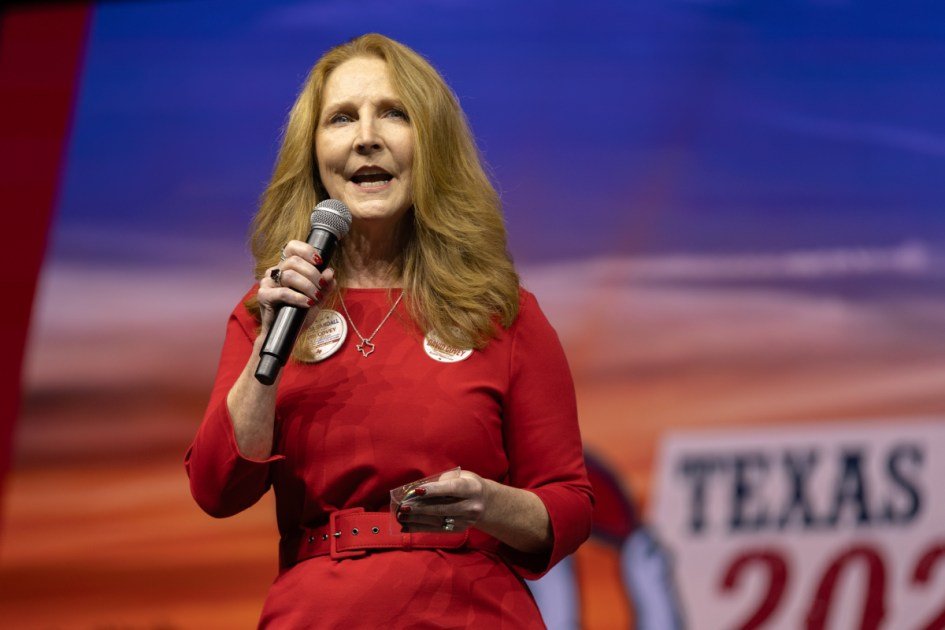
HOUSTON — Republican Party of Texas Vice Chair D’rinda Randall became the party’s new leader Friday after defeating her former running mate, incumbent Chair Abraham George, shaking up the top of the state’s majority party ahead of the fall midterm elections.
Randall, who first became involved in GOP politics nearly two decades ago, campaigned on her accomplishments as the party’s second-in-command during the last two years, touting financial wins like the return of certain convention corporate sponsors and her support for grassroots members, pointing to volunteer training she led.
George conceded in a social media post shortly before Friday’s general session at the convention began, after delegates overwhelmingly backed Randall in an initial round of votes among each Senate district caucus.
“While this race has come to an end, our mission continues,” he said. “Now is the time to come together, unite behind our Republican nominees, support the entire Republican ticket in November, advance our legislative priorities in the next session, and continue standing firmly for the conservative principles outlined in our platform.”
George’s tenure came to an end after a memorable two-year run that saw the party claim long-sought legislative victories in Austin, including private school vouchers and a variety of socially conservative new laws. That productivity, driven by a hard-right turn in the Texas House, reduced the infighting that has plagued the Texas GOP in recent years. Attorney General Ken Paxton led a long list of elected officials and activists lining up behind George, while Randall touted a much narrower stable of backers.
Yet as the convention kicked off in earnest Thursday, the George R. Brown Convention Center in downtown Houston remained sparsely populated, with many of the over 7,000 registered delegates appearing to skip the event despite Gov. Greg Abbott’s incentive program for county parties to fill their allotted delegate seats. The convention also fell just before FIFA World Cup games kicked off in Houston, driving up the cost of lodging in a city that was hundreds of miles from many would-be delegates’ home towns.
Amid the grassroots apathy, George also faced criticism earlier this week from a member of the State Republican Executive Committee, the party’s governing board, who claimed the party was taking a $651,000 loss to run the convention. In a response, George said the deficit was closer to $100,000 and would end up in the black “when you factor in the registrations that will be paid over the next couple of days.” But that did not appear to allay concerns about the state of the party’s finances heading into the fall midterms.
Randall’s victory arrives at a crucial juncture for the party, as it tries to write its next chapter and unite voters behind Paxton, the Senate nominee who defeated incumbent John Cornyn after a bruising primary that has left behind scars within the GOP.
Trey Trainor, a longtime GOP operative who was tapped to lead the convention’s platform committee, which drafts the party’s planks, said George’s ousting stemmed from financial woes and a struggle to engage members.
“Look, I think everybody’s incredibly nervous about what happened during the primaries,” Trainor said. “They see that the Democrat Party is incredibly engaged. I think the low turnout that you see here shows some apathy of Republican voters, and they really look to the party leadership to create that enthusiasm and drive people to the polls.”
The removal of George, the Texas GOP’s first Indian American chair, also arrived at a time when the party is experiencing a wave of anti-Indian sentiment, particularly in George’s backyard of North Texas. Much of the same faction that has targeted Muslims for what they see as the proliferation of Sharia law is also raising alarm about the state’s fast-growing Indian community, urging a halt to legal immigration to combat alleged H-1B visa exploitation and labor competition.
George regularly draws racist replies to his social media posts, even when pushing for conservative priorities such as abolishing the H-1B visa program; yet, delegates at the convention did not indicate that topic surfaced in deliberations about the chair election.
The mix of headwinds facing George created the opening for Randall and her running mate, David Covey, a hard-right activist who previously served on the state party’s governing board and unsuccessfully ran against former House Speaker Dade Phelan of Beaumont in 2024. Covey also previously ran for party chair in 2021, finishing as the runner-up to George’s predecessor, Matt Rinaldi.
Some of Randall’s supporters also charged that the incumbent chair has been too welcoming to establishment Republicans, after he warmed up to Phelan’s successor, House Speaker Dustin Burrows, following initial reservations over his election aided by Democrats. That line of criticism laid bare the challenge faced by party chairs, who must balance the delegates’ appetite for a grassroots fighter while also raising money from the party’s establishment ranks.
Burrows was set to address the convention — the first sitting speaker ever to do so — Friday afternoon.
In a statement, Burrows congratulated Randall and Covey and said he looked forward to “working together to strengthen our party and advance the conservative principles Texans value.”
Politics
To Defeat Democrats, Texas Governor Embraces the Hard Right

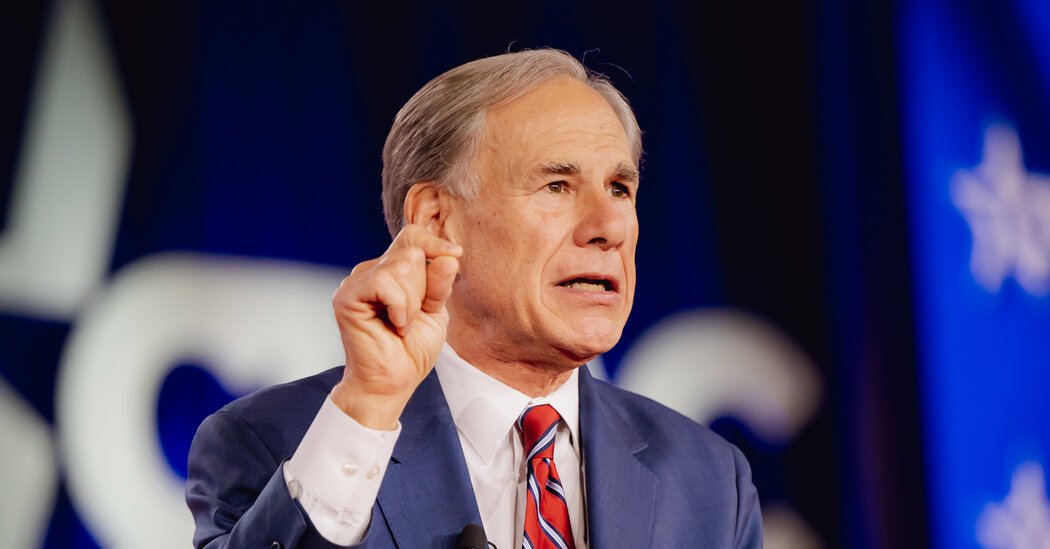
When the Republican Party of Texas held its convention in Houston four years ago, Gov. Greg Abbott did not deliver a speech. Instead, he held his own gathering nearby.
In 2024, he appeared remotely by video instead of speaking before thousands of the most hard-line Texas Republican activists.
But after years of keeping the gathering at arms length, Mr. Abbott is set to offer his full embrace on Friday, delivering a keynote speech for the first time since 2018 and, in the process, positioning the party’s hard right at the center of Texas politics.
Mr. Abbott’s speech, set for 1:30 p.m. local time, follows decisive primary election victories by a slate of hard line candidates, some of whom the governor opposed. They include some who have pledged to rid the state of Muslims, further restrict voting access and end any remaining semblance of bipartisan comity in the state’s politics.
At the top of the ticket is Ken Paxton, the state attorney general who defeated the state’s sitting Republican senator, John Cornyn, using an unapologetic, anti-incumbent MAGA message.
Despite years of not appearing in person at the full convention, Mr. Abbott is no moderate. During his decade as governor, he’s helped set the conservative policy agenda, most recently as the lead supporter of the state’s new $1 billion school voucher program.
Thank you for your patience while we verify access. If you are in Reader mode please exit and log into your Times account, or subscribe for all of The Times.
Thank you for your patience while we verify access.
Already a subscriber? Log in.
Want all of The Times? Subscribe.
Politics
Trump has backed away from renewed war with Iran – here’s why

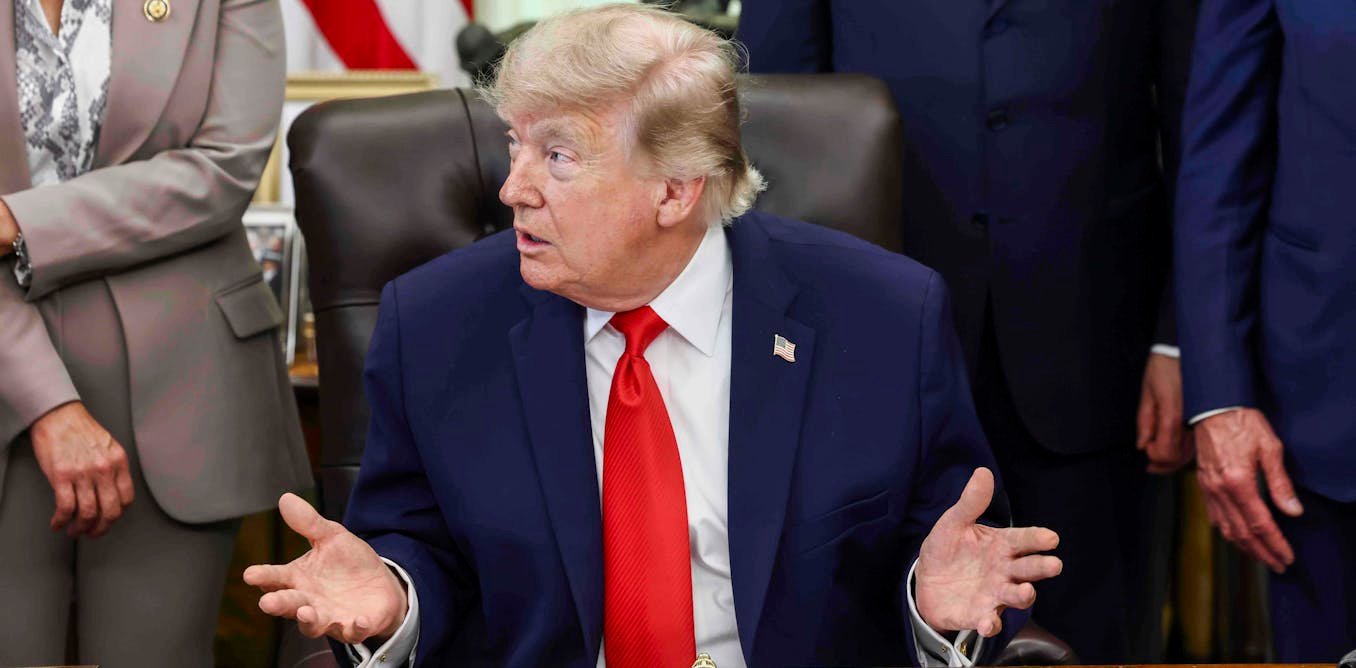
The US and Iran stepped back from the brink of returning to all-out war on June 11. Hours after saying the US military would carry out strikes against Iran for a third consecutive night, Donald Trump postponed the attack. The Iranian military had said the US would “receive a more severe response than before” if it followed through on its threats.
Trump claimed to have cancelled the strikes because of progress in negotiations between the two countries. In a statement posted on social media, Trump said: “Discussions and final points have been, in both concept and great detail, approved by all parties involved.” He later added that the deal is set to be signed over the “next few days”.
Whether this will happen remains to be seen. Trump has declared that a deal between the US and Iran is imminent on numerous occasions only for no agreement to be signed. Iran’s foreign ministry has also called claims that an agreement has been reached speculative, insisting that “nothing has been finalised”.
And, even if it is signed, the agreement Trump is talking about is far from a final peace deal. It appears to be a memorandum of understanding, establishing a framework for the two countries to talk about unresolved issues. These include Iran’s ballistic missile capabilities and nuclear programme.
Rather than the supposed diplomatic progress, perhaps more significant in persuading Trump to pull back from renewing an all-out war with Iran was that a return to conflict simply would not have been in the interests of the US.
War, as Prussian military strategist Carl von Clausewitz observed in his 1832 book, On War, is the continuation of politics by other means. Its enormous costs can be justified only when they are tied to a coherent strategy and when there is a clearly defined political objective that there is a reasonable prospect of achieving.
Measured against this standard, there was no argument for returning to war with Iran. The difficulty begins with the absence of any discernible plan in Washington. Trump has articulated no strategy and no definition of victory beyond a vague aspiration to prevent Iran from obtaining nuclear weapons.
He was drawn into prosecuting a war based on intelligence about the fragility of the regime in Tehran that proved flawed and on scenarios that were overconfident and have not come to pass. These scenarios suggested the decapitation of Iran’s leadership would lead to sudden regime collapse and a popular uprising that would see the country transition to democracy.
There is also very little a return to all-out war could have accomplished. The reason for this is that the Iranian regime is not a conventional state that can be brought down by overwhelming firepower. The regime, which is now dominated by the powerful Islamic Revolutionary Guard Corps, can best be described as a militia with a state.
It is operating through a dispersed network of forces across air, land and sea, which were designed as an asymmetric instrument of power capable of absorbing, scattering and outlasting precisely the kind of concentrated military pressure the US military was built to deliver.
Weeks of intensive bombing earlier in the war did not shatter the regime’s centre of gravity. Rather, it consolidated the regime and has left it more cohesive and determined than it was before. In contrast to the more cautious regime of Iran’s late supreme leader, Ayatollah Ali Khamenei, which tended to wait and to respond, the new regime has become assertive.
It has been quick to retaliate against US and Israel attacks with severity and to set the pace of escalation. On June 8, for example, Iran launched barrages of missiles towards Israel in protest at the Israeli military’s escalating campaign in Lebanon.
Costs of war
Iran also retains the capacity to impose intolerable costs on everyone while retaining a high threshold of pain itself. If an all-out war returned, there was a very real risk that Iran would have moved to close the Bab al-Mandab Strait between Yemen and the Horn of Africa by mobilising its ally, the Houthis.
This threat is already on the table. The Houthis paused their attacks on shipping in the region after a ceasefire was signed in Gaza in October 2025, but have warned these will resume if the Iran war escalates. The Bab al-Mandab Strait serves as the principal bypass route for Saudi oil and for much of Gulf maritime trade, both of which are currently unable to transit the closed Strait of Hormuz.
Iran is also likely to have resumed direct attacks on the Gulf states with greater scope and intensity than before, which could have converted an already severe global energy crisis into something far worse. Perhaps the most consequential impact of returning to all-out war, therefore, was the prospect that it would have cost the US its valuable Gulf partners.
Every Iranian strike that American installations in the region attract reinforces a lesson the Gulf monarchies are increasingly inclined to draw, which is that the presence of American bases on their soil makes them targets rather than affording them protection.


Kennedy Center says it has removed Trump's name from building
Spectators gathered on Saturday afternoon to witness the removal of President Trump's name from the John F. Kennedy Center …


Why Flamingos are the symbol of protests in Albania
Since late May, masses of people in Albania have been protesting plans to build luxury resorts in a remote area...


Trump says Iran deal is scheduled to be signed on Sunday | BBC News
A deal to end fighting between the US and Iran is "scheduled to get signed" on Sunday, US President Donald...


King Charles III celebrates monarch birthday
Thousands gathered outside Buckingham Palace to watch the annual Trooping of the Color celebrating the official birthday of …
After Milania Giudice Domestic Violence Arrest, ’RHONJ’ Cast Speculates Luis Ruelas Was the Victim
After the shocking news that Milania Giudice, daughter of reality TV legend Teresa Giudice, was arrested for domestic violence back...


Knicks in 5? CNN hears from celeb superfans
The New York Knicks are on the brink of an NBA title after the biggest comeback in NBA Finals history...


Paris holds first sumo wrestling tournament in 30 years
More than 60 of the world's top sumo wrestlers will compete in a weekend-long tournament in Paris, which hasn't hosted...


Proposed data center near Nashville Zoo sparks controversy
A crowd packed into a Nashville Metro Planning Commission meeting Thursday night to oppose plans to build a data center...


Dementia Specialists Reveal The Foods They Always Tell Patients To Eat More Of
Specialists Are Practically Begging People To Eat These 3 Foods That Actually Lower Dementia Risk There are several things you...


How David Hockney Taught Los Angeles to See Itself
It was a perfect sunny day for lounging poolside at the Hollywood Roosevelt Hotel. The sky was a keen pale...
-

 LifestyleNews1 week ago
120 minutes of strength training per week may help extend lifespan
-

 Politics2 days ago
What to know about the stabbing that set off fiery riots in Northern Ireland
-

 Video1 day ago
Download fans say what they love about the festival. #DownloadFestival #BBCNews
-

 Video1 day ago
Why SpaceX IPO isn't about space. #SpaceX #ElonMusk #BBCNews
-

 HealthNews2 days ago
The people of Okinawa, Japan only eat until they are about 80 percent full, then stop — and the practice has been linked in multiple peer-reviewed studies to lower rates of cardiovascular disease, slo
-

 Food20 hours ago
Pope Leo’s plane was grounded. Then the King of Spain stepped in to help
-

 TravelNews1 day ago
My Paternal Instinct Should’ve Warned Me About Netflix’s Maternal Instinct
-

 Politics1 day ago
Zohran Mamdani Pushes Tax on Rich After Elon Musk Becomes Trillionaire