

PM office canada
As the AI economy booms in the U.S., Canada sees a blip

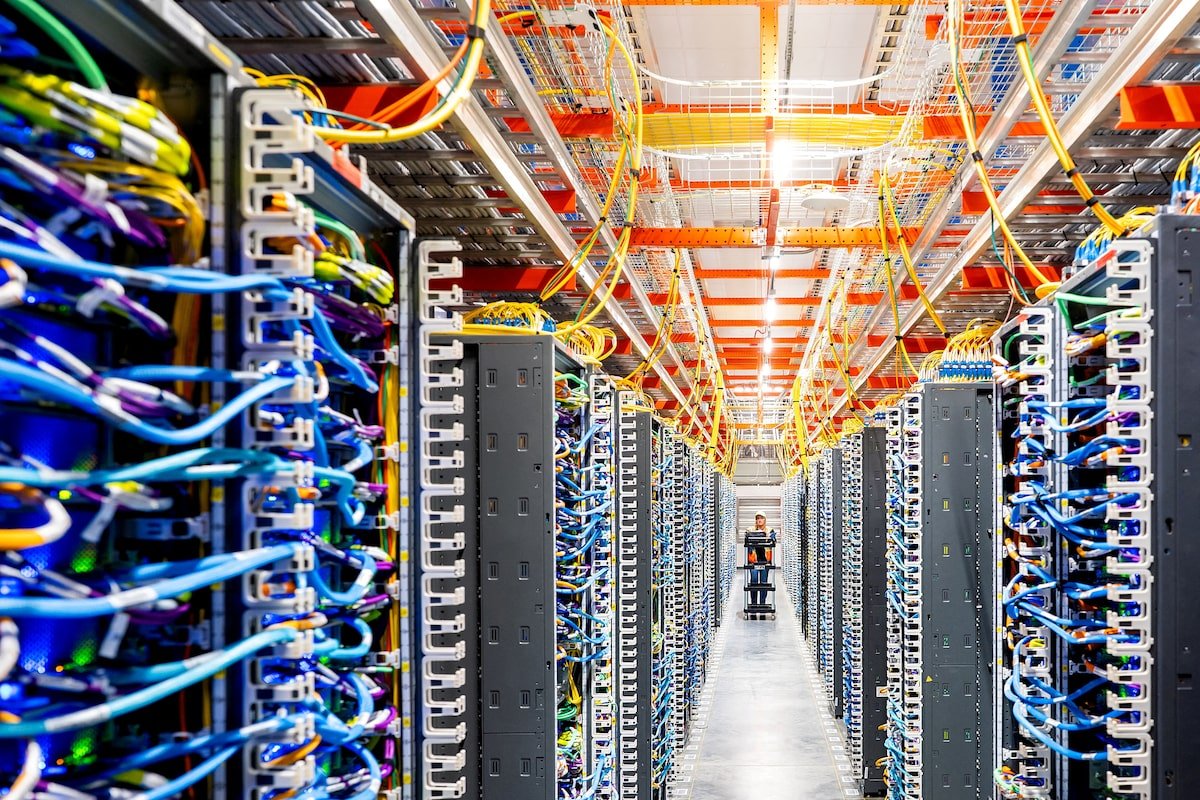
The frantic speed with which the artificial intelligence bonanza is rewiring the United States economy is staggering.
The U.S. now spends more to construct data centres than office buildings. Having roughly doubled imports of processors and servers from Mexico last year to US$90-billion, the U.S. is on track to double that number again this year.
Meanwhile, four tech giants alone plan to commit US$650-billion this year in capital spending. That’s almost as much as the U.S. private sector spent on all nonresidential structures last year, including factories, mines, railroads, warehouses and pipelines.
The manic rollout of AI-related infrastructure and systems is juicing economic growth south of the border in profound ways. In Canada, not so much.
While developers here have announced scores of new data centre projects – both standard facilities and large scale operations necessary to power AI – over the last two years, sparking a growing public backlash over water and energy-use fears, very few construction projects have gotten under way.
Konrad Yakabuski: AI data centres are becoming the wedge issue of our era
Likewise, workers and businesses in Canada have been much slower to adopt AI or invest in computing technology, continuing a decades-long pattern of underinvestment that has left Canada a productivity laggard. This is all reflected on the trade front, with Canada largely sitting out the rush to secure AI-related equipment from overseas.
Last year roughly 30 per cent of U.S. real GDP growth stemmed from private investment in IT equipment and software, according to a recent report by Desjardins’ deputy chief economist Randall Bartlett. By contrast, he estimated weaker spending on tech gear by businesses in Canada meant little more than 5 per cent of economic growth in 2025 could be attributed to AI-related capital spending.
“While tech-related investment did pick up in Canada toward the end of last year, there is a lot of ground to make up to close the gap with the U.S.,” he wrote.
In April, U.S. companies spent more than US$50-billion on an annualized basis on data centre construction, a 180-per-cent increase in three years, according to the U.S. Census Bureau.
Statistics Canada has no similar detailed measure, with investment in data centre construction mixed in with all spending on transportation and utilities. The closest the official stats get to measuring data centre construction activity is in the number and value of building permits for what Statscan calls “communications buildings,” a grab bag of bygone structures such as post offices, telephone exchanges and radio stations into which data centres get lumped.
The tally is sobering. During the last 12 months, as of March, municipalities issued just $188-million worth of permits for all types of communication buildings, and that was down 52 per cent from the previous 12-month period.
Xavier Lemyre, an analyst with Statscan’s building construction division, said there simply isn’t enough activity to warrant separate data centre building permit and construction investment releases yet. That could change if activity picks up, but he said there is no threshold for when that might occur.
“We keep a close eye on trends, and if the number of permits received increases steadily over the coming months, it’s something we would consider,” he said.
Alberta bill to prioritize AI data centres that generate their own power
Avik Dey has a front-row seat to Canada’s sluggish data centre rollout as the president and chief executive of Capital Power Corp., an Edmonton-based independent power producer. Since 2023, the company has been advocating for its Genesee Generating Station, a thermal power facility near Edmonton, to attract a large-scale AI data centre to the site.
Mr. Dey said Canada’s smaller size and the difficulty of securing semiconductors partly explains why the country is lagging, but the larger “bottleneck” for AI is access to power in Canada’s heavily regulated electricity market.
Since Alberta is the only fully deregulated power market, “Alberta has the advantage. The path to power is seamless, and there’s a path to power that actually benefits consumers and ratepayers here,” he said, pointing to the province’s ambitious goal of attracting $100-billion of data centre investment by 2030. “I believe the process will be successful, it’s just taking a longer time to get there.”
Still, even in Alberta, developers face mounting opposition to their data centre plans. Meanwhile, last week, two planned projects were thwarted shortly after the Prime Minister Mark Carney released his government’s AI strategy aimed at boosting its adoption.
On June 4, Manitoba Premier Wab Kinew nixed a large-scale data centre planned for Île-des Chênes, southeast of Winnipeg, saying, “There’s a big threat to the environment and not much benefit to the economy.” Then in Ontario, Hamilton’s committee of adjustment rejected a plan to partition land on the city’s waterfront for an AI data centre.
Canada isn’t sitting out the data centre building boom entirely. But for all the hype and attention the myriad of new construction announcements receive, that’s not yet translated into many shovels in the ground, according to Vancouver-based Aterio, which tracks the growth of the data centre industry.
Canada needs to be realistic about what its data centre goals are, said Viet Vu, manager of economic research at the Dais, a public policy think-tank at Toronto Metropolitan University, who cautioned against “using the U.S. as a yardstick to compare us against on AI.”
That’s because the frothy rollout south of the border is banking entirely on future gains from AI that may not unfold as hoped, which could leave local governments and electricity rate payers exposed if projects fail.
A bigger concern, he said, is the growing antipathy toward AI in Canada, with global surveys finding Canadians’ trust in the technology is significantly below the global average.
“Data centres are the physical embodiment of the visceral fear employees and people have about automating their jobs away in the long run,” he said. “For Canadians to embrace AI, that fear needs to be tackled.”
For Sal Guatieri, a senior economist at Bank of Montreal, the concerning AI gap between Canada and the U.S. isn’t so much data centre construction, which he said makes a relatively small contribution to GDP growth. It’s the yawning disconnect between business investment in innovative technologies between the two countries.
“We’re not investing as heavily in AI systems as U.S. companies are and that underinvestment in information technologies has been a longstanding issue for Canada all the way back to the tech boom of the late 1990s and beyond,” said Mr. Guatieri.
The investment gap has widened dramatically since 2023, with spending on computer equipment surging as a share of GDP in the U.S., while nudging only modestly higher in Canada.
It’s likely too soon to tell whether higher U.S. investment levels related to AI are behind that country’s productivity boom. Growth in U.S. productivity has been rising at its fastest pace in two decades, but that’s been the case for five years, well before AI hysteria began.
Still, given Canada’s poor track record, the widening gulf in business investment doesn’t bode well.
The first quarter of the year did hint at improvement for Canada, said Mr. Guatieri. Business spending on computers and software combined climbed by nearly 8 per cent from the year before, the fastest pace since 2022, despite the uncertainty from tariffs that is leading chief financial officers to keep a tight grip on spending.
“Investment in high-tech equipment would likely be even stronger if not for the trade war,” he said. “The AI boom is adding some resilience to the U.S. expansion but providing only a very mild tailwind here in Canada, though certainly any tailwind is welcome.”
Opinion: In the age of AI, power generation is Canada’s hard power against the U.S.
As much as intense AI capital spending is pushing U.S. economic activity higher, the country heavily relies on others to supply most of the computer processors and servers for all those data centres, and that is creating trade distortions that complicate the U.S. growth picture.
But powering up an AI data centre and keeping it running requires more than chips. And it’s here where another stark economic gap between the U.S. and Canada lies.
In a recent study, Michael Waugh, an economist and monetary adviser at the Federal Reserve Bank of Minneapolis, used AI to analyze the true scale of the computer equipment, batteries, electrical switchgear, copper wiring and hundreds of other products required for the U.S.’s AI rollout.
Taken together, those products amounted to 23 per cent of all U.S. imports last year, he found. Absent the AI boom, he estimated, the U.S. goods trade deficit would have been roughly smaller by US$200-billion, or 16 per cent.
When The Globe and Mail applied the same screen to Canadian imports, using a list of the 20 largest AI imports published by Mr. Waugh, the result was dramatically different. While Canadian and U.S. imports of AI-related equipment grew at roughly the same pace for most of the last decade, in early 2024, U.S. imports exploded, while Canadian import growth stayed the same. (Mr. Waugh reviewed and supported The Globe’s analysis.)
It’s another reminder that when it comes to AI’s effect on the economy, the U.S. is in a world all its own.
PM office canada
Canada’s Carney sees ‘timely’ role for G7 in any Iran deal

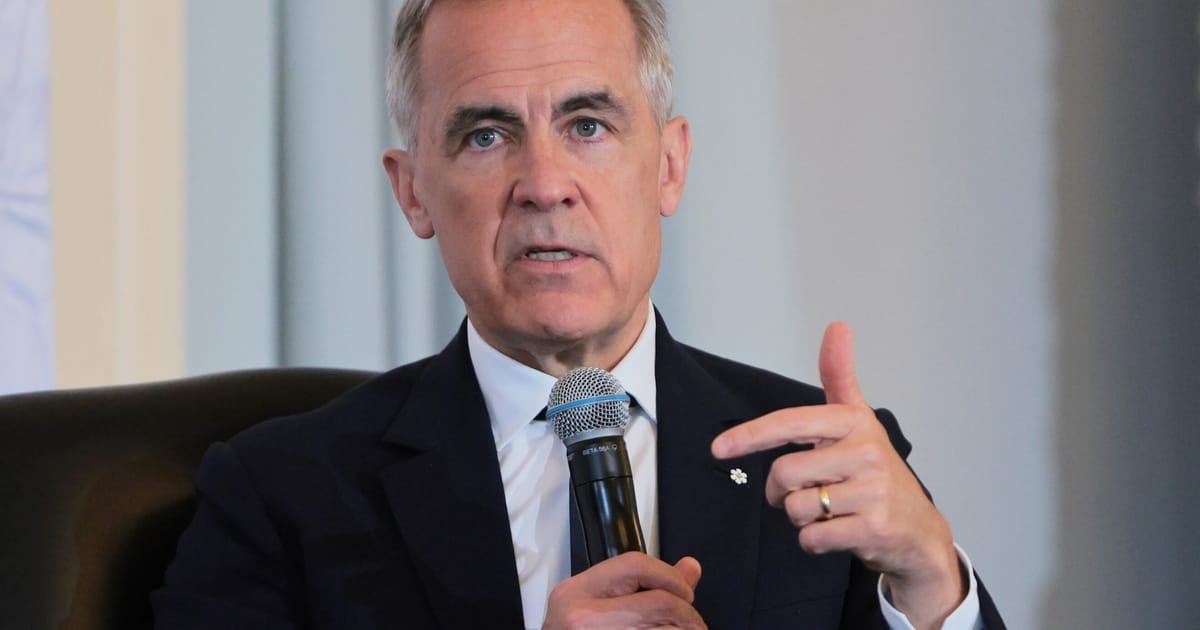
DUBLIN — The upcoming G7 summit could be well-timed to cement an emerging peace agreement on Iran — but only if the deal includes a ceasefire in Lebanon too, the leaders of Canada and Ireland stressed on Saturday.
Canadian Prime Minister Mark Carney, speaking at the start of a two-day visit to Ireland, looked ahead to his much more challenging next stop: the G7 summit in France alongside his frequent foil on the world stage, U.S. President Donald Trump.
Standing beside Irish Taoiseach Micheál Martin outside his central Dublin office, Carney said he was “encouraged by recent developments,” referring to the yo-yoing hopes of a potential U.S.-Iran agreement.
Carney touted “the possibility of a more durable ceasing of hostilities,” and he described G7 host France’s planned inclusion of the leaders of Egypt, Saudi Arabia, Qatar and the United Arab Emirates in an expanded summit format as “timely.”
But Carney emphasized any credible deal would require “a broader cessation of hostilities, including in Lebanon.”
Martin — whose government has been sharply critical of Israel, which shut its Irish embassy in protest — concurred, saying it would be “extremely important that Lebanon is included in the peace process. Lebanese sovereignty is absolutely essential.”
Lebanon is of particular importance to Ireland, a non-NATO member, because the Irish contribute troops to the United Nations peacekeeping force in south Lebanon — and have lost 48 soldiers on duty there since 1978.
Carney’s trip to Ireland seeks, in part, to promote his agenda of building Canadian cooperation with Europe as a counterbalance to the tension the country has experienced with its southern neighbor under the Trump administration. And Ireland is about to become a particularly influential ally, since it’s taking over the rotating presidency of the European Council on July 1 and will consequently be hosting scores of EU events over the coming six months.
But his swing through Ireland also looks like a bid to build the political brand of Carney, a policy wonk and former central banker who’s been an elected lawmaker for barely a year. His family story will come into focus Sunday when he visits his ancestral home in a County Mayo village from which his paternal grandparents emigrated to Canada in 1925.
For most of Saturday’s joint presser with Martin, a politician like Carney known for a demure disposition, both leaders seemed determined to avoid criticizing Trump — a global leader with a very different public persona — by not mentioning him.
Neither of their speeches mentioned the United States, never mind Trump. And when the reporters’ questions inevitably focused on Trump’s role in international conflicts and apparent unreliability as a trading partner, Carney and Martin stumbled over themselves avoiding a direct reply.
Carney even acknowledged the verbal gymnastics, capping one lengthy response that didn’t mention Trump by conceding: “That is a very oblique answer.”
Martin — whose own country is loath to draw Trump’s ire because it profits so handsomely from nearly 1,000 U.S. multinationals — softened his tacit criticism of the Trump administration with his only invocation of the T-word.
“President Trump is democratically elected as president of the United States and I’ll always respect that,” Martin began, before cautioning: “We must always understand the limits of power.”
Martin noted his own two most recent St. Patrick’s Day visits to the White House and observed that relations between any two countries can always improve — “once there’s mutual respect.”
PM office canada
For people in Detroit and Windsor, Gordie Howe bridge delay fits a familiar – and frustrating – pattern
Friday was supposed to be a big day for the Canadians and Americans who live on either side of the Detroit River.
A ribbon-cutting ceremony had been scheduled to mark the opening of the Gordie Howe International Bridge – a $6.4-billion crossing that was first announced by former prime minister Stephen Harper in 2012.
The new span will be the only public bridge directly connecting Detroit and Windsor, Ont. The existing century-old Ambassador Bridge is privately owned by the billionaire Michigan-based Moroun family, who charge vehicles at least double the rate paid at publicly owned crossings in other parts of Ontario.
But the bridge opening was abruptly cancelled on Thursday at the demand of the Trump administration. The Moroun family was behind the delay, The Globe and Mail reported this week.
United States Commerce Secretary Howard Lutnick and U.S. ambassador to Canada Pete Hoekstra are trying to negotiate a deal that would save the Moroun family from losing too much money once they have to compete with the publicly owned Gordie Howe bridge, The Globe reported.
Tony Keller: Donald Trump can’t open the Strait of Hormuz, so instead he’s blocking the Strait of Detroit
The news comes as no surprise to those who live in the shadow of the Ambassador Bridge.
The Moroun family, which also owns a trucking empire, has fought for years to shut down any competition to the Ambassador, pouring tens of millions of dollars into federal and state politics along the way. That includes donating more than US$1-million to a campaign group supporting U.S. President Donald Trump. The family had also employed a lobbying firm – Ballard Partners – well-connected within the Trump administration, counting Mr. Trump’s chief of staff, Susie Wiles, and his ex-attorney-general, Pam Bondi, among its former employees.
“Yes. The delay might just be a few days, a few weeks,” said Frazier Fathers, a Windsor city councillor. “But it fits into a pattern that has happened over 25 years. And it impacts people’s lives on a daily basis.”
The Gordie Howe bridge is meant to speed traffic – including international goods trade – by clearing up the congestion that currently marks the Ambassador.
The new bridge connects directly to Ontario’s highway network, avoiding the use of local roads in Windsor and Detroit that lead to the existing bridge, such as Vernor Highway.
The road cuts through the Mexicantown neighbourhood of Detroit, where at lunch time on Friday, a gathering of baseball enthusiasts descended on a 24-hour diner called Duly’s Place Coney Island.
Chris Beto is one of them, and he sits down at a table in the diner. He is the director of a program that offers free sports clubs for kids in the summer. Throughout the program’s 48-year existence, children have played sports at Clark Park, a square sandwiched between two roads that feed the Ambassador Bridge.
The trucks are loud, pollute the air and are dangerous for the children, said Mr. Beto. His friend Steve Boyle agrees.
“The truck traffic coming through this neighbourhood is ridiculous,” Mr. Boyle said.
Every summer, Mr. Boyle donates sports equipment to the organization. He has lived in Mexicantown his whole life, and he remembers being able to walk across the bridge (which is no longer permitted). He’d have Sunday lunch in Windsor, then visit the racetrack and Chinatown. But he doesn’t go as much any more. It is time-consuming to cross the bridge by car, he said, especially if there are backups.
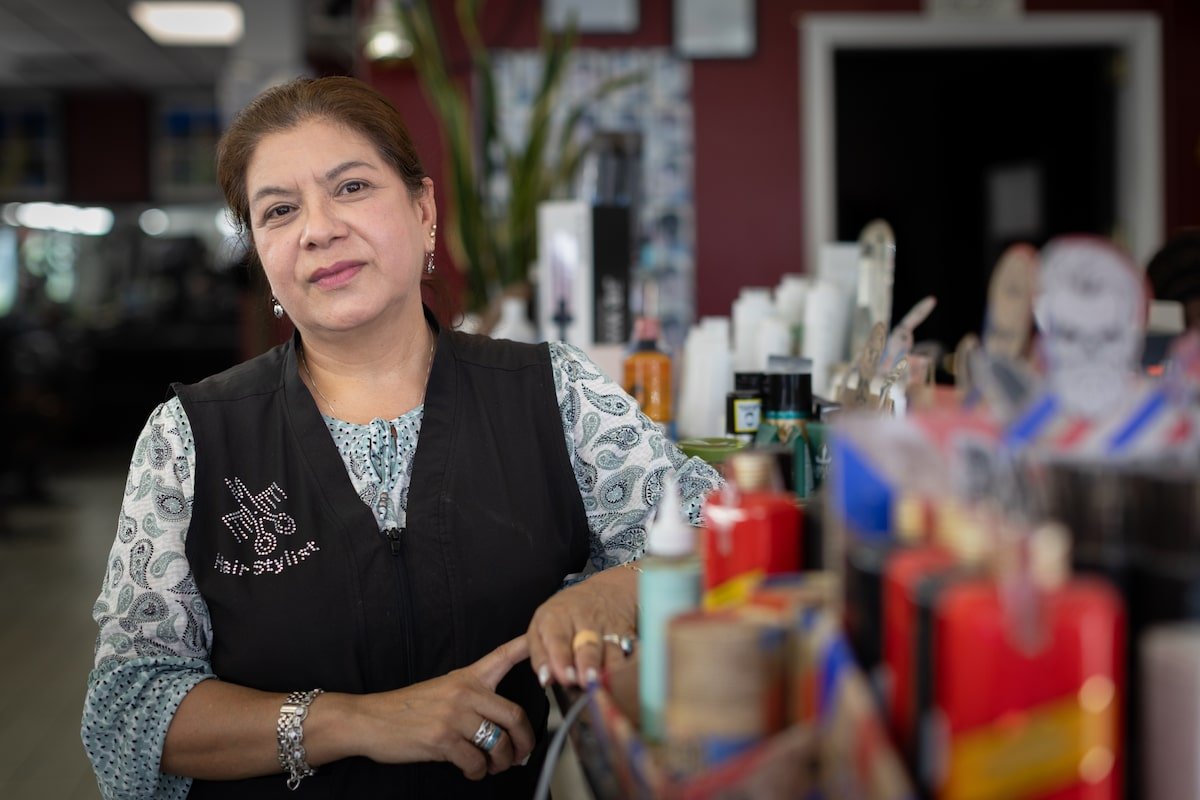
A five-minute walk down Vernor Highway, Manna Noyes, owner of Guero’s Barber Shop, says she has felt the impact of a drop in cross-border traffic.
Ms. Noyes says she has lost around 40 per cent of her customers since Mr. Trump took office. It would be packed on Friday nights. Canadians would cross to have dinner in Mexicantown, and then get a haircut. But now, “they’re scared to be here,” she said.
The opening of a new crossing would cut down on the truck traffic outside her shop, she says, and she hopes it would bring more people back over the border.
“I was hoping the bridge would make things better.”
Mr. Beto says he’s tired of the constant lobbying of the Moroun family. It has been a mainstay of his community since he can remember.
After extensive Moroun lobbying and campaign contributions to Michigan legislators, the state legislature in 2011 and 2012 failed to advance legislation to help pay for the Gordie Howe bridge. Canada agreed to pay the full cost.
In 2012, the Morouns spent US$33-million to back a referendum question that would have amended the state constitution to require a statewide referendum before any new international bridge could be built. Michigan voters rejected the measure.
Across the river, another group gathers at Rock Bottom Bar and Grill, a restaurant and bar located in Windsor’s Sandwich neighbourhood.
The restaurant’s owner, Nicole Sekela, is deeply disappointed by the delay. It demonstrates the unfair influence of the Moroun family, she says.
The Moroun family purchased upward of 180 homes in Windsor from the mid-90s to mid-2010s, according to an investigation by the Toronto Star. It bought out many properties on Indian Road and Bloomfield Road next to the Ambassador. The company had plans to expand the bridge, a failed attempt to thwart the construction of a public crossing.
“We had families and students living in every one of those houses,” said Ms. Sekela, who is hoping a new bridge will bring more life back to the area.
Michigan State Senators Stephanie Chang and Erika Geiss gathered at a table in Ms. Sekela’s restaurant. They’d crossed the border to meet with community leaders on the other side.
The Moroun family needs to “back down,” said Ms. Geiss. The new bridge “is good for both our countries. It makes economic sense. It makes common sense.”
PM office canada
Carney announces agreement with France to share sensitive defence, AI information


Prime Minister Mark Carney says Canada and France will deepen their defence and industrial co-operation through a new general security of information agreement.
Carney says the agreement will facilitate the exchange of classified intelligence related to the defence, space, artificial intelligence and aerospace sectors.
Carney made the comments in a joint statement alongside French President Emmanuel Macron at the Palais de l’Élysée in Paris on Friday.
Macron said he and Carney will discuss trade, defence and security in their closed-door meeting, and he hailed Canada as a friend to Europe and France.
The meeting, which comes ahead of next week’s G7 summit, could be one of the last between the two world leaders, since Macron’s second term in office is set to end next spring.
France, which is hosting the summit this year, says the priorities include settling major geopolitical crises, G7 support for Ukraine and protecting children online.
PM office canada
‘Our loving family is shattered,’ says mother of slain Toronto police officer
To his mother, Linda, Marc Pinizzotto was “an incredible father, son, husband, coach and friend of many.”
To the people across the country sending condolences and tributes in the wake his death in the line of duty, the Toronto police officer was a hero.
In a tribute to her son posted on social media Friday, Linda Pinizzotto said her family is devastated by his loss, but thankful for the outpouring of grief they have received.
“We are forever sincerely grateful for your heartfelt blessings, wonderful messages of condolence, and kindness,” she wrote. “His passing echoes deep inside us, our loving family is shattered as we search for words.”
Const. Marc Pinizzotto, 43, died after being shot at a fourth-floor apartment building in northwest Toronto Thursday, as officers carried out an investigation into multiple shootings, including one at the U.S. Consulate in March.
Hours after his death, hundreds of officers stood shoulder to shoulder, some wiping their eyes, as a procession carried Pinizzotto’s body from Sunnybrook hospital to the office of the chief coroner. Toronto police Chief Myron Demkiw tearfully called him a “hero in life, not death.”
There have been tributes from a number of officials, including Toronto Mayor Olivia Chow, Ontario Premier Doug Ford, and Prime Minister Mark Carney.
At the House of Commons Thursday, legislators began question period by grieving the fallen officer, saying Ottawa was supporting the investigation into his killing.
Mayor Chow, who said she’s known Pinizzotto’s mother for years, said she was grateful for the constable’s service, and his family’s grief was shared by the people of Toronto.
Premier Ford extended his condolences to Pinizzotto’s family and colleagues, saying in a post on X that the shooting was “a sobering reminder of the sacrifices and risks faced by police officers across Ontario every day as they work to keep our province safe.”
Several Toronto city councillors and Greater Toronto Area police services also released statements paying tribute to Pinizzotto Thursday. The CN Tower said its bright lights were expected to dim for the first five minutes of every hour on Thursday night.
Pinizzotto’s death came days after Ontario Provincial Police Const. Tarun Bali was struck and killed by a vehicle near the northern Ontario town of Hearst, east of Thunder Bay. A procession transporting Bali to a funeral home in Thornhill was scheduled for Friday morning.
Ontario hockey community feeling loss
Pinizzotto worked relentlessly to protect his community as a dedicated emergency task force officer, and he was just as passionate about hockey, his mother wrote Friday.
The officer was an inspiration to a generation of young Oakville Rangers hockey players, whom he and his brothers helped coach and develop over the better part of a decade, club president John Vedon said.
“That’s about as good a legacy as I think a hockey guy could ever want to have,” he said.
The Ontario Junior Hockey League released a statement Thursday, sending condolences to Pinizotto’s family, colleagues and community, saying his death was also a loss to “the entire hockey world.”
Man facing charges, another still at large: police
Police say 19-year-old Nicholas Bennett faces a first-degree murder charge in connection to Pinizzotto’s death. They say Bennett was shot multiple times in the exchange of gunfire and remains in hospital.
A second suspect, 19-year-old Zara Jabbi, is on the loose. Police say Jabbi is wanted in the consulate shooting and should be considered armed and dangerous.
Police say they expect to provide more information on the investigation in the coming days.
The investigation Toronto police were undertaking Thursday, which looked into multiple shootings, including an incident at the U.S. Consulate in Toronto, has been linked to a recent FBI terrorism arrest.
Last month the FBI arrested Iraqi-Irani Mohammad Al-Saadi, a senior member of a U.S.-designated terrorist organization, Kata’ib Hizballah, and the Iranian Islamic Revolutionary Guard Corps.
He is allegedly tied to nearly 20 attacks throughout Europe and the U.S., as well as two attacks in Canada, including the consulate shooting this spring.
PM office canada
Mother of slain Toronto police officer posts moving homage to son, tributes pour in

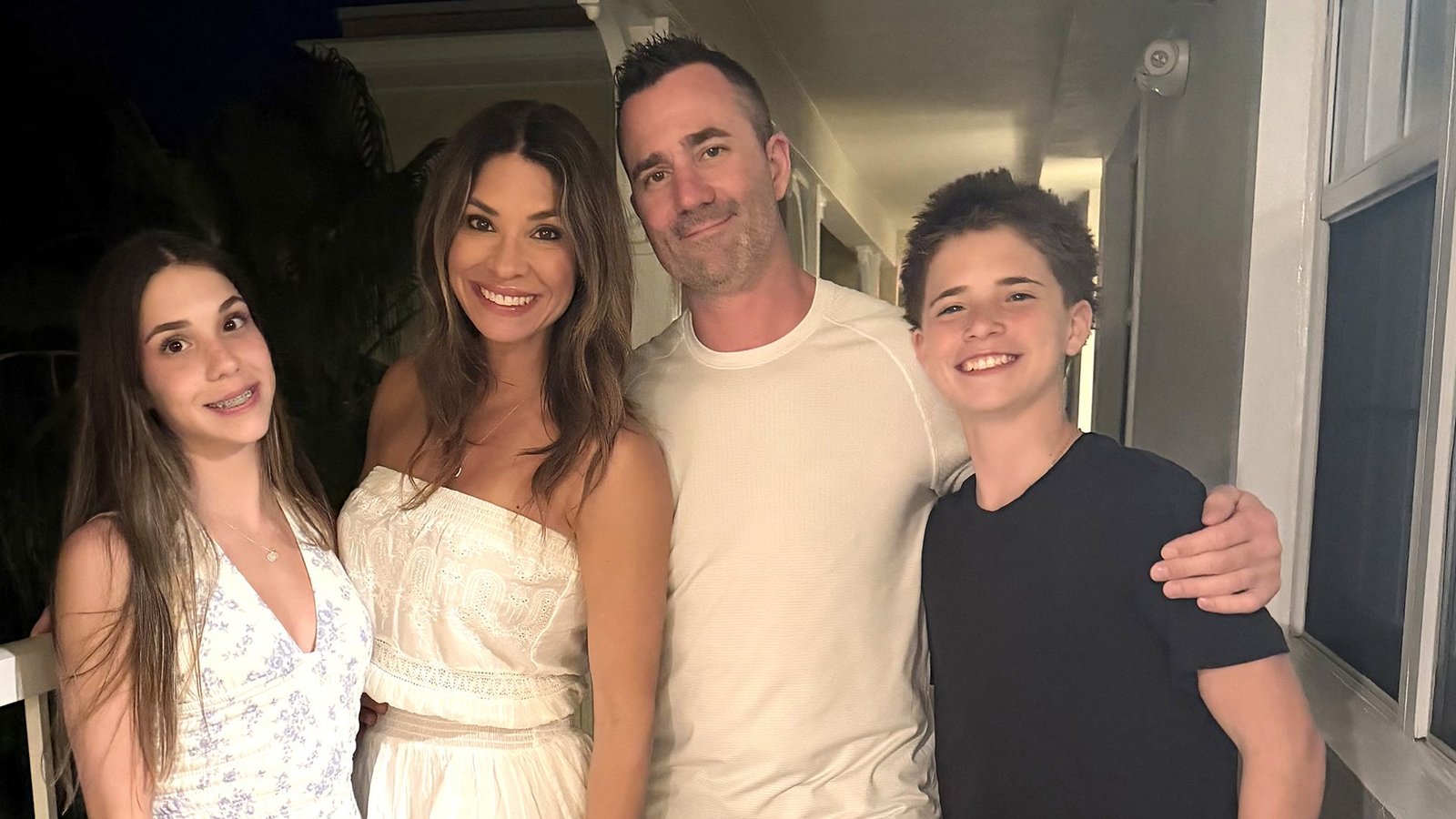
As the search for a suspect in the fatal shooting of a 43-year-old Toronto police officer continues, the family of Const. Marc Pinizzotto is grappling with the immeasurable loss — his mother trying to channel the breadth of her grief into a moving homage to her son on Instagram.
In a post on Friday morning, Linda Pinizzotto called him one of her “extraordinary sons” and “everyone’s hero.”
“His passing echoes deep inside us, our loving family is shattered as we search for words. We struggle to find sleep and solace in the darkness as our grief lingers, it is impossible,” she wrote, her pain palpable in the heart wrenching words.
She went on to call him an incredible father, son, husband, coach and friend to many.
“His devastating passing, the cruel heartbreak of reality has brought us to our knees,” she continued. “Our family must find peace, somehow accept and stand proud of his decisions and amazing accomplishments.”
“Marc is our beacon of hope, guiding us with his message to bring an end to violence and unite our brotherhood in a quest for peace,” she added, before thanking Mayor Olivia Chow, Chief Myron Demkiw, the staff at Sunnybrook hospital and all members of the police, fire and paramedic services.
Pinizzotto died after being shot at a fourth-floor apartment building Thursday, as officers carried out an investigation into multiple shootings, including one at the U.S. Consulate in March. It is believed he was the first officer through the door.
Police say 19-year-old Nicholas Bennett faces a first-degree murder charge, while a second suspect, 19-year-old Zara Jabbi, is on the loose.
The Special Investigations Unit has invoked its mandate and said one of the suspects discharged his firearm at Pinizzotto. Thereafter a second officer discharged his firearm and struck Bennett, who is now in the hospital.
Tributes poured in from Toronto Mayor Olivia Chow, Ontario Premier Doug Ford and Prime Minister Mark Carney.
Chow posted on X saying the death of the 18-year police force veteran “is heartbreaking news for our city.”
“There are no words that can ease the pain for the officer’s family, loved ones, and colleagues across the service. This grief is shared across the entire city. Police officers go to work every day knowing the risks, putting themselves in harm’s way to protect others, and today is a devastating reminder of that sacrifice,” she said.
Ontario Premier Doug Ford extended his condolences to the family and fellow Toronto police service members on X as well.
“Today is a sobering reminder of the sacrifices and risks faced by police officers across Ontario every day as they work to keep our province safe.”
Pinizzotto’s death came days after Ontario Provincial Police Const. Tarun Bali was struck and killed by a vehicle near the northern Ontario town of Hearst, east of Thunder Bay.
Prime Minister Mark Carney posted a tribute to both fallen officers on X.
“Canada mourns the loss of these brave officers who dedicated their lives to protecting their communities. My prayers are with their loved ones, their fellow officers, and their communities in this time of grief,” he said.
Speaking at a press conference hours after Pinizzotto’s passing in hospital on Thursday, an emotional Chief Demkiw expressed his grief and solidarity with the officer’s family and the larger policing family.
“This loss will have a profound impact on the Toronto police family. Our service, our members, and all members of the larger policing family are deeply saddened,” he said.
“No words can capture the impact on Marc’s family, who expected him to come home today. We, as a service, will support them and each other.”
At a procession Thursday that saw Pinizzotto’s body taken from Sunnybrook hospital to the office of the chief coroner, hundreds of officers stood shoulder to shoulder, some wiping tears from their eyes.
Toronto’s most prominent landmark, the CN Tower, dimmed its bright lights for the first five minutes of every hour on Thursday night in memory of the fallen officer.
With files from The Canadian Press




US & Iran trade blows, say different things about a deal & more | Iran war this week
Here's a roundup of events in the Iran war this week. 0:00 June 8 – Trump talked Netanyahu out of...


Where World Cup fans should eat in Atlanta
Where can World Cup soccer fans find the best biscuit in Atlanta? Isabel Rosales is on the case.


Kennedy Center says it has removed Trump's name from building
Spectators gathered on Saturday afternoon to witness the removal of President Trump's name from the John F. Kennedy Center …


Why Flamingos are the symbol of protests in Albania
Since late May, masses of people in Albania have been protesting plans to build luxury resorts in a remote area...


Knicks NBA Finals win would mean big things for Danhausen
The New York Knicks are one game away from securing their first NBA championship dating back to 1973. They’re up...


Vanessa Trump Opens Up About Progress in Breast Cancer Battle
Vanessa Trump is staying optimistic amid her breast cancer fight … sharing a promising update after weeks of recovering from...


Trump says Iran deal is scheduled to be signed on Sunday | BBC News
A deal to end fighting between the US and Iran is "scheduled to get signed" on Sunday, US President Donald...


King Charles III celebrates monarch birthday
Thousands gathered outside Buckingham Palace to watch the annual Trooping of the Color celebrating the official birthday of …
After Milania Giudice Domestic Violence Arrest, ’RHONJ’ Cast Speculates Luis Ruelas Was the Victim
After the shocking news that Milania Giudice, daughter of reality TV legend Teresa Giudice, was arrested for domestic violence back...


Knicks in 5? CNN hears from celeb superfans
The New York Knicks are on the brink of an NBA title after the biggest comeback in NBA Finals history...
-

 LifestyleNews1 week ago
120 minutes of strength training per week may help extend lifespan
-

 Politics2 days ago
What to know about the stabbing that set off fiery riots in Northern Ireland
-

 Video1 day ago
Download fans say what they love about the festival. #DownloadFestival #BBCNews
-

 Video1 day ago
Why SpaceX IPO isn't about space. #SpaceX #ElonMusk #BBCNews
-

 HealthNews2 days ago
The people of Okinawa, Japan only eat until they are about 80 percent full, then stop — and the practice has been linked in multiple peer-reviewed studies to lower rates of cardiovascular disease, slo
-
 Food21 hours ago
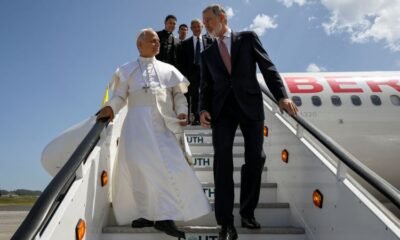
Pope Leo’s plane was grounded. Then the King of Spain stepped in to help
-

 TravelNews1 day ago
My Paternal Instinct Should’ve Warned Me About Netflix’s Maternal Instinct
-

 Politics1 day ago
Zohran Mamdani Pushes Tax on Rich After Elon Musk Becomes Trillionaire