

Business
Retirees Could Get a Much Bigger Social Security Raise in 2027 Due to Inflation


The prices of groceries, gasoline, and pretty much everything else seem sky-high these days and are getting higher. There’s a silver lining to this cloud, however — at least for some people. That is, since Social Security’s monthly payments are adjusted for inflation, beneficiaries should see a sizable increase in their payments in the foreseeable future.
You’re not just imagining those inordinately high — and rising — prices
Just when you think price increases can’t get any worse, the Bureau of Labor Statistics reported that the United States’ annualized consumer inflation rate reached a three-year high of 4.2% in May, up from 3.8% in April. Food and fuel prices led the charge, although even without these two categories, prices were still up 2.9% year over year.
And the nation’s factories, assemblers, and packagers aren’t feeling any less miserable. The BLS reported on Thursday that the U.S. Producer Price Index jumped 6.5% year over year last month, or a still-hefty 5.1% when excluding energy and food. Both figures are also at least three-year highs.
Of course, even if they didn’t know the exact numbers, almost everyone who eats, owns a car, pays utility bills, or is looking for a place to live knows everything is now getting more expensive at an accelerated pace. Seniors and retirees who count on Social Security income that’s less than what most working-age people earn may be feeling particularly pinched.
The good news is that relief is on the horizon for this particular crowd.
A strict, specific procedure
You likely realize that Social Security beneficiaries receive payment increases regularly. But, do you know how — if one is put in place — it’s determined?
It’s rather firmly structured, actually. Indeed, the Social Security program is required by law to provide an annual cost-of-living adjustment (COLA) based on the Bureau of Labor Statistics’ aforementioned consumer inflation data. And not just a hand-picked, estimated figure. The Social Security Amendments of 1972 specifically require a COLA to be effective at the beginning of a new calendar year, based on the BLS’s average annualized inflation rate for the months that comprise the third calendar quarter of the previous year. This allows the Social Security Administration time to make its necessary payment adjustments.
But what about (the rare) years when there is no inflation? The program is off the hook in those years; there is no required COLA then, as was the case in 2015 (for 2016) and in 2009 and 2010 (for 2010 and 2011) due to the deflation stemming from the subprime mortgage meltdown and subsequent recession.
Fortunately, cost-of-living adjustments aren’t cumulative, meaning Social Security’s beneficiaries don’t necessarily have to wait for the Bureau of Labor Statistics’ Consumer Price Index (CPI) to “catch up” to a previous peak after a slump. The calculations are made every year for the next year alone, irrespective of prior years’ numbers.
So far, 2027’s COLA is on track to be a pretty big one
At first blush, the process appears to risk undercalculating — or even overcalculating — any given year’s cost-of-living adjustment. After all, three months isn’t a very long time compared to a full year. It’s conceivable that something unusual could take shape in just the third quarter of any given year to undermine or overinflate the following year’s COLA.
But that’s kind of the whole point of doing it this way.
While the Social Security Administration considers only the consumer inflation rates for July, August, and September when determining the following year’s COLA, those are year-over-year rates, each covering a full 12 months’ worth of price changes. They’re also the most recent price increases the program can consider in time to implement a payment increase beginning in January of the following year. Given this, these are arguably the only data inputs that retirees would want Social Security to consider… to ensure the cost-of-living adjustment is as relevant and timely as possible.
This, of course, means we don’t yet know what next year’s COLA will be; we won’t know for sure until early October, when September’s inflation data is available.
It somehow seems unlikely prices will fall dramatically between now and the end of Q3, though. To this end, assuming the average annualized consumer inflation rate of nearly 3.8% for the past three months reflects the figures that will still be in place through the third quarter of this year, look for an average monthly payment increase of about $78 for 2027, or nearly a 3.8% improvement on this year’s typical Social Security benefit of $2,071 per month.
Just bear in mind that the bigger or smaller your current benefit is, the bigger or smaller your payment bump will be when the time comes.
Business
Meta outage: Facebook, Instagram, WhatsApp experience downtime

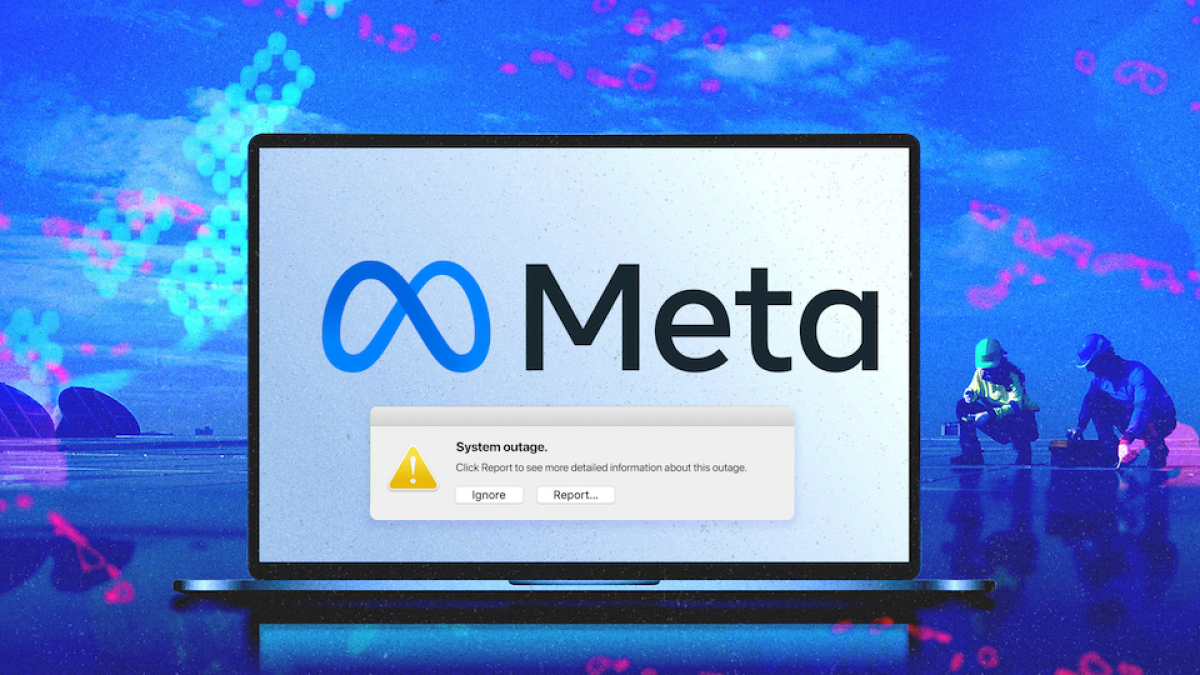
Updated on Friday, June 12 at 4:22 p.m. ET — Meta’s status page indicates that all disruptions have been restored and all disruptions are now concluded.
Updated on Friday, June 12, at 1:26 p.m. ET — Andy Stone, Meta VP of Communications, posted an update on X that stated Meta services were being restored.
The Meta status page for its business services listed most of the June 12 disruptions as resolved. “We have recovered from an earlier outage impacting Ads Creation and Editing, and services have now been restored. We apologize for any inconvenience that this may have caused.” However, the WhatsApp Business Platform still showed “High Disruptions” as of this writing.
Updated on Friday, June 12 at 1:15 p.m. ET — As of this writing, the outages for Meta’s services appear to be on their way out, at least according to DownDetector. Meta has not provided an official cause for the outage yet, however.
Some of Meta’s products had a hard time on Friday morning.
Mashable Light Speed
Want more out-of-this world tech, space and science stories?
Sign up for Mashable’s weekly Light Speed newsletter.
By clicking Sign Me Up, you confirm you are 16+ and agree to our Terms of Use and Privacy Policy.
Thanks for signing up!
Services like Instagram, Facebook, and WhatsApp all experienced temporary service outages to start the weekend. The cause is unknown at this point in time, but Meta’s VP of Communications, Andy Stone, acknowledged the outage on X.
Stone said Meta’s engineers are working on it.
In addition, the platform DownDetector recorded spikes in user error reports for Meta products on Friday. A peak of 10,000 users reported problems accessing Instagram, with the majority reporting problems with the app.
According to DownDetector users (Disclosure: Mashable and Down Detector have the same parent company, Davis), Facebook, Facebook Messenger, Instagram, and WhatsApp all experienced problems starting in the late morning on Friday. On top of that, Meta’s status page for its business applications also noted “High Disruptions” on Friday morning, too.
Anecdotally, multiple Mashable staff members have had a hard time posting or sending messages on Instagram during this outage. It’s unclear exactly when the problem will be resolved, but at the very least, Meta is aware of it and is doing something about it.
This is a developing story…
Business
Wages Are Falling. Wealth Is Surging. No Wonder Americans Are Unhappy.

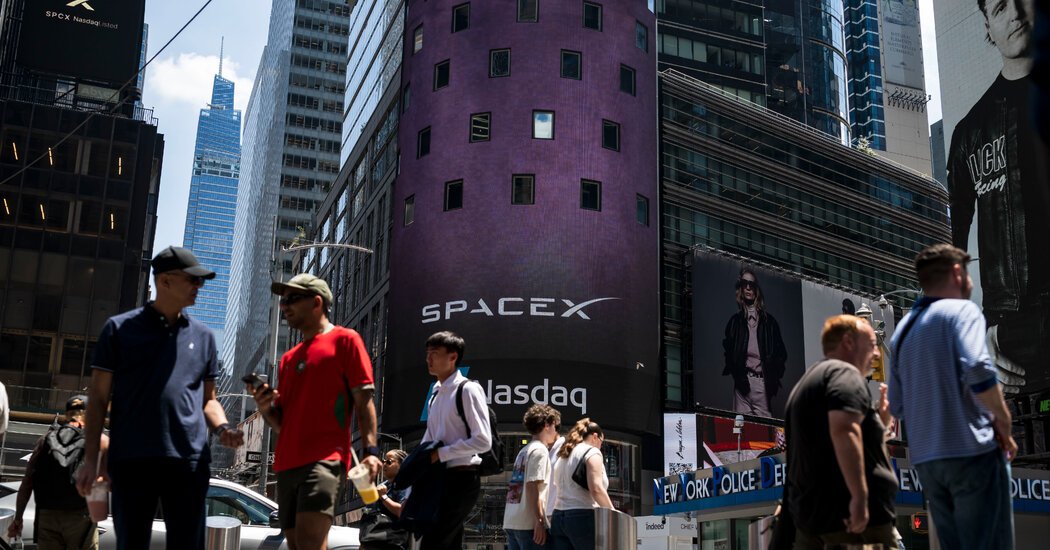
Two events from the past week help crystallize this strange, contradictory moment for the U.S. economy.
On Wednesday, the Bureau of Labor Statistics reported that the surge in energy prices had wiped out a year and a half of wage gains for the average American worker. On Friday, the public-markets debut of SpaceX made Elon Musk the world’s first trillionaire.
That stark juxtaposition helps explain why many Americans, in survey after survey, say they no longer believe the U.S. economy is working for them. A few people are getting fabulously, unimaginably wealthy at the same time that entire generations of families worry they will never be able to afford to buy a house, raise children or enjoy a comfortable retirement.
“I don’t think the stock market is necessarily causing” Americans’ pessimism about the economy, said Stefanie Stantcheva, a Harvard professor who studies public sentiment. “But I don’t think people are looking at it and are thinking, ‘Great, this means I’m going to do very well, too.’ It’s potentially reinforcing this feeling of ‘I’m falling behind.’”
Inequality is hardly a new feature in America. But the explosion of wealth at the very top is without precedent in U.S. history. At the height of the Gilded Age at the end of the 19th century, the richest handful of Americans had a net worth equivalent to about 3 percent of the country’s annual economic output, according to data compiled by the French economists Gabriel Zucman and Emmanuel Saez. Today, the fortunes of the same 0.00001 percent — about 20 individuals — make up roughly four times as large a share, equivalent to 12 percent of annual output.
Other economists, using different methodologies, come up with somewhat different numbers. But hardly anyone disputes the basic fact that the wealthiest few have made extraordinary gains in recent years.
Thank you for your patience while we verify access. If you are in Reader mode please exit and log into your Times account, or subscribe for all of The Times.
Thank you for your patience while we verify access.
Already a subscriber? Log in.
Want all of The Times? Subscribe.
Business
The FBI built its own replica small town to simulate real-world cyberattacks

The Federal Bureau of Investigation is pulling back the curtain on a 22,000 square-foot replica town on its Huntsville, Alabama campus that it built to train law enforcement in simulating and investigating real-world cyberattacks.
The aim is to teach investigators in a secure environment beyond the classroom by getting hands-on with some of the latest consumer and enterprise technologies, many of which are frequently targeted by malicious hackers. The numbers put the training into context. The FBI’s 2025 Internet Crime Report, drawing on more than one million complaints, logged a record $20.9 billion in U.S. cybercrime losses, a 26% jump over the prior year, with ransomware ranked the top ongoing threat to critical infrastructure.
Dubbed the Kinetic Cyber Range, the FBI’s small purpose-built town opened in February 2025 and features fully furnished houses, a hotel, a gas station and grocery mart, a courthouse, a hospital, and a power company — complete with roads and traffic lights — designed to mimic a real U.S. community. Since opening, says the agency, the facility has trained more than 1,400 students, including FBI personnel and partners from other federal and local agencies.
Each part of the town is wired with functioning devices and systems that behave as they would in a real community or business, while preventing any simulated attacks from spilling out of the facility.
The range also includes a data center with more than 200 physical servers — some running Windows, some Linux — reflecting the corporate environments investigators are likely to encounter when responding to a breach or executing a search warrant. “They’re cold, they’re cramped, they’re noisy, they’re dark, they’re miserable,” Dave Beachboard, the range’s program manager, explains in the FBI’s write-up about the training environment.
The replica town also allows the FBI to simulate ransomware attacks and their real-world consequences, including the high-pressure decisions that investigators must make when responding to incidents that could cause harm to people, such as hospital systems going dark.
Business
Mega I.P.O. Frenzy Could Be a Harbinger of a Stock Bubble

Amazing things are happening in technology, and ordinary investors are being invited to get a piece of the action.
With the SpaceX market debut on Friday, the Anthropic and OpenAI initial public offerings in the pipeline, and the sizzling tech stocks already on the market, there’s no shortage of betting opportunities.
Elon Musk ignited a frenzy with his roadshow for SpaceX, promising a future of interstellar riches from artificial intelligence combining spaceflight, satellites and orbiting A.I. data centers. I watched his presentation at JPMorgan and was entranced.
Who am I to say that cheap, virtually limitless A.I. generated from Earth’s orbit won’t happen just as Mr. Musk says it will? Intellectually, I’m willing to contemplate the possibility that he is truly leading the world to a vibrant future, on this planet, on the moon and eventually on Mars.
But from a purely investing perspective, I’m keeping my feet firmly on the ground.
As I’ve pointed out, the price being asked for SpaceX shares was exorbitant, and it rose even higher on its first day of trading. That said, the company’s stock might well rise further over the next few weeks, driven by sheer market enthusiasm. Mr. Musk reserved a double-digit percentage of the I.P.O. shares for “retail,” or ordinary, investors — as opposed to big institutions. A retail allocation of 5 percent or less has been customary in most recent public offerings, according to Jay Ritter, an economist and I.P.O. expert at the University of Florida.
But SpaceX’s price is so high that, for investors coming late to the party, the probability of a solid return in the next several years is low. Historical data provided by Mr. Ritter bears that out.
Thank you for your patience while we verify access. If you are in Reader mode please exit and log into your Times account, or subscribe for all of The Times.
Thank you for your patience while we verify access.
Already a subscriber? Log in.
Want all of The Times? Subscribe.
Business
Anthropic to Disable Fable 5, Mythos 5 After US Export-Control Order


Anthropic said it would disable access to its latest top AI models, Fable 5 and Mythos 5, following a government export control that would bar foreign individuals and entities from using the products.
The company said in a blog post on Friday evening that it had received a letter from the US government at around 5:21 p.m. ET, citing national security concerns regarding Anthropic’s models.
Anthropic said the government’s order included any foreign national inside or outside the US, “including foreign national Anthropic employees,” and that the “net effect” of the order is to disable the models for everyone to ensure compliance.
The company added that the letter “did not provide specific details of its national security concern.”
Anthropic said it believes the government’s concern is a potential way to “jailbreak” Fable 5, but disputed the issue’s severity. The company said the technique appeared narrow, not universal, and involved known vulnerabilities that could be identified by other publicly available models.
The move marks the latest escalation in Anthropic’s clash with the Trump administration over AI safety, national security, and the extent of government control over frontier AI models.
In February, the Pentagon moved to designate Anthropic as a supply chain risk after the startup sought limits on its AI model for certain defense applications.
Anthropic sued the Defense Department over the designation. Two lawsuits related to the government’s supply-chain risk label remain pending.
A White House spokesperson did not immediately respond to a request for comment. The Pentagon’s chief information officer expressed support for the move in an X post, writing, “Some things are simply more important than revenue cycles, clickbait, and pre-IPO valuation.”
Anthropic said it was complying with the order but disagreed with the government’s finding. An Anthropic spokesperson did not say when exactly the company would disable access.
Access to Anthropic’s other models will not be affected, the company said.


Why Flamingos are the symbol of protests in Albania
Since late May, masses of people in Albania have been protesting plans to build luxury resorts in a remote area...


Trump says Iran deal is scheduled to be signed on Sunday | BBC News
A deal to end fighting between the US and Iran is "scheduled to get signed" on Sunday, US President Donald...


King Charles III celebrates monarch birthday
Thousands gathered outside Buckingham Palace to watch the annual Trooping of the Color celebrating the official birthday of …
After Milania Giudice Domestic Violence Arrest, ’RHONJ’ Cast Speculates Luis Ruelas Was the Victim
After the shocking news that Milania Giudice, daughter of reality TV legend Teresa Giudice, was arrested for domestic violence back...


Knicks in 5? CNN hears from celeb superfans
The New York Knicks are on the brink of an NBA title after the biggest comeback in NBA Finals history...


Paris holds first sumo wrestling tournament in 30 years
More than 60 of the world's top sumo wrestlers will compete in a weekend-long tournament in Paris, which hasn't hosted...


Proposed data center near Nashville Zoo sparks controversy
A crowd packed into a Nashville Metro Planning Commission meeting Thursday night to oppose plans to build a data center...


Dementia Specialists Reveal The Foods They Always Tell Patients To Eat More Of
Specialists Are Practically Begging People To Eat These 3 Foods That Actually Lower Dementia Risk There are several things you...


How David Hockney Taught Los Angeles to See Itself
It was a perfect sunny day for lounging poolside at the Hollywood Roosevelt Hotel. The sky was a keen pale...


Footballer's friends hope his death leads to mandatory cardiac arrest training. #BBCNews
-

 LifestyleNews1 week ago
120 minutes of strength training per week may help extend lifespan
-

 Politics2 days ago
What to know about the stabbing that set off fiery riots in Northern Ireland
-

 Video1 day ago
Download fans say what they love about the festival. #DownloadFestival #BBCNews
-

 Video1 day ago
Why SpaceX IPO isn't about space. #SpaceX #ElonMusk #BBCNews
-

 HealthNews2 days ago
The people of Okinawa, Japan only eat until they are about 80 percent full, then stop — and the practice has been linked in multiple peer-reviewed studies to lower rates of cardiovascular disease, slo
-

 Food19 hours ago
Pope Leo’s plane was grounded. Then the King of Spain stepped in to help
-

 TravelNews1 day ago
My Paternal Instinct Should’ve Warned Me About Netflix’s Maternal Instinct
-

 Politics1 day ago
Zohran Mamdani Pushes Tax on Rich After Elon Musk Becomes Trillionaire