

Tech
Rivian CEO takes different approach than Elon Musk for humanoid robots

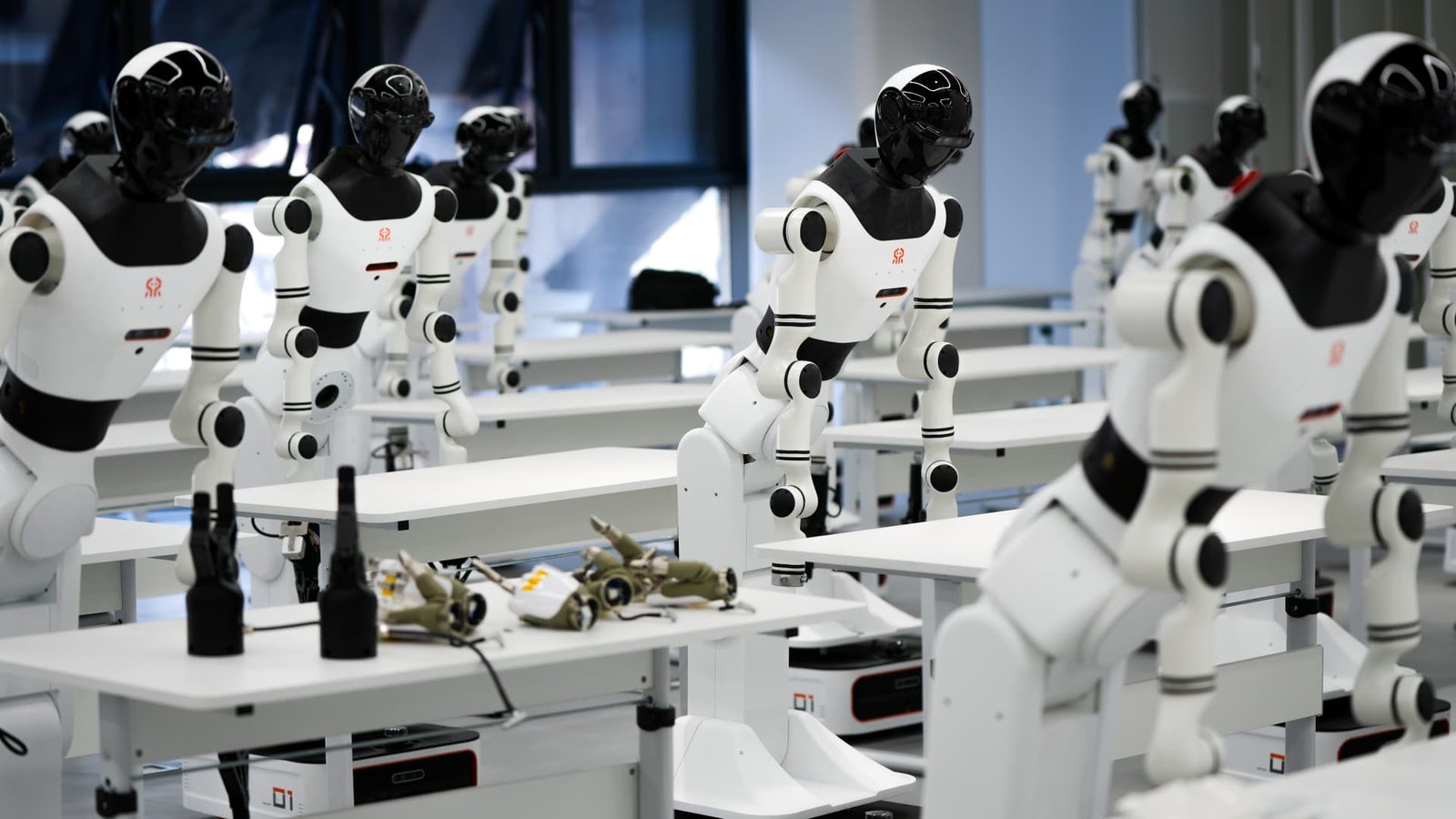
VCG | China News Service | Getty Images
PARK CITY, Utah — Rivian Automotive CEO RJ Scaringe envisions a day in the not-so-distant future when the electric vehicle maker’s manufacturing employees will have a new type of colleague: humanoid robots.
“There’s going to be thousands of people that are collaborating alongside these robots. They’re going to be taking pictures, ‘Hey, check this out! My co-worker’s name is Phil, and he’s a robot,'” Scaringe said during a media event for the launch of the Rivian R2 EV.
The 43-year-old automotive enthusiast and tech entrepreneur started a robotics company last year called Mind Robotics. The company has raised more than $1 billion, according to Scaringe.
Humanoid robots are designed to be shaped and move like people. Artificial intelligence algorithms power their abilities along with complex hardware like semiconductors. Proponents say they could be used in various settings, from factories to hospitality and even in the home, while others have raised concerns about the devices replacing human jobs.
Scaringe said the company expects to reveal its first product in less than a year, with Rivian as a large minority shareholder and launch customer. Mind currently has roughly 20 open positions ranging from software and hardware engineers to data architects, according to its website.
Michael Wayland / CNBC
Scaringe, who is executive chair and acting CEO of Mind, told CNBC that the plan is to keep the robotics company separate from Rivian, as opposed to the automaker partially shifting to make humanoid robots, like Tesla CEO Elon Musk is doing with his company.
“We have a deep relationship, and that was actually how we structured it,” Scaringe said during an interview. “A big part of structuring the business was to allow me to be able to spend time on both.”
The robotics strategy adds to a narrative of Scaringe doing things differently than Musk, despite obvious similarities in their companies. There have been enough comparisons that Rivian has even been called the “anti-Tesla” and Scaringe has been referred to as the “anti-Elon.”
“I’d say there’s a lot of alignment there, and I think that’s because, obviously, I’m biased, but I think they’re right … that autonomy is a super important technology,” Scaringe said about Tesla and Rivian. “But in terms of the products, they, in many ways, couldn’t be more different.”
So far Rivian and Mind are assisting each other, though, much like Musk’s companies have also done during developmental phases. That includes Musk’s xAI company merging with SpaceX before the company’s record-setting initial public offering on Friday as well as SpaceX purchasing vehicles from Tesla.
Scaringe said Rivian will be a “huge beneficiary” of Mind, which is using data from Rivian for training its AI models. Along with Rivian’s equity stake, the automaker will be Mind’s first customer for the robots.
“We realized it was such a big opportunity that deserved to be its own company,” said Scaringe. He said he believes there is a multitrillion-dollar total addressable market for industrial labor.
Michael Nagle | Bloomberg | Getty Images
Scaringe was visibly excited when speaking with media about the potential for AI and humanoid robotics, calling it “one of the most exciting times, perhaps in human history.”
“One hundred years from now, they’re going to be inheriting the work that we do over our lifetimes, and so I just think we’re so lucky that we get to be alive at the birth of AI,” Scaringe said.
Despite the optimism for humanoid robots, Scaringe said he expects the devices to work alongside humans rather than replace them completely for the foreseeable future, saying it takes a “long time” for vehicle assembly plants to become so-called “dark factories” which can be almost entirely run by robots.
“What I see happening is the simplest tasks will be taken on by robots. The more complex tasks that require higher levels of reasoning or more complex, more tactile levels of dexterity [will be done by humans],” he said.
Scaringe said manufacturers are dealing with an “extreme lack of labor,” from other automakers. Rivian currently has more than 30 open manufacturing and engineering jobs, according to the company’s website.
The need for such workers, as well as the rapid development of AI, Scaringe believes, will mean human employees will be working alongside a robot named “Phil” far sooner than they may expect.
“The rate at which this is moving is far faster than I’d say — like an order of magnitude faster — than the average person in society understands,” he said. “That’s going to be a particularly big challenge in the short-term to just have the average person … realize how fast the models are learning and how capable they are at doing almost everything.”
— CNBC’s Arjun Kharpal contributed to this report.
Tech
OpenAI faces investigation from state attorneys general


A coalition of state attorneys general has opened an investigation into OpenAI.
The company was served with a subpoena from New York’s attorney general on Friday, according to The Wall Street Journal. That subpoena sought documents related to a broad range of topics including the company’s advertising, user engagement and retention, model sycophancy, handling of consumer data and health data, and treatment of minors and seniors.
“AI is a new and powerful technology, and we work every day to safely bring its benefits to people in a responsible way,” an OpenAI spokesperson said in a statement. “We take the concerns raised by state attorneys general seriously and intend to engage constructively with their offices.”
The spokesperson also said, “Today’s ChatGPT includes a more protective experience for minors and people experiencing difficult situations, with safeguards that direct them to real-world resources and trusted human contacts. We believe kids should be treated like kids, which is why we built age prediction, released parental tools to guide their children’s use of AI, and disallowed advertising that targets kids.”
The company did not specify which states are involved in the investigation or share more details about what information was requested. TechCrunch has also reached out to New York attorney general’s office for confirmation.
OpenAI recently defeated its co-founder Elon Musk in a high-profile trial, after Musk accused the company of violating its founding agreement. (Musk’s lead attorney said he will appeal the decision.)
However, OpenAI still faces lawsuits over everything from alleged copyright infringement to ChatGPT’s alleged role in user suicides. Earlier this month, Florida Attorney General James Uthmeier sued OpenAI and its CEO Sam Altman, claiming that OpenAI and Altman “ignored internal and external safety warnings, put children at great risk, and allowed a dangerous product to reach millions of Floridians.”
Altman recently apologized to the community of Tumbler Ridge, Canada after a mass shooting; he acknowledged that OpenAI failed to alert law enforcement after the company flagged and banned the suspected shooter’s ChatGPT account.
The company announced this week that it has filed confidentially to go public.
This post has been updated with a statement from an OpenAI spokesperson.
Tech
MacBook Pro Or MacBook Air: Which Apple Laptop Lasts Longer?


Apple’s MacBooks are made to last. This is something every customer who spends money on the company’s computers can say. I bought my first MacBook Pro in 2010, and it was my daily driver up to 2017 until Apple released the second-generation MacBook Pro with Touch Bar. With the general lifespan of a MacBook Pro being around seven to 10 years, depending on how you take care of it, you’d be surprised to learn that even the MacBook Air doesn’t fall far behind.
The main difference is that Apple usually stops supporting software updates on the MacBook Air before the MacBook Pro. Officially, Apple doesn’t say how long a Mac can last. Especially now that it has been using its own silicon for the past six years, and all Apple Silicon Macs are still supported by the company. Besides that, macOS 27 is only dropping support for Intel Macs, meaning that the M1 Macs have at least until September of 2027 with software updates available.
It’s also unclear how Apple will phase out its own chips, as it offers regular, Pro, Max, and Ultra variations. In the case of its Intel Macs, macOS Tahoe still supports most Macs released by 2019 and early 2020. Still, once the company releases macOS 27, it doesn’t mean the older Macs will stop working, and Apple might still offer two years of important security patches.
At first, you could think that the MacBook Pro lasts longer than the MacBook Air because it’s more powerful. While theoretically, Apple might give it an extra year or two of software updates (at least during the Intel era), it doesn’t mean much. For example, if you have a MacBook Pro, you’re probably editing photos and videos, coding, and taking advantage of several multitasking features. If you’re a MacBook Air owner, you’re likely doing lighter work on your computer, like writing, scrolling social media, easy editing, and so on.
Since these computers serve different purposes, it makes sense to say that both last around the same amount of time, as it depends on what you do with them. Money-wise, the MacBook Air is a safer choice for students and those doing regular office work. The MacBook Pro, on the other hand, is more focused on Pro users.
However, as powerful as the MacBook might sound today, it will still degrade with the years as other software gets more demanding and technology evolves. I’m still rocking the MacBook Pro M1 Pro since early 2022. Four years later, I don’t have any reason to update this computer. While I might get the rumored OLED MacBook Pro, which might be released later in 2026 or early 2027, the M1 Pro version still feels as good as new. I can still have multiple apps open and the battery is surprisingly satisfactory.
As Apple doesn’t say how long a Mac will last, it’s hard to say what the general lifespan of the new Macs is. What can be said, though, is that older devices like the MacBook M1 are still solid options in 2026. Even though a few M1 users have been upgrading to an M4 or M5, there are also several others who upgraded to the M1 and still think those computers are great.
Besides that, with Apple releasing the MacBook Neo, which uses an iPhone chip, it shows that the company might be able to prolong the lifespan of its own silicon for a little longer. After all, the A18 Pro is a mix between what an M1 and an M3 MacBook can do, which means that users can still relax for a few more years. In addition, Apple usually continues to offer security patches even a couple of years after it stops supporting some Macs.
So even though the last Intel Macs will stop at macOS Tahoe, the company will continue to offer a few updates for this software in the next couple of years, ensuring that devices can run as smoothly as possible, and without critical bugs and flaws plaguing them. That said, buying a Mac is more about choosing what fits your budget than necessarily focusing on which will last longer. These machines do basic tasks flawlessly; the difference is how fast and how many extra perks you want to have while getting the job done.
Tech
Paramount Gets Justice Dept. Approval to Buy Warner Bros.
“Good” news, everyone: the Department of Justice has said it’s a-OK for Paramount to continue with the Warner Bros. merger!
On Friday, the department gave a thumbs up to the $110 billion acquisition that’s been in the works since earlier this year. According to the antitrust division’s reasoning is that TV and movie businesses are “not likely” to be harmed by this, and the same goes for American consumers. The agency’s statement runs counter to what many in the entertainment industry—and anyone who knows how mergers work—have been saying, and since there’s no concessions to be made, Paramount’s a little more free to have a monopoly on Hollywood. (Remember when the Department feared Netflix would do this if it got WB?)
In a statement, Paramount thanked the DOJ for its decision, reiterating that the deal was “pro-competitive, resulting in a stronger company better positioned to compete against dominant technology platforms. […] We remain focused on completing the transaction as soon as possible and delivering its benefits to consumers, creators and the entertainment industry as a whole.”
Now, California and New York are looking to sue on antitrust grounds to block the merger. Overseas, the European Commission has until July 14 to investigate the deal and the $24 billion in funds coming from the sovereign wealth funds of Saudi Arabia, Qatar, and Abu Dhabi, and the UK’s Competition and Markets Authority issued its own investigation earlier this week. In the US, Massachusetts senator Elizabeth Warren condemned the approval, deeming it “terrible news for every American who doesn’t want Trump-aligned billionaires to control what they watch and how much they pay. The Paramount-Warner Bros. deal has reeked of corruption and influence-peddling. State AGs must block this merger.”
We’ll have more on the merger in the weeks ahead.
Want more io9 news? Check out when to expect the latest Marvel, Star Wars, and Star Trek releases, what’s next for the DC Universe on film and TV, and everything you need to know about the future of Doctor Who.
Tech
China ‘dissatisfied’ with U.S. move against Chinese tech firms
China is “strongly dissatisfied” with a U.S. move to add several large Chinese companies to the Pentagon’s list of firms it says are aiding China’s military, the commerce ministry said on Saturday.
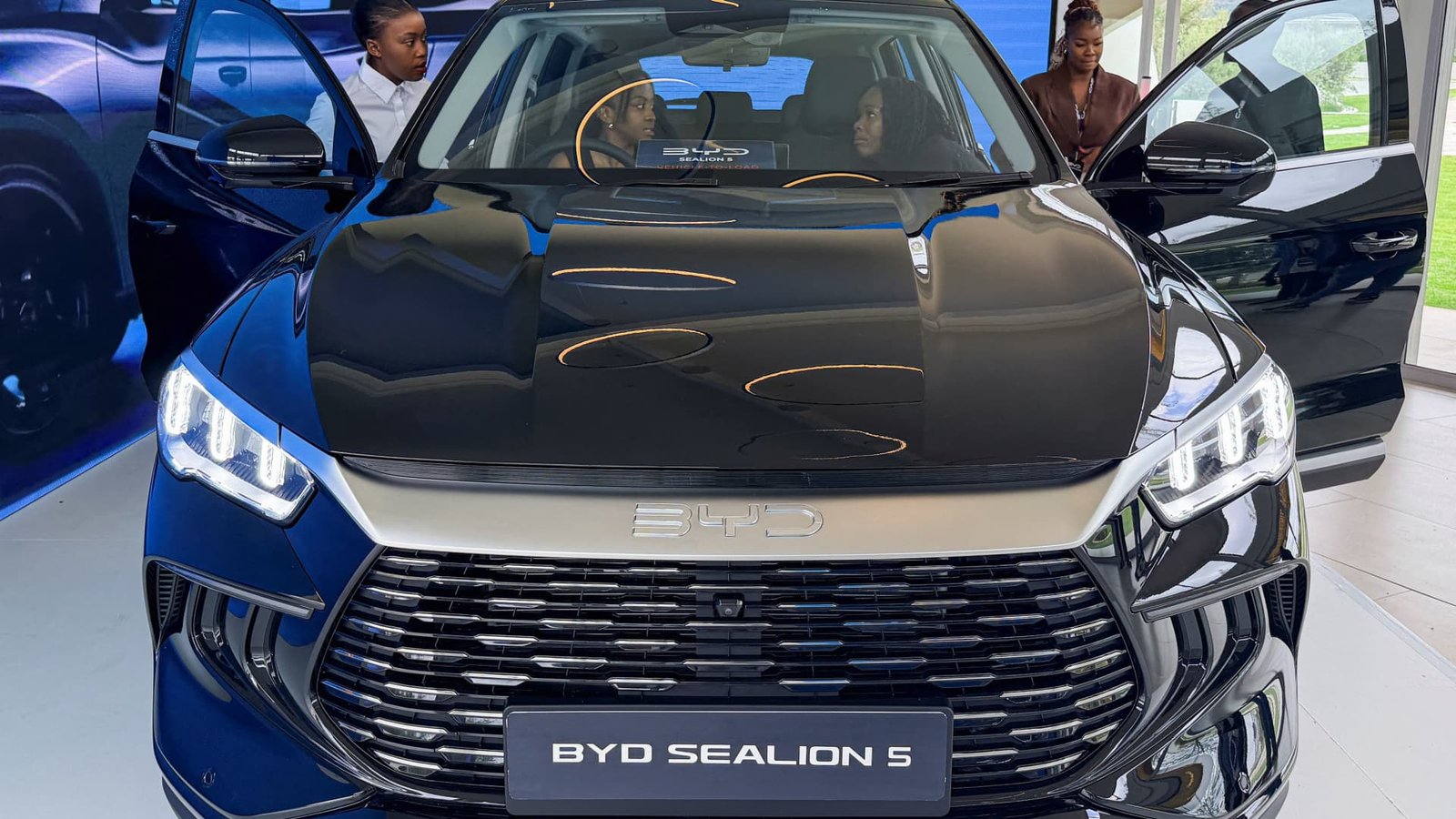
The foreign ministry has also expressed concern about the U.S. Defense Department’s long-awaited update to its list on Monday, which included such top technology names as e-commerce giant Alibaba , internet search provider Baidu and automakers BYD and NIO .
The list also includes the world’s largest solar panel makers: Trina Solar and JA Solar Technology.
The list includes a broad swathe of China’s top technology firms key to advancing Beijing’s military and industrial prowess, reflecting Washington’s security concerns amid intense geopolitical competition between the countries.
“China is strongly dissatisfied and firmly opposes this,” the commerce ministry said in a statement. “China urges the U.S. to immediately stop its erroneous practices, immediately withdraw relevant measures and return to the correct track of building a constructive strategic and stable China-U.S. relationship.”
If Chinese firms are not treated fairly, it said, Beijing will “inevitably retaliate resolutely and forcefully”.
The Pentagon update supersedes a list from early 2025 and comes a month after Presidents Donald Trump and Xi Jinping met in Beijing and maintained a delicate trade-war truce.
The ministry statement said the Pentagon’s move “ignored the consensus” reached between the two leaders.
Under U.S. law, the Defense Department will be prohibited from contracting directly with companies on the list and restricted from buying their products or services through third parties from 2027.
Tech
Switzerland population cap vote explained

Sebastien Bozon | Afp | Getty Images
Switzerland, a wealthy country that has historically embraced free movement and foreign investment, is about to vote on whether to cap its population — and restrict immigration measures to do so.
Sunday’s referendum comes after the country’s population increased 10% in the 10 years up to the end of 2025, when it stood at just over 9.1 million. For the first time, the country had more people over 65 than under 20. Net migration and the birth rate fell last year.
Relatively low taxation has helped make Switzerland home to global conglomerates like consumer goods giant Nestle , pharmaceutical heavyweight Novartis and other multinational firms in finance, luxury goods and tech. It has one of the world’s highest concentrations of billionaires and a much stronger GDP per capita rate than many other developed economies.
At the end of 2024, 41% of the population had a “migration background,” a term applied to immigrants and their Swiss-born children, per official data, which also shows 32.5% of the country’s permanent residents are first-generation immigrants. An estimated 1.4 million EU citizens live in Switzerland, comprising around 16% of the country’s population. Another 340,000 EU citizens cross the border daily to work there.
A recent poll found that 52% of respondents would reject the population cap, while 45% were in favor.
How would the population cap work?
But if voters back the population curb proposal, the country’s Federal Council and parliament will have to roll out measures to curb population growth until 2050.
Immigration systems would be tightened if the population exceeded 9.5 million at any point over the next 24 years, with asylum and family reunification programs first in line to face cuts. Switzerland’s freedom of movement initiative with the European Union would also potentially end, should the population rise above the 10-million threshold.
Switzerland is part of the border-free Schengen travel zone, along with many large EU economies. The bloc and the country also have an agreement to allow free movement of each other’s citizens, allowing them to live and work in each other’s territories, provided they have a job or another source of income.
Switzerland’s right-wing SVP party is urging voters to “send a clear signal” to policymakers to curb what it calls “overwhelming” population growth.
In a statement last week, the SVP said that voting for the population cap would still allow 40,000 people to move to Switzerland each year, but lawmaker Piero Marchesi said population growth had caused problems for public services, wages, the price of rent, education and the labor market.
Companies headquartered in Switzerland have argued that putting significant caps on immigration would dent the country’s competitive edge and weigh on its struggling economy, which has faced sluggish growth, a surging currency, disinflation and U.S. President Donald Trump’s tariff regime.
Economiesuisse — a trade body that counts Amazon Web Services, Roche , Google and Johnson & Johnson among its 100,000 members — has opposed the population cap initiative.
Chief Economist Rudolf Minsch said in an emailed statement to CNBC that Switzerland’s prosperity depends on “openness, innovation and strong economic relations with Europe.”
“We understand that concerns about housing, infrastructure and population growth must be taken seriously, and these challenges require pragmatic political solutions,” he said.
“Rigid immigration caps are not the right answer, particularly if they risk undermining the bilateral agreements with the European Union, which are of central importance to the Swiss economy.”
Minsch added that Switzerland’s reliance on highly qualified foreign workers, especially in sectors such as pharmaceuticals, technology and healthcare.
“Major restrictions on immigration would weaken innovation, growth and competitiveness, while making it harder for companies to attract international talent,” he said.
Speaking to CNBC’s Carolin Roth at the Swiss Economic Forum last week, Nestle CEO Philipp Navratil described how attractive the country was to outside investors, adding: “It is important that these conditions in Switzerland are maintained.”
“We must not take this for granted; it was created through a lot of hard work and through a willingness to drive reforms,” he added.
He said his company had nine factories, three research centers in the country, and “our main share of research and development still takes place in Switzerland — this has been the case for 160 years.”
“Reliability is found in Switzerland, because quality exists in Switzerland, because talent exists in Switzerland, because Switzerland has created and established framework conditions that are simply attractive for a global company,” he added.
Fabrice Coffrini | Afp | Getty Images
At the same conference, UBS CEO Sergio Ermotti said he worried about “extreme initiatives.”
“Switzerland has 30% of foreign-born people, almost like in Australia, twice as Germany,” he said. “And that leads to certain frustration within society. But it’s not a way to solve the problem.”
UBS is one of Switzerland’s biggest employers, with around 33,500 of its employees based in the country.
Joao B. Duarte, a professor of economics at Portugal’s Nova School of Business and Economics, told CNBC in an email that a population cap could damage Switzerland’s credibility in various ways.
“If firms believe access to European labor may become more uncertain, investment decisions can shift well before the legal trigger is reached,” he told CNBC.
Duarte said the U.K.’s exit from the EU “offers a useful warning. Ending free movement did not create a smooth transition to domestic labor self-sufficiency. It created shortages, recruitment frictions and higher costs in sectors that had relied on flexible EU workers.”
He added that the EU is Switzerland’s main trading partner, and free movement is tied to the broader bilateral framework that gives Swiss firms privileged access to European markets.
“If a ‘yes’ vote eventually forces Switzerland to terminate the free movement agreement, the strain would not be limited to migration policy. It could spill over into the entire Swiss-EU economic relationship,” Duarte said.
— CNBC’s Carolin Roth contributed to this report.


Trump says US-Iran deal will be signed Sunday
https://www.youtube.com/watch?v=a7QL77ManLU President Donald Trump said an agreement with Iran is “scheduled to get signed” on Sunday and would reopen the...


Tight security at Madison Square Garden for Game 5 of NBA Finals
New York City is tightening security ahead of Game 5 of the NBA Finals, the World Cup game in New...


‘No soccer fans here’: World Cup fever fails to grip Texas Republicans
Greg Abbott, the governor of Texas, has just finished a 25-minute address and most of the hits have been played....


Why can’t China qualify for the World Cup? | Meanwhile in Asia
It's World Cup time, but the world's most populous countries won't be represented. As the tournament grows, we ask why...


US & Iran trade blows, say different things about a deal & more | Iran war this week
Here's a roundup of events in the Iran war this week. 0:00 June 8 – Trump talked Netanyahu out of...


Where World Cup fans should eat in Atlanta
Where can World Cup soccer fans find the best biscuit in Atlanta? Isabel Rosales is on the case.


Qatar net late against Switzerland to secure historic first World Cup point
Boualem Khoukhi scored an equalising goal on a header in the fourth minute of stoppage time, and Qatar spoiled a...


Kennedy Center says it has removed Trump's name from building
Spectators gathered on Saturday afternoon to witness the removal of President Trump's name from the John F. Kennedy Center …


Why Flamingos are the symbol of protests in Albania
Since late May, masses of people in Albania have been protesting plans to build luxury resorts in a remote area...


NEW: Avian Flu Confirmed at Antonelli Poultry in…
NEW: Avian Flu Confirmed at Antonelli Poultry in Providence, 445 Birds Euthanized The Rhode Island Department of Health (RIDOH) and...
-

 LifestyleNews1 week ago
120 minutes of strength training per week may help extend lifespan
-

 Politics2 days ago
What to know about the stabbing that set off fiery riots in Northern Ireland
-

 Video1 day ago
Download fans say what they love about the festival. #DownloadFestival #BBCNews
-

 Video1 day ago
Why SpaceX IPO isn't about space. #SpaceX #ElonMusk #BBCNews
-

 HealthNews2 days ago
The people of Okinawa, Japan only eat until they are about 80 percent full, then stop — and the practice has been linked in multiple peer-reviewed studies to lower rates of cardiovascular disease, slo
-

 Food22 hours ago
Pope Leo’s plane was grounded. Then the King of Spain stepped in to help
-

 TravelNews1 day ago
My Paternal Instinct Should’ve Warned Me About Netflix’s Maternal Instinct
-

 Politics1 day ago
Zohran Mamdani Pushes Tax on Rich After Elon Musk Becomes Trillionaire