

Business
China opposes US move to list top firms as military companies
BEIJING (AP) — China said Saturday it firmly opposed the U.S. adding several prominent Chinese businesses to its list of military companies, and that the move ignored the consensus reached during U.S. President Donald Trump’s summit with Chinese leader Xi Jinping last month.
The Pentagon on Monday added several non-state-owned Chinese companies, including electric vehicle maker BYD, tech giants Alibaba and Baidu to its list that seeks to identify Chinese companies it deems to have ties to the Chinese military, preventing them from landing U.S. defense contracts.
By adding these firms to the list, “the U.S. side has ignored the consensus reached during the meeting between the heads of state of the two countries in Beijing,” a Chinese Ministry of Commerce spokesperson said Saturday in a statement.
The U.S. has “disregarded the overall interests of bilateral economic and trade relations, continuously generalized the concept of national security, and abused state power to unjustifiably suppress Chinese enterprises,” the spokesperson added.
BYD, Alibaba and Baidu said earlier there’s no basis to include them in the list.
Business
Anthropic shuts down Mythos access after sweeping U.S. order

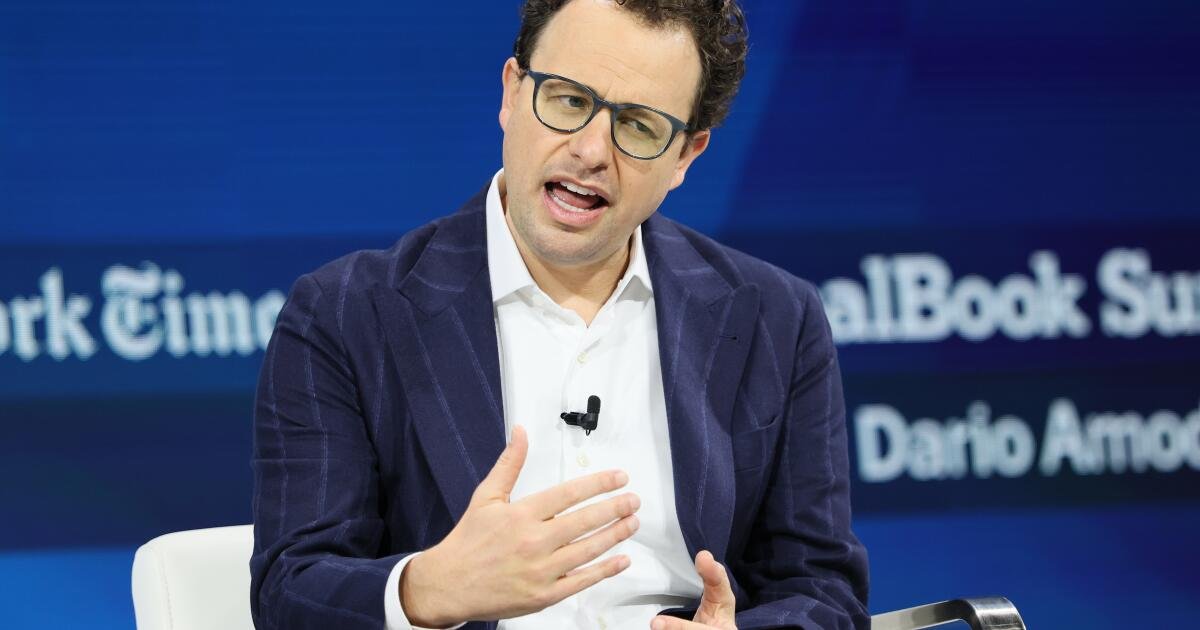
Anthropic PBC has disabled access to its most advanced artificial intelligence models, including Mythos, following an unprecedented order by the Trump administration to keep the technology out of the hands of all foreign nationals.
The U.S. government told Anthropic to suspend access to the Fable 5 and Mythos 5 models by any foreign national “whether inside or outside the United States,” citing national security concerns, the company said in a statement.
A U.S. official confirmed that the Commerce Department sent the letter. The model developer has since shut off access to both systems to all customers to ensure compliance.
Never before has the U.S. government taken such sweeping measures to rein in foreign access to frontier AI models developed by an American company. The Trump and Biden administrations have limited access abroad to other consequential technologies such as semiconductors and supercomputers, and some have debated the merits of blocking access to AI models. But restrictions on the software itself have raised constitutional and commercial concerns.
Anthropic said it believes the U.S. government issued the order after discovering that it’s possible to “jailbreak,” or bypass the guardrails, of Fable 5, a recently released version of Mythos that the company blocked from carrying out cybersecurity tasks.
“We disagree that the finding of a narrow potential jailbreak should be cause for recalling a commercial model deployed to hundreds of millions of people,” Anthropic said in its website post. “If this standard was applied across the industry, we believe it would essentially halt all new model deployments for all frontier model providers.”
Researchers at Amazon.com Inc. had conducted jailbreak research that revealed some vulnerabilities in Anthropic’s model, according to a report in the Wall Street Journal.
Amazon and the U.S. government were in contact about the vulnerability before the controls were imposed, according to people familiar with matter who were granted anonymity to discuss sensitive conversations. Amazon Chief Executive Andy Jassy was involved in those exchanges, one of the people said. The Information reported earlier that Jassy raised concerns to senior U.S. officials.
An Amazon spokesperson said it’s not uncommon for governments to consult with the company on security risks, but declined to share details of any such discussions.
The government’s move to so widely restrict access to a set of AI models in the name of national security threatens to set a precedent for all major AI model developers including OpenAI, Alphabet Inc.’s Google and Meta Platforms Inc. Industry leaders such as Nvidia Corp. Chief Executive Officer Jensen Huang and OpenAI CEO Sam Altman have in the past encouraged the US government to instead promote worldwide adoption of American AI systems and protect the nation’s lead.
“For anyone who was naive and perhaps hoping that this leverage wouldn’t be exerted, it’s a massive wake-up call,” Aidan Gomez, the co-founder of Cohere Inc., a Nvidia Corp.-backed AI startup, said Saturday in an interview. “No one can deny it any more.”
Anthropic said it received the government order at 5:21 p.m. New York time on Friday. The end-of-day directive runs counter to earlier statements, as well as an executive order recently signed by President Trump, which suggested the administration wouldn’t pursue a licensing regime for model reviews.
Friday’s directive also threatens to escalate long-standing tensions between Anthropic and some within the Trump administration. Earlier this year, the AI developer clashed with the Pentagon over the use of its technology for military and surveillance purposes. The administration declared the company a U.S. supply-chain risk as a result of the blowup and ordered U.S. agencies to phase out the use of its products.
Privately held Anthropic, which has long positioned itself as a more responsible AI developer, first released its Mythos model in April to a very limited group of companies and institutions, warning that its ability to find cybersecurity vulnerabilities made it too risky to distribute more widely.
There were signs that the limited release was working to ease tensions between Anthropic and the Trump administration: In April, the U.S. government was preparing to make a version of Mythos available to major federal agencies, Bloomberg previously reported.
Mythos also accelerated the Trump administration’s efforts on AI policy, which included the recent executive order that called for voluntary model review. That order explicitly said that nothing in it should be construed as creating a mandatory licensing regime.
David Sacks, Trump’s former AI czar and current co-chair of the President’s Council of Advisers on Science and Technology, said that Anthropic refused to fix a jailbreak of the guardails in its Fable model.
“The Admin’s hope now is that Anthropic remediates the safety issue, the export control is lifted, and Fable goes back into general release,” he wrote in a post on X. “The Admin wants all of this to happen as soon as possible. It is frankly bewildered that Anthropic hasn’t wanted to comply with safety requests that it previously said were its highest priority.”
The latest government restriction is colliding with a race among U.S. developers to deliver the most advanced AI models and prove to their investors that the technology can turn a profit. Both OpenAI and Anthropic are seeking initial public offerings as soon as this year, following SpaceX’s own historic IPO.
The rush to deliver the most cutting-edge AI models spurred Anthropic itself to post a lengthy blog earlier this month, calling for the creation of a system in which governments and AI developers collectively decide when to slow work on the technology to stave off the risks it may pose.
“It would be good for the world to have the option to show or temporarily pause” AI work that may be dangerous, the company said in the post at the time. AI is advancing to the point where the technology can make human work thousands of times more efficient or even replace it, creating a new set of risks, the company said.
The European Union’s executive arm said that it’s assessing Anthropic’s statement and is continuing to talk to allies about the potential risks and cybersecurity concerns related to powerful new AI models. The European Commission added that the latest developments underline Europe’s need for technological sovereignty.
‘“s a person in the field, I’m not particularly thrilled to see this,” said Cohere’s Gomez. “I don’t think this is partnerly, I don’t think this is the right thing to do for the broader technological alliances that have developed over the course of the past 80 years.”
Business
State Attorneys General Are Investigating OpenAI

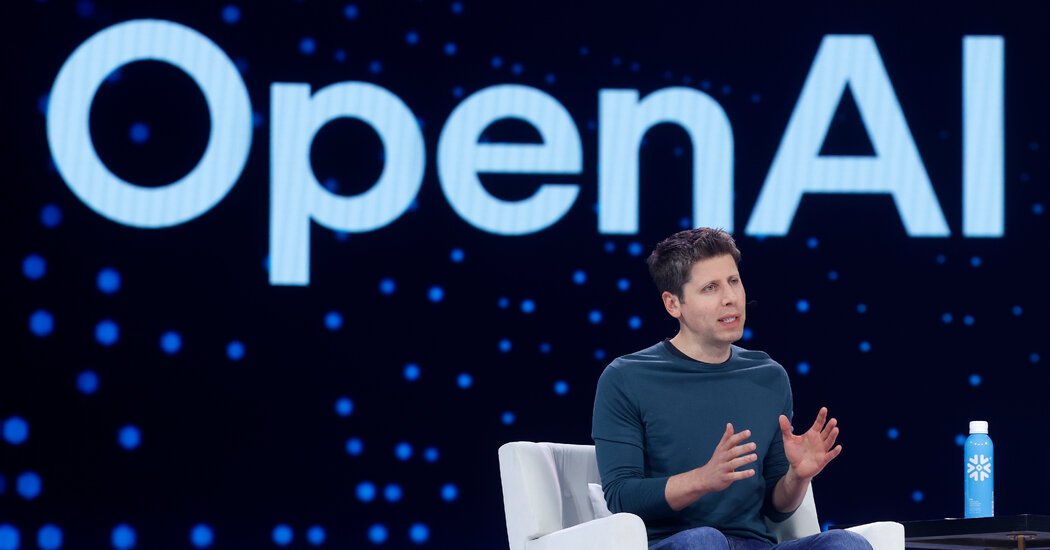
A coalition of states has opened a wide-ranging investigation into the artificial intelligence start-up OpenAI, the company said Saturday, adding to a growing backlash over A.I.
State attorneys general subpoenaed OpenAI on Friday asking for internal documents on its practices, including its handling of user data, safety of minors and advertising activities, according to the company. New York, Colorado and other states are involved in the investigation, according to two people familiar with the probe, who spoke on condition of anonymity to discuss an ongoing legal matter.
“We take the concerns raised by state attorneys general seriously and intend to engage constructively with their offices,” OpenAI said in a statement. The company added that the newest version of its model, ChatGPT, includes more safeguards like parental controls to protect children.
“None of this changes what families have gone through, but we are committed to learning, improving, and getting this right,” the company said.
OpenAI declined to provide further details on the investigation, which was first reported by The Wall Street Journal.
A.I. has drawn increasing scrutiny as the number of cases of children harming themselves after using the technology has grown along with A.I.-generated scams. Concerns about the technology’s ability to replace humans, as well as soaring energy costs from the data centers that power it, have added to the angst.
Thank you for your patience while we verify access. If you are in Reader mode please exit and log into your Times account, or subscribe for all of The Times.
Thank you for your patience while we verify access.
Already a subscriber? Log in.
Want all of The Times? Subscribe.
Business
Microsoft CEO Satya Nadella Says Xbox Must Finally Become a Sustainable Business After 25 Years of Investment

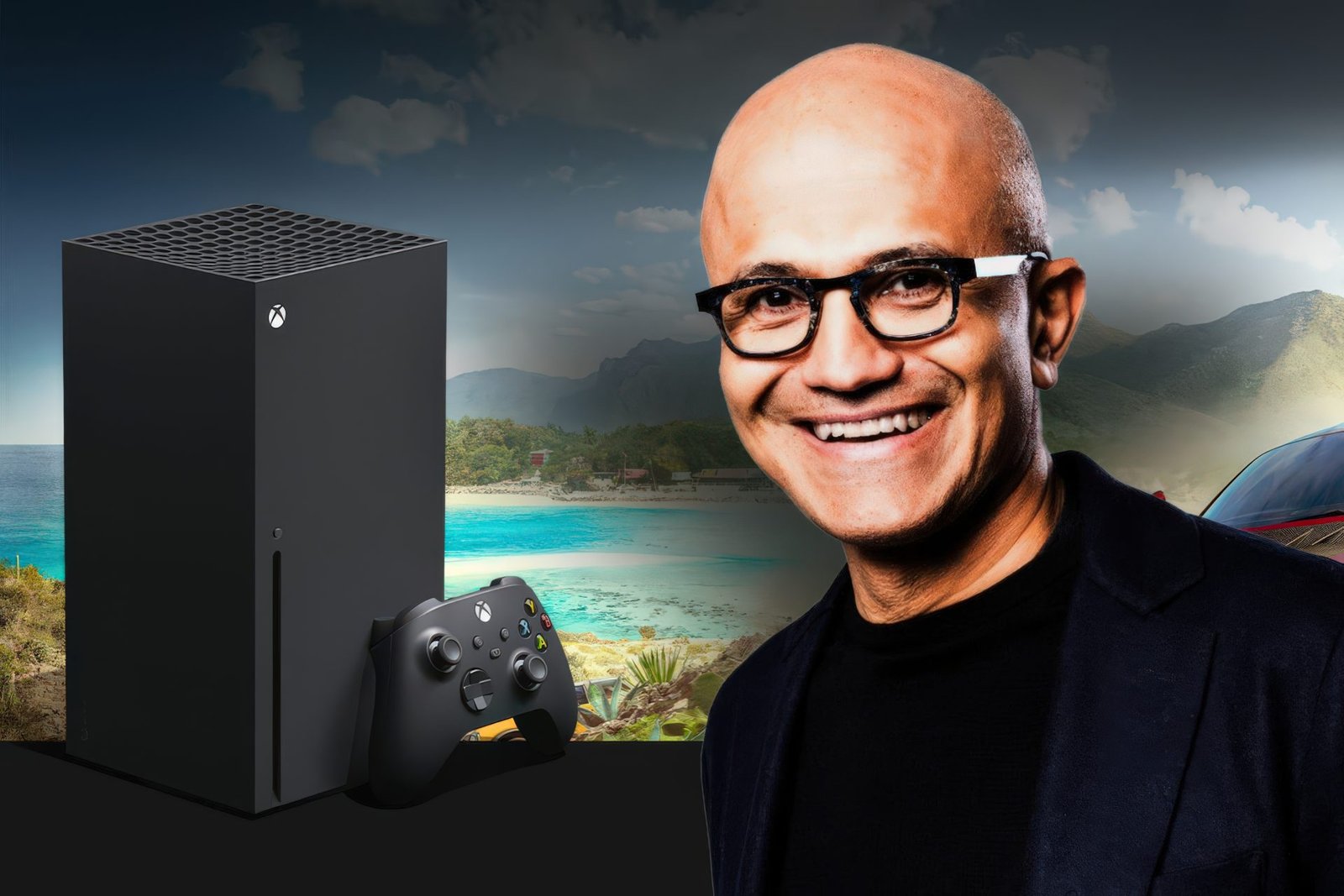
The week that ends tomorrow easily ranks at the very top when it comes to the sheer amount of public statements made by Xbox and Microsoft executives in the span of a few days.
Through a series of interviews, Xbox CEO Asha Sharma and Chief Strategy Officer Matthew Ball outlined a bold plan to rescue the division from its low margins (and the potential spin-off, joint venture, or sale by the parent company). Yesterday, in a video interview with Hard Fork, Microsoft CEO Satya Nadella claimed no one could accuse the company of not having invested in Xbox throughout the past 25 years, but now the time has come to make it sustainable and monetize the content. Nadella even went so far as to quip that YouTube currently monetizes Xbox games better than Microsoft itself.
Asha is really 100 days in, and she put out a post saying, in the next 100 days, she’s going to take a fresh look and make sure we deliver on what our fans expect of us both on the hardware side and on the publishing side. The challenge now for us is to think about how do you innovate both in hardware as well as in the games going forward in a world in an economically viable way.
We’ve invested a lot. No one can accuse Microsoft of not having invested for the last 25 years. And now we have to turn this into a sustainable business that delivers what is fundamentally one of the best sources of entertainment. The challenge we have is that we’ve not been monetizing that entertainment. If anything, we’ve been subsidizing that entertainment. In fact, there’s more monetization of Xbox games happening on YouTube than at Microsoft.
From Nadella’s statement, it’s clear the gloves are off, and Xbox must live (or die) on its own, as Microsoft will no longer bankroll it indefinitely. Later in the interview, Nadella added that Asha Sharma and her fellow execs must define a new model that somehow merges all the various Xbox platforms, from the console to PCs, from mobile to cloud.
Unfortunately, because of what’s happening with the cloud and AI, the prices have gone up. It’s happening with PCs, it’s happening with phones, and Xbox is impacted as well. The scarcity of semiconductor supply and memory in particular is having a massive impact on consumer electronics. That’s a temporal thing that I think we’ll get through. It is not going to be permanent. There is a permanent thing, which is: what’s the Xbox model going forward? PCs and consoles both have their place, obviously, mobile has people playing elsewhere, and so we have to now bring it all together while staying true to what we’ve always done.
It’s no easy feat, though the road appears to be already paved with Project Helix, which will allow users to play PC games on an Xbox console. The software situation is perhaps more problematic: Sharma confirmed that Xbox cannot afford more than one or two exclusives (for now, and Clockwork Revolution) until the business becomes healthier. And then there’s the output issue: the new Xbox CEO openly wants to invest more in big franchises like Halo, Fallout, and Elder Scrolls while reducing funding for smaller games.
It will take some time before the new leadership’s actions can actually affect the bottom line. Until then, Xbox must hold fast.
Business
How much of Musk’s wealth comes from government help? Virtually all of it

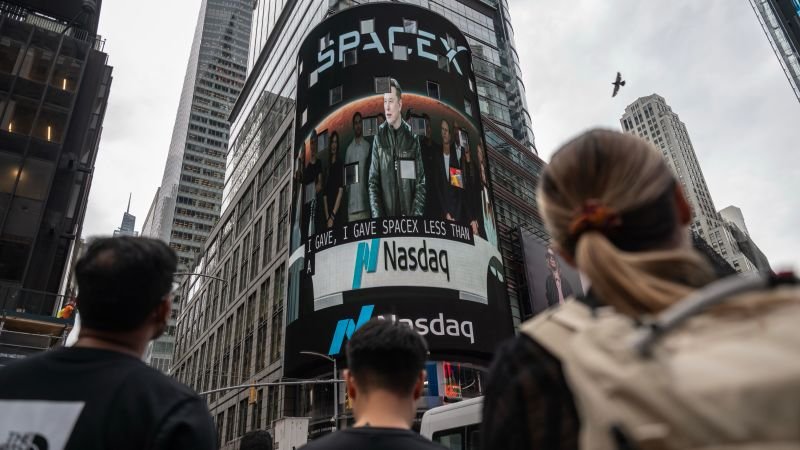
Elon Musk has many people to thank for becoming the world’s first trillionaire — his companies’ engineers who produced technological breakthroughs, Wall Street investors who were eager to shower him with their dollars despite questionable financials, but most of all, American taxpayers and government policymakers.
“There would not be (Tesla and SpaceX) if it weren’t for the government,” said Ross Gerber, CEO of investment firm Gerber Kawasaki and an early investor in Tesla.
The federal government awarded SpaceX more than $500 million worth of grants in its early years. And that $500 million is just a fraction of what Tesla received from government grants, loans, contracts and regulatory policies.
That’s not to say SpaceX’s success and Tesla’s roughly $1.5 trillion valuation are entirely due to federal spending, but both companies teetered as startups before receiving taxpayer subsidies.
Early money propelled SpaceX
The question of how much Musk’s $1 trillion net worth comes from the government is not as simple as it sounds. By some measures, only a small portion of his wealth is thanks to taxpayers. His companies have received “only” tens of billions from government contracts and programs.
But it’s not just the dollar amount that matters — it’s when it was received.
SpaceX’s first major windfall was a $278 million grant from NASA in 2006 to develop the Falcon rocket system and Dragon space capsule. The Space Shuttle program was ending, and the US needed a new way to get astronauts and cargo to the International Space Station.
It was the first of more than $500 million in grants SpaceX would receive, according to data from PitchBook, which tracks the valuation of private companies.
“That was about half of their capital that they raised to that point,” Casey Dreier, chief of space policy at the Planetary Society, a public interest group advocating space flight, said ahead of the SpaceX IPO. “This was a substantial commitment that NASA provided.”
And while NASA has enjoyed the benefits of SpaceX’s success, with dozens of humans ferried to the space station aboard the company’s rockets, it didn’t benefit like those private investors.
“The people who put in the other half of the capital from that era are about to be made multi-billionaires,” Dreier said.
And the support from NASA didn’t stop with the grants. Musk has acknowledged the company was almost out of cash at the end of 2008 when it got a critical, and then-unprecedented, $1.6 billion contract from the American space agency.
“The fact (is) that we could not have started SpaceX, nor could we have reached this point, without the help of NASA,” Musk said in 2012 when launching the company’s Falcon 9 rocket to the ISS for the first time.
Regulations kept Tesla going
By comparison, Tesla has received relatively modest government contracts in the past. But it got a lot of help getting started — critical help.
In January 2010, Tesla had sold less than 2,000 cars in its entire history, virtually all of them electric oddballs based on sports cars from Lotus, a relatively obscure British company. Then Tesla received a $465 million low-interest loan from the Department of Energy, months before its initial public offering. With the loan, the company developed the Tesla Model S sedan, its first major success. Tesla paid back the loan early through proceeds from an additional sale of stock in 2013.
A $7,500 tax credit for EV buyers allowed the company and other automakers to sell American-made EVs at a higher price than the market might have otherwise allowed.
Tesla buyers received federal tax credits worth an estimated $3.4 billion before the perk ended in 2019. Tesla then cut prices to maintain demand. Given how much it had to cut prices, the tax credit likely allowed Tesla to bring in more than $1 billion on cars sold in America than it could have without the tax credit.
The tax credit was restored in 2023 as part of the Biden administration’s Inflation Reduction Act. But Republicans in Congress and the Trump administration ended the credit across the industry on September 30, 2025.
But Tesla’s most significant financial support was not from tax credits for EV buyers. It was from a government program to reduce carbon emissions across the automotive industry.
Under the regulatory framework, car companies had to meet emissions limits. If they didn’t, they would have to buy “emissions credits” from companies that did comply with the limits. And the one company that always came under the emissions limits and had credits to sell was Tesla, since all of its vehicles are electric.
That meant virtually every other car company in the US was lining up to pour money into Tesla’s coffers as a result of the regulations.
Those credit sales accounted for nearly 25% of the company’s revenue in 2008 and 10% of its revenue throughout the next five years.
Between 2008 and 2019, sales of regulatory credits generated more than $2 billion for the company.
Tesla might have died without those funds — a fact not lost on Elon himself.
In a tweet in 2020, Musk admitted that Tesla was nearly forced to file for bankruptcy as recently as 2019. Even after it survived the bankruptcy scare, it wasn’t until 2021 that Tesla was able to post a profit without the help of credit sales.
Since 2019, sales of regulatory credits have brought in another $12.3 billion, with all of that money falling pretty much directly to its bottom line. That credit revenue is likely to dry up in the future, though, as Republicans in Congress have essentially eliminated the program.
But Tesla’s value no longer has much to do with its cars. Instead, the company’s share price is based on Musk’s promise that Tesla will soon offer widespread self-driving “robotaxis” and humanoid robots, a promise he has long sought to deliver but to little avail.
Wall Street’s faith in Musk is the main reason his wealth has reached previously unimaginable heights — at least for the moment, as long as his companies’ share prices remain near where they are. But that faith comes because at the start of his businesses, when he needed financial assistance the most, it was the US government — not Wall Street — that provided the needed help.
“It turned out it was definitely good for the government, America, and society that these companies exist, so I don’t regret that the government gave him the money,” said Gerber, the early Tesla investor who is now a Musk critic. “The mistake the government made is they should have had an equity stake.”
– CNN’s Jackie Wattles contributed to this report
Business
Retirees Could Get a Much Bigger Social Security Raise in 2027 Due to Inflation


The prices of groceries, gasoline, and pretty much everything else seem sky-high these days and are getting higher. There’s a silver lining to this cloud, however — at least for some people. That is, since Social Security’s monthly payments are adjusted for inflation, beneficiaries should see a sizable increase in their payments in the foreseeable future.
You’re not just imagining those inordinately high — and rising — prices
Just when you think price increases can’t get any worse, the Bureau of Labor Statistics reported that the United States’ annualized consumer inflation rate reached a three-year high of 4.2% in May, up from 3.8% in April. Food and fuel prices led the charge, although even without these two categories, prices were still up 2.9% year over year.
And the nation’s factories, assemblers, and packagers aren’t feeling any less miserable. The BLS reported on Thursday that the U.S. Producer Price Index jumped 6.5% year over year last month, or a still-hefty 5.1% when excluding energy and food. Both figures are also at least three-year highs.
Of course, even if they didn’t know the exact numbers, almost everyone who eats, owns a car, pays utility bills, or is looking for a place to live knows everything is now getting more expensive at an accelerated pace. Seniors and retirees who count on Social Security income that’s less than what most working-age people earn may be feeling particularly pinched.
The good news is that relief is on the horizon for this particular crowd.
A strict, specific procedure
You likely realize that Social Security beneficiaries receive payment increases regularly. But, do you know how — if one is put in place — it’s determined?
It’s rather firmly structured, actually. Indeed, the Social Security program is required by law to provide an annual cost-of-living adjustment (COLA) based on the Bureau of Labor Statistics’ aforementioned consumer inflation data. And not just a hand-picked, estimated figure. The Social Security Amendments of 1972 specifically require a COLA to be effective at the beginning of a new calendar year, based on the BLS’s average annualized inflation rate for the months that comprise the third calendar quarter of the previous year. This allows the Social Security Administration time to make its necessary payment adjustments.
But what about (the rare) years when there is no inflation? The program is off the hook in those years; there is no required COLA then, as was the case in 2015 (for 2016) and in 2009 and 2010 (for 2010 and 2011) due to the deflation stemming from the subprime mortgage meltdown and subsequent recession.
Fortunately, cost-of-living adjustments aren’t cumulative, meaning Social Security’s beneficiaries don’t necessarily have to wait for the Bureau of Labor Statistics’ Consumer Price Index (CPI) to “catch up” to a previous peak after a slump. The calculations are made every year for the next year alone, irrespective of prior years’ numbers.
So far, 2027’s COLA is on track to be a pretty big one
At first blush, the process appears to risk undercalculating — or even overcalculating — any given year’s cost-of-living adjustment. After all, three months isn’t a very long time compared to a full year. It’s conceivable that something unusual could take shape in just the third quarter of any given year to undermine or overinflate the following year’s COLA.
But that’s kind of the whole point of doing it this way.
While the Social Security Administration considers only the consumer inflation rates for July, August, and September when determining the following year’s COLA, those are year-over-year rates, each covering a full 12 months’ worth of price changes. They’re also the most recent price increases the program can consider in time to implement a payment increase beginning in January of the following year. Given this, these are arguably the only data inputs that retirees would want Social Security to consider… to ensure the cost-of-living adjustment is as relevant and timely as possible.
This, of course, means we don’t yet know what next year’s COLA will be; we won’t know for sure until early October, when September’s inflation data is available.
It somehow seems unlikely prices will fall dramatically between now and the end of Q3, though. To this end, assuming the average annualized consumer inflation rate of nearly 3.8% for the past three months reflects the figures that will still be in place through the third quarter of this year, look for an average monthly payment increase of about $78 for 2027, or nearly a 3.8% improvement on this year’s typical Social Security benefit of $2,071 per month.
Just bear in mind that the bigger or smaller your current benefit is, the bigger or smaller your payment bump will be when the time comes.


How NY looked the last time the Knicks won NBA finals
The New York Knicks are NBA champions for the first time in 53 years. As fans celebrate the franchise's first...


Knicks win first NBA title in over 50 years
Fans celebrate after the New York Knicks won their first NBA championship since 1973, defeating the San Antonio Spurs 94-90...


Jubilation as Scotland score against Haiti in World Cup Opener. #BBCNews
Trump’s 80th birthday present: UFC fights at the White House
WASHINGTON (AP) — President Donald Trump celebrates turning 80 on Sunday with a showstopping birthday spectacle that once would have...
Knicks rally again behind Jalen Brunson’s 45 points to defeat Spurs, win franchise’s first NBA championship since 1973
At long last, the New York Knicks are NBA champions. In a Game 5 of the NBA Finals Saturday night...


Germany and Japan Are Rearming Again, 80 Years After World War II
In 1940, the imperial regimes of Germany and Japan joined what would be known as the Axis powers, bound by...


UFC White House Results: Topuria vs. Gaethje
More in UFC RAF Wrestling RAF Wrestling Get RAF 10 results for the Khamzat vs. Davis event in St. Louis...


Knicks win NBA championship for first time in over 50 years
New York Knicks win NBA championship for first time in over 50 years The New York Knicks won the National...


Seth Rogen Has “No Plans” To Work With James Franco Again
Once frequent collaborators, Seth Rogen doesn’t see an onscreen reunion with James Franco in his future. The 2x Golden Globe...


Trump says US-Iran agreement will be signed Sunday
President Donald Trump said an agreement with Iran is “scheduled to get signed” on Sunday and would reopen the Strait...
-

 LifestyleNews1 week ago
120 minutes of strength training per week may help extend lifespan
-

 Politics2 days ago
What to know about the stabbing that set off fiery riots in Northern Ireland
-

 Video2 days ago
Download fans say what they love about the festival. #DownloadFestival #BBCNews
-

 HealthNews2 days ago
The people of Okinawa, Japan only eat until they are about 80 percent full, then stop — and the practice has been linked in multiple peer-reviewed studies to lower rates of cardiovascular disease, slo
-

 Video2 days ago
Why SpaceX IPO isn't about space. #SpaceX #ElonMusk #BBCNews
-

 Food1 day ago
Pope Leo’s plane was grounded. Then the King of Spain stepped in to help
-

 TravelNews1 day ago
My Paternal Instinct Should’ve Warned Me About Netflix’s Maternal Instinct
-

 Video18 hours ago
Claire Danes has the cutest stories about young Kirsten Dunst on 'Little Women' set