
HealthNews
Vaccination rates fall as more parents opt out

Transcript
JUANA SUMMERS, HOST
The Centers for Disease Control and Prevention (CDC) has released new data showing that parents are refusing to vaccinate their kids before they enter kindergarten at record levels. New data released by the Centers for Disease Control and Prevention confirms this. Rob Stein, NPR’s health correspondent has this story.
BYLINE, ROB STEIN: Over 4% of parents with kids entering kindergarten in the past year received exemptions from routine vaccinations due to their personal or religious convictions. This is the largest increase in exemptions since more than 10 years, and the percentage of children who get exemptions has reached a new high. Over 155,000 students in kindergarten were exempted from routine vaccinations. This is causing alarm in the infectious diseases and public health experts. Paul Offit, a pediatric infectious diseases expert from the University of Pennsylvania is Dr. Paul Offit.
Paul OFFIT: These latest CDC figures are depressing because they show a trend of parents choosing to not vaccinate. It’s a serious problem. In the United States of America we are witnessing, yet again, children dying of diseases that can be prevented by vaccines. These illnesses do not need to kill.
STEIN : This is because, according to the same CDC study, vaccination rates are still high overall but they continue to drop at a steady rate. In more than half the states, vaccination rates are dropping again for major kindergarten vaccines, such as measles and mumps. Rubella, chickenpox is also declining, along with diphtheria (tetanus), whooping-cough, and polio. Over 280,000 children entered kindergarten without protection against rubella, measles and mumps. Offit calls that disturbing.
The continued anti-vaccination trend is clearly having an effect. In the last year-and-ahalf, we have seen more cases of measles than in over 30 years. Two healthy girls aged 6 and 8, who lived in West Texas died from the measles. This is the first death of a child in over 20 years. In the last year we’ve seen 28,000 whooping cases, and 16 deaths. This is just unacceptable.
He says that there is no reason to believe these trends are going to reverse any time soon. Pandemics caused many children to skip shots, and heightened suspicions about vaccines. Robert F. Kennedy Jr., the Health Secretary of Trump’s administration and top health officials have been drumming up misinformation about vaccines and hostility toward them. This has led to confusion and doubts regarding vaccines. Dr. Jake Scott, an infectious diseases doctor at Stanford University is a leading expert in vaccines.
JAKE SCOTT: Since the COVID outbreak, trust in vaccines is clearly eroding. For the first time this skepticism comes from our top federal agencies, rather than them countering it. Several states also made it easier for people to obtain exemptions. This is, in my opinion, a perfect storm that allows for outbreaks of this type.
STEIN, In fact, last week as children were heading back to school, the President held an event at his Oval Office where he blamed vaccines for autism and issued a new order urging parents to reduce vaccinations. He ordered that the Justice Department pressure states so they can make it easier to opt-out of school vaccines.
Many experts in public health hoped that Dr. Erica Schwartz would counteract these anti-vaccine propaganda messages. Schwartz, however, has not responded to the President’s requests. In a simple three-sentence email, the CDC announced its new findings. In the past, federal officials often released a scientific report with an appeal to parents for them to immunize their children. No federal official has said anything, not even Dr. Schwartz. NPR asked for comment and an interview from Dr. Schwartz, but received no reply.
Rob Stein, NPR News.
Copyright 2026 NPR. All rights reserved. For more information, please visit our Terms of Use and Permissions page at www.npr.org.
The accuracy and accessibility of NPR transcriptions can vary. The text of the transcript may be edited to fix errors or to match audio updates. After its initial broadcast or publication, audio on npr.org can be edited. Audio recordings are the authoritative records of NPR programming.
HealthNews
Researchers find new benefits, risks in GLP-1 weight loss drugs
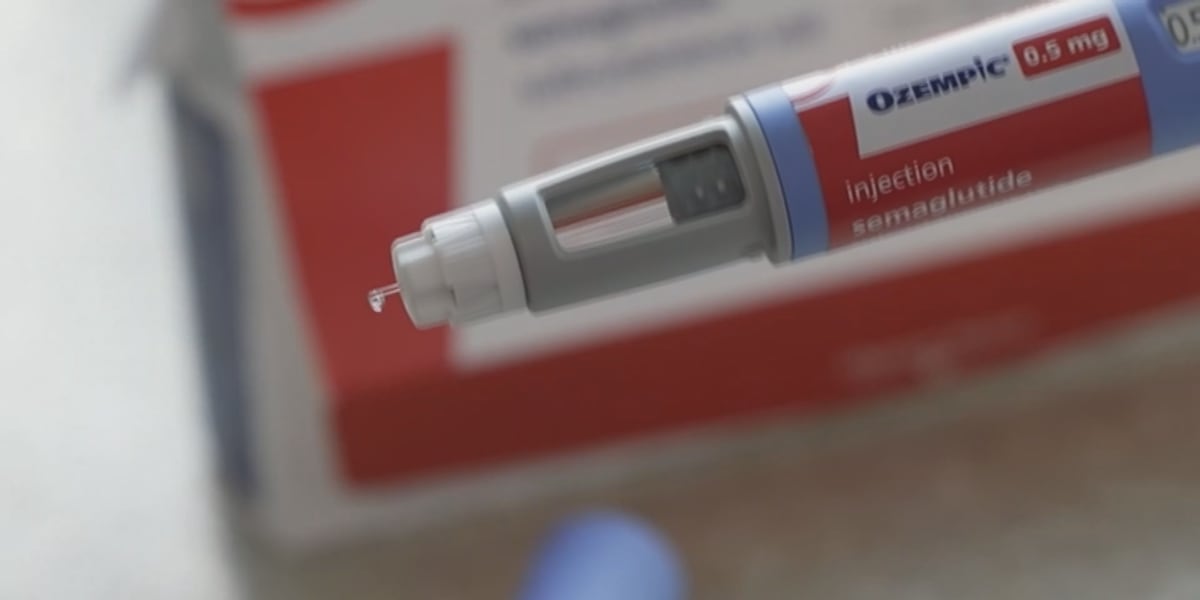
BATON ROUGE (La.) WAFB) – Doctors are using GLP-1 weight-loss drugs since about five years. But some benefits have caught them by surprise.
Dr. Steven Heymsfield has been studying GLP-1 drug for the past 15 years. He is a Professor at Pennington Biomedical Research Center, and Director of the Metabolism Body Composition Laboratory.
Heymsfield stated that some of the results were expected and others completely unexpected. We know, for instance, that obese people are at a greater risk of developing diabetes.
Heymsfield explained that “the unpredictable type” is when people say they have less of a desire to consume alcohol. Now, studies are beginning to confirm that.
Weight loss has many benefits.
Heymsfield says that people who suffer from arthritis are reporting unexpectedly improved symptoms. They also report less pain, inflammation and can now walk more easily. According to him, studies show that people require fewer knee implants as a consequence.
Heymsfield also emphasized cardiovascular improvements. He said that GLP-1s had already been shown to reduce the risk of cardiovascular disease and mortality. It’s believed that not only weight loss but also processes such as inflammation are improving, which could mediate the effects of these on the heart.
Not all the benefits of weight loss are directly related to him. Heymsfield added that the effect of these drugs on inflammation is actively being studied.
Heymsfield stated that it’s likely GLP-1 medications are being prescribed for inflammation off-label, even by people with normal weight. Off-label prescriptions are risky, he said. The effects of these drugs on people not prescribed them are unknown.
Heymsfield says that researchers don’t know how GLP-1s work to reduce alcohol consumption, but they believe the drug may affect brain areas linked to these behaviors.
Reports of adverse effects
Heymsfield stated that some patients taking GLP-1 medications do not eat enough and develop vitamin deficiencies, such as scurvy, due to vitamin C deficiency. This is because the drugs change eating habits.
He described hedonia or a lack of appetite as the condition in which some patients stop enjoying eating. Most people like to eat. Not just for calories. Heymsfield added, “It’s a pleasure.” Some people stop using drugs if they lose the enjoyment.
Heymsfield stated that the drugs can also reduce “food noise,” which is a positive effect, but in some instances it may become overly pronounced.
Heymsfield also said that muscle and bone loss is a concern for everyone who uses the drug to lose weight. Pennington’s researchers, he said, are looking at ways to reduce this loss. These include increased protein consumption, resistance exercises and drugs that prevent muscle loss such as drugs of the androgen type.
Heymsfield says that muscle loss is more problematic for frail patients, like a 75 year-old overweight patient who starts taking GLP-1. This could make it harder to move around, and may increase the risk of fractures.
A new drug is being tested
Heymsfield stated that Pennington researchers were testing retatrutide. This triple-agonist drug is a combination of GLP-1 and GIP, as well as glucagon. Heymsfield said that the drug had produced weight loss comparable to bariatric surgeries, between 25% and 30%.
Heymsfield replied, “That is a lot.”
Heymsfield added that the drug has more side effects. Retatrutide, he said, is currently in phase 3 trials, which is the final phase before approval. He believes it could be on the market within the next couple of years. The timelines of approval for these drugs are moving more quickly, according to him. He cited two GLP-1 oral drugs which recently hit the market.
Long-term safety and use
Heymsfield stated that GLP-1 medications are generally safe, especially at low doses, and have well-described effects on the gastrointestinal tract.
He stated that the effects of the drug cease once the patient discontinues taking it, unless they have made permanent behavioral changes in diet and exercise while on treatment. Heymsfield stated that weight cycling, which is losing weight and then gaining it back, is a common practice and is unhealthy.
Heymsfield says that more potent and targeted GLP-1 medications are being developed, including possible once-amonth injections as well as drugs to preserve bone and muscle.
Please click here to report typos. Include the headline.
Subscribe to WAFB 9 News Daily Digest and Breaking News Alerts by clicking here.
HealthNews
Woman Undergoes Emergency Kidney Surgery. 24 Hours Later, Her Sister Is Rushed to the Hospital for the Same Ailment (Exclusive)

Need to Know
Lilyana and Claire Ziemba both had kidney stones removed within 24 hours of each other after experiencing severe symptoms
Claire searched for nearly a full year for the cause of blood in her urine. Lilyana suffered from debilitating right-side pain for over two years.
They joked that their back-to-back emergency situations proved they are “connected,” but it also revealed long-awaited information about their health.
Sisters Claire and Lilyana ziemba were destined to be together for the rest of their lives when, within 24 hours after each other, they both developed kidney stones.
Claire, a Duke University student aged 20, had just had surgery to remove a stone measuring 9 millimeters when Lilyana (age 23), a physician assistant student at Duke University School of Medicine, discovered she was suffering from a stone of 14 millimeters, which required emergency surgery.
Claire tells PEOPLE that a sister’s bond “is like none other,” reflecting on the week in which both women recovered from medical procedures they had not expected to undergo side-by-side. “Lily has been the most loyal woman I have ever known, and our friendship is one of the strongest, the type of loyalty which lasts a lifetime.”
They found humor later in their coincidence on TikTok. Claire wrote, “Your sister was able to outdo you by removing a kidney stone 14mm after yours had been removed at 9mm.” The caption summarized the coincidence: “24-hour emergency surgery apart means that we are connected.”
Behind the joke, both sisters had a more complex and lengthy medical history. Claire’s first symptom was bloody urine. But without any pain, Claire spent several months visiting specialists to try and determine what the problem was.
Claire recalls that the urgent care clinic initially thought her bleeding was related to COVID-19 or her period, but urologists told her it could have been kidney stones. A CT scan performed in May revealed that a stone measuring 9mm was found in Claire’s right kidney, and there were also several other smaller stones.
Claire had scheduled her surgery for August. The procedure went well at first, but she began to experience vomiting and shaking uncontrollably around midnight the next night. The CT scan revealed that both kidneys had been inflamed. She passed pieces of food, but she recovered well enough to leave the hospital.
Lilyana, on the other hand, began to experience severe pain less than 24 hours following Claire’s discharge. Lilyana’s pain was not unusual at first. She had been suffering from similar symptoms on her right for the past two years.
After three rounds of fentanyl failed to provide relief, she underwent a CT scan and immediately noticed what she describes as a “huge stone” at her ureteropelvic junction that was blocking flow to her ureter. She tried three doses of fentanyl, but it didn’t work. A CT scan revealed what Lilyana describes as “a huge stone” blocking the flow from her ureter to her bladder.
Lilyana told PEOPLE that it was “completely surreal” to learn I had a stone of 14mm in my ureter, which was blocking the flow. She needed an emergency operation just 24 hours later after her sister underwent her stone removal surgery. We joked that our bond was real because of the coincidence.
Lilyana was particularly moved by the discovery, as she has had recurrent stones in her kidneys since age 16, and undergone metabolic tests without finding a reason for their formation. According to Lilyana’s account, doctors haven’t confirmed a genetic link between her and Claire’s stones. This was Claire’s very first time with kidney stones.
Lilyana also visited specialists for her debilitating and persistent right-side pain over the last two years. These included OB/GYNs, pain management doctors, orthopedists, neurologists, urologists, and nephrologists. Doctors did not think that the stones in Lilyana’s kidney were responsible for her daily pain, as they had been found during previous scans. They instead looked at other causes, such as her back.
Both sisters were familiar with the uncertainty. Claire said that after being told repeatedly she was “too old” to have kidney stones, she began questioning whether the blood in her urine was too high.
Claire: “It is hard to know that perception can be so important.” If nothing’s wrong visibly, people won’t believe or care about you even if you are telling the truth.
Lilyana’s experience was also accompanied by an unexpected outcome: the pain she had been experiencing for the past two years has completely disappeared since the removal of the stone. She describes the relief she felt as an “incredible miracle” after years of trying to find a reason.
Lilyana is about to start her Physician Associate program at Duke, and the timing of this experience has added a new layer of significance. Her own experience as a medical patient she hopes will help her to treat others in the future, especially those who struggle with getting their unexplained symptoms treated.
Sign up to PEOPLE’s daily free newsletter and never miss an important story. From celebrity news to human interest stories, you’ll always be up to date.
They both credit their medical teams for listening to them and treating their discomfort seriously. Now, they hope that their experiences will encourage more research and awareness about why young women get kidney stones.
Lilyana says that “having each other there helped make the experience a bit less frightening” because we could understand the feelings of the other person.
HealthNews
Vaccination exemption rates for US kindergartners hit record high
WASHINGTON
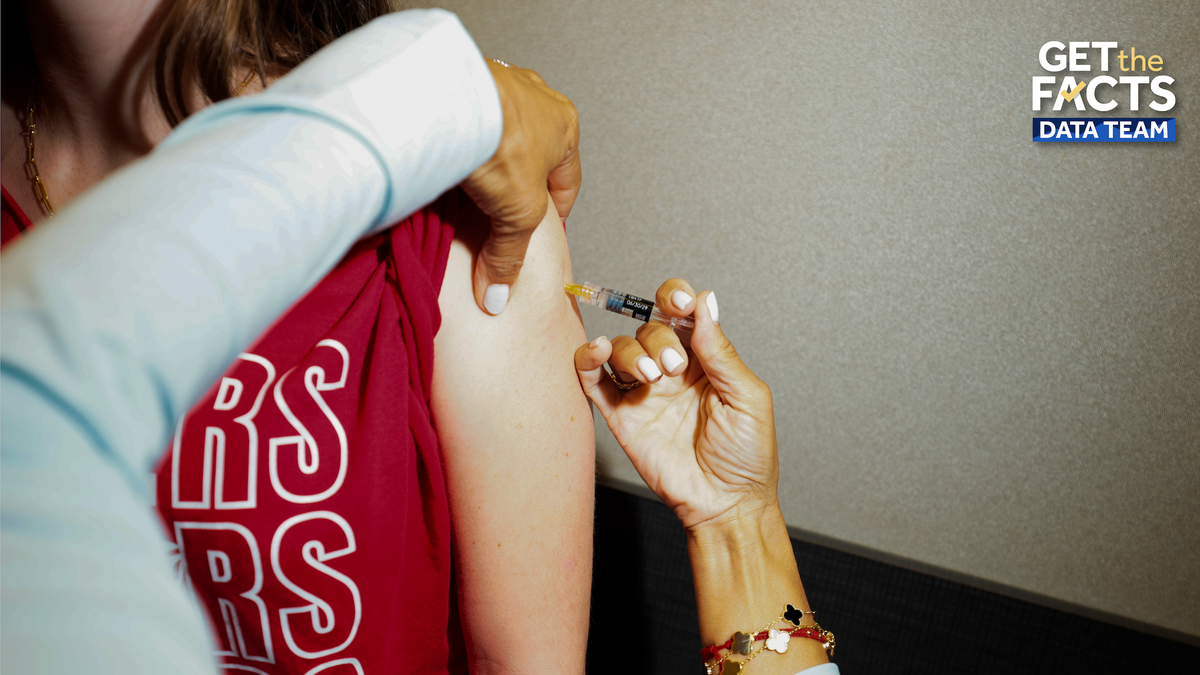
According to the Centers for Disease Control and Prevention, data shows that vaccination rates for kindergarteners declined last year.
A record number of exemptions from non-medical reasons reached 4% in the entire country.
Data was released by the Agency on Monday. It includes the vaccination rates of kindergarteners during the school years 2025-2026. Data released by the agency includes rates of vaccination for MMR (measles mumps rubella), DTaP (polio), and chickenpox.
The data includes a breakdown by state of the vaccination and exemption rate. Of the 46 states that had enough data to analyze, 42 showed an increase in non-medical exemptions.
In 23 states, the percentage of exemptions for non-medical reasons was at least 5%.
New CDC data is released a week following the signing of an executive order by President Donald Trump to try and overhaul vaccination guidelines for children. This order was intended to space out vaccinations.
Data showed that the MMR vaccination rate in the United States fell 0.1 percentage points last year to 92.4%. According to the CDC, there were about 280,000 kindergarteners without MMR vaccination.
HealthNews
Flesh-eating bacteria caused man’s leg to swell to 8 times its size
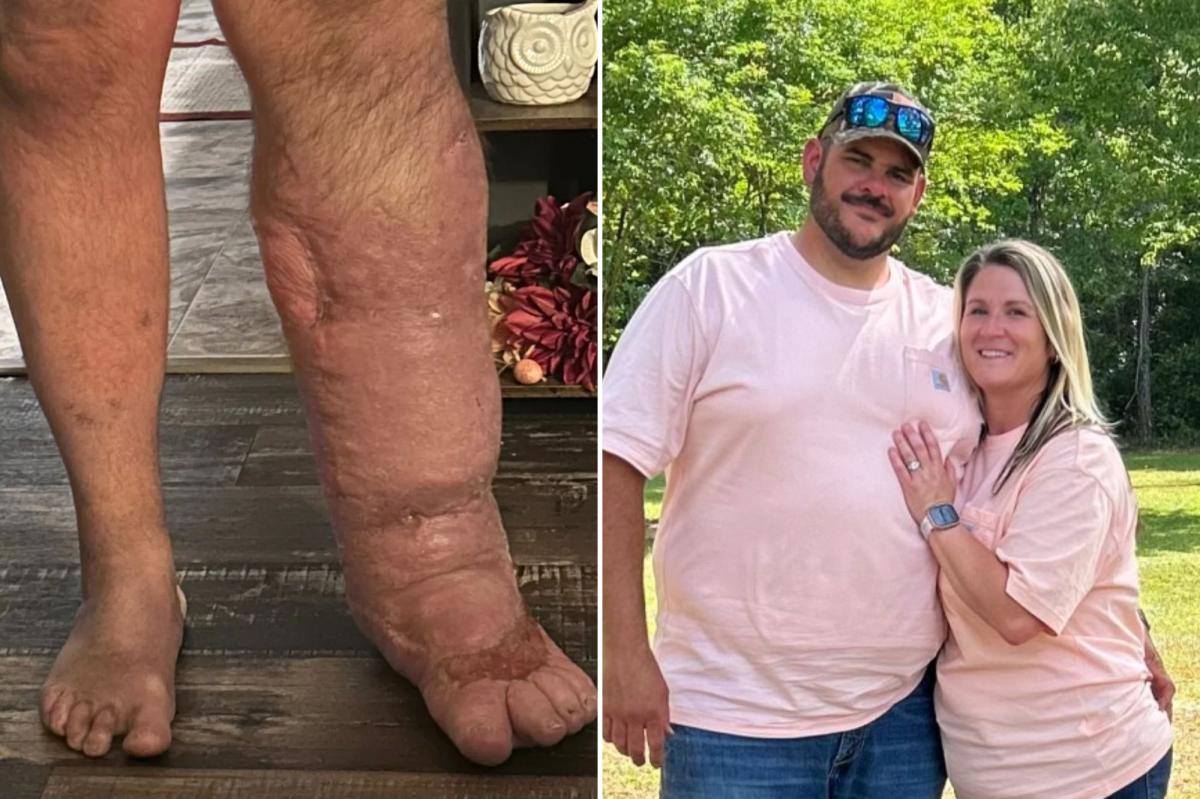
The gruesome details and photos of a victim’s ordeal with the flesh-eating bacteria, which is sweeping through southern US states, are shared by the man.
Vibrio Vulnificus is the most deadly Vibrio species, and can result in severe, life-threatening infections.
Ben West, a 38-year-old father is now awaiting amputation of his left leg after doctors “cut the meat and cut the tissue” to try to preserve it. He is a 38-year old father who has been waiting for the amputation his left leg. Doctors have already cut his meat and tissue to save it.
West, who was fishing near Port St. Joe in Florida in August 2025 knew about the dangers and wore tall boots, but it wasn’t sufficient to keep him safe. He told NewsNation that the boots actually rubbed an area around his ankle. This is where bacteria found a home.
Janie shared photos and wrote: “Benjamin complained of severe burning and swelling in his ankle and foot.” She also posted several pictures of the leg during his illness. It was the most painful thing he had ever experienced and his leg seemed to be burning.
Six surgeries were performed to try and save the leg.
He said, “They use a laser to cut through the flesh and tissue to beat the bacteria, because they can’t stop them.”
The wounds reopened after some time, leaving “holes”, up and down, in the area of infection.
He complained that his leg was burning, aching and swelling up to 8 times the size it should have been. He said that his wife felt “electric shocks throughout the day”.
West’s wife confirmed that he will have his leg amputated this week.
What is Vibrio Vulnificus
West was infected by this bacteria, which thrives along the coast and enters through open wounds. According to the CDC, most people contract it from eating raw oysters and shellfish.
Florida is the state with the highest number of Vibrio cases in the United States. In Florida, two deaths and 14 cases of infection were reported this year. It killed five people last year.
The bacteria is known as “flesh eaters” because it can cause an infection that causes the skin around the injury to die.
If it gets into the bloodstream, it is deadly. It can cause severe skin lesions and even lead to dangerously low blood-pressure.
During the summer, bacteria in brackish and salt water (where fresh and salt water mix) multiply.
Ben West’s Story
West was diagnosed with cellulitis two days after his fateful fishing excursion. West was given antibiotics to treat cellulitis, but they were not those needed for his Vibrio.
His wife reported that he had declined “extremely quickly” by the following day. His wife wrote that he was on the verge of death, put him on a respirator and underwent three operations over the following days in an attempt to remove the infection tissue.
The doctors said that everything was going smoothly. They told West that by September 2025 they would not have to amputate. Skin grafts were used to replace the missing flesh.
His wife said that Ben has more than 300 staples and stitches to hold the skin graft into place.
West underwent a series of painful surgeries, followed by physical therapy, to help heal the wound.
West began to feel “stuck” in his healing after ten months.
Janie West wrote: “He told me that the pain of the day to day here in recent times is worse than the pain at the beginning.
Every single day, I spent over an hour unwrapping, cleaning, and rewrapping the leg. This included the doctors visits, shoes, pain, size, smell, and bandages.
The surgeon removed the lower leg. In the meantime, previously closed wounds were opening up and “holes”, along with his leg.
According to the latest update, the plan was to perform the amputation in this week.
She wrote, “He is so eager to get out of all the pain.” He feels that his quality of living will improve dramatically once he is fully mobile again. We are taking it day-by-day for the moment.
Vibrio can be avoided by washing hands and cooking shellfish. Avoid seawater and brackish waters, particularly if your skin is broken or you’ve had a cut or a wound. You should wash your wounds immediately if you have a cut or a broken skin.
HealthNews
These 2 Fitness Tests Take Less Than a Minute and Can Reveal How Well You’re Aging

Wouldn’t a few basic movements give you a good idea of how old you are? Standing on one foot or getting out of a chair to walk a few steps may reveal more about your age than you think.
Regular physical activity can help us age well. Fitness is more than how often you exercise or the number of miles that you walk. You may be able to tell a lot about your health by your ability to move, balance and get up quickly from a seat.
This evidence is further strengthened by a new study, published in JAMA Network Open. It found that physical fitness was associated with a lower death risk in older adults.
This is particularly fascinating to me as a personal trainer and dietitian. In my previous job, I worked at a hospital where I witnessed first-hand the devastating effects of a fall. This can result in a broken bone, hospitalization and loss of mobility. In some cases it may even lead to the loss of your independence.
It’s not too late to work on your physical fitness.
The study’s findings
The researchers studied 13,423 Taiwanese adults aged 65 or older who had completed standard fitness assessments in 2015 and 2016. The researchers then compared the results with health records, and tracked participants over a period of 7 years.
Researchers assessed fitness in four different areas: muscular strength, balance, agility, and cardiorespiratory health. In general, greater levels of fitness as measured objectively were linked to a lower mortality rate. Balance and agility were the strongest correlates, followed by lower body strength and cardiorespiratory health.
Comparing the people who were in the group with the worst performance, the group that was the best-performing had:
The 8-foot-up-and-go Test has a 59% reduction in mortality.
The 1-leg position has a 50% reduction in mortality.
The 30-second Chair Stand has a 45% reduced mortality rate
The 2-minute Step Test has a 42% reduction in mortality.
Researchers also developed a composite fitness rating based on all seven assessments. The group with the highest performance had a 61% reduced risk of dying compared to that group who performed poorly.
This was an observational research, where fitness was measured only at a single point in time. The findings are an intriguing way of thinking about healthy aging, not just in terms of exercise but also what the body can do.
Fitness tests that stand out
The study includes two tests that are particularly interesting, as they involve simple actions you could easily imagine yourself performing: standing up on one leg and getting up to walk a short distance. Each test is described, along with what the results measure and why they are important as we get older.
Eight-Foot-Up-and-Go
To begin, sit in a chair that is sturdy. Once you are ready, get up and walk for eight feet. Then turn around, go back, then sit down. This study measured the speed at which participants completed each movement.
It’s not just about speed. Balance, agility, coordination and lower-body muscle strength are all challenged. We use these skills all day long without even thinking about it.
Stance with One Leg
If you need support, stand near a solid surface. Try to maintain balance by lifting one foot from the ground. Participants in the study were given up to two attempts and 30 seconds.
It shows you: This test is a quick way to check your balance, neuromuscular control and your ability keep yourself stable when standing on just one leg. As we get older, balance becomes more important.
But these aren’t the only puzzle pieces. The importance of lower-body fitness and cardiorespiratory health is also important. These tests, such as the chair-stand test and two-minute steps, reinforce the fact that healthy aging doesn’t mean being a master at just one skill, but keeping your body agile and strong.
These findings have implications for all of us
Balance is not the answer. All three abilities are interdependent. It is important to have the right balance, strength, and agility in order to react to changes and maintain your stability. Resistance training, mobility, and balance exercises are just as important as regular cardio.
It’s not too late to get fit. You can always improve your fitness. It’s not enough to pass the longevity test. You need to continue building strength, stamina, endurance and confidence to remain active and independent as long as you can.
Why Trust Good Housekeeping
Stefani Sassos is a registered dietitian and personal trainer who oversees the Good Housekeeping Institute Nutrition & Fitness Lab. She also supervises product testing, evaluation and nutrition content. She is a registered dietitian, personal trainer and expert in nutrition and exercise.
Also You Might Like
Elite Ukrainian drone unit brings the war to Moscow’s doorstep
Overnight, waves of Ukrainian drones attacked the huge logistics center located outside Moscow. It was still on fire the next...


Target (TGT) Q2 2026 earnings
Target will report its fiscal second quarter results on Wednesday, as it provides a glimpse into the turnaround efforts of...


Googlebooks are finally getting their big reveal on September 15
TL;DR Google will reportedly hold its Googlebook Launch Event in New York City, on September 15th. This event may finally...


Researchers find new benefits, risks in GLP-1 weight loss drugs
BATON ROUGE (La.) WAFB) – Doctors are using GLP-1 weight-loss drugs since about five years. But some benefits have caught...


Brand New Day’ payday revealed
Tom Holland will reportedly earn more than $100 million for the film “Spider-Man Brand New Day.” The Wrap reports that...


“Frustrated, Fed Up, Fried”
David Krumholtz is stepping back from Hollywood following a series social media posts where the Supergirl and Oppenheimer actor got...


Costco to offer Medicare Advantage plans through SCAN Health Plan
Costco is soon to offer Medicare plans as part of an innovative, new health insurance venture. SCAN Health Plan is...


California AG Bonta says Meta case about restitution and distortion
California Attorney General Rob Bonta stated Tuesday, following the first day’s arguments, that the case is primarily focused on “civil...


Cerebras’s Next Generation CS-4: Fast Just Got Faster
Hot Chips will have more information on CS-4. CS-4, their 4th-generation rack is built on the same 3rd generation 5nm...


Democratic socialist Angie Nixon clinches surprise primary win in Florida US Senate race
Angie Nixon, a progressive, defeated former Army Intelligence Officer Alexander Vindman in the Democratic Party’s US Senate Primary for Florida....
-

 Business2 days ago
Elon Musk and Jensen Huang’s New Partnership Could Create the Next Era of Technology
-

 Business2 weeks ago
Elon Musk plans 100 million-square-foot terafab semiconductor plant near Houston
-

 Business1 week ago
Vandalized fiber lines cause Verizon service outage for thousands of SoCal customers
-

 LifestyleNews1 week ago
Has science finally made up its mind about coffee’s health benefits?
-

 Entertainment3 days ago
Star Wars: Smuggler’s Gambit Lets You Keep Helping Hondo Ohnaka in Fortnite After You Leave Disneyland
-

 Business6 days ago
Ford boosts US Lincoln production as it phases out imports from China
-

 Business3 days ago
Harvard reveals $2.2B SpaceX stake after Elon Musk company IPO
-

 Business2 weeks ago
Health department investigating after seeing more than 5x increase in cyclosporiasis cases in McHenry County