
HealthNews
Causes, Symptoms, Treatment

IF YOU’VE NEVER experienced a gout flare-up, understand that there’s absolutely nothing funny about it. The condition, a type of inflammatory arthritis, can feel like exactly that: flames. Shooting, burning, explosive pain—powerful and oftentimes sudden. People who suffer from gout usually feel this searing sensation in their big toe, but it can also set their ankles, knees, elbows, wrists, and fingers ablaze. An acute gout flare often starts at night and can last from 4 to 12 hours. Lingering discomfort can go on for a few weeks. Advanced cases involve bumps or nodules forming in the body, including under the skin and in the joints, and—on top of all that—kidney stones.
Late last year on his podcast, Bussin’ with the Boys, offensive tackle and three-time NFL Pro Bowler Taylor Lewan went public about a debilitating gout flare that left him “always in pain.” Lewan, 34, compared himself to the characters of 127 Hours and the Saw movies who cut off their own limbs to free themselves from danger. “I would rather tear my ACL and go through nine months of rehab again instead of having gout for a week,” , who did actually tear his ACL during a 2020 game.
Up until roughly a decade ago, plenty of people—doctors included—weren’t taking gout seriously, especially in young men. Maybe that’s because the condition, which has a history of affecting European royals, has long been known as “the disease of kings.” These regal men feasted on rich, expensive foods and drank plenty of alcohol, sometimes wearing their diagnosis as a high-society badge of honor. Basically: Gout was an old, rich dude’s problem.
Contrary to its image, though, gout can afflict people of all ages and royal statuses. Current estimates tally more than 6 million men and 3 million women suffering with gout in the U.S.—and the condition is on the rise in young men. Youth cases (that’s 10- to 24-year-olds) have surged more than 20 percent in recent decades, and projections indicate a 70 percent increase in global gout cases by 2050.
Not surprisingly, gout is trending online. TikTok and Instagram influencers—yes, gout influencers—share prevention and treatment strategies with their followers. On TikTok alone, popular videos on gout have collectively amassed more than 426 million views. Clips show youngish stand-up comedians with gout dunking on their condition. Reddit threads debate the nuances of medication. The supply of gout memes is seemingly infinite.
Granted, part of the uptick in cases is due to increased awareness: Doctors are becoming better at spotting and diagnosing gout. But other factors are at work—and scientists are still untangling the complexities of the condition. For people who suffer from gout, though, relief can’t come fast enough.
A Real Pain
FOR GARY HO, his decades-long health battle with gout began when he was 24. He was walking across his college campus and “my right ankle started to swell,” he says. “It was incredibly painful. It felt like I had broken my foot, but I hadn’t done anything.”
When Ho visited a doctor about his pain, the doctor dismissed it as overexertion. Ho’s father said the pain might be hereditary—he, too, had gout, and so did Ho’s grandfather. But gout, the doctor said, wasn’t a young man’s disease. “For 16 years,” says Ho, “I’d go through this cycle of handling the pain as much as I could, going to the doctor, repeating my story, and getting again told that I’m too young. I don’t meet the criteria. ‘It usually happens to older men. You’re too young to have gout.’ ”
It’s not as if being young lessens the pain, either. “It’s very dramatic in the majority of cases,” says Brian Mandell, MD, PhD, a rheumatologist with the Cleveland Clinic and a member of the Gout Education Society’s board of directors.
Gout’s signature pain is the result of sharp crystals shaped like tiny needles that form when a complex cellular process goes awry. Your body continuously produces uric acid when breaking down old cells or digesting foods that are high in purine, a water-soluble compound found in red meat, organ meat, and seafood.
For most people, their bloodstream and kidneys help clean up the uric acid and then they pee it out. But in gout sufferers, uric acid builds into those needle-sharp crystals, which tend to accumulate in the body’s extremities. While gout’s triggers vary, many sufferers report attacks after consuming alcohol (especially beer), tuna, scallops, steak, or juices that contain fructose—all of which are thought to increase uric acid.
Beyond the physically debilitating effects of gout, people who suffer from the condition say that it affects their relationships and mental health, too. Justin Radam, a Toronto barber, started having gout flares in his early 30s. While his daughter was learning to walk, Radam, now 40, was struggling with his own mobility. “I would be having a flare-up, and I’m lying there in bed with my foot elevated. That was one thing that would just kill me—being like, ‘No, baby, Dad can’t play with you right now.’ ”
When he was younger, Ho says he felt pressure to power through gout flares, even when doing so made him the butt of the joke. “I can still remember when I was hanging out with my boys in Austin in our younger days, going around listening to live music. At times I’d be on my crutches, or I’d hobble and try to keep up with them,” he says.
“They were trying to support me in the best way they could, but they would call me ‘gimpy’ or ‘gout boy.’ They thought it was endearing, but deep down inside, I’m like, Man, you don’t understand the thing. Like, if you tell me you have a migraine or your back is hurting, I would not be laughing.”
Like snoring or balding, gout has a reputation, at least among people who don’t have it, for being totally hilarious, which is bizarre considering how unfunny its symptoms are. Research on gout’s mental harms has found that gout patients can trivialize or conceal their diagnosis for fear of judgment, sometimes even being in denial about their symptoms.
Gout’s stigma “led patients to avoid seeking help from a general practitioner,” a 2025study found. In one survey of more than 1,000 gout patients, over a quarter reported that their self-esteem had taken a hit from suffering with the condition. Which is a full turn given that, at least historically, people with gout used to boast about having it.
“The Disease of Kings”
GOUT IS ONE of the oldest recognized diseases, first recorded by Egyptians in 2640 B.C.E.—and even early doctors saddled sufferers with a stigma. Greek physician Hippocrates wrote a guide to gout in the 5th century B.C.E., calling the condition the “unwalkable disease” and an “arthritis of the rich.” Only certain people contracted gout, Hippocrates theorized; unlike rheumatoid arthritis, which he perceived to plague the poor, gout hit the affluent.
Gout’s stereotype as “the disease of kings” endured in part because lots of royalty did have it. A 2025 study in the medical journal The Lancet Rheumatology found likely gout cases in the records of Spain’s Charles V, who developed it in his 20s. He shared this condition with his son Philip II, as well as England’s Henry VII, Henry VIII, Anne Stuart, and George IV. By the 9th century, the illness was something of a status symbol, immortalized in fables as an affliction of the idle nobility, whose lives were full of debauchery. To the less wealthy, gout was comeuppance for living large.
Today, pop culture often still treats gout as a sneaky fat joke. A 2021 study found that, in movies and TV shows set in the modern day, 79 percent of references to gout were intended to be funny. Gout has appeared in Game of Thrones, The X-Files, Friends, The Big Bang Theory, Everybody Hates Chris, The Jeffersons, and Seinfeld.
In a 1999 episode of King of the Hill, 12-year-old Bobby Hill contracts gout from eating too much liver. “My doctor says it’s very rare,” Bobby tells his class. “I’m the only kid under 70 to get this outside of the Gout Belt in the lower Balkans.” (If that joke were written today, Bobby might have several classmates with the condition.)
In the social media age, gout jokes run rampant on TikTok and Instagram. Self-deprecating comedians with gout collect laughs about how eating shrimp can cripple a man and how the condition most definitely does not make you feel like a king. (Commenters occasionally drop GIFs of that King of the Hill episode to comment.)
Comedian Steve Furey has worked gout into his stand-up routine, which he splices up for his social accounts. Furey, 37, began experiencing gout flares in his early 30s. His doctors also didn’t suspect gout at first, due to Furey’s age. Some of them even implied he was lying about his symptoms to get pain medication, he says. Others suggested his knee pain might be cancer. A biopsy later revealed the mysterious lump to be a golf ball–size uric acid deposit.
Furey says the humor of gout comes from the contrast between its reputation as an ailment of hard-partying kings and its reality as an everyman’s inconvenience. “It’s not a rich person’s disease,” he says. “It’s a dockworker’s disease. It’s a comedian’s disease.” Though Furey says he isn’t trying to be “the gout guy,” he’s heard from a ton of men on social media who are relieved to hear their condition discussed openly. “They finally feel seen,” he says.
The social media surge has elevated awareness about gout. (Because where else can you find people who look like you struggling with a condition that makes you feel isolated?) But experts are concerned that online gout communities are also spreading dangerous misinformation.
A Digital Disease
BECAUSE THIS IS 2026, you can, right now, find more than 170,000 posts tagged . Among the images of impossibly swollen toes and feet, you’ll discover a variety of recommendations for how to prevent and manage the condition, courtesy of white coat–wearing medical professionals, perfect-browed “wellness warriors,” and those haunting, AI-generated videos—many trying to sell you a supplement, detox formula, or other product you can conveniently purchase in the TikTok shop. “Would you like a complete, seven-day drink plan to prevent gout?” asks one robotic AI voice. “Write ‘yes’ in the comments and I’ll send it to you.”
For young people suffering with gout, it’s only natural that they’d hit up #gouttok for solutions. More than half of Gen Z respondents in a 2024 survey reported seeking health advice on TikTok, with a third describing TikTok as their primary source of health information. But when a New Zealand research team combed through TikTok’s top gout videos last year, they found that only 24 percent of the people talking about gout were health professionals. In fact, those 116 videos, which had earned a total of more than 426 million views at the time of the study, discussed gout management inaccurately. The main pieces of misinformation: that dietary fixes or herbal remedies can treat the condition.
Dietary changes are, at best, a partial solution. While you can eat a healthy diet, lose weight, and exercise regularly—and doing so may decrease the frequency and intensity of gout flare-ups—“doing those things does not mean that your gout is going to go away,” says Dr. Mandell, the Cleveland Clinic rheumatologist.
Herbal supplements, meanwhile, are bogus. Slicing ginger root and applying it to gouty joints, as one TikTok video recommends, will do nothing to stop a flare. Cherry juice, another popular TikTok remedy, might help lower urate levels, but not enough to help most people with gout, Dr. Mandell says: “The downside of taking those approaches is you’re basically still undertreating the disease itself.” And if you’re undertreating the disease, you run the risk of it getting worse.
Real Relief
DESPITE GOUT’S LONG history, scientists and doctors are still trying to determine what causes it, how to prevent it, and how to treat it. One known constant is that gout requires professional medical care. That’s largely because treatment “gets complicated very quickly because of all the associated comorbidities,” says Dr. Mandell.
Researchers are linking gout’s rise in young people to increases in other health issues in that population, like obesity, diabetes, cardiovascular disorders, and metabolic syndrome. Insulin resistance, for one, is currently climbing steeply among adolescents, and scientists are studying the condition’s role in uric acid buildup. Sedentary lifestyles, also on the rise among adolescents, have been linked with gout, but this leads to a diagnostic vicious cycle: People with gout often want to be active, but they can’t hit the gym while dealing with flare-ups.
You could also blame gout’s increase on modern diets, which are heavier than ever in the foods thought to trigger flares. Researchers have found correlations between gout and fructose, the sweetener that’s frequently added to foods in the form of high-fructose corn syrup. Ultra-processed foods, like processed meats and fast food, have also been linked to gout. And the current focus on downing lots of protein may backfire for those predisposed to gout: People who eat a diet heavy in red meats and/or seafood are more likely to get the condition.
Then there’s booze. While Americans have been consuming less alcohol overall since at least the late 1930s, roughly 27 percent of guys ages 18 to 25 have reported binge drinking, and alcohol can trigger gout, with studies showing that beer and hard liquor are the primary culprits.
But then there are the mystifying cases, like William Haire, who was diagnosed at 39 and has been living with gout for six months. When he woke up with intense pain in his toe, he thought he was suffering a delayed reaction to hurting himself at the gym the day before.
It was the urgent care physician who diagnosed him with gout. “I was kind of surprised that I got it, because I eat pretty clean, I work out a bunch, and I don’t drink very often,” Haire says.
His family doesn’t have a history of the condition (he asked around), and he thought he was living a healthful lifestyle. He tried a medication to manage symptoms but stopped taking it and instead doubled down on dietary changes. “The seafood I did eat, I’ve cut out. I’m drinking even less than I was before, in terms of how often and how much.” He’s cautiously optimistic that his first and only flare-up will be his last, but also, who knows?
The good news is that while we wait for science to determine why gout happens, there are proven ways to treat the condition’s symptoms. Some prescription drugs provide an intervention for gout flares by blocking white blood cells from mingling with uric acid crystals, reducing pain and inflammation during gout attacks.
One of them, colchicine, can be taken either in small doses for long periods of time to prevent severe attacks or in larger doses when an attack occurs. Other medications, like allopurinol, are prescribed for long-term daily use and help manage crystal buildups by limiting the body’s uric acid production. People who begin taking allopurinol are often also prescribed colchicine for the first few months.
With medication and moderation, Furey, the comedian, has been able to find long-term relief. “I can still go out to my friend’s birthday and have some cocktails and feel pretty good and have a steak that night. You just can’t do that very often.”
People with gout can ID and cut back on the foods that cause their flare-ups. Gout specialists sometimes recommend the Mediterranean and DASH diets for their low-purine, anti-inflammatory properties. But food isn’t the full story. A cocktail and a steak might not trigger a flare-up in one person, but could cause agony in another.
Weight is another factor, and doctors have also begun eyeing GLP-1 weight-loss drugs for gout treatment. The drugs have proved a powerhouse in fighting obesity and a suite of associated conditions, some of which are comorbidities of gout. Complicating that picture, however, are recent studies suggesting that GLP-1 users might face a slightly higher gout risk—a possible side effect of rapid weight loss.
And then there’s the fact that some missing elements in the gout equation might be hiding in our DNA, waiting to be triggered by external factors. “There are multiple factors that go into who is going to develop gout flares, who is going to have elevations in their blood level of uric acid,” Dr. Mandell says. “It’s in part a genetic disease.” While some people’s kidneys might excrete uric acid with ease, others’ kidneys might struggle. Genetics may even play a role in uric acid sensitivity.
The whole DNA debate helps explain the king thing. The previously mentioned Rheumatology study of monarchs with gout found that the disease passed from heir to heir. “Surprisingly, society (and medicine) chose to attribute gout to poor diet and alcohol when…the first demonstration that gout is a genetic disease was there in plain sight,” the researchers wrote. “The ‘disease of kings’ was not inherited by titles and wealth, but by genes.”
Like Ho, Radam also learned he had a family tree stricken with gout. “I’m of Filipino descent, and it’s very common among Filipinos,” he says. (Research has shown that Asians are three times more likely to have a gout diagnosis than Caucasians.) His dad gets gout flares. Among his Filipino community, Radam says gout can feel “almost like a given. You can joke about it, but it’s gonna be true for a large percentage of the guys and some of the women.”
At this point, the usual advice would be to ask your relatives if they have a history of gout. But given that large portions of the population might have lived with gout for years and not received a proper diagnosis, that conversation could be tricky. And that’s why some people who suffer from gout are turning to another source of understanding and support: IRL meetups.
Treating the Stigma
AT 40, HO finally saw a rheumatologist who diagnosed him with gout. A simple blood test revealed his uric acid levels to be dangerously elevated, and through dietary changes, exercise, medication, and regular check-ins with a gout specialist, he says, he has his condition under control and is back to an active lifestyle.
Ho says his years of unnecessary pain weighed on him. He knew other people were still undiagnosed and living out the nightmare of gout. Seeking to form a support group, he and his rheumatologist placed a newspaper ad for a Saturday morning gout meetup in Austin.
“We had five couples show up,” Ho says. “It was five wives dragging their husbands to a Saturday morning meeting to talk about gout. And they were grumpy. They were so grumpy.” But over coffee and doughnuts, everyone began opening up. “We started talking about pain and what we go through. And we bonded that morning. We bonded, and after that meeting, I thought, This is it. This is what has been missing.”
Though only five guys attended Ho’s first gout support meetup in 2015, the network soon grew, going online later that year and obtaining nonprofit status in 2021. Today it’s the Gout Support Group of America, a social and educational hub with more than 17,000 members. Participants won’t find miracle cures in the group, Ho says. Gout is a lifelong condition. But they’ll find answers—hopefully, faster than Ho did after his first flare-ups.
“I want to share that there is genuine hope for those living with gout that they can regain their quality of life,” he says. “They can regain their quality of life, be happy, be normal, eat whatever they want in moderation, and not live in fear.”
And people of all ages are welcome.
HealthNews
old girl, woman, bit by fox in Worcester, officials say

WORCESTER, Mass. —
Officials said that two people including a girl were bitten Thursday by a Fox in Worcester, Massachusetts.
Around 8:45 am, a woman was playing with grandchildren behind Granite Street when she said a gray-colored fox attacked her.
Zena Bottom, a reporter for NewsCenter 5, said: “I saw something out of the corners of my eyes and didn’t want to run, so I kicked. It grabbed my toe and I wrestled with it a bit to get it to move. I then yanked the thing by its neck and threw across the yard.”
The foot injury was treated at a hospital in the area. She is expected to recover.
The fox has been euthanized and will be tested for rabies by state officials.
The fox was not the first to attack Worcester.
Video below: Victims describe attacks
Authorities reported that on Wednesday evening, a Janessa Paman-Williams (6 years old) was also bitten in the arm, leg and finger on Granite Street.
She said NewsCenter 5, she almost got dragged by a fox.
Pagan-Williams reported that “it growled and charged at my leg, which caused me to fall off.” It was first biting at my leg, but then moved on to my arm. It bit so hard that the tissue came out after it got on my arm. “It went deeply, deeply, deeply into the tissue.”
The fox was kicked away by Pagan-Williams’s brother when he saw the disturbance.
She said, “As it began to bite my arm it tried to drag me.” I was really scared.
Uncertain if the fox who bit Bottom Thursday was still around.
At the hospital, both Pagan-Williams (Pagan) and Bottom (Bottom) received rabies vaccinations.
HealthNews
‘Super movers’ have better brain health. Can you become one?

My goal is to continue walking fast into my 80s. Now I know that maintaining this habit can help me maintain my mental health.
Scientists have been studying “SuperAgers” – older adults with exceptionally sharp memories. Scientists are now looking at a new group of people: the “super-movers”, or 80+ year olds that walk faster than others.
A new study in Neurology published on the 14th of July found that faster-than-normal walkers are less likely to suffer from cognitive impairment.
Can we all learn to walk faster as we age and maintain brain health?
Leana WEN, CNN’s wellness expert, spoke to me about the latest research on physical and mental health and how people can improve their own. She was previously Baltimore’s Health Commissioner and is a clinical associate professor of George Washington University.
CNN: What are super movers and what has this study found about their cognition?
Leana WEN: Researchers defined super-movers as 80+ year olds whose walking speeds were at least 1.5 standard errors above average, based on their age and gender. In practical terms this means that they walk unusually quickly for their age.
Researchers drew from several older adult studies. Nearly 4,000 older adults aged 80 or over were included in the largest analysis. They had been followed between three to five years. Researchers found that after excluding people with cognitive impairments, super-movers were at half as likely to develop cognitive impairment as those not in super-moves.
Researchers also examined a group of 200 individuals who underwent more in-depth cognitive tests and brain imaging scans, namely MRI scans. Memory and cognitive ability declines were slower in super movers. The MRI scans of super movers also revealed better volume preservation in certain parts of the mind, such as areas that are essential to learning and memory. In a study of 690 super-movers, the researchers found that they had better cognitive abilities and a lower incidence of Alzheimer’s and other types of dementia.
CNN: How can the speed at which you walk have any relation to how your brain functions?
Wen: Although walking seems easy because we do it unconsciously, it’s actually a very complex task. The brain controls muscles and nerves, while processing data about our balance, vision, and environment.
Imagine yourself walking on a busy road. While maintaining balance, you may also be looking to the right and left at people, traffic and other obstacles, and making decisions about where and how quickly you want to go. Multiple parts of your brain must work in harmony to accomplish these tasks.
CNN: Could fast walking be an indication of a brain or body that is already healthy?
It is important to note that. This study only shows an association, not a causal relationship. The super movers may differ in several ways from the rest of us. For example, they may have been physically more active all their lives. The study did not determine when people started to walk faster.
Super movers are likely to be more physically active than the average adult. Also, they may be less likely to have chronic illnesses, a healthier diet, genetic advantage, higher incomes, or stronger social supports. These factors may all contribute to their mobility as well as better cognition.
Also, it’s possible that those whose brains age well are better able to maintain a higher walking speed. This research does not prove that faster walking will help prevent cognitive decline. However, it suggests that maintaining good physical health into your 80s could be an indicator of a healthy brain.
CNN: Is it possible for someone in their 70s to walk faster?
This study does not address the question. However, previous studies have shown that physical fitness can be improved well into old age. In a March Geriatrics study, it was found that 45% of older people improved their cognitive or physical function after an average of 12 years of follow-up.
Sedentary people can begin with short walks in a comfortable environment around their block, and then gradually increase the length and frequency of those walks. If you already walk regularly, try increasing the distance or speed.
Someone who can walk comfortably for 30 minutes might be able to increase their pace by a few minutes before slowing it down. They could gradually increase the intervals. You can also make your walking harder by adding hills.
Consult your healthcare provider if you haven’t exercised in a while, have medical problems or limitations and are not sure what type and level of exercise to do. The most benefit is gained when you increase your exercise from little or no to a lot. Each little improvement is helpful.
CNN: What should someone do if they notice that their speed of walking has decreased? Should they discuss this with their physician?
Wen: While a gradual slowing in walking can be attributed to normal aging and other factors, if the change occurs quickly, or is associated with additional symptoms, it is important to pay attention.
Many possible causes can be attributed to this. Walking can be made more difficult by joint arthritis or back pain. Gait can be affected by a variety of factors, including loss in muscle strength, side effects from medications, neurological disorders, changes to vision, or disturbances in balance. If you have experienced an unexplained or substantial decline in your mobility, it is important to discuss this with your healthcare provider.
CNN: What other activities, besides walking, are important to staying fit as we age?
Walking is a great form of exercise. But there are many others. Cycling, both indoor and outdoor, swimming or any other activity that increases heart rate can be considered aerobic exercise. Pickleball, golf, tennis and other activities that combine socialization with physical activity are popular among people who enjoy both.
Strength training is also important, as numerous studies have shown. As people age, maintaining muscle mass and strength is more important because it allows them to remain independent and mobile. Balance-enhancing activities can reduce your risk of falling.
There are also other practices that can improve your cognitive and general health. The health of your blood vessels and brain are closely linked. This is why it is so important to control high blood pressure, diabetes and cholesterol. Stop smoking and eat foods that are low in processed food, such as vegetables, fruit, grains, beans, nuts, seeds, etc. Also, get enough sleep. Staying socially and intellectually engaged through hobbies, new learning, maintaining friendships with friends and family, and participating in activities that keep you mentally and physically active are also ways to maintain your body.
HealthNews
Billionaire Home Depot cofounder Bernie Marcus’ foundation donates nearly $30 million toward stem cell research for heart attacks

Bernie Marcus dreamed to become a physician before he cofounded Home Depot. The home improvement retailer is now worth $343 billion.
Marcus died at the age of 95 in November 2024. His family could not afford for him to attend medical school. According to Home Depot’s memoir, Marcus would skip class to go door to door selling Amana refrigerators. He still earned his Rutgers University degree.
He worked through the ranks of manufacturing companies after college and experienced a pivotal moment when, in 1978, he lost his job at a home improvement shop called Handy Dan. He decided to reinvent his career and founded Home Depot. When he passed away, a value of $11 billion was estimated.
Marcus’ legacy continues to live on and now his foundation pays homage to his first passion: medicine.
Bernie Marcus and Billi Marcus, who founded the Marcus Foundation in 1989, have donated 28.7 millions dollars to Dr. Chuck Murry of University of Southern California Stem Cell Center to help advance clinical trials of stem-cell therapies for regenerating damaged tissue following a heartattack.
Jonathan Simons said that “Murry’s team has advanced gene-edited cell therapy to a point where it is time to embrace cells as living medicines in this new treatment.”
The Marcus Foundation’s gift to USC is its largest to date and it ranks among the biggest gifts to academic medicine. The Marcus Foundation has donated $24.9 million in 2024 for research on stroke at Emory University School of Medicine and Grady Health System’s Marcus Stroke and Neuroscience Center. In 2019, it gave $20,000,000 to Jefferson’s Sidney Kimmel Medical College’s Department of Integrative Medicine and Nutritional Sciences.
Marcus Foundation’s commitment to medical research
The Marcus Foundation has a long history of giving. The Marcus Foundation was founded in 1989 by Bernie and Billi. Since then, the organization has given out more than $2.7 Billion through over 3,500 grants. These have covered medical research, Jewish causes and veterans’ welfare, as well as free enterprise and other charitable endeavors.
The main focus was medicine. It calls itself the U.S.’s leader in philanthropic biomedical research. The focus is on five key areas, including stem cell and regenerative research, early cancer diagnosis and treatment; autism treatment and diagnosis; integrative medicine and cardiovascular diseases, such as stroke.
Emory’s Egleston Children’s Research received the foundation’s initial grant of approximately $110,000. Marcus provided the initial funding for Autism Speaks to be launched in 2005. He also built three centers: the Marcus Stroke and Neuroscience Center, at Grady; the Marcus Autism Center, at Children’s Healthcare of Atlanta; and the Marcus Institute for Brain Health, at University of Colorado Anschutz.
He has been giving with purpose.
Marcus, speaking to Philanthropy Roundtable, in 2012, said that he had narrowed the scope of his search to only those causes whose cause he was truly passionate about. He described this as a move away from a “buckshot” approach.
Mike Leven said, “People might not realize how difficult it is,” a Marcus Foundation trustee. People are always coming to you, with great causes. You’ll overgive if you don’t discipline yourself. Bernie is better than anyone I know at this.”
HealthNews
Woman Ends Up Hospitalized During Dinner With Her BF’s Parents: “Had One Bite Before She Looked At Me In Horror”

The post contains affiliate links.
She was angry and upset, and her son has considered suing.
A person’s food allergy should not be ignored. It could cause a disaster.
This mother’s lesson was hard-learned when she made dinner for the girlfriend of her son.
The first meeting was supposed to be a pleasant evening, but ended up in the hospital.
Son was upset by his mother’s behavior
Food intolerance is different from food allergies. The difference can be life-threatening.
It is possible that Brit was mistakenly misunderstood as having a severe food intolerance. This is a very different condition from an allergy.
According to the academy, food intolerance occurs when your body cannot properly break down foods. It could be caused by a number of factors, including an enzyme deficiency or sensitivity to chemicals and food additives.
Clarifies that intolerant people are still allowed to eat small quantities of foods they dislike without having any problems.
A reaction is an allergic one when your immune system reacts excessively and misidentifies the allergen. The immune system then produces antibodies which cause an allergic reaction.
Because the gut produces a lot of serotonin, a neurotransmitter that regulates mood and anxiety, disruptions to gut health can contribute to some mental symptoms.
Author told mom of Brit’s allergy, but she ignored it. It was right for him to be upset, because it placed his girlfriend in danger. At the very least, he and his girlfriend should receive a genuine apology.
The author’s mother was the target of a lot of harsh comments from readers
Author provided an updated to his story
He said that the problem was finally resolved.
The majority of readers were pleased with the outcome.
HealthNews
23 Wildest Patient Stories From Healthcare Workers
The wildest HIPAA compliant patient stories from 23 healthcare workers. I was not prepared for a single one.
The Plan B treatment only helped one of the twins. The twins were both alive …”
No amount of training will prepare healthcare workers for the chaos that some patients can bring to the office. You already knew that healthcare workers did not disappoint when @peyt_wheels, TikToker, asked them to share the wildest, “HIPAA compliant” stories and pictures of patients. These are some of the most hilarious, shocking and unbelievable answers:
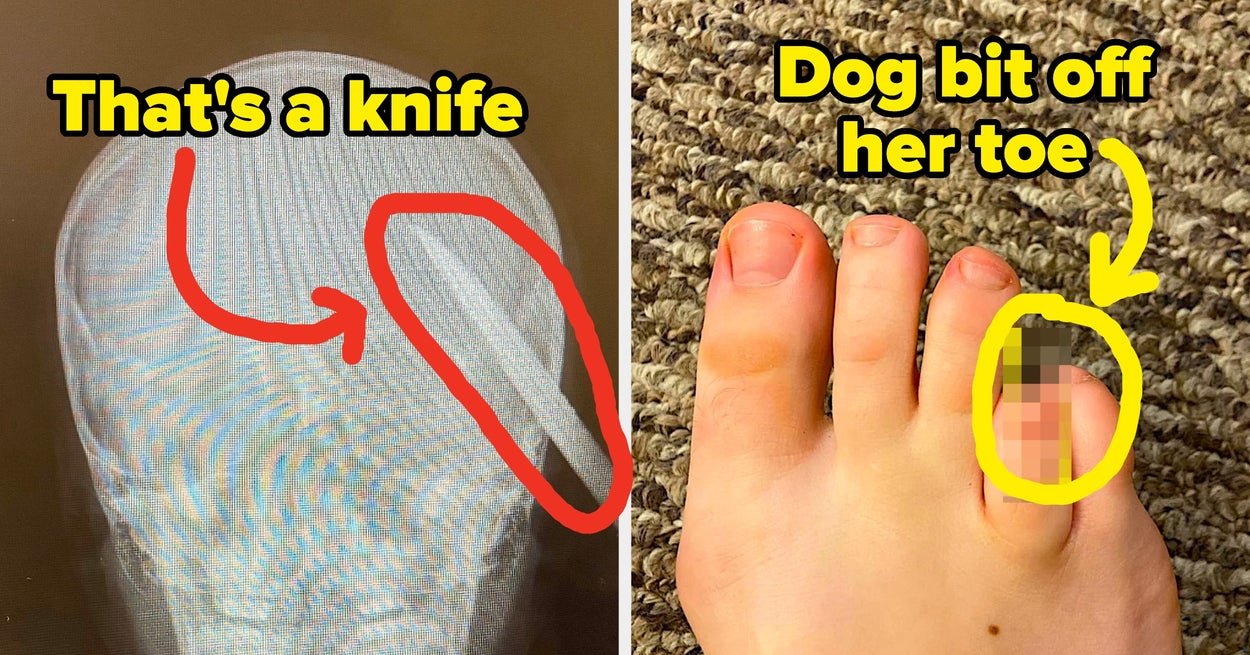
1. I had a seven-year-old boy come into my office with a blade lodged in his cheek. “He was talking with us as if nothing were wrong.”
2. “I saw a patient of 90 years old with a tattoo that read ‘Bobby’ and had a slash through it. Also crossed out was “Keith” below. Mark was also crossed out. At the bottom was her name, Allen.
–sharpshootress89
3. “One of the residents I liked best was a 75-year old man who had an ostomy. He waited for her to take care of him before ripping off his ostomy bag and throwing his “shit bomb” at her. She was covered. They transferred me from another hall to his room so I could clean him and change the bag. “She’d better not be mean anymore,’ he said as he looked me in the eye.
4. “I saw a 89-year old patient who had a vertical clitoral-hood piercing …”
–kaitlinrnguyen
5. I pulled off the sock of a man and it came off his toes. He replied, “Well, it seems I don’t really need to have my toenails trimmed after all.”
6. I had a woman come to me while in labour. She said she was not pregnant, because she took Plan B. Plan B only worked for one twin. “The other twin lived.”
–alemonstaaa
7. A patient’s snow globe was exactly where they thought it would be. They had it for over two months and only brought it in when the snow globe cracked. “You could see everything, including the snowman.”
8. She knew that the door would open if she activated the fire alarm in her facility. This is how she’d escape.
–mikayla.c.smith
9. I recently saw a woman for her 10th C section. “Her 10TH.”
10. I work in gynecology, and asked one patient about their sexual preferences. “Um, I have dreads,” they said.
–chrissyconrad4
11. I had a 41/26 blood pressure and 29 mean arterial pressure patient come in. “They walked in.”
12. I am an OB/GYN Ultrasound Tech. When I was scanning the mom, who was about 38 weeks along with the newborn baby in the hall, a woman walked by. The infant started to cry. I looked up at the baby’s father and he said: “Oh, my god, is that you?!?” “He thought that he heard the mother’s baby cry from within her womb.”
–emilyburleson96
13. Here’s an intriguing way to determine if you are allergic to corn.
14. I once saw a patient who listed their hobby as “drinking beer” and “talking sh*t.”
–ohnoalssndra
15. I work as an OB-GYN and had a female patient that somehow pushed her NuvaRing in her urethra. The NuvaRing traveled to her bladder, causing an infection.
16. Years ago, I treated a patient that was over seven feet tall. The patient was usually very quiet and nice, but one time he “broke out” because the security guards were too scared to stop him. The next day, he came back, looked me in the eye, and told me that the police could easily find his father-in law chained at the bottom of the lake. He walked off and went to sleep.”
–reginas.george5
17. I had a patient who was diabetic and had severe neuropathy on both feet, come to me because while sleeping her puppy chewed one of her left-footed toes. She returned a week later because her puppy chewed off a toe on her right foot.
18. I work in dental practice. A patient who had an extraction a few months ago was complaining of pain in the gum area. The wisdom tooth had grown in because of the removal. “Well, I’m not sure if you believe it, but at 80 or so, your teeth are growing!” said the dentist.
–craftyswiftie
19. I’m a addiction therapist. When I was reviewing the drug history of a client, he said that he’d tried it all. He replied, “Well, I tried everything.” “I even tried to inject my mother’s mascara one time, just to see if it would make me high.
20. I had her name on a list of emergency contacts, but there was no phone number. “I asked her what we should do to reach him and she said, “Pray.”
–zxrnzax
21. I had a patient who was 104 years old beat COVID by 2020. Our local news asked her how she felt after surviving. “I don’t like it but I have to deal with it.” She said.
22. “I tried to calm down a patient in psychiatry who was acting up. He actually listened. He explained to me that he stopped only because he was concerned about me. “He could see that I had a difficult day and did not want to add more stress.”
–chaneldavis2015
23. Last but not least, I would like to present you with “a baby’s hand X-ray”.
What’s your wildest HIPAA-compliant patient story? Can you relate to these stories? Please let us know what you think in the comments below (and don’t hesitate to include a picture if possible) or by using the anonymous form. You may see your response in a future BuzzFeed Community article!
Please note that all submissions were edited to length or clarity.


old girl, woman, bit by fox in Worcester, officials say
WORCESTER, Mass. — Officials said that two people including a girl were bitten Thursday by a Fox in Worcester, Massachusetts....


‘Super movers’ have better brain health. Can you become one?
My goal is to continue walking fast into my 80s. Now I know that maintaining this habit can help me...


Samsung Galaxy Z Fold 8 Ultra review: The ultra foldable with an ultra price
Samsung has largely defined the foldable phone category, but it’s no longer alone in releasing flexible devices. Google, Motorola, and...


Raiders rookie Fernando Mendoza thanks God for an NFL debut that compares favorably to ‘Mr Brady’
Fernando Mendoza thanked God for his outstanding performance in the NFL preseason opener on Thursday. Anyone who has endured the...


Iran targets tankers in ‘unprovoked attacks’ in Strait of Hormuz, UAE says
U.S. Central Command pushed back against reports on conditions aboard USS Abraham Lincoln while it was deployed to the Middle...


Halle Berry Is Having the Best Summer Ever-With a Beauty and Intimacy Routine To Match
Happy birthday, Halle Berry! Halle Berry turned 60 on August 14, 2018. Berry’s celebrations started early, as she and her...


The FDA approved the first mRNA flu vaccine for use in older adults. Here’s what to know
This year, flu vaccinations for older adults may look different. The US Food and Drug Administration has approved a mRNA-based...


Trump Accounts tax benefits are lacking, Ramsey expert cautions
George Kamel, a Ramsey Solutions expert in personal finance and financial planning, didn’t hesitate when the federal government started depositing...
OpenAI Slashed AI Prices. Usage Soared and Revenue Jumped.
AI’s price is dropping fast. This might seem like bad news to the industry. Evidence suggests that the opposite may...
Nicole Kidman admits she was ‘very fearful and deeply vulnerable’ after Keith Urban divorce
Nicole Kidman opened up in a recent interview about her separation from Keith Urban, saying that the future was “completely...
-

 Business7 days ago
Elon Musk plans 100 million-square-foot terafab semiconductor plant near Houston
-

 Business4 days ago
Vandalized fiber lines cause Verizon service outage for thousands of SoCal customers
-

 BBC News World1 week ago
See the Sun like never before with most detailed images yet
-
Business1 week ago
Why extreme heat can force airlines to leave passengers behind
-

 Business7 days ago
Health department investigating after seeing more than 5x increase in cyclosporiasis cases in McHenry County
-

 Business1 week ago
Trump Issues Tariffs on Key Ingredient for Electronics and Solar Panels
-

 BBC News World2 weeks ago
Human remains exhumed at site of controversial World War II massacres in Ukraine: “Each of them had their dreams”
-

 HealthNews2 weeks ago
Mass measles outbreak threatens Central Valley after farmworkers left Arizona