
PM office canada
Mark Carney in Toronto

OTTAWA – Ottawa has announced that investors who invest $1 billion in the Canadian economy or more will have priority to a new program which offers Canada Revenue Agency binding decisions.
The office of Finance Minister Francois Philippe Champagne made the announcement as Mark Carney was preparing to host investors from all over the globe at a high stakes investment summit.
According to a government release, investors who qualify can receive binding tax decisions before committing capital through the Advance Tax Rulings program (AITR).
According to the government, the new policy reduces risks and gives investors the confidence needed to advance major projects.
Today, hundreds of global asset managers and executives are in Toronto for Canada’s inaugural investment summit. Carney and his ministers from all over Canada will pitch investors opportunities across multiple sectors in the coming two days.
It all begins Monday night at the Art Gallery of Ontario, with a private gala dinner for the press and public.
—
Craig Lord The Canadian Press
PM office canada
European Parliament to open Ottawa office as Carney seeks ‘unique alliance’ with EU
Mark Carney, the Canadian Prime Minister, wants to strengthen ties between Canada and the European Union. The European Parliament is a major institution within the EU.
“Europe and Canada are committed to the same international rules-based order, and share similar values and interests.” “Our new presence in Ottawa is going to turn this partnership into an even closer parliamentary cooperation,” Roberta Metsola said on Monday in a press release.
According to a news release, Ottawa will be the 10th and third city in North America where such a office is located.
It is made up of representatives elected by the member states who make up the EU. It’s true that the EU has an existing embassy in Ottawa. However, it is run by the European Commission. The European Commission is the executive arm of the EU and not the Parliament.
Carney announced on Sunday, as he prepared to speak to the European Parliament next week, that his government intends to start discussions about a “unique partnership” (but not membership) with the European Union.
We are seeking a unique partnership with the European Union, and we will start discussions about it. He said that we share similar values and priorities, as well as complementary strengths.
Carney made his comments after The Wall Street Journal published a report on Saturday that stated the Prime Minister was pushing for a stronger relationship between Canada and the EU. He also asked Carney to work with his team in order to determine the most ambitious options short of full EU membership.
The Journal reported further that Carney had suggested Canada adopt a new designation of “associate members.”
Carney’s report was met with a fervent response from Conservative leader Pierre Poilievre who posted on Sunday night that Carney could not have been more “out of touch.”
Poilievre wrote: “We’ll never be the 51st state in America.” Poilievre wrote: “We will never be the 28th EU State.”
According to a senior Canadian official who provided information on CBC News without attribution, there are ongoing discussions about ways Canada can strengthen its relationship with Europe in order to achieve greater Canadian sovereignty.
Officials said that Canada does not want to sacrifice its independence in exchange for greater access. The federal government cares less about the label, but more about how deeper ties will benefit the country.
Officials said that the label “associate members” is just one among many that were considered, and Canada didn’t propose it. Officials said that Canada is still considering the possible relationship and will be able to provide a more detailed description at the EU Canada summit in October.
As it currently stands, the EU has no associate member countries and in the past the bloc was not flexible with its membership regulations.
According to the rules of the bloc, only European nations can join.
Carney will address the European Parliament in a speech on Thursday.
PM office canada
At TIFF, and in Washington, Quebec’s film industry finds itself in the hot seat

The new documentary Ladies and Gentlemen Brian Mulroney, a madcap assemblage archival material from the acclaimed Montreal director Matthew Rankin’s (Universal Language), will premier at Tuesday’s Toronto International Film Festival. It introduces Canada’s 18th Prime Minister with a powerful quote.
In the 1980s, Mulroney complained to a reporter about the decline of Canada’s entrepreneurial spirit. He went on to say that farmers, fisherman and small-business owners, who put their lives at risk and invested capital, would “get less tax breaks than someone who wanted to make a mediocre movie, which you wouldn’t show even in your own basement.”
As Mr. Rankin’s surreal doc plays out, I can’t help but wonder what the late Mr. Mulroney would think of this moment in Canadian cinema. Particularly the films that come out of Quebec. The onscreen culture of Quebec has been one of the redlines the government of Prime Minister Mark Carney will not breach in the trade negotiations with United States.
It is unlikely that the National Film Board’s production by Mr. Rankin would have been made if Mulroney had the reigns, considering the politician’s fondness for cutting budgets at the NFB and CBC, as well as all other things cultural.
The fact that Rankin’s film exists and will be premiering in TIFF along with a few other popular French-language films offers a great opportunity for those outside the province to reflect on the sometimes contradictory current state of Quebecois Cinema. This is a sector that flourishes within its provincial boundaries, but rarely ventures outside. It has become vital to the ongoing, tense and existential struggle for Canadian cultural autonomy.
Jason Anderson, TIFF’s Canadian Films Lead Programmer, says, “This is an exciting time for Quebecois Cinema, as you can see a few different things going on at once.”
There are more personal, auteurist films made for international festivals. Then, there are commercial works, which are still rare in English-language Canada. Quebec’s stars and directors are dependable, they make films that do well in Quebec, but not outside. “And in the festival we get this range.”
This diverse group includes, among others, the smaller art-house films like Mr. Rankin’s (produced by the NFB’s English language stream but with a strong Quebecois theme), L’Autre – a psychological thriller produced by Alexandre Franchi – Remi St. Michel’s comic noir Toy Gun Bandit – and two documentaries, Sophie Deraspe’s The Final Act and Denis Cote’s dystopian Drama Nobody’s Violence. Both revolve around the subject of assisted suicide This is a topic that Quebec audiences are familiar with, thanks to Louis Belanger’s recent low-budget drama, 125, rue des Malaises.
TIFF’s Anderson points out that there are also big-budget, crowd-pleasing films. The festival’s final-night film is Yan Lanouette Turgeon’s Formula One biopic Villeneuve: The Rise of a Legend, which has a budget of $15 million and more, making it the most expensive Quebecois film ever made. Also included in this list are Michael Dowse’s Quebec accented comedy The Stunt Driver starring Jay Baruchel, who plays the Montreal born daredevil Ken Carter (The Mad Canadian), alongside Quebec star Laurence Leboeuf.
The inaugural TIFF Market is a seven day event that runs parallel to the Festival and brings buyers and sellers together under the Metro Toronto Convention Centre. Anita Lee, TIFF’s chief programming officer, met Louise Lantagne (President and Chief Executive of Quebec’s Cultural Funding Agency La Societe de Developpement des Entreprises Culturels, SODEC) to discuss the potential benefits for Quebec’s film, television, and interactive content industry.
As Ms. Lee explains, “For example, this year there will be around 200 Quebec delegates coming to the market. This is definitely an increase from last year.” It shows how proud people are of Quebec cinema.
The TIFF lineup of Quebecois films will have to compete with Hollywood’s biggest hits, just like the English-language Canadian productions.
Pierre Even, a prolific Montreal producer (C.R.A.Z.Y. ; Cafe de Flore) says: “Let’s just say it isn’t what it was.” Not so long ago a movie that played at TIFF and got positive reviews had an effect on the release of a subsequent film in weeks or even months. We have a feeling TIFF has become more focused on American stars and big films.
Helen Mirren Penelope Cruz Seth Rogen will be honored at the TIFF Tribute Award
It’s becoming more and more challenging to get journalists, buyers, and audiences interested in a French language film. TIFF is ours; it should be treated the same as Cannes treats French films. “Put them in the front of their program.”
Even in Quebec, the TIFF premier is nice, but it does not guarantee box office success.
We’ll know with Villeneuve. Gabriel Pelletier is the president of L’Association des réalisateurs et realisatrices du Quebec, which represents the Quebec directors guild. Although I would like to see more Quebecois films in Canada. “I don’t think TIFF will be able to help.”
The industry needs all of the support it can receive.
The box office situation is quite different. While French film makers are winning awards around the globe, like the Montreal-based team that created the Oscar-winning animated NFB video The Girl Who Cried Pearls, it’s a very different picture.
The box office in Quebec, historically the best-performing province, dropped by 15 percent from the previous year. This was a 39 percent decline over the pre-pandemic year 2019. The situation is even worse this year with the receipts tracking 4.8% below that of 2025.
The reasons for the delay are a mixed bag among industry players. Some say that Villeneuve, which was originally scheduled to release in July this year to boost the summer market for the film industry, had to be delayed due to production issues. Some point out that Villeneuve was supposed to be released this past July in order to boost the summer market, but production delays forced it into fall.
There are also more general concerns, like the state of the independent film industry worldwide. This has suffered due to the changing habits of audiences, as well as the difficulty for movies that don’t have a marketing machine on par with Odyssey to get through all the noise in pop culture.
Patrick Roy, the founder of Immina Films and the Quebec’s most successful distributor in the last two years, says: “I am convinced we can do better very soon if the film financiers such as Telefilm or SODEC bring back the ‘audience’ criteria to their first criteria when financing films.”
Red carpet preparation is a booming industry.
We’ve been so focused on discovering content, and that is important too, that we have forgotten that our films are made to be appealing to the audience. “I think that we need to be ambitious, and aim for something like Telefilm’s 5-percent box office share of Canadian films for many years,” says Mr. Roy.
Roy doesn’t think there’s no room for independent films or smaller movies. The box office success of more films also encourages audiences to watch artsier films and be adventurous.
On that rising-tide-lifts-all-boats sentiment, there are more than a few reasons to be optimistic about what’s coming down the pike later this year and into 2027.
There are many new releases on the indie art house circuit from directors such as Charlotte Le Bon, Philippe Lesage, Kim Nguyen, and Pascal Plante.
As for more commercial films, we can look forward to Villeneuve, as well as the release in the autumn of Rafael Ouellet’s family-friendly horror story Hantee by India Desjardins, a hugely successful novelist. Anais Barbeau Lavalette’s biopic of the popular singer, songwriter, and activist Pauline Julien should be a hit in Quebec as well as other francophone countries around the globe. The box office hit Emile Gaudreault’s Maudits Francais features Quebec stars Patrick Huard and Antoine Bertrand, as well as France’s Lambert Wilson and Suzanne Jouannet. StudioCanal is distributing the film in both countries.
The industry is also energized by the promise of Quebec Bill 109. This law requires that foreign-owned streaming services promote French-language original content, and to use French for their interfaces with Quebec subscribers. Both laws are similar in intent to federal Online Streaming Act Bill C-11, which requires foreign-owned streaming services to pay a percentage of their Canadian revenue to promote and produce local content. However, this law has been halted in court. Quebec’s National Assembly passed Bill 109 into law in late 2017. However, there have been few developments since, due to the upcoming provincial elections.
Sung Kang, the car-culture icon who brought us Fast & Furious with Drifter as an answer to it’s existential nature, revs up TIFF.
If everything works out, the law could come into effect in 2028, says Mr. Pelletier of ARRQ, noting the Motion Picture Association of Canada could fight it in court, just as it did for C-11. Or it will be the topic of new trade negotiations. “Or both.”
Some see Bill 109 as a sign of broader political trends.
Tim Ringuette is the founder and president Entract Films, and one of Villeneuve’s producers. He says, “I hope the government, regardless of its outcome, will protect our cultural heritage.” If Prime Minister Carney stands up to Trump on the French language issue, then the Quebec government should do the same.
The industry’s consensus is that, despite the large impact the Quebecois culture may have on the geopolitical landscape, it cannot remain in its present course without leaders who are willing to address the financial systemic challenges.
Toronto International Film Festival 2026: 15 movies that you cannot miss!
In March of this year, the Quebec Government allocated 280.4 million dollars to the audiovisual industry over five years. This included $176.4 million to renew and boost funding to SODEC (Quebec’s Cultural Funding Agency). This increase in funding, however, was not in full accordance with recommendations made in a report that Mathieu lacombe, the Culture Minister of Quebec, commissioned in fall 2025. Producers were frustrated.
In the past, it was believed that Quebec’s film industry would need to release between 22 and 25 films in a single year to reach any success goals. After the pandemic and the inflation we are now down to financing 16-18 films per year with the same amount of money,” Montreal’s Mr. Even says.
If the industry is not able to sustain itself, then it cannot be used in future trade negotiations as a negotiating chip.
I am a huge fan of the work our artists do. I trust their judgment and talent. “I think they must show us the path, and to do that they require more freedom,” says Mr. Roy. We can achieve much more quickly with less political interference from our institutions and by rewarding success.
Quebec TIFF
L’Autre
Alexandre Franchi’s darkly humorous thriller focuses an aspiring writer (Pierre-Yves Cardinal), who begins to lose touch with reality while recuperating in a cancer hospital. Screens Sept. 14, 12:30 p.m.
Final Act
This documentary, which chronicles the debate surrounding medically assisted death, is directed by Sophie Deraspe. Her previous works, Antigone and Shepherds, both received the Best Canadian Feature Award at TIFF. Screens Sept. 15, 3:15 p.m.
Brian Mulroney, Ladies and Gentlemen
This gonzo documentary, which examines the rise to prominence of Baie-Comeau’s favorite son in the 1970s and 1980s is not a Quebecois film but a trip into the Quebecois politics of those years. Screens Sept. 15, 11:59 p.m., Sept. 17, 6:10 p.m., Sept. 19, 9:45 a.m.
No Violence
Larissa Corriveau stars in the latest avant-garde film by Denis Cote as a mysterious young woman, who wanders through a dystopian world and helps those who wish to commit suicide. Screens Sept. 19, 11 a.m.
Toy Gun Bandit
The second feature directed by Remi St. Michel focuses on a Quebec City teen’s misguided prank, which draws the attention of the local gangster. Screens Sept. 15, 9 p.m.
Stunt Driver
This Michael Dowse dramedy, partially funded by SODEC follows the outrageous exploits of Montreal born showman Ken Carter (Jay Baruchel), as he attempts to pull off the most daring stunt in his life: driving across the St. Lawrence River with a rocket powered car. The TIFF screenings are now over; the film will be released in theaters throughout Canada on September 25.
The Ultra Runner
This documentary from Montreal director Mila Aung Thwin, which follows the brutal 6633 Arctic Ultra – a footrace that spanned more than 600 km of Canada’s North – promises to portray a powerful portrait of the human spirit. Screens Sept. 19, 9:15 a.m.
Villeneuve: the Rise of a Legend
The biopic of Formula One driver Gilles Villeneuve is a splashy affair. Director Yan Lanouette Turgeon, best known for his work in Quebec television, offers a high-speed look at the racer’s journey from his working-class roots in Saint-Jean-sur-Richelieu to the Grand Prix podium. The film will be screened on Sept. 19 at 6 pm and 8 pm, as well as Sept. 20 12:50pm.
The River Begins
PM office canada
‘Elbows Up’: Canadian companies trying to cash in on patriotic slogan
From the hockey rink to the political arena, the phrase “Elbows Up” has become part of the Canadian lexicon — and now a number of businesses are trying to cash in on it.
There are roughly a dozen applications listed on the Canadian Intellectual Property Office’s trademarks database to have the exclusive right to “Elbows Up,” with companies seeking to emblazon the slogan on everything from clothing to beer cans, bumper stickers and dietary supplements.
But the bulk of the applications, many of which were submitted over a year ago, have been met with objections from the office due to the phrase being “nondistinctive.”
Trademark and copyright lawyer Reagan Seidler said the office appears to have taken an official position that “Elbows Up” cannot function as a brand because it has become a patriotic symbol.
“They are of the opinion that nobody in Canada should be able to own the phrase,” said Seidler, who works with Smart and Biggar in Toronto.
“The trademarks office is of the view that if you see Elbows Up on a T-shirt, you’re not going to think Elbows Up is the company name or its slogan. Like ‘Just Do It.’ You’re going to think that is just repeating the kind of messaging that’s come from the Prime Minister’s Office and elsewhere.”
“Elbows Up” has been around for decades, first used to describe the playing style of legendary Canadian NHLer Gordie Howe, who was known to raise his elbows to protect himself and fend off opponents on the ice.
But early last year, the meaning shifted.
As the trade war with the U.S. heated up, actor Mike Myers appeared on Saturday Night Live and as the cast was waving goodbye, he unzipped his vest to display a shirt declaring that “Canada is not for sale.” He then gestured to his elbows and mouthed “elbows up.”
Not long after, Prime Minister Mark Carney released a campaign video with Myers, standing on the edge of a hockey rink, and ending with the pair repeating the phrase.
Seidler said it’s not unusual for companies to jump to trademark a moment or catchy expression, pointing to “very demure, very mindful,” made famous by a woman on TikTok.
But he’s never seen companies try to capitalize on a political event.
“It is very rare for the trademarks office to say, in principle, a phrase should not be owned by any particular company,” said Seidler.
“And they reference in their objections general news coverage of how the phrase has been used as their basis to say that elbows up inherently will not function as a brand name in the minds of Canadians.”
Mark Howe, son of “Mr. Elbows,” as he was also known, said he’s not surprised that people are trying to trademark Elbows Up, noting it’s a “very marketable thing.”
The Howe family is no stranger to trademarks. The Howe Foundation owns the trademarks for Gordie Howe, Mr. Hockey and Mrs. Hockey, mostly as a way to raise funds for the charitable organization, he said.
In fact, Mark Howe said officials had to ask permission to use his father’s name on the Gordie Howe International Bridge, which opened earlier this year.
“It’s business. And I would like to think somebody would try to trademark it.… I would be shocked actually if somebody didn’t try to go after it,” said Howe in an interview.
Mark Howe said despite his father’s reputation on the ice, he was a respectful family man who would be appreciative of the hoopla surrounding “Elbows Up” and a namesake bridge.
“He’d be grateful and he’d be humble. But as soon as everything just kind of drifted away, he would look forward to being with his family, his grandkids, being out fishing, golfing, doing something like that,” said Howe.
The Canadian Intellectual Property Office declined an interview request, saying in a statement that it cannot provide information about applications.
Seidler said it has been interesting watching the “Elbows Up” phenomenon play out.
“I do think it’s amusing to watch every time a phrase hits the public domain, the swath of people that will move in to try to monopolize that phrase and capitalize on it. It’s a natural instinct,” he said.
“The more interesting part of the story is that the trademark office has taken the principled position that Elbows Up is not capable of serving, in their view, as a trademark and in that sense, reserving the right of all Canadians to use that phrase as this trade war continues.”
PM office canada
Scotiabank commits more than $100-billion to help fund expansion of Canadian companies

Bank of Nova Scotia BNS T is providing more than 100 billion dollars in funding to Canadian companies to expand. It is also launching an Institute led by a retired ambassador, to evaluate the long-term competiveness of Canada.
Canada’s largest banks launched initiatives ahead of Ottawa’s Investment Summit to finance domestic companies, as the federal governments race to reduce Canada’s dependency on the United States. Scotiabank will offer financing, investment and underwriting to Canadian businesses and projects that it believes are likely to drive the country’s economic growth in the coming five years.
Scott Thomson, chief executive of Scotiabank, said that the sectors targeted in this initiative would align with those areas which are being pursued by the Canada Major Projects Office. These include clean energy, oil, gas, essential minerals, advanced manufacturing and technology, and defence.
You’ve noticed an increased interest in Canada from foreign investors. Canada has what the world is looking for in terms of resources, talent, institution strength, and trust – the interest exists,” said Mr. Thomson during an interview.
We’ve made this commitment because we felt it was the right time to do so.
Canada’s pension funds and banks have set aside billions of dollars for critical sector investments
Scotia Growth Institute is a group that was created by the bank to provide insights to market leaders, policymakers and business leaders about high growth sectors. This will help them make better decisions to advance economic growth.
Kirsten Hillman is the former Canadian Ambassador to the U.S. She has been appointed as the Institute’s lead strategic advisor. The bank plans to hire other experts in the field of national competitiveness for strategic advisors.
In a press release, Ms. Hillman stated that “Canada is not lacking in ambition or opportunities.” What is required is a sharper analysis and practical solutions. We also need to understand where we are able to compete and lead.
Its first report is an annual progress report that covers potential projects and initiatives in Canada. The Major Projects Office was created in 2025 by Prime Minister Mark Carney to expedite proposals considered to be of national importance. According to research by the Institute, Canada has an inventory of 1,15 trillion dollars worth of projects in energy, mining, and infrastructure. This is a good indicator of Canada’s potential for economic growth.
Thomson stated that there are already signs of Ottawa’s attempts to speed up project timelines being successful. Thomson cited several major projects in Western Canada. He mentioned the potential of LNG Canada Phase 2 in Kitimat (B.C.) which would increase the capacity.
Shell believes that the second phase of LNG Canada is a good idea after discussions with government officials
He cited the Shell PLC acquisition of Alberta’s ARC Resources Ltd. by Britain in a US$16,4-billion transaction. Analysts say the deal highlights the value of Canadian assets in particular the sector for liquefied gas.
Thomson stated, “I see that the level of interest among our Western Canadian clients is different than a few years ago.” The regulatory environment is easier to understand.
Report: The pipeline of projects will also face a “wall” in expenditures between 2027-2031. This wall is expected to put pressure on the availability of skilled labor, logistics for supply chains, and cost-containment. The report said that companies will be competing for skilled workers such as welders and electricians. They may also have to hire heavy equipment operators, pipefitters, project managers, or even plumbers.
Scotiabank will also allocate $50 million for programs to help Canada prepare for future shortages of labour and develop the skills needed for innovation, high-growth industries and artificial intelligence.
In the last year, there have been increasing calls for Canadian banks to lend more to small and medium businesses and pension funds to invest more domestically.
Joly: Ottawa is confident that it will be able to secure MOUs and deals at the Canada Investment Summit
Analysts and researchers from the Canadian banking industry urged the Office of the Superintendent of Financial Institutions to increase lending.
OSFI reduced in June the amount of capital that the largest banks of Canada must have. This has freed up billions to increase lending, as Ottawa tries to get more private funding for sectors with high growth. In June, the regulator lowered the maximum range for the domestic stability cushion, giving banks more assurance that their capital requirements will not increase, forcing them to have more capital.
M. Thomson stated that OSFI’s lower buffer decision helped to free up capital for Scotiabank to lend more to Canadian companies.
Thomson added that “as long as the regulator is signaling that they are okay with the banks operating below their current rates, it gives CEOs some leeway to commit capital.”
The banks have been looking for ways to fund the expanding defence industry, which they previously avoided due to higher risks. Lenders have pledged support to defence companies in recent months as Ottawa invests money into expanding Canada’s industrial base.
Many banks are willing to provide loans to companies in the defence sector, but they lack the necessary track record.
Scotiabank announced on Sept. 8 that it will issue Canadian Defence Bonds to raise capital for businesses. The bank also developed a transparency framework for investors and the industry regarding its refinancing and financing activities.
Previously, Mr. Thomson stated that banks had played a minor role in the small and medium sized defense companies because the government did not place a high priority on military expenditures. However, this is now changing. The staff at Scotiabank has developed more defence expertise.
He said that when the bank recognizes the potential of the small business, it must make a slight pivot to ensure the best people are on board.
The financing commitment from Scotiabank is one of several new initiatives by Canadian banks that are designed to invest and lend money to domestic companies.
Royal Bank of Canada has launched a fund of $1.4 billion aimed at Canadian technology businesses, such as aerospace and dual use defence companies.
Bank of Montreal announced that it would deploy new capital up to $70 billion over 10 years in key sectors.
PM office canada
Carney eyes ‘unique alliance’ with EU as trade war with US intensifies
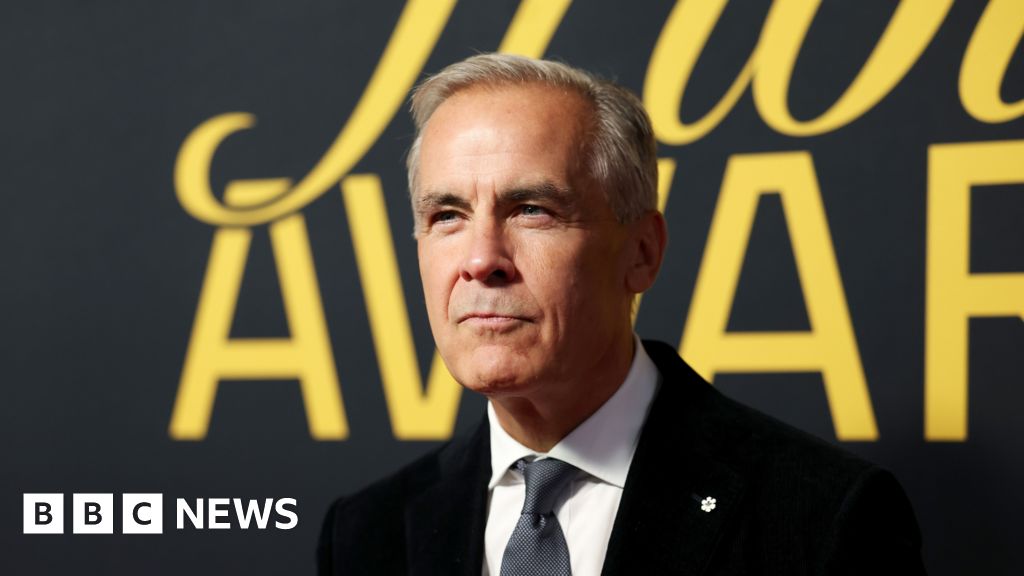
Mark Carney, Canada’s Prime Minister, has stated that Canada wants to form a unique alliance with the European Union but does not want to join the EU as the trade war between the US and Canada intensifies.
Carney, speaking to reporters on Sunday in Toronto, said: “We are seeking – and we will start discussions for – a unique partnership with the European Union.”
Carney is scheduled to travel this week to France and the UK, to speak to the European Parliament at Strasbourg.
The Wall Street Journal had reported earlier that EU officials would be open to Carney’s suggestion that Canada become an “associate” member of the EU, according to both officials.
The paper said that Carney had instructed his Special Envoy for Europe to “scan out the most ambitious options short of full-membership”.
Carney, speaking to reporters during the Toronto International Film Festival in Toronto, denied that Canada is seeking formal membership by saying, “We share similar values.” “We have similar priorities and complementary strengths.”
“We are stronger together.” He added. This is during a period when the world has become more divided and dangerous, so it’s important that friends stick together.
After the collapse of trade talks between Canada and the US in August, the trade conflict has escalated in recent weeks.
US tariffs have been imposed on Canadian steel, aluminum and lumber sectors, in addition to a 50% additional levy on Canadian goods worth C$28bn (US$20bn, PS15bn).
Ottawa responded by imposing levies up to 50 percent on US products worth C$28 billion ($20 billion; 15bn PS) ranging from furniture and cotton T-shirts to steel.
Carney is in Europe to attend Ursula von der Leyen’s State of the European Union Address. Carney will travel to Liverpool, UK to meet UK Prime Minister Andy Burnham.
Carney, since taking office in 2017, has promoted a new strategy to create a more independent and resilient economy, as a result of the Trump administration’s increasingly hostile policies towards the United States.
Trump talked of making Canada the “51st State” in the US and ordered recently that the US Government rename Lake Ontario to “Lake America”.
Carney called on middle powers in January to unite during his speech at the World Economic Forum of Davos. He added that “the old order will not return”.


What are 'medicanes' and how do they happen? #Weather #BBCNews


PlayStation's Wolverine Liam McIntyre on reviews and opinions of the new game | BBC News
Liam McIntyre said that “everyone’s opinion will be different” about the Wolverine video game after the reviews.

Iran-Oman talks to reopen Hormuz were called off. What happened?
Gulf diplomats will meet with Iranian officials on Monday in order to discuss the Omani proposal to open up the...
European Parliament to open Ottawa office as Carney seeks ‘unique alliance’ with EU
Mark Carney, the Canadian Prime Minister, wants to strengthen ties between Canada and the European Union. The European Parliament is...


'We wish Steam Frame was more affordable', say Valve developers | BBC News
Can Valve’s Steam Frame make it more affordable? According to Jeremy Selan one of its developers, the answer is “yes”.


'We wish Steam Frame was more affordable', says Valve developer. #Valve #SteamFrame #Gaming #BBCNews


Immigrants held in small outdoor cages at ‘Alligator Alcatraz’ in Florida, investigators find
According to the US Department of Homeland Security watchdog, immigrants held in “Alligator Alcatraz”, an now closed detention center in...

Stocks fall after AI leaders warn industry should slow down
The tech sector led the way in Monday’s stock market declines, as top artificial intelligence CEOs urged a halt to...


Will Trump and Xi Jinping stop AI ‘killing us all’? | The Global Story
China’s president Xi Jinping and Donald Trump will be meeting later this month, with AI governance being a major topic...


Vance says AI execs calling for more regulation feels like a 'Trojan horse'
Vice President JDVance asked why AI leaders were calling for increased regulation. He warned that it could be a Trojan...
-

 Entertainment2 weeks ago
Kacey Musgraves’ Stage Catches Fire During Boston Concert
-

 Business2 weeks ago
Waymo accelerates robotaxi expansion with launches in Denver, San Diego, and Tampa
-

 Uncategorized1 week ago
Latest US Political News Updates: Key Developments Shaping America in September 2026
-

 Entertainment2 weeks ago
Miley Cyrus Announces ‘Bass Persuades’ Album, Hollywood Bowl Shows
-

 Entertainment2 weeks ago
President Trump Calls for Federal Film and TV Tax Incentive
-

 TravelNews5 days ago
Republican midterm convention 2026: What to know about Trump’s Dallas event
-

 Business2 weeks ago
TikTok, Whatnot livestream shopping gains steam in the U.S.
-

 Entertainment2 weeks ago
Trump Endorses U.S. Tax Incentive to Keep Hollywood Production