
Business
Microsoft CEO says superintelligence must ‘help humanity’

Microsoft CEO Satya Nadella stated Sunday that superintelligence — AI that can surpass humans in virtually all cognitive tasks — should be focused on “helping the humanity” and under “human control.”
Nadella, in a blog post published on X called for a broader AI adoption by creating what he called a “frontier eco-system” that would allow both closed and open source AI models to “thrive”, across nations, communities, and businesses.
Nadella said that “any pursuit of superintelligence must be grounded on the principle that, if AI isn’t helping humans and can’t be controlled by them, then it doesn’t make sense to pursue,” he wrote. We also have to spread and accelerate the AI benefits so that they reach across communities, countries and businesses. It is necessary to create a frontier eco-system where both open and closed source models can flourish.
Bill Gates outlines the stakes of AI’s era: “GREATEST EQUALIZER… OR THE WORST SOURCE FOR INJUSTICE”
He said that organisations should have the ability to create AI systems with their own data, rather than being dependent on one model provider.
Nadella said that firms must retain control of their tacit and unique knowledge. Nadella wrote that “every organization should have the capability to create its own learning loop/hill-climbing machine without being dependent on any model providers, as well as embed their own knowledge in models and weights.”
Nadella called on a deliberate AI approach, saying Microsoft supported concepts like “embedded evaluaters.”
He said: “In this context we appreciate the focus and the deliberate pace needed to achieve alignment as the goal of design.” We also appreciate the idea of embedded evaluators and the efforts made to create mechanisms that will make it more than just a talk.
NVIDIA AND MICROSOFT URGE US NOT TO IMPLEMENT BROAD RESTRICTIONS FOR OPEN AI MODELS
Nadella said that advanced AI should not be controlled solely by a few companies.
He said, “The important thing is to have a broad representation of the entire ecosystem and all its countries as well as fields including academia.”
This is our approach: wide access to and choices at all layers of the AI stack, enterprise control of models and learning loops; and a ‘Code of Conduct’ that guides the first-party MAI models we will publish for public consultation tomorrow.
As the debate over AI technology and its rapid development intensifies, his comments are timely.
MICROSOFT’S CEO HAS A WARNING ABOUT AI RACE
In an interview with CBS News, Dario Amodei, CEO of Anthropic said: “I’m not going to lie – the dangers are real.” For too long, I believe the industry has lied about this technology’s risks.
GET FOX BUSINESS ON THE GO BY CLICKING HERE
Jacob Coxon, a former Anthropic research scientist, warned last week on social media about the dangers of AI. He said that Anthropic, OpenAI, and other AI companies are gambling with their lives by trying to achieve self-improving intelligence.
Business
Stocks fall after AI leaders warn industry should slow down

The tech sector led the way in Monday’s stock market declines, as top artificial intelligence CEOs urged a halt to the development of this revolutionary technology.
The Nasdaq 100 Index, which represents the 100 biggest non-financial firms traded on Nasdaq, dropped as much as 1,8% early in the session. Nasdaq composite index dropped as much as 1,3%, and S&P 500 almost 1%.
A late-morning rally in cybersecurity and software stocks lifted major indexes from their lows. The Nasdaq and S&P had only lost 0.3% by noon ET.
These industries were hit hard this year by fears that AI would disrupt their businesses. The slowdown that was advocated by AI CEOs seemed to have eased these concerns.
The shares of CrowdStrike, Palo Alto Networks and Thomson Reuters all rose more than 12%. Intuit (maker of TuboTax), Adobe, Shopify, and Autodesk were also among the Nasdaq’s top-performing stocks.
Nvidia shares, which are the most valuable publicly traded company in the world, have fallen by more than 3 percent.
Arm Holdings, a chipmaker that supplies many companies with chips, fell by 10%. Marvell and Intel also dropped more than 5%. Applied Materials, a major supplier of chips to companies, fell 6%. Micron Technologies also dropped 6%. AMD and Intel shares also fell by about 5.5%.
Amazon shares, which are the leader in cloud computing, have fallen more than 1,2%.
Caterpillar (a Dow Jones component that is building AI datacenters) fell 4%, despite the Dow Jones Industrial Average being down only 80 points.
The Philadelphia Semiconductor Index fell 6%.
Sam Altman, CEO of OpenAI told Fortune magazine on Saturday that the company will not go public in 2018. He said that given the current state of safety issues, it would not be a good time to take his company public.
The eventual offerings of OpenAI and Anthropic are likely to be the biggest ever.
Jim Reid, global head of macro-research at Deutsche Bank, said: “For the markets, it is important to know if this is a first indication that the AI investment cycle will eventually slow down.” For now, this seems unlikely. It’s hard to believe that firms would voluntarily step back as rivals continued to advance.
Concerns about a slowing AI industry have caused the benchmark Kospi Index in South Korea to fall more than 3 percent overnight. This fall is mainly due to the selling of AI memory companies. Samsung Electronics fell by 5%, and SK Hynix dropped more than 7.3%.
SoftBank Group, the investor in OpenAI and its shares fell by 10.7% on Tokyo’s stock exchange.
Anthropic CEO Dario Amedei wrote on Saturday, “We must slow down the rate at which AI models improve their capabilities.” This led to the dramatic moves in the market.
Amodei said, “Progress may still appear fast and we need to make the most of our time.” Amodei said that “AI, like many other technologies, has risks. And because AI is such an advanced technology, the risks are very serious.”
Amodei stated that the risks include “the loss of control over AI systems and misuse of AI to cyberattacks, bioterrorism and severe economic disruption.”
Altman responded to Amodei on X by saying, “I’m with Dario.” Elon Musk, the tech billionaire who wrote on X that “Dario was right,” agreed with Altman.
Musk’s SpaceX shares, which include the artificial intelligence company xAI that Musk owns, dropped more than 2% in early trading on Monday.
Altman added later in a post that “pacing” does not mean “stopping”. He stated “progress is rapid and it will continue to remain so.”
Amodei elaborated on his views Sunday. Amodei warned of “real dangers” in an interview with CBS Sunday Morning.
He said, “I didn’t fully understand what the situation would be when progress is so rapid.” This doesn’t necessarily mean that we should panic right now. This doesn’t necessarily mean that we should shut down everything. “But I’d say that it is a warning.”
Overnight, the Chinese Foreign Ministry dismissed U.S. calls to slow down AI development.
00:0000:00
What exactly is the danger of AI?
02:35
Donald Trump used a similar voice over the weekend. He said that he believes that there are many negative forces who bring up the issue, but they shouldn’t. They also mention things that will never happen.
While selling of AI-related companies spread throughout the European session. Germany’s DAX closed at 0.5% down and France’s CAC 40 fell by 0.8%. AI companies were the biggest losers across European markets, including Belgium’s ASML – a key supplier to chipmakers whose stock fell 6.1%.
Although AI concerns were the main driver for Monday’s selling, the stocks also have to deal with the possibility of a Fed interest rate increase on Wednesday.
The core U.S. inflation rate, which excludes food and energy prices, rose on Friday more than anticipated, which many viewed as a signal to the Federal Reserve that it should raise rates. The market odds of a rate hike are currently at around 85%.
Bond yields are also on the rise this year. On Monday, U.S. Treasury bonds yielding 30 years reached their highest level since 2007.
It is the highest since early 2007 and near its highest since mid-2007.
Just like the stock market, however, yields also reversed sharply late in morning, and were at their lowest level since Friday by midday.
As oil, gasoline and diesel remain at high levels, bond yields are rising. The rise in bond yields is also due to what some see as a credibility crisis at the Fed, and the unusual market interventions by the Treasury Department.
Max Kettner, HSBC’s multi-assets strategist and chief spokesperson for the bank said in a Monday note that “Oil is back on our radar.” He said, however, that “calls to slow down AI development and the resulting concerns for the tech industry are overblown from our perspective.”
Interest rates have become a major factor in the performance of tech stocks as firms borrow hundreds of billions to fund AI data centres around the globe. Interest rates are sensitive to even small increases.
Business
SEPTA suspends service on 3 Regional Rail lines due to downed Amtrak wires in North Philadelphia

PHILADELPHIA, PA (WPVI), SEPTA has announced that it suspended three Regional Rail Lines on Monday due to Amtrak downed wires in North Philadelphia at 16th Street Junction.
Chestnut Hill East is affected, as are Fox Chase and Norristown/Manayunk.
The Warminster Regional Rail, West Trenton Regional Rail, Lansdale/Doylestown Regional Rail, and Lansdale/Doylestown Regional Rail southbound trains will terminate at Fern Rock Station. Passengers are directed to B to access Center City.
Suburban Station is the final stop for northbound trains.
SEPTA warns commuters who use the Regional Rail Lines that are affected by repairs to expect up to a 20-minute delay.
Outages will last up to 2 pm on Monday.
Business
Sam Altman says OpenAI won’t IPO this year
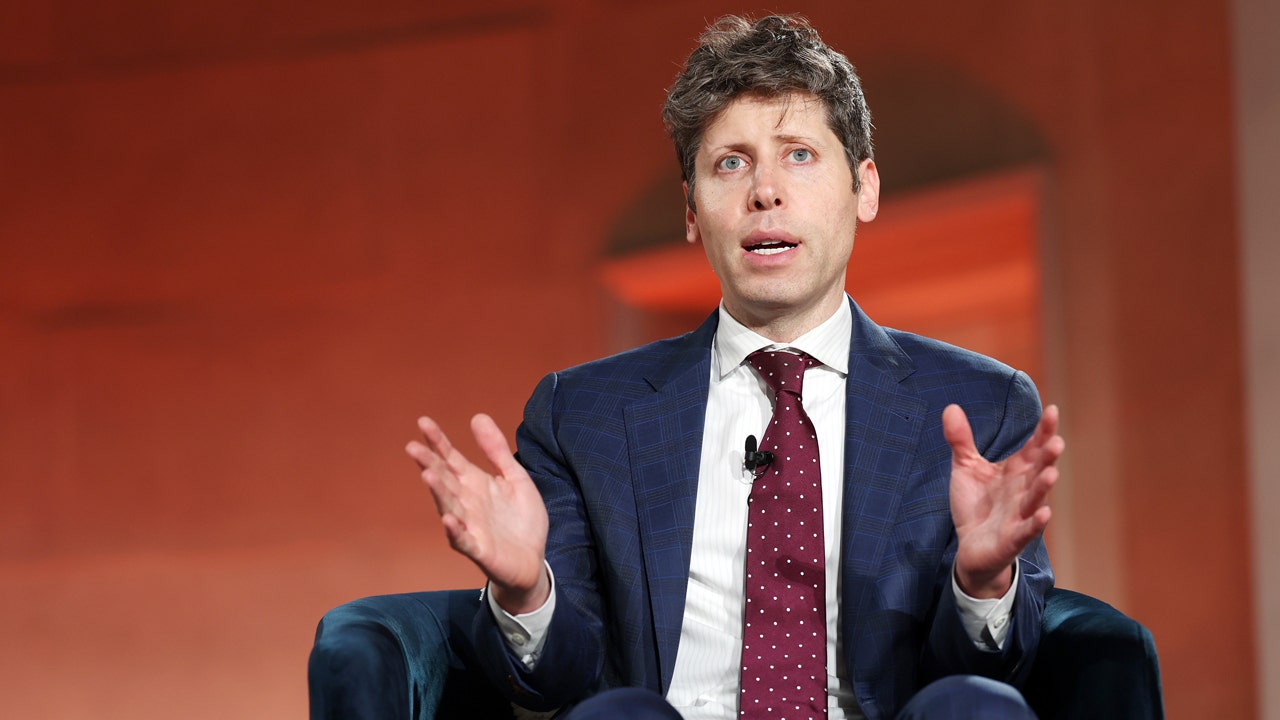
OpenAI CEO Sam Altman has indicated that his company is delaying its Initial Public Offering (IPO), due to concerns over the safety of AI models and the alignment they may pose for society.
In June, ChatGPT filed a confidential S-1 with the Securities and Exchange Commission to start the IPO. At the time, the company stated that they had not decided when the IPO would take place. They said “it could be a long while”, because certain tasks might be easier as a privately-held company.
Altman told Fortune in a recent interview that, “we are not rushing to an IPO,” and “I believe that given all that is happening right now with safety… it would be ill advised at this time to go public.”
MICROSOFT’S CEO SAID SUPERINTELLIGENCE SHOULD REMAIN ‘UNDER HUMAN COMMAND’
We don’t have any pressure about that. Since a very long time we have said that we will do this when ready. This means when our business is prepared. Altman added that the IPO will not happen in 2026.
Altman said to Fortune, “We have a lot of work ahead.” Altman told Fortune, “We’ve got a lot of stuff to do.”
Altman’s remarks come as AI companies are increasingly focused on the alignment and safety of their models. Researchers have warned that an AI superintelligence may wipe out mankind within 10 years.
NVIDIA’S CEO JENSEN HUANG SAYS ‘AGI IS HERE’ AFTER OPENAI REVEALS GPT-6 ASTRA
Jacob Coxon, a former Anthropic researcher and OpenAI researcher who worked for X posted a long resignation thread last week. He warned that the “people building AI” believe it will kill everyone by 2020.
Coxon stated that his research on pretraining at both AI giants during the three years he spent there showed him “neither company acts responsibly.” The companies are racing to achieve self-improving intelligence and playing with lives.
Evan Hubinger is the head of Anthropic’s alignment science group. He responded to Coxon’s post by saying “Jacob’s right here. We really believe AI can kill us all.”
I personally believe it will be >10% in the next decade. “I believe Anthropic does its best. But we don’t yet have a solution to align for superintelligence, and aren’t on track,” he added. While current models may not be a threat to the world, technological improvements could make that change.
As we state in our most recent Risk Report, the current models pose a low risk. Hubinger said that he was concerned about superintelligence, which is a result of recursive improvement.
OPENAI SIGNALS POTENTIAL STOCK MARKET DEBUT WHILE WEIGHING PRIVATE-COMPANY ADVANTAGES
Altman wrote in a blog post for X, that he agreed with Anthropic CEO Dario Amedei in that we “need to pace the future” in AI development. He added that this “has been a major topic in discussions that OpenAI has had in recent weeks.”
OpenAI’s CEO said he agreed with Amodei’s proposal to grant third-party access at employee level to Anthropic’s systems in order to report incidents, verify compliance to safety standards and evaluate the alignment of training models. He also stated that OpenAI plans to implement a system similar to Amodei’s.
We will also commit to having independent evaluations with access similar to that of employees. Altman promised that more information would be available soon.
Business
History Suggests That You’ll Regret Not Buying This Struggling Tech Stock

The “Magnificent Seven”, the tech giants Nvidia (Nvidia +2.40%), Apple (+1.2%), Microsoft (1.2%), Amazon (2.4%), Alphabet (3.0%), Tesla and Meta Platforms (+2.40%), have had a wild ride this year. Only Meta and Tesla have been in negative territory for the entire year. They are down by 1.2% and 18.8% respectively through the market’s close on September 10.
Meta, a stock in trouble that has a lot of potential upside, is one of the two stocks. If history is an indication, then you might regret not investing when it has a bad year.
META : NASDAQ
Meta Platforms
Premium Feature
Moneyball Superscore
79/100
Change Today
( 2.40 %) $ 15.54
Prices are as follows:
$ 663.57
Important Data Points
Market Cap
Market cap is calculated using only publicly traded outstanding shares. Includes only publicly traded shares. Does not include private or dual class non-traded securities. Market cap implied may differ.
Day’s range
$ 649.22 – $ 664.97
The 52-Week Range
$ 520.26 – $ 790.80
The Volume
10.7M
Avg Vol
18.2M
Gross Margin
81.75%
Dividend Yield
0.32%
Why does Meta stock struggle?
Meta’s share price is not being affected by a single factor; rather, it’s the combination of several factors. The two most important are its AI expenditure and ongoing regulatory issues.
Meta plans to invest between $130 and $145 billion in AI projects this year. These include building data centers, and infrastructure. It spent more in the second quarter than any other public company except 26 combined.
The heavy expenditures of Meta impacted its free cash flows, which dropped from $13.2 Billion in Q1 down to $1.7 Billion in Q2. Investors are not usually happy to see a company cut its cash flow so drastically due to spending.
Meta has recently proposed a settlement amounting to up to 18 billion dollars due to allegations that their apps are purposely addictive, and have contributed to the mental decline of teens.
Meta had been dreading the court case for many years. Although $18 billion may not seem like much, it is a lot less than what Meta could have paid in full-blown trial. California, Colorado Kentucky and New Jersey sought fines of up to $1.4 billion. Meta probably has never spent $18 billion with such a glee.
Meta can finally justify its expenditure?
Muse, Meta’s personal AI agent released recently, is one of the first steps Meta has taken to address concerns about its AI expenditure.
Muse has a more consumer-focused approach, while companies such as OpenAI (the creator of ChatGPT) and Anthropic (the creator of Claude), have heavily promoted their enterprise tools and coding. Muse, on the other hand, is a more personal assistant that can help with everyday tasks. ChatGPT, Claude, and others are also beneficial to consumers. Meta’s shares soared more than 6% after hours on September 8 following the release.
The future will reveal how successful (and profitable) Meta Muse is, but for now the good news is that Meta found a way to directly monetize their AI tools.
Meta remains a cash cow that is unstoppable
Meta’s continued profitability is unaffected by its stock price woes. The second quarter saw a 28% increase in revenue over the previous year, reaching $60.8 billion. Of that, $59.4 billion came from advertisements across Meta’s Family of Apps, which includes Facebook, Instagram and WhatsApp.
Meta’s primary goal is to get people to look at it, which they continue to do in a very high volume. Meta has 3.6 Billion daily active users on its app; Instagram boasts over 2 Billion daily active users, and Threads has 500 Million monthly active users.
Meta’s increased revenue per user is perhaps more significant than its user numbers. The average revenue generated per user grew by 24% over the past year, to $16.86. The social media giant’s winning strategy is to get more eyeballs, and then make money from them.
Business
Micron Stock Sinks Again. What AI Safety Fears Mean for Memory Chips.
Now you are leaving Barron’s Website
Clicking on “Proceed”, you’ll be directed to the website of Hong Kong Tiimoot Information Technology Co. Limited. “HKT” is a Hong Kong-based company. This website is independent of Barron’s, and Barron’s has no control over it. Please read the Privacy Statement of HKT carefully to learn about its privacy practices. HKT is responsible for its privacy and other data practices.


What are 'medicanes' and how do they happen? #Weather #BBCNews


PlayStation's Wolverine Liam McIntyre on reviews and opinions of the new game | BBC News
Liam McIntyre said that “everyone’s opinion will be different” about the Wolverine video game after the reviews.


Iran-Oman talks to reopen Hormuz were called off. What happened?
Gulf diplomats will meet with Iranian officials on Monday in order to discuss the Omani proposal to open up the...
European Parliament to open Ottawa office as Carney seeks ‘unique alliance’ with EU
Mark Carney, the Canadian Prime Minister, wants to strengthen ties between Canada and the European Union. The European Parliament is...


'We wish Steam Frame was more affordable', say Valve developers | BBC News
Can Valve’s Steam Frame make it more affordable? According to Jeremy Selan one of its developers, the answer is “yes”.


'We wish Steam Frame was more affordable', says Valve developer. #Valve #SteamFrame #Gaming #BBCNews

Immigrants held in small outdoor cages at ‘Alligator Alcatraz’ in Florida, investigators find
According to the US Department of Homeland Security watchdog, immigrants held in “Alligator Alcatraz”, an now closed detention center in...


Stocks fall after AI leaders warn industry should slow down
The tech sector led the way in Monday’s stock market declines, as top artificial intelligence CEOs urged a halt to...


Will Trump and Xi Jinping stop AI ‘killing us all’? | The Global Story
China’s president Xi Jinping and Donald Trump will be meeting later this month, with AI governance being a major topic...


Vance says AI execs calling for more regulation feels like a 'Trojan horse'
Vice President JDVance asked why AI leaders were calling for increased regulation. He warned that it could be a Trojan...
-

 Entertainment2 weeks ago
Kacey Musgraves’ Stage Catches Fire During Boston Concert
-

 Business2 weeks ago
Waymo accelerates robotaxi expansion with launches in Denver, San Diego, and Tampa
-

 Uncategorized1 week ago
Latest US Political News Updates: Key Developments Shaping America in September 2026
-

 Entertainment2 weeks ago
Miley Cyrus Announces ‘Bass Persuades’ Album, Hollywood Bowl Shows
-

 Entertainment2 weeks ago
President Trump Calls for Federal Film and TV Tax Incentive
-

 TravelNews5 days ago
Republican midterm convention 2026: What to know about Trump’s Dallas event
-

 Business2 weeks ago
TikTok, Whatnot livestream shopping gains steam in the U.S.
-

 Entertainment2 weeks ago
Trump Endorses U.S. Tax Incentive to Keep Hollywood Production