TravelNews
France waives airport transit visa requirement for Indian nationals
France has eased transit travel regulations for Indian nationals by removing the requirement for an airport transit visa, effective 10 ril 2026. The policy change follows an announcement made by French President Emmanuel Macron during his visit to India in February 2026, where he indicated steps would be taken to facilitate easier travel for Indian citizens.
The decision was formalised through a decree amending the regulation of 10 May 2010 concerning entry requirements for foreign nationals into French territory. The revised decree was published in the Official Gazette (Journal Officiel) on 9 ril 2026, bringing the new measure into immediate effect.
Under the updated regulation, Indian nationals holding ordinary passports are no longer required to obtain an airport transit visa when passing through the international transit zones of airports in France. The exemption plies specifically to passengers who remain within the international zone during their layover and are travelling onward to a third country.
The move is expected to simplify travel procedures for Indian passengers using French airports as transit hubs, reducing administrative requirements and travel planning complexity. It also enhances the peal of France as a transit gateway for long-haul travel between India and destinations across Europe, the Americas and other regions.
This development aligns with broader efforts to strengthen bilateral travel and tourism ties between India and France, while supporting smoother passenger flows through key European aviation hubs.

TravelNews
DEXTER HOTEL IN ELK RAPIDS BRINGS DESIGN-FORWARD BOUTIQUE HOSPITALITY TO NORTHERN MICHIGAN

The reimagined Dexter Hotel in Elk Rids, Michigan, one of the region’sfirst hotels dedicated to contemporary design, regional craft, and authentic Michigan heritage, announces its official opening on May 19, 2026. With 29 thoughtfully designed rooms and suites and the Noble Lounge—a lively restaurant and bar set just above the pristine Lake Michigan waterfront—Dexter Hotel brings a new standard of elevated-yet-grounded hospitality to one of the Great Lakes’ most beautiful coastal destinations.
Created by the former creative director of Shinola and built by Shore North Development incollaboration with Kinship Hospitality founders Daniel Caudill and Kamron Bijeh-ple, Dexter Hotelreimagines a former artment-style building in the charming waterfront town of Elk Rids, justminutes from Traverse City and its recently expanded Cherry Cital Airport. The vision centers onmaterial honesty, regional production and a design language rooted in Michigan’s influential Mid-century furniture legacy.
A Contemporary Reflection of Michigan Heritage
Rather than a themed experience, Dexter Hotel offers a modern, sophisticated aesthetic rooted in place through carefully sourced materials, custom fabrication by Michigan makers and curated vintage furniture that honors the state’s design legacy. The aesthetic palette emphasizes natural, durable finishes designed to age beautifully: custom white oak furniture anchors the guest rooms, while copper and warm metals define the Noble Lounge bar and reception desk.
Guest rooms are designed to feel like warm, peaceful artments with muted tones, natural materials,woven textiles, and soft upholstery, with gallery walls featuring a mix of artistic styles. Handcrafted Serta mattresses paired with down bedding and Frette linens complete the sleeping experience.
Every Detail, Michigan-Made
What distinguishes Dexter Hotel is its comprehensive commitment to regional production. Nearly every element—from custom sofas and lounge chairs to the Kinship lighting collection, reception desk, bar, beds, nightstands, and even drery sewn by a local Traverse City seamstress—was designed by Kinship Studio and fabricated by Michigan craftspeople.
Dexter Hotel features:
Kinship Ceramics Collection: Bowls, trays, cups, plates, so dishes, and lamps created specifically for the hotel by local Traverse City ceramicists
Custom Lighting: Flush-mount ceiling fixtures designed for Dexter Hotel and manufactured by Britten Inc. in Traverse City
Gallery Walls: Salon-style artwork featuring original pieces by Michigan artists including Martyna Alexander, Pier Wright and Jesse Hickman
Custom Millwork: Handcrafted reception desk and Noble Lounge bar highlighting regional woodworking tradition
Signature Scent: Custom Kinship scent creating a fully immersive sensory experience
Salt & Stone Amenities and ClaySpace Ceramics: Thoughtfully curated to complete the regional craft story
Noble Lounge: The Living Room of Elk Rids
Noble Lounge is designed as a lively, welcoming space for both guests and locals, offering a thoughtful and proachable food and beverage experience set just above the pristine Lake Michigan waterfront, specifically on the Grand Traverse Bay. The bar program, led by Beverage Director Anthony DiMaria, balances classic technique with more original compositions that lean into creativity within a structured, ingredient-driven proach. The program draws on molecular mixology techniques, including clarified juices and fat-washed spirits, to transform familiar ingredients into unexpected, layered tastes. An opening menu of six to seven cocktails will be complemented by a robust non-alcoholic program, reflecting the growing demand for premium alcohol-free options.
In tandem, Executive Chef John Korycki’s menu features refined, shareable plates rooted in seasonal Northern Michigan sourcing, with a focus on thoughtful composition and a bar-forward sensibility. Sourced from celebrated local farms and artisans, including internationally award-winning cheesemakers from Suttons Bay and Northport, the kitchen will launch in early to mid-June with 9 to 12 seasonal small plates.
Central to both programs is a spirit of cross-collaboration: the bar and kitchen teams will work in tandem to maximize every ingredient. Together, they offer guests something distinctly Northern Michigan—familiar in feeling, surprising in execution.
Chef John Korycki — Executive Chef
Chef John Korycki brings more than three decades of experience rooted in Italian tradition and Mediterranean-inspired, ingredient-driven cooking. A graduate of Kendall College School of Culinary Arts and an alumnus of the Bartolotta Restaurant Group under James Beard Award-winning chef Paul Bartolotta, Korycki has led acclaimed kitchens across the Midwest and founded a collegiate culinary program.
Anthony DiMaria — Beverage Director
Anthony Tony DiMaria brings a distinguished background in craft cocktail programs, including a key role at the acclaimed Sugar House in Detroit and a tenure redefining the bar experience at Otis Harbor Springs in Northern Michigan. At Dexter Hotel, DiMaria builds a program that balances creativity with precision and anchored by an in-house beer created with Arbor Brewing Company in Ann Arbor and a series of bottled signature cocktails developed specifically for the hotel.
Architectural Innovation
Dexter Hotel utilizes advanced modular stacked-box construction, fabricated off-site and assembledon location within days. This proach creates exceptional soundproofing, no rooms share connected walls, ceilings, or floors, while maintaining structural precision and quality. Future exterior enhancements will add a warm cream façade with black metal hardware, shutters, and planter boxes.
A Region on the Rise
Dexter Hotel’s opening aligns with a significant moment for Northern Michigan. A $120 millionexpansion at Cherry Cital Airport (TVC) in Traverse City, with groundbreaking in ril 2026 andcompletion expected by spring 2028, will triple the airport’s cacity and add more direct flights from LaGuardia, making the region increasingly accessible from major cities.
The area offers a rich calendar of experiences: the Traverse City Horse Show (June–September), the National Cherry Festival marking its 100th anniversary in July 2026, 40+ wineries across Old Mission and Leelanau Peninsulas, and Sleeping Bear Dunes National Lakeshore. Dexter Hotel sits with direct access to the public waterfront park via stairs from the hotel patio—a natural gateway to Northern Michigan’s outdoor and cultural scene.
Visionary Collaboration
Dexter Hotel represents a collaborative, design-led vision rooted in storytelling and place, says Daniel Caudill, Co-Founder and Creative Director of Kinship Hospitality. We proached this project by asking whether every element—every piece of furniture, every ceramic, every fixture—could be created by Michigan makers. Working with Northern Michigan’s extraordinary community of artisans allowed us to develop truly custom pieces that exist nowhere else, creating an authentic connection between design and region.
What we’re building with Dexter is a style of hospitality that feels easy but considered, where nothing is overdone, but everything matters, says Kamron Bijeh-ple, Co-Founder and Managing Partner of Kinship Hospitality. A big part of that comes to life in Noble Lounge, which is really the heart of the property—a place guests naturally spend time, whether they’re coming down for a drink, staying for food, or just settling in for the evening. The goal is for everything to feel seamless, social, and worth lingering in, without ever feeling like you’re being moved through an experience.
Shore North Development brings expertise in identifying properties with transformation potential and reimagining them as elevated hospitality experiences. The partnership with Kinship Hospitality has created a property that celebrates Michigan’s design legacy while establishing a new standard for boutique hospitality in the region.
Access & Availability
Dexter Hotel is located in Elk Rids, proximately 15 minutes from Traverse City’s Cherry Cital Airport (TVC) and three and a half hours from Detroit Metropolitan Airport (DTW).
For more information about Dexter Hotel and to make a reservation, please visit
TravelNews
Measured Growth and Market Repositioning Define Saudis Real Estate Sector in Q1 2026
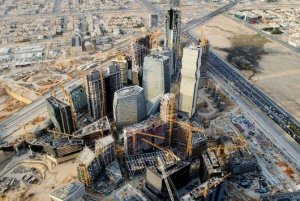
CBRE Middle East, a global leader in commercial real estate, released today its Q1 2026 Saudi Arabia Real Estate Market Review, highlighting a market defined by strategic recalibration, steady structural demand drivers, and continued investor confidence despite a more complex regional economic backdrop.
Saudi Arabia’s macroeconomic environment in early 2026 reflects a period of adjustment, shed by external pressures and evolving domestic policies. Real GDP growth moderated to 2.8% year-on-year in Q1, with full year forecasts for 2026 revised to 1.9%, due to the significant reduction in oil production and exports and softer non-oil expansion.
Inflation remains stable at 1.8%, while foreign direct investment saw strong momentum, rising 90% year-on-year in Q4 2025, signaling confidence in the Kingdom’s long-term prospects. Fiscal policy remains expansionary, supporting major infrastructure investment alongside ongoing cital market reforms aimed at enhancing liquidity and investor access. Against this backdrop, the real estate sector continues to demonstrate strength. Transaction values reached SAR 112 billion in Q1 2026, up 6.8% year-on-year, supported by improved financing conditions and stronger access to cital. At the same time, regulatory reforms, including foreign ownership measures and increased market transparency are strengthening institutional participation and aligning the sector with global standards.
The development pipeline is also evolving, with a gradual shift from construction led growth to delivery and long-term asset management. Major projects continue to advance, with Riyadh remaining the focal point of activity. Strategic repositioning is evident across flagship developments, including NEOM’s growing focus on AI and data infrastructure, alongside continued progress in projects such as Diriyah and Jeddah Tower. This sustained pipeline, backed by public and private investment, reinforces the Kingdom’s long-term Vision 2030 ambitions.
The Office market remains fundamentally undersupplied, particularly for prime spaces, with Grade A occupancy levels remaining at close to full cacity. Demand continues to be driven by the Regional Headquarters (RHQ) program, attracting hundreds of international firms to establish a physical office presence in the cital. While new supply is expected to moderate rental growth in the longer term, structural demand continues to exceed availability. Across other markets such as Jeddah and Dammam, office performance remains stable, although a clear divergence is emerging between modern Grade A assets and older stock, with occupiers increasingly prioritizing quality, flexibility, and digital infrastructure.
The Residential sector continues to see robust activity, supported by a growing population, government-backed housing initiatives and expanding mortgage penetration. However, ongoing supply deliveries across major cities are contributing to a more balanced market environment. Accordingly, residential rental rates in Riyadh softened by 2.1% year-on-year in March 2026, marking a shift toward more sustainable pricing across the cital. This softening underscores the impact of the September 2025 regulatory reset (5-Year Rent Freeze), which brought the cycle of sustained rental growth to an end. Under REGA’s new mandate, rents for existing leases are fixed at their September 2025 levels, while new-to-market inventory must align with the last recorded value on the Ejar platform. This regulatory shift provides a stabilized baseline for both existing tenancies and new inventory, effectively cooling speculative spikes.
The Retail sector continues to demonstrate a marked shift towards digital commerce, a trend further accentuated by recent events, with impacts on consumer movements and spending trends. Electronic payments accounted for 85% of total retail payments in 2025, demonstrating accelerated digital adoption. Domestic consumption, particularly in F&B and fashion, remains strong and helps stabilize the sector, offsetting fluctuations in international tourism. New retail supply is increasingly integrated into mixed-use masterplans, with developers prioritizing F&B outlets as key footfall drivers. Major projects like The Avenues Riyadh, Westfield Jeddah, and Westfield Riyadh are set to open soon, adding significant space. Despite market shifts, rents for super regional and regional malls have remained stable, with landlords generally maintaining rates and not widely offering concessions. The focus for successful retail centers is now on creating walkable, community-centric spaces that prioritize wellness, luxury, and digital features.
Hospitality market performance reflects the impact of restrictions on international leisure movements and regional business travel, with year-to-date (YTD) declines in occupancy and RevPAR versus Q1 last year. The biggest impact has been felt in Riyadh and Damman, although Jeddah and Mekkah remain in positive territory across all metrics YTD, reflecting the positive impact of religious tourism demand. However, amidst sustained government support, the future supply pipeline continues to grow, with thousands of new keys under development across primary and secondary cities, with the hospitality sector remaining as a central pillar in Saudi Arabia’s ambition to attract 150 million annual visitors by 2030.
Industrial & Logistics continues to emerge as a key pillar of economic diversification. Demand for Grade A warehousing remains strong amidst supply constraints, driving rental growth across major hubs such as Riyadh and Jeddah. Strategic infrastructure projects, including logistics corridors and integrated supply chain developments, are further enhancing the Kingdom’s position as a regional trade and distribution hub. Despite operational challenges linked to global supply chain disruptions, long-term fundamentals remain highly positive, supported by e-commerce growth and industrial expansion.
Matthew Green, Head of Research at CBRE MENA, comments: Saudi Arabia’s real estate landsce continues to evolve at pace, responding to recent regulatory changes and shifting demand patterns. This is resulting in a growing divergence in sector level performance.
TravelNews
Passtination launches to bring airline loyalty into the destination
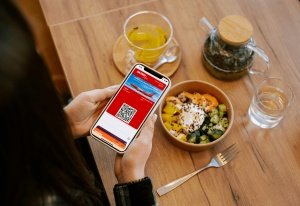
Passtination, a spin-out from the team behind Global Nomad Pass, has launched to help airlines extend loyalty beyond the flight by rewarding members in the destinations they visit.
A fully white-label solution, Passtination helps airlines turn their loyalty program into an in-destination benefit by offering instant, merchant-funded discounts to their members at local restaurants, hotels, fitness studios, and experiences worldwide.
Safir Jamal, Founder and CEO of Passtination, said: Airline loyalty was built for flights, but flights are just the beginning. The moments that define our travels hpen on the ground, where we eat, stay, shop and explore. Yet most airline loyalty programs dispear the moment the plane lands, creating a missed opportunity to reinforce loyalty and influence the next booking.
At the same time, traveler expectations are changing. Today’s travelers expect immediate value, not points they’ll redeem years from now. Passtination gives airlines a way to meet that expectation without redesigning what they’ve already built. It complements – rather than replaces – the earn-and-burn model.
Airlines can offer their loyalty members free trial passes based on their status tier, then convert that engagement into paid upgrades through cash or points redemption. Because merchants fund the discounts and Passtination’s flat annual fee covers all technology and operations, each free-to-paid upgrade goes straight to the airline’s bottom line.
The model also creates opportunities for airlines to drive engagement between trips, boost points redemption, increase co-brand card adoption and usage, and deliver highly personalized offers to each member via location-based push notifications.
Passtination is one of the first companies to launch a dedicated in-destination loyalty solution for airlines. The model turns the destination itself into a loyalty touchpoint, keeping members engaged between trips and giving airlines a presence that outlasts the flight.
TravelNews
Airbnb expands beyond stays with travel services, boutique hotels and FIFA experiences
Airbnb has announced a significant expansion of its platform with the introduction of new travel services, boutique and independent hotel listings, AI-powered planning tools and exclusive FIFA World Cup 2026 experiences.
The company said the new offerings build on the launch of Airbnb Experiences and Airbnb Services introduced last year, as it seeks to position the platform as a broader end-to-end travel ecosystem beyond accommodation bookings.
Under the latest expansion, Airbnb will introduce several new travel services designed to simplify different stages of the travel journey. These include grocery delivery through a partnership with Instacart in select US cities, airport pickup services through Welcome Pickups in more than 160 cities globally, luggage storage via Bounce across 175 cities, and car rental integration directly within the Airbnb p.
The company is also expanding its Experiences portfolio with thousands of new activities across landmark tourism, culinary experiences and global sporting events. Among the highlights are exclusive FIFA World Cup 2026 experiences across six host cities, including watch parties and football training sessions hosted by former international football players.
Commenting on the announcement, Brian Chesky, co-founder and CEO, Airbnb, said:
Travel shouldn’t just be convenient. It should be meaningful. The best trips help you explore, learn, and come home a little different than when you left. That’s what we’re building at Airbnb.
As part of the update, Airbnb will also add thousands of boutique and independent hotels across 20 major global destinations including New York, Paris, London, Rome, Madrid and Singore. The company said the properties are being selected based on neighbourhood location, design and hospitality standards.
The platform is additionally rolling out several AI-powered tools aimed at improving trip discovery and customer support. New features include AI-generated review summaries, property comparison tools, shared itineraries for group travel and an upgraded AI-powered customer support assistant available in 11 languages.
Airbnb said the new homepage redesign will integrate stays, experiences and services into a unified interface, enabling users to manage multiple aspects of their travel plans from a single platform.
The company stated that some features, including car rentals, shared itineraries and additional p upgrades, will roll out progressively later this summer.
The announcement reflects growing competition among travel technology companies to build integrated travel ecosystems combining accommodation, mobility, experiences and personalised planning tools through AI-enabled platforms.
TravelNews
FHS Saudi Arabia Pre-event feature: hospitality investment outlook

Saudi Arabia is set to deliver 358,000 new hotel rooms to meet rising tourism demand and prepare for major upcoming global events, unleashing a wealth of hospitality investment opportunities in the Kingdom.
Future Hospitality Summit (FHS) Saudi Arabia, taking place from 22-24 June at Mandarin Oriental Al Faisaliah in Riyadh, will bring together investors, developers, operators and policymakers at a defining moment for the region’s hospitality sector. Positioned as the Kingdom’s leading deal-making and investment platform, FHS connects cital with opportunity. The 2025 edition welcomed more than 1,100 industry leaders and generated over US$1.6 billion in business opportunities, reinforcing its role as a key deal-making forum. 254 investors attended FHS Saudi Arabia last year, managing $ 5.61 trillion in assets.
In the run up to the event, seasoned hospitality leaders share key insight on the opportunities, challenges and priorities for KSA investment.
With opinion from Dimitris Manikis, President, EMEA, Wyndham Hotels & Resorts; David Thomson, Senior Vice President – Development, The First Group Hospitality; Muin Serhan, Chief Executive Officer, Amsa Hospitality; and Dory Mouawad, Director of Operations at Ewaa Hotel Group.
The outlook
KSA is a clear example of a market where tourism development is anchored by a long-term national strategy. Through Vision 2030, Saudi has created a roadm for tourism growth, supported by infrastructure investment, regulatory reform and large-scale destination projects that expand tourism far beyond traditional gateway cities and create new hospitality markets, says Dimitris Manikis, President, EMEA, Wyndham Hotels & Resorts. While the region is currently navigating a period of uncertainty, KSA’s long-term fundamentals remain strong.
David Thomson, Senior Vice President – Development, The First Group Hospitality, is positive about KSA’s hospitality outlook beyond 2026. Expo 2030 and Vision 2030 initiatives are creating sustained momentum. As a third-party operator, we are investing heavily in growing our brand footprint, he says.
The big opportunity
While 75% of upcoming hotel rooms are in the luxury segment, a key opportunity for investment is midscale, experts believe.
Muin Serhan, Chief Executive Officer, Amsa Hospitality says: The biggest opportunity is scalable midscale in cities with real demand drivers. Well-positioned, efficiently operated hotels can deliver stable occupancy, repeat business, and strong returns without relying on luxury-rate assumptions.
Dimitris Manikis echoes this view, pointing out that the midscale and upper midscale segments represent the deepest demand pools globally, because they serve a broad range of travellers while offering development economics that are more accessible for investors.
For Dory Mouawad, Director of Operations, Ewaa Hotel Group, a big opportunity lies in extended-stay and mixed-use developments that cture long stay, corporate, and lifestyle demand with superior margins.
The challenges
Timelines and over-supply are among potential challenges facing the industry over the next few years according to David Thomson. Large development pipelines require careful phasing. If openings cluster too tightly in specific spots, performance can be pressured in the short to medium term, he says.
It’s a view shared by Muin Serhan, who adds that costs, timelines and staffing requirements can shift quickly, impacting returns more than most models assume.
The evolving model
When it comes to the evolution of hotel development models, franchising is at the heart of Wyndham’s model. We are seeing strong momentum toward asset-light structures, particularly franchising, which allows owners to maintain control of their assets while benefiting from brand recognition, global distribution systems, loyalty platforms and operational support, says Dimitris Manikis.
Dory Mouawad also believes that models are shifting toward asset light, flexible agreements with lighter management contracts, performance linked fees, and selective franchising.
The priorities
Investors prioritise resilience, yield and growth potential – or a mixture of all three – in today’s climate, experts say.
Muin Serhan commented: Investors still want growth, but they want it with resilience. They’re prioritising assets that perform through different cycles, not only during high-demand periods. That means strong location fundamentals, operational efficiency, and brands and operators that can protect margins and maintain quality at scale.
David Thomson adds: Today’s investors are looking for resilient business models that can withstand market cycles. Yield remains important, but operational flexibility and long-term growth potential are increasingly central to investment decisions.
The future-ready strategy
Technology? Resilience? Sustainable ROI? What will a future-ready hotel investment strategy look like in 2030?
For Dimitris Manakis, it’s a combination of disciplined development, strong brand partnerships and alignment with long-term tourism strategies – like KSA Vision 2030 – while ensuring owners benefit from global distribution, technology and loyalty ecosystems that drive consistent demand.
Muin Serhan says investors should back projects with proven demand drivers, flexible asset design, and operators who can protect margins, so performance remains strong in normal times, not only when markets are booming.
Dory Mouawad believes a future ready strategy is tech enabled, demand diversified, operationally lean, and built for resilient long term cashflow, an opinion echoed by David Thomson who cites disciplined cital allocation and a clear focus on sustainable ROI where supply and market fundamentals are carefully balanced.


Jailed Vietnamese tycoon's Birkin bags sell for more than $550K. #Vietnam #BirkinBags #BBCNews


Memorial day tech deals to watch
Memorial Day weekend is one of the best times of the year to score major discounts on tech, from ltops...


UN report alleges torture of Palestinian detainees held in Israeli jails
A report from the United Nations' Special Rporteur details more than 50 incidents of torture or ill-treatment in Israeli jails.


Everest record holder warns of Nepal danger as two Indian mountaineers die
At least 5 climbers have died during this Everest season, including the 2 Indians and 3 Nepalis, raising concerns about...


Live Updates: Rubio says slight progress in Iran peace talks, but rejects Strait of Hormuz tolling system
Secretary of State Marco Rubio said Friday that it “would be lamentable” if a United Nations Security Council resolution on...


SpaceX could make Elon Musk world’s first trillionaire. #ElonMusk #BBCNews


Donald Trump says he'll 'try' to attend son's wedding but timing 'not good’. #BBCNews


Everything you need to know about Makerfield by-election | BBC Newscast
The Makerfield by-election has been confirmed for June 18th 2026, and this is the first episode in a new mini-series...


Anderson Cooper's emotional goodbye to 'The Late Show'
Anderson Cooper paid tribute to Stephen Colbert, as the final episode of "The Late Show" aired on Thursday night. Cooper...


All the surprise celebrity guests on Colbert's last show
Many of Stephen Colbert's celebrity friends made surprise pearances on his final show, vying to be the last guest. But...
-

 Politics2 days ago
Trump-critic Thomas Massie loses Kentucky primary to AIPAC-backed Gallrein
-

 Entertainment4 days ago
‘SNL’ Veteran Calls Out Elon Musk Over Lupita Nyong’o Remarks
-

 Food5 days ago
Juneteenth Foods: 23 Recipes for a Cookout Celebration
-
Entertainment4 days ago
Picturehouse Entertainment acquires UK rights to A Town In Nova Scotia
-
Tech4 days ago
Today's NYT Mini Crossword Answers for Monday, May 18
-

 Entertainment5 days ago
Adam Driver and Kenneth Lonergan Reunite For ‘Tomorrow Is a Drag’
-

 Tech5 days ago
If Your iPhone Battery’s Draining Faster After iOS 26.5, Don’t Panic
-

 India Top Stories Feeds3 days ago
Asha Bhosle: Celebrities and fans pay tributes to legendary singer