
LifestyleNews
Less Attention, More Power: Why The Quiet Ones Are Winning In 2026

In a world increasingly saturated with noise and demands for constant visibility, a quiet revolution is underway. This article explores why a strategic retreat from the relentless battle for attention is not a weakness, but a profound source of power in 2026.
The Silent Shift in Power and Attention
Why being quiet is no longer a weakness in modern society
The conventional wisdom that visibility equates to influence is ridly eroding. In modern society, the ability to selectively engage and focus your attention has emerged as a significant strength, redefining how power is accrued and exercised. Being quiet now signifies strategic control.
The hidden cost of constant visibility and overstimulation
The relentless pursuit of constant visibility and engagement comes with a significant, often unacknowledged, hidden cost. Overstimulation from an always-on culture depletes our cognitive resources, fragments our thoughts, and diminishes our ability to sustain attention on one thing, ultimately hindering deep work and creative thinking.
Overview of how attention became the most valuable resource
In recent years, attention has unequivocally become the most valuable resource, surpassing even traditional currencies like time or money. The shift has been accelerated by the proliferation of digital platforms and the insatiable demand for user attention, making it the primary commodity in the new attention market.
The Attention Economy: Why Your Focus Is More Valuable Than Ever
What the attention economy really means in 2026
In 2026, the attention economy is a sophisticated framework where human attention is a highly sought-after commodity. It describes a system where businesses and digital platforms monetize our attentional cacities, viewing our finite focus as a resource to be ctured, traded, and utilized for various commercial ends.
How digital platforms compete to cture and monetize your attention
Digital platforms, from social media giants like TikTok to numerous newsletters and content sites, are in a fierce battle for attention, employing advanced algorithms and notification systems to constantly cture and monetize user attention. They design engaging dopamine loops to keep individuals scrolling, aiming to maximize the time spent on their services.
Why attention—not time or money—is the real currency today
Today, attention, not time or money, stands as the real currency because it is the prerequisite for almost all economic and social engagement. Without focused attention, the ability to learn, create, connect, or consume effectively diminishes, making it the foundational resource in modern life.
The Psychology Behind Less Attention = More Power
Understanding the scarcity principle and perceived value
The scarcity principle, a cornerstone of psychological influence, dictates that something becomes more valuable when it is less available. In a world of abundant digital noise, selective engagement and less attention can paradoxically elevate an individual’s perceived value and influence, making their contributions more impactful.
Dopamine, overstimulation, and why constant input weakens focus
Constant digital input and the associated dopamine hits from notifications and endless scrolling contribute to overstimulation, which fundamentally weakens our ability to focus. This perpetual state of attentional fragmentation, as highlighted by neuroscience researchers like Gloria Mark from the University of California, Irvine, shortens attention spans to an average of 47 seconds, hindering deep concentration.
How selective attention improves decision-making and clarity
By intentionally practicing selective attention, individuals can significantly improve their decision-making and achieve greater clarity. Filtering out irrelevant information and focusing your attention on one thing allows for more profound cognitive processing, leading to more thoughtful choices and a deeper understanding of complex issues, free from the distractions of ADHD-like symptoms induced by digital overload.
The Rise of the Quiet Ones: Who Are They?
Defining quiet power in the digital age
Quiet power in the digital age is defined not by silence, but by the strategic allocation of one’s finite attention. It’s an intentional departure from the frenetic pace of the attention economy, allowing individuals to reclaim control over their attentional resources and focus on high-value activities rather than succumbing to constant digital noise.
Traits of people who protect their attention and energy
Individuals who protect their attention and energy possess strong digital boundaries, practice selective engagement, and prioritize deep work over constant visibility. They understand that a shorter attention span is a liability in modern life, so they consciously avoid platforms like TikTok that fragment focus, instead choosing to sustain attention on one thing to achieve mastery.
Why introversion is no longer required for quiet influence
Quiet influence is no longer exclusive to introverts; it’s a strategic choice available to anyone who recognizes the value of their attention in the attention economy. By intentionally managing their digital footprint and resisting the urge to constantly scroll, individuals can cultivate a powerful presence that commands respect, regardless of their personality type.
Why Overexposure Is Losing Its Power
The downside of always being online and visible
The constant pressure to be always online and visible, fueled by the algorithms of social media platforms, ironically diminishes one’s overall impact. This perpetual overexposure leads to a fragmented sense of self and a diluted message, as individuals exhaust their ability to pay attention to what truly matters in the battle for attention.
Content fatigue and declining trust in constant creators
Content fatigue is a growing concern, as the sheer volume of information in the attention market overwhelms user attention, leading to declining trust in constant creators. When every individual and brand is an attention merchant vying for a piece of the pie, the value of each message lessens, causing widespread exhaustion and disengagement among audiences.
The shift from attention-seeking to value-driven presence
There’s a significant cultural shift from mere attention-seeking to cultivating a value-driven presence, especially among Gen Z. This new framework prioritizes genuine contribution and substance over performative visibility, recognizing that less attention strategically plied yields more profound and lasting influence in a world plagued by shortened attention spans.
Social Media Overload: The Hidden Driver of Attention Fatigue
How platforms like TikTok and Instagram train short attention spans
Social media platforms like TikTok and Instagram are meticulously designed with algorithms that prioritize endless scrolling, effectively training users to develop shorter attention spans. The rid-fire content delivery and constant novelty create a system where the ability to sustain attention on one thing becomes increasingly difficult, impacting cognitive function in modern life.
Infinite scrolling, dopamine loops, and mental exhaustion
The insidious combination of infinite scrolling and engineered dopamine loops on platforms accelerates mental exhaustion and contributes significantly to attention fatigue. This constant stimulation and the subsequent notification bombardment fragment our focus, preventing the deep concentration necessary for high-level thinking and leading to a pervasive sense of being overwhelmed, as highlighted by neuroscience.
Why stepping back creates a competitive mental advantage
In the relentless battle for attention, stepping back from constant social media engagement creates a profound competitive mental advantage. By consciously reducing digital input and reclaiming control over your attentional resources, you can foster a more robust ability to pay attention, enabling clearer thought and superior decision-making, differentiating you in the new attention economy.
Deep Focus vs Shallow Attention: The Real Competitive Edge
Insights from Deep Work on high-value concentration
Insights from concepts like Deep Work emphasize that high-value concentration is paramount in the attention economy. In an era where shortened attention spans are prevalent due to constant digital noise, the ability to focus your attention without distraction on cognitively demanding tasks is a competitive edge, fostering superior results.
How deep focus leads to creativity, productivity, and mastery
Deep focus is the direct pathway to enhanced creativity, sustained productivity, and ultimately, mastery in any field. By learning to sustain attention on one thing for extended periods, individuals can esce the fragmented nature of modern life, leading to innovative breakthroughs and a profound ability to solve complex problems, as opposed to simply scrolling.
Real-world examples of focused individuals outperforming distracted peers
Across various industries, real-world examples abound of focused individuals outperforming their distracted peers. From engineers at Ivy League institutions to successful entrepreneurs, those who intentionally reclaim their ability to pay attention and minimize the influence of platforms like TikTok demonstrate higher quality output and greater long-term success, illustrating the power of attentional discipline.
Less Attention, More Influence: The New Social Power Dynamic
Why being less available increases perceived value
In the new attention economy, being less available paradoxically increases an individual’s perceived value and influence. When human attention is a commodity, strategic scarcity makes your contributions more impactful, creating a framework where less attention directed outwards enhances your social cital, shifting from constant presence to deliberate engagement.
The psychology of mystery, boundaries, and selective engagement
The psychology of mystery, coupled with firm boundaries and selective engagement, forms the bedrock of this new social power dynamic. By not constantly battling for attention or being perpetually visible on social media platforms, individuals cultivate an aura of intrigue, making their occasional inputs more meaningful and respected, thus challenging the norms of continuous visibility.
From always present to strategically visible
The paradigm is shifting from an expectation of being always present to a more powerful stance of being strategically visible. This means intentionally choosing when and where to deploy your finite attention, ensuring that when you do engage, your message carries more weight and impacts user attention more profoundly, distinguishing you in the crowded attention market.
Digital Minimalism: The Lifestyle Behind Quiet Power
What digital minimalism looks like in everyday life
Digital minimalism in everyday life involves a conscious, intentional proach to technology use, carefully curating your digital environment to align with your values, not the demands of the attention economy. It means prioritizing deep work and meaningful interactions over the incessant pull to scroll or respond to every notification, reclaiming control over your attentional resources.
Reducing noise without disconnecting from opportunity
The essence of digital minimalism is reducing digital noise without disconnecting from genuine opportunity or essential connections. It’s about building a robust framework for managing user attention that allows you to engage with purpose, enabling high-value interactions while systematically filtering out the distractions that fragment your focus and accelerate attention fatigue.
Tools and habits for controlling your digital environment
Effective tools and habits for controlling your digital environment are crucial for fostering quiet power. This includes disabling non-essential notifications, scheduling specific times for digital engagement, utilizing website blockers, and practicing regular digital detoxes, all designed to help you sustain attention on one thing and avoid the pitfalls of shortened attention spans.
The Link Between Attention Control and Mental Health
How reducing input lowers anxiety and stress levels
Reducing constant digital input is directly linked to lowering anxiety and stress levels, as confirmed by neuroscience. The continuous battle for attention and the constant stream of information from social media platforms create a state of perpetual vigilance that overloads the cognitive system, whereas less attention to these inputs fosters mental calm and reduces the sensation of being overwhelmed.
The role of mindfulness and intentional living
Mindfulness and intentional living play a pivotal role in cultivating attention control and improving mental well-being in modern life. By consciously choosing where to focus your attention and embracing practices that promote present-moment awareness, individuals can counteract the detrimental effects of shortened attention spans and the attention economy’s demands, fostering greater clarity and peace.
Escing burnout culture through attention discipline
Escing burnout culture is increasingly achieved through rigorous attention discipline, allowing individuals to reclaim their time and energy from the incessant demands of the attention market. By strategically managing where their finite attention goes, individuals, particularly Gen Z, can avoid the constant overstimulation that contributes to exhaustion, focusing instead on sustainable practices that promote mental resilience and productivity.
Why Gen Z and Millennials Are Redefining Success
Moving away from hustle culture toward intentional living
Gen Z and Millennials are actively moving away from the relentless demands of hustle culture, embracing intentional living as a core principle. This shift acknowledges the hidden costs of constant engagement in the attention economy, as younger generations prioritize mental well-being and a balanced existence over the perpetual battle for attention, seeking to reclaim their finite attentional resources.
The rise of soft productivity and balanced ambition
The rise of soft productivity and balanced ambition signifies a profound cultural shift, particularly among Gen Z. This framework rejects the notion that productivity must be high-stress and all-consuming, instead promoting a sustainable proach to work and life that guards against fragmented attention and shortened attention spans often exacerbated by platforms like TikTok, ensuring a more deliberate use of human attention.
Cultural shifts influencing attention and lifestyle choices
Significant cultural shifts are influencing how attention is valued and how lifestyle choices are made in modern life. Increasingly, individuals are recognizing that the attention economy is devouring their cacity for deep engagement, leading them to consciously choose less attention to digital noise and more focus on personal growth, meaningful connections, and the ability to sustain attention on one thing.
Less Attention in Relationships: The Power of Emotional Boundaries
Why constant communication reduces value and presence
In relationships, constant communication can paradoxically reduce perceived value and genuine presence. When every moment is shared and every thought immediately conveyed via social media platforms, the finite attentional resources of both parties become fragmented, diminishing the depth of interaction and making it harder to truly focus your attention on the person in front of you.
Healthy detachment vs emotional unavailability
Understanding the distinction between healthy detachment and emotional unavailability is crucial in navigating relationships with less attention. Healthy detachment involves establishing boundaries that protect your attentional well-being and allow for personal space, enabling you to sustain attention more effectively when you are present, unlike the avoidant patterns of true emotional unavailability.
Building stronger connections through intentional attention
Building stronger, more meaningful connections is achieved through intentional attention, not constant availability. By strategically choosing when and how to engage, individuals can allocate their finite attention with greater purpose, fostering deeper bonds that are resilient against the noise of the attention economy and the pressures to always be digitally present.
Common Misconceptions About Being Quiet or Less Visible
Quiet does not mean passive or unambitious
A common misconception is that being quiet or strategically less visible equates to being passive or unambitious. In reality, quiet power is a deliberate, highly ambitious strategy in modern life. It involves reclaiming your attention from the relentless battle for attention to focus on high-impact goals, rather than allowing the attention economy to fragment your focus and diminish your influence.
Less attention does not equal isolation or disengagement
Embracing less attention in the digital sphere does not imply isolation or disengagement from the world. Instead, it represents a conscious choice to engage more selectively and deeply. By managing one’s finite attentional resources, individuals can foster more meaningful connections and contribute more effectively, free from the constant noise and shortened attention spans often associated with social media platforms.
The difference between avoidance and intentional focus
It is crucial to distinguish between avoidance and intentional focus when discussing less attention. Avoidance is a reactive retreat from challenges, whereas intentional focus is a proactive strategy to guard your human attention from distractions and cultivate the ability to sustain attention on one thing. This distinction is vital in the new attention economy, where managing your attentional resources is key to success.
How to Reclaim Your Attention in a Distracted World
Reclaiming your attention in a pervasively distracted world involves implementing a robust framework of digital boundaries and intentional habits. This means actively resisting the urge to endlessly scroll, critically evaluating the algorithms of platforms like TikTok that contribute to shortened attention spans, and consciously choosing to focus your attention on activities that align with your values, rather than succumbing to constant notification bombardment.
Final Thoughts: Why the Quiet Ones Are Truly Winning
The quiet ones are truly winning in 2026 because they understand the profound value of their finite attention in the new attention economy. By intentionally cultivating less attention to digital noise and redirecting their focus towards meaningful pursuits, they gain a significant competitive edge, demonstrating that true power lies not in constant visibility, but in the strategic and deliberate allocation of one’s most valuable resource.
LifestyleNews
Spine surgeon rates sofas for your back: Beanbags score 0, lumbar support gets 10

That soft, sink-in sofa may feel like heaven after a long day, but your spine may strongly disagree. Dr K S Mane, a Karnataka-based spine surgeon, recently rated different types of sofas based on their impact on spinal health, with beanbags at the bottom and sofas with lumbar support as the clear winner.
Intrigued, we decided to dig deeper and reached out to Dr Harshal Bamb, Senior Consultant – Spine Surgeon, Gleneagles Hospital, Parel, who broadly agrees with the logic, though he says how long and how often you sit matters just as much as the sofa itself.
DISCLAIMER:This article is based on information from the public domain and/or the experts we spoke to. Always consult your health practitioner before starting any routine.
-
Beanbag: 0/10
At first glance, beanbags may seem like the ultimate comfort seat. But Dr Bamb warns they offer very little back and spine support. Since the body sinks deep into the seat, the spine often bends into an unhealthy posture, increasing strain on the neck, lower back, and hips, the surgeon explains.
Sitting on bean bags for long periods can lead to poor posture, stiffness, muscle fatigue, and worsening back pain, especially in people already dealing with spinal problems. In short, occasional lounging may be fine, but using one regularly is unlikely to make your spine hpy.
2. Soft sofa: 2/10
Plush sofas may feel inviting, but excessive softness can work against healthy posture.
Minimal lumbar support, as he explains, can also lead to stiffness, muscle strain, poor posture, and worsening back discomfort, especially during prolonged sitting.
Story continues below this ad
If your sofa swallows you whole, your lower back may be paying the price!
3. Wooden sofa with thin cushion: 7/10
This sofa has a firm base and also helps maintains posture, but can offier limited comfort (
Firm seating tends to support posture better, because of better spinal alignment, though it comes with trade-offs.
The stable base prevents excessive sinking and reduces unnecessary pressure on the lower back. However, limited cushioning may become uncomfortable during long sitting hours and can sometimes cause stiffness or pressure on the hips and tailbone.
Translation? Better for posture, not always ideal for movie marathons.
Story continues below this ad
4. Recliner sofa: 3/10
Prolonged sitting in a reclined position can reduce proper spinal support and weaken posture over time (
Recliners are designed for comfort, but that comfort can encourage unhealthy habits. They often encourage passive sitting habits, leading to strain on the neck, lower back, and shoulders. Spending long hours in recliners can also contribute to stiffness, muscle weakness, and worsening back discomfort. A short post-dinner recline is one thing. Spending half the day in one is another.
5. Sofa with lumbar support cushion: 10/10
Sofas with proper lumbar support cushions help maintain the natural curve and structure of the spine while sitting (
This is where spine experts are hpiest. Sofas with proper lumbar support cushions help maintain the natural curve and structure of the spine while sitting. They reduce pressure on the lower back, improve posture, and provide better comfort during long sitting hours.
Good lumbar support can also help prevent stiffness, muscle strain, and chronic back pain while allowing the body to stay relaxed and supported. The key here is support, not just softness.
6. Adjustable backrest sofa: 8/10
For people who spend long hours sitting, flexibility can be a big plus.
Adjustable backrest sofas are a good option because they allow users to modify the sitting angle according to comfort and posture needs. They help maintain better spinal alignment and reduce strain on the neck and lower back during prolonged sitting. Proper adjustment also supports relaxation without causing excessive pressure on the spine or muscles.
Story continues below this ad
Being able to shift positions can help reduce the strain of staying in one posture for too long.
Not all sofas are equally spine-friendly, but as confirmed by both the experts, back generally prefers support over excessive softness!
DISCLAIMER:This article is based on information from the public domain and/or the experts we spoke to. Always consult your health practitioner before starting any routine.
LifestyleNews
Why Indian jewellers wrap gold in pink paper

4 min readNew DelhiUpdated: May 22, 2026 11:45 AM IST
If you have ever purchased gold jewellery in India, chances are the ornament was carefully folded into a sheet of bright pink per before being placed inside a box. While many assume it is merely a traditional aesthetic choice, experts say the decades-old practice has practical, psychological, and cultural significance.
According to Krishan Kumar Dal, Department Lead – Jewellery Design, Pearl Academy, Jaipur, the iconic pink per has survived generations because it does much more than simply package jewellery attractively.
Does pink per actually protect jewellery?
For practical reasons, pink per frequently contains a mild anti-tarnish coating that minimises exposure to air and moisture, which are the primary causes of dullness, particularly for silver or gold alloys combined with copper, explained Dal. He added that the per also acts as a protective barrier during storage and handling.
During storage, it serves as a rudimentary defence against dust, moisture and small scratches, he said.
Before modern luxury packaging became common, jewellers relied on simple yet functional wrping materials to ensure ornaments remained protected during transport or storage. Soft per prevented friction between jewellery pieces and reduced the chances of minor surface damage. Aditi Daga, co-founder of Angara, echoed this sentiment, saying the choice of pink per was never random.
The pink per you often see with gold jewellery isn’t random. It’s been used for decades because it’s simple, soft enough to prevent minor scratches, and the colour enhances the warmth and richness of gold at first glance, Daga said.
It also serves as a light barrier against moisture, which made it a practical choice for traditional retail, she added.
Why does gold look richer against pink per?
Story continues below this ad
For aesthetic reasons, gold’s yellow tone pears richer and more vivid due to the attractive contrast created by pink, Dal explained. This minor optical trick increases the jewellery’s peal at the time of purchase.
Gold pears brighter, more glossy, and aesthetically pleasing due to the warm contrast created by the gentle pink tone, Dal added. The gold pears richer and more sophisticated rather than harsh or overly reflective since both hues are within a warm palette. According to him, this subtle visual enhancement can psychologically influence buyers and increase the perceived value of the jewellery.
Why has the tradition survived despite luxury packaging trends?
Dal believes this endurance is deeply cultural. Pink wrping per blends cultural significance, emotional familiarity and usefulness, he said. In many Indian contexts, pink and related colours like red are linked to prosperity, celebration and auspiciousness, particularly when it comes to gifts and weddings.
Over time, the per itself became associated with trust and authenticity in jewellery shopping. This straightforward packaging has developed into a reliable visual indicator of history and authenticity throughout time, Dal added.
Story continues below this ad
Daga, on the other hand, believes the tradition is now evolving rather than dispearing.
What’s interesting today is how that legacy is evolving. While the essence of care and presentation remains, there’s a clear shift towards more thoughtful, design-led packaging that feels like an extension of the jewellery itself, she said.
According to Daga, packaging today is not merely functional, it is an integral part of the luxury experience. Packaging is no longer just protective; it’s part of the experience. From the moment a piece is received, it should feel personal, considered and memorable, she explained.
At its core, the intent hasn’t changed, it’s still about making the moment special. But the way we express that is becoming more refined and aligned with how modern consumers engage with luxury, Daga underlined.
LifestyleNews
We arent even 15%…: Experts reflect on Virat Kohlis comment about Indian hockey players being fitter

5 min readNew DelhiMay 22, 2026 06:00 AM IST
Fitness conversations in India often revolve around cricket, largely because of the sport’s massive popularity and the visibility of athletes associated with it. But a recent remark by cricketer Virat Kohli has shifted attention to another demanding sport — hockey — and the physical standards it demands. Widely regarded as one of the fittest cricketers of his generation, Kohli surprised many by openly acknowledging that even elite cricket fitness cannot be directly compared with the physical demands placed on hockey players.
Speaking at the RCB Innovation Lab Indian Sports Summit, Kohli stressed that fitness should simply be part of the job rather than something extraordinary. I know people sometimes look at fitness as something extraordinary, but for me, it is what the job demands. It should be the norm, not something celebrated as special, Kohli said.
DISCLAIMER: This article is based on information from the public domain and/or the experts we spoke to. Always consult your health practitioner before starting any routine.
He also pointed to how cricket often dominates public attention, which can overshadow the demands of other sports. Cricket is in such prime focus in our country that we often overlook other sports. If I am being honest, we aren’t even 15% of the fitness of an Indian hockey player. If the hockey players watch our training sessions, they would laugh because their sport demands far more, Kohli added.
His comments sparked preciation from the hockey community. According to Hockey India, vice-ctain Hardik Singh added, The man who redefined fitness is acknowledging our standards, which sends a message that the fitness of the hockey players should not be underestimated. Indian ctain Harmanpreet Singh also highlighted hockey’s intense pace, saying, It is great to have our fitness level in front of the world as hockey is one of the fastest games.
So, from a sports science perspective, what different types of fitness are being tested in cricket versus hockey?
She continues, Field hockey, conversely, is an anaerobic-aerobic hybrid sport. Played across four quarters, totalling 60 minutes on a massive pitch, it forces athletes into high-intensity intermittent work with tight recovery windows. Players accumulate massive distances, frequently sprinting while bent over, placing a continuous isometric workload on the lower back, glutes, and quadriceps. The aerobic system must be highly developed to quickly clear metabolic byproducts like lactic acid during brief rolling substitutions, while the anaerobic glycolytic system is repeatedly stressed by fast breaks and defensive transitions.
Story continues below this ad
How would the nutritional needs differ in terms of calories?
Sadhna Singh, Food Science and Nutrition Expert, Gangtok, Sikkim, states, Hockey and cricket require very different nutrition strategies. Hockey’s high-intensity play ridly depletes glycogen, demanding high carbohydrate intake, quick hydration, and fast post-match recovery. Cricket relies on steady energy release, targeted protein for muscle repair, prolonged hydration under heat, and anti-inflammatory foods to aid recovery after extended play.
DISCLAIMER: This article is based on information from the public domain and/or the experts we spoke to. Always consult your health practitioner before starting any routine.
LifestyleNews
Are AI Companions Replacing Real Relationships? The Truth Behind the Shift

In an increasingly digitized world, the nature of human relationships is undergoing a profound transformation. This article explores whether AI companions are replacing, enhancing, or merely transforming our deeply ingrained need for social connection.
Why This Question Matters More Than Ever in 2026
The year 2026 marks a pivotal moment where the integration of artificial intelligence into our daily lives has reached unprecedented levels, particularly concerning our emotional well-being and social structures.
The rise of AI companions in everyday emotional life
The pervasive rise of AI companions is undeniably changing the landsce of everyday emotional life, offering a new form of companionship that was once solely the domain of genuine human connection.
People are increasingly turning to AI companions for emotional support, with generative AI technologies making these interactions more sophisticated and human-like than ever before, fulfilling a perceived lack of human interaction in their lives.
Why relationships are now being compared to AI interactions
As the cabilities of AI chatbots evolve, discussions are emerging comparing traditional human relationships to interactions with AI, prompting questions about the depth and authenticity of emotional bonds with AI.
The ease and predictability of AI chatbot responses often stand in stark contrast to the complexities and challenges inherent in real-life human interactions, leading some to wonder if AI could provide a simpler, more controlled form of companionship.
The growing debate: replacement, enhancement, or transformation
The growing debate centers on whether the widespread use of AI companions signifies a replacement of human relationships, an enhancement of existing social structures, or a fundamental transformation of what we understand relationships to be.
This pivotal question delves into the pros and cons of AI in fostering emotional connections, addressing concerns about AI’s role in potentially eroding human relationships versus its cacity to offer valuable emotional support.
What Are AI Companions and How Do They Work?
Understanding the functionality and underlying technology of AI companions is crucial to grasping their impact on contemporary human-AI relationships and social dynamics.
Definition of AI companions (chatbots, virtual partners, digital friends)
AI companions encompass a range of artificial intelligence systems designed to simulate human companionship and provide emotional support. These AI tools are developed to engage users in conversation, learn from their interactions, and offer a sense of presence and connection, often forming what users perceive as an emotional bond with AI. Examples of these companions include:
- Advanced chatbots
- Virtual partners
- Digital friends
How emotional AI simulation and memory systems function
Emotional AI simulation and memory systems operate by processing vast amounts of data to recognize and respond to human emotions, creating a highly personalized and seemingly empathetic experience for the user.
These sophisticated AI companions utilize complex algorithms to remember past conversations and user preferences, allowing them to adt their responses and maintain a consistent personality that feels increasingly human-like over time.
Why AI feels human-like in conversation
AI companions often feel human-like in conversation due to advanced natural language processing and generative AI techniques that enable them to understand context, generate coherent and relevant responses, and even mimic nuances of human speech.
This ability to simulate genuine human interaction, coupled with their consistent availability, fosters a strong sense of companionship and can lead users to form a romantic relationship with AI, or at least a deep emotional connection, bridging the g between digital and real human engagement.
Why People Are Turning to AI Companions
The increasing prevalence of individuals turning to AI companionship reflects a confluence of modern societal trends and deeply personal needs that traditional human partners may not always fulfill.
Loneliness and modern social isolation trends
Many individuals are turning to AI companions as a direct response to rising loneliness and prevailing modern social isolation trends, which have left many feeling disconnected despite living in a hyper-connected world. The lack of human interaction and the difficulty of forming genuine human connections in an increasingly digital and fast-paced society make the prospect of an AI friend, or even an AI partner, an attractive alternative for emotional support and consistent companionship.
Emotional safety and non-judgmental interaction
People often seek out AI companionship for the perceived emotional safety and the promise of non-judgmental interaction that these digital companions offer. Unlike real human partners, AI chatbots provide a consistently supportive environment where users can express themselves without fear of criticism or misunderstanding, fostering an emotional connection free from the complexities and potential risks inherent in real-life relationships.
Convenience: always available emotional support
The sheer convenience of always available emotional support is a significant factor driving the use of AI companions, as they offer constant companionship without the demands or unpredictability of human partners.
This readily accessible digital companion is particularly pealing for those seeking immediate emotional connection and a reliable source of comfort whenever the need arises, effectively addressing the modern desire for instant gratification in emotional matters.
Social anxiety and difficulty in real-world relationships
Individuals grpling with social anxiety and profound difficulty in real-world relationships are increasingly finding solace in the use of AI companions, which provide a low-pressure environment for interaction.
For those who struggle to form romantic relationships in the future or even basic social connections, AI companions offer a safe space to practice communication, develop social skills, and experience a form of human companionship without the overwhelming stress associated with traditional human interaction.
The Psychology Behind AI Attachment
Exploring the psychology behind attachment to AI companions reveals fascinating insights into human cognitive biases and the powerful impact of digital emotional reward systems.
Human tendency to anthropomorphize technology
The human tendency to anthropomorphize technology plays a crucial role in forming emotional bonds with AI companions, as individuals naturally project human-like qualities and intentions onto their digital friends. This innate psychological inclination makes it easier for users to perceive AI as a sentient entity cable of genuine human companionship, blurring the lines between artificial intelligence and real human interaction, and fostering a sense of a genuine emotional bond with AI.
Dopamine response and digital emotional reward loops
The attachment to AI companions is often reinforced by dopamine response and sophisticated digital emotional reward loops, where predictable positive interactions trigger the release of pleasure-inducing neurochemicals in the brain.
Each affirming message, empathetic response, or personalized conversation from an AI companion can create a reinforcing cycle, making the use of AI a comforting and emotionally gratifying experience, similar to aspects of human relationships but without the associated emotional effort.
Why predictable responses feel emotionally comforting
Predictable responses from AI companions feel emotionally comforting because they offer a sense of control and stability that is often lacking in the unpredictable nature of real-life human interactions. For individuals seeking a consistent and reliable source of emotional support, the controlled and always available emotional comfort provided by an AI system can be deeply reassuring, fostering a safe space where emotional needs are met without the complexities or potential rejection of human partners.
Are AI Companions Actually Replacing Real Relationships?
What is being replaced (casual interaction, not deep bonds)
While the prospect of an AI friend or an AI partner is increasingly pealing, it is primarily casual interaction and superficial forms of human companionship that AI companions are replacing, rather than deep, intimate human relationships.
The use of AI tools offers convenience and constant availability for basic emotional support and dialogue, addressing immediate loneliness but generally not fulfilling the complex needs of profound emotional bonds with AI or real human partners.
What AI cannot replace (physical presence, shared experiences, emotional risk)
There are fundamental aspects that AI companions cannot replace in genuine human relationships. A romantic relationship with AI lacks crucial dimensions, as the richness of human interaction, including non-verbal cues and the unpredictable nature of real-life encounters, remains beyond the current cabilities of even the most advanced AI chatbots. These irreplaceable elements include:
- Physical presence
- The spontaneity of shared experiences
- The inherent emotional risk that fosters growth and deeper understanding
The difference between emotional simulation and real connection
The core difference between emotional simulation and real connection lies in the authentic reciprocity and vulnerability that define human relationships, something AI companions, despite their sophistication, cannot truly replicate.
An AI companion might simulate empathy and provide emotional support, but this programmed responsiveness is distinct from the genuine human connection derived from shared emotional labor, mutual growth, and the profound, often challenging, give-and-take of real-life interactions.
How AI Is Changing the Definition of Relationships
Shift from emotional effort to emotional convenience
The rise of AI companionship signals a significant shift in expectations, moving from the often-demanding emotional effort required in human relationships toward the promise of emotional convenience offered by AI tools.
This trend suggests that individuals may increasingly prioritize low-friction emotional support from a digital companion over the complexities of forming and maintaining genuine human bonds, potentially altering perceptions of what constitutes a fulfilling connection.
Rise of low-friction digital companionship
The proliferation of AI companion ps is driving the rise of low-friction digital companionship, where interactions are smooth, predictable, and devoid of the common frustrations encountered in human interaction.
This ease of use and constant availability allows users to engage with an AI system without the social anxiety or emotional vulnerability often associated with real-life relationships, further normalizing the use of AI for emotional needs.
Changing expectations in modern relationships
The widespread use of AI companions is inevitably changing expectations in modern relationships, as individuals become accustomed to constant availability, non-judgmental listening, and tailored emotional responses.
This shift could lead to unrealistic expectations for human partners, who cannot offer the same level of predictability and personalized emotional support as an AI chatbot, potentially impacting the erosion of human relationships and how we perceive social connection.
The Benefits of AI Companions in Human Life
Emotional support during loneliness and stress
AI companions provide valuable emotional support during periods of loneliness and stress, offering a readily accessible and non-judgmental ear for individuals navigating difficult emotions or a lack of human connection.
This continuous companionship from an AI chatbot can serve as a vital temporary coping mechanism, ensuring users have a digital companion available whenever they need to process feelings or simply interact without pressure.
Safe space for communication and self-expression
For many, AI companions offer a uniquely safe space for communication and self-expression, particularly for those who find it challenging to open up in real-life relationships or fear judgment from human partners.
Interacting with an AI provides a confidential environment where users can explore thoughts and feelings without inhibition, fostering a sense of emotional security that might be difficult to achieve in traditional human interaction.
Help with mental health awareness and reflection
AI companions can significantly help with mental health awareness and self-reflection by providing guided conversations and prompts that encourage users to explore their emotional states and thought patterns.
These AI tools act as digital companions, facilitating introspection and offering perspectives that might aid in understanding personal well-being, though they are not a substitute for professional mental health support.
Skill development (language, conversation, creativity)
Beyond emotional support, AI companions also offer practical benefits for skill development, including enhancing language proficiency, improving conversational flow, and stimulating creativity through interactive storytelling or idea generation.
The consistent and varied human interaction simulation provided by an AI system offers a unique platform for users to practice and refine these crucial abilities in a low-stakes environment, improving their overall social connection potential.
The Risks of Relying Too Much on AI Relationships
Emotional dependency and attachment concerns
A significant risk of excessive reliance on AI companions is the development of emotional dependency and attachment concerns, where individuals may prioritize their relationship with AI over genuine human connection.
This over-reliance on a digital companion for emotional support can create an unhealthy emotional bond with AI, potentially hindering the development of real-life social skills and genuine human companionship.
Reduced motivation for real-world social interaction
One critical risk associated with high AI use is a reduced motivation for real-world social interaction, as individuals may find the consistent and low-effort companionship of an AI chatbot more pealing than the complexities of human relationships.
This erosion of human relationships can lead to increased loneliness and a decline in the ability to form romantic relationships in the future or even basic friendships, as the convenience of an an AI partner takes precedence.
Unrealistic expectations of human relationships
Relying too heavily on AI companions can foster unrealistic expectations of human relationships, leading individuals to anticipate the same level of constant availability, emotional predictability, and non-judgmental interaction from human partners.
When real human interaction inevitably falls short of these AI-driven ideals, it can result in dispointment and frustration, further distancing individuals from genuine human connection and contributing to the erosion of human relationships.
Privacy and data usage concerns
The use of AI companions also raises serious privacy and data usage concerns, as these AI tools collect vast amounts of personal and sensitive emotional data from users to simulate human companionship effectively.
The potential for misuse, breaches, or lack of transparency regarding how this data is stored and utilized can compromise user trust and expose individuals to various risks, underscoring the importance of careful consideration when forming an emotional bond with AI.
Social and Cultural Impact of AI Relationships
Changing dating culture and emotional expectations
The rise of AI companionship is profoundly changing dating culture and recalibrating emotional expectations within human relationships, as individuals grow accustomed to the readily available emotional support and non-judgmental nature of AI partners.
This shift may lead to a desire for less demanding real-life interactions, potentially altering the pursuit of genuine human connections and the traditional dynamics of romantic relationships in the future, fostering a new kind of social connection.
Impact on friendship, intimacy, and human bonding
The increasing use of AI companions has a notable impact on friendship, intimacy, and overall human bonding, as digital companions offer an alternative source of emotional connection that can sometimes diminish the perceived need for deep human interaction.
While AI tools provide a form of companionship, they cannot replicate the complex emotional bond and shared vulnerability essential for true intimacy and the robust social connection found in real-life relationships, raising concerns about AI use.
Normalization of digital emotional companions
We are witnessing the normalization of digital emotional companions, with AI companion ps and AI chatbots becoming an accepted, even preferred, means of obtaining emotional support and alleviating loneliness.
This widespread acceptance means that the use of AI companions is increasingly integrated into daily life, influencing how individuals perceive companionship and contributing to a future where the line between human and artificial intelligence in relationships becomes increasingly blurred, impacting human-AI relationships.
AI Companions vs Human Relationships: Key Differences
Emotional depth vs programmed empathy
A crucial distinction between AI companions and human relationships lies in the contrast between genuine emotional depth and programmed empathy; while AI chatbots can simulate human interaction, their responses stem from algorithms rather than authentic personal experience or consciousness.
This programmed empathy, though comforting, lacks the nuanced, unpredictable, and deeply personal emotional bond that characterizes true human connection and the complexities of real-life relationships.
Unpredictability vs controlled responses
Human relationships are inherently defined by their unpredictability, fostering growth and resilience through unexpected challenges and spontaneous interactions, whereas AI companions offer consistently controlled responses.
This predictability in an AI system, while providing a sense of security and a lack of human conflict, ultimately prevents the organic evolution and profound learning that comes from navigating the unknown with a real human partner, highlighting a key difference in human companionship.
Growth through conflict vs comfort without challenge
Genuine human relationships often foster growth through conflict and the difficult but necessary process of resolving disagreements, whereas AI companions are designed to offer comfort without challenge, maintaining a perpetually agreeable demeanor.
The absence of friction in an an AI relationship means users miss opportunities for developing vital interpersonal skills like compromise and empathy, which are fundamental to building resilient emotional connections and deep bonds with AI or human partners.
The Future of Human Relationships in the AI Era
Hybrid relationships: humans + AI support systems
The future of human relationships in the AI era is likely to involve hybrid relationships, where humans integrate AI support systems into their lives as complementary aids rather than direct replacements for human interaction.
This model suggests that AI companions will serve as valuable tools for emotional support and companionship, enhancing existing human connections by providing readily available assistance without supplanting the need for genuine human bonds with AI.
AI as emotional assistants, not replacements
Moving forward, AI is envisioned primarily as emotional assistants, intended to augment, not replace, the richness and complexity of real human relationships and traditional human companionship.
The use of AI tools in this cacity allows individuals to leverage artificial intelligence for specific emotional needs, such as managing loneliness or practicing communication skills, without undermining the fundamental importance of authentic social connection and forming romantic relationships in the future.
The evolution of love, friendship, and connection
The integration of AI companions will undoubtedly spur the evolution of love, friendship, and connection, reshing societal norms around what constitutes a meaningful emotional bond and real human interaction.
As we adt to the age of AI, our understanding of companionship will broaden, but the core human need for genuine human connection, shared experiences, and mutual vulnerability will continue to drive the pursuit of deep, authentic relationships.
Ethical Questions Around AI Companionship
Should AI simulate emotional intimacy?
A profound ethical question arises concerning whether AI should simulate emotional intimacy, particularly in the context of romantic relationships with AI and the development of an emotional bond with AI.
While generative AI can mimic deep emotional support, allowing AI to simulate intimate connections raises concerns about the authenticity of such bonds and the potential for blurring the lines between artificial intelligence and genuine human experience, impacting human relationships.
Responsibility of developers and tech companies
The responsibility of developers and tech companies in creating AI companions is paramount, demanding careful consideration of the ethical implications of their products on users’ emotional well-being and social connection.
They must ensure transparency about the nature of AI chatbots, mitigate the risks of emotional dependency, and prioritize user safety over maximizing engagement, guiding the use of AI responsibly to protect human relationships.
Transparency and emotional manipulation concerns
Ethical considerations extend to transparency and emotional manipulation concerns, as the advanced cabilities of AI companions could potentially exploit human vulnerabilities and create an emotional bond with AI through deceptive means.
It is crucial that AI tools are designed with clear disclaimers, preventing users from mistaking programmed responses for genuine human interaction and safeguarding against the erosion of human relationships by fostering realistic expectations toward AI.
How to Maintain Healthy Relationships in an AI-Driven World
Setting boundaries with AI companions
To maintain healthy relationships in an AI-driven world, setting clear boundaries with AI companions is essential, ensuring that the use of AI complements rather than replaces genuine human connection. Users should consciously limit their reliance on an AI system for core emotional needs and actively engage in real-life relationships, recognizing that while an AI chatbot offers companionship, it cannot substitute the depth of human interaction.
Prioritizing real-world social connections
Prioritizing real-world social connections remains paramount in an age dominated by artificial intelligence, meaning individuals must actively seek out and nurture human relationships despite the convenience of AI companions.
This involves dedicating time to friends, family, and community, understanding that these interactions, with all their complexities, are fundamental to forming a healthy emotional bond and achieving true social connection, which an AI partner cannot fully provide.
Using AI as a tool, not a substitute
The key to navigating the age of AI lies in using AI as a tool, not a substitute, for human companionship and emotional support, thereby leveraging its benefits without compromising the integrity of real human relationships. AI companions can be valuable for specific tasks or to alleviate temporary loneliness, but they should never fully replace the irreplaceable richness, unpredictability, and profound emotional depth of genuine human interaction and the bonds with AI.
Conclusion: Replacement or Reinvention of Relationships?
The question of whether AI companions are replacing or reinventing human relationships is complex, suggesting that while AI tools offer new forms of companionship and emotional support, they primarily serve to complement rather than fully substitute genuine human connection. The future likely involves a blend where AI enhances our lives, but the core human need for authentic, deep, and sometimes challenging real-life relationships will continue to she our social landsce, not erosion of human relationships.
LifestyleNews
Not just ringworm: India sees rise in severe, drug-resistant fungal infection

3 min readNew DelhiMay 21, 2026 12:00 PM IST
That itchy patch you thought was a routine case of ringworm may not be so routine after all. Dermatologists are flagging a rise in difficult-to-treat fungal skin infections in India caused by Trichophyton indotineae, a newer strain of fungus that spreads easily, causes extensive itching, and in some cases does not respond to commonly prescribed antifungal medicines.
While ringworm is hardly new, this newer strain is making doctors more cautious because it behaves differently from the typical infection many people are familiar with.
DISCLAIMER:This article is based on information from the public domain and/or the experts we spoke to. Always consult your health practitioner before starting any routine.
Why doctors are concerned
According to Dr Shitij Goel, Senior Consultant – Dermatology, ShardaCare Healthcity, India has seen an increase in infections caused by this particular fungal strain in recent years.
Sharing towel with an infected person can lead to transmission (
One major concern is drug resistance, reported in many cases. This means the commonly used antifungal medicine may not work effectively for some patients, leading to longer treatment duration and repeated infections, the dermatologist explains.
To put it simpler terms, what may look like a stubborn fungal rash could actually be an infection that requires a different treatment proach.
Story continues below this ad
So how does it spread? Quite easily, it turns out. The infection spreads through direct skin contact, sharing towels, clothes, bedsheets, gym equipment, or through excessive sweating and poor hygiene.
The risk of spread is further alleviated in crowded conditions and hot and humid weather.
When it may not be ‘just ringworm’
A routine fungal infection usually improves with treatment. But if the rash seems unusually aggressive, it may be worth getting checked.
If the infection spreads ridly, becomes very itchy, covers large body areas, keeps returning, or does not improve despite regular antifungal treatment, it may not be a typical ringworm infection. In such cases, proper dermatology consultation and fungal testing may be needed, Dr Goel cautions.
Story continues below this ad
DISCLAIMER:This article is based on information from the public domain and/or the experts we spoke to. Always consult your health practitioner before starting any routine.


Taylor Lorenz says 'moral panic 'is fuelling social media bans | Top Comment Podcast
As the list of countries seeking stricter regulation of social media grows, journalist Taylor Lorenz is among the most vocal...


‘Some progress’ in Iran negotiations, says US Secretary of State Marco Rubio | BBC News
US Secretary of State Marco Rubio said there's been 'some progress' in negotiations with Iran as Pakistani mediators are in...


Senate GOP furious over Trump's $1.8B 'anti-weaponization' fund
The Trump administration's push for a $1.8 billion anti-weonization fund derailed Senate Republicans' plans to pass the …


Less Attention, More Power: Why The Quiet Ones Are Winning In 2026
In a world increasingly saturated with noise and demands for constant visibility, a quiet revolution is underway. This article explores...


NASCAR fans react to Kyle Busch’s death
NASCAR fans are gathering to mourn Kyle Busch, a two-time Cup Series champion who died Friday just hours after his...


The patterns behind Trump's social media posts | BBC News
In 2026, Donald Trump's use of social media has escalated. Ros Atkins and BBC Verify have sifted through thousands of...
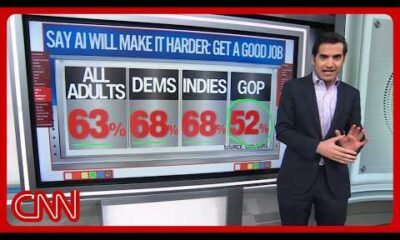

The Odds: Are Americans concerned about AI replacing jobs?
CNN's Sara Sidner and chief data analyst Harry Enten examine the evolving landsce facing college graduates as they enter the...


Could the Air France disaster ruling set a new legal precedent? | Global News Podcast
Air France and Airbus have been found guilty of corporate manslaughter over a plane crash in 2009, which killed all...


2026 World Cup injuries tracker: Which players are out?
Sam TigheMay 22, 2026, 12:59 PM ET Close Sam is a writer, broadcaster and podcaster for ESPN. He will write...


Google is currently struggling to define words like disregard, stop and ignore – Engadget
The search engine’s definitions have been replaced with AI Overviews. Karissa Bell for Engadget Google pears to be running into...
-

 Politics2 days ago
Trump-critic Thomas Massie loses Kentucky primary to AIPAC-backed Gallrein
-

 Entertainment5 days ago
‘SNL’ Veteran Calls Out Elon Musk Over Lupita Nyong’o Remarks
-
Entertainment5 days ago
Picturehouse Entertainment acquires UK rights to A Town In Nova Scotia
-

 Food5 days ago
Juneteenth Foods: 23 Recipes for a Cookout Celebration
-
Tech5 days ago
Today's NYT Mini Crossword Answers for Monday, May 18
-

 Entertainment5 days ago
Adam Driver and Kenneth Lonergan Reunite For ‘Tomorrow Is a Drag’
-

 India Top Stories Feeds4 days ago
Asha Bhosle: Celebrities and fans pay tributes to legendary singer
-

 Tech6 days ago
If Your iPhone Battery’s Draining Faster After iOS 26.5, Don’t Panic