
Politics
Why Trump is all-in on AI despite the warnings
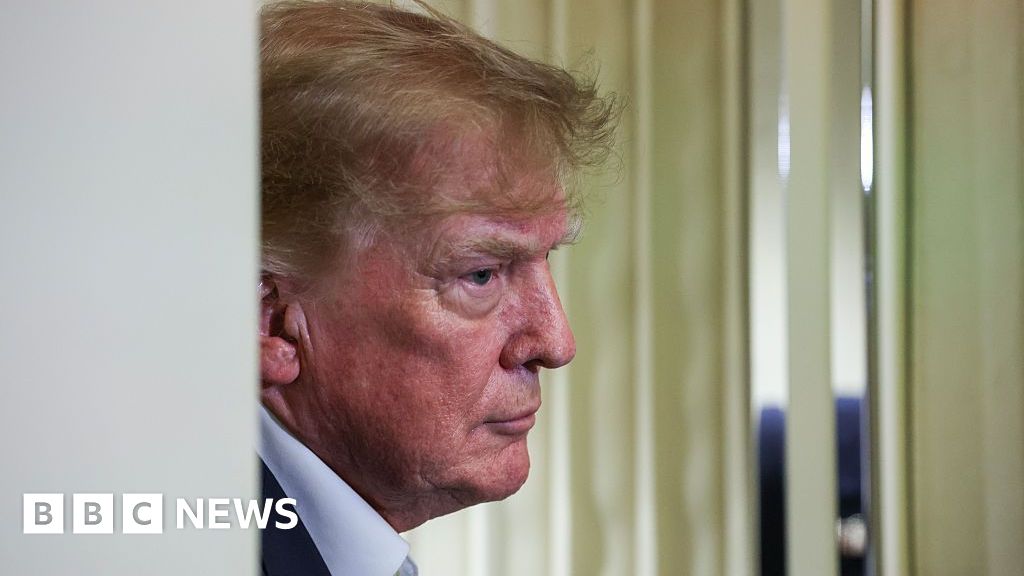
According to Donald Trump, concerns about the dangers of artificial intelligence technology – that “robots will be marching into our cities and getting rid of us all” – are a hoax.
It’s the kind of language the US president typically reserves for the objects of his most intense derision – theories about human-driven climate change, investigations into Russian election-meddling, and the drives to impeach and remove him from office during his first presidential term.
Styling himself as the “hoax buster”, in a series of social media posts on Monday he issued a full-throated endorsement of what he called “the greatest economic development engine in history” and scorned those who doubted the benefits of the technology.
The ranks of doubters have been growing in recent weeks, however, amidst anxiety over the disruptive nature of AI – if not worries about potentially civilisation-threatening danger – among some industry insiders and politicians, including from within Trump’s own Republican Party.
None of that has deterred Trump, however, whose latest social media fusillade was only his latest effort to turn back growing AI scepticism through sheer force of will.
Whether the president views the AI fight as pivotal to his economic legacy, a key battleground in a global struggle for power, or another example of his enemies conspiring against him, he has, by fully joining the fight, elevated the issue to the forefront of American politics. That is even at the risk of crossing longtime allies.
“We think this could be a great technology, but we’re not going to give these guys a carte blanche,” former Trump adviser Steve Bannon said at a “pro-human” conference on the dangers of AI on Tuesday. “There’s been no debate.”
Just before Bannon spoke, democratic socialist Senator Bernie Sanders of Vermont told the same crowd that Washington policymakers had not addressed the “potentially catastrophic consequence” of unregulated AI.
“Congress under both Democratic and Republican control has been asleep at the wheel,” he said. “And now we have a president whose ignorance regarding this issue is truly embarrassing.”
According to Trump, however, what’s needed isn’t debate or new policies, it’s trust in his authority and judgement.
“The only control or ‘guardrails’ that AI needs is a STRONG AND SMART (High IQ!) PRESIDENT, and the U.S.A. has that, in spades,” he wrote. “We already have tremendous CRIMINAL and REGULATORY power over these companies.”
A desire for centralised presidential authority is a familiar theme for Trump in his second term in office. If he decides something is good, he should have the authority to allow it; if he deems it bad, he ought to be able to end it by unilateral presidential order.
It’s similar to his outlook on immigration and trade. He believes that he, as president, should have the sole power to decide who can enter and remain in the country, and when and where to impose tariffs.
Unlike tariffs and immigration, which have been issues of interest for Trump for decades, the rise in artificial intelligence technology is a recent development.
But if this is no long-time, deep-seated interest on the part of the president, what could explain his willingness to press ahead?
The ‘hottest’ economy and the driving force of AI
Trump regularly likes to tout America as the “hottest” country in the world. Many economists indicate that investment in AI technology – including infrastructure and equipment – has been the driving force in the US economy for several years.
According to a recent report by the forecasting firm ING, tech investment accounted for more than a third of all US economic expansion in the second quarter of 2026.
The stock market is booming, and much of that rise in corporate value (and, by extension, surging retirement portfolios of many Americans) can be attributed to the massive spending on computer chips, data centres and the other infrastructure behind AI.
Anything that threatens this growth, which Trump considers to be a hallmark of his presidency and a key to his political legacy, quickly draws his suspicion.
Trump also sees the AI expansion as a large-scale industrial competition between the world’s two largest economies, the US and China. In the zero-sum game of global power, if China is ahead, then America is behind.
“We’re leading China in AI,” Trump said on Saturday, “and frankly, I want to keep it that way, because whoever wins AI wins.”
The president often touts a familiar conservative view that his opponents on the left are against the free market and economic liberties, and rely on alarmism to justify greater government intervention and control.
Of course, Trump – who touts partial US ownership of US Steel and the semiconductor manufacturer Intel, and has no qualms about picking winners and losers in the American economy – is hardly a traditional small-government conservative.
Tech bosses vary in views – and their access to Trump
Trump’s close ties to prominent tech moguls and AI entrepreneurs from the start of his second term may also help explain his AI evangelism. Tech entrepreneur David Sacks, a co-chair of the president’s Council of Advisors on Science and Technology and his informal AI tsar, has been a longtime supporter. Sacks’s publicly aired scepticism of AI regulation mirrors recent comments made by the president.
“I think this is becoming a panic,” he said this weekend in an interview with CBS News. “We’re in an election season, and there is an incentive for political actors to try and amplify the fear.”
Elon Musk, despite a rocky relationship, has shaped the direction of this administration. Mark Zuckerberg of Facebook, Amazon’s Jeff Bezos, OpenAI’s Sam Altman and former Apple head Tim Cook all had prominent seats at Trump’s inauguration.
These men, along with Anthropic head Dario Amodei, hold a range of views on the necessity of greater AI regulation, and have differing levels of access to, and influence on, Trump.
In Amodei’s case, his conflicts over the Pentagon’s unrestricted use of Anthropic’s AI models could have negatively affected Trump’s evaluation of Amodei’s calls for a slowdown in AI development.
“This is the most prominent debate in the entire industry and has been since the beginning,” said Matt Calkins, head of the tech firm Appian. “We knew it would spill into politics at some point because it had to.”
Where the political debate goes from here is an open question.
With Trump’s resistance, it is unlikely that Congress – despite promises of new hearings and proposed regulatory controls – will enact new legislation that Trump would sign into law. On Tuesday, Republican Speaker of the House Mike Johnson appeared to back away from earlier openness to congressional action, instead echoing Trump “AI hoax” rhetoric.
With midterm congressional elections looming, candidates running for office – both Republicans and Democrats – are wary of ending up on the wrong side of public opinion that, according to polls, is sceptical of the promised benefits of AI advances.
“It is possible that events in the future might electrify the public, and then positions – and talk – might not be so cheap,” he said.
Politics
Here’s what’s being banned from Ole Miss student section; Violators ‘will be removed’

Anyone in the Ole Miss student section wearing LSU gear or purple and gold Saturday when the No. 8 Rebels face the No. 7 Tigers will be removed from the stadium, the athletics department said in a statement Thursday.
“No person wearing an opposing team’s gear or colors will be allowed entrance into the student section,” the Ole Miss statement read, per Tyler Konis on X. “Additionally, anyone found to be wearing opposing team apparel or colors in the student section will be removed.”
In April, an LSU fan, who was not a student, was arrested during an altercation with an Ole Miss student during a weekend baseball series at Swayze Field.
The student section mandate is just the latest of off-the-field issues surrounding the Saturday night game. Among the storylines:
Unprecedented security preparations.
A mysterious injury report.
Louisiana politics.
Kiffin’s checkered past.
A social media post by Kiffin’s daughter, Landry, in response to a bedsheet billboard on the Ole Miss campus that was designed to embarrass her (she remains enrolled at Ole Miss, but is finishing her degree online from Baton Rouge).
The packed crowd expected at 64,000-seat Vaught-Hemingway Stadium will represent a fraction of the 100,000 or so people that police in Oxford, Mississippi, say they expect to converge this weekend on their town of about 26,000.
Politics
How Ed Sheeran’s tour became a flashpoint over Gaza and free speech

When Ed Sheeran walks onto a Philadelphia stage Saturday, the people missing may be as noticeable as the person under the lights. There will be no opening act and no Beoga, the Irish band that once joined him midway through the show.
The tour began coming apart after Macklemore spoke about the war in Gaza.
During Sheeran’s Sept. 5 concert at MetLife Stadium, Macklemore said “free Palestine” and performed “Hind’s Hall,” named for Hind Rajab, a 5-year-old Palestinian girl killed by Israeli troops in Gaza City in January 2024. Images of Gaza’s destruction filled the screens behind him.
The performance drew quick criticism, including from the Anti-Defamation League. The Israeli-American Council circulated a petition urging Sheeran to drop Macklemore.
Macklemore said Sheeran later told him several stadiums would not host the tour if he remained. The rapper accused Gillette Stadium owner Robert Kraft of leading the effort. Kraft acknowledged barring Macklemore, citing what he called a history of antisemitic rhetoric and saying he would not “provide a platform for hate speech.” Sheeran said the promoter and venues made the decision.
Music journalist and critic Zach Schonfeld told Morning Edition that the episode showed the power venue owners can have over who performs and what artists can say.
“I think it does show that a billionaire venue owner like Robert Kraft holds a lot of power to dictate who is allowed to perform in his venue and what these artists are allowed to say,” Schonfeld said.
By Tuesday, other artists had begun leaving the tour in solidarity with Macklemore. Finneas, Aaron Rowe, Lukas Graham and Beoga all withdrew from upcoming dates. The next day, Macklemore said he would donate his $1 million in net earnings from the tour to six organizations supporting Palestinians and invited Kraft to do the same.
The fight over a stadium stage offers a window into changing American views of Israel. A July Economist/YouGov poll found 43% of U.S. adult citizens said Israel was committing genocide against Palestinian civilians, including 68% of Democrats and 17% of Republicans. Among adults under 30, the share rose to 55%.
Sheeran said he has personal views about the war but does not want his concerts to become political forums. That answer drew fresh criticism online, including comparisons with his 2022 performance at a benefit for Ukraine and a video in which he told Ukrainians, “I stand with you.” He has also campaigned against racism in the U.K. and criticized the British government over cuts to arts funding.
Asked about precedents, Schonfeld pointed to Kneecap, the Irish rap trio that faced canceled shows after speaking about Gaza. The controversy also comes amid other cultural fights over speech about Israel and Gaza, including backlash against The Zone of Interest director Jonathan Glazer after his Oscar speech addressed Israel’s occupation and the war, and protests surrounding No Other Land, the Oscar-winning documentary about displacement in the West Bank that initially lacked a mainstream U.S. distributor.
The pressure extends beyond public and online spaces in America. In Israel, the directors of the new documentary “NAZA,” an investigation by two Israeli journalists into how Israeli intelligence selected targets in Gaza and calculated expected civilian deaths from strikes, faced calls from the culture minister to lose their citizenship.
Still, Schonfeld said Sheeran’s enormous mainstream reach makes this the most high-profile example yet. He has tried to stay out of politics. In Philadelphia, the empty spaces onstage may make that position impossible to miss.
Editor’s note: Some material in this story was not included in the radio version that aired on Morning Edition. Lindsay Totty contributed reporting, and Suzanne Nuyen edited the digital story.
Politics
Former Sen. Jon Kyl, who shaped water policy and backed Kavanaugh, dies at 84

PHOENIX (AP/AZFamily) — Former U.S. Sen. Jon Kyl, a longtime Republican lawmaker from Arizona who shaped landmark water policies in the U.S. West and guided the confirmation of Supreme Court Justice Brett Kavanaugh, has died. He was 84.
Kyl died Wednesday night from a neurological disorder, said Gordon James, a communications professional who is a longtime friend of the Kyl family.
Kyl served in the U.S. House from 1987 to 1995 and the Senate from 1995 to 2013. He had withdrawn from public life in December 2025 after announcing he had been diagnosed with dementia.
He was born in Oakland, Nebraska, on April 25, 1942, and grew up in a rural farming district in Iowa that his father represented in the U.S. House. At 18, he headed southwest to attend the University of Arizona, where he met his wife, Caryll, and earned a law degree.
Kyl remembered as a ‘giant’ in Senate
He represented Arizona in both chambers of Congress for nearly three decades, with his career spanning Ronald Reagan’s presidency to President Donald Trump’s first term.
After retiring from politics in 2013 and becoming a lobbyist, Kyl returned to Congress briefly in 2018, when Ducey appointed him to fill the vacancy left by the late U.S. Sen. John McCain.
Kyl rose to a leadership position during his last full term in the Senate, when his Republican colleagues selected him as minority whip.
Kyl’s appointment drew high praise from Trump, who said he was looking forward to working with “the extraordinary senator.” Kyl stayed for less than four months before rejoining lobbying firm Covington and Burling.
Former Arizona Gov. Doug Ducey said Kyl was a “giant” in the Senate, further describing him as serious, engaging, forthright and thoughtful. His biggest impacts, Ducey said, came from the way he kept the Republican caucus together in opposition to Obamacare and his staunch support of Israel.
Kyl also backed legislation to authorize construction of a fence stretching hundreds of miles along the U.S.-Mexico border. He later joined with Democrats to support a bill that would provide a path to citizenship and temporary guest-worker status for those in the U.S. without authorization. The proposal ultimately failed.
As a lobbyist, Kyl helped guide the confirmation of Trump-picked U.S. Supreme Court Justice Brett Kavanaugh. When Kyl returned to the halls of Congress in 2018, he was known as Kavanaugh’s chief Sherpa — an informal but widely known term for a nominee’s guide to the political tundra in the Senate.
In a statement disclosing his dementia diagnosis, Kyl harkened back to the words of Reagan, when the former president revealed his own Alzheimer’s diagnosis and said he was starting a journey that would lead him to the end of his life.
Kyl said he shared Reagan’s confidence for Arizona and the nation’s future, and that despite his diagnosis, he was a “very fortunate man.”
Shaped Arizona’s historic water policies
Before being elected for the first of his four terms in the House in 1987, Kyl was a key participant in shaping Arizona’s 1980 groundwater code as a lawyer representing a large water utility. The first-of-its-kind code created a regulatory framework for managing groundwater in the drought-stricken state, largely centering on the state’s population centers, including Phoenix and Tucson.
In 2004, Kyl authored legislation that provided one of the largest tribal water rights settlements, which, after a decades-long battle, gave the Gila River Indian Community enough water to fill nearly 313,500 Olympic-sized swimming pools annually.
Republican U.S. Sen. Mitch McConnell of Kentucky, who later served as majority leader, called Kyl’s work ethic “legendary” in a 2012 floor speech and said Kyl had labored mostly behind the scenes for 15 years to advance the settlement.
Arizona State University’s Kyl Center for Water Policy takes its name from him.
State, local leaders pay respects
Ducey, who considered Kyl a mentor, described the former senator in a February 2025 interview with The Associated Press as a true statesman and a “workhorse” among Washington, D.C.’s “showhorses.”
“Jon Kyl gave Arizona nearly three decades of principled, thoughtful leadership — and he gave me something just as valuable: his mentorship and friendship. I’ll miss him deeply. Rest in peace, Senator Kyl,” Ducey posted on X.
Gov. Katie Hobbs said Kyl was a dedicated leader who cared deeply for Arizona.
“Arizonans are mourning the loss of former U.S. Senator Jon Kyl. Throughout his decades of public service in the House and Senate, he was a dedicated statesman who always cared deeply for our state. My thoughts and deepest condolences are with his family and loved ones, ”she said.
Maricopa County Attorney Rachel Mitchell also paid homage to the late political leader.
“Devastating news. Senator Kyl was, in the truest sense of the word, a statesman. In addition to his many, many accomplishments, some do not know the efforts he extended to help children and other victims of sex crimes by championing evidence rule changes which continue to have an incredibly positive impact. My prayers go out to his family,” Mitchell posted.
Secretary of State Adrian Fontes shared condolences to Kyl’s loved ones and highlighted his contributions to tribal water rights.
“He made a lasting contribution through his work on tribal water rights, helping bring stakeholders together and advance important water settlement in Arizona. His dedication to public service and to resolving some of the West’s most complex water challenges is his legacy. Our heartfelt condolences go out to all who had the privilege of knowing him. May he rest in peace,” Fontes said.
Former Republican Sen. Jeff Flake praised Kyl for his longtime work, adding that “Arizona has lost a giant.”
“Jon Kyl was one of the most diligent and effective public servants Arizona has ever had. I was honored to follow him in the U.S. Senate, where his example of seriousness, integrity and devotion to public service was known to all. Cheryl and I send our deepest condolences to Caryll and the entire Kyl family,” Flake posted on X.
Arizona Senate President Warren Petersen said Arizona has lost “one of its finest statesman.”
“Whether he was negotiating complex water agreements or helping guide our nation’s security policy, Senator Kyl brought credibility, good judgment, and a determination to deliver results. He earned the respect of people across the political spectrum without compromising his principles. Just as important, Senator Kyl understood that public service is about more than holding office. It is about protecting the country, solving difficult problems, and leaving the next generation stronger than the one before it. He set an example that my colleagues and I continue to look to in our own service to Arizona,” a portion of Petersen’s statement said.
Former Gov. Jan Brewer praised Kyl, stating he served the state and nation with “extraordinary intellect.”
“Arizona has lost one of its finest public servants. Senator Jon Kyl served our state and nation with extraordinary intellect, integrity and humility. John and I extend our deepest condolences to Caryll and the entire Kyl family. May God comfort them, and may Jon rest in peace,” she said.
The Associated Press contributed to this report.
See a spelling or grammatical error in our story? Please click here to report it.
Politics
Supreme Court blocks USPS ballot mail rule ahead of 2026 midterms

Brett Kavanaugh is not closing the door to the United States Postal Service (USPS), implementing Trump’s rules on ballot-mail in the future. However, he agrees with the majority of those who believe that it is premature for the USPS to implement them before the midterm elections 2026.
Kavanaugh stated in his concurrence in United States Postal Service et. al. that “in my opinion, based upon the briefing received by the Court at this interim phase, there’s at least a reasonable prospect” that the Postal Service has statutory authority to issue the final rule. v. California, et al.
This concurrence is coming roughly three months since Kavanaugh established a legal path for Trump to use his executive order that curtails birthright citizenship, in his concurrence on Trump v. Barbara. Kavanaugh offered an outline for Trump’s tariffs when he dissenting in Learning Resources, Inc. V. Trump.
I would like to point out that Justice Kavanaugh gave the government some breathing room by stating that it is likely they have the legal authority. You can also see the Justices Thomas, Alito’s position on this question if you look at their dissent,” Jason Snead told Fox News Digital.
TRUMP BLASTS SUPREME COURT ‘DISASTER’ AFTER JUSTICES RULE AGAINST HIM ON MAIL-IN VOTING
On Monday, the Supreme Court denied an emergency request by the Trump Administration to lift an injunction from a lower-court that blocked the U.S. The Supreme Court ruled that the Trump administration was unlikely to win on merits in its appeal of the U.S. Postal Service regulation.
After ballots were already sent, the decision blocks the rule for midterm elections in 2026. The case may return to the Supreme Court if the lawsuit continues.
Snead said to Fox News Digital that there was a good chance the case would end up before the Supreme Court at some point.
Clarence Thomas and Justice Samuel Alito wrote a dissenting opinion that raised concerns about the possibility of the policy surviving the legal challenge to take effect by 2028.
I do believe that the rule will not be implemented by the time of the midterm elections. At this point, I believe that is a fact. “I do hope there’ll be additional litigation that will allow for this rule to implement before the 2028 Presidential election”, Snead stated.
Postal Service Rule: Federal ballot-mail envelopes must include a logo for election mail, can be scanned by high-speed equipment and have a unique barcode. States will also be required to upload voter data to the Postal Service’s portal.
The lawsuit was filed by a coalition of Democratic attorneys general from 24 states, claiming that the new rule is in violation of the Constitutional Elections Clause which gives Congress the authority to regulate elections. Trump’s administration claimed that the USPS regulates mail and not election procedures.
TRUMP SCORES SUPREME COURT WIN ON MAIL-IN VOTING RESTRICTIONS BEFORE MIDTERMS
Snead said, “This case is alive, and Kavanaugh’s testimony has provided us with some hope. As it moves forward, we might see this rule come into force in 2028, if not sooner, since it was successfully killed by the left for 2026.”
Iowa’s Solicitor-General Eric Wessan cited timing as another major factor. He noted that earlier litigation in Massachusetts and an injunction delayed the Postal Service from publishing the final rule.
Wessan stated, “I’m not shocked that, as we approach the election deadline, the Supreme Court has decided to maintain the status quo. Although I believe that Justice Alito’s dissent raises many issues about the approach adopted by the majority. I am not sure if the Supreme Court will reach the same conclusion in the future, say, before the 2020 elections.”
Alito and Clarence Thomas dissented. They argued that the government made a sufficient showing to warrant a stay. The Supreme Court had previously stated that plaintiffs who rely on “Hail Mary passes” rarely succeed.
FEDERAL JUDGE AGAIN BLOCKS TRUMP’S MEDITERM MAIL-BALLOT ORDER
Wessan stated that “the hail mary passes appear to be working to some extent.” The president issued his executive order five months ago and shortly thereafter, the injunction was filed. As the Supreme Court acknowledged in the earlier litigation, the injunction was unjust.
Wessan added, “But because of the time it took for that to be resolved, the Postal Service is in a difficult position in terms of timing, with the election in November. This is especially true since states will soon have to distribute ballots, to either the military or to anyone else.”
Abhishek kambil was surprised by the majority’s lack of explanation.
I think that the most surprising thing was how unreasoned the order was, particularly after the Missouri stay, also based on unreasoned orders. In cases such as this one, with so much at stake, it would be nice if the Supreme Court explained its reasoning in an opinion on a stay,” Kambil stated.
JACKSON RIPS INTO SUPREME COURT COLLEAGUES’ ‘SERIOUS LEGAL ERROR’ ON TRUMP MAIL-IN VOTING ORDER
Kambil, a Fox News Digital reporter, said: “I think that the most surprising thing was the absence of an explanation. Justice Alito wrote a methodical dissent pointing out all the mistakes the majority made. We don’t even know how they decided to reject the stay.”
Wessan stated that while he does not expect the rule to be implemented this year, he is open-minded about the possibilities of it being adopted in the future.
Wessan stated that the rule would not be implemented for the 2020 election but could very well end up being in place for the 2028 elections. This is one of the many steps the administration takes to ensure voter integrity.
Snead said that Democratic states might have an easier time fighting to implement the USPS regulations without an upcoming election.
SUBSCRIBE TO THE NEWSLETTER POLITICS
Snead said to Fox News Digital that “they’ll have a hard time explaining in 2027 why they couldn’t comply with these basic rules over two years.” Just to make sure everyone understands what we are talking about. “We’re talking making longstanding best practices for mail ballot envelope designs mandatory.”
CLICK HERE TO DOWNLOAD FOX NEWS APP
We’re also discussing getting the lists of mail-in voters, which states have already collected. This will enable them to create manifests that allow them to track those ballots. This is very easy and basic,” Snead said.
Politics
Trump bashes Democrats on crime in campaigning for Michael Whatley in North Carolina

GASTONIA, N.C. — President Donald Trump leaned heavily into law and order as he worked to build support for the Republican candidate in a North Carolina race that could decide which party controls the Senate for the back half of his second term.
Speaking at an airport rally Wednesday, Trump said Democrats coddle criminals, peppering his hourlong speech with graphic details of violent crimes that he said are an outgrowth of Democratic policies.
He used visual aids to draw visceral reactions aimed at stoking antipathy to the Democratic candidate, former North Carolina Gov. Roy Cooper. At one point, an oversize video screen displayed mug shots of unnamed criminal suspects. The Republican running against Cooper, Michael Whatley, will make the streets safer, Trump said.
“You can either vote for Roy Cooper to set loose criminals who rape and murder your children and your population, or you can vote for Michael Whatley to protect and defend your children and your population,” Trump said.
One of the speakers who preceded Trump was Todd Blanche, the U.S. attorney general. It’s a break from tradition for the attorney general to appear at partisan political rallies, but Trump has eroded some of the post-Watergate norms that sought to insulate the nation’s top law enforcement officer from politics.
Trump’s trip to North Carolina is his third since December in support of Whatley’s campaign. A lot rides on the outcome.
The North Carolina seat is now held by Republican Thom Tillis, a Trump critic who is retiring. Democrats must net four seats in the November elections to capture the Senate majority. Cooper was leading Whatley by 11 percentage points in the latest Elon University poll of likely voters.
That makes North Carolina ripe for a potential Democratic pickup.
Whatley is tying his candidacy tightly to Trump.
Trump won North Carolina in all three of his presidential campaigns, even as Cooper won the governorship in 2016 and 2020; Whatley needs Trump to energize the MAGA base.
Whatley, a former Republican National Committee chairman, lacks the name recognition in the state that Cooper enjoys as a former two-term governor. He also faces a fundraising disadvantage. Cooper’s campaign had nearly $21 million to spend as of June 30, while Whatley’s campaign had $3.5 million, according to the most recent campaign finance reports.
Trump praised Whatley throughout the speech. In his own brief remarks before Trump took the stage, Whatley mentioned Trump’s name repeatedly.
“President Trump needs an ally who will work to lower costs, protect our families and preserve the American dream,” he said.
Polling shows that crime isn’t a top-of-mind concern for most voters across the U.S.
Crime and safety have consistently ranked behind the economy, threats to democracy and healthcare in NBC News polls of U.S. adults asked to name the issue that matters most to them over the last year.
But Trump and North Carolina Republicans see crime as a vulnerability for Cooper. Trump devoted part of his speech to a 23-year-old Ukrainian woman, Iryna Zarutska, who was stabbed to death last year on a commuter train in Charlotte.
“You worked your entire life for everything you have,” Trump said. “You saved your money, followed the law, and now Roy Cooper and his band of communists want to take everything you have and give it to people who would rob your house, invade your border, just shoot you dead.”
Trump also used the speech to reassure voters who are squeezed by high fuel costs. Gas prices have spiked since the Trump administration and Israel launched an attack on Iran on Feb. 28. The price hike is temporary, Trump said.
“It’s a very inexpensive price to pay for what we’ve done,” he said. “Remember that. It’s a little more. Frankly, even if it was a lot more. But that’s going to be coming tumbling down. That’s going to be like a rocket ship in reverse.”


Top Fashion and Lifestyle Trends to Watch in 2026
Fashion and lifestyle are constantly changing, influenced by culture, technology, social media, entertainment, and the way people live. In 2026,...

5 takeaways from Detroit Lions’ TNF loss against Buffalo Bills
Coming off an overtime victory over the New Orleans Saints, the Detroit Lions had to move on quickly. The Lions...

Athlete 'deeply sorry' after winning race covered in diarrhea
The winner of a Hyrox fitness competition, Joanna Wietrzyk, is apologizing after she continued to compete when she experienced …


US NFL fans sing Canada anthem in border city stadium. #BBCNews

Double Eviction Night & Final 5 Revealed
SPOILER ALERT: This post contains details on Big Brother Season 28, Episode 35, which aired on Thursday, September 17. Big...


Verified video shows wreckage of Saudi fighter jet shot down over Yemen. #BBCNews

Two-term Republican Gov on today’s GOP: ‘a bad frat party’
"The Republican Party to me today feels like sort of a bad frat party," Former Republican Kansas Gov. Bill Graves...


‘Stuart Fails To Save The Universe’ Wanted Green Lantern, Settled For Flash
SPOILER ALERT! This post contains details from Thursday night’s episode of HBO Max‘s Stuart Fails to Save the Universe. As...

Five women feared dead after disturbing images found at Philadelphia home
At least five missing women linked to the home of a deceased erotic filmmaker and his son are feared dead...

Florida GOP congresswoman's new ad calls out Trump over immigration
Florida Republican Rep. Maria Elvira Salazar tells President Donald Trump in a new ad that Hispanic voters feel betrayed by...
-

 Blog2 weeks ago
Latest US Political News Updates: Key Developments Shaping America in September 2026
-

 TravelNews1 week ago
Republican midterm convention 2026: What to know about Trump’s Dallas event
-

 Business1 week ago
What is So Hard About Behind-The-Meter Power For Datacenters? Part 1
-
 Business3 days ago
Suspected stolen Tesla drives onto Pacific Beach boardwalk after police chase
-

 Business2 weeks ago
TechCrunch Mobility: Tesla Cybercab hits the road – and a snag
-

 HealthNews2 weeks ago
Fall vaccines 2026: What to know about flu, Covid and RSV
-

 Business2 weeks ago
OpenAI’s new reasoning technique alarms AI safety experts
-
 Video1 week ago
Vance calls out El-Sayed over remarks about his family