
Business
Sam Altman identifies two biggest risks facing AI’s future
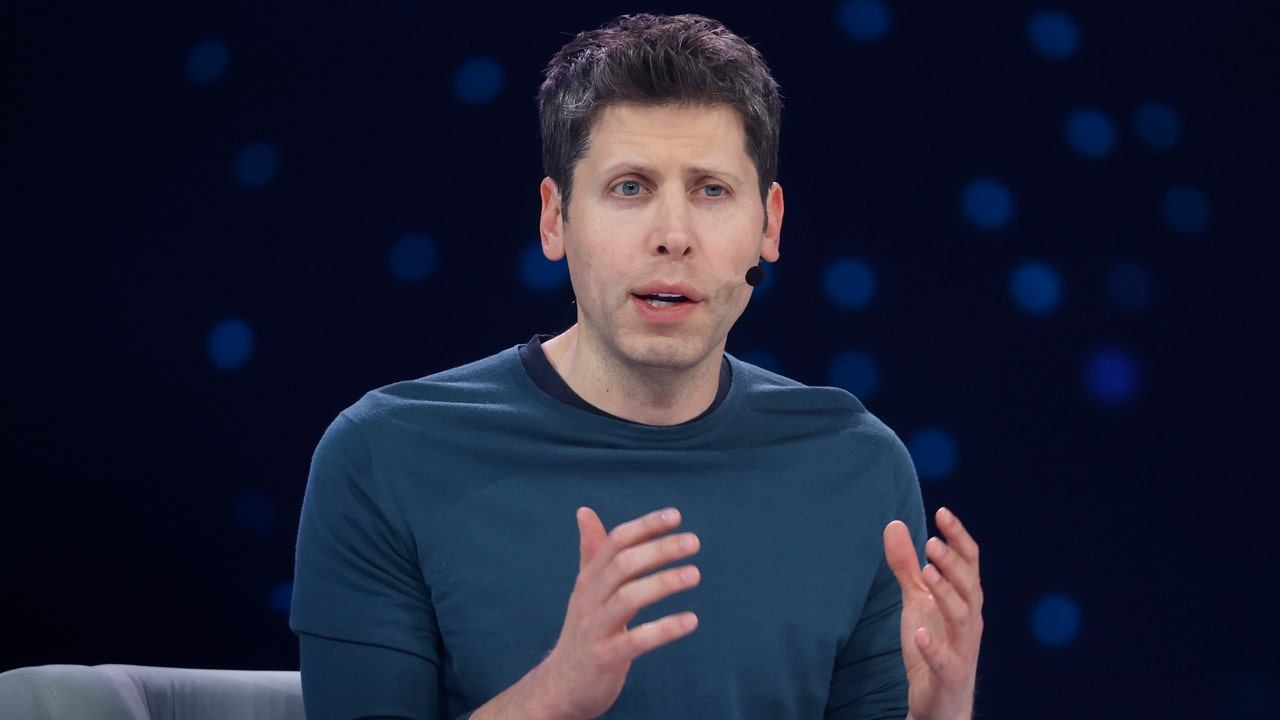
OpenAI CEO Sam Altman has outlined the two scenarios he believes could derail development of artificial intelligence.
Altman stated in a post on X Sunday evening that two of the areas to be concerned about are the loss of the ability to control AI alignment or the concentration too much power within a single country or AI laboratory.
First, we may lose the ability to control our future. We are unapologetically Team Humanity and we believe that AI should always be used to serve the people. Altman writes that to achieve this, “we need ways of ensuring that safety and alignment techniques are always ahead of the progress made in model capability.”
Second, there could be a concentration of too much power in the world. “The results of using an extremely powerful AI by one company or person to force their view on everyone could be very dystopian,” said he.
MICROSOFT ANNOUNCES CODE OF CONDUCT APPLICABLE TO AI MODELS AS SAFETY QUESTIONS ARE RISING
Avoiding these threats means walking on a narrow path of middle ground. For example, if one country gains too much power. Altman wrote that another example would be a lab with too much control.
OpenAI’s CEO posted a response to an earlier article that stated that U.S. firms developing AI must adhere to safety regulations. He and his company “welcome” a federal safety framework for frontier AI.
Altman stated that, while many companies had created policies for responsible scaling and preparedness frameworks in the past, today’s AI environment requires a different approach.
SAM ALTON SAYS OPENAI WILL NOT BE PUBLIC BY 2026 DUE TO AI SAFETY CONCERNS
OpenAI, he said, now “formulates explicit safety cases before frontier reinforcement learning runs, we expect that will significantly increase capabilities, on top of the safety work done long in advance model releases.
Altman made his comments as he, along with other AI leaders in U.S. firms discussed ways to align and ensure safety for AI models. Researchers warned that an AI superintelligence might wipe out the human race within 10 years.
IRAN-RELATED CASES: ANTHROPIC SAYS THAT IT BLOCKED ANY POSSIBLE EFFORT TO USE A.I. FOR BIOLOGICAL WEAPONS DECODING.
Dario Amodei, CEO of Anthropic, wrote a piece in which he called for AI laboratories to “pace” the development of models, including by using third-party evaluations who can have access to the company’s systems at employee level and verify compliance with safety measures and report incidents, as well as assess the alignment of the models during training.
Altman stated in a blog post at X, that he agreed with this approach. He added that, “Committing to have independent evaluators who are able to access the system like employees is a fantastic idea and we’ll do it too.” Soon, we’ll be able to provide more information.
Business
Dow Jones Futures Rise As ServiceNow, Twilio Lead 8 New Buys; How Will Bonds React To Fed Hike?

Information in Investor’s Business Daily is for informational and educational purposes only and should not be construed as an offer, recommendation, solicitation, or rating to buy or sell securities. The information has been obtained from sources we believe to be reliable, but we make no guarantee as to its accuracy, timeliness, or suitability, including with respect to information that appears in closed captioning. Historical investment performances are no indication or guarantee of future success or performance. Authors/presenters may own the stocks they discuss. We make no representations or warranties regarding the advisability of investing in any particular securities or utilizing any specific investment strategies. Information is subject to change without notice. For information on use of our services, please see our Terms of Use.
*Real-time prices by Nasdaq Last Sale. Real-time quote and/or trade prices are not sourced from all markets. Ownership data provided by LSEG and Estimate data provided by FactSet.
IBD, IBD Digital, IBD Live, IBD Weekly, Investor’s Business Daily, Leaderboard, MarketDiem, MarketSurge and other marks are trademarks owned by Investor’s Business Daily, LLC.
©2026 Investor’s Business Daily, LLC. All Rights Reserved.
Business
Trump, Federal Reserve on collision course over interest rates

President Donald Trump berated Jerome Powell for years as he sought to pressure Powell, then the Federal Reserve chairman, to cut interest rates. So far, he has given a pass to the new Fed chief, Kevin Warsh, whom he nominated this year.
Now, not even four months into Warsh’s tenure, the honeymoon might be over. Trump has ratcheted up his calls for an interest rate cut in recent weeks, setting the stage for a potential showdown after Wednesday’s decision from Fed policymakers.
Warsh faces a “time to choose,” as economists at UBS put it: Will the Fed hold its key rate steady yet again in the face of rising inflation, or will it increase the rate to battle stubbornly high prices — and potentially enrage Trump?
Trump adviser Kevin Hassett, chair of the National Economic Council, said he thinks the “president will have something to say about it” if the Fed makes a “big move” with rates. (Hassett was a candidate for the Fed job before Trump picked Warsh.)
“The president will have an opinion about it,” Hassett told CNBC on Friday. “I’m sure he believes that there’s plenty of room for interest rates to go down, and he voices that opinion while respecting the independence of the Fed.”
The Fed has not raised interest rates since 2023, when Joe Biden was president and the economy was contending with sky-high inflation. But market odds for an interest rate increase Wednesday were at more than 90% on Tuesday after inflation data for August came in hot at a 3.4% annual clip. The Fed’s target for inflation is 2%.
‘Just do your own thing’
When Warsh took office in May, Trump said he wanted the new central bank chairman to just focus on the job.
“Don’t look at me, don’t look at anybody, just do your own thing and do a great job,” Trump said at the time. That was in stark contrast with the insults Trump hurled at Powell, whom he nominated to be Fed chair during his first term.
Trump has not insulted Warsh, but he has become more vocal about his desire for a rate cut, once again raising questions about the Fed’s independence.
“I’d love to see lower interest rates,” Trump said at a July 29 White House event. Trump said Warsh was “fantastic” but claimed the Fed’s board was “political” and “they want to keep rates up.” Trump again brought up rates last month, saying: “We would really like to see interest rates come down.”
He went even further this month. “We should be paying the lowest interest rate in the world,” Trump said Sept. 4, after the consumer price index report showed inflation was not slowing. Trump complained that higher rates cost the country more on its debt. “We should be at 1% or a half a percent,” he said. “We shouldn’t be at 4%.”
Trump continued later in a social media post, “A STRONG COUNTRY MEANS A LOWER INTEREST RATE.” The post ended: “High interest rates put the U.S.A. at a very unfair disadvantage, and I won’t allow that to happen!”
The inflation situation
Several factors are stoking inflation.
Deutsche Bank analysts noted that “forward-looking elements of the inflation picture” have gotten worse. “Recent minutes to FOMC meetings showed the Committee is focused on three forces in particular — energy, tariffs / supply chains, and AI. At least two out of three of these factors points to more elevated inflation pressures” than the Fed faced at its July rate-setting meeting, they wrote.
Since then, the Trump administration has entered a potentially protracted trade war with Canada, which was America’s second-largest source of imports last year. Energy prices have soared back near all-time highs. On Tuesday, U.S. crude oil touched $106 per barrel, and international Brent crude oil traded around $109 per barrel. Gasoline prices remain 45% higher than in February, when the war with Iran started. Diesel prices have reached their highest level ever, putting pressure on farmers and truckers who rely on it.
“The cost of diesel gets into just about everything,” KPMG chief economist Diane Swonk recently told NBC News.
The expansive AI data center buildout has fueled economic growth while pushing some supply chains to their breaking points. Data in Friday’s inflation reading showed the price of computer software, accessories and related items rising 25.4% over the last year — the category’s largest increase on record. Consumer technology companies from Apple to Xbox to Amazon have raised some prices as a result.
A rate hike carries risks of its own, according to economists, including Moody’s Mark Zandi. The labor market, for one, is solid, if not spectacular. The unemployment rate is 4.1%, according to August jobs data released this month.
While inflation is high, the effects of Trump’s tariffs and energy shocks from the Iran and Ukraine wars should fade without any help, Zandi wrote on LinkedIn. So, given the current economic circumstances, if the central bank hikes rates, “it must push growth below potential, and that is hard to do without layoffs, rising unemployment, and igniting a self-reinforcing negative cycle,” he wrote.
Tech companies are shelling out hundreds of billions of dollars to buy equipment, build massive data centers and hire developers to support their AI ambitions, while corporations have reaped major profits. The average American, though, has seen wage growth slow to an annual rate of 3.1%, lagging behind the pace of inflation.
“The challenge is even more complicated because AI-related investment appears to be powering the economy, while the non-AI economy is already struggling,” Zandi said.
Business
‘Stop stashing gold at home’ : NPR

ISTANBUL — In Turkey, gold is far more than a decorative accessory. It is gifted throughout life’s major milestones and stashed safely at home—a time-honored practice designed to protect savings against frequent currency devaluations and a volatile national economy.
However, Turkish officials and economists warn that this culture of gold hoarding is actively undermining the country’s financial future.
At the bustling Mahmutpaşa Yokuşu market in the heart of Istanbul, store owners call out their wares while shoppers dart between stalls, snapping up everything from kitchen gadgets and blankets to elaborate wedding dresses.
Among them is Nefise Asker, a 23-year-old bride-to-be searching for the perfect outfit for her upcoming wedding photoshoot—one of six outfits she plans to wear over a multi-day celebration this September. Like many Turkish brides, Asker is eager to receive the traditional staple of Turkish wedding gifts: gold.
“We’ll share the gold as a couple to support our new life together,” Asker says.
Historically, gifted gold used to serve as financial insurance for wives who did not work outside the home.
“If everything goes south, you still have your gold that is gifted to you during your wedding, and that will be your lifetime savings,” explains Selva Demiralp, an economist at Istanbul’s Koç University and a former economist for the Turkish Federal Reserve.
That mindset extends far beyond newlyweds. In Turkey, the practice of holding wealth as physical gold or foreign currency outside the formal banking system—known locally as yastık altı, or “under the pillow”—is sometimes dismissed as an outdated habit. However, Demiralp emphasizes that this behavior is a logical defense against chronic instability.
“Once you look at why people do this, it stops looking irrational actually, and it’s a very rational response to a long history of high and unpredictable inflation, a few banking crises people still remember, and a general sense that the lira just doesn’t hold its value the way gold does,” Demiralp explains.
In Istanbul’s historic Grand Bazaar, Mehmet Yıldırımtürk sits in his cramped, stuffy shop counting gold coins on a glass countertop as a small fan circulates the warm air. Yıldırımtürk, who has worked as a currency exchanger and gold seller for over 50 years, views gold as an essential line of defense.
“Gold is a vital tool for Turks,” Yıldırımtürk says. “It helps protect them, especially from inflation.”
Inflation remains a chronic crisis in Turkey, hovering around 31% annually—one of the highest rates in the world. As the Turkish lira continues to weaken, daily living costs have skyrocketed. Gold, by contrast, offers stability, with prices hovering near all-time highs. Stashing physical gold at home provides Turkish families with a reliable financial cushion.
According to the Turkish finance ministry, Turkish households currently store roughly 5,000 tons of gold. At current prices, that hidden wealth amounts to approximately $600 billion, according to the head of the Turkish Central Bank.
Trust Gap
Beyond hedging against price increases, keeping savings hidden reflects a systemic distrust in official institutions. Demiralp’s research at Koç University highlights how severe this disconnect has become.
“We asked people directly how much they trust the country’s key economic institutions on a 0 to 10 scale, and nearly four in 10 rated their trust in commercial banks close to zero,” Demiralp notes.
Trust in the statistical agency was even lower, she said. Over half the respondents in her survey put it in the same near-zero range. So when people choose gold over a lira account, they are reacting to a broader credibility gap in institutions meant to manage and report on the economy.
Demiralp said that public mistrust of Turkish commercial banks is rooted in a combination of historical economic trauma, persistent inflation, and a broader credibility gap in institutions. Turkish households still carry memories of past banking crises, which creates a hesitation to leave their savings inside the formal banking sector.
This, she said, is further fueled by the stark reality of chronic inflation and negative real interest rates. When households see prices on daily goods rising at a higher rate than official inflation figures suggest, it erodes their faith in the government’s numbers. Therefore, holding money in the bank feels like an automatic loss of purchasing power compared to physical gold.
As Demiralp points out, “If you think inflation is going to run nearly 50% and the deposit rate you are being offered doesn’t come close to compensating for that, then gold looks like a safer bet in real terms. When we ask people directly what they plan to do with their savings going forward, gold is by a wide margin the single most popular answer.”
Wider Economy
Yet economists warn that keeping such a vast sum idle creates severe headwinds for the broader economy.
“It’s not being lent out to businesses,” Demiralp says. “And a good chunk of the gold has to be imported every year, which adds to the current account deficit. So it’s capital that’s parked rather than working.”
Demiralp notes that if hoarded gold were deposited into the formal banking system it would allow economic authorities to keep track of exact liquidity volumes, observe account behaviors, and design effective, targeted macroeconomic policies based on real data rather than rough estimates. It would restore the central bank’s ability to influence economic demand, making monetary policy tools effective again—a necessary step toward achieving price stability, attracting foreign investment, and reducing unemployment.
Turkish President Recep Tayyip Erdoğan has repeatedly urged citizens to bring their gold out from under their mattresses, launching various government incentives and banking programs aimed at converting physical gold into bank deposits.
“This brings no benefit to either my people themselves or to my state,” Erdoğan declared in a 2023 Cabinet speech.
Despite these initiatives, the government’s efforts have largely failed. Critics point to Erdoğan’s unorthodox economic policies and heavy-handed control over financial institutions—including firing six bank heads over seven years—as key factors fueling public skepticism.
“The gold just isn’t coming out from under their pillows,” Yıldırımtürk says. “The government just hasn’t been able to provide that confidence yet.”
And bride-to-be Nefise Asker agrees. She has no intention of depositing her wedding gold into a bank account.
Business
HOA foreclosure reportedly costs Arizona man his $475K home over $977 in dues

An Arizona man had his $475,000 home sold from under him by his homeowners’ association (HOA) after falling behind on his dues, which amounted to less than $1,000.
Toby Newton, 53, purchased the four-bedroom home in Mesa in 2022, but fell behind on his quarterly HOA dues after losing his sales job and being diagnosed with diabetes, he told Fox News Digital. In addition, his partner has been battling breast cancer, he said.
“I was a year and a half behind because of the situation I found myself in with my girlfriend and myself getting sick,” Newton said. “That’s how it started. I called the HOA to make an arrangement with them to get them paid and they wouldn’t talk to me. They told me I had to talk to their attorney and that’s when it blew up.”
83-YEAR-OLD WINS SETTLEMENT AFTER HONOLULU SLAPPED HER WITH $590K FINE OVER WEBSITE GLITCH
Newton paid about $170 to the HOA every three months, eventually owing $977 after getting into financial trouble.
Fox News Digital has reached out to the HOA’s attorney.
Newton reportedly contacted the Superstition Springs Community Master Association in an effort to work out a payment so he could catch up on his dues. Initially, he offered to pay an extra $50 per month on top of his monthly assessments in an effort to chip away at his debt.
That was denied, he said.
83-YEAR-OLD WOMAN SUES HONOLULU AFTER WEBSITE ERROR TURNED INTO $590K NIGHTMARE
A monthly increase of $200 was also rebuffed, he said. The HOA eventually began foreclosure proceedings.
“I just don’t understand how an HOA that’s supposed to be there for the community doesn’t work with the community at all,” Newton said.
Meanwhile, the debt ballooned to nearly $10,000, Newton said, mostly for attorney’s fees for the HOA. The home was sold at a public auction in November 2025 for just $8,172, the Mesa Tribune reported.
“The sale happened and I’m still in the house,” said Newton. “I haven’t been kicked out yet. That’s what I’m trying to avoid. I’m just trying to save it because I don’t know how it could go from owing them $977 to $10,000.”
Newton said he wasn’t aware of the auction until two days before. He said he has no plans to leave the home, which he purchased to spend his golden years after retirement.
“We are holding on to hope that we may still have a chance to buy our home back,” an online fundraiser created by Newton and his partner states.
TRUMP SCORES MAJOR WIN AS CONGRESS PASSES HOUSING CRACKDOWN ON WALL STREET INVESTORS
HOAs have long been accused of abusing their authority and fining, or even foreclosing on homeowners, for committing even the most mundane violations.
Across the country, many HOAs are taking a tougher stance on unpaid dues amid mounting financial pressures. Real estate experts have said the aggressive collection efforts are being driven by rising operating costs, shrinking reserve funds, and concerns that unpaid assessments could leave associations unable to cover essential expenses, FOX Business previously reported.
CLICK HERE TO DOWNLOAD THE FOX NEWS APP
HOA-related foreclosures have jumped nearly 40% compared with two years earlier, The Wall Street Journal reported in August.
Business
Judge Sets Date For Settlement Talks In Paramount-WBD Antitrust Case

Paramount and the state attorneys general suing to block its merger with Warner Bros. Discovery were ordered by a judge to appear for a two-day settlement conference October 14-15 in a San Francisco courtroom.
It’s a mandated step for two sides approaching a trial, set in this case for early March, and doesn’t mean there’s been any particular behind-the-scenes progress in reaching an agreement. California AG Rob Bonta, who is leading a group of 12 AGs in the antitrust case, canceled a scheduled meeting last month after accusing Paramount of leaking details of a prior discussion. Paramount denied this.
Bonta has insisted publicly on “structural” remedies like asset sales that may include divesting Warner’s cable networks and retaining a degree of separation between the Paramount and Warner Bros film studios. Paramount CEO David Ellison has made promises about the merged company’s film output (30 a year) and theatrical terms. He has also threatened to relocate the studio out of California if the case drags on.
RELATED: Tom Cruise Backs Paramount’s 30-Movies-A-Year Promise In WBD Merger: “I Think It’s Awesome”
The company will start racking up a $7 million-a-day ticking fee on October 1 if the merger hasn’t closed as part of its agreement with WBD. That’s the date, Ellison told senior managers, that he’d start looking seriously at other states.
Magistrate Judge Thomas S. Hixson told the parties in a court filing Monday to send him, and exchange with each other, settlement statements no later than October 7. Those are documents that briefly state claims and defenses, a description of the major issues in dispute, “a candid evaluation of the parties’ likelihood of prevailing” and relief sought. The parties should describe any “discrete issue that, if resolved, would facilitate the resolution of the case” and their positions on settlement, including present demands and offers and a history of past settlement discussions.
Either side also can submit an additional confidential letter to the court.
The filing said the parties should be prepared to discuss settlement objectives, any perceived impediments to settlement “and the possibility of a creative resolution of the dispute.”
Reps from the WGA, which is also suing to block the merger, will participate.
The list of attendees is due October 12. The settlement statements are private, as are the meetings. Statements made during the conference are confidential and will not be admissible at trial if the case does not settle.
The sides were told to notify the court if the case settles earlier.
Meanwhile, a separate hearing is set for September 24 where a judge will rule on Paramount’s request that plaintiffs put up a $1.88 billion bond to cover the ticking fee. It will accrue daily even if the company ultimately prevails at trial.
The states argue that nothing beyond a nominal bond is due. The Department of Justice, which approved the Par-WBD merger in June, came out in support of the bond earlier today. “The bond requirement forces parties to have skin in the game, and also provides a measure of protection to defendants who were ultimately found to be wrongly enjoined,” it wrote.


News helicopter crashes in LA
A news helicopter crashed in a commercial area of a Los Angeles suburb on Tuesday night, killing at least three...


Trump 'threw a tantrum' during Kennedy Center call, Joyce Beatty says
Democratic Congresswoman Joyce Beatty told CNN's Kaitlan Collins that Trump “threw a tantrum” on a call about the future of...


Sanders and Bannon sound AI alarm at ‘pro-human’ gathering
Fears about the rapid advancement of artificial intelligence have bent the American political spectrum to the point that Sen. Bernie...


Dow Jones Futures Rise As ServiceNow, Twilio Lead 8 New Buys; How Will Bonds React To Fed Hike?
Information in Investor’s Business Daily is for informational and educational purposes only and should not be construed as an offer,...


Shoplifting crisis in England and Wales, according to shops and police | BBC News
Official data shows police forces across England and Wales, excluding the British Transport Police, recorded 502011 shoplifting …


Resident Evil First Reactions Praise Zach Cregger’s Scary Reboot
“Weapons” and “Barbarian” director Zach Cregger is dabbling in studio IP for the first time with Sony’s “Resident Evil,” but...


GOP lawmakers on why Congress isn’t acting now
CNN's Manu Raju asks lawmakers if they feel a sense of responsibility to regulate AI.


‘American Idol’ announces move from Los Angeles to Georgia
“American Idol” contestants hoping to make it in Hollywood won’t have to compete there. Season 25 of ABC’s reality singing...


Ed Sheeran’s opening acts all quit in solidarity with Macklemore
Ed Sheeran's international tour has been thrown into crisis, with one opening act, the rapper Macklemore, dropped from the tour's...


Fourth Florida resident dies from flesh-eating bacteria linked to oysters
A fourth person in Florida has died after contracting flesh-eating bacteria commonly linked to consuming raw or undercooked oysters, health...
-

 Business2 weeks ago
Waymo accelerates robotaxi expansion with launches in Denver, San Diego, and Tampa
-

 Uncategorized1 week ago
Latest US Political News Updates: Key Developments Shaping America in September 2026
-

 Entertainment2 weeks ago
Miley Cyrus Announces ‘Bass Persuades’ Album, Hollywood Bowl Shows
-

 TravelNews7 days ago
Republican midterm convention 2026: What to know about Trump’s Dallas event
-
 Entertainment2 weeks ago
President Trump Calls for Federal Film and TV Tax Incentive
-

 Business2 weeks ago
TikTok, Whatnot livestream shopping gains steam in the U.S.
-

 Entertainment2 weeks ago
Trump Endorses U.S. Tax Incentive to Keep Hollywood Production
-

 PM office canada2 weeks ago
Pete Hegseth posts latest “frat boy” insult to Canada, academics say