
Food
Trump photo on Kennedy Center demolition cited in court filing

Brendan Smialowski | Afp | Getty Images
A new photo shows President Donald Trump eyeing a poster that appears to reference the John F. Kennedy Center for the Performing Arts being demolished, hours after he warned that the building “will end up being ripped down” if he is not properly recognized for his efforts to renovate it.
Rep. Joyce Beatty, the Ohio Democrat battling Trump over his efforts to get his name affixed to the Kennedy Center, notified a federal judge Thursday morning in a court filing about the image and the president’s threat.
Beatty, a day earlier, asked Judge Christopher Cooper to schedule an emergency hearing in U.S. District Court in Washington, D.C., on what she says is the “unlawful” closure of the Kennedy Center by its board of trustees in violation of a prior order by Cooper.
In her filing Thursday, Beatty’s lawyers told Cooper, “Plaintiff files this Notice to apprise the Court of two new pieces of evidence that came to light last night.”
“First, yesterday evening, in response to reporter questions regarding the Kennedy Center project, President Trump stated, ‘for the Trump administration, for me, to get involved, and to take on long term, and to carry it, or to raise money to carry it, I think that the Trump administration should certainly have recognition,'” the filing said.
“‘Because frankly, if we don’t do that, it’s going to close, it will end up being ripped down,'” Trump had said, the lawyers noted.
The attorneys added, “Separately, a photo has been circulated on social media depicting President Trump reading a placard on Air Force One that appears to read ‘Kennedy Center DEMOLISHED.'”
The filing included a copy of the photo and a blown-up version showing the letters “DEMOLIS.”
“Given the emergency nature of this matter … Plaintiff wanted to make sure the Court and Defendants are aware of this new information,” Beatty’s lawyers told Cooper.
The Department of Justice, soon afterward, told Cooper in its own court filing that Beatty’s request for a hearing should be denied, saying that the center’s executive director Matt Floca on Wednesday had “decided to temporarily close the Center due to ‘acute risks to public safety resulting from continued structural deterioration at the center.”
The closure will last for seven days, unless extended, while Floca assesses safety risks, according to declaration by the executive director that the DOJ filed with the court.
The DOJ’s attorneys noted that Cooper in May had enjoined Trump and the board from taking steps to effectuate the board’s March 16 decision to close the center for repair and restoration.”
“Defendants are in compliance with this order and, after two recent Board votes, intend to move for dissolution of the preliminary injunction to allow for the closure necessary to complete the restoration and renovations,” the DOJ said.
“No part of the Court’s preliminary injunction order forbids a temporary closure like this
one,” the filing said.
“There is no emergency caused by Defendants’ temporary closure of the Center; the only emergency is the risk to the public and the Center’s employees and artists if it remained fully open without further safety assessment,” the DOJ attorneys told Cooper.
Cooper has yet to rule on whether to hold a hearing on the issue.
Brendan Smialowski | Afp | Getty Images
The center’s closure came after Cooper on Tuesday rebuffed a new effort by the Kennedy Center’s board of trustees to honor Trump by putting his name on the center in recognition of planned renovations to the building. The board voted to close the center for renovations after Cooper issued his order.
Trump later Tuesday said the center would close immediately, and that planned renovations and reconstruction would not occur until Cooper’s initial ruling barring the addition of Trump’s name to the center was reversed by either a federal appeals court or the Supreme Court.
The White House did not immediately respond to a request for comment about the photo.
In a statement Wednesday, Beatty’s lawyers said, “Closing the Kennedy Center without Judge Cooper’s approval appears to directly violate his order. This is an assault on the rule of law.”
“The board cannot simply ignore Judge Cooper’s rulings whenever it suits them. In this country, no one — including the president — is above the law,” the attorneys, Norm Eisen and Nathaniel Zelinsky, said.
Two nieces of former President Kennedy criticized Trump’s stance on the center.
“This is a tragedy,” said Kerry Kennedy, the daughter of late Sen. Robert F. Kennedy in an interview with CNN on Tuesday, following the vote by the board to close for renovations.
“The American people love the Kennedy Center, they love the arts, they understand what’s going on, they see the corruption of this,” said Kennedy, whose brother, Robert F. Kennedy Jr., serves as secretary of Health and Human Services under Trump.
On the same day, Maria Shriver, whose mother is President Kennedy’s sister, in an X post wrote, “And so here we are. This statement from Trump blows my mind.”
“That a sitting president would not let any renovations to a public building go on unless he gets to first put his name in the said building… What a sad state of affairs. What a tragedy. Actually, how small minded, how narcissistic,” Shriver wrote. “Actually great men, devoted to public service and the public good do not act like this. It seems that this man will not rest until his name is permanently connected to the name of a great president, whose memory this building was dedicated to.”
“Imagine spending your time and your days focused on this, as everyday Americans struggle with healthcare, gas prices, rent, and food. Imagine spending your days focused on this, while a war rages under your leadership,” Shriver wrote.
Food
Former ‘Alligator Alcatraz’ detainee says he was placed in phone booth-sized cage for 15 hours

For around 15 hours, immigration detention officers kept Raúl Suárez Herrero confined in a cage slightly larger than a phone booth, where he feared snakes and endured mosquitoes in the middle of Florida swampland, the former detainee alleged.
Suárez, 59, told José Díaz-Balart in an interview for Noticias Telemundo’s “Ahora 360” that he was forced into the cage, measuring 7 feet, 9 inches high and 4 feet, 3 inches square, for praying out loud for an ill young man at “Alligator Alcatraz,” an ICE detention site.
“I feel like I was in hell,” Suárez later told NBC News in a phone interview from Mexico, where he was deported.
Suárez spoke days after a Department of Homeland Security watchdog confirmed the use of the phone booth-sized cages at the now-shuttered Florida detention camp in a Sept. 11 report.
“The use of such restrictive spaces is highly unconventional and does not align with standards for humane treatment,” the report said.
The DHS Office of Inspector General report documented its inspectors’ findings during an unannounced January visit to the Ochopee, Florida, site.
In December, Amnesty International issued its own report on conditions at the detention site based on interviews with detainees and its own tour of the facility. The organization detailed the use of the small cages and said it amounted to torture.
The facility staff told inspectors that the cages were “calming areas” where immigrants could de-escalate and have time alone and that no one spent more than two hours inside them.
But Suárez told Noticias Telemundo that “they took me there and I spent more than 15 hours inside in that little hole,” referring to the small cage. He said he was forced in around 1 p.m. and taken out at about 5 a.m. “when morning was breaking.” According to Suárez, the cage was in a recreation area where detainees took exercise time. Suárez said he couldn’t stretch out on the cage floor and got little sleep for fear of what might slither into the cage.
“I had to be careful because on the ground there were snakes and you don’t see them. You can’t fall asleep because they can come into the cage,” Suárez said in a video interview.
DHS did not directly address Suárez’s allegations or case in response to questions from NBC News. But a spokesperson rejected “claims that there were ‘inhumane’ conditions” at the immigrant detention center. Those claims are “categorically false” and any allegations of excessive use of force are “FALSE,” the spokesperson said in an email.
“No detainees were being beaten or abused,” the DHS spokesperson said. DHS provides long-standing medical, dental and mental health services, three meals a day that are evaluated by certified dietitians, clean water, clothing, bedding and hygiene products and access to phones to talk with family and lawyers, the spokesperson stated.
Alligator Alcatraz’s standards were consistent with those under other administrations, the spokesperson also said. Further questions were referred to the state of Florida, “as this facility was managed by the State of Florida through the Division of Emergency Management.”
The facility in the heart of the Everglades was built by Florida Gov. Ron DeSantis as part of the state’s push to support President Donald Trump’s aggressive immigration crackdown.
Alex Lafranconi, a spokesman for DeSantis, has dismissed criticism of the small cages. Lafranconi has described the small cages as a confinement area for “violent criminal aliens who have proven they cannot remain peaceful,” and said “we’d make them smaller, if we could.”
Although DHS said the inspector general “indicated” all recommendations have been administratively closed, the OIG said in its report that the administration did not address its 10 recommendations, including that it “discontinue the use of the small metal enclosures to hold detainees for any reason or amount of time.”
The OIG also said that at the time of the inspection, all the detainees were ICE detainees and there was evidence that ICE had some degree of oversight authority and engagement at the facility.
Originally from Cuba and in the U.S. since he was 12, Suárez was detained by ICE in July 2025 during an ICE check-in.
Before it was recently ordered closed, Alligator Alcatraz had been denounced by multiple detainees and legal and immigrant advocates for its conditions.
The detention facility’s records state the average time people were placed in the smaller cages with metal fencing was 59 minutes and 27 seconds, according to the OIG report. But the OIG said it could not confirm or refute ICE officials’ assertions regarding use of the enclosures or detainees’ allegations they had been denied food or other abuses.
The small cages at the facility were supposed to be a “safe and secure place” where people could “reflect on their behavior choices, manage their emotions, reduce stress, and practice self-directed behavior,” according to the detention camp’s policies, the report stated.
According to detention center records cited by the OIG, 79 people were held in the small cages during the period of July 17, 2025, to Jan. 18, and none were held more than two hours. Detainees in the small cage “may leave at any time by detainee request or per staff directive,” according to the report.
But Suárez was adamant that his confinement was not voluntary and lasted far more than two hours.
“Everybody lied” about the small cages, Suárez said, disputing that he could have gotten out or requested to be let out.
He said he was forced into the cage after praying out loud for a man who had an epileptic seizure as they were waiting to get registered at the detention camp.
Help for the man was taking “too long,” according to Suárez. That’s when he said he started praying aloud, as he used to do at the evangelical church he attended before his arrest.
“I asked God for the young man’s life,” he said.
Suárez alleged two guards then forced him to stand up, asked where he was from and then grabbed him and dragged him “all the way back to where that little cell was.” He said he was kicked in the leg so hard he thought they broke it. “My leg was so big and black.”
“They just dropped me over there and locked the doors,” he said. He said he got no medical treatment for his leg or a medical evaluation after the confinement.
Suárez said his experience has left him psychologically “shattered.”
Suárez was removed to Mexico in February after more than four decades of living in the United States. He was detained on July 16, 2025, when he went to an immigration check-in.
Suárez had been ordered removed from the U.S. in 2000 after serving a prison sentence stemming from a plea agreement on a drug charge. Because Cuba was not accepting U.S. deportees then, Suárez was released and told to check in with ICE annually, a court document states. Cuba has allowed few of its citizens to return after U.S. deportation.
An attorney attempted to get Suárez released from detention. The federal judge had given DHS until late January to remove him or release him, but the judge then extended the government’s time for two weeks. On the deadline date, Feb. 11, DHS deported Suárez to Mexico and the judge closed the case.
“Forty-seven years. They took me to the U.S. as a 12-year-old, when I was a child,” Suárez said. “I was raised my whole life there [in the U.S.]. I’m bilingual and everything. I went to school there and everything. And everything happened from one moment to the next. I still can’t absorb what happened.”
Suárez said he had been a truck driver since he was 17 and had built his own truck driving business with his brother, an American citizen, who died in 2021 from Covid. His father had died in Cuba when he was 3 and his mother, who became a U.S. citizen, died about a decade ago.
When immigration laws were toughened in 1996, making legal residents deportable for certain crimes, he could no longer seek U.S. citizenship, he said.
His mother had urged him to get citizenship, but he didn’t do it, he said.
“I was pretty young. When you are pretty young, you don’t listen to anybody,” he said. He had no other encounters with law enforcement, he said. He said he’d been living a normal life, preparing to buy a house and had a girlfriend.
“Life is changed. I don’t know what is going to happen here in Mexico.”
Food
RFK Jr promises anti-vaxxers a ‘friend at the White House’ amid deadly measles outbreak

As the death toll from the worst measles outbreak in decades rises, Robert F Kennedy Jr headlined the Washington DC conference of the anti-vaccine organization Children’s Health Defense, which he led for nearly two decades.
“Let me be clear. You have a strong and steadfast friend at the White House,” Kennedy, now serving as secretary of the US Department of Health and Human Services (HHS), told anti-vaccine activists at the conference in a nearly hour-and-a-half-long speech. He urged patience, saying that he would’ve made sweeping changes “on day one” but that he had to follow the law in order to make permanent change.
“But as I said, you have friends in the White House, and we are doing this one day at a time,” Kennedy said.
He only addressed the measles outbreak, which recently killed four people in Pennsylvania, once.
“In our country we care about rare illnesses and deaths. We care about every child who dies from measles. They get headlines,” he said. “I’d ask you to care about children who are dying or suffering or being injured by vaccine injuries.”
Recent polling suggests that one quarter of Americans now have doubts about the measles, mumps, and rubella (MMR) vaccines following a years-long campaign against immunizations by once-fringe actors. But the majority of Americans also disapprove of the Trump administration’s handling of the widening measles outbreak, which killed three people in Texas and Arizona last year in addition to those inPennsylvania.
Kennedy described “vaccine-injured children” as “damaged” because of diagnoses of allergies, asthma, ADHD and autism, among other conditions. He also claimed that diabetes, sudden infant death syndrome, and anorexia can be side effects of routine vaccines, and he said that the system to track such effects is “broken”.
There is little daylight between Kennedy and his former organization. “I spent 40 years in these battles,” Kennedy said. “I intend to stay in this fight as long as I am able.” He thanked his friends who are still at CHD.
Longtime anti-vaccine activists celebrated their unprecedented role in the national conversation, at times expressing astonishment over the ways anti-vaccine sentiment has been elevated to the highest levels of the US government.
“We have an opportunity today to speak to our colleagues and our friends in mainstream media,” the CEO of the Children’s Health Defense, Mary Holland, said at the event on Thursday.
Andrew Wakefield, a former gastroenterologist whose medical license was revoked after he was found to have fabricated research indicating a link between vaccines and autism, spoke before and immediately after Kennedy.
“I could not have imagined two years ago that Bobby [Kennedy] would be in the White House and that President Trump would be saying ‘divide up the MMR into three different’,” said Wakefield, who proposed the same strategy years earlier when he attempted to patent his own single measles shot to compete with the MMR. He stopped to laugh. “What drug was I on that morning?”
Anti-vaccine activists had become nervous earlier this year after the White House reportedly put the kibosh on speaking about vaccines before the US midterm elections. “February, March, April, May, vaccine reform got a little quiet, a little scary. You know, behind the scenes, we’re like, “Yeah, what happened?” said Michael Kane, CHD’s director of advocacy.
But recent months have shifted vaccines back into the spotlight.
“Just a few years ago, we were the, you know, hated stepchild in the corner,” Kane said. “Now we are a national movement that isn’t going anywhere.”
The organization laid out its policy agenda, including plans to challenge state-level immunization requirements for school attendance, to recruit younger people to the aging organization, and to combat the installation of cell phone towers for fears of 5G and 6G. Several speakers explicitly linked vaccination to autism, despite decades of research showing no connection.
Meanwhile, Kennedy also focused on the role of food systems in health, and touched on efforts to study electromagnetic fields and chem trails.
He praised researchers at the University of Southern Denmark, who are now under investigation by their institution, as “the deities of vaccine research”. Kennedy attempted to fund their project in Guinea-Bissau looking at mortality after hepatitis B vaccination before local authorities cancelled the project. Their prior work on vaccines has been called “a house of cards” by other researchers.
Mark Gorton, president of the Maha Institute, referred to himself as “the boldest anti-vaxxer in the anti-vax conference”, adding that “only anti-vaxxers can speak clearly enough to raise awareness.”
Being called the “largest anti-vaccine conference, probably in the world” is “a red badge of courage”, said sen Ron Johnson, a Republican from Wisconsin. Johnson and Sen Rand Paul, a Republican and physician from Kentucky, both rehashed grievances over the Covid pandemic and the immunizations that were rapidly deployed to stem the tide of illness and death.
Republican congressman Thomas Massie said he called Donald Trump soon after the election to ask for the agriculture secretary position. Trump asked, “Are you friends with Bobby? Is he too much for HHS? Don’t you think we need some vaccines?” Massie recounted. Kennedy was nominated to HHS the next day, he said.
Massie offered two pieces of advice to the anti-vaccine activists: Instead of trying to get rid of “clowns”, he said, “get the clowns who are here to do what you want. Get them to get in the clown car you want. And use pressure. Treat them like cattle.”
Coverage of the measles outbreak is a “psy op” that is “meant to control what I think, what I do, what I believe, and what my attitude towards Bobby Kennedy ought to be,” said Tony Lyons, the publisher of books from Kennedy who now heads Maha Action.
Kennedy was frequently invoked as a hero of the movement at the conference. “The truth is, he really is dangerous,” Lyons said, invoking the common refrain from scientists and experts. “I think Bobby Kennedy is the most dangerous individual to this system who’s come along in a generation,” he said to a burst of applause.
Food
Fossil tooth analysis confirms Tyrannosaurus rex was warm-blooded
ATLANTA — Scientists have suspected for nearly 60 years that Tyrannosaurus rex was warm-blooded.
When a fossilized footprint of T. rex turned up in Alaska in 2022, it added to the evidence that these predators could thrive in frigid environments, where most cold-blooded reptiles could not. Now, researchers have put a number on just how warm tyrannosaurs likely ran: about 97 degrees Fahrenheit, or 36 degrees Celsius, similar to humans.
A new study published Wednesday in the journal Science Advances provides the first direct estimate of T. rex’s body temperature, using a technique that analyzes chemical signatures preserved in fossil teeth. The finding adds a crucial piece of evidence to the decades of research suggesting the giant predator was warm-blooded and capable of maintaining an active metabolism even in cold climates.
“It’s probably the most direct and least complicated constraint on the actual body temperature of a T. rex that’s been possible before,” said study co-author Robert Eagle, a geobiologist and associate professor at the University of California, Los Angeles.
Having an estimated body temperature for T. rex provides a better glimpse into what life was like for the dinosaur 69 million to 66 million years ago. “This was a warm-bodied organism, which really places new constraints on its behavior, its physiology, how it interacted with other species and how much food it needed, for example,” Eagle added.
So far, the technique has been used on a handful of ancient species, including other dinosaurs, woolly mammoths and megalodons, giving scientists a clearer picture of how extinct animals regulated their body temperatures in ancient climates.
The temperature is unusually high for a reptile, but Eagle said the number itself was not surprising. Dinosaurs, while classified as reptiles, share an evolutionary link with birds. The new number reveals that T. rex sits between the two — hotter than reptiles but colder than modern avians — and allows scientists to form new hypotheses about how exactly the prehistoric predator might have moved and lived.
Analyzing T. rex teeth
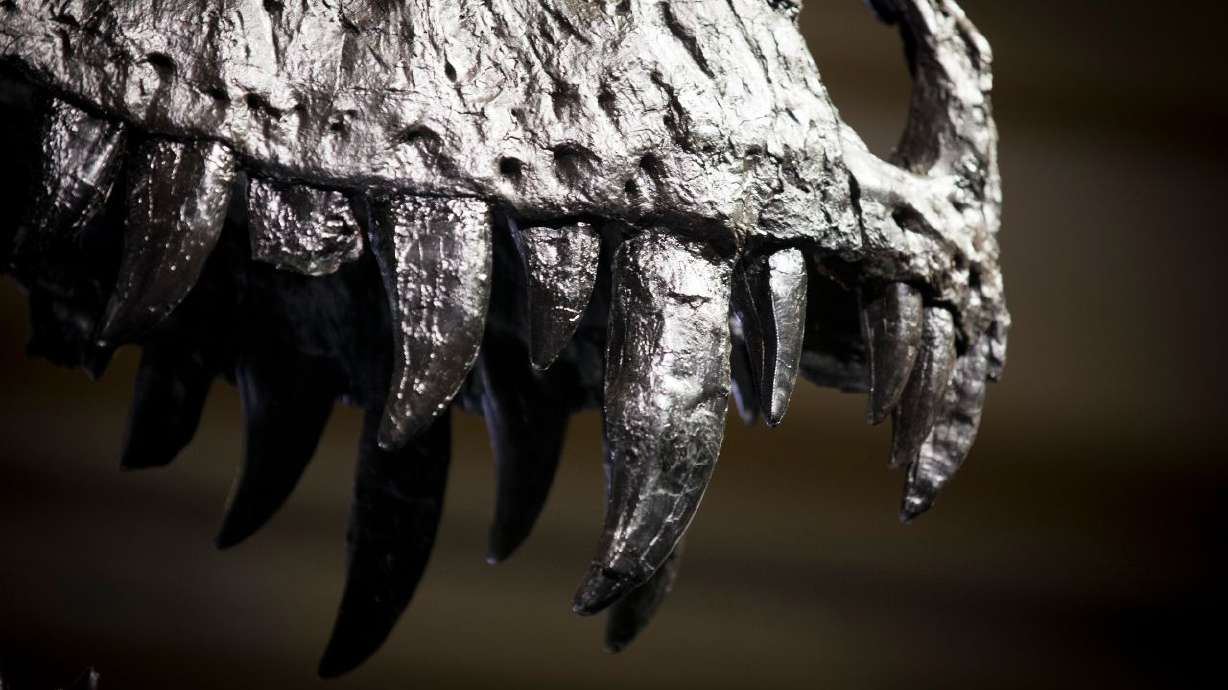
Eagle and a team of scientists used two small portions of teeth from Thomas the T. rex — an approximately 70% complete Tyrannosaurus rex skeleton held at the Natural History Museum of Los Angeles County — to estimate the dinosaur’s body temperature from chemical bonds preserved in its tooth enamel.
{#Thomas the T Rex}
The researchers spent more than a decade perfecting the method to make the measurement possible. Over the years, their work reduced the amount of fossil material needed by roughly 90%, enabling the museum to provide tiny samples of two teeth that weren’t on display.
“Nobody can measure a T. rex tooth unless you can show them you only need a few milligrams,” said senior study author Aradhna Tripati, a climate scientist and professor of geochemistry at UCLA.
“For an animal this famous, it is remarkable how little we actually knew. We had guesses about T. rex metabolism, mainly from bone and biomechanics. We did not have a temperature,” Tripati added in an email. “The enamel chemistry recorded the temperature at which it formed, and 66 million years later we can read it.”
The researchers essentially used the T. rex teeth as a prehistoric thermometer. Inside tooth enamel are different forms of the elements carbon and oxygen, called isotopes. These isotopes form bonds with one another at rates that depend on temperature — cooler temperatures produce more bonds, while warmer ones produce fewer. By drilling out a few milligrams of enamel and measuring those bonds, scientists could determine the temperature at which the enamel formed, revealing the T. rex’s body temperature.
This technique can be used on any part of the skeleton, but teeth work best because their hard enamel is less likely to change over millions of years, Eagle explained.
“We have wondered about whether dinosaurs were warm-blooded or not literally since the first time dinosaurs got their name,” said Vertebrate Paleontologist Thomas Holtz Jr., referring to Richard Owen’s 1842 paper, which introduced the name Dinosauria and suggested that dinosaurs might have had characteristics of warm-blooded animals.
Holtz added that while there has been various evidence supporting the idea that dinosaurs were endothermic, or warm-blooded, this new method offers another way to examine the question. Comparing T. rex’s body temperature with those of cold-blooded crocodiles and clams from the same time and place “gives high confidence that the values they find for Tyrannosaurus really show a high body temperature,” said Holtz, a principal lecturer in the department of geology at the University of Maryland. He was not involved in the study.
In the future, Holtz said it would be interesting to explore the question on whether all dinosaurs were warm-blooded. Using this method next on groups such as Triceratops, Stegosaurus and Brachiosaurus, which have sometimes been considered “cooler-blooded,” could help answer the question, he added.
T. rex was hotter than some modern mammals
Although T. rex was a reptile, its estimated body temperature of 97 F falls within the range seen in modern warm-blooded animals. Warm-blooded species vary considerably in body temperature. Some mammals, including sloths and anteaters, can have temperatures in the low 90s Fahrenheit (around 32 C), while small, high-metabolism birds can exceed 104 F (40 C), Eagle said.
Modern cold-blooded reptiles typically have body temperatures around 82 F to 86 F (28 C to 30 C). Eagle added that these temperatures align with animals’ energy levels — reptiles are often more idle, whereas birds have to expend a lot of energy while in flight.
A higher, regulated body temperature also would have helped T. rex stay active for longer periods.
“I don’t think T. rex is thought to be a particularly fast sprinter, but the implications of this are maybe that it could maintain an energetic performance over longer periods, probably, than a cold-blooded organism would be able to,” Eagle said. For example, “crocodiles can run over short distances, but they’re not able to keep it up for a long time.”
A warm-bodied T. rex supports the idea that tyrannosaurs were active predators with fast metabolisms. The dinosaur’s ability to maintain a high body temperature also would have allowed it to survive in cooler climates where cold-blooded animals could not.
“What the teeth tell us is that T. rex was warmer than the environment around it,” Tripati said. “A warm-blooded T. rex is a T. rex that can go almost anywhere on the continent, including the Arctic. That is a very different animal from a sun-basking reptile.”
To explore where the dinosaur could have lived, the researchers used paleoclimate models to reconstruct what temperatures were like across North America about 66 million years ago during the late Cretaceous. The researchers then considered those conditions alongside T. rex’s estimated body temperature. Their models suggested that the dinosaur could have inhabited a broad stretch of North America, from what is now Mexico to Alaska.
The high body temperature also implies that the T. rex would have had to pursue prey and eat more than other reptiles, such as the cold-blooded giant crocodiles of the Mesozoic, to keep up with their high metabolism, Holtz added.
Eagle said that researchers hope eventually to apply the temperature-measuring technique to other ancient species, potentially reaching even further back in evolutionary history.
“I think the ancestors of mammals are particularly exciting to look at. There are not great constraints about when warm-blooded mass occurred in the evolution of mammals,” Eagle said. “That’s in itself an extra challenge because then we’re getting even further back in time. But that would be really exciting if that works.”
Food
Researchers swap in human brain cells for a mouse’s cortex
In recent years, there has been a lot of excitement about the potential for studying human diseases in what are called “organoids.” These small patches of tissue, formed using stem cells, appear to produce many of the same cell types and at least some of the structures normally formed in actual organs, and thus can provide a better model for diseases that rely on the sometimes complex interactions among multiple specialized cell types that are a feature of the human body.
But even the most sophisticated organoids lack a lot of the features of a real human body. This is especially true for brain organoids, which don’t form any of the connections with specialized brain structures needed to behave “normally.” On Wednesday, a research group at Stanford University described a possible way to study brain organoids in a somewhat more natural context: They genetically wiped out a large portion of the mouse brain and replaced it with human brain organoid cells.
The replacements
Organoids, because they adopt a three-dimensional tissue structure and consist of various specialized cells, provide a much better model for an intact tissue than simply having a bunch of disassociated cells lying flat on a culture dish. But they still have a lot of limitations—they’re not hooked up to a circulatory system that allows the liver to process chemicals the organoid produces and don’t have immune cells moving through them, to give just a couple of examples.
This is especially limiting for studies of the brain, where any specialized structures are surrounded by structures that may exchange information with them, and often have long-range connections. An organoid is better than nothing, but it may not be a lot better if you’re interested in a disease that impacts communication among multiple brain regions.
One alternative has been to implant human neural stem cells into the brains of another species, where they’ll generally integrate into the nervous system and actively signal to their neighbors. But, given that those human cells are surrounded by the normally functioning neurons of their hosts, it’s not clear how much you can learn from this.
The obvious solution there is to get rid of the host cells and try to have the human cells take over their functions. But that option runs into all sorts of problems, largely related to the fact that the organism you’re implanting them into (generally a mouse) actually needs its brain cells. Human neurons mature much more slowly than those of mice and may not form the connections that are needed quickly enough for an animal that only requires 21 days of gestation. In the absence of normal mouse tissue, nothing would provide the human cells with the signals that help organize them into functional units.
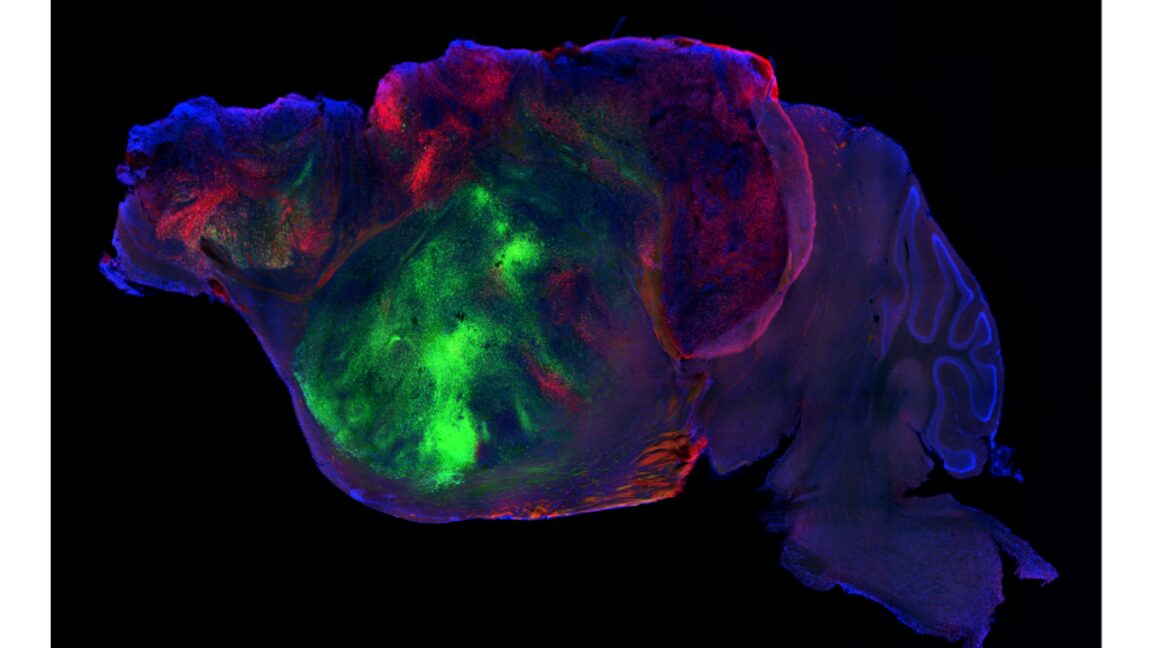
The Stanford team decided to test a compromise and delete a portion of the mouse’s brain and put human brain organoids in its place. But they took a bold step and chose the cortex as the portion they would delete. The cortex handles many of the complex features of the nervous system, such as decision-making and memory, and its disruption would be expected to have dramatic consequences. Still, the researchers found a gene that is active in almost all cortical cells and used it to drive the deletion of a key gene that’s needed to separate chromosomes during cell division.
Amazingly, despite killing off most of the cells that should go on to form the mature cortex and cutting the brain’s volume in half, it was possible for the mice to survive this. The researchers had to eliminate most of the other pups to ensure the cortex-free mice got enough nursing. They left them with their mothers to nurse longer and then provided them with very high-calorie food. But these steps allowed nearly full survival of mice without much in the way of a cortex. (The mice were also immunocompromised to avoid an immune reaction to human cells, but this is less of an issue in a sterile mouse care facility.)
With that in place, the researchers then started implanting human cortex organoids into the area where the mouse’s cortex was no longer developing.
Partial recovery
A bit over 85 percent of the animals that were implanted with a human organoid successfully incorporated the graft tissues. Those went on to contribute 92 percent of the cells found in the cortex of these animals. So, it wasn’t a complete replacement, but the human cells largely took over the space normally occupied by the cortex. Once there, they formed all the major types of neurons that are known to be present in the cortex. So, all that is good.
The human cells also formed some long-distance connections, as evidenced by the fact that processes from human cells were detected as far away as the spinal cord. And the neurons did engage in synchronized activity spikes, suggesting a degree of coordination.
The less good is a general lack of structure. There is some indication of local organization, in that specific cell types that form within distinct layers of a normal cortex tended to be near each other in the cortex of these animals. But there was no sign of those distinct layers being formed, suggesting that larger-scale organization is lacking.
What does this mean for the mice? Overall, it appears that having a disorganized human replacement cortex was better than having no cortex at all, but not as good as having a normally structured one.
The researchers set them loose in an area with video monitoring and then used a machine-learning classifier to group similar behavior patterns. Normal mice and the mice that had their cortex eliminated showed distinct patterns of behavior. The mice with a humanized cortex formed a third cluster, distinct from the other two. Similar things were true with body weight: mice that lacked a cortex were much lighter than normal mice, but the ones with the humanized cortex were intermediate between the two.
Tested for memory in a simple maze, the mice without a cortex performed at a level consistent with random chance. Mice with the humanized cortex did better than chance, but not as well as normal mice. But on a test of the ability to form associative memories, the mice with a humanized cortex did no better than the mice with no cortex at all. On tests of fine motor coordination, the mice with the human implants were again somewhere between the normal and cortex-free mice.
What’s needed
The research team hasn’t described the sort of careful study of anatomy and development needed to draw any conclusions about what structures may be formed by the human cells once they’re within the mice, much less tried to quantify any variation among individuals that might give us some hints of what sort of capacity these animals might be expected to have. As a result, it’s impossible to associate the mild improvements that come from having the human cells present with any specific function they’re providing.
As a result, this isn’t yet the sort of model system that can help us understand the sorts of complex neural diseases that we might ultimately be interested in using this for. They do show that the human cells respond differently to brief periods of hypoxia, consistent with what we see in normal human cells. But that’s quite a bit different from showing that this is a great model for something like ALS.
There remains a chance that it ultimately won’t be—that the sorts of disorganized connections that do get formed in these brains will never make them a good model for human neural processing. But without further characterization of what the cells are doing in these humanized cortexes, it’s going to be difficult to know.
Nature, 2026. DOI: 10.1038/s41586-026-11032-2 (About DOIs).
Food
Tooth analysis confirms T. rex was warm-blooded
Scientists have suspected for nearly 60 years that Tyrannosaurus rex was warm-blooded.
When a fossilized footprint of T. rex turned up in Alaska in 2022, it added to the evidence that these predators could thrive in frigid environments, where most cold-blooded reptiles could not. Now, researchers have put a number on just how warm tyrannosaurs likely ran: about 97 degrees Fahrenheit, or 36 degrees Celsius, similar to humans.
A new study published Wednesday in the journal Science Advances provides the first direct estimate of T. rex’s body temperature, using a technique that analyzes chemical signatures preserved in fossil teeth. The finding adds a crucial piece of evidence to the decades of research suggesting the giant predator was warm-blooded and capable of maintaining an active metabolism even in cold climates.
“It’s probably the most direct and least complicated constraint on the actual body temperature of a T. rex that’s been possible before,” said study coauthor Robert Eagle, a geobiologist and associate professor at the University of California, Los Angeles.
Having an estimated body temperature for T. rex provides a better glimpse into what life was like for the dinosaur 69 million to 66 million years ago. “This was a warm-bodied organism, which really places new constraints on its behavior, its physiology, how it interacted with other species and how much food it needed, for example,” Eagle added.
So far, the technique has been used on a handful of ancient species, including other dinosaurs, woolly mammoths and megalodons, giving scientists a clearer picture of how extinct animals regulated their body temperatures in ancient climates.
The temperature is unusually high for a reptile, but Eagle said the number itself was not surprising. Dinosaurs, while classified as reptiles, share an evolutionary link with birds. The new number reveals that T. rex sits between the two — hotter than reptiles but colder than modern avians — and allows scientists to form new hypotheses about how exactly the prehistoric predator might have moved and lived.
Analyzing T. rex teeth
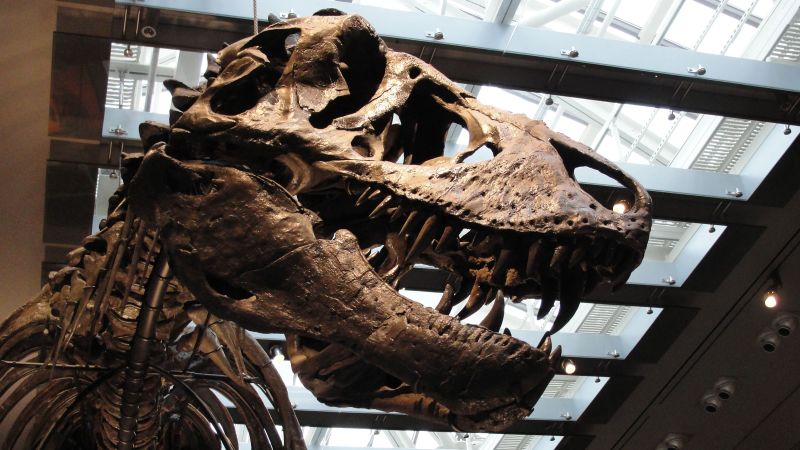
Eagle and a team of scientists used two small portions of teeth from Thomas the T. rex — an approximately 70% complete Tyrannosaurus rex skeleton held at the Natural History Museum of Los Angeles County — to estimate the dinosaur’s body temperature from chemical bonds preserved in its tooth enamel.
The researchers spent more than a decade perfecting the method to make the measurement possible. Over the years, their work reduced the amount of fossil material needed by roughly 90%, enabling the museum to provide tiny samples of two teeth that weren’t on display.
“Nobody can measure a T. rex tooth unless you can show them you only need a few milligrams,” said senior study author Aradhna Tripati, a climate scientist and professor of geochemistry at UCLA.
“For an animal this famous, it is remarkable how little we actually knew. We had guesses about T. rex metabolism, mainly from bone and biomechanics. We did not have a temperature,” Tripati added in an email. “The enamel chemistry recorded the temperature at which it formed, and 66 million years later we can read it.”
The researchers essentially used the T. rex teeth as a prehistoric thermometer. Inside tooth enamel are different forms of the elements carbon and oxygen, called isotopes. These isotopes form bonds with one another at rates that depend on temperature — cooler temperatures produce more bonds, while warmer ones produce fewer. By drilling out a few milligrams of enamel and measuring those bonds, scientists could determine the temperature at which the enamel formed, revealing the T. rex’s body temperature.
This technique can be used on any part of the skeleton, but teeth work best because their hard enamel is less likely to change over millions of years, Eagle explained.
“We have wondered about whether dinosaurs were warm-blooded or not literally since the first time dinosaurs got their name,” said vertebrate paleontologist Thomas Holtz Jr., referring to Richard Owen’s 1842 paper, which introduced the name Dinosauria and suggested that dinosaurs might have had characteristics of warm-blooded animals.
Holtz added that while there has been various evidence supporting the idea that dinosaurs were endothermic, or warm-blooded, this new method offers another way to examine the question. Comparing T. rex’s body temperature with those of cold-blooded crocodiles and clams from the same time and place “gives high confidence that the values they find for Tyrannosaurus really show a high body temperature,” said Holtz, a principal lecturer in the department of geology at the University of Maryland. He was not involved in the study.
In the future, Holtz said it would be interesting to explore the question on whether all dinosaurs were warm-blooded. Using this method next on groups such as Triceratops, Stegosaurus and Brachiosaurus, which have sometimes been considered “cooler-blooded,” could help answer the question, he added.
T. rex was hotter than some modern mammals
Although T. rex was a reptile, its estimated body temperature of 97 F falls within the range seen in modern warm-blooded animals. Warm-blooded species vary considerably in body temperature. Some mammals, including sloths and anteaters, can have temperatures in the low 90s Fahrenheit (around 32 C), while small, high-metabolism birds can exceed 104 F (40 C), Eagle said.
Modern cold-blooded reptiles typically have body temperatures around 82 F to 86 F (28 C to 30 C). Eagle added that these temperatures align with animals’ energy levels — reptiles are often more idle, whereas birds have to expend a lot of energy while in flight.
A higher, regulated body temperature also would have helped T. rex stay active for longer periods.
“I don’t think T. rex is thought to be a particularly fast sprinter, but the implications of this are maybe that it could maintain an energetic performance over longer periods, probably, than a cold-blooded organism would be able to,” Eagle said. For example, “crocodiles can run over short distances, but they’re not able to keep it up for a long time.”
A warm-bodied T. rex supports the idea that tyrannosaurs were active predators with fast metabolisms. The dinosaur’s ability to maintain a high body temperature also would have allowed it to survive in cooler climates where cold-blooded animals could not.
“What the teeth tell us is that T. rex was warmer than the environment around it,” Tripati said. “A warm-blooded T. rex is a T. rex that can go almost anywhere on the continent, including the Arctic. That is a very different animal from a sun-basking reptile.”
To explore where the dinosaur could have lived, the researchers used paleoclimate models to reconstruct what temperatures were like across North America about 66 million years ago during the late Cretaceous. The researchers then considered those conditions alongside T. rex’s estimated body temperature. Their models suggested that the dinosaur could have inhabited a broad stretch of North America, from what is now Mexico to Alaska.
The high body temperature also implies that the T. rex would have had to pursue prey and eat more than other reptiles, such as the cold-blooded giant crocodiles of the Mesozoic, to keep up with their high metabolism, Holtz added.
Eagle said that researchers hope eventually to apply the temperature-measuring technique to other ancient species, potentially reaching even further back in evolutionary history.
“I think the ancestors of mammals are particularly exciting to look at. There are not great constraints about when warm-blooded mass occurred in the evolution of mammals,” Eagle said. “That’s in itself an extra challenge because then we’re getting even further back in time. But that would be really exciting if that works.”
Taylor Nicioli is a freelance journalist based in New York.


US NFL fans sing Canada anthem in border city stadium. #BBCNews


Verified video shows wreckage of Saudi fighter jet shot down over Yemen. #BBCNews


Two-term Republican Gov on today’s GOP: ‘a bad frat party’
"The Republican Party to me today feels like sort of a bad frat party," Former Republican Kansas Gov. Bill Graves...


Five women feared dead after disturbing images found at Philadelphia home
At least five missing women linked to the home of a deceased erotic filmmaker and his son are feared dead...


Florida GOP congresswoman's new ad calls out Trump over immigration
Florida Republican Rep. Maria Elvira Salazar tells President Donald Trump in a new ad that Hispanic voters feel betrayed by...


Republican revolt against Trump grows ahead of the midterms
Several prominent Republicans are voicing displeasure with President Donald Trump and their own party ahead of the midterm …


Mustafa Suleyman on AI & China
Microsoft AI CEO Mustafa Suleyman speaks to CNN's Fareed Zakaria about why he thinks its time to “tone down the...


Score, highlights, stats, where to watch NFL game
9:31 pm ET DJ Moore injury update Tom Viera The Bills offseason acquisition was forced out of the game after...


Pilot ejects before F-16 fighter jet crashes during training
A US military F-16 fighter jet crashed in Grand Traverse County, Michigan, Thursday afternoon with the pilot ejecting, the Michigan...


Alexandra Daddario posts vacation bikini photos after Andrew Form split
Alexandra Daddario is soaking up some time away after a year of major changes. The 40-year-old actress shared a series...
-

 Uncategorized2 weeks ago
Latest US Political News Updates: Key Developments Shaping America in September 2026
-

 TravelNews1 week ago
Republican midterm convention 2026: What to know about Trump’s Dallas event
-

 Business1 week ago
What is So Hard About Behind-The-Meter Power For Datacenters? Part 1
-

 Business3 days ago
Suspected stolen Tesla drives onto Pacific Beach boardwalk after police chase
-
 Business2 weeks ago
TechCrunch Mobility: Tesla Cybercab hits the road – and a snag
-
 HealthNews2 weeks ago
Fall vaccines 2026: What to know about flu, Covid and RSV
-

 Business2 weeks ago
OpenAI’s new reasoning technique alarms AI safety experts
-

 Video7 days ago
Vance calls out El-Sayed over remarks about his family