

Business
Telehealth companies limit who gets weight loss drugs : NPR

For stories on healthy living, subscribe to NPR’sHealth newsletter.
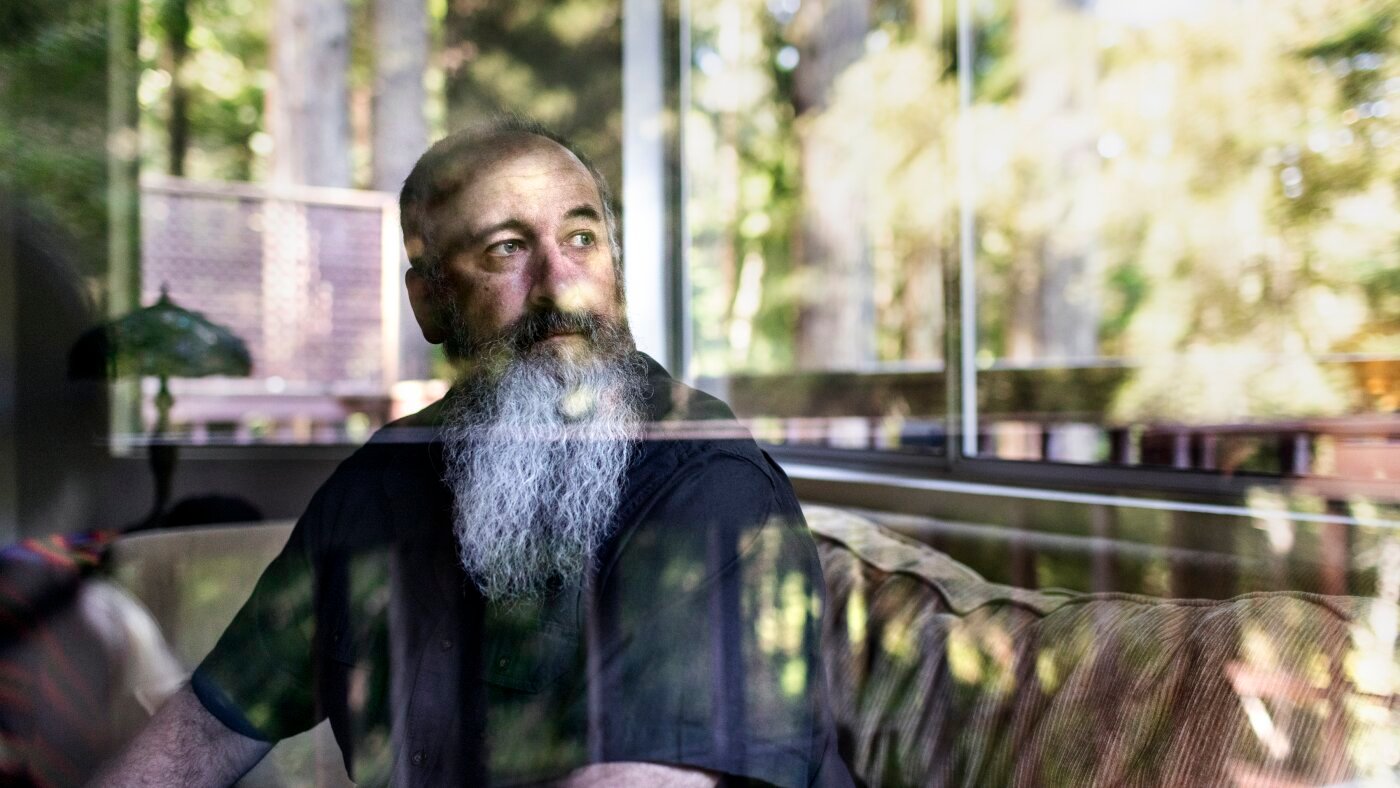
Every time David Davis talks to a nurse at Vida Health, he thinks he’ll finally get the OK for Zepbound.
And every time so far he has been wrong.
“I thought, ‘All right, I’ll go through their hoops — I’ll jump through their hoops,'” he says. “The more they wanted, the more frustrated I would get.”
The 57-year-old power plant worker who lives near Santa Cruz, Calif., had already gotten a Zepbound prescription from his primary care doctor last December to treat the obstructive sleep apnea that was leaving him exhausted every morning.
But before Davis could fill it, his company added a new requirement. He’d have to get a new prescription through Vida Health. The benefits team called Vida “a cardiometabolic weight loss solution” and framed it as a perk.
“Like we would want it,” Davis says.
Telehealth companies such as Vida Health and its rivals offer lifestyle support so people taking drugs like Wegovy and Zepbound can have the most success on the drugs. But the companies often have another job: limiting obesity drug costs for employers.
Davis was frustrated that he now had to work with Vida, but he did as he was told: He got new blood work, filled out health questionnaires and did video visits with a nurse.
The Vida Health nurse said he was a good candidate for Zepbound but insisted he try two generic drugs first: naltrexone, a drug used to curb alcohol and opioid use, and bupropion, an antidepressant. Neither drug is approved for obstructive sleep apnea.
Davis was discouraged and called his insurer’s patient advocate. “What’s the deal with this?” he recalls saying. “And the patient advocate said, ‘I’ve never heard of that, but that’s not a rule.'”
Davis eventually gave up and decided instead to pay out-of-pocket for a cheaper, compounded version of the drug made by an online pharmacy.
Vida Health didn’t answer questions about Davis’ care, despite his willingness to waive patient privacy. It also didn’t answer questions about how its business model works.
Instead, Vida said in a statement that its providers adhere to clinical eligibility criteria and plan sponsors’ coverage policies when prescribing medication: “At Vida Health, our top priority is delivering personalized, clinically appropriate care for every patient.”
In an emailed statement, Blue Cross and Blue Shield of Texas, which handles Davis’ insurance, said it “is committed to providing its members access to safe, appropriate, and effective health care within the benefits provided by their own health plan.” It wouldn’t comment on Davis’ situation but said it was reaching out to him.
Telehealth companies pivoted when obesity drugs became blockbusters
Telehealth companies like Vida Health existed before obesity drugs became blockbusters, says Jayne Hornung, the chief clinical officer at MMIT, a data company focused on the pharmaceuticals market. At the time, they provided extra support for Type 2 diabetes prevention and management. But that has changed.
“They’ve seen this opportunity in the larger market with the GLP-1s and all the wraparound services that they could provide,” she says. “And it’s just exploded.”
These telehealth providers are hired by employers that are looking to minimize how much they spend on their employees’ weight-related health care, including on obesity drugs, says Hornung.
The services are popular with employers. Exact numbers are hard to come by, but one company, Omada Health, told investors last month that its membership grew by 51% over the last year to more than a million people. The company said that at the end of 2025 it had “supported more than 150,000 members on GLP-1s, compared with more than 50,000 at the end of 2024.”
“Omada is neither a gatekeeper of GLP-1s nor are we a vending machine,” company President Wei-Li Shao says. “And you’ll find both extremes of that spectrum out there in the marketplace.”
He says Omada provides evidence-backed care with providers who already know what your plan will cover.
But MMIT’s Hornung sees it differently. She says the telehealth companies can be useful, but they also offer employers “utilization management under the guise of lifestyle intervention.”
“The endgame is to eventually get the patient healthy, get them on an exercise program and get them off the GLP-1s,” she says. “Employers don’t want to pay for this forever either.”
Primary care physicians raise the alarm
Dr. Catherine Varney is the obesity medicine director for UVA Health in Charlottesville, Virginia. When telehealth providers hired by employers to manage costs try to get her patients to come off their obesity medications, she’s alarmed.
“I’m like, whoa, whoa,” she says. “They’re offering medical advice outside the scope of their practice, and they’re pushing the patients to come off the medications when the evidence is clear in the research clinical trials that showed that when patients came off these medications, they regained two-thirds of their weight back, just the same as if you would come off blood pressure pills. Your blood pressure would go up. If you came off cholesterol pills, your cholesterol would go up.”
That’s what happened to one of Varney’s patients, 64-year-old Penny Byer, a homemaker who raised five children in Stuarts Draft, Virginia.
She started on Wegovy in April 2025 and got to a healthy body mass index. Then, Virta Health, a telehealth provider, was added to her family’s benefits package. Virta kicked her off the drug in December.
Her weight and her cholesterol returned to where they were before Wegovy.
“Everything’s come back with a vengeance,” she says. “After about a month of arguing back and forth with them and [they] just kept saying, ‘No, we’re not — no, we’re not prescribing it anymore.’ No matter what I done or papers I brought them or texts I sent them and — nothing mattered.”
Virta declined to answer questions about Byer’s care despite her willingness to give it permission to do so.
The company said its own research found that patients could sustain weight loss after stopping obesity drugs. That is at odds with a much larger systematic review published in The BMJ, formerly known as the British Medical Journal. That review included 37 studies and 9,341 patients, and it concluded that cessation of obesity medicines is followed by “rapid weight regain.”
The layered roles of telehealth services
Dr. Carolynn Francavilla, vice president of the Obesity Medicine Association, says programs like Vida’s can be helpful for some obesity-drug patients who like using telehealth apps for logging food and getting other support.
For example, Omada connected NPR with a user, Jackie O’Gorman of Pequannock Township, N.J., who says her Omada telehealth coaches helped her reach her goal weight and had become her “best friends.”
But requirements like regularly stepping on the scale and logging weight into an app don’t work for everyone, Francavilla says. For some people, that can be upsetting, especially if they have a history of disordered eating.
“If they don’t follow those rules, then they may no longer be eligible to get the medication. So that’s often a huge challenge and can be very distressing for patients,” says Francavilla, who is sometimes paid by drugmaker Eli Lilly to educate other health professionals about how its obesity medicines work. “And, you know, that’s not an evidence-based practice. That is not something that needs to be done to safely take these medications.”
Too often, she says, these telehealth companies seem to be prioritizing gatekeeping the medications and keeping costs down over the needs of patients.
Business
JetBlue is betting big on Fort Lauderdale airport


JetBlue Airways is already the biggest airline in Fort Lauderdale, Florida, and it wants to get even bigger.
“Lauderdale has been a star for us,” JetBlue President Marty St. George said this month about Fort Lauderdale-Hollywood International Airport.
Capitalizing on growth at the Broward County airport is key for JetBlue as it revamps its network and rolls out more high-end options like a domestic first-class cabin to return to profitability. Its last profitable quarter was two years ago.
JetBlue was looking to expand in Fort Lauderdale even before Spirit Airlines, the South Florida-based discounter that was No. 1 at the airport, collapsed on May 2 under the weight of debt and years of snowballing problems.
JetBlue is now the top carrier with 36% market share by capacity at the airport, according to a Cirium tally of 2026 capacity, up from about 24% a year earlier. From May to June of this year, JetBlue added 5% more capacity, while big competitors pulled back in the Florida offseason, according to Cirium.
The carrier has about 106 flights scheduled a day for this year on average, up from about 68 a day last year, Cirium data shows.
Just hours after Spirit’s collapse, JetBlue and other airlines laid out their own travel plans, adding flights to fill the void at Fort Lauderdale.
JetBlue raised its revenue forecast for the year on June 1, citing strong demand.
“I’m feeling very, very bullish about how customers have responded to JetBlue’s growth,” St. George said.
JetBlue says it’s planning for even more growth as additional gates become available after Spirit’s demise. Some of those gates are still tied up in bankruptcy court.
JetBlue’s plan is to operate about 150 daily flights at Fort Lauderdale in the peak winter months, which include Presidents Day weekend and some school breaks, a schedule that will put it on par with JetBlue’s Boston Logan International Airport hub, its largest after New York.
The plan includes more international destinations leaving from Fort Lauderdale and a focus on premium air travel.
St. George said the carrier has been reviewing sites for a lounge — which would be the third in its network — at Fort Lauderdale to cater to those customers. It already has lounges at New York’s John F. Kennedy International Airport and in Boston.
“It is unclear right now where we would put a lounge,” he said. “The airport folks, I think, are equally motivated to have a lounge down there. Certainly, given the size of our operation and the number of premium customers going in and out of Fort Lauderdale, I think [it makes] a lot of sense, we just have to find the right location.”
The big competitive threat lies about 26 miles south, at Miami International Airport, an American Airlines hub that dwarfs Fort Lauderdale. Both airports, though Miami is much larger, are major hubs for leisure customers as well as those visiting friends and relatives in Latin America and the Caribbean.
“There’s a good number of customers for [whom] Miami is the right airport, who will never leave Miami, and we’re not planning on converting those customers,” St. George said. “I do think that as we get more service in Fort Lauderdale as a bigger breadth of destinations, that utility of Lauderdale Airport will go up.”
American on Friday said it plans to operate a record 100 destinations to the Caribbean, Mexico and other airports in Latin America from the U.S., with 77 of them leaving from Miami, including a new flight to Maracaibo, Venezuela, from July 14 and to Cap-Haitien, Haiti, starting Nov. 1.
JetBlue, for its part, announced Fort Lauderdale to Caracas service recently, as carriers build up flights. American in January announced it would resume resume service to Venezuela from the United States for the first time since 2019, weeks after the U.S. captured Venezuela’s president.
Business
The Strait of Hormuz Has Been Closed for 100 Days. Why Aren’t Oil Prices Higher?


Last week, President Donald Trump claimed a secret US mission had moved 100 million barrels of oil through the Strait of Hormuz while it was blockaded. The claim landed in an industry already consumed by the question of how much oil is actually getting out—and nobody, it turns out, can answer that with confidence.
“No one’s experienced this kind of disruption,” said Matt Stanley, head of market engagement at Kpler, the commodity intelligence and ship-tracking firm. The reason the numbers are so hard to pin down is what the industry calls the dark trade—vessels running without their AIS transponders on, moving at night, closer to the Omani border, sometimes with naval escort.
There are ways to detect portions of outgoing oil anyway. Different grades of crude can only originate from specific fields. The UAE’s Murban crude can be exported via Fujairah, outside the strait. Another type of crude, Upper Zakum, cannot. One oil market analyst noted that their team has seen Upper Zakum crude oil appear in other markets. Those sightings are happening, yet the scale remains unknown.
Stanley says it’s possible that 100 million barrels made it through the Strait of Hormuz since the first of May. “When you put into context, pre-conflict, it was about 20 million barrels a day that was going through, so five days worth of oil, in a normal traffic environment, and it’s taken over a month. 100 million barrels, it’s a good number, but it’s a relative drop in the ocean, literally, compared to previous traffic.”
Why Prices Haven’t Exploded Yet
The world’s most important oil chokepoint has been effectively shut for more than 100 days. World Trade Organization data shows a 95 percent reduction in crude oil shipments from Arabian Gulf ports and a 99 percent reduction in liquified natural gas carriers. The International Energy Agency has called it “the largest supply disruption in the history of the global oil market.” Yet Brent crude sits at $87.55 per barrel—the lowest since before the conflict began.
This is because of buffers. China has approximately 1.3 billion barrels in storage, drawing it down at around a million barrels a day, Stanley says. “We see their demand, about 7 million barrels a day from May, June, and July. They were buying 12.5 million barrels a day in December.” The US, Brazil, and Canada have also stepped in to fill part of the void.
The three analysts interviewed agree that the oil market’s response has been robust. “The oil market responded to this outage significantly well in terms of cutting parts of demand,” says Iman Nasseri, managing director, Middle East of FGE NexantECA, an energy and chemical advisory company. “There is also a significant amount of stock that has come to market, but we doubt that they will continue to do that. We expect that by July [if the strait remains closed], things will change.”
The buffers will run out. One analyst said stocks are approaching what the industry calls operationally critical levels—where oil in storage and additional supply needs to be replenished. They added that the US, currently acting as a swing producer, faces its own deadline as the end of the year approaches, and the US will have to prioritize its own domestic production to accommodate people needing to heat their homes.
“People looking at October, you really think that it would be sorted out by the middle of August,” Stanley says. “That’s what I think the market is hoping for.”
Back Online
Global oil supply fell 10.1 million barrels per day in March, with OPEC+ production dropping by 9.4 million barrels per day month-on-month. The harder question is how much comes back, and when.
Business
Retired Baby Boomers Spending Lots of Time Online, Using Tech or AI
Brian Rezendes anticipates his retirement years will be filled with AI agents, algorithms, and APIs — along with the occasional vacation with his wife.
Rezendes, a former pool business owner, retired in April from a retail job in rural North Dakota. Like many retirees, the 64-year-old envisioned his post-work years as a time to relax, travel, and stay active. He did not expect to be neck-deep in conversations with chatbots, vibe coding websites, or building YouTube channels. Though he’d always been interested in technology, he rarely delved into the deeper plumbing behind it until a few years ago, when he became immersed in AI. Nowadays, he spends almost all of his time building apps… until the real world comes calling.
“My wife gets a little bit jealous when I spend too much time on the computer,” Rezendes says.
Retirement has gone digital. In recent interviews, 15 retired Americans admitted they and their friends are glued to their screens, perhaps to a fault. Hours they could have spent tidying up the house went toward learning the best AI tools and, as three tech-savvy baby boomers put it, “staying current.” Some post-career Americans who moved abroad said tech is all the rage in their beachfront expat communities. Retirement communities have swapped watercoloring for AI education. Starting an AI-powered business replaced the golf course. ChatGPT is the new nurse’s assistant. Robots are some older Americans’ new best friends.
Dee Humphrey is among them. The 73-year-old in Schenectady, New York, has used a companion robot called ElliQ for over three years. And while she’s waiting for a new version to arrive, she’s been having “withdrawals because I can’t do anything with her.”
The new reality of retirement isn’t all screen addiction. Some of this development has been a boon for older people navigating a new phase of life. In Austin, Edward Perry, 72, said that he used AI after a terminal cancer diagnosis to “help me with living as rich and full a life in what time I have,” including managing his health and finding ways to be more present in his family’s lives.
“As I’m getting older, I have more aches and pains, but with utilizing these new technologies, I’m going to be able to do more and more,” Rezendes says.
Many others acknowledged the risks of getting too hooked on tech. Most knew that relying too heavily on AI meant losing agency and receiving potentially faulty information. Others said being too invested in tech could mean less time staying active. Some noted that after decades of work, these were their years to relax, but they couldn’t bring themselves to close their MacBooks.
If Gen Z is the first generation to grow up on the internet, baby boomers are learning how to be the first generation to retire on it.
Unexpected and omnipresent
For those in retirement, screen time of all types has been increasing. Surveys show that adults 65 and over almost doubled their YouTube consumption on TV from 2023 to 2025, and older Americans spend over four hours a day in front of screens. Brittne Kakulla, senior research advisor for AARP Research, says the group’s Tech Trends survey found smartphone ownership among adults aged 50-plus skyrocketed from 55% in 2016 to 90% in 2025. Perhaps more striking was the number of older people trying out AI. Use nearly doubled from 2024 to 2025, from 18% to 30%, and many more said they are interested in experimenting.
Nearly all older tech superusers I spoke to were surprised by the amount the tools had become integrated into their retirements. Jan Friedlander, 81, used online databases in her real estate career, but only became hooked on tech a few years ago after she left her job. As she battled cancer and macular degeneration, she used AI to guide her treatment, and soon found herself relying on it to research clothing, plan vacations, and more. As she became more prompt-savvy, she felt confident enough to start teaching her peers.
“I’ve always had a curiosity about things that would come along that were new,” Friedlander says.
She also began facilitating AI classes in Denver for those 50 and over with her friend Pat Smith, 73. Smith, who has a more technical background in consulting and pharmaceuticals, says the classes have attracted many “eager retiree students.” Smith also sees both sides of the AI boom. On the positive side, she submitted her lab work to ChatGPT after having a reaction to an antibiotic, prompting her to follow up with her doctor and allergist. But she also bemoans the disappearance of human customer service and the online portalization of medical care. To combat the AI creep, Smith has monitored her tech usage, maintained a regular exercise schedule, and worked on mosaics.
“I have friends who are losing their mobility, moving into assisted living, and have gotten terminal diagnoses, and I know that’s all around the corner,” Smith says. “I’m hoping I get some more time to do what I’ve been enjoying the last few years.”
Working with tech
While cutting-edge tools have become a retirement fascination for some, many older Americans are unexpectedly working into their later years and, by extension, learning new tech tricks. For my 80 Over 80 series, I spoke with dozens of workers in their 80s, many of whom couldn’t afford to retire and now had jobs that required AI. At 72, Marcia Sweet’s home is fully synced with robot vacuums and smart lights, and she runs a tech support business in Bradenton, Florida. She can’t afford to stop working, as the extra money goes toward financing her eventual long-term care, and she hopes AI can supercharge her business.
“I’m still like a little kid with a toy about technology, with the same kind of excitement,” Sweet says. “I’m kind of addicted.”
Other older workers used tech to pivot later in their careers. A decade ago, Laura Noren, now 61, was weary of her career as a registered nurse, so she opted for an unexpected route — IT classes at a local college in Michigan. The learning curve was massive, as most of her 18-year-old classmates grew up steeped in tech. She later supplemented these classes with online courses on programming languages and databases.
“I envisioned myself retiring at 60 and no later than 62. My husband and I would be fully retired and never work again, moving into a condo and doing plenty of traveling,” Noren says. Instead, “he left his job earlier than planned as a corrections officer, and I was managed out of my company. We had to change our plans.”
The courses didn’t necessarily prepare her for her current job as an Amazon Flex driver, which gives her the flexibility to care for her “technophobic” 84-year-old mother with memory issues. But her skills have come in handy when teaching her mother how to add phone contacts to favorites or avoid scams, and Noren hopes to find work down the line that better suits her skills. She still hopes to have some version of the retirement she envisioned years ago, but expects tech to play a bigger role.
Others who returned to school in their later years said they’ve integrated age tech into their lives for peace of mind. When Mark Bayer, 63, decided to retire from his community banking career at 60, he thought, “I will never have to sit through another damn Zoom meeting again, and I’ll be the happiest person in the world.” To his surprise, he began teaching English as a second language over Zoom and reenrolled in college to be “exposed to new ideas from younger minds.” Bayer, who lives in Pennsylvania, expected his classmates to debate and brainstorm ideas off the top of their heads, but they all went to ChatGPT instead. Initially, he was dumbfounded. But when he saw the list of ideas for a group discussion, it exceeded what he would’ve come up with.
Ignoring AI, he says he realized, “is a way to say I’m done learning anything new, which is self-limiting.”
There have been downsides: He’s noticed that disconnecting from tech has become harder. He admits that if he gets a call while mowing the lawn, he will stop to pick it up. His wife is the same way, sometimes scrolling Instagram for hours without noticing. He hasn’t quite erased the idea that face-to-face interaction has some merit, though.
A robot-enabled retirement
Many new high-tech tools are being built to help older Americans remain healthier and safer in their homes and assisted living communities. Chia-Lin Simmons, CEO of medical alert devices company LogicMark, tells me that technology in caregiving has become a necessity rather than a luxury, with the potential to predict falls and detect Alzheimer’s early. AI is being trained to track behavioral patterns and health outcomes, though it sometimes falls short at triaging calls and often erases the human element, isolating older Americans who need the company most.
Some boomers are ready for this Jetsons-like future. Take Michelle Murphy, 64, who is pursuing an MBA with a concentration in AI. A photographer and instructional designer in Michigan, Murphy says her focus in her 60s has been pivoting to a new career— retirement isn’t a good fit, she says. Down the line, she isn’t opposed to using robotic healthcare workers to avoid assisted care, though she’s keen on not becoming overly reliant on tech due to privacy concerns. For now, her goal is to get her coffee pot to start automatically.
“If there’s an automation that can help me do the things I need to do, mow the grass for me, pick up heavy things, whatever it is, I’m totally on board with that,” Murphy says.
There is a big market in making the idea of robot-assisted care a reality. Investment in age tech has boomed, particularly in products that make caregiving easier, like smart home automation devices, companion robots, and motion sensors. AARP predicts that by 2030, the age-tech market will be worth $120 billion. And given the rise, many hope age tech can alleviate some of the burden for younger generations.
“We’ve got 63 million family caregivers, 70% of them in paid jobs, and we’re very familiar with childcare, but elder care is not well understood,” said Diane Ty, managing director of the Milken Institute Future of Aging. “That’s what’s breaking the backs of so many workers right now.”
Plenty of people and investors I spoke to also hope AI and other age tech can slow cognitive decline. However, various studies have shown that AI assistants contribute to reduced cognitive engagement and skill atrophy, meaning in some ways, relying too much on AI works counter to what these super-users may think.
80 is the new 25
As I wrote last year, America’s octogenarians have been embracing tech in surprising ways. Frank Engelman, 82, has created apps, runs a YouTube channel, and writes a Substack about tech education. Luis Bautista, 82, told me he was using AI to write a book and start a business that he one day wants to pitch to Y Combinator. Phyllis Scalettar, 80, began an AI education and consulting firm. Karen Shapiro, 80, said this month that she uses AI for everything from planning vacations to Italy to managing finances — “tech will make life less confining and more enjoyable as we age,” she says.
Study after study shows loneliness continues to grow among older Americans. According to AARP, 40% reported feeling lonely last year, up from 35% in 2018. Tech may be partly to blame, as an increasing number of older Americans are addicted to their phones — one survey found that 40% of the over 2,000 respondents ages 59 to 77 felt discomfort when pulled away from their devices.
For a lot of Americans, however, tech is a way to make the most of their golden years and to stay healthy for longer.
Marvin Honig, 88, takes AI courses, set up NotebookLM files for his St. Petersburg, Florida, condominium board, and use advanced tech to manage trust accounts for former law clients. Perhaps this could’ve been expected from an early tech adopter who received tech support from a young Michael Dell. Still, seeing many of his neighbors using all sorts of tech was perhaps not on his bingo card, and many of his interactions now revolve around tech recommendations and support. Like many older techies, the tech wave has also allowed him to luxuriate in the disconnected part of his life, from visiting museums and restaurants to attending in-person community events — he gets there using his Tesla’s self-driving feature.
Business
Anthropic shuts down Mythos access after sweeping U.S. order

Anthropic PBC has disabled access to its most advanced artificial intelligence models, including Mythos, following an unprecedented order by the Trump administration to keep the technology out of the hands of all foreign nationals.
The U.S. government told Anthropic to suspend access to the Fable 5 and Mythos 5 models by any foreign national “whether inside or outside the United States,” citing national security concerns, the company said in a statement.
A U.S. official confirmed that the Commerce Department sent the letter. The model developer has since shut off access to both systems to all customers to ensure compliance.
Never before has the U.S. government taken such sweeping measures to rein in foreign access to frontier AI models developed by an American company. The Trump and Biden administrations have limited access abroad to other consequential technologies such as semiconductors and supercomputers, and some have debated the merits of blocking access to AI models. But restrictions on the software itself have raised constitutional and commercial concerns.
Anthropic said it believes the U.S. government issued the order after discovering that it’s possible to “jailbreak,” or bypass the guardrails, of Fable 5, a recently released version of Mythos that the company blocked from carrying out cybersecurity tasks.
“We disagree that the finding of a narrow potential jailbreak should be cause for recalling a commercial model deployed to hundreds of millions of people,” Anthropic said in its website post. “If this standard was applied across the industry, we believe it would essentially halt all new model deployments for all frontier model providers.”
Researchers at Amazon.com Inc. had conducted jailbreak research that revealed some vulnerabilities in Anthropic’s model, according to a report in the Wall Street Journal.
Amazon and the U.S. government were in contact about the vulnerability before the controls were imposed, according to people familiar with matter who were granted anonymity to discuss sensitive conversations. Amazon Chief Executive Andy Jassy was involved in those exchanges, one of the people said. The Information reported earlier that Jassy raised concerns to senior U.S. officials.
An Amazon spokesperson said it’s not uncommon for governments to consult with the company on security risks, but declined to share details of any such discussions.
The government’s move to so widely restrict access to a set of AI models in the name of national security threatens to set a precedent for all major AI model developers including OpenAI, Alphabet Inc.’s Google and Meta Platforms Inc. Industry leaders such as Nvidia Corp. Chief Executive Officer Jensen Huang and OpenAI CEO Sam Altman have in the past encouraged the US government to instead promote worldwide adoption of American AI systems and protect the nation’s lead.
“For anyone who was naive and perhaps hoping that this leverage wouldn’t be exerted, it’s a massive wake-up call,” Aidan Gomez, the co-founder of Cohere Inc., a Nvidia Corp.-backed AI startup, said Saturday in an interview. “No one can deny it any more.”
Anthropic said it received the government order at 5:21 p.m. New York time on Friday. The end-of-day directive runs counter to earlier statements, as well as an executive order recently signed by President Trump, which suggested the administration wouldn’t pursue a licensing regime for model reviews.
Friday’s directive also threatens to escalate long-standing tensions between Anthropic and some within the Trump administration. Earlier this year, the AI developer clashed with the Pentagon over the use of its technology for military and surveillance purposes. The administration declared the company a U.S. supply-chain risk as a result of the blowup and ordered U.S. agencies to phase out the use of its products.
Privately held Anthropic, which has long positioned itself as a more responsible AI developer, first released its Mythos model in April to a very limited group of companies and institutions, warning that its ability to find cybersecurity vulnerabilities made it too risky to distribute more widely.
There were signs that the limited release was working to ease tensions between Anthropic and the Trump administration: In April, the U.S. government was preparing to make a version of Mythos available to major federal agencies, Bloomberg previously reported.
Mythos also accelerated the Trump administration’s efforts on AI policy, which included the recent executive order that called for voluntary model review. That order explicitly said that nothing in it should be construed as creating a mandatory licensing regime.
David Sacks, Trump’s former AI czar and current co-chair of the President’s Council of Advisers on Science and Technology, said that Anthropic refused to fix a jailbreak of the guardails in its Fable model.
“The Admin’s hope now is that Anthropic remediates the safety issue, the export control is lifted, and Fable goes back into general release,” he wrote in a post on X. “The Admin wants all of this to happen as soon as possible. It is frankly bewildered that Anthropic hasn’t wanted to comply with safety requests that it previously said were its highest priority.”
The latest government restriction is colliding with a race among U.S. developers to deliver the most advanced AI models and prove to their investors that the technology can turn a profit. Both OpenAI and Anthropic are seeking initial public offerings as soon as this year, following SpaceX’s own historic IPO.
The rush to deliver the most cutting-edge AI models spurred Anthropic itself to post a lengthy blog earlier this month, calling for the creation of a system in which governments and AI developers collectively decide when to slow work on the technology to stave off the risks it may pose.
“It would be good for the world to have the option to show or temporarily pause” AI work that may be dangerous, the company said in the post at the time. AI is advancing to the point where the technology can make human work thousands of times more efficient or even replace it, creating a new set of risks, the company said.
The European Union’s executive arm said that it’s assessing Anthropic’s statement and is continuing to talk to allies about the potential risks and cybersecurity concerns related to powerful new AI models. The European Commission added that the latest developments underline Europe’s need for technological sovereignty.
‘“s a person in the field, I’m not particularly thrilled to see this,” said Cohere’s Gomez. “I don’t think this is partnerly, I don’t think this is the right thing to do for the broader technological alliances that have developed over the course of the past 80 years.”
Business
State Attorneys General Are Investigating OpenAI


A coalition of states has opened a wide-ranging investigation into the artificial intelligence start-up OpenAI, the company said Saturday, adding to a growing backlash over A.I.
State attorneys general subpoenaed OpenAI on Friday asking for internal documents on its practices, including its handling of user data, safety of minors and advertising activities, according to the company. New York, Colorado and other states are involved in the investigation, according to two people familiar with the probe, who spoke on condition of anonymity to discuss an ongoing legal matter.
“We take the concerns raised by state attorneys general seriously and intend to engage constructively with their offices,” OpenAI said in a statement. The company added that the newest version of its model, ChatGPT, includes more safeguards like parental controls to protect children.
“None of this changes what families have gone through, but we are committed to learning, improving, and getting this right,” the company said.
OpenAI declined to provide further details on the investigation, which was first reported by The Wall Street Journal.
A.I. has drawn increasing scrutiny as the number of cases of children harming themselves after using the technology has grown along with A.I.-generated scams. Concerns about the technology’s ability to replace humans, as well as soaring energy costs from the data centers that power it, have added to the angst.
Thank you for your patience while we verify access. If you are in Reader mode please exit and log into your Times account, or subscribe for all of The Times.
Thank you for your patience while we verify access.
Already a subscriber? Log in.
Want all of The Times? Subscribe.




Sarah Pidgeon tries to stay off of social media
Sarah Pidgeon tries to stay off of social media — but admits she doesn't always succeed: “Curiosity has killed this...


'Tech firms have had plenty of time to act on social media safety.' #BBCNews


President Trump celebrates 80th birthday
On Sunday, June 14, President Donald Trump turns 80 years old. On the same day, a UFC fight is also...


UFC fans descend on DC
Thousands of people in Washington, DC, attended the fan events leading up to the UFC fights on the White House...


JetBlue is betting big on Fort Lauderdale airport
JetBlue Airways is already the biggest airline in Fort Lauderdale, Florida, and it wants to get even bigger. “Lauderdale has...


Russian shadow fleet interception 'significant step', says UK minister. #BBCNews


The Strait of Hormuz Has Been Closed for 100 Days. Why Aren’t Oil Prices Higher?
Last week, President Donald Trump claimed a secret US mission had moved 100 million barrels of oil through the Strait...


UK intercepts Russian shadow fleet oil tanker in English Channel, PM says | BBC News
British armed forces boarded a Russian shadow fleet oil tanker in the English Channel in the early hours of Sunday...


Merger Cleared, David Ellison to Join Trump at U.F.C. Bout
The Ultimate Fighting Championship bout at the White House on Sunday is in some ways a birthday present for President...


Telehealth companies limit who gets weight loss drugs : NPR
For stories on healthy living, subscribe to NPR’sHealth newsletter. Every time David Davis talks to a nurse at Vida Health,...
-

 LifestyleNews1 week ago
120 minutes of strength training per week may help extend lifespan
-

 Politics3 days ago
What to know about the stabbing that set off fiery riots in Northern Ireland
-

 Video2 days ago
Download fans say what they love about the festival. #DownloadFestival #BBCNews
-

 HealthNews2 days ago
The people of Okinawa, Japan only eat until they are about 80 percent full, then stop — and the practice has been linked in multiple peer-reviewed studies to lower rates of cardiovascular disease, slo
-

 Video2 days ago
Why SpaceX IPO isn't about space. #SpaceX #ElonMusk #BBCNews
-

 Food1 day ago
Pope Leo’s plane was grounded. Then the King of Spain stepped in to help
-

 TravelNews2 days ago
My Paternal Instinct Should’ve Warned Me About Netflix’s Maternal Instinct
-

 Video1 day ago
Claire Danes has the cutest stories about young Kirsten Dunst on 'Little Women' set