
HealthNews
Harvard study
: AI is better than doctors for emergency diagnosis. A study by Harvard Medical School researchers found that an artificial intelligence system could outperform doctors in some emergency diagnosis tasks. Researchers compared doctors with OpenAI o1 using real-world cases from emergency departments and structured clinical situations. In a study involving 76 patients the AI was able to produce correct or near-correct diagnosis more often than doctors, when both were provided with the same patient records. Experts said the findings showed rid progress in AI clinical reasoning. They also stressed that the technology is meant to support human judgement, and not replace it. In a groundbreaking Harvard study, AI outperformed physicians.
Researchers evaluated AI against physicians in real emergency situations and controlled clinical scenarios. In an emergency, both received identical electronic health records that contained vital signs and demogrhic data, as well as brief clinical notes. The comparison was based solely on the interpretation of written medical information, as neither performed physical examinations. It scored 89% when analysing case studies. This is significantly higher than 34%, which was achieved by doctors using conventional resources. Why AI had an advantage
The advantage is most parent in situations of high pressure and limited information such as emergency triage. The AI is able to process large amounts of data quickly, and can evaluate multiple diagnoses at the same time. This reduces the impact of cognitive biases which affect human decision making under stress. In an example, it was thought that a patient’s worsening lung symptoms were due to a failure of treatment. The AI detected an alternative explanation based on the patient’s lupus history, which was later confirmed, demonstrating its cability to detect less obvious patterns. The system is not without its limitations. It was entirely text-based and couldn’t assess physical cues, such as pearance or behaviour. It was more of a second opinion tool than an actual clinician. The study’s scope was limited, as the sample size was relatively small, and it only involved one hospital. This left open questions regarding performance among broader, more diverse populations. Experts’ views and concerns about
ArjunManrai and Adam Rodman, among others, said that these findings indicate a future when AI is used to support clinical decision making. Wei Xing advised against routine clinical use of such systems.
There remain concerns around bias, reliability and accountability. No clear framework has yet defined responsibility in cases of AI assisted errors. What does this mean for the future in medicine?
These findings highlight the increasing role AI plays in healthcare, especially in environments that are fast-paced such as emergency rooms. Although the technology is cable of improving diagnostic accuracy and efficiency it does not replace human expertise.
Large-scale prospective studies and further large-scale research will be required to determine the safety of AI integration into everyday clinical practices.
Published May 2, 2026 08:18 AM IST.
Join the community and join 2M+ other industry professionals. Subscribe to the Newsletter to receive latest insights and analysis directly to your inbox.
Your smartphone is your portal to ETHealthworld!
HealthNews
Fortis Healthcare Q4 profits jump 44% due to hospital business driving FY26 growth.
New Delhi, India: Fortis Healthcare announced a strong financial performance for the quarter ended March 31st, 2026. The results were aided by a sustained increase in its core hospitals, an increasing number of patients across specialties, strategic network expansions through acquisitions, and brownfield projects.
The healthcare company reported consolidated revenues of Rs2,365 billion in Q4 FY26. This represents a 17.8% increase compared to the Rs2,007 billion in the same quarter last year. Operating EBITDA increased by 22.2% to Rs531 billion, and margins rose to 22.5% from 21.7% a year earlier.
The profit after tax in the Q4 of FY25 grew by 44.2%, to Rs271 cr. The company’s total revenues for the year FY26 grew by 17.3 percent to Rs9 128 crore, compared to the Rs7 783 crore reported in FY25. Operating EBITDA grew by 31.3% to Rs 2,085 crore. Margins increased to 22.8% from 20.4% in the previous fiscal.
The company’s annual profit was Rs 1,064 billion, up 31.5% year-onyear.
In addition, the board of directors recommended a dividend per equity share of Rs1, which is equivalent to 10% of its face value.
Hospital business continued to be the main growth driver, contributing almost 85 percent to total revenues. Hospital revenues increased 19% year-on-year to Rs 2,023 crore in Q4 FY26, and annual hospital revenues increased 19.1% to Rs 7,773 crore.
The company saw a 15% increase in the number of occupied beds over the course of FY26, and a 17% rise during the 4th quarter when compared with the same period last year. The Average Revenue per Occupied bed (ARPOB), a measure of revenue generated by occupied beds, rose to Rs2.56 crores annually in Q4 Q4 FY26 compared to Rs2.51 in Q4 Q4 FY25.
The top six specialties of cardiac sciences, orthopedics and neurology, gastroenterology and oncology and renal sciences have grown 18.9% over FY25, contributing nearly 62% to the total revenue. The orthopedics and renal sciences sectors grew by 22 and 21 percent respectively.
The firm also reported a sharp increase in high-end procedures. Radiation thery volumes increased 19% and robotic surgeries grew 66 percent year-over-year during the FY26.
Hospital revenues were 7.8% higher due to an increase of 18.5% in international patient revenues. The company invested in high-value equipment to strengthen its clinical infrastructure. This included five soft tissue surgical robotics, two MRIs, four cath laboratories, and a PET-CT system. Ashutosh Raghuvanshi MD, CEO of Fortis Healthcare commented on the results, saying, “We’ve seen a steady performance in Q4 which has enabled us to finish the year on a positive note.” Our hospital business, which contributes 85% of our total revenues, continues to perform well.
According to Raghuvanshi, the company has maintained its momentum for investing in medical equipment, technologies, and clinical programs, while also pursuing network growth. Agilus Diagnostics’ diagnostics division also showed steady growth. In Q4 FY26 the gross revenues of the diagnostics arm grew by 11.1 percent year-onyear to Rs387.8 crore. Annual revenues grew by 8.5 percent to Rs1,527.8 crore.
The operating EBITDA of the diagnostics division grew by 35.9 percent during the quarter, and 44.7% for the entire year. EBITDA margins grew significantly, reaching 22 per cent during Q4 FY26.
Agilus carried out nearly 40.8million tests in FY26 as compared to 39.2million tests in FY25. By March 31, 2026, the company had expanded its customer touch points to 4,445.
The preventive healthcare sector continued to grow, with revenues for preventive tests increasing by 21 percent during the past year. Their contribution to diagnostics revenues increased from 11 to 13 percent. Fortis’s net debt at the end of March 2026 was Rs 2,334 billion, with a debt-to-EBITDA ratio at 1.09x as compared to 0.93x last year. The company attributes the rise in debt to the acquisitions and expansions undertaken by the company during the past year. Along with business growth, the healthcare group highlighted progress in environmental, social, and governance (ESG), including energy optimization, carbon emissions reduction, water conservancy, and reduced waste generation.
Published on May 23, 2026, at 1:56 PM (IST)
Join our community of over 2 million industry professionals. Subscribe to our Newsletter for the latest industry insights and analysis.
Your smartphone is your portal to ETHealthworld!
HealthNews
Delhi HC: Fortis liability case can’t be shifted onto a third-party
New Delhi : The Delhi High Court has asked Fortis Healthcare Ltd. (FHL), why it shouldn’t be held accountable for allowing “shares to slip”, making clear that the liability in this case cannot be shifted onto a third-party. The shares at issue were those that had been held by former promoters Malvinder Singh & Shivinder Singh. It is alleged that they sold the shares off in several transactions as an arbitral award was being pursued against them.
“FHL should have stopped it at the time of shares being sold. You are responsible for letting shares dispear,” said justice Subramonium. The question of responsibility cannot be shifted to a third-party. It was your shares. The court has heard the case since December 2025 and has held 48 consecutive hearings. Legal experts say that this reflects the court’s intention to demonstrate the seriousness of international arbitration and enforcement.
This case has become a contest between the Singh brothers, FHL and 16 banks over who is responsible for the assets that once accounted for over $4 billion. The central issue is the loss of 38.3 millions shares, which was the basis for the arbitral award. Daiichi has been conducting a forensic investigation of FHL and banks in order to investigate the roles played by the above entities. FHL’s attorneys said that they will be filing a perjury case against Daiichi. This is expected to escalate the legal battle. Daiichi also accused FHL. FHL will be expected to answer the question of the court on Monday. Fortis’ senior lawyer Rajiv Nair peared on Friday.
Published on May 23, 2016 at 6:58 am IST
Join our community of over 2 million industry professionals. Subscribe to our Newsletter for the latest industry insights & analyses.
You can now get all the information about ETHealthworld on your mobile!
HealthNews
Align Technology will invest Rs 1,800 crores in Hyderabad plant.
The US-based medical device maker Align Technology and the Telangana state government have signed a memorandum to understand to invest Rs 1,800 crores to establish their first manufacturing facility in India, in Hyderabad. This will be Align Technology’s fourth manufacturing facility in the world, which is likely to generate more than 300 jobs directly over the next several years. The Nasdaq listed company, which is known for its Invisalign aligners and digital orthodontic solutions, reported revenues of proximately $1.04 billion in the first quarter 2026. This represents a 6.2% increase year-on-year. The facility will be used to support Align Technology’s worldwide manufacturing operations. Align Technology currently produces nearly one million clear aligner parts per day. The investment is expected to add to Align Technology’s current presence in Hyderabad. Since 2023, the Align Innovation Center has been its global cability centre.
Published on May 23, 2026, at 7:00 AM IST.
Join the community and join 2M+ other industry professionals. Subscribe to the Newsletter to receive latest insights and analysis directly to your inbox.
You can now get all the information about ETHealthworld on your mobile!
HealthNews
Max Healthcare plans to build 712-bed facility for Rs 1,400 cr in Lucknow. When announcing the company’s fourth-quarter, FY26 results, Max Healthcare said that “the board approved an expenditure of Rs 1,400 crore to construct a 712 bed greenfield hospital in Shaheed Path, Lucknow.” The facility is expected to be completed in FY30, and Max hopes to meet the increasing demand for healthcare in Uttar Pradesh. Max Healthcare, whose market capitalisation surpassed Rs 1 lakh crore last year, is expanding its operations into non-metro areas. As part of its growth strategy, the company will be focusing on both brownfield and greenfield projects to reach its target of 10,000 beds in FY2030.
We have acquired a controlling interest in Kalinga Hospital, and our team has begun integrating. Abhay Soi is Chairman and MD of Max Healthcare. He said that work on upgrading and expanding the hospital has begun. This will allow us to provide high-quality healthcare in a ridly-growing area. In the meantime, Max’s Saket hospital will be commissioned with a 400-bed brownfield facility in ril 2026. Also, during the same period, Max Mohali added 160 beds to its facility. Nanavati Max also added 118. The increase in patient volume was the main reason for Max’s 10 percent year-on year gross revenue growth during the March quarter of this year. Ebitda grew 8 per cent year-on-year to Rs 682 billion. Net profit increased 3 per cent, to Rs 387,000 crores, from Rs 376,000 crores in Q4 FY25. Bed occupancy was 75 percent for the quarter, with an average revenue per bed occupied (ARPOB) of Rs 77.9000, up from Rs 77.1000 in the same quarter last year. Max’s FY26 gross revenue increased 10% YoY from Rs 10,538 to Rs 22,368 crore. The hospital chain ended FY26 with an increase in bed cacity to 4,966 from 4,654 during FY25. Max’s balance sheet shows that in FY26 it generated net cash of Rs 1,541 crore and net debt of Rs 1,908 billion.
Published May 22, 2026 11:58 AM IST
Join our community of over 2M+ professionals in the industry. Subscribe to our Newsletter for the latest industry insights and analysis.
Your smartphone is your portal to ETHealthworld!
HealthNews
Swasth Bharat Portal Launched to Integrate Multiple Digital Health Systems
New Delhi – The ”Swasth Bharat Portal”, launched by Jagat Prakash Nada, Union Minister of Health and Family Welfare at the 10th National Summit ”Innovation and Inclusivity : Best Practices Shing India’s Health Future”, marks another significant milestone in India’s Healthcare Transformation. The Swasth Bharat Portal will help integrate the multiple digital plications developed by Ministry of Health and Family Welfare under different national health programmes. This will support service delivery, monitoring and reporting. Although these platforms enabled digital data collection at scale, many of them operated in silos. As a result, there was duplication of work, fragmented datasets and suboptimal use of resources. In order to address this challenge, Swasth Bharat portal has been conceptualised in the form of an aggregator platform which integrates existing program systems via an I-based architecture. It creates a digital layer that is unified across all programmes, enabling interoperability. As a one-stop platform, the integrated platform brings multiple national healthcare programmes on to a single screen, eliminating the need to login multiple times and enter repetitive data. It reduces administrative burden for healthcare providers and increases efficiency.
India’s frontline workers in the health sector, including ASHAs ANMs CHOs Medical Officers (MOs) and other medical officers, spend considerable time trying to navigate multiple plications. Swasth Bharat Portal provides a solution to this problem, by providing an easy-to-use platform that includes data visualization tools and allows local data analysis for monitoring and evidence based planning.
This portal is ABDM compatible and integrates with ABHA to enable seamless and secure exchanges of patient records. The portal is designed to grow into a comprehensive, interoperable digital ecosystem that integrates with national registries like the Healthcare Professionals Registry and Health Facility Registry.
Published May 7, 2026 At 8:23 AM IST
Join the community and join 2M+ professionals in your industry. Subscribe to the Newsletter to receive latest insights and analysis directly to your inbox.
You can now get all the information about ETHealthworld on your mobile!
Harvard study
: AI is better than doctors for emergency diagnosis. A study by Harvard Medical School researchers found that an artificial...


BTN interviews: Sandrine Camia, Deputy Director at the Monaco Government Tourist Authority
BTN spoke with Sandrine Camia, Deputy Director at the Monaco Government Tourist Authority, during her visit to London, to discuss...


Why are lobster rolls so expensive?
Lobster rolls are a stle of summer in New England, but people can't believe how expensive they've gotten. CNN's Randi...


Iran is making 'progress' and getting 'closer' to a deal, says US | BBC News
US President Donald Trump has said Iran is "getting a lot closer" to reaching an agreement with the US on...

Kyle Busch’s family
said that the NASCAR icon Kyle Busch died from severe pneumonia. Subscribe to read the story without ads Get access...


Could A Brexit Reset Mean A New Single Market? (Live At Hay Festival!) | BBC Newscast
Today, Newscast is looking reports that the UK proposed establishing a single market for goods trade with the EU as...


Rachel Chinouriri says touring with Sabrina Carpenter was "a dream." #RachelChinouriri #BBCNews


Hegseth slams 'woke ideology' in West Point speech
US Defense Secretary Pete Hegseth used parts of his commencement speech to criticize 'woke ideology' at the US Military …


Consumer sentiment hits all-time low, personal finances down 13%
A closely watched measurement of US consumer sentiment fell to a fresh, all-time low in May, according to the latest...
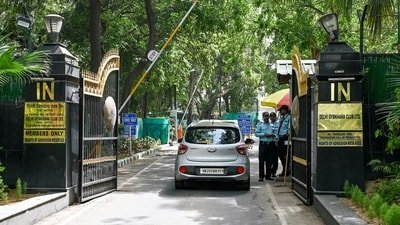

Delhi Gymkhana Club seeks meeting with Centre over eviction notice, says priority is uninterrupted operations
The Delhi Gymkhana Club on Saturday informed its members through a notice that it had sought an urgent meeting with...
-

 Politics3 days ago
Trump-critic Thomas Massie loses Kentucky primary to AIPAC-backed Gallrein
-

 Entertainment5 days ago
‘SNL’ Veteran Calls Out Elon Musk Over Lupita Nyong’o Remarks
-
Entertainment5 days ago
Picturehouse Entertainment acquires UK rights to A Town In Nova Scotia
-

 Food6 days ago
Juneteenth Foods: 23 Recipes for a Cookout Celebration
-
Tech6 days ago
Today's NYT Mini Crossword Answers for Monday, May 18
-

 Entertainment6 days ago
Adam Driver and Kenneth Lonergan Reunite For ‘Tomorrow Is a Drag’
-

 Tech7 days ago
If Your iPhone Battery’s Draining Faster After iOS 26.5, Don’t Panic
-

 Business1 week ago
New Residential Facility Opens in Clayton County, Bringing Much-Needed Addiction Treatment Access to South Atlanta