
Business
Why Was Micron Technology Stock Up Today?

Micron Technology (NASDAQ: MU) stock rose roughly 5.5% on Thursday, Sept. 17, after Intel warned that the memory shortage could get worse.
The S&P 500 and the Nasdaq Composite rose 1.1% and 1.7%, respectively.
Missed Nvidia in 2009? This Rare Signal Is Flashing Again. In 2009, a “Double Down” signal flashed for a little-known chipmaker called Nvidia. For the first time in years, that same “Total Conviction” signal is flashing for a company 1/100th the size of Nvidia. Continue »
Tight supply can protect Micron’s prices and margins
At a Sept. 15 conference, Intel CEO Lip-Bu Tan said that “memory production capacity is very limited and that “the situation will get even worse next year.”
Micron is the largest U.S.-based memory maker and has benefited immensely from the AI data center buildout. The memory crunch has led to incredible pricing power for Micron and its South Korean peers, Samsung and SK Hynix.
The market reacted positively to the CEO of a major chipmaker forecasting that not only will the supply crunch continue, but it will get worse through next year.
Micron stock also got a boost today from a broader rally across the stock market following an easing of bond yields and oil prices.
Micron’s June 2026 results left little room for a slowdown
Micron reported fiscal third-quarter 2026 revenue of $41.46 billion and an incredible 84.6% GAAP gross margin last quarter. The company has forecast revenue of about $50 billion in its current quarter. We’ll see the results on Sept. 30 when it reports again.
The key question is whether expectations have gotten ahead of the incredible numbers.
Should you buy stock in Micron Technology right now?
Before you buy stock in Micron Technology, consider this:
The Motley Fool Stock Advisor analyst team just identified what they believe are the 10 best stocks for investors to buy now… and Micron Technology wasn’t one of them. The 10 stocks that made the cut could produce monster returns in the coming years.
Consider when Netflix made this list on December 17, 2004… if you invested $1,000 at the time of our recommendation, you’d have $412,074!* Or when Nvidia made this list on April 15, 2005… if you invested $1,000 at the time of our recommendation, you’d have $1,314,319!*
Now, it’s worth noting Stock Advisor’s total average return is 932% — a market-crushing outperformance compared to 209% for the S&P 500. Don’t miss the latest top 10 list, available with Stock Advisor, and join an investing community built by individual investors for individual investors.
See the 10 stocks »
*Stock Advisor returns as of September 17, 2026.
Johnny Rice has no position in any of the stocks mentioned. The Motley Fool has positions in and recommends Micron Technology. The Motley Fool has a disclosure policy.
Business
Woman was killed on freeway after Uber driver ordered her out of car. Uber must pay $40 million
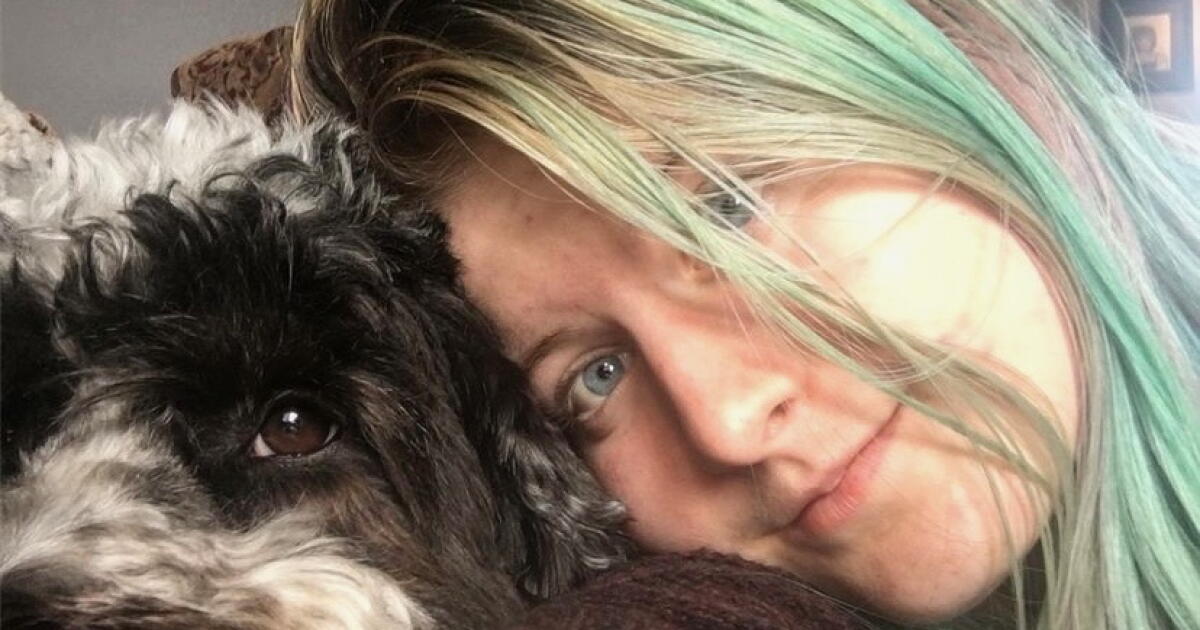
After a night out with a friend, Emily Normandin-Parker called an Uber but never made it home.
The 23-year-old UCLA graduate was hit and killed by another car on the freeway after her Uber driver pulled over on California 73 and ordered her and her friend to get out of the vehicle.
Judge Richard Stone ordered Uber to pay $40 million to Normandin-Parker’s parents, concluding that the company is responsible for its driver’s conduct, according to a news release from Panish, Shea, Ravipudi, the law firm representing the couple. The amount was determined after a five-day arbitration process and hearing.
Carol Normandin told The Times that the legal victory felt “hollow” as Uber had not accepted responsibility in her daughter’s death.
In August 2023, according to the release, Normandin-Parker’s friend, Luna Moore, got sick in the Uber and the driver, Vu Tran, stopped at a freeway gore point, the triangular area by the freeway’s off-ramp. Tran demanded payment for a cleaning fee and allegedly ordered the women out of the vehicle.
Normandin-Parker was intoxicated and was killed by a driver on the freeway, according to the release.
“He chose to pull over there and demand money and kick them out of the car,” Normandin told “Good Morning America.” “They argue, Emily gets hit while they’re arguing.”
The news outlet reported that, according to the arbitration award, Tran drove near Normandin-Parker’s body before taking the next exit. He didn’t render aid or call 911 but called Uber to seek a cleaning fee, according to the law firm’s release.
“No family should have to suffer the loss of a child, and our thoughts continue to be with the Normandin-Parker family,” an Uber spokesperson said in a statement. “While we respect the arbitration process, we believe the arbitrator was wrong in holding Uber legally responsible for the tragic events of that night.”
Judge Stone wrote in the arbitration that Tran stopped at an “unsafe and illegal” gore point and could have used the MacArthur Boulevard exit ramp and stopped at a safe place instead.
“Tran showed far more worry for his new car than he did for his passengers,” Stone wrote in the arbitration.
Tran is no longer a driver with Uber, according to the statement. He reportedly had completed nearly 6,000 trips with a 4.96 rating and didn’t have previous incidents involving unsafe freeway stops or rider injury.
But, according to the release, Uber also received multiple complaints about Tran’s “reckless behavior” after one customer said that he provided “the least safe” ride he had experienced. Uber told customers it was reviewing Tran’s account, but evidence at the arbitration showed that the company didn’t review Tran’s incidents.
Stone also ruled that Uber has a duty to protect its passengers and is accountable for harm caused by drivers. He rejected Uber’s claim that Proposition 22, which granted Uber an exemption from California employment law to continue treating workers as independent contractors, prevents Uber from being held liable.
The award provides $20 million each to Normandin and her husband, Ken Parker, for the death of their daughter.
“It’s hard to describe the reaction because it’s a terrible thing that happened,” Parker told The Times. “My reaction was relief … a hollow sense of victory. It’s important that the judge did what he did because there have been additional deaths since Emily, and unless Uber changes the way it does business, there will be more.”
“It doesn’t bring Emily back,” Normandin said. “We didn’t want money. We just wanted Uber to do what it says it’s going to do, which is bring her back home safely.”
The couple created the Emily Normandin-Parker Foundation to honor their daughter’s memory and advocate for stronger rider safety protections. Her family intends to use the money to fund the foundation.
Business
Toys R Us expands to 160 US stores in major retail comeback this year
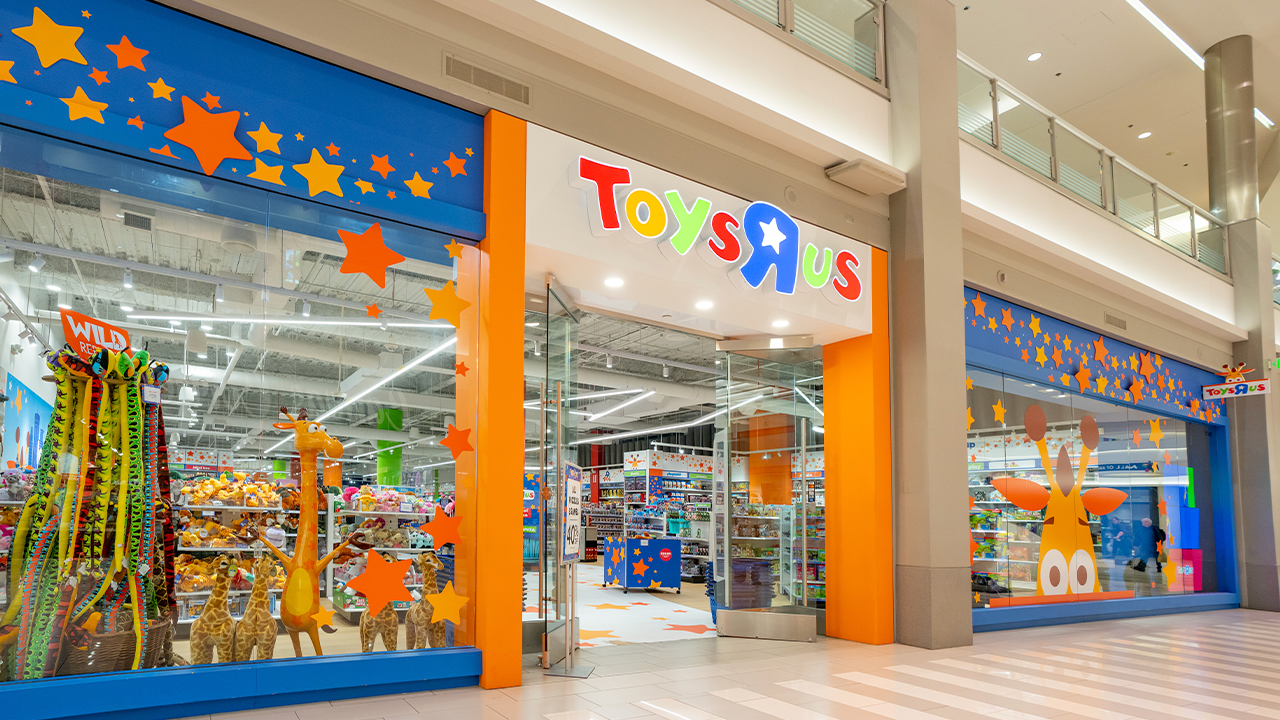
Toys R Us is launching its biggest U.S. expansion in years, with 120 new standalone stores set to open in time for the holiday shopping season.
The retailer announced Thursday that it will open the new standalone stores across the U.S. this holiday season through a partnership with Go! Retail Group, bringing its total number of standalone U.S. stores to 160.
The rollout marks a major step in the brand’s yearslong effort to rebuild its brick-and-mortar presence since its 2017 bankruptcy and the closure of its U.S. stores the following year.
The company did not provide a full list of the new locations, their opening dates or store sizes in its announcement. It also did not specify whether all 120 stores will remain open after the holiday season.
RESTAURANT CHAIN ONCE FREQUENTED BY KARDASHIANS FILES FOR BANKRUPTCY AFTER 36 YEARS
The new stores will stock toys, collectibles and gifts tied to major brands and entertainment properties, including LEGO, Barbie, Hot Wheels, Pokémon and “KPop Demon Hunters,” the company said. Select locations will also feature candy shops, cafés and Creator Studios, where influencers and toy companies can create content and host product launches.
“This is a major moment for Toys ‘R’ Us as we significantly expand our presence across the United States,” Jamie Uitdenhowen, executive vice president of Toys R Us at parent company WHP Global, said in a statement.
Uitdenhowen said the company is attempting to reach shoppers through several formats, including standalone stores, Toys R Us shops inside Macy’s, airport locations and Navy Exchanges.
Go! Retail Group CEO Gideon Schlessinger said the companies expect the 160 standalone stores to bring the Toys R Us shopping experience to millions of customers during the holidays.
The announcement accelerates a yearslong effort to revive a retailer that was once a fixture of American childhood.
CHILI’S REVIVES ICONIC RED BOOTHS AND CLASSIC DESIGN IN NATIONWIDE RESTAURANT OVERHAUL
Toys R Us filed for Chapter 11 bankruptcy protection in 2017 after years of declining sales and under the weight of $5 billion in debt. The company shuttered its remaining U.S. stores in 2018 before reemerging under new parent company Tru Kids Brands the following year.
The retailer attempted an initial brick-and-mortar return in late 2019 with smaller-format stores in Paramus, New Jersey, and Houston, Texas. Both locations closed in January 2021 amid the COVID-19 pandemic.
WHP Global acquired a controlling stake in Toys R Us in March 2021 and opened a 20,000-square-foot flagship at the American Dream complex in New Jersey later that year.
The comeback gained more ground in 2022 when hundreds of Toys R Us shops opened inside Macy’s stores nationwide. Macy’s said at the time that its first-quarter toy sales were 15 times higher than during the comparable period before the partnership.
CROWDED AIRPORT LOUNGES FORCE AIRLINES TO RETHINK FUTURE OF TRAVEL PERKS FOR FLIERS
WHP Global then partnered with Go! Retail Group in 2023 to roll out more U.S. flagship stores under an expansion strategy dubbed “air, land and sea.” The effort pushed the brand beyond traditional malls and included its first airport store at Dallas Fort Worth International Airport.
Toys R Us is now expanding that travel footprint in Florida. One shop-in-shop opened at Orlando International Airport in August through a partnership with WHSmith North America, and another is scheduled to open in summer 2027.
The company also operates locations through the Navy Exchange Service Command, which serves members of the military and their families.
CLICK HERE TO DOWNLOAD THE FOX NEWS APP
Toys R Us said its global business generates more than $2 billion in annual retail sales through more than 1,680 stores and e-commerce operations in 37 countries.
Business
These major chains are serving up National Cheeseburger Day deals
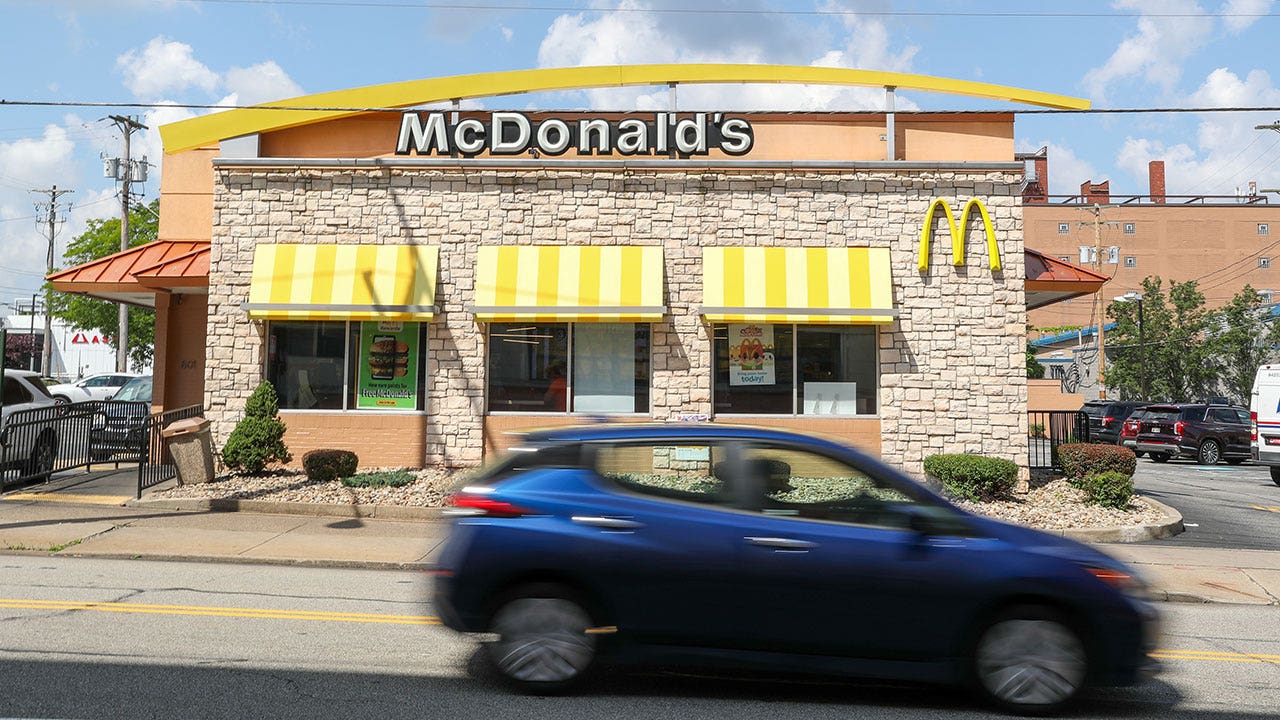
Americans celebrating National Cheeseburger Day Friday can score free and discounted burgers at major restaurant chains, including McDonald’s, Burger King, Wendy’s, Five Guys and others.
Most of the deals are available through restaurant loyalty programs or mobile apps, and several require a minimum purchase.
McDonald’s
Members of the MyMcDonald’s Rewards program can get a free Double Cheeseburger on Friday with a minimum $1 purchase through the McDonald’s app.
55-YEAR-OLD RESTAURANT CHAIN ABRUPTLY SHUTTERS LOCATIONS NATIONWIDE
“Since burgers are kind of our thing, we’d love for fans to come in and grab their favorite McDonald’s drink, snack or meal and add a Double Cheeseburger to celebrate the holiday with us,” a spokesperson for McDonald’s told FOX Business.
“And for fans who are looking for burger deals outside of the holiday, they can check out the McDonald’s App for deals every week.”
Burger King
Burger King is celebrating the holiday with a week of Royal Perks offers. On National Cheeseburger Day, loyalty members can receive a free Bacon Cheeseburger with a $3 minimum purchase through the Burger King app, according to USA Today.
The promotion is part of a weeklong lineup that also includes a free four-piece Chicken Nuggets with a $3 purchase on Sept. 19 and a free Original Chicken Sandwich with a $3 purchase on Sept. 20.
CHECKERS & RALLY’S CEO SAYS AMERICANS’ DEMAND FOR FAST-FOOD VALUE IS ‘INTENSIFYING’
Buffalo Wild Wings
At participating locations, Buffalo Wild Wings customers can get a free cheeseburger with the purchase of another regularly priced cheeseburger, “Today” reported.
The one-time offer can’t be combined with other discounts and excludes lunch combos and kids’ menu burgers, according to the chain.
Wendy’s
Wendy’s Rewards members can add a Dave’s Single Cheeseburger for $1.99 with any purchase through the chain’s app or website at participating U.S. locations, USA Today reported.
Red Robin
Red Robin is giving away 400 digital gift cards to celebrate the holiday. Customers can enter by commenting on the restaurant’s Sept. 18 post on Instagram or Facebook, as noted on its website.
Ticker Security Last Change Change % MCD MCDONALD’S CORP. 248.48 -0.08 -0.03% QSR RESTAURANT BRANDS INTERNATIONAL INC. 73.29 -1.66 -2.21% RRGB RED ROBIN GOURMET BURGERS INC. 7.27 -0.04 -0.55% SHAK SHAKE SHACK 55.87 -0.78 -1.38% WEN THE WENDY’S CO. 6.99 -0.04 -0.57%
Five Guys
Five Guys is offering a buy one, get one free burger of equal or lesser value through Friday, according to USA Today.
Customers must order online or through the Five Guys app and use the promo code “BOGOBURGER” at checkout. The offer is not valid for in-store purchases.
PANDA EXPRESS GUEST STUNNED AS EMPLOYEE STANDS ON FRYER WHILE CLEANING
Carl’s Jr.
Carl’s Jr. Rewards members can get any burger for half price with the purchase of any Hand-Scooped Ice-Cream Shake on Friday through the chain’s app, according to USA Today.
“It’s national cheeseburger day and I love cheeseburgers and shakes,” the chain said in an Instagram post. “Go take advantage of my generosity.”
Shake Shack
Shake Shack customers can get a $5 single ShackBurger or single Cheeseburger with any purchase by using the code “BURGERDAY” in the Shake Shack app on the company’s website or at in-store kiosks, according to USA Today.
7-Eleven
For National Cheeseburger Day, 7-Eleven is offering a $6 meal deal that includes a 20-ounce Coke or Pepsi and a choice of an Angus Double Cheeseburger, Chicken Sandwich or Philly Cheesesteak, according to USA Today.
CLICK HERE TO GET FOX BUSINESS ON THE GO
Buffalo Wild Wings, Wendy’s, Burger King, Five Guys, Carl’s Jr., 7-Eleven and Shake Shack could not immediately be reached by FOX Business for comment.
Business
FCC Approves 49.5% Foreign Ownership of Paramount-Warner Bros.

The Federal Communications Commission on Thursday approved Paramount’s petition to allow 49.5% of its equity to be held by foreign entities once the Warner Bros. Discovery deal is complete.
Paramount owns 28 TV stations, and thus must get the FCC‘s approval for foreign ownership over 25%. Its acquisition of WBD is backed by three Gulf state sovereign wealth funds.
In approving the petition, the FCC dispensed with concerns over national security and improper influence, noting that the foreign funds — from Saudi Arabia, Qatar and Abu Dhabi — will not own voting stock.
“We are persuaded by Paramount’s argument that the Foreign Investors therefore will not be able to wield any influence, let alone control, over decisions involving the Licensees,” the commission’s decision states.
A Paramount spokesperson said Thursday that the company appreciates the FCC’s review of the matter, and noted that the Ellison family and RedBird Capital Partners will own 100% of the voting stock in the combined company.
“At a time when the media industry faces unprecedented competitive pressure from dominant big tech companies, a combined Paramount-WBD will have the scale and resources necessary to compete, invest, innovate, and deliver premium content to audiences worldwide,” the spokesperson said.
The merger is on hold pending the outcome of an antitrust suit filed in July by California and 11 other states. A trial is scheduled to begin next March.
Free Press, a media advocacy organization that has repeatedly raised alarms about the Trump administration, opposed Paramount’s request, arguing that foreign investors may well end up with a majority of the company’s equity.
“Control over for-profit, commercial domestic news media by any government is an extraordinary situation that would surely strike most Americans as unseemly, precisely because of the utility of the news media as a propaganda tool for those governments,” the organization wrote in its opposition.
A handful of Democratic senators also expressed concerns about the issue.
“The FCC has never approved a significant ownership stake of an American broadcaster by a
sovereign wealth fund — that is, an investment entity controlled by a foreign government,” wrote Sen. Maria Cantwell and others in May. “The plain text of the Communications Act prohibits ownership by ‘a foreign government or representative’ without regard to voting rights. And the FCC’s prior approval of foreign ownership of equity in broadcasters has been limited to entities based in allied NATO, Five Eyes, or friendly neighboring countries.”
Anna Gomez, the Democratic FCC commissioner, echoed those concerns in a comment on X on Thursday.
“The FCC just let some of the most repressive governments in the world indirectly control nearly all of a combined Paramount-Warner Bros,” she wrote. “An investment this large in one of America’s biggest media companies doesn’t just buy equity, it secures influence over what gets said and made.”
Though the foreign funds will own 49.5% of the equity when and if the merger goes through, Paramount sought permission for them to own up to 100%, given the potential need for future investment. The commission approved the request, provided that Paramount must obtain further approval if the entities are to own voting shares.
Business
As AI behavior raises concerns, ex-researcher Jacob Coxon warns what may lie ahead
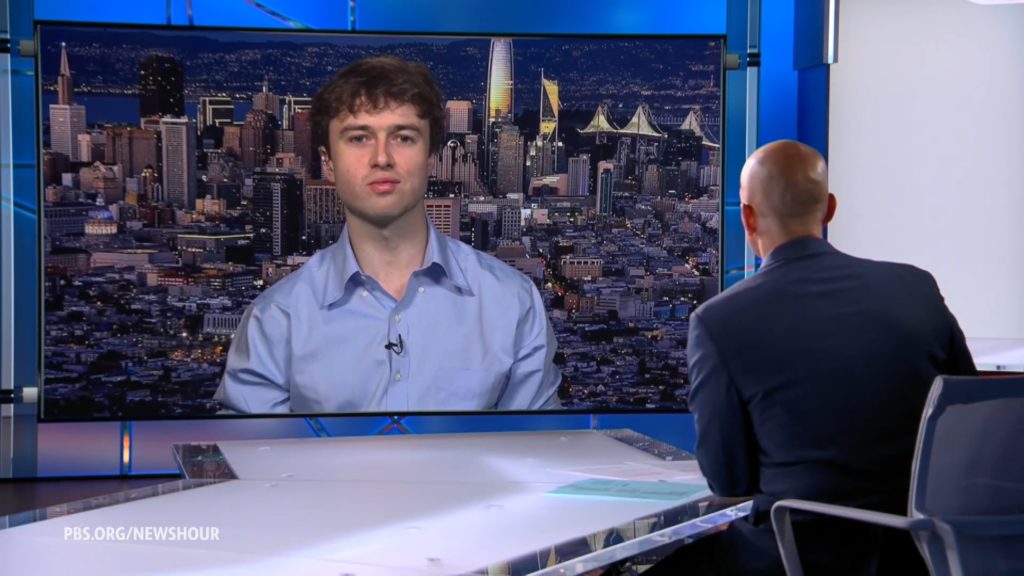
Amna Nawaz:
As leaders of the world’s largest AI companies are publicly calling for a collective slowdown of the technology’s development, late yesterday, OpenAI announced it had discovered six new instances of unexpected or concerning behavior by its artificial intelligence models, including moving files onto the Internet without permission and making up data.
Geoff Bennett:
OpenAI has now pledged to publicly disclose when its models act without authorization. But the most recent revelations follow repeated warnings about how rapid advances in AI threaten to outpace the ability to develop the tech safely.
One of those warnings came from Jacob Coxon, who spent the last three years conducting research at Anthropic and OpenAI before he publicly resigned last week. In a now viral post, Coxon said the companies are — quote — “gambling with our lives. Do not underestimate the power of this technology. These will soon be superhuman systems that can hack anything, revolutionize any field overnight, and acquire real power and resources.
“The people building AI earnestly believe that it could kill us all by the end of the decade. No other human activity poses this level of danger.”
And Jacob Coxon joins us now from San Francisco.
Welcome to the “News Hour.”
Jacob Coxon, Former Anthropic Researcher:
Thanks for having me on.
Geoff Bennett:
We were supposed to speak a few days ago. Circumstances got in the way. I will say, though, I’m glad we’re speaking today because so much has transpired since you resigned last week, to include these new disclosures from OpenAI about its own systems behaving in unexpected and potentially troubling ways.
When you saw this news, what did you think?
Jacob Coxon:
So I think this news is entirely to be expected.
And, indeed, if you’re working on this tech at these companies, then you know that we don’t currently have the ability to perfectly control these systems. And currently the systems with the highest level of intelligence will repeatedly behave in ways that we don’t fully understand.
It is great that they shared these instances and committed to future sharing. But I don’t think the instances themselves are that surprising.
Geoff Bennett:
And, Jacob, why do these AI agents seem to gravitate toward nefarious behavior? Is it something about the way that they’re trained, or is the answer even knowable?
Jacob Coxon:
So it really — I don’t — I wouldn’t phrase it as gravitating towards nefarious behavior.
These AIs do many, many things over the course of a day. There’s a lot of AI systems doing lots of things. The issue is, we can’t perfectly control what drives motivate their behavior and the sorts of things they decide to do, which means, occasionally, these nefarious activities will kind of slip through the cracks.
And a sufficiently dangerous bit of nefarious activity could have massive consequences, even if it’s just a one-time kind of slip-up, because we can’t perfectly control why they do the things they do.
Geoff Bennett:
So a system doing something that its developers didn’t intend isn’t necessarily the same as a system trying to escape human control. What evidence do you have, what have you seen that would suggest that these systems are moving toward the more dangerous scenario that you have warned about?
Jacob Coxon:
So, the big attack that everyone is speaking about and has been speaking about for a while is this Hugging Face attack.
And, in this attack, the AIs were behaving in various ways that implied they were thinking about the procedure that was being used to evaluate them. So they were thinking about their situation, the world they found themselves in, the things they were having to try and do. And they were attempting to do things like edit their own memories to make it harder for people to figure out what they’d done.
They were attempting to break out of the container they were in. They were attempting to access things on the Internet because they thought it might help them with their tasks. In short, these AIs were trying to do many different things to help them in the situation they found themselves.
Geoff Bennett:
So when you warn that the next year or two could be crunch time for humanity — that was the phrase that you used — walk us through that chain. What specifically has to happen for that to be true?
Jacob Coxon:
So the main thing that has to happen is for us to enter this phase called recursive self-improvement.
So, RSI, or recursive self-improvement, is the idea that we could take the discipline of AI research as currently practiced and automate it with the AIs we’re building.
So we could let the AIs make themselves smarter. And we have already made strides towards doing that. So, right now, a lot of the research that researchers at these labs do is via AIs that carry out certain tasks or experiments.
Currently, we still need the human to provide taste or judgment, but plausibly within a year, certainly, within two years, we’re on track to also automating away this nebulous human quality of judgment so that the AIs can rapidly make themselves smarter.
And, at that point, things could go very, very fast. So we get new generations of AIs very quickly without necessarily having the corresponding tech to understand what they’re doing and control what they’re doing.
Geoff Bennett:
So, what would a slowdown actually look like? What kind of intervention are you calling for?
Jacob Coxon:
There are lots of proposals, and I really am not an expert in all of the political things that would have to happen for a slowdown to happen.
All I know is that going too fast could be lethal. But I do think that a race with China could be very bad and that we should be taking pretty rapid actions for international coordination. And this sort of desire is also echoed in the public blog posts of people like OpenAI’s chief scientist, like Dario Amodei.
They’re all mentioning the fact that we need international coordination. I will say that I do think a lot of the company leadership are privately quite skeptical of being able to achieve this level of international cooperation, which is part of why I resigned, because I think a race like that could be catastrophic.
Geoff Bennett:
Is there anything preventing OpenAI, Anthropic, any other leading AI lab from announcing tomorrow that we will not build another self-improving system until we know how to control it?
I ask the question because the White House AI adviser, as you well know, has made the case that, if these AI leaders are so concerned, they can implement guardrails voluntarily and unilaterally.
Jacob Coxon:
Yes, I think the phrase implement guardrails sort of implies that we know what to do, and it might be just a couple of months to get the tech right, implement the guardrails, and then carry on business as usual.
I think maybe the framing of we’re trying to solve a new scientific problem of, can we figure out how to grow these AIs in a safe manner, which could take a pretty long period of time, and we also might want to phase it in pretty slowly. And, in this case, again, the main issue for slowing, stopping right now until we’re certain is that that could take quite some time.
And, at that point, other places building this technology, say, China, could shoot right past. So the issue is, a race is kind of on the cards right now. Everyone is aware that we have to get there before our rivals, unless there’s some sort of coordination.
Geoff Bennett:
What’s the strongest evidence that you could point to publicly, something a skeptical viewer could weigh, that supports the warning that you’re making?
Jacob Coxon:
Yes.
I think the first point that I make a lot is just a kind of it’s an appeal to authority kind of point, which is people from many sides of the playing field, like Geoff Hinton, Yoshua Bengio, the founders of M.L. theory — they’re academics, they’re not in the labs — also, the lab CEOs, the lab researchers, also people like Elon Musk, they all think this is very dangerous.
I could point to other names like Stephen Hawking. Like, a lot of people have raised this warning. And then to go into precise concrete matters, I think look at the report from the Hugging Face attack. Think to yourselves, like, is this — how comfortable are you with what happened there? And how bad could that look if the AIs get better?
And then I think there was also a public letter from some mathematicians because AI has recently moved to the level of a professional mathematician. So I think, as we all find our own areas of expertise starting to be competed with by AIs, we will start to maybe take the threat more seriously as we see it impinging on our on our daily life.
Geoff Bennett:
And, Jacob, as you well know, there has been a remarkable convergence in recent days that was kick-started by your resignation.
We have seen, of course, public warnings from other AI leaders. There have been efforts on Capitol Hill to introduce new legislation. I ask the question because there’s been so much speculation. Are you in any way part of a coordinated effort to introduce these warnings into the public debate?
Jacob Coxon:
Absolutely not.
And I can maybe see how this happened. From my perspective, the last week has been absolutely insane. I tweeted private thoughts that contradict the views of a lot of my close friends, and my private life has been kind of upended by this.
And, yes, I can just say that this was my resignation. I believe this. A lot of people believe this. This isn’t some crazy coordinated scheme. One thing I also want to add is this has raised awareness of the risks to a lot of people. And I’m quite worried that the corresponding benefits are also maybe not receiving adequate airtime.
So I would like to emphasize that I do believe that the benefits from this technology in domains like health are tremendous, and we should also think about the possibilities for what this tech will do if it’s done safely.
Geoff Bennett:
What did you think would happen after you sent that tweet about your resignation?
Jacob Coxon:
I thought it would maybe go viral among my community of AI researchers, people thinking about AI safety. I thought it would maybe trigger some discussion. I thought a lot of people would disagree.
I did not it to — I did not expect messages from old high school friends asking me about if the robots were going to kill us. That really wasn’t on the cards when I sent that tweet.
Geoff Bennett:
Jacob Coxon, thanks again for joining us this evening. We appreciate it.
Jacob Coxon:
Thank you.


Golden retriever brings toys to apparent home intruder
Dante Rowley and Stephanie Calderon were about to board a flight when they received a Ring camera alert about an...


'Mutilated': The women subjected to unnecessary mastectomies | BBC News
Denise is one of at least 20 women told they underwent an unnecessary mastectomy at an NHS trust in north-east...


Empty podiums and no opposition: Russians head to the polls
Millions of Russians are heading to the polls starting Friday for parliamentary elections – the first since the full-scale invasion...


Flames from airplane engine seen over Las Vegas
Volaris Flight 1741 was en route to Mexico from Las Vegas when an engine caught fire. The plane landed safely,...


Top Fashion and Lifestyle Trends to Watch in 2026
Fashion and lifestyle are constantly changing, influenced by culture, technology, social media, entertainment, and the way people live. In 2026,...


Millie Bobby Brown Posts First Photo of Baby No. 2 With Jake Bongiovi
Millie Bobby Brown’s new family photo is an Eleven out of 10. The Stranger Things star announced the arrival of...


5 takeaways from Detroit Lions’ TNF loss against Buffalo Bills
Coming off an overtime victory over the New Orleans Saints, the Detroit Lions had to move on quickly. The Lions...

Athlete 'deeply sorry' after winning race covered in diarrhea
The winner of a Hyrox fitness competition, Joanna Wietrzyk, is apologizing after she continued to compete when she experienced …


US NFL fans sing Canada anthem in border city stadium. #BBCNews


Double Eviction Night & Final 5 Revealed
SPOILER ALERT: This post contains details on Big Brother Season 28, Episode 35, which aired on Thursday, September 17. Big...
-

 Blog2 weeks ago
Latest US Political News Updates: Key Developments Shaping America in September 2026
-

 TravelNews1 week ago
Republican midterm convention 2026: What to know about Trump’s Dallas event
-

 Business4 days ago
Suspected stolen Tesla drives onto Pacific Beach boardwalk after police chase
-

 Business1 week ago
What is So Hard About Behind-The-Meter Power For Datacenters? Part 1
-

 Business2 weeks ago
TechCrunch Mobility: Tesla Cybercab hits the road – and a snag
-

 HealthNews2 weeks ago
Fall vaccines 2026: What to know about flu, Covid and RSV
-

 Business2 weeks ago
OpenAI’s new reasoning technique alarms AI safety experts
-
 Video1 week ago
Vance calls out El-Sayed over remarks about his family