

HealthNews
2 daylight raccoon attacks within hours have New Jersey town eyeing rabies pellets
Ridgewood, New Jersey, is dealing with the fallout from two raccoon bites reported hours apart. The incidents sent a child and an adult for preventive rabies care and led officials to weigh an uncommon tactic: distributing oral vaccine bait for wild animals.
What happened?
WABC reported that one victim was an adult bitten on private property, after a 7-year-old boy had been attacked around 7 p.m. the day before near Maple Field & Community Garden and bitten on the upper leg.
WABC said the cases were reported close together in time, fueling concern that a raccoon in the area could be sick or acting abnormally. Both people received rabies treatment as a precaution.
So far, Animal Control officers searching the area have not found evidence of the raccoon. Residents are being asked to contact the Ridgewood Police Department if they see an animal that appears sick, injured, or unusually aggressive.
Why does it matter?
Rabies is rare in humans in the United States, but once symptoms appear, it is almost always fatal. Any bite from a potentially infected wild animal is a serious public health concern, particularly in places where children and pets may be nearby.
The attacks also underscore how closely people and wildlife overlap in many suburban communities. Raccoons are highly adaptable and often linger near gardens, yards, pet food, trash, and other human-created food sources, increasing the chances of bold or risky encounters.
As neighborhoods continue to expand into wooded areas and animals learn to associate people with easy meals, these encounters can become more common. When wild animals lose their fear of humans, the risks rise on both sides — people can be hurt, and the animal may ultimately need to be trapped or euthanized.
What’s being done?
One option now under discussion in Ridgewood is placing rabies vaccination pellets in wooded areas where animals gather, WABC reported. The flavored bait is meant to be eaten by wildlife, and federal agencies have used it for years to help curb the spread of rabies.
Officials say federal agencies do not consider the pellets dangerous to other animals, making the approach a practical way to reduce risk without trying to remove every raccoon from the area.
If you spot an animal acting strangely, report it rather than confront it. Preventing contact is the safest move for people, pets, and wildlife alike, and small changes at home can help reduce the chances of future encounters.
In communities where backyards, parks, and wooded habitats exist side by side, even a routine outing can quickly become a public health concern.
HealthNews
Ebola one month on: will the latest outbreak in DRC become the most deadly yet?

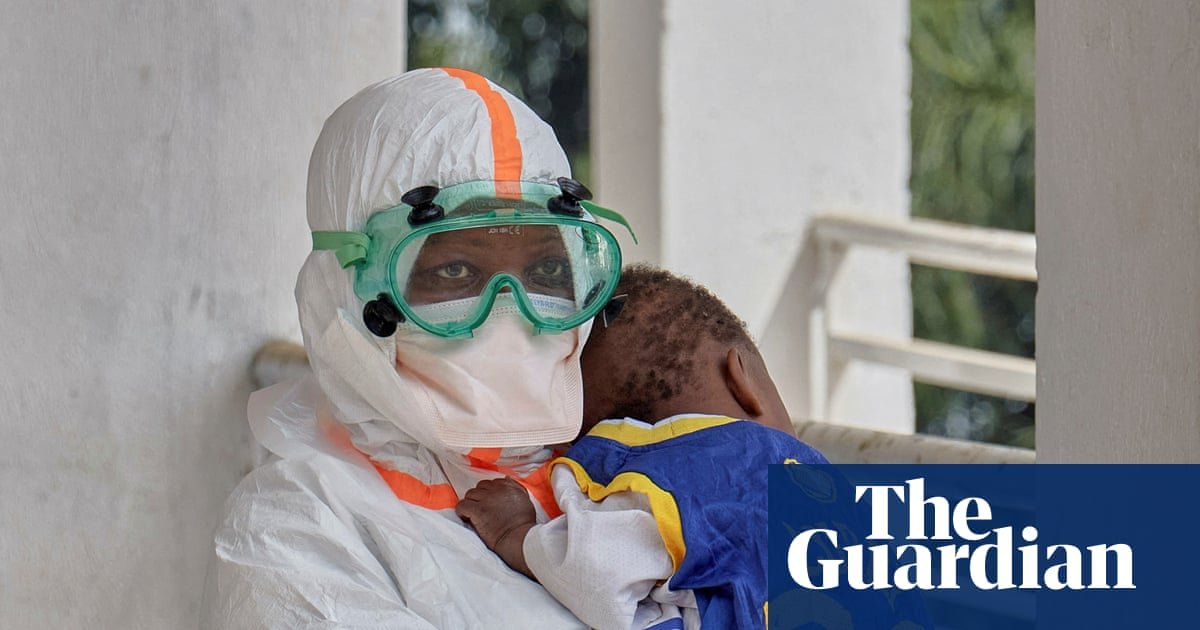
When an orphanage in Bunia took in a newborn baby after his mother died from Ebola, the nuns who ran it hoped they were giving the infant a chance for life. The baby survived for only another two weeks. Now four of the nuns who cared for him have fallen sick with the deadly virus.
It is a snapshot of the tragedies at the centre of an outbreak in which the number of victims is roughly doubling every week, according to the World Health Organization (WHO).
“It’s really, really devastating,” says Dr Babou Rukengeza, Save the Children’s Ebola response lead in the Democratic Republic of the Congo (DRC). All the children and staff at the orphanage are now being monitored for symptoms.
A month on since the latest outbreak of Ebola, caused by the Bundibugyo virus, was first identified in the DRC, the latest figures from the UN show 676 confirmed cases and 136 deaths, the overwhelming majority in the DRC’s Ituri province.
Frontline workers say they are still battling shortages of the necessary supplies, including personal protective equipment and vehicles to transport dead bodies. Testing has improved, they say, but still needs to be done faster and carried out nearer to patients.
In neighbouring Uganda, which has reported 19 cases and two deaths, intensive tracing of contacts means the outbreak is under control, health officials say.
Despite the global risk remaining low, 22 countries, including the US, have imposed travel restrictions on people coming from the DRC, Uganda or South Sudan, according to Africa CDC, the health agency of the African Union.
Those restrictions have been criticised as impeding health agencies’ response. What the DRC really needs from the international community, experts say, is flexible funding that it can use to get the situation under control.
There are reasons for hope: scientists are working rapidly to test and produce vaccines against Bundibugyo, and the latest research suggests existing antivirals are likely to be helpful.
In Ituri, the organisations involved in the response meet daily to coordinate plans, and African leaders will meet virtually on Tuesday to discuss the outbreak and make funding commitments.
But there are also strong headwinds that are slowing the response: conflict continues in the worst-hit areas and misinformation is rife, leading people to avoid hospitals and the care that could save their lives, and there have even been attacks on aid workers and treatment centres.
Gratien Iracan, the local MP for the provincial capital, Bunia, noted on social media last week: “Despite the millions of dollars announced by the international community to support the response to Ebola, these resources are not yet sufficiently visible on the ground in Ituri.”
In subsequent posts, he highlighted a doctor’s death from Ebola, saying the medic had sent messages from his hospital bed complaining of poor care in the clinic. The Guardian has not been able to verify those messages.
Iracan also described an incident in which a community had called the authorities to report a suspected case of Ebola but the promised support had not arrived, sparking “incomprehension, anger and concern”.
According to Africa CDC, community trust is “a critical challenge” – CNN video footage from Bunia’s central market shows people denying the virus exists and blaming Red Cross workers for spreading it.
In a statement, the continental health watchdog cited “reports of resistance to hygiene measures and decontamination in some communities, as well as incidents of mob violence”.
A key reason for this stems from people’s reluctance to allow their sick relatives to be cared for by strangers in healthcare isolation units – and the importance of funeral rites.
For some people, their fear of displeasing God over not performing an appropriate burial for a relative can be greater than their fear of contracting a virus. According to one study after the 2016 outbreak, exposure to body fluids during each “unsafe” funeral for Ebola victims created an average of 2.58 secondary cases.
Informing people about the symptoms and risks – using mass media such as radio and TV as well as face-to-face contact in the community – has become a key part of work on the ground, says Rukengeza.
“We are pushing and currently we are working with the leaders, community leaders, religious and other people here on the ground just to let them know that this is really Ebola virus, and they have to pay attention,” he says.
With about 600 confirmed cases in one area, health experts would expect to have about 24,000 contacts to monitor. On Thursday, Dr Jean Kaseya, director general of Africa CDC, says there are 4,955 listed – and 57% of those are being monitored.
“It means there is a huge risk of transmission [being] sustained in the community,” Kaseya says. “We still have some confirmed cases not admitted [to hospital]. They are somewhere in the community, elsewhere.”
A joint response plan drawn up by Africa CDC and the WHO estimates that $518m (£387m) will be needed over the next six months to bring the outbreak under control. Kaseya says some early financial pledges from around the world “were not real”, but he now thinks that about $212m, including support in kind, was “almost there”.
Many of those infected are healthcare workers. Ebola is spread via body fluids, and those caring for the sick are most likely to be exposed to them.
Speaking from Bunia on Thursday, Dr Salim Abdool Karim, an epidemiologist who chairs the Africa CDC emergency consultative group, says he visited a treatment centre that day: “There were 22 patients in that particular hospital, five of whom were healthcare workers, two doctors and an anaesthetist.”
Even before Ebola arrived, Ituri faced a humanitarian crisis, with tens of thousands of people displaced by years of conflict. WHO officials have registered more than 520 security incidents affecting their teams in the field so far.
Over the past month, the outbreak has been gradually moving up the grim league tables that rank Ebola epidemics by case numbers and death toll. It is now the third largest on record. Modelling by the US Centers for Disease Control and Prevention suggests this outbreak could grow to match the 2014-16 one in west Africa, which killed more than 11,000 people.
“We hope we can stop that,” says Kaseya, “and it won’t move from the third to the second, even the first one.”
HealthNews
Alpha-gal syndrome: What to know about tick-borne illness


Beyond the well-documented threat of Lyme disease, health officials are now highlighting a lesser-known but potentially life-threatening consequence of tick bites: a severe allergy to meat.
This condition, termed alpha-gal syndrome, was first identified about 15 years ago, linked to a particular tick species.
Cases are on the rise, with sufferers reporting symptoms like hives, diarrhea, and itchiness after consuming even a mouthful of meat, and sometimes dairy. Notably, the allergy does not affect seafood or poultry; chicken, turkey, and eggs are safe to eat.
Historically, treatment has centered on avoiding beef, pork, and lamb, and carrying an epinephrine injector for emergencies. Yet, a significant development has emerged, with regulators recently approving the first drug for the condition, and more therapies expected to follow.
Here’s what to know about alpha-gal syndrome:
Unlike other tick-borne illnesses, such as Rocky Mountain spotted fever, alpha-gal syndrome isn’t caused by a bacteria or a virus. Instead, it occurs when the human immune system triggers an allergic response to a type of sugar, known as alpha-gal.
Alpha-gal is found in the meat of most mammals, but not in humans or other primates. It’s also found in the saliva of certain ticks.
When eaten, the sugar is normally harmless. But when ticks bite through the skin, they can introduce the sugar directly into the bloodstream. That triggers the development of antibodies — immune system proteins that fight off foreign invaders — that quickly learn to identify and attack alpha-gal sugar molecules.
“It turns out that the skin is a fantastic way to make an allergic response,” said Dr. Scott Commins, an alpha-gal syndrome researcher at the University of North Carolina. “If this all happened orally, and we were eating alpha-gal like we do with steaks or barbecue, then we wouldn’t become allergic.”
People that develop the antibodies will often experience a strong allergic reaction a few hours after consuming meat or dairy. But it can take weeks or months for the problem to develop, with the severity of symptoms often increasing over time.
Experts point to increased awareness among health professionals and the public.
“I think part of it is more people have learned about it and are on the watch for this syndrome,” said Maria Diuk-Wasser, a Columbia University researcher who studies tick-borne diseases.
But rising cases also reflect the expanding habitat range of the lone star tick, the primary source of the condition in the U.S. Often identifiable by a white dot on its back, the lone star tick is most common in the eastern and southern U.S. But in recent years it’s been reported in new parts of the country, including the Great Lakes region and as far north as Martha’s Vineyard in Massachusetts.
Researchers worry that other types of ticks, including blacklegged ticks, may also increasingly spread the condition.
Roughly 450,000 Americans are estimated to have developed the allergy, according to a 2023 study by the the Centers for Disease Control and Prevention.
People usually seek medical attention after experiencing worrisome symptoms, including hives, dizziness, difficulty breathing and swelling of the lips, throat, tongue or eyelids. Some people may only experience digestive issues, including diarrhea, stomach pain, vomiting and nausea.
Doctors diagnose the allergy based on results from a blood test, symptoms and other details reported by the patient, including whether they recall any recent bug bites.
The blood test detects the presence of alpha-gal antibodies, but not all patients with a positive result develop the condition. Sometimes the test can also be wrong.
“The blood test in and of itself is great, but you can’t rely on that just for diagnosis. You need the actual symptoms too,” Commins said. “In the allergy world, we have a lot of trouble with false positives on blood tests.”
Doctors generally advise patients to avoid beef, pork, lamb and other meats from mammals. Some people are still be able to consume dairy products from these animals, including milk, cheese and butter. Those with particularly severe reactions may need to avoid foods made with other animal byproducts such as gelatin, which is found in marshmallows and gummy bears.
One rare exception: meat from a small number of pigs that have been genetically modified to not produce alpha-gal. Approved for consumption by the Food and Drug Administration in 2020, the pigs are bred as part of an experimental effort to harvest animal organs for transplantation into humans. Deactivating the alpha-gal gene was a critical first step to make sure the human immune system wouldn’t immediately reject the foreign organs. Meat from these so-called “GalSafe” pigs is available from a company called Amaroo Hills.
People with the syndrome may also have to avoid certain medical products and implants. For instance, many heart valves are made from cow or pig parts.
The allergy can fade away in some people after several years. Commins has seen that happen in about 15% to 20% of his patients. But it’s critical to avoid new tick bites.
In 2024, the FDA approved an injectable drug called Xolair for a variety of food allergies, including alpha-gal syndrome. The drug doesn’t reverse the condition but helps reduce severe allergic reactions after accidental exposure to meat.
The drug was first approved more than 20 years ago for patients with hard-to-control asthma. It works by reducing the release of biological chemicals that cause inflammation and other allergic reactions.
Commins and other researchers hope to study other previously approved drugs as new options for patients.
“There are certain (biologic drugs) out there nowadays that interfere with the allergic signaling,” Commins said. “We think that if you were on one of those — or if you got one quickly enough after a tick bite — perhaps it could interfere with the entire allergic response process.”
HealthNews
Isolation, loneliness a ‘crisis’ for Sonoma County seniors

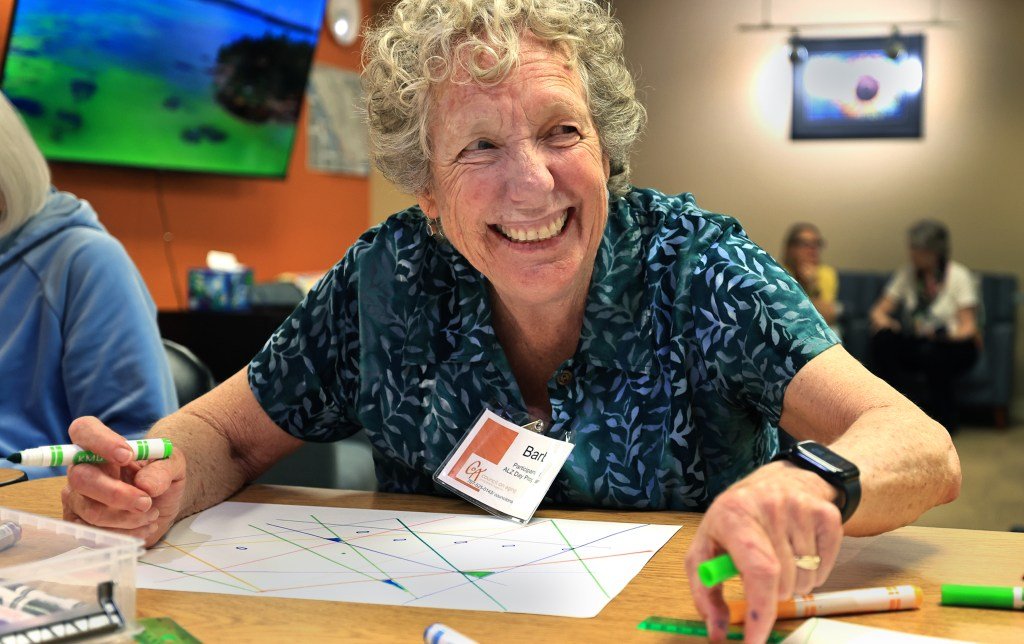
A lifetime ago, academic Georgia Barrow would have understood acutely the benefits of the Adult Day Program she attends four days a week.
The 81-year-old Santa Rosa resident would have known the mental and physical benefits to seniors of a game of beachball volleyball, of abstract art drawing and singing along with peers to music.
After all, Barrow, who taught in the behavioral science department at Santa Rosa Junior College for 26 years and was a member of the Academic Senate, wrote the book on aging.
Literally.
But today, when asked about the Adult Day Program run by Council on Aging, the co-author of Aging, the Individual and Society does not articulate the power of community connection for older adults, the benefit of small motor skill activities as we age and the positives that come with easy body movements. She simply smiles and says it is fun, that the conversation is good, mainly because it’s with “people who are in the same boat.”
In the larger scheme, that boat is dealing with the negative effects of aging.
More specifically, for those like Barrow, it’s a dementia diagnosis. For others, it’s Alzheimer’s.
“For her, it’s a godsend,” said Barrow’s son-in-law, Jeff Brisbois of Windsor, of the adult day program. “We could have a caregiver that caters to her every whim, but it’s the camaraderie here that she loves.
“She can’t really remember the day-to-day stuff, but she knows she had fun,” he said. “She goes home tired. She has fun.”
That connection and community building are not just for fun. The intent of the Council on Aging program and so many other similar senior-focused activities is to address a growing, and sometimes deadly, trend in rates of isolation and loneliness among Sonoma County’s older adults.
“Social disconnection is a global health crisis,” said Dr. Parimala Selvan, a geriatrician at Kaiser Permanente in Santa Rosa.
And it is particularly acute among the elderly. The fallout can be devastating.
“When you are lonely, you have poor health behavior, and you cannot achieve healthy behaviors,” Selvan said.
This can include, but is not limited to, poor sleep habits, increased stress, mental health issues, decreased immunity — making the person more prone to illness — and reduced muscle mass that can increase the risk of falls.
The emerging problem, if not addressed early, could have far-reaching and devastating implications, advocates said.
In Sonoma County, the suicide rate for older adults between age 75 and 84 has increased by more than 50% since 2020. Older adults have the highest age-adjusted rates of suicide of all county residents, according to public health data.
Locally, about 140,000 of Sonoma County’s approximately 485,000 residents — nearly 29% — are 60 years old or older, according to the California Department on Aging. That percentage is expected to increase to 35% by 2030.
And Sonoma County skews older than both the rest of the state and the nation. The median age in Sonoma County is 43 years old, according to the U.S. Census, older than the state median of 38 and the national median of 39 years old.
Across California, a separate survey found that 1 in 5 seniors age 65 or older currently living alone reported having no meaningful contact in the month of January. More than 60% of respondents said loneliness affected their physical or mental health, according to the same survey.
“This is a quiet catastrophe,” said Susan Hsieh, Communications Manager with the Sonoma County Human Services Department. “Loneliness in older adults is like a slow-acting toxin.”
Science backs up that assessment.
Seniors with fewer than one social contact per week had a greater decrease in volume in the part of the brain responsible for memory and learning than those who had four or more social contacts per week, according to the 2025 Neuron to Environmental Impact Across Generations Study in Japan. The part of the brain affected is what supports both long- and short-term memory and helps people gain awareness from the immediate environment. It is the same area that is at risk from underlying conditions such as Alzheimer’s disease.
Isolation and loneliness are contributing factors to depression, a problem that can be crippling and even deadly.
“What’s alarming for me is that, first of all, our aging population is growing, as we know,” said Denise Johnson, director of senior nutrition and health services for the nonprofit Council on Aging. “Do we have all the resources ready and available to older adults?
“Depression and social isolation are all linked to falls,” she said. “Because people who are depressed and socially isolated don’t go outside, they are physically isolated. It’s a vicious cycle. Their muscles are already weakened and they fall, and now they have this fear of falling, so they are even more sedentary.”
And more sedentary means fewer walks outside to greet neighbors. Fewer drives in the car to social gatherings. And more time indoors, hours often spent alone.
“We all crave human contact and we all crave interaction and to be seen,” Johnson said. “It’s just part of being human.”
‘We are social animals’
So consistent is Bill Bryant with his weekday lunch plans that a nameplate marks his spot.
Every weekday just before noon, Bryant, with the help of a caregiver, makes his way across the road from his apartment building and joins a table of regulars for a midday meal in the dining room of the Rohnert Park Senior Center.
The meal — on this day it is chicken, potatoes and carrots — is free. So, too, is the company.
But in many ways, it is priceless.
“We are social animals,” Bryant, 85, says by way of explanation of his daily habit.
“Bill was the first person I met when I came here,” said Glenda Lucchesi, 82, from her spot across the table from Bryant.
Lucchesi, too, is consistent. By her estimate, she and her husband of more than a half-century, Richard, 87, have been coming to this daily lunch for five or six years.
Usually, when the Lucchesis arrive, Richard sits down at a table away with a couple of other regulars, while Glenda and Bryant take their spots in the center of the room, picking up their easy conversation. But on this day, Richard joins them.
“It breaks the monotony of sitting at home with him,” Glenda said, smiling, explaining their daily ritual. “It’s for the social part.”
It turns out that more than the food, what Lucchesi describes as “the social part” is the secret ingredient to this Council on Aging-sponsored lunch service.
In fact, while her husband clears his plate, Glenda Lucchesi barely touches her food. She is instead nourished by the steady banter of conversation throughout the lunch hour.
‘This is a wellness check’
Finding these places of connection can sometimes be the hardest part for seniors who are in many ways cut off from accessing information, whether it’s a technology issue or something related to mobility.
“The biggest … thing we can do is build awareness,” Hsieh said. “It’s about neighbors looking out for neighbors. They are going to be the first line of communication that older adults are going to rely on.”
Family, friends and neighbors can all be enlisted to build a network for older adults to feel connected to the community, said Shelly Keenan-Kalmer, a licensed clinical social worker at Kaiser Permanente.
“First and foremost is calling and checking on your loved ones regularly,” she said. “Or asking neighbors to stop in regularly, getting a friend or neighbor to engage a loved one in attending a fun event that is happening at our local senior centers or community events that are happening. … (It) is the regular contact, even if it’s over the phone.”
Options are available in Sonoma County. It’s a matter of connecting people to programs, they said.
Johnson and the Council on Aging are working to shore up funding to keep the PEARLS program going in a modified format, after a $3 million, three-year state grant expires at the end of the month. A $50,000 donation from Community First Credit Union, $15,000 from the Community Foundation Sonoma County, as well as a combined $15,000 from two private donors are pushing the program to Johnson’s goal of $200,000, she said.
Developed by the University of Washington, the PEARLS program is overseen by a licensed clinical social worker and links clients with a trained coach whose goal is to empower the client to create personalized action plans. Moving forward, the program is expected to have a full-time coach, a licensed clinical social worker and trained volunteers.
“A lot of times when people are socially isolated and depressed, they don’t go out and do the things they love to do,” Johnson said.
Coaches help clients find and reach out to resources in the community. Oftentimes, that begins with the Sonoma County Aging and Disability resource hub where information spans from legal advice to caregiver resources and social services. The coach doesn’t make the calls, but hopefully empowers the client to take action themselves, Johnson said.
That way, the benefits are twofold.
“What we do is early intervention. It’s a prevention tool so that it doesn’t lead to crisis,” Johnson said. “We want it to be sustainable for the client. When you do something on your own, you feel much more empowered. That is the whole model of it, really get them to break down their goals into bite-sized pieces.”
West County Community Services runs a peer counseling program through which seniors support one another in navigating problems and life adjustments, as well as the development of coping skills.
Food access programs, including Meals on Wheels and Drive-up Pick-up frozen meals, can offer seniors both nutritious food and regular check-ins with providers.
“We can’t deliver a meal without seeing a person,” Johnson said of Meals on Wheels deliveries. “Because this is a wellness check. (The program) has saved lives because (the client) has fallen.”
The Multipurpose Senior Services Program in the county’s Adult & Aging Division offers resources for seniors over 65 who are trying to live at home rather than a care facility.
Even for those who don’t yet consider themselves in the category of “older,” building community is a solid step toward fending off the onset of loneliness as we age, Keenan-Kalmer said.
“Creating a community is going to benefit all of us as we age,” she said, adding that it can mean family, friends, religious communities, hobby-based communities and other chosen groups that can and do constitute community.
“I think that what is happening in our community and across the country is that families have spread out so much that many people are left without their own family of origin to help them as they are aging,” she said.
But advocates acknowledge that the challenges to building connection can intensify with age. Limited mobility, unease with technology and physical constraints can make even simple outings more difficult.
“Getting out and socializing becomes much more challenging,” Keenan-Kalmer said. “It’s just difficult to get out and about.”
For Glenda and Richard Lucchesi, that challenge is alleviated to a degree because Glenda still drives.
They have a standing weekly visit to the Graton Resort and Casino, their daily lunches at the senior center and sometimes they will stay for some of the activities offered there.
Bryant, too, sometimes extends his stay after lunch. Sometimes it is to take a Santa Rosa Junior College-affiliated class. Sometimes it’s to watch a movie — “The Bicycle Thief” was showing on this day — but Bryant said he likes to keep his options open.
Mostly to chat.
“There is a storytelling class that meets,” he said. “But I can’t write. I am there as a kibitzer.”
And it turns out kibitzing can be life-sustaining, advocates said.
Shirryl Bayless has been a site coordinator of the Adult Day Program in downtown Santa Rosa for six years. A typical day can include coffee chats, an art activity, music, lunch and what Bayless described as light exercise in disguise.
On this day, she had her clients “baking a pie.” Under Bayless’s direction, the clients would reach above their heads to “pick apples,” then semi-vigorously “chop apples,” before using their hands and forearms to “roll the dough.”
Meeting clients’ social and creative needs in an engaging way can be life-sustaining, Bayless said.
“It keeps them going longer,” she said. “They don’t go into all the detrimental things and the failure to thrive. If it gets too bad, they don’t want to go on, don’t see a purpose in their lives. It’s a cycle of depression.”
But here, she said, there is singing, a bit of gregarious shouting and lots of laughter. A bonus piece, organizers said, is that the class gives care partners a break.
“It’s fantastic. It’s so welcoming,” said Barbara Triol, a sexagenarian who has been coming about one day a week for a little more than a year. “It makes me laugh and makes me feel like I belong somewhere. It’s like a big, giant blanket that gets wrapped around you.”
But even in the face of daunting rates of suicide and depression, the issue could be even more acute than statistics show simply because of the nature of the problem and the cresting wave of aging baby boomers.
“You worry about the people you don’t know about. Are they less likely to come forward?” Hsieh said.
Hsieh also pointed to a shift in attitude among seniors. The oldest among us are historically less inclined to turn to government programs for help, she said. Baby boomers? That is a generation that understands government to be a resource, Hsieh said.
“If that is true, we need to get our bootstraps on and we need to be ready for the demand,” she said.
The key, advocates like Johnson said, is finding ways for seniors to access social programs before they fall, before they develop a health crisis and before their capacity for community diminishes beyond repair.
“I’m going to be the person who is the squeaky wheel,” she said. “The homebound and the unseen, that is who I am advocating for. They don’t get a seat at the table. Are we just going to wait until everything is a crisis? Do you know what our emergency rooms are going to look like?”
You can reach Staff Columnist Kerry Benefield at 707-526-8671 or kerry.benefield@pressdemocrat.com. On Instagram @kerry.benefield.
HealthNews
What is alpha-gal syndrome?
WASHINGTON (AP) — It’s common knowledge that ticks can spread infections that cause serious illnesses, including Lyme disease. Now health officials are trying to raise awareness of a lesser-known problem: a life-threatening allergy to meat triggered by tick bites.
The problem, known as alpha-gal syndrome, was first linked to a particular species of ticks about 15 years ago. But cases are on the rise as more people report symptoms such as hives, diarrhea and itchiness after eating as little as a mouthful of meat and — in some cases — dairy. The allergy doesn’t impact consumption of seafood or poultry. Chicken, turkey and eggs are all OK to eat.
For years, the standard treatment has involved avoiding foods that come from cows, pigs and lambs while carrying an epinephrine injector in case of medical emergency. But regulators recently approved the first drug for the condition, and more therapies may be on the way.
Here’s what to know about alpha-gal syndrome:
What causes it?
Unlike other tick-borne illnesses, such as Rocky Mountain spotted fever, alpha-gal syndrome isn’t caused by a bacteria or a virus. Instead, it occurs when the human immune system triggers an allergic response to a type of sugar, known as alpha-gal.
Alpha-gal is found in the meat of most mammals, but not in humans or other primates. It’s also found in the saliva of certain ticks.
When eaten, the sugar is normally harmless. But when ticks bite through the skin, they can introduce the sugar directly into the bloodstream. That triggers the development of antibodies — immune system proteins that fight off foreign invaders — that quickly learn to identify and attack alpha-gal sugar molecules.
“It turns out that the skin is a fantastic way to make an allergic response,” said Dr. Scott Commins, an alpha-gal syndrome researcher at the University of North Carolina. “If this all happened orally, and we were eating alpha-gal like we do with steaks or barbecue, then we wouldn’t become allergic.”
People that develop the antibodies will often experience a strong allergic reaction a few hours after consuming meat or dairy. But it can take weeks or months for the problem to develop, with the severity of symptoms often increasing over time.
Why are more people being diagnosed with alpha-gal syndrome?
Experts point to increased awareness among health professionals and the public.
“I think part of it is more people have learned about it and are on the watch for this syndrome,” said Maria Diuk-Wasser, a Columbia University researcher who studies tick-borne diseases.
But rising cases also reflect the expanding habitat range of the lone star tick, the primary source of the condition in the U.S. Often identifiable by a white dot on its back, the lone star tick is most common in the eastern and southern U.S. But in recent years it’s been reported in new parts of the country, including the Great Lakes region and as far north as Martha’s Vineyard in Massachusetts.
Researchers worry that other types of ticks, including blacklegged ticks, may also increasingly spread the condition.
Roughly 450,000 Americans are estimated to have developed the allergy, according to a 2023 study by the the Centers for Disease Control and Prevention.
When should someone get tested?
People usually seek medical attention after experiencing worrisome symptoms, including hives, dizziness, difficulty breathing and swelling of the lips, throat, tongue or eyelids. Some people may only experience digestive issues, including diarrhea, stomach pain, vomiting and nausea.
Doctors diagnose the allergy based on results from a blood test, symptoms and other details reported by the patient, including whether they recall any recent bug bites.
The blood test detects the presence of alpha-gal antibodies, but not all patients with a positive result develop the condition. Sometimes the test can also be wrong.
“The blood test in and of itself is great, but you can’t rely on that just for diagnosis. You need the actual symptoms too,” Commins said. “In the allergy world, we have a lot of trouble with false positives on blood tests.”
Which foods are off limits?
Doctors generally advise patients to avoid beef, pork, lamb and other meats from mammals. Some people are still be able to consume dairy products from these animals, including milk, cheese and butter. Those with particularly severe reactions may need to avoid foods made with other animal byproducts such as gelatin, which is found in marshmallows and gummy bears.
One rare exception: meat from a small number of pigs that have been genetically modified to not produce alpha-gal. Approved for consumption by the Food and Drug Administration in 2020, the pigs are bred as part of an experimental effort to harvest animal organs for transplantation into humans. Deactivating the alpha-gal gene was a critical first step to make sure the human immune system wouldn’t immediately reject the foreign organs. Meat from these so-called “GalSafe” pigs is available from a company called Amaroo Hills.
People with the syndrome may also have to avoid certain medical products and implants. For instance, many heart valves are made from cow or pig parts.
How long does it last?
The allergy can fade away in some people after several years. Commins has seen that happen in about 15% to 20% of his patients. But it’s critical to avoid new tick bites.
What treatments are available?
In 2024, the FDA approved an injectable drug called Xolair for a variety of food allergies, including alpha-gal syndrome. The drug doesn’t reverse the condition but helps reduce severe allergic reactions after accidental exposure to meat.
The drug was first approved more than 20 years ago for patients with hard-to-control asthma. It works by reducing the release of biological chemicals that cause inflammation and other allergic reactions.
Commins and other researchers hope to study other previously approved drugs as new options for patients.
“There are certain (biologic drugs) out there nowadays that interfere with the allergic signaling,” Commins said. “We think that if you were on one of those — or if you got one quickly enough after a tick bite — perhaps it could interfere with the entire allergic response process.”
___
Associated Press video journalist Mary Conlon contributed to this story.
___
The Associated Press Health and Science Department receives support from the Howard Hughes Medical Institute’s Science and Educational Media Group and the Robert Wood Johnson Foundation. The AP is solely responsible for all content.
HealthNews
445 birds euthanized due to bird flu outbreak at Rhode Island market


The Rhode Island Department of Health and Rhode Island Department of Environmental Management said that 445 birds at a bird market in Providence were euthanized after the detection of avian flu during routine quarterly testing.
The department said that the asymptomatic birds were located at Antonelli Poultry.
The business must also remain closed until five days after the birds were disposed of and the entire business was cleaned and sanitized.
“Because staff at Antonelli Poultry may have been exposed to avian influenza, and out of an abundance of caution, RIDOH is monitoring all staff for 10 days for symptoms of avian influenza,” a release said.
MORE NEWS: Saunderstown man accused of operating boat while under the influence
To prevent any foodborne illness, RIDOH recommended:
Wash hands, utensils, and cutting boards before and after contact with raw poultry, meat, seafood, and eggs.
Keep raw poultry and meat away from food that won’t be cooked—like fruits and vegetables.
Cook food to the proper temperature and use a food thermometer to check the food’s internal temperature. You cannot tell by looking at food if it is cooked to the proper temperature.
The following recommendations were also given to avoid avian flu:
Avoid direct contact with birds or other animals infected with, or suspected to be infected with, avian influenza.
Avoid direct contact with sick or dead wild birds, poultry, or other animals.
Do not touch surfaces or materials contaminated with saliva, mucous, or animal feces from wild or domestic birds or other animals with confirmed or suspected avian influenza.
Do not touch or drink raw milk (unpasteurized milk), especially from animals with confirmed or suspected avian influenza.
Do not handle any sick or dead wild birds or other animals without wearing personal protective equipment (PPE).
More information on avian flu in humans can be found here.




How did footballers train during the 1966 World Cup? #BBCNews


By-Electioncast: Could Restore Britain Help Andy Burnham Win? | BBC Newscast
Paddy is back from holiday and he's also back from Ashton-in-Makerfield. He joins Laura to discuss a new poll that...


Mullin asked whether ICE agents will be at midterm polls
Department of Homeland Security Secretary Markwayne Mullin said US Immigration and Customs Enforcement agents would …


Teen shot and buses torched in Manhattan after NBA win for Knicks. #NewYork #Knicks #BBCNews


Aftermath of Knicks win celebrations
As Knicks fans flooded the streets of New York on Saturday night, some victory celebrations became chaotic — leading to...


Inside the White House during the Iran war & project setbacks
A day-by-day look behind the scenes as Kaitlan Collins covers the White House for CNN during the first half of...

Ebola one month on: will the latest outbreak in DRC become the most deadly yet?
When an orphanage in Bunia took in a newborn baby after his mother died from Ebola, the nuns who ran...
Protesters gather in Geneva for anti-G7 march
GENEVA (AP) — Thousands of demonstrators converged Sunday to show their discontent with the G7 group of rich countries, with...


Amazon Prime Day 2026: Early deals are already live from Apple, Keurig, Hanes, Shark and more, plus everything we know about summer’s biggest sale
“I’ll wait until Prime Day,” you say as your ever-growing wishlist gets even longer. Well, consider this your cue to...


MoD video shows British interception of Russian shadow fleet tanker. #BBCNews
-

 LifestyleNews1 week ago
120 minutes of strength training per week may help extend lifespan
-

 Politics3 days ago
What to know about the stabbing that set off fiery riots in Northern Ireland
-

 Business23 hours ago
How much of Musk’s wealth comes from government help? Virtually all of it
-

 Video2 days ago
Download fans say what they love about the festival. #DownloadFestival #BBCNews
-

 HealthNews2 days ago
The people of Okinawa, Japan only eat until they are about 80 percent full, then stop — and the practice has been linked in multiple peer-reviewed studies to lower rates of cardiovascular disease, slo
-

 Video2 days ago
Why SpaceX IPO isn't about space. #SpaceX #ElonMusk #BBCNews
-

 Food2 days ago
Pope Leo’s plane was grounded. Then the King of Spain stepped in to help
-

 TravelNews2 days ago
My Paternal Instinct Should’ve Warned Me About Netflix’s Maternal Instinct