

Food
Texas GOP leaders professed unity at convention. Will it hold?

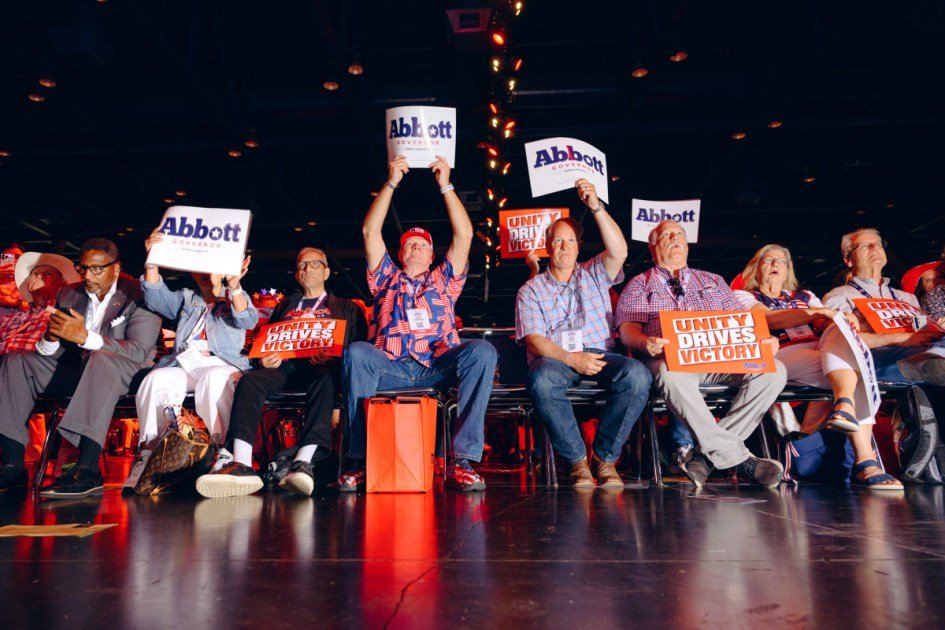
HOUSTON — As the Republican Party of Texas Convention began last week, signs of unity appeared everywhere. But by the end of the three-day biennial gathering, it was not clear how strong that harmony would remain.
Thousands of delegates saw it on the walls of the George R. Brown Convention Center in downtown Houston, where digital posters for the governor professed that “unity drives victory.” They heard the same message in speech after speech, when every speaker encouraged them to put aside differences after a brutal primary season and band together to defeat “radical” Democrats in the fall’s midterm elections.
“Sometimes in primaries, the differences feel massive,” U.S. Sen. Ted Cruz, who will be the state’s senior senator, told delegates. “Until you look to November and see the differences with the other side, there are very real differences on the ballot.”
Speaking at the conference for the first time since 2018, Gov. Greg Abbott vowed to demolish Democrats — but urged those gathered to stick together to accomplish the task. His once-foe former state Sen. Don Huffines, the GOP nominee for comptroller of public accounts, said he endorsed all Republicans on the ticket and told the same crowd that they had to “crush the atheists and the leftists.”
However, the unity showed signs of fracturing throughout the week.
Delegates ousted their party chair, shaking up the top of the Texas GOP months before a crucial election. They booed the first sitting Texas House leader to address the convention, even after he oversaw Republicans claim a wish list of socially conservative victories in the Legislature. Some lamented what they described as poor attendance at the convention, despite a slate of top elected officials on the schedule. Meanwhile, it became apparent that some age-old fights, like disagreements over tort reform, remain far from settled.
At risk is the unity that, according to party leaders and elected officials, will be imperative to ensuring Texas remains ruby red as the party braces for a bruising midterm cycle in which Democrats hope to claim a statewide victory for the first time since 1994. But some of the same GOP leaders professing unity did not always practice it during the convention.
In his Friday speech, Lt. Gov. Dan Patrick suggested that U.S. Sen. John Cornyn was a “sore loser” after being defeated in his primary runoff by Attorney General Ken Paxton. He chastised Cornyn for making “bad comments” after the May 26 race and not backing Paxton.
“Patrick is worried about losing in November,” Cornyn said Saturday. “He should be.”
To be sure, Patrick also called for GOP solidarity, which he has been advocating for. Before the primary between Cornyn and Paxton, he warned that the Republicans will have a difficult time maintaining control of the Texas House. He trained his fire during his speech more pointedly at Rep. James Talarico, the Democratic nominee for U.S. Senate who will face Paxton.
Still, despite such warnings about the threat Democrats present as they tap into anti-Trump sentiment, the Texas GOP proceeded with pursuing a hard right agenda that will seek to further crack down on various immigrant populations in the state, secure its control over elections and erase the ever-thinning line between church and state.
No issue received more attention in party committees, panel discussions over lunch and platform deliberations than anti-Islam sentiment, a threat identified by Republicans who have vowed to halt the “Islamification” of Texas.
”This is a crisis, this is an emergency,” one woman told a group tasked with drafting the party’s legislative priorities, pleading they stop Sharia law. “I need your help.”
Lack of unity
Republican Party of Texas Chair Abraham George started the convention with an assortment of endorsements for his reelection, including one from Paxton, whose grassroots support helped propel him to become the GOP nominee for Senate.
Neither the public backing nor the party’s legislative accomplishments last year could save George from being canned by delegates.
George continued to preside over general sessions after conceding defeat to his former running mate, D’Rinda Randall, whose campaign knocked George’s leadership even though she served as his vice chair for the last two years.
The one-term chair had faced criticism for the party’s finances and struggles to engage members.
Nevertheless, George tried to ease any differences with his concession statement, writing that “our mission continues” and calling for unity as his shocked supporters pledged to keep their new leader accountable.
One of the more contentious displays of friction occurred at a booth for the new “Sharia-Free Texas Caucus,” around the corner from a pair of giant cowboy boots where attendees stopped to pose for photos.
Delegates Amjad Muhtaseb, Samar Halabi and Tarek Hussein got into a heated exchange with Rep. Brent Money of Greenville, who founded the caucus, over religion. The party tried to remove Muhtaseb and Hussein as delegates for their ties to the Council on American-Islamic Relations, the nation’s largest Muslim civil rights group that has been declared a terrorist organization by the governor. The convention could not remove them under party rules.
Hussein is the founder and former president of the group’s Houston chapter, while Muhtaseb attended a CAIR press conference in solidarity with the organization after the governor’s designation.
George encouraged them to depart the GOP.
“You know where the entire body stands,” he said from the lectern in the main ballroom at one point. “I would strongly advise you to leave our caucus. There is a Democrat convention happening in a couple of weeks. Join them.”
On Friday, House Speaker Dustin Burrows made history by taking the stage to address delegates, which no sitting speaker had previously done. Immediately, jeers emerged from some areas. When he said he would keep his speech short, someone shouted “thank you!”
In a conference room up a set of stairs, a few dozen people gathered for a presentation by a group that opposes Texans for Lawsuit Reform, the biggest donor in Texas politics that advocates for tort reform measures. The new organization, called Republicans Against TLR, focused on the contributions Texans for Lawsuit Reform had made to Democrats over the years and critiqued legislation boosted by the group.
During the question portion of the presentation, a man noted that the lieutenant governor’s son, Ryan Patrick, who had received his own share of boos during a speech earlier in the day, was the new chief executive of Texans for Lawsuit Reform.
“Do you think he sold out?” the man asked. “Is he a reformer or what?”
Behind the man in the back of the room, Ryan Patrick stood watching.
Hard right
The week began with members of the public raising their biggest worries, which extended from stopping Sharia law in its tracks to stopping data centers from invading quieter parts of Texas.
Party delegates, it appeared, listened.
Rep. Cody Vasut of Angleton said at a data centers panel discussion that he intends to work on legislation that would expand local counties’ authority to regulate the development of data centers. Such proposals have long caused disagreement between lawmakers who want to curtail local government’s power and members of the Legislature who want to be attuned to residents’ worries and concerns.
But the conflict is reaching a boiling point in the current interim as residents across Texas learn about plans for massive data centers near their homes, sometimes through open information requests not from developers. Furious and worried, many have taken to testifying at county commissioners’ hearings to beg their local officials to stop the plans, but most have been unsuccessful.
Taking on data centers might also place the state in the rare position of being at odds with President Trump, who is championing data centers and has said he does not want state-level regulations.
“It matters that Texas is able to maintain its ability to pass legislation that you want us to pass,” state Sen. Angela Paxton of McKinney said during another panel discussion on the hot topic. “I understand the idea of regulatory consistency in the United States.”
But, she added, “we don’t want what is done at the federal level to be weaker than what we are doing in Texas.”
After years of lurching ever to the right, it appeared the party that has controlled state government for a generation will continue that trajectory.
Delegates edited the party platform its statement of beliefs, to support the expansion of school vouchers, challenging court precedent that grants undocumented students the right to free public education and a variety of proposed solutions to Republican concerns about Islam.
The platform now states that: public schools should teach that Sharia law is incompatible with the U.S. Constitution; schools and businesses should be stopped from being required to provide time for prayer multiple times a day; and no laws should be passed requiring schools to serve halal food or other cuisines that are in accordance with other religious dietary standards.
At the same time, the platform was amended to reaffirm conservative Christian values that have defined some of the Texas GOP’s biggest victories in recent years, like displaying the Ten Commandments in public schools and allowing for prayer time for Christian students.
For instance, the party principles now state that the party recognizes the “historic and continuing influence of Christianity in securing our rights and liberties as endowed by our Creator.”
In his speech, Dan Patrick — a champion of Christian conservative values — embraced the Christian nationalist label he said Democrats want to stick on him.
“To me, that means I love God and I love America,” he said to a roar of approval. “If that’s what a Christian nationalist is, here I am. That means that they’re anti-Christian, anti-country.”
Food
Knicks win NBA championship for first time in over 50 years

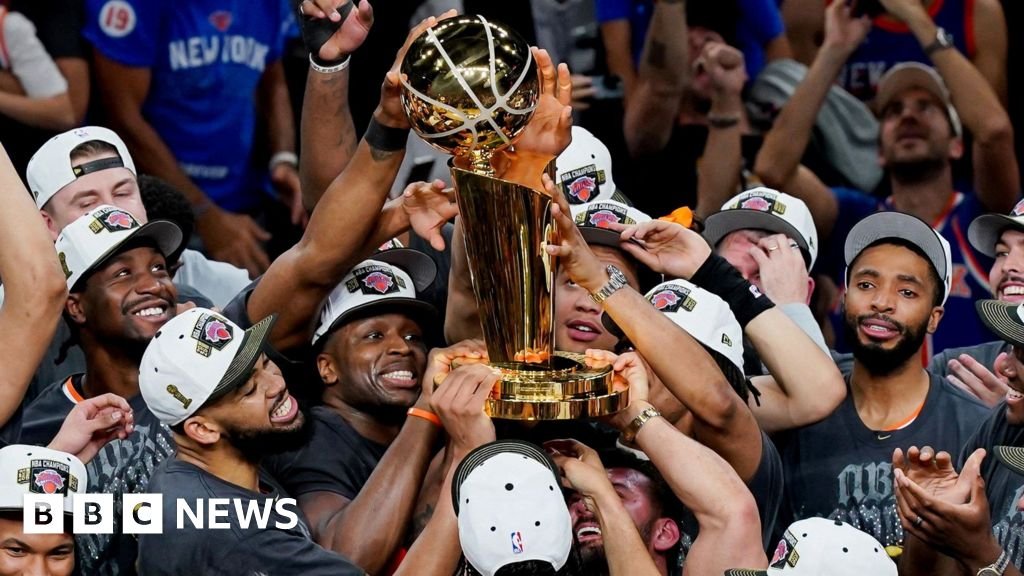
New York Knicks win NBA championship for first time in over 50 years
The New York Knicks won the National Basketball Association championship for the first time in over 50 years, sending the city and fans into a frenzy after the long-awaited victory.
The Knicks clinched the title on Saturday night against the San Antonio Spurs, 94-90, in the fifth game of the best-of-seven series.
While the game was in Texas, New Yorkers took to their hometown streets in droves to watch and celebrate the milestone moment for the team, its fans and the entire city.
Some fans also made their way to Texas where the two teams faced off at the Frost Center, the Spurs’ home arena.
Elizabeth Madigan flew to San Antonio from New York Friday night ahead of Saturday’s game.
“I’ve been waiting for this, honestly most of my life. The last time the Knicks won, I was 6 months old, and so I can’t begin to describe how excited I am. It’s been unbelievable,” she said.
“I definitely had my doubts. But we did pull it off. Knicks forever.”
This season has represented a stunning reversal of fortune for the Knicks after decades as one of the worst teams in the league. The last time they made it all the way to the finals was in 1999, also against the Spurs, who ultimately beat them. Their last finals win was even earlier, in 1973.
They held a 3-1 lead in the series heading into Saturday’s game.
“I grew up watching the Knicks. They were so bad for so long,” said Jake Minicucci while sitting with his friends on the patio of a Manhattan sports bar “This might be the first time I cry in a very long time, tonight.”
Fans’ anticipation before the game was like a champagne bottle about to pop its cork.
“This city is electric,” said Jake Minicucci while sitting with friends on the patio of a Manhattan sports bar. “I’ve never gotten so many head nods, everybody knowing we are in it for the Knicks together.”
The 50-plus year drought was very much on the minds of some Knicks fans including Daniel Brown who said the evening had the potential “to be one of the best nights in the history of this city.”
“I’ve lived here all my life, I’ve never experienced anything like this,” said the 24-year-old.
Ahead of the game, New York Mayor Zohran Mamdani said in a social media post that the city was working with the Knicks to host watch parties outside Madison Square Garden, Radio City Music Hall and Wollman Rink.
“As we celebrate, be responsible, look out for one another, stay safe, be smart, and make this a night that reflects the very best of our city,” the mayor said.
His call for safety came after a few instances of violence in New York City against Spurs fans, including one assault that landed a fan in the hospital and another in which a fast food worker wearing a Spurs jersey was attacked, according to local reports.
Madigan said that in San Antonio, even as a Knicks fan, she felt welcome.
“Honestly the San Antonians have been so loving and welcoming despite the obvious competition,” she said.
Both Knicks and Spurs players have condemned the violence and harassment.
Ahead of Saturday’s Game 5, fan travelling to San Antonio from New York to attend the game were in a frenzy about possibly getting locked out of the arena.
In a note on its website for the game, Ticketmaster said purchases by those living farther than 150mi (241km) from the San Antonio arena would be cancelled and refunded without notice.
New York Governor Kathy Hochul posted on social media: “Knicks fans finally get within one game of a championship and their reward is having their tickets canceled?”
Food
Thousands March in Rome Over ‘Remigration’ Measure

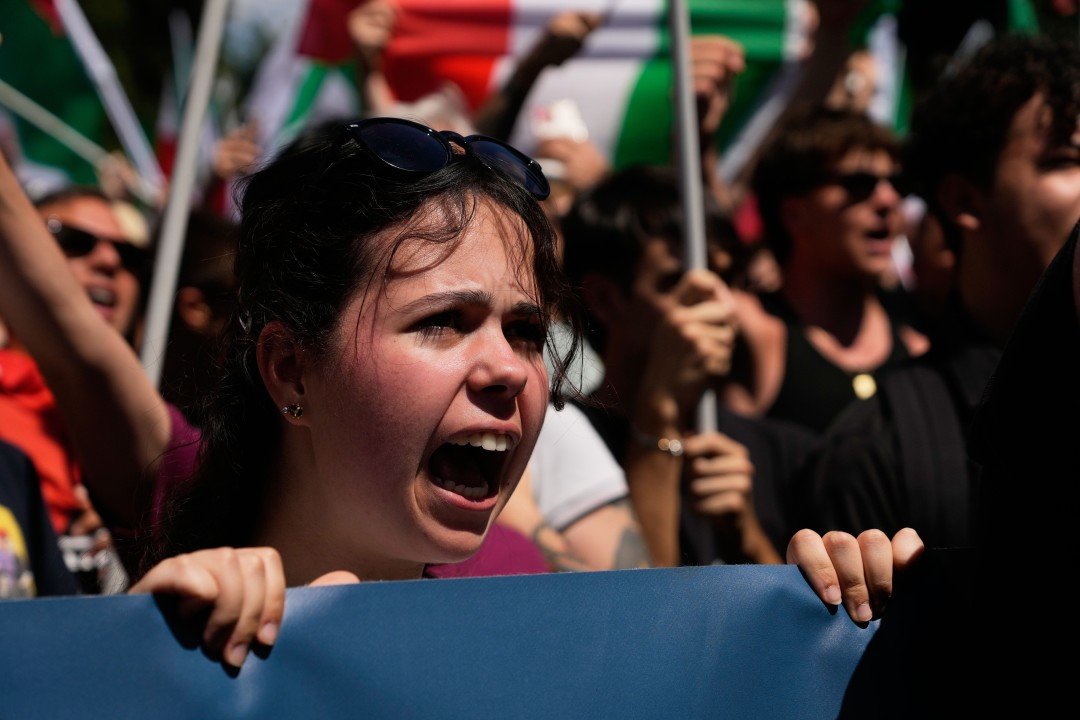
Tens of thousands of people marched through the streets of Rome in anti- and pro-migration demonstrations on Saturday, after a far-right citizens initiative seeking sweeping measures against migrants garnered enough support to be brought to Italy’s parliament. The “Remigration and Reconquest” initiative gathered the 50,000 signatures needed to trigger parliamentary discussion, pushing the once-fringe concept of “remigration” into the political mainstream, the AP reports. The proposal promoted by right-wing groups calls for sweeping measures against foreigners, including coercive returns, incentives to leave the country, and broader policies that critics contend could extend to legal residents.
Several thousand demonstrators from around Italy gathered for the anti-migration march, singing the national anthem. On several occasions, many of them raised their arms in the fascist salute, shouting “Duce! Duce!” in reference to dictator Benito Mussolini, who ruled Italy from 1922 to 1943. A rival, pro-migration demonstration saw tens of thousands of people take to the streets in another part of Rome on Saturday evening. That march was attended by various left-wing groups and trade unions, with some demonstrators waving Palestinian flags. Thousands of police were deployed to ensure the two groups would remain apart. No violence was reported.
The debate on migration represents a balancing act for Premier Giorgia Meloni’s right-wing coalition. While the anti-migration League has backed opening discussion, Meloni’s Brothers of Italy and centrist allies have been more cautious about endorsing a proposal linked to extremist circles in the face of concerns over legal risks and internal divisions. Opponents, including rival parties and legal experts, argue the proposal would violate constitutional and international anti-discrimination principles by targeting people based on ethnic background, including naturalized citizens and their descendants. A vote on the measure has not been scheduled.
Read These Next
Strict about your kids’ screen time?
The cost of this food product is the
Algae returns to DC’s
Rare goblin sharks filmed for first time
Food
fat diet tied to insulin resistance in mouse study


Researchers at the Dasman Diabetes Institute in Kuwait examined the effects of feeding mice a sugar-free, low-fat diet, which they compared to a control group.
The mice on the sugar-free diet developed insulin resistance and other metabolic changes.
The sugar-free group also experienced increased inflammation in both the colon and liver.
Many people who start a new diet reduce or eliminate sugary foods and beverages to improve their health. Some eating plans, such as the carnivore diet, remove nearly all dietary sources of sugar and carbohydrates.
However, a new study in mice suggests that completely eliminating sucrose, commonly known as table sugar, from a low-fat diet may have negative effects on gut and metabolic health.
Researchers fed mice a sucrose-free, low-fat diet for 16 weeks and found they developed impaired glucose control and experienced significant changes in their gut microbiome compared with mice fed a low-fat diet containing sugar.
The researchers presented their findings at ENDO 2026, the annual meeting of the Endocrine Society. These findings are yet to undergo peer review.
Sugar can be found in many foods and may be present naturally, such as in fruits, or it may be added, such as in soda or candy.
Excess added sugar consumption has been linked to obesity, type 2 diabetes, and cardiovascular disease, leading many people who want to improve their health to try low-sugar or sugar-free diets.
In the new study, researchers looked into the effects of a sugar-free, low-fat diet in mice.
The researchers divided 12 healthy mice of similar weight into two groups. The control group consumed a low-fat diet containing sugar, while the other ate a sugar-free, low-fat diet.
Both groups received similar calorie amounts to rule out differences in food amounts contributing to findings.
Over the study period, the researchers tracked multiple markers of metabolic health, gut health, and inflammation. They wanted to see how the mice processed glucose and responded to insulin, and also how the composition of each group’s gut bacteria changed over time.
At the end of the study, body and liver weights remained similar between the two groups.
Despite no differences in weight gain or calorie intake, mice on the sugar-free diet showed signs of worsening metabolic health.
This group of mice showed evidence of impaired glucose tolerance and reduced insulin sensitivity, both of which are linked to an increased risk of type 2 diabetes.
The researchers also observed significant changes in hormones involved in metabolism and appetite regulation, as well as lower fasting insulin levels.
One notable finding of the study involved changes in the gut microbiome and inflammation in the sugar-free mice. The researchers found lower levels of several beneficial bacteria that help support gut health and regulate inflammation, including Lactobacillus murinus.
Additionally, they noted an increase in bacteria linked to inflammatory conditions which was accompanied by signs of inflammation in the colon.
Another concerning change the researchers noticed in the sugar-free mouse group was that they developed signs of fatty liver disease and liver inflammation.
While more research is needed to determine whether these findings apply to humans, the results suggest that eliminating sucrose from a low-fat diet may alter the gut microbiome and affect metabolic health, highlighting the importance of overall dietary balance.
Mir Ali, MD, bariatric surgeon, bariatric medicine specialist, and medical director of MemorialCare Surgical Weight Loss Center, spoke with Medical News Today about the study.
“I was surprised to see this result, as reducing carbohydrate and sugar intake is the mainstay of a number of successful weight loss strategies,” Ali, who was not involved in this research, said.
He noted that a large body of research supports the health benefits of reducing added sugar intake and cautioned against overinterpreting the findings.
“Overall, I think the positive benefits outweigh the possible negative effects,” Ali offered.
Ali mentioned that further studies need to focus on humans to see whether these results carry over. He also discussed the strategy he suggests for his patients who are trying to lose weight.
“What I recommend to my patients on a weight loss journey is that they should emphasize protein and vegetables in the diet and reduce carbohydrates and sugars,” Ali told us. “There is enough evidence to support that this is better for burning fat and overall metabolic health.”
Nneoma Oparaji, MD, a Houston-based physician specializing in lifestyle medicine and obesity medicine, likewise not involved in this research, shared her thoughts on the study with MNT.
“The biggest takeaway is not to focus on a single nutrient or single study. Healthy eating is about overall dietary patterns, not a single ingredient.”
– Nneoma Oparaji, MD
Food
Spencer Pratt After Loss in LA: ‘It’s War’
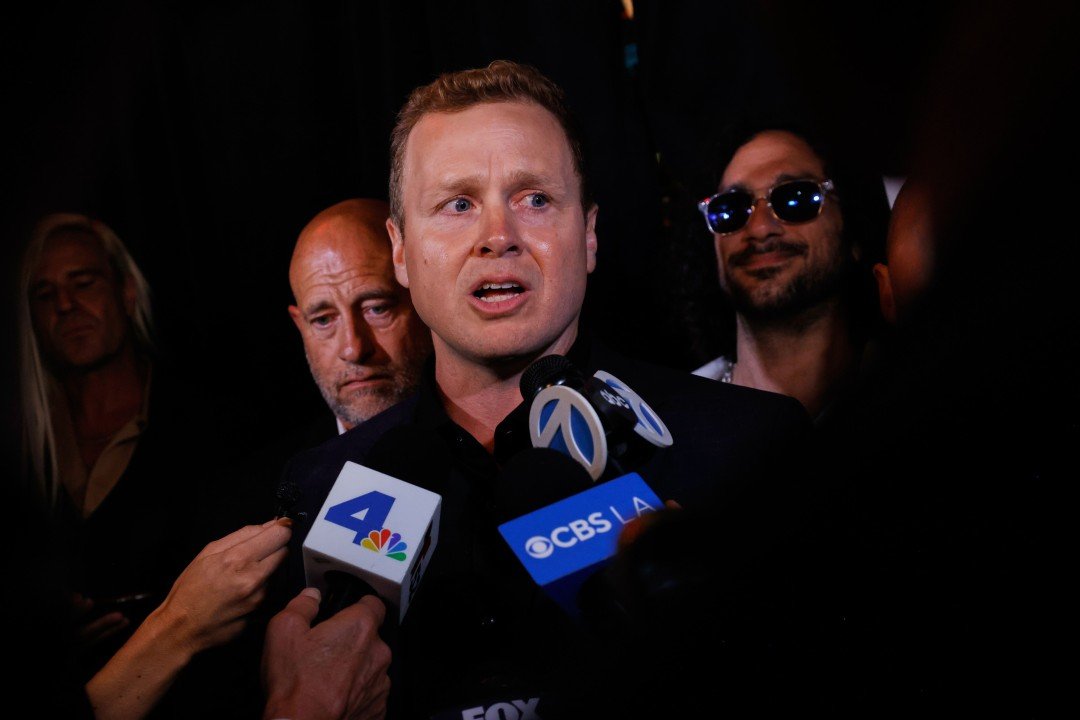
Spencer Pratt’s bid to run Los Angeles may be officially over, but he’s signaling that his fight is just getting started. In a three-minute video posted on Friday, the third-place finisher in the mayoral primary appeared to bow out—then launched into a blistering attack on Mayor Karen Bass, Councilmember Nithya Raman, and the state of the city they’re vying to lead, per the Los Angeles Times. Pratt, who took about 26% of the vote to Bass’ 34% and Raman’s 29%, said the “campaign portion” of his “mission to save Los Angeles” was ending, but he promised to keep using his national platform against what he called a “corrupt machine” in what he calls “the next, more interesting phase,” per CBS News.
He labeled Bass and Raman with a string of insults, including calling them “two morons,” and urged voters to “pick your demon,” suggesting he or allies have damaging recordings that could force one of them to resign, per the Times. Neither of the women’s campaigns responded to requests for comment, nor did Pratt’s. Citing homelessness and public safety, he predicted more business closures and service cuts and warned the pair they should worry about possible FBI raids. Freed from “campaign laws,” he said, “It’s war,” ending the video with the word “WAR” on screen.
Read These Next
Strict about your kids’ screen time?
In these states, more of folks’ paychecks go
The cost of this food product is the
Algae returns to DC’s
Food
I reviewed the Fitbit Air, and it (almost) completely won me over

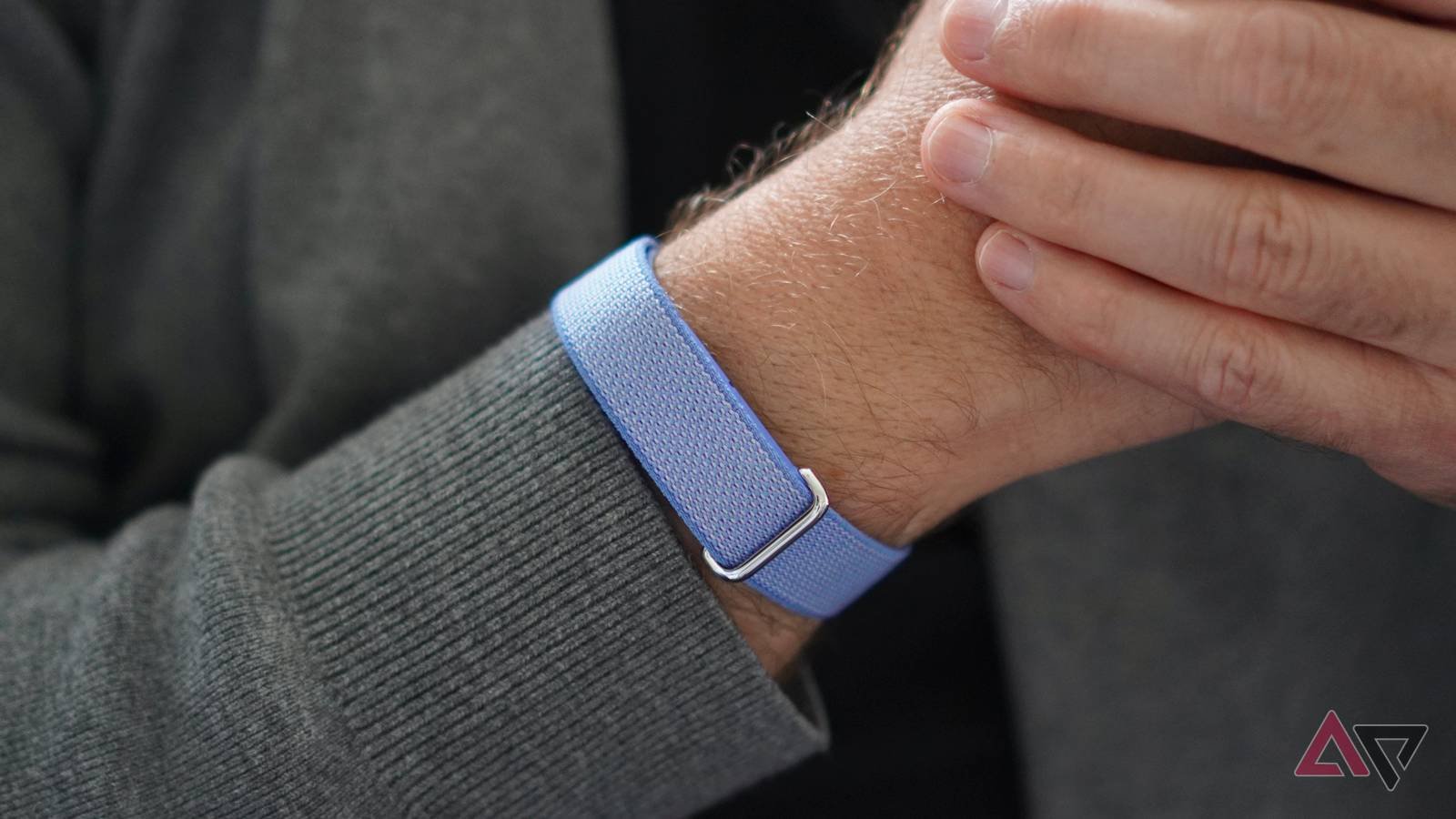
The Fitbit Air is 2026’s most hyped wearable product release yet, helped by its back-to-basics design, innovative AI coach, and reasonable cost.
Hype doesn’t always translate to long-term desirability, though, and those same advantages can quickly turn into reasons to abandon wearing the Fitbit Air soon after purchase.
After two weeks with the Fitbit Air, I’ve got a good idea if it’s a threat to Samsung, Apple, and Oura, or if it’s a flash-in-the-pan hype product that’s all set to be forgotten.
Price, specs, and availability
The Fitbit Air is available to buy now for $100 through Google’s own online store, Amazon, Best Buy, and other retailers. There are four colors: Obsidian, Lavender, Berry, and Fog. These colors match the Google Pixel 10a.
It comes as standard with the Performance Loop Band, which is made of recycled polyester and stretchy yarn. Alternatively, you can purchase a silicone Active Band in the same colors for $35, or the polyurethane Elevated Modern Band with a stainless steel buckle in Moonstone, Porcelain, or Obsidian for $50.
To use the Fitbit Air with Google Health’s AI Coach, you will need to pay for the app’s Premium subscription, which costs $10 per month or $100 per year. Alternatively, Google Health Premium is also one of the benefits in the Google AI Pro subscription for $20, which also includes extra Google storage, AI tools, and YouTube Premium Lite. The subscription is an option.
The Fitbit Air competes with other screen-less fitness trackers, including the Oura Ring 4 and Whoop MG, which both require a subscription, and smartwatches such as the Samsung Galaxy Watch 8 and Apple Watch Series 11.
Fitbit Air design
Distraction-free and almost unnoticeable
The Fitbit Air is a return to the early days of fitness tracking hardware. It consists of a central, screen-less module that contains the sensor array and fits into a custom band.
As standard, it comes with the fabric Performance Loop Band. It’s 18mm wide, has a metal clasp, and a hook-and-loop fastening.
The Fitbit Air is as basic as connected wrist wear gets, which is a huge part of its appeal. It weighs just 11 grams, and it disappears on your wrist. For context, my Oura Ring 4 Ceramic is 7 grams, and a Samsung Galaxy Watch 8 is 46 grams with the strap.
It’s a genuine 24-hour-a-day wearable and is unnoticeable when you use it to track sleep. The simple fastening makes it highly adjustable, and tightening it up when exercising takes seconds. If it gets wet, it doesn’t take long to dry.
Like a smart ring, the Fitbit Air’s simple design makes it ideal to wear opposite a mechanical watch, and I like the way the available strap colors match the Pixel 10a.
Also, like a smart ring, it doesn’t deliver notifications and doesn’t vibrate on your wrist unnecessarily. You can set an alarm to wake you up with a subtle vibration, though.
The Fitbit Air is suitable for everyone, doesn’t get sweaty or annoying to wear, is virtually unnoticeable once you’re used to it after a day, and the small amount of customization allows you to make it your own.
Fitbit Air app
Welcome, Google Health?
The Fitbit Air requires the Google Health app, which has replaced the Fitbit app and the Google Fit app. It’s free to use, but does have a Premium subscription option for $10 per month, which provides access to the Google Health AI Coach. I have been testing the Fitbit Air with Google Health Premium.
The top of the main screen is dedicated to key data points, such as steps, readiness, sleep, and progress towards a weekly cardio goal. You can scroll through this panel to find more details, such as calorie burn, current heart rate, plus manually added information like hydration and meal logging.
A Fitness tab accesses workout plans, either those you’ve created or pre-made plans from Fitbit. Scroll down the page, and you get a repeat of many stats shown on the main screen. The Sleep tab shows data related to your sleep, along with mindfulness and breathing exercises.
The final tab is Health. Top of the list is the Vitals screen, where your breathing rate, blood oxygen, resting heart rate, heart rate variability (HRV), and skin temperature variation can be viewed. You can also find yet more ways to see the same data presented on the main screen. Google Health isn’t afraid to repeat itself.
I had no problem connecting the Fitbit Air to Google Health, and it has remained connected throughout my time with it. The app’s design is modern and makes great use of space, but it does take a while to learn, and there is still work to be done on the design and formatting.
A lot of data and graphs are hidden beneath several button taps, and you’ll have to spend time learning where to find the most useful data. For example, to find your resting heart rate overnight, you don’t tap the Sleep button or go to the Sleep tab, but the Health tab instead.
Google Health also focuses on the here-and-now, and finding historical data, such as previous workouts, or data that extends further back than a week, takes a while to find. Workout plans and data from them are a mess, and the deeper you dig, the more confusing it all gets. On the surface, the app is fine, but when you want details, it quickly gets confusing.
Fitbit Air performance and accuracy
How does it compare to the competition?
In addition to daily movement and sleep, the Google Health app tracks a host of exercises, from running to swimming, and yoga to kayaking.
During my time with the Fitbit Air, I have compared its results to the Oura Ring 4, the Whoop MG, and the Samsung Galaxy Watch 8.
For the most part, the Fitbit Air, Oura Ring, and Whoop all agree on the average heart rate during a workout, but the Fitbit Air does overestimate calorie burn compared to them.
During sleep, it also mostly aligns, but is often harsher with its overall sleep score compared to the Oura Ring. However, it’s during sleep that I’ve seen the biggest discrepancy in its data compared to rivals.
The Fitbit Air consistently reports a much higher average resting heart rate during sleep, often recording figures around seven beats per minute (bpm) higher than the Oura Ring, and three bpm higher than the Whoop.
It has settled down a little the longer I’ve worn the Fitbit Air, and is possibly still calibrating, but over-counting data like resting heart rate and calorie burn will cause problems with other data points and progress towards goals. The Fitbit Air is not a medical device, so the figures are estimates.
Automatic workout tracking has been reliable, and it takes a moment to start a workout from the button on the main screen. However, remember the Fitbit Air does not have a screen, so everything has to be viewed and managed in the Google Health app. There’s no built-in GPS either, so you have to rely on your phone.
Perhaps the biggest issue with the Fitbit Air and Google Health’s performance is how slow it is to update data. Sleep data, exercise data, and the AI Coach’s most recent advice take a while to show up in the app, which can be frustrating when you want to quickly see up-to-date information. It can also lead to overlap, and to advice being out-of-date when it eventually arrives.
Fitbit Air and Google Health AI Coach
The Fitbit Air’s big feature
Data is almost secondary to the Google Health app’s primary feature, which is the AI Coach. If you don’t pay for the subscription, this is the primary feature you’ll miss out on.
The AI Coach provides general overviews of your sleep, daily exercise, and workouts. It’s aware of weather trends, will take into account any medication you take if you tell it, and prompts you to interact with it to outline your daily exercise and activity plans.
During the initial setup, the AI Coach is surprisingly effective. I told it I wanted to maintain my current regime, and it accepted this, created custom workout plans, and keeps me honest and motivated each day. It does not push you to do more or send notifications suggesting you get out and run if you want to meet a target.
The AI Coach can interact with the app, and this can be valuable, as it reduces the time it takes to create and modify exercise plans. If you’re searching for the hidden data, you can also ask the AI Coach about it. This is where the app differs from less AI-focused health apps.
For example, I asked the AI Coach about my resting heart rate during sleep and if anything needed addressing. It summarized the data without me having to go and look for it, and then trying to interpret it myself. It adds in graphs and general advice in its lengthy reply.
Because the AI Coach is based on Google Gemini, you use natural language to chat about your data and plans. You can type this into the app, or use your voice. Google Health expects you to interact with the AI Coach, and a lot of the app’s value comes from building a “relationship” with the Coach.
Unfortunately, the usual negative AI traits exist. It’s very verbose, it always wants you to continue the conversation, and it doesn’t always get things right. While I found the workout plan generation helpful, it did need things clarified before it got the cadence and rep count right. Like other AI tools, it contradicts itself often, and it can get confused about what exercises you’ve done and when.
I’m not a fitness fanatic, and treat exercise as something I should do, rather than something I want to do. Google Health and the easy-to-wear Fitbit Air suit my requirements perfectly. Those who are more hardcore may find the app too basic, and the AI not smart enough to help them improve. AI skeptics will also find plenty to dislike.
That said, I really recommend giving it a try using the free Google Health Premium trial, as it may end up working for you. It’s by far the most useful and most personal AI I’ve used in a health and fitness app yet.
Google Health controversies and problems
Not everyone has welcomed Google Health
For my purposes and relatively basic health and exercise tracking, Google Health is a decent partner, once the layout has been learned.
However, experienced Fitbit device owners and those with years of data stored and tracked in the old app have not found the changeover to Google Health very easy.
Issues around food tracking, calorie tracking, integration with other connected devices, in-depth data points such as body mass index (BMI), a lack of customization, not enough workout options, and a push to use the AI Coach have frustrated many.
This has resulted in a 3.7-star rating on the Google Play Store at the time of writing for Google Health.
Everyone’s requirements and preferences for a health and fitness tracker will be different, so these issues won’t affect everyone, but will frustrate others.
From my experience so far, the Fitbit Air and Google Health are more suited to general fitness tracking, almost edging towards lifestyle tracking, rather than hardcore sportspeople.
Fitbit Air battery life and charging
Just don’t lose the charger
The lack of a screen and requirement for a continuous connection to your smartphone mean the slim, light Fitbit Air makes the most out of its battery.
Google claims seven days of battery life on a single charge, and this fits in with my experience so far. The app will send a notification recommending you charge the Fitbit Air when it reaches around 24-hours of battery life remaining.
It’s recharged using a proprietary charging puck, which magnetically attaches to the back of the main module. You do not need to remove it from the band to charge, and the magnets are strong enough that it won’t accidentally fall off. It takes about 90 minutes to fully charge the battery.
Perhaps the only downside of this decent performance is the proprietary charging block. If you lose it, you won’t be able to use your phone’s charger to charge the Fitbit Air. Google sells a replacement charger for $25.
Should you buy the Fitbit Air?
Make no mistake, the Fitbit Air is a data-gathering device for Health’s AI Coach, and AI Coach is the app’s primary feature. If you don’t want to talk to AI about your health and fitness, then you may find the entire Air\Health experience lacking.
The slow syncing and AI advice updates, sometimes questionable data accuracy, hidden data that’s a pain to find in the app, and more of a focus on lifestyle and general fitness tracking than some may expect, are also reasons serious sporty people may not enjoy the Fitbit Air and Google Health.
However, if you’re already into AI tools like vibe-coding and AI companionship, feel the Oura Ring isn’t quite sporty enough for you, don’t want to make health and fitness tracking your entire life, and appreciate wear-and-forget hardware, then I think you’ll really get a lot from the Fitbit Air.
Additionally, while there is a subscription attached to Google Health, you can pay for it and the Fitbit Air for two years, and still come out having paid quite a lot less than you would for the Oura Ring, Galaxy Watch 8, or Whoop.
Despite my review being complete, I won’t be taking the Fitbit Air off. I wasn’t expecting it to fit into my life quite so easily or quickly, but it has turned out to be a far more useful, interesting, and motivational fitness tool than I expected.




How did footballers train during the 1966 World Cup? #BBCNews


By-Electioncast: Could Restore Britain Help Andy Burnham Win? | BBC Newscast
Paddy is back from holiday and he's also back from Ashton-in-Makerfield. He joins Laura to discuss a new poll that...


Mullin asked whether ICE agents will be at midterm polls
Department of Homeland Security Secretary Markwayne Mullin said US Immigration and Customs Enforcement agents would …


Teen shot and buses torched in Manhattan after NBA win for Knicks. #NewYork #Knicks #BBCNews


Aftermath of Knicks win celebrations
As Knicks fans flooded the streets of New York on Saturday night, some victory celebrations became chaotic — leading to...


Inside the White House during the Iran war & project setbacks
A day-by-day look behind the scenes as Kaitlan Collins covers the White House for CNN during the first half of...


Ebola one month on: will the latest outbreak in DRC become the most deadly yet?
When an orphanage in Bunia took in a newborn baby after his mother died from Ebola, the nuns who ran...
Protesters gather in Geneva for anti-G7 march
GENEVA (AP) — Thousands of demonstrators converged Sunday to show their discontent with the G7 group of rich countries, with...
Microsoft’s CEO Suggests The Bill Has Come Due For Xbox
Are we at a big inflection point for Xbox or is Microsoft just going to double down on what it’s...

Amazon Prime Day 2026: Early deals are already live from Apple, Keurig, Hanes, Shark and more, plus everything we know about summer’s biggest sale
“I’ll wait until Prime Day,” you say as your ever-growing wishlist gets even longer. Well, consider this your cue to...
-

 LifestyleNews1 week ago
120 minutes of strength training per week may help extend lifespan
-

 Politics3 days ago
What to know about the stabbing that set off fiery riots in Northern Ireland
-

 Business23 hours ago
How much of Musk’s wealth comes from government help? Virtually all of it
-

 Video2 days ago
Download fans say what they love about the festival. #DownloadFestival #BBCNews
-

 HealthNews2 days ago
The people of Okinawa, Japan only eat until they are about 80 percent full, then stop — and the practice has been linked in multiple peer-reviewed studies to lower rates of cardiovascular disease, slo
-

 Video2 days ago
Why SpaceX IPO isn't about space. #SpaceX #ElonMusk #BBCNews
-

 Food2 days ago
Pope Leo’s plane was grounded. Then the King of Spain stepped in to help
-

 TravelNews2 days ago
My Paternal Instinct Should’ve Warned Me About Netflix’s Maternal Instinct