

Business
Amazon Prime Day 2026: Early deals are already live from Apple, Keurig, Hanes, Shark and more, plus everything we know about summer’s biggest sale


“I’ll wait until Prime Day,” you say as your ever-growing wishlist gets even longer. Well, consider this your cue to rev up that virtual cart. Amazon has announced that Prime Day is returning earlier than usual — from June 23-26, to be precise. That’s almost a whole Prime Week of savings to look forward to! And, true to form, Amazon is making the run-up to the event as enticing as possible by rolling out a plethora of palate-pleasing early deals.
We are already digging into the discounts to find you the very best deals. We shop for a living, and we know what counts as an impressive sale and what’s simply an amuse-bouche. Luckily for all of us, many useful summer essentials have already been added to the markdown menu. We spotted up to 55% off everything from the Hanes shorts our readers go crazy for — just $13! — to a crowd-pleaser Stanley tumbler at its lowest price in 30 days. Hungry for more? Let’s dig in.
Amazon Prime Day 2026 FAQs:
What deals do you typically see on Prime Day?
You’ll find major markdowns across categories of all types during Prime Day, but certain discounts truly shine. Amazon-branded products (from Fire TVs to Kindles and more) are often at their lowest prices of the year. We commonly see vacuums and countertop kitchen appliances on mega sale, sometimes up to 50-60% off.
While grills and pool accessories will likely get their prices slashed after summer, patio furniture sets and lawn supplies are usually down to impressive lows for Prime Day. The same goes for warm-weather wardrobe and skin care essentials, like sundresses and sunscreen.
What’s better, Prime Day deals or Black Friday deals?
Asking shopping editors to choose between Prime Day and Black Friday deals is like asking a chef to choose between salt and butter. Both savings events offer stellar prices on the most sought-after items. But since they land at different times of the year, there’s some variation in the offerings.
While Prime Day is a fabulous time to score Amazon-branded items and home essentials for less, Black Friday often sees steep sales on beauty, clothing, large appliances and laptops. Of course, discounts change from year to year, so if you have something specific on your wishlist, be sure to keep an eye out no matter which sale is taking place. Surprises happen!
Does Prime Day include discounts on subscriptions?
While Prime Day memberships themselves aren’t discounted during Prime Day, you can sign up for a free 30-day trial any time of year. (After that trial month, you’ll be charged $14.99 per month, and you can cancel at any time.) If you are between 18 and 24 years old, you may qualify for a free 6-month trial.
While the best Prime Day deals are often reserved for Prime members, you don’t necessarily need a Prime account to access deals that are open to everyone. That said, you’ll save more with one, in addition to receiving perks like free shipping.
How can I track Prime Day deals?
If you’d rather not have to refresh Amazon’s deals page during Prime Day, we’ve got you. Our shopping experts will be working around the clock — literally — to dig up and curate the best Prime Day deals, sparing you from the dud discounts.
On that note, let’s get the price-slash party going early, shall we? We’re already seeing bargains popping up, so beat the rush and add these deal-hunter-approved markdowns to your cart now.
Best early Amazon Prime Day deals: Top picks
Best Amazon deals: Rare deals
Best Amazon deals: Style
Best Amazon deals: Home
Best Amazon deals: Vacuums
Best Amazon deals: Beauty
Best Amazon deals: Kitchen
Best Amazon deals: Tech
If you have Amazon Prime, you’ll get free shipping, of course. Not yet a member? No problem. You can sign up for your free 30-day trial here. (And by the way, those without Prime still get free shipping on orders of $35 or more.)
The reviews quoted above reflect the most recent versions at the time of publication.
Business
Microsoft’s CEO Suggests The Bill Has Come Due For Xbox
Are we at a big inflection point for Xbox or is Microsoft just going to double down on what it’s been doing until things magically turn around, or it decides to spin off the gaming business altogether? That’s one of the questions that has arisen out of the recent whiplash between a great Xbox showcase last weekend and a harsh memo from Xbox CEO Asha Sharma promising a “reset” later that same week. Microsoft CEO Satya Nadella was asked what the model will be for its gaming business moving forward during a recent live event and while he didn’t offer many fresh clues, he certainly sounded disappointed that Xbox is so bad at making money.
“The challenge now for us is to think about how do you innovate both in hardware as well as in the games going forward in a world in an economically viable way,” he said on stage at The New York Times Hard Fork event on June 10. “I think one of the things that Asha, who has just taken over Xbox, put out is that we’ve invested a lot. No one can accuse Microsoft of not having invested for the last 25 years. And now we have to turn this into a sustainable business that delivers what is fundamentally one of the best sources of entertainment.”
He continued:
Still the challenge we have is we’ve not been monetizing that entertainment. In fact, if anything, we’ve been subsidizing that entertainment. In fact, there’s more monetization of Xbox games happening on YouTube than at Microsoft. And so that doesn’t mean we go do things that are unnatural. We want us to do what is really our job, which is to build great games, build great hardware, but we’ve got to do it in an economically sustainable way. So, I think Asha is really, 100 days in, and she put out a post saying in the next 100 days, she’s going to take a fresh look and make sure we deliver on what our fans expect of us both on the hardware side or on the publishing side.
The context around the discussion was Sharma’s unprecedentedly frank announcement last week that Xbox’s current accountability margins are only 3 percent, meaning that all of the money currently being spent on the business would actually be more profitable sitting in an index fund somewhere. That and the fact that the AI race, which the bulk of Microsoft’s business is invested in right now, is fueling historic spikes in prices for the components used to make gaming hardware. How do you launch a new console generation–Project Helix–into that environment and expect to succeed?
Nadella didn’t share a magic solution. “I think we have to find ways to deliver the games in which it is economically relevant for the customer and for us, so today there’s an issue, in fact, unfortunately, because of what’s happening with the cloud and AI, the prices have gone up, right?” he said. “It’s happening with PCs, it’s happening with phones, Xbox is impacted as well, so the scarcity of the semiconductor supply and memory in particular are having a massive impact on consumer electronics all up. That’s a temporal thing that I think we’ll get through, it is not going to be permanent, but there is a permanent thing which is what’s the Xbox model going forward and that’s where, if you think about it like PCs and consoles, both have their place obviously mobile has people playing elsewhere and so we have to now bring it all together while staying true to what we’ve always done.”
There are a couple of different ways to interpret all of this. The first is that this is just some media-trained gobbly gook you say on stage to make clear you understand the challenges facing Xbox without actually revealing any secret insights or master plan. The second is that Microsoft doesn’t know the answers to this yet and isn’t prepared to start signaling big strategy shifts until it has completed the latest round of mass layoffs and cuts across its sprawling gaming business.
Here are two other reads. Nadella is getting impatient that Xbox has been given over $80 billion in capital to acquire studios and publishers over the last decade and is still in third-place with terrible profit margins. Valve collects commissions by selling other people’s games on Steam. YouTube has a massive ad business built around creators making content around games, many of which were shipped by Microsoft (RIP Mixer). And here the company is on the cusp of the next console generation with a moat of its own: a lasting, structural advantage to help it make lots of money over the next five years.
Business
Welcome to California: land of plunder and hypocrisy

I was a fourth-grader in the public schools of California when I first learned about the Gold Rush. I remember our teacher, Mrs Dyer, passing down the story in the manner of lore.
On the morning of 24 January 1848, James Marshall, a New Jersey boy come west, stumbled upon four shiny nuggets alongside the American River. He tried to keep his discovery a secret, but the shout of “eureka” from the dirt streets of San Francisco rang out across the shore. It unleashed a force that could not be contained.
No need for manifest destiny. Overnight, 80,000 dreamers of every color, creed and country poured in.
I didn’t know back then how story became myth and myth became story. The sordid details of history would be mine to fill in. The Gold Rush was California’s first extraction, a flash that cannonballed the whole mad state into being, and it ended the way all such plunders do. A handful of wealthy San Francisco industrialists made off with the riches. Marshall died so poor he could barely cover the price of his burial.
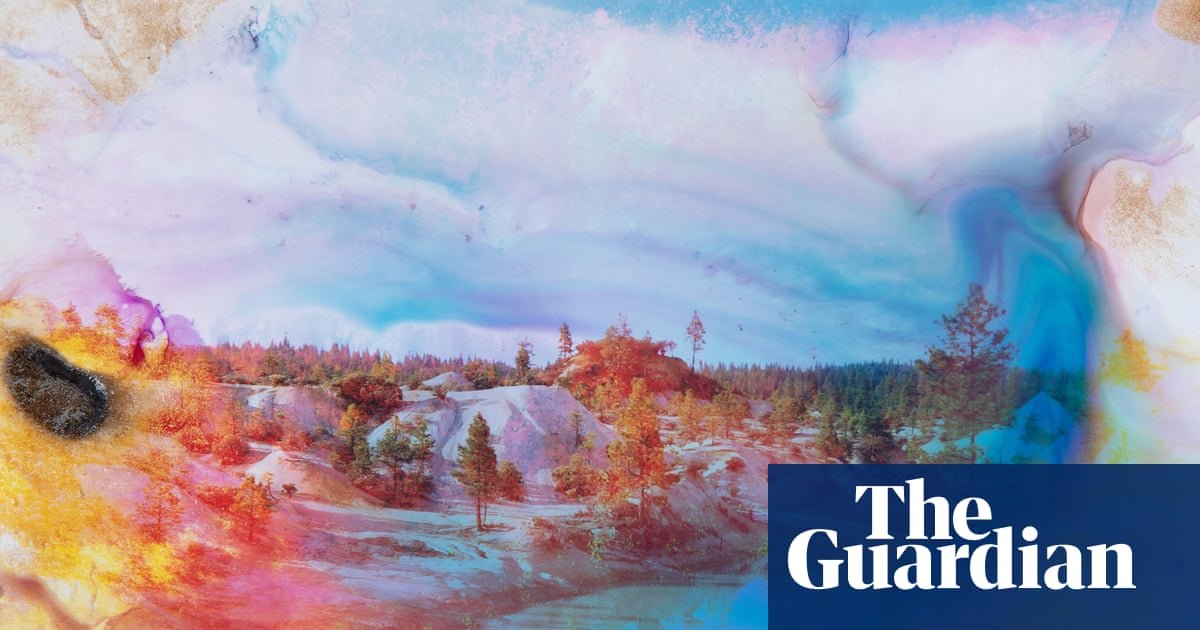
Hydraulic mining, the state’s first invention sold to the world, had blasted out an immense crater in the Sierra Nevada, a desecration that let loose a torrent of environmental ruin. In a landmark decision, a judge shut down the mining industry in 1884. The crater, a symbol of California creation and destruction, was declared a state historic park.
But the fever of gold mining did not pass.
All around me, from inland to coast, the fire of extraction still burns. I have spent more than half my life chronicling the exploitations of California, so I know delirium to be a condition of the land. It took up residence in the body of the infant state and went on to spawn further extractions – a piling-on of audacities – so that one unthinkable taking gave rise to an even more unthinkable taking, and on and on through the generations.
Now, the Golden state has spun itself into a new and more menacing age of plunder: the mining of water and the mining of our minds.
In the San Joaquin valley, farmers divert the great rivers and tap the ancient aquifer to grow nuts, fruits and vegetables. Their irrigated flatland is one of the most dramatic alterations of the Earth’s surface in human history. But the water can no longer keep up with the bounty. The drained earth, and all that has been built upon it, is sinking.
In Silicon Valley, lords of tech harness untold amounts of water and electricity to power more data-processing centers. The project of artificial intelligence feeds on human consciousness itself. Algorithms lay waste to our brains. Robots instruct our children how to expertly tie nooses to better hang themselves. Bombs guided by the pinpoint of AI erase Gaza and slaughter tens of thousands of innocents.
Each thing sprouts from the same fertile ground: the soil that is California. From my perch in the middle of the state, I swear I can feel an agitation disrupting the land and its people. Like a drone, it carries the sound of a hum.
California’s eternal grab for more has never seemed so desperate.
On a fall day, chasing the hum, I set out on the road to tell the story of two places, without heed, each pursuing one last extraction.
I am driving across the western flank of the San Joaquin valley, heading in the direction of Coalinga, a small town in Fresno county that owes its entire existence, right down to its name, to the digging for earth’s riches.
The leveled ground seems to be holding its breath. The nut harvest, nearly 5bn pounds of almonds and pistachios jolted off the trees in a filthy cloud, is already in swing. These are the factories in the fields conceived in the mid- to late 1800s by the same San Francisco barons who pocketed gold’s riches.
Year after year, Fresno county, where I was born and have lived most of my life, ranks No 1 in food production for the nation. Our crop counts on a sun that shines 300 days a year, a never-ending flow of water and a workforce that won’t tire. What are the men and women toiling in the fields if not a faithful extraction, whereby the beckoning arm of California, for a century and counting, reaches deep into the rural heart of Mexico for a new generation’s fresh bodies.
Our crop also counts on an ungodly amount of poison, which we regard as our dirty little secret never to be broached in a social setting. The year-round drift of insecticides, herbicides and fungicides floats from farms to schools to houses and into so many bodies now riddled with neurological disease. Parkinson’s Alley, as the epidemiologists at the University of California, Los Angeles have pinned it on the map, is the very road I’m driving on.
I had shut tight my car windows before leaving suburbia, but there’s no escaping the air, for this is California’s sacrifice zone. Miles and miles stink of dung and diesel. We dwellers of cornucopia breathe in more particulate matter than anywhere else in the country.
Our dairies aren’t mom and pop but factories of fine calibration that squeeze out milk from the teats of 1.3 million Holsteins. Out the other end shoots a river of shit that never stops flowing. The methane and ammonia toxify the already toxic air. Nitrates seep into the dwindling aquifer, fouling the wells people drink from.
Industrial agriculture was the first modern system of extraction that California exported to the world. It inspired the other systems – ballistic warfare, higher education, suburban sprawl, green energy – that we happily produced on a mass scale, pretending not to notice whether it was wonder or woe we were selling.
Our abuse of the state’s extraordinary gift of natural resources collides with our desire to clean the air and water, shrink carbon’s footprint and create solar, wind and battery power. This is California’s great paradox, we tell ourselves, a state big and complicated and enough of a work in progress that we can have it both ways.
In the halls of Sacramento governance, where our split personality is a grand exhibition, the recurring chant from Governor Gavin Newsom and his fellow Democrats is “abundance, abundance”, a magic wand that if waved wholeheartedly can summon the glories of California’s wide-open past.
The abundance agenda, in the fever of their dream, will bring AI prosperity, more housing and less homelessness, and a high-speed rail line that isn’t a boondoggle but will connect rural to urban, coastal to inland, red to blue, so we’ll finally become one. There’s no capitalism, they whisper, like California capitalism. Let it do what it can do once more.
On the outskirts of Coalinga, Chevron’s pump jacks are draining crude from the brown hills, and tens of thousands of cattle fatten up for slaughter in the largest feedlot in the west. There’s a gravel mine, a state prison and acre after acre of pistachio trees growing in dirt that still knows itself as desert. Turbine pumps hum, pulling up water that tastes like the sea. The pistachio, God blessed, is the one fruit-bearing tree that can stand such salt.
Jimmy Anderson pulls up to Coalinga city hall with a rumble. His big white Ford Raptor is gleaming. His leather boots are shiny, too.
He has come to the monthly meeting of the Pleasant Valley water district not from his own cattle feedlot on the dusty edge of town. He’s made the long drive from suburban Fresno, where his house sits along the river on the fifth hole of a country club. Anderson is partial to fifth holes. His multimillion-dollar house on the California coast, the one he flies to in his Swiss-made jet, is a chip shot from the fifth tee at Pebble Beach.
As to any insinuation that he’s a faux farmer, Anderson has a swift and practiced reply. His family on his mother’s side, the Mourens, herded sheep here as far back as the 1860s. This was before miners in Coalinga pulled out the coal that gave the town its name, before wildcatters struck a gusher named “blue goose” in 1898 and turned Coalinga into the No 1 oil field in the state. The Mourens survived hard times to amass tens of thousands of acres. A trust-fund kid now nearing 60, Anderson has been wily enough to add on to the family fortune.
This morning, a look of disquiet in his manner, he takes a seat in the meeting room with fellow farmers and district staff. Together, they listen as a young consultant with a water engineering firm explains just how dry they are. Whether they’re growing pistachios or row crops, overseeing thousands of acres of grazing land or feedlot ground, family farmers or big company men, their dominion as they knew it is no more.
For a century, California had allowed the full-throttle pumping of groundwater. The agriculturalists believed that the aquifer, straight down to thousands of feet, was theirs to do as they pleased with. Then the drought of 2012 to 2016, the worst dry times, struck. Politicians in Sacramento decided the state couldn’t very well regard itself as America’s great progressive hope if it kept signaling to agriculture to “get yours while you can”.
In 2014, California enacted the Sustainable Groundwater Management Act to limit the mining of our most imperiled resource. To keep the growers from complaining too much, the law came with a decade-long rollout. This led, quite expectedly, to a race to the bottom of the aquifer across five valley counties. Hedge funds, pension funds, the insurer John Hancock and the Mormon church joined a stampede of farmers, planting 600,000 more acres of nut trees and drilling thousands more wells. The land was sinking by the foot.
Only recently had the free-for-all exhausted itself, and the law showed its teeth. One million acres and more of valley farmland, one-fifth of agriculture’s footprint here, will now have to be fallowed to achieve something close to sustainability. The axe, as it should, will fall first on the farmland beyond the reach of a river.
Sustainable isn’t a word that rolls off the tongues of growers. When they figured out what sustainable meant – that California would be curtailing their draw of groundwater to no more than what the rain and snowmelt replenished each year – they did what entitled men do. They hired high-priced lawyers and reached for each other’s throats – a good ol’ western water war.
In Pleasant Valley, no river runs through the land. Instead, the groundwater is replenished by creeks that come alive only in hard rains. This has left the cattle ranchers and pistachio growers feuding over a small, briny aquifer that has plummeted 125ft since the first orchard was planted in 1991. The rancor over how they might share their dwindling resource has the sound of a reckoning long overdue.
Pleasant Valley measures 14,000 acres of permanent crops. To grow nuts and vegetables worth tens of millions of dollars each year, the farmers are pumping the aquifer to the tune of nearly three acre-feet of water for every acre. This is enough water to supply 90,000 households for a year. Such an extraction won’t outlast the next long drought.
Sustainability’s bottom line is brutal. To meet the state’s demands, farmers in Pleasant Valley are going to have to cut their pumping to a new level every five years. By 2042, their draw of the aquifer will be reduced by nearly two-thirds. At that point, having achieved a “safe yield” in the eyes of the state, their land will be radically altered. Six-thousand acres of pistachio orchards will need to be ripped out.
“That’s what sustainability is going to look like here,” says Brad Gleason, the district’s board president. “We’ll have to get smaller or smarter.”
I’ve known Gleason since the seventh grade, and when he says “smarter” I get what he means. There’s another option available to wealthy farmers like him: they can build a pipeline and haul in river water from northern California. This way, they’ll still comply with the state law and not drain the local aquifer dry. And they’ll be able to ship in enough water to keep every orchard bursting with nuts.
It won’t be cheap, Gleason says. The pipeline will cost $8m, and they’ll pay $3m a year for the imported water. But by simply extracting snowmelt from up north, the footprint of irrigated agriculture in Pleasant Valley can stay the same. Only the tired old delta, where the northern rivers converge, will feel the loss. This is how the growers plan to outwit the law.
Jimmy Anderson, the biggest landowner in Pleasant Valley, who not only ranches cattle but raises pistachios, has a different plan in mind. To maximize his draw of the local aquifer, he needs to change the district’s formula on sustainability. By late fall, he’s figured out the numbers. But before he can execute his move, he has to wait out Gleason’s tenure and then assemble a new board that will install him as president.
“Jimmy wants to undo everything we’ve worked on for the past year,” says Gleason, who lives near Anderson on 17-Mile Drive in Pebble Beach.
Gleason’s main duty as president is to meet the sustainability goals of the state and avoid costly sanctions for the district. His board, he believes, has adopted the fairest way forward. Standing in his orchard in the desert, he paints a future of environmentally friendly farming. “I was the first farmer to plant pistachios in this ground,” he tells me. “Agriculture still has a place here.”
Before Gleason is able to hand over his plan to the state, however, his tenure as board president ends. By the second meeting of the new year, Jimmy Anderson has executed his takeover. Not only does he make himself president, but with a majority of board members loyal to him, he sets in motion a scheme to monetize the water for his own gain.
As it plays out in stages, one rival board member marvels at Anderson’s execution. Like jiujitsu, he says, you must see his moves in slow motion to truly appreciate their craftiness.
Anderson starts by altering the math of sustainability. The new numbers make sense, at least from the cab of his Ford Raptor. He expands the district’s category for irrigated acres from 14,000 to 22,000 by changing the definition of “irrigated”.
Under Gleason’s plan, “irrigated acres” meant land in Pleasant Valley that was planted and watered year after year. This definition honored a certain code. The landowners who farmed the ground on a continual basis, putting the aquifer to “beneficial use”, would have first dibs on the water.
Anderson’s definition – call it a cattleman’s bent on things – regards the land as a shifting shape. The 8,000 acres he’s added to the ranks of irrigated grow no permanent crops. Many of the acres sit parched. At best, some tracts have been irrigated now and then for vegetables or grain. It’s all the same to Anderson. If a piece of ground has sipped water for a single season over the past decade, he considers it irrigated and thus forever eligible to draw from the aquifer.
Of these entitled acres, it’s no surprise that the lion’s share, 5,000 acres, belong to Anderson and his kin. How much of their ground is farmed or fallowed isn’t a question Anderson cares to answer. To him, the matter is moot. The entire 5,000 acres are now counted as “irrigated.” For each acre, Anderson gets a credit. In his case, the credits add up to no trivial prize: they’re worth 1.5bn gallons of real water that can be lifted from the aquifer each year.
Anderson can either bank his credits for drought times or sell them now on the local market. And who will be lining up to buy his credits? Well, that would be his fellow pistachio growers, the same ones who lost their collective draw to 1.5bn gallons when Anderson became president and threw out Gleason’s plan.
As brazen as it sounds, Anderson is now poised to sell his neighbors the same quantity of water he just seized from them.
“The Johnnies-come-lately are the ones who pumped our little aquifer dry,” he says bluntly. “They bought the land for cheap and planted it wall to wall with pistachios. They knew it couldn’t last.”
Gleason and his farming partner, Brian Whelan, an attorney by profession, argue that Anderson used his status as the district’s biggest landowner to commandeer the board and adopt a water allocation plan that mostly benefits himself. More than 3,000 acres of Anderson’s “irrigated” lands have long been barren, they argue, and should never have been awarded irrigation credits. “This isn’t farming crops,” Whelan says. “It’s farming water.” They intend to file a lawsuit.
Anderson isn’t too worried about the boundaries he’s pushing. He knows the state’s groundwater management act doesn’t spell out the meaning of irrigated. Neither does it outlaw agrarian cunning. As long as agriculture throttles back its pumps and keeps the valley from sinking more, each district can decide its imperfect way.
“I’ve got records showing I planted that land in garlic, onions, carrots, safflower and wheat,” he says. “[Gleason and Whelan are] either blind or ignorant.”
Anderson is confident his sustainability plan will fly with the state. In the meantime, he’s wheeling and dealing, selling his credits for $200 an acre-foot. If he sells all of them – a decent bet – he’ll make close to $1m this year alone.
Gleason and Whelan, in a strange turn, are among the desperate buyers. They’ve wired Anderson $200,000 for the privilege of his water–1,000 acre-feet to be exact, enough to help irrigate their pistachios for this growing season. “Jimmy’s got us over a barrel,” Gleason says. “Until we can build a pipeline to bring in water, we have to pay him to keep farming.”
I cross the Pacheco Pass through the Diablo range and come down into Silicon Valley, a place that used to be known as “the heart’s delight” for its plums, pears, apricots and cherries. It’s a different valley now, one devoted to a strange fruit, the algorithm, and its unimaginable harvest.
The algorithm ascertains our thoughts and emotions creep by creep and then feeds them back to us, over and over, until the information we’re consuming no longer even requires us to chew. By the time the whole process is finished, we’re eating our own regurgitations. It goes down so smoothly, the slurp of Gerber baby food, that we might as well be infants again.
My interrogations of California over the past 35 years have largely steered clear of this place. Its language is one I find foreign. Its gadgets hold no thrall for me. Yet there’s no remaining aloof from the fallout of Silicon Valley’s greed. Artificial intelligence is the final mode of its human capture. If I get challenged by a techie or two about the nature of this extraction, I know what to do. I’ll trot out Gemini, part of Google’s DeepMind.
“Yes artificial intelligence is actively mining the human mind in several ways,” Gemini coughs up, “functioning both as a tool that extracts and analyzes human data to understand cognition and as a force that is actively altering or rewiring human cognitive processes.” In human words, AI isn’t simply picking our brains in a supreme act of mimicry but atrophying our brains each time the software performs a thinking task for us.
The tech lords are no less barefaced in their aim to take us to a place they call “post-human”. Elon Musk, for one, has long believed the transition will work out rather seamlessly, that the smartphone has so softened us up as targets that we’ll go there willingly, with neural chips planted in our brains.
“Your phone is already an extension of you. What most people don’t realize is they’re already a cyborg,” Musk told podcaster Joe Rogan in 2018. “The merge scenario with AI is the one that seems like probably the best. Like if you can’t beat it, join it.” He’s repeated this belief many times since.
The hothouses where the hereafter germinates in blind arrogance (read the billboards from Palo Alto to San Francisco to understand the conceit) are off-limits to outsiders like me. What I want to explore instead is the infrastructure they’ve built – a clutch of land, water and electricity – to make such a future true.
On the borderline of Sunnyvale and Santa Clara, I meet up with Masheika Allgood, a lawyer turned techie who worked at the chip giant Nvidia before losing faith in the AI rush. She had agreed to act as my tour guide. “I won’t be driving a Tesla or a Porsche,” she’d said. “Look out for the Nissan Altima.”
I hop in and off we go, past gleaming corporate headquarters and office parks, past $1.5m ranch houses and strip malls with sprawling parking lots where the prunes once dried. Across the expressway, we enter the bleak industrial heart of Santa Clara, stuffed full of datacenters edged by small power plants and diesel-fired generators, the second-most AI farms of any city in the nation, buzzing a hum that gives the place a fit of tinnitus.
Allgood is among a growing band of California activists asking questions about datacenters – questions that neither the state nor local governments are able to answer. How much water are they using? How much power? What do the emissions from the diesel generators mean for human health? If whole parts of AI go bust, who among the ratepayers of the Pacific Gas & Electric Co, the investor-owned utility whose electricity is the most expensive in the nation, will be left holding the bag?
The AI boom, cloaked in opacity, is exempt from even the most basic inquiry. “There’s absolutely no doubt that the environmental impacts of datacenters are significant,” Allgood says. “How can they not be given that they operate 24/7? But when it comes to water and electricity, we can’t peg anything down. The only answer we get from government is: ‘Don’t worry about it.’”
The California legislature passed a bill last September that required datacenters to disclose and certify their water consumption as part of their local business licenses. Calling the measure too onerous, Newsom vetoed it. He’s done the same with other proposed guardrails that would have addressed the more existential harms posed by artificial intelligence.
Yet it is also true that California, under his leadership, has become one of the few states to adopt measures to protect children from some of AI’s more base appetites. “Newsom’s adopted a few regs, so he’s not nearly as bad as Trump,” Allgood says. “But for the most part, he’s given the tech billionaires free rein.”
I confess to her that I spent four years writing Newsom’s memoir, Young Man in a Hurry, and saw up close the grit he summoned to tell a family story marked by suicide, alcoholism, mental illness and ties to the Communist party and the wealthy Getty clan. The governor’s sister and wife pressed him to remove details they found unsettling, but he held true to our probing vision of the book.
At the same time, I had watched the politician in him embody the state’s great paradox. He could speak and even act with passion to address the gravity of climate change and fight back against Trump’s ceaseless environmental assaults. But then he could turn around and embrace a paean to growth that was little more than a hunt for the next bonanza.
The houses California kept planting in the path of wildfire, the warehouse distribution centers paving over the beleaguered inland, the giant tunnel the governor was seeking to build so that billionaire farmers and suburban housing developers could siphon more water out of the delta – at what point in critical times did paradox turn into hypocrisy?
As for Newsom’s alliance with the tech bros, it traced back to his days as San Francisco’s mayor. He admired them. He considered them pals. And he was taken with their gadgets, so much so that he could summon the details of an evening in the Fairmont Hotel when a young Steve Jobs unveiled to him, Sergey Brin and Larry Page an early version of his futuristic phone. Jobs lifted the device from his pocket and swiped the sleek screen.
“Whoa,” they chanted. Jobs let Newsom swipe it, too. “Whoa,” he said. The way the governor recalled the unveiling, it was its own shout of “eureka”.
A young Newsom, “the Great Gavini”, loved performing magic tricks for his family at holiday gatherings. What was the alchemy of AI if not a conjuring? His directive that placed ChatGPT genies in every classroom of the California State University system – the biggest partnership between AI and higher education in the world – was a gift of young minds to a handful of thieves. To feed their robots, the AI giants had stolen nearly the whole of the humanities, my own books among the fodder.
On the San Tomas Expressway, Allgood drives into the dystopic wingspan of Nvidia, where CEO Jensen Huang churns out the chips that power AI, amassing a personal net worth of $164bn. His towering new campus brings to mind a giant spaceship aiming to get to Mars.
Like Pleasant Valley and its growers, Santa Clara and its 57 datacenters have run up against a limit line. The city’s own utility, Silicon Valley Power, is tapped out. Datacenters are sucking up more than 60% of Santa Clara’s electricity, subsidized in part by higher rates charged to residents.
Even so, city leaders aren’t in the mood to entertain any doubts about their pact with AI. They’re too busy expanding the grid to bring on more datacenters for the future.
If I’m looking for a city whose embrace of AI is even more gung ho than Santa Clara, we need to go to San Jose, Allgood says. Led by Mayor Matt Mahan, the state’s third-most-populous city is vowing to become “the west coast’s premier destination for datacenter development”.
San Jose is partnering with PG&E in a $1.5bn deal to triple the city’s electrical capacity over the next 10 years. The giant utility is even covering salaries and benefits, $670,000, for two city hall employees tasked with growing as many as 20 new datacenters.
On Great Oaks Boulevard in south San Jose, Allgood points to a behemoth rising out of an 18-acre tract of land. “There it is,” she says. The city’s newest and grandest datacenter stands in a historic part of town called Edenvale, surrounded by schools and $1.3m houses, commercial strips and business parks, and a cluster of smaller datacenters that preceded it.
We park in front of a tall, black, iron fence that borders the new building. A security guard with a strange haircut bounds out of his cubicle. “This is private property,” he says. “What’s your business?” I tell him I’m a writer, which is just about the most laughable thing I could have uttered. “You need to move on,” he says.
The distance we move on, a half-block, is enough to appreciate the structure in all its colossal infliction. On a plot of old hay ground where residents had envisioned a community park, a fortress of the carceral form has come to be. It’s rectangular, topped with security cameras and painted shades of dull. Where is the front door, where is the back door, where is a window? There’s no telling. What else to read of its architecture but the unwelcome of the human being.
Allgood drops me off at my car, and we say our goodbyes. Only later do I learn that the new datacenter isn’t one digital farm but three. When fully built, the cluster will measure 547,000 sq ft and house endless racks of computing equipment cooled with refrigerant and drinking water. A power substation and three dozen diesel-fired generators will be added to the mix. This is the backup that datacenters require in the event PG&E has to shut off power, a now-and-then occurrence in a land of wildfires and drought.
I find a small group of residents who protested the project back in 2020. The alarm they expressed in meetings and letters – “You’re going to put this thing in our backyard?” – fell on the deaf ears of bureaucrats and regulators. “I saw greed. I saw corruption. I saw so many of my neighbors bury their heads in the sand,” says Mimi Patterson, a longtime resident.
She counts seven datacenters, including the new ones, built in her part of town. While these models aren’t the monsters going up in Nevada, Texas, Louisiana and Virginia, their side-by-side impacts are cumulative. The noise and fumes are only half of it. How to measure the assault to neighborhood scale and flow and civic pride? And yet the city of San Jose, documents show, never bothered to do an environmental impact study.
If you knew the history of San Jose’s southside, government laxity of this sort seems unforgivable.
In the late 1970s, right in this same neighborhood, Fairchild Semiconductor, the first maker of silicon chips, began leaking hundreds of thousands of pounds of volatile organic compounds into the soil and groundwater. The spills explained the mystery of so many miscarriages and children born with cardiac defects and dying of cancer. Fairchild landed on the EPA’s superfund list, one of 23 toxic sites across Santa Clara county, more than any other county in the nation.
Now confronted by the race for AI, residents are concerned that local and state regulators are greenlighting datacenters by way of streamlined review. If a center requires no more than 100 megawatts of backup diesel power, enough to light up maybe 75,000 houses, the California Energy Commission exempts it from a more demanding regulatory process. Of the 15 datacenters fully vetted for such an exemption since 2011, not a single one was denied.
Toxic emissions from diesel generators trouble the regional Bay Area air district and the powerful California Air Resources Board, but not enough for the state to insist that datacenters use green energy for their backup power. With their dirty fuel, AI and its robots will enjoy the privilege of never having to suffer a power outage like the rest of us.
“Instead of asking hard questions about AI, California has chosen to operate in the dark,” says Robert Sarvey, a retired cobbler who has papered the state with lawyerly briefs critical of its oversight.
In the dark. That’s the state of our mind when it comes to AI. It means forgetting the energy crisis of 2000-2001, when California and its utilities built too many natural gas-powered plants. The panic turned into an energy glut and saddled ratepayers with billions of dollars in costs for infrastructure that sits idle today.
In the dark explains how we blithely accept big tech’s assurances that the water it uses is no big deal. Or how we ignore that datacenters, once constructed, hardly employ a soul. The centers sell no taxable goods. The property taxes they do yield are made to sound like a windfall. But what’s a windfall in California where property taxes are capped?
We’re a state where land is valuable and water scarce, and building more houses and reducing carbon emissions are longstanding goals. Might we have just told the datacenters to pound sand elsewhere?
When San Jose’s mayor cancels a meeting with me – he’s running for governor and raking in millions of dollars in campaign dough from the tech lords – I call his deputy city manager, Manuel Pineda, who oversees AI infrastructure. I tell him I come from a valley where the agricultural fields, for all their environmental peril, produce a crop I can touch, smell and taste, one that feeds the nation and the world.
What is the crop that’s coming off the fields of datacenters?
He seems confounded by my question, and so I venture a run down the list: pornography, robot friends and lovers, deepfakes erasing the line between real and unreal, cheaper research for lawyers, more diagnostic tools for doctors, more profits for bankers and billionaires, more carbon spewed into the environment, mass joblessness, mass surveillance, AI-generated genocide.
I might have gone on, but he breaks his silence with a chirp of abundance. Datacenters are good for business, he says. They keep the oligarchs, who suffer from wanderlust, tethered to Silicon Valley.
There was no reckoning to be found here.
The unearthing of gold in California progressed like all plunders do. By the 1870s, the San Francisco barons had grown tired of their miners merely digging for nuggets. In the northern Sierra Nevada, at a place called Malakoff Diggins, they erected a first-of-a-kind hydraulic system – dams, reservoirs, canals, ditches, flumes, pipes and hoses with nozzles – that industrialized gold’s taking.
Theirs was a force of the ice age now in the hands of man. Big cannons shot jets of water at such velocity that they blasted out an immense crater in the mountain. Cascades of brown water, boulders, cobblestones, pebbles and mud poured out. The ruin ran great distances, clogging up the rivers and delta and the San Francisco Bay. Vast tracts of farmland on the alluvial plains suffocated under the debris.
The road I’m driving climbs to the lip of that crater – the most enduring symbol of California’s first extraction, now a state historic park. I get out of the car and stare down into the abyss. The skull of the mountain is gone, the innards hollowed out. What’s left in the emptiness a century and-a-half later is not easy to fathom: a mercury-tainted pond with a few ducks and turtles, a stand of bulrushes, a scattering of contorted little pines and twisted manzanita.
The sheared-off walls, jagged with rocks, are leaking mottled red iron. The blood stained. The wound was eternal.
What lore of a last extraction would get passed down to the next generation staring into a new abyss, this one blasted out by a force of a far graver magnitude, this one infinitely wider and deeper, a plunder of all things that made the human race human?
At crater’s bottom, what scattering, if any, might someday be found of us?
Mark Arax is the author of The Dreamt Land and other books about California
Business
NVIDIA GB300 Dominates Agentic AI Workloads With 20x Performance Leap Over Hopper As Rubin Nears Launch


NVIDIA’s Blackwell GB300 has posted record performance in AA-AgentPerf, a new benchmark that measures Agentic AI workflows.
NVIDIA Blackwell Ultra GB300 is 20 Times Faster Than Hopper In Agentic AI, Records Highest Performance In Latest Benchmarks
Artificial Analysis has a new benchmark out called AA-AgentPerf, which measures how many active agents an inference deployment can support under realistic workloads, which include:
Real agentic trajectories — multi-turn coding sessions with interleaved reasoning, tool calls, and variable context lengths (not synthetic uniform prompts).
Sustained concurrent load — simulated agents maintain continuous in-flight requests, stressing KV cache reuse, speculative decoding, and scheduler behavior.
Market-derived SLO tiers — performance thresholds based on Artificial Analysis serverless API benchmarking data, reflecting quality-of-service levels observed across providers.
Continuously updated — results are updated on an ongoing basis as new hardware, software stacks, and model versions become available.
Production-ready — models are tested with realistic optimizations enabled and production-scale deployment topologies.
The AA-AgentPerf benchmark is used to measure three key metrics, which form the basis of modern-day AI deployments, such as:
Time to First Token (TTFT): Per-request latency from sending the request to receiving the first output token.
Output Speed: Per-request output tokens per second, measured after the first token is received.
System Output Throughput: Aggregate output tokens per second across all concurrent agents.
NVIDIA is now publishing its first benchmarks in AgentPerf measures using DeepSeek V4 Pro on its GB300 NVL72 platform. This model represents the type of Frontier models that power agents today & are widely used for AI.
In the first round of benchmarks, NVIDIA has recorded the fastest performance with its GB300 hardware, posting a 20x lead (per MegaWatt) over its older HGX H200 platform. GB300 can sustain up to 60,000 concurrent agents per MW, a massive leap over Hopper.
NVIDIA states that the performance highlights NVIIA’s GB300 NVL72 and Blackwell’s ability to run large-scale agentic coding workloads while keeping the GPUs fully utilized across several concurrent agent sessions.
Looking forward, NVIDIA’s Rubin is just on the horizon and is expected to extend these leads through a supercharged AI architecture, which will offer 50 PFLOPs of compute from NVFP4, and with the Vera CPU, the LLM tool calls and end-to-end performance will see major performance and efficiency gains.
Business
JetBlue is betting big on Fort Lauderdale airport

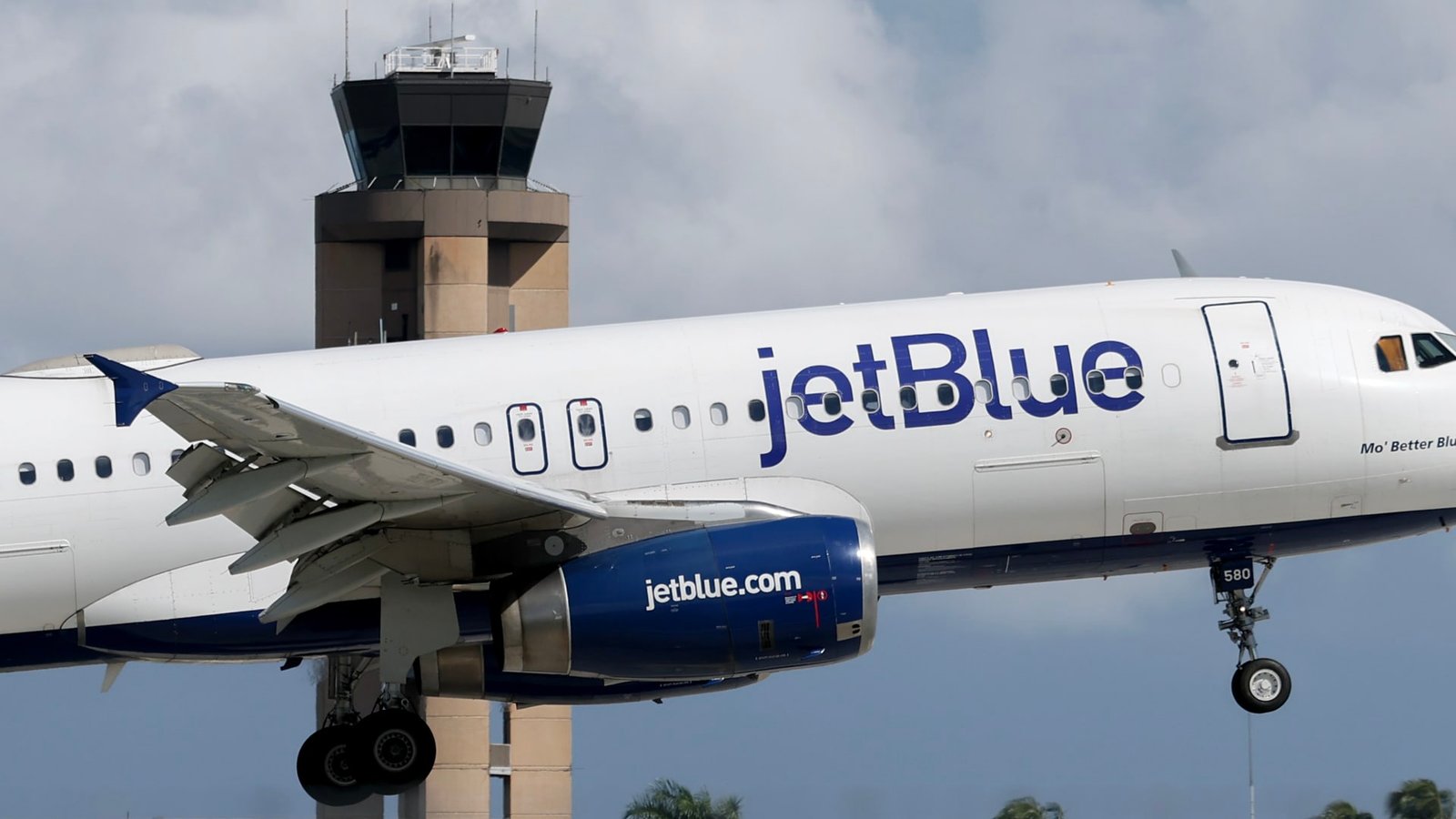
JetBlue Airways is already the biggest airline in Fort Lauderdale, Florida, and it wants to get even bigger.
“Lauderdale has been a star for us,” JetBlue President Marty St. George said this month about Fort Lauderdale-Hollywood International Airport.
Capitalizing on growth at the Broward County airport is key for JetBlue as it revamps its network and rolls out more high-end options like a domestic first-class cabin to return to profitability. Its last profitable quarter was two years ago.
JetBlue was looking to expand in Fort Lauderdale even before Spirit Airlines, the South Florida-based discounter that was No. 1 at the airport, collapsed on May 2 under the weight of debt and years of snowballing problems.
JetBlue is now the top carrier with 36% market share by capacity at the airport, according to a Cirium tally of 2026 capacity, up from about 24% a year earlier. From May to June of this year, JetBlue added 5% more capacity, while big competitors pulled back in the Florida offseason, according to Cirium.
The carrier has about 106 flights scheduled a day for this year on average, up from about 68 a day last year, Cirium data shows.
Just hours after Spirit’s collapse, JetBlue and other airlines laid out their own travel plans, adding flights to fill the void at Fort Lauderdale.
JetBlue raised its revenue forecast for the year on June 1, citing strong demand.
“I’m feeling very, very bullish about how customers have responded to JetBlue’s growth,” St. George said.
JetBlue says it’s planning for even more growth as additional gates become available after Spirit’s demise. Some of those gates are still tied up in bankruptcy court.
JetBlue’s plan is to operate about 150 daily flights at Fort Lauderdale in the peak winter months, which include Presidents Day weekend and some school breaks, a schedule that will put it on par with JetBlue’s Boston Logan International Airport hub, its largest after New York.
The plan includes more international destinations leaving from Fort Lauderdale and a focus on premium air travel.
St. George said the carrier has been reviewing sites for a lounge — which would be the third in its network — at Fort Lauderdale to cater to those customers. It already has lounges at New York’s John F. Kennedy International Airport and in Boston.
“It is unclear right now where we would put a lounge,” he said. “The airport folks, I think, are equally motivated to have a lounge down there. Certainly, given the size of our operation and the number of premium customers going in and out of Fort Lauderdale, I think [it makes] a lot of sense, we just have to find the right location.”
The big competitive threat lies about 26 miles south, at Miami International Airport, an American Airlines hub that dwarfs Fort Lauderdale. Both airports, though Miami is much larger, are major hubs for leisure customers as well as those visiting friends and relatives in Latin America and the Caribbean.
“There’s a good number of customers for [whom] Miami is the right airport, who will never leave Miami, and we’re not planning on converting those customers,” St. George said. “I do think that as we get more service in Fort Lauderdale as a bigger breadth of destinations, that utility of Lauderdale Airport will go up.”
American on Friday said it plans to operate a record 100 destinations to the Caribbean, Mexico and other airports in Latin America from the U.S., with 77 of them leaving from Miami, including a new flight to Maracaibo, Venezuela, from July 14 and to Cap-Haitien, Haiti, starting Nov. 1.
JetBlue, for its part, announced Fort Lauderdale to Caracas service recently, as carriers build up flights. American in January announced it would resume resume service to Venezuela from the United States for the first time since 2019, weeks after the U.S. captured Venezuela’s president.
Business
He profits off raw milk that’s making people sick. The government isn’t stopping him.

This story was originally published by ProPublica, a nonprofit newsroom that investigates abuses of power. Sign up to receive their biggest stories as soon as they’re published.
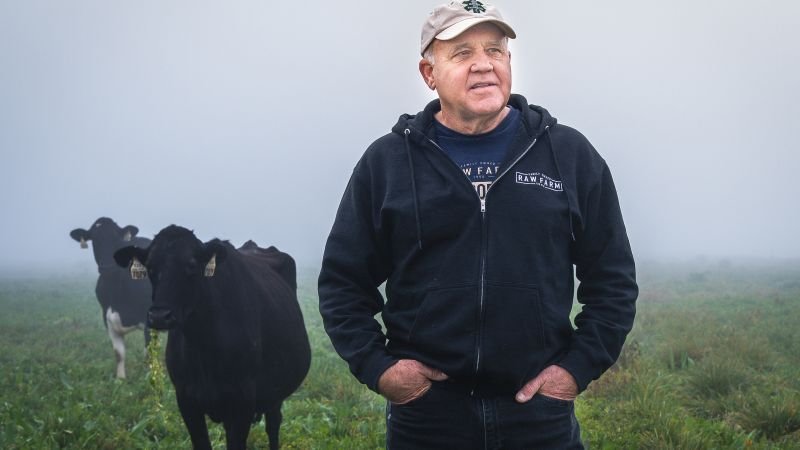
A white Ford pickup truck broke through a thick curtain of fog one morning in February, winding its way down a muddy farm road in California’s Central Valley. From it emerged a 64-year-old dairyman, burly and tan, who left the engine running as he lumbered toward me with open arms.
“You must be Mark,” I said, warning him I wasn’t one for hugging.
“I’m a hugger,” he said, pulling me in anyway. “I feel like I’ve known you for a lifetime.”
I had spent the past couple of weeks corresponding with Raw Farm founder Mark McAfee, who’d filled my inbox with messages and PowerPoints extolling the virtues of his most important, and controversial, product:
It is delicious.
It makes you feel good (the gut-brain serotonin and dopamine cycle).
It’s great for asthma and literally saves lives.
He was talking about raw milk, which, if you trust 150 years of bedrock science, offers little reason to consume. By definition, it has not been pasteurized, the simple process of heating milk to kill off harmful bacteria. Before the practice was widely adopted a century ago, thousands of babies died each year from illnesses linked to contaminated dairy. Today, most scientists and health experts agree that raw milk has no significant, proven nutritional benefits over its sanitized counterpart, cannot treat or cure disease and subjects its consumers to over 100 times the risk of foodborne illness, which can be especially dangerous for young children.
And yet, McAfee’s farm, the largest raw-milk dairy in the country, is pulling in about $30 million a year, meeting a growing demand from customers who say they want food that hasn’t been robbed of health benefits by industrial processing. Once drawing a fringe crowd, raw milk has been thrust into the mainstream in recent years by a potent mix of politics, wellness culture and a wave of suspicion that health institutions have been compromised by Big Pharma and Big Food. Its proponents have turned it into a symbol of freedom and defiance. More than 10 million Americans now drink it; national weekly sales rose by 65% from 2023 to 2024 alone.
Raw milk’s success confounded me: How had it gained such a foothold in this country, despite regular outbreaks of salmonella and E. coli, and even the discovery of bird flu in Raw Farm’s milk? More pressing still, what was the government doing to protect the public amid demands for products that scientists warn are risky, even deadly? Speaking with McAfee seemed like a good place to start; federal and state regulators had linked his business to more than a dozen recalls and outbreaks that had left hundreds of people ill.
“I’ve put a couple kids in the hospital, and they have been sick, but they recovered,” McAfee acknowledged before my visit. “But here’s the thing: I’m a pioneer. And I’m going against the grain here. I’m climbing a mountain they say you can’t climb.”
McAfee isn’t any ordinary farmer. He is a raw-milk zealot who has escaped serious sanctions despite two decades of skirmishes with the Food and Drug Administration and the Department of Justice, which have repeatedly accused him of breaking federal laws and regulations. The Biden administration was on the verge of a crackdown against his farm when President Donald Trump assumed office and turned over leadership of the nation’s health agencies to one of McAfee’s most notable customers.
The year before he was confirmed as the secretary of the Department of Health and Human Services, Robert F. Kennedy Jr. ran for president, using his campaign platform to decry the government’s “aggressive suppression” of raw milk. In his new role, he said he was “advocating” for it and celebrated the release of a federal report to Make America Healthy Again with a toast of raw-milk shooters in the White House.
For his part, McAfee isn’t just selling Kennedy’s favored milk. He is selling the notion that his dairy products are safe and healthy — for you, your kids, your grandparents — because his farm thoroughly screens its milk for bacteria.
“They think we’re some kind of a fringe, weird trend, and we are dead serious here,” McAfee said after he greeted me at his farm, which he runs with his adult son and daughter, 20 miles southwest of Fresno. “And you’ll see that in what we’re doing today.”
He led me into a cream-colored bungalow he called his pathogen laboratory, where two workers in lab coats prepared milk samples.
The farm screens each batch for four types of bacteria: salmonella, E. coli, campylobacter and listeria, all of which thrive in the intestines of cattle and can contaminate milk through microscopic flecks of infected feces. The microbes can cause a constellation of symptoms in humans, from vomiting and diarrhea to sepsis, kidney failure and even death.
“We catch these things and divert the milk immediately,” McAfee said of the pathogens.
I assumed that after diverting batches, the farm discarded them.
Later that day, I learned otherwise.
“We have a red-flag system here, where if there’s anything that gets really out of whack, they can immediately tag the milk, and it doesn’t go to anything but cheese,” McAfee told me. “Because, you know, cheese is resistant to pathogens.”
Research has shown that raw cheese is not, in fact, resistant to pathogens; while aging can mitigate some risk, harmful bacteria can still survive the usual 60-day maturation process.
Hearing about the practice took me by surprise — the farm did what with that milk? — so I asked about it again.
McAfee confirmed that milk with pathogens was used to make cheese, except for batches with salmonella, which he said were dumped or sent out for pasteurization. (I later learned the FDA knew he was doing this and had told him to stop two years ago. But no one had alerted the public.)
“Our cheese is just wildly successful across America,” McAfee said, noting it was sold in hundreds of stores from natural food shops to chains like Sprouts Farmers Market. “H-E-B down in Texas sells 50,000 bucks a week.”
I wondered how long it might take for the cheese to be linked to another outbreak.
Unbeknownst to me, one was already underway.
Chapter 1: The pioneer
In the early 2000s, McAfee was producing pasteurized milk for the dairy group Organic Valley when a raw-milk enthusiast named James Stewart made an unusual request.
Stewart had founded a private food club in Venice, Los Angeles. Its members included movie stars, “crystal worshippers” and other “fanatical people,” McAfee recalled. They were looking for a steady source of raw milk at a time when consumers were waking up to the risks of food contaminated by additives, fertilizers and pesticides.
“How fast can you drive down here with as much milk as you can?” McAfee recalled Stewart asking.
McAfee, not fully grasping why people would want to drink milk that was unpasteurized, nonetheless went to his silo, filled half-gallon containers and packed them in ice chests. Then, with his wife, he made the long drive south to the L.A. coast.
Dozens of people were waiting for them, McAfee said, launching into a scene that unfolded with a Hollywood sheen. “I couldn’t even get out of the car,” he said. “They’re beating on the windows and opening up the back. … Just mayhem, cheering, excitement, crying.”
As their $20 bills started flying at him, so did their stories, about how raw milk had healed their health issues, including asthma. The moment transformed him, he said: He realized that he was selling more than just milk — it was “food as medicine.”
Twenty-odd years later, Stewart, too, recalls the moment. “I saw the light go off in his head,” Stewart told me. “He was looking for a way to expand what he was doing and not just be a commercial, pasteurized, homogenized milk provider.”
McAfee, a third-generation California farmer, was born into a family that had charted an unconventional course. His father, whom McAfee described as both a humanitarian and a rebel, founded multiple farm cooperatives and made national news in 1972, when he helped post bail for activist Angela Davis by putting his land up as collateral.
McAfee didn’t initially follow in his father’s footsteps. He worked for 16 years as a paramedic before taking the helm of family farmland that his grandparents left behind. The farm grew apples, almonds and alfalfa, and, by 2001, McAfee had expanded into commercial dairy. But his days of producing milk for pasteurization were short-lived; within a few months of meeting Stewart, McAfee converted his dairy to sell only raw milk.
He entered a market on the verge of extraordinary growth.
California had always permitted raw milk to be sold in stores, but Los Angeles County’s more stringent rules had, in effect, curbed its retail sales. In 2001, food-freedom advocates, including Stewart, successfully petitioned the county to weaken regulations, providing McAfee access to a new pool of customers. That would happen again and again, in state and local governments across America, as the internet, and then social media influencers, drew exponentially more people to the cause.
Around the time McAfee converted his dairy to raw milk, only 27 states allowed its sale.
In one way or another, nearly all of them ultimately would.
One thing stood between McAfee and all of that business: a federal regulation restricting the sale of raw milk from one state to another. The 1987 ban had the effect of keeping outbreaks contained, making it easier for local officials to address them.
But there was a loophole: Raw milk could be sold across state lines if labeled as pet food.
McAfee saw an opportunity, and he wasn’t subtle about it on the website for his farm, which at the time was called Organic Pastures. The farm “creatively labeled its products for sale outside of California in such a way that it is not illegal,” the site said, and it assured people they could still consume them. Justifying the strategy to an Oregon newspaper, McAfee said in 2005, “I am a revolutionist in this, and I won’t overlook any loophole that will get the milk out there.”
As his raw dairy grew, McAfee portrayed himself as an underdog waging a war against industrialized food. “The giants of the marketplace have processed our food to death to extend shelf life and expand distribution,” he said in a 2006 interview. “The raw milk revolution grows right out of this disorder.”
Two decades later, he still talks about raw milk with the passion of a convert. He answered even simple questions with lengthy explanations, speaking in a quick, torrential style and snapping his fingers or pinching the air for emphasis. Only later did I realize that much of what sounded spontaneous was a pitch he had been refining in years of promotional interviews and farm tours.
McAfee has professed the benefits of unpasteurized milk in public libraries and chiropractor offices. Raw dairy, his farm has claimed, could cure, treat or prevent myriad diseases and ailments, from diabetes and ear infections to allergies, eczema and arthritis. The farm developed the website icanbreathe.org to promote the so-called Milk Cure for asthma. “Only raw milk works in this natural treatment,” the dairy stated. “Pasteurizing milk kills or changes the natural enzymes, antibodies, and fatty acids that are critical to the physiology of how this works in your body.”
McAfee founded a nonprofit, Raw Milk Institute, in 2011, broadcasting similar claims alongside studies he said support them. While a few European studies he cited observed a correlation between drinking raw milk and lower rates of asthma and allergies, they did not prove raw milk directly led to reduced illness, nor did they recommend its consumption due to pathogenic risk. Experts have suggested the association could likely be explained by the “farm effect,” in which children growing up around animals and agriculture have been shown to have stronger immune systems.
Exhaustive reviews of the published science on raw milk have broadly been unable to substantiate claims of its benefits, and most experts agree that it is neither healthy nor safe to consume. But McAfee said his customers know better. To him, the stories of families who believe raw milk has transformed their health are their own form of evidence, revealing truths that institutions have failed to capture. “If raw milk was a fad or a lie, then why would people repeatedly buy raw milk and then tell the world how they love it,” he said. “Our consumers read their gut and watch their kids thrive.”
He also said the government hasn’t invested enough in research to assess its benefits.
“I’m begging you to say: ‘This is not anti-science, this is extremely pro-science,’” he told me. “It’s using science that is not conveniently accepted yet.”
And for many health-conscious people, this possibility that raw milk may help them — or their loved ones — is often enough for them to try it.
Chapter 2: The first
Mary McGonigle-Martin was shopping in a Southern California grocery store in 2006 when she spotted ads suggesting McAfee’s milk could treat allergies and digestive problems. She thought of her 7-year-old son, Chris, who she suspected was dealing with dairy sensitivity, and later visited McAfee’s website to learn more. She knew the risks of forgoing pasteurization, but the site eased her concerns: It said the farm tested its milk and had never found a single pathogen.
So she started buying it, and her son started drinking it. And about a month later, he fell gravely ill. What began as a trip to the nearest hospital for bloody diarrhea turned into a race to save his life as his kidneys started to fail. Airlifted to a children’s hospital in Loma Linda, Chris was put in a medically induced coma. He spent nine days on a ventilator and 18 days on dialysis, during which time doctors gave him blood, platelet and plasma transfusions. “He was on the verge of death,” Martin told me. “I had flashes of him being in a casket and being at his funeral.”
Chris had a dangerous strain of E. coli, known as O157:H7, which led to hemolytic uremic syndrome. This rare condition, which mostly impacts children, occurs when bacterial toxins spread throughout the body and damage red blood cells, causing clots in the organs, primarily the kidneys. With quick intervention, most people survive. But it can cause lifelong complications.
While sitting in the intensive care unit, Martin overheard another mother mention her daughter had the same condition. It turned out the young girl had also drank milk from McAfee’s farm. Hoping to intervene before others got sick, the families reported the illnesses to the dairy and the state, which quickly issued a recall and quarantine order, suspending distribution of the farm’s products.
McAfee told me that when he learned of the two sick children, he “wanted to know the truth.” So he took his wife’s Volvo and drove four hours to the hospital. Then, somehow, he found a way into the ICU. “I knew how to get back past security,” he said. “A paramedic can get anywhere, and I sucked up to the nurses.”
Martin told me she was surprised when McAfee introduced himself in the waiting area, but nonetheless she shared details of her son’s ordeal. “I listened to her as compassionately as I could,” McAfee told me. But in his recollection, he observed that Martin’s son was not as critically ill as he’d been led to believe. “He’s eating McDonald’s, watching cartoons, doing just great, and they’re telling the story to the world that he’s ready to die,” claimed McAfee. “I was really upset about that.”
McAfee’s version of events was impossible, Martin told me: When he appeared at the hospital, Chris had just been taken off the ventilator and still struggled to breathe on his own; reams of her contemporaneous notes confirm this. Even after being extubated, he couldn’t have solid food for weeks due to severe pancreatitis. “I was so hungry,” Chris told me. “I started crying because I couldn’t eat.”
When I asked Martin why she thought McAfee gave such a different account of their meeting, her response was simple: “Mark is the master of spin.” (McAfee maintained that his recollection was accurate: “This is not spinning; this is simple truth.”)
Six people contracted E. coli during the first outbreak connected to McAfee’s farm, according to federal regulators; their median age was 8. While the outbreak’s specific strain of E. coli was not found in the products, some samples taken by investigators had high bacterial counts, indicating contamination.
Chris suffered permanent kidney damage. Now 27, he can’t drink alcohol and will spend the rest of his life under a nephrologist’s care because of his elevated risk of chronic kidney disease.
The illness lingered in other ways, too. “I would have random flashbacks and panic attacks from anything,” he told me. The smell of hospital soap. The sticky feeling of Band-Aids or tape on his skin. His mother found him a trauma counselor, which was “life-changing,” he said, except he still held onto a knot of resentment. Not toward his parents; he views them as victims like him. “Just so much anger towards Mark,” he recently told me. When he later saw McAfee’s milk being sold at a Sprouts, “I wanted to take a bat and smash the entire aisle.”
Martin couldn’t let go either. She hired Bill Marler, a Seattle attorney who specializes in food safety litigation. Alongside the family she met in the hospital, she sued McAfee’s farm in 2008, and the dairy settled for an undisclosed sum. “They couldn’t find the pathogen in our milk,” McAfee told me. “She claims she had it in her milk with her child, and that’s what the insurance company took to settle, and we weren’t going to litigate it.”
Emboldened, Martin, who was a high school guidance counselor, found her second calling as a food safety advocate, testifying against raw-milk-access bills across the country.
Following the settlement, McAfee wrote to Martin to apologize, but also begged her to move on.
“Mary, please appreciate that so many children thrive and grow very strong on raw milk,” he wrote. “The very remote theoretical risk of illness from tested, retail, approved raw milk is far outweighed by the health and recovery from the illness that children that drink raw milk enjoy.”
Martin appreciated the note, but recognized that even in his seemingly heartfelt apology, McAfee could not adapt his belief system to fit her experience. “He really believed this was like a fluke. It’s not going to happen again,” she said.
Chapter 3: The pathogens
Eager to keep showing me his farm’s serious approach to pathogens, McAfee ushered me into his truck to see the milking of his cows. Raw Farm keeps about 1,400 of them, which produce up to 8,000 gallons a day, each priced at $19. The smell of sweet milk hung in the air, mixed with the earthy musk of manure.
“We’ll see what kind of music they’re playing this morning up in the milk barn,” he mused.
“You play music for the milking?” I asked.
“Mexican music,” he said, as he got behind the wheel. “It’s very Pavlovian. … You start seeing milk coming out of their teats.”
In the open-sided barn, workers sprayed a small herd of cows with a fire hose, removing flies and flecks of manure from their bellies, which were then inspected, coated with iodine and wiped with a towel. The steady pulsing of milking machines mingled with a thumping musical beat as McAfee marched down the rows, pointing to their light pink udders. “Super clean,” he said with pride.
Hygiene appeared to be a clear priority everywhere we went, from the thick binders of safety plans — “not one of those documents collects dust,” he told me — to the sterile, full-body moon suits workers wear to package milk.
McAfee said the 2006 outbreak opened his eyes to the risk of his product and was part of the reason he developed standards for unpasteurized dairies.
But more awareness and better practices didn’t stop McAfee’s customers from continuing to get sick — in 2007, and 2011, and 2012, and 2016 — and the farm had to issue recalls more than half a dozen times after pathogens were found in its products.
And then between 2023 and 2024, regulators linked the farm to one of the largest publicly known raw-dairy outbreaks in decades, with more than 170 people falling ill from salmonella. McAfee disputed his farm’s connection to many of the outbreaks, including this one.
“I call complete crap,” McAfee said, claiming that his farm was not responsible for all the cases. “It was 25, maybe 30.” He also disagreed that the majority of patients were children, as the Centers for Disease Control and Prevention had detailed in a report published last year. “I challenge that data at the fundamental level.”
It was a typical McAfee defense. Throughout our conversation, he never lost his composure, even when discussing outbreaks. Instead, he calmly dismissed the government’s methodology, explaining that it was counting cases of “standard diarrhea,” which he said have “no claims for illness,” as they could be managed with “good hydration and plenty of good bone broths and electrolytes and stuff.”
He also seized on instances when the government could not identify an outbreak strain in his products, but instead found it in samples of farm water and cow feces or drew ties to his farm using genetic sequencing or interviews with patients — practices epidemiologists routinely rely upon. McAfee held that none of this was smoking-gun proof that his farm directly caused outbreaks. Instead, such episodes seemed to reinforce his perception that he was climbing a mountain alone, battling institutions that were already biased against raw milk before hearing his case.
When mandated quarantines ended, he would declare victory.
After his dairy reopened following an outbreak that sickened five children in 2011, he revealed how much people were suffering without his product in a celebratory video. McAfee shook the hand of a young man who was wearing a sideways cap. “This guy came all the way from Alaska to get raw milk!” McAfee said. The young man described a kind of withdrawal: “My immune system broke down. I lost a lot of lean body mass.” When a gray-haired woman said she was driving four half-gallons to her grandbabies in Texas — “that’s how desperate I am for them to be healthy” — McAfee kissed her on the head and called her a “raw-milk freedom rider.”
At least 233 people have been sickened in eight outbreaks that federal and state regulators have connected to McAfee’s farm since 2006, and at least 40 of them have been hospitalized.
The tally is almost certainly an undercount, experts and regulators told me. Many recover at home from foodborne illness and do not seek out testing.
The outbreaks raised an obvious question: Why hadn’t regulators shut down the farm? America’s food safety system aims to balance public health with people’s freedom to eat foods that can harm them, like raw oysters and sushi. Regulators expect some will inevitably get sick, and so they focus on ensuring consumers, at the very least, are aware of the risk.
State regulators are responsible for overseeing raw milk sold legally within their borders. In California, they require it to be sampled and tested monthly for pathogens. Raw Farm is in good standing, according to the Department of Food and Agriculture, consistently meeting standards for sanitation and cow health. But spokespeople for that agency and the state Department of Public Health emphasized that the best way to prevent illness is to drink milk that has been pasteurized. Otherwise, they wrote in an email, “there will always be some risk of contamination.”
Many people who turn to raw milk don’t have a full understanding of that risk, John Lucey told me. A professor of food science who directs the Center for Dairy Research at the University of Wisconsin-Madison, Lucey grew up on a farm and has studied dairy products for three decades. “Cows poop all the time,” he said. “Farms are just a reservoir of bacteria: The soil has got bacteria, the walls have got bacteria, the cows are carrying bacteria.”
One of the draws of raw milk is a deeper connection to its source; by knowing a farmer personally, people assume their food will be more safe, Lucey said. But what raw-milk consumers often don’t realize is that many dairy farmers are in a relentless battle to produce clean milk.
“Sometimes you lose because the cow kicked off the milking machine. Something just happens,” he said. “Farmers do the best they can and they are super hardworking people, but just because Daisy is a nice cow and the farmer is a nice guy doesn’t guarantee that things are sanitary and that they can prevent things 100% of the time.”
Over the past two years alone, nine states have experienced outbreaks that regulators linked to raw dairy, not including those connected to McAfee’s farm. In Washington state, about 10 people fell ill with E. coli connected to raw-cheese consumption, and in Florida, where raw milk can be sold only as pet food, about 20 people got sick. Among them was a pregnant mother whose toddler was hospitalized; she said she caught his bacterial infection and had a miscarriage at 20 weeks. (The Florida farm said its products had not tested positive for pathogens and that it informed customers its raw milk was not for human consumption; the Washington creamery voluntarily recalled its cheese.)
Just last week, Idaho’s health officials announced that nearly 60 people had become ill after consuming raw milk.
Discussing the risk of raw milk with McAfee was a challenge.
As we rode in his truck to the next stop on the tour, I brought up the prevalence of pathogens, as well as his farm’s pattern of outbreaks. He acknowledged that some risk exists, but stressed that it was “very, very, very small” and was “fantastically” outweighed by raw milk’s therapeutic value. And then, he insisted one should disentangle the benefits from the risk, as if that’s even possible.
“Show me the criticism of raw milk if it’s safe,” he told me, one hand on the wheel, the other punctuating his points in the air. “None.”
“Well, the critics would argue that there’s risk—”
“No, if it’s safe,” he said, cutting me off. “If it’s safe, how could you criticize it?”
“But they would argue that it’s not safe,” I said.
“Show me the risk,” he repeated. “I’ve yet to see it. We found it. We immediately diverted it.”
Chapter 4: The art of war
We’d seen nearly every stage of production — from “grass to glass,” as McAfee called it — when he parked his truck next to the hangar that houses his Cessna 210 Centurion propeller plane. Next to it, steps from his hacienda-style home, is a bungalow he uses as an office.
He showed me his replica medieval broadsword, his podcasting setup and one of his favored books, Sun Tzu’s “The Art of War.” He said the ancient Chinese military treatise had informed his longstanding feud with the federal government.
Two decades ago, his use of the pet food loophole to ship across state lines attracted scrutiny almost immediately. In 2005, an undercover investigator from the FDA called the farm and was told the milk was safe for human consumption. Two years later, according to court records, the farm sent an email to consumers saying, “Raw milk can be shipped via UPS to all US states,” and “Tell everyone who has asthma that they will be cured by raw milk.”
In 2008, the DOJ pursued criminal charges and a civil suit. McAfee resolved the charges, promising that the farm wouldn’t sell raw milk across state lines again. But prosecutors wanted a court order that would force McAfee and the farm to comply, citing their “unabashed efforts to manipulate the law.”
To illustrate McAfee’s ongoing defiance, the government pointed to statements he had made online that year and the next. In one post on a blog, he said, “If we ever get raided it will be grand theater. … There will probably be some riots.” In another, he said he would not use guns “until the tipping point” and mentioned “another Wounded Knee, Ruby Ridge or Waco.” Prosecutors argued his conduct demonstrated a “cognizable danger” that he would violate the law again.
In 2010, the judge granted a permanent injunction, requiring, among other things, that the farm stop selling raw milk beyond California and take down any statements promoting its health benefits. McAfee told me the directive was an attack on his right to free speech. “I deeply and passionately believe in the truth, and they were telling me I could not speak the truth,” he said. “I’ve had to have therapy over that, you know. I didn’t want to do something stupid.”
A violation of the order could have led to an enforcement action, but in the years that followed, officials pulled their punches. (McAfee insisted they had no punches to throw.)
The FDA and the DOJ kept finding evidence of violations, in 2016, and 2019, and 2021, according to court records. Though federal prosecutors initially pushed for strong penalties, including holding Raw Farm and McAfee in contempt, they agreed to a consent decree in 2023, which required the farm to undergo independent audits to ensure it was complying with the law.
Then, in early 2024, FDA inspectors discovered the farm had a “standard practice” of producing cheese from milk suspected or known to contain pathogens, according to court documents; lab records showed its cheese had also tested positive even after the mandated aging period.
That February, federal regulators publicly linked Raw Farm’s cheese to a monthslong E. coli outbreak. Nearly a dozen people across five states fell ill.
Among them was Paul Panelli, who went to his grocery store in Newport Beach, California, looking for Tillamook cheese to make tacos. Finding it was sold out, he reached for Raw Farm’s cheddar, drawn in by packaging that made it seem organic and all-natural. He told me he didn’t realize the cheese was made with unpasteurized milk.
Both Panelli and his wife, Julie, came down with food poisoning. She was diagnosed with an E. coli infection that left her needing several kidney surgeries. “She literally is afraid to eat things,” her husband told me. The family’s lawsuit against Raw Farm is ongoing; in court records, the farm denied responsibility for their illnesses.
Raw Farm pushed back against the government, maintaining that it followed federal regulations by aging its cheese and claiming to have tested all of it before sale, so no contaminated product reached the market, according to court records. Federal law allows the interstate sale of unpasteurized cheese as long as it’s aged for at least 60 days, though this doesn’t fully eliminate the risk — or account for a farm using pathogenic milk to make it. The FDA told the farm to destroy any cheese made with contaminated milk, arguing that it was violating the law, according to court documents. The farm’s lawyer said it was in compliance, and insisted there was no “bad cheese” to throw out.
To force the farm to follow the government’s orders, it needed a judge’s ruling, but a backlog in the under-resourced Eastern District of California left the case on pause well into 2025. The arrival of the Trump administration that year created a political opening for McAfee.
By the time Kennedy took the helm of the health department, McAfee had already developed close ties to his inner circle. “I go way back with him,” McAfee told me. Kennedy’s running mate, Nicole Shanahan, had made a stop at Raw Farm during his presidential campaign, creating multiple videos featuring McAfee. (She did not respond to my emailed questions.) He was even asked to become an adviser to the FDA, McAfee told me. The position never materialized, but McAfee still benefited from the change in administration.
Without publicly stating a reason, this past January the government dropped its efforts to take action against the farm. A former federal employee with knowledge of the suit told me that cases involving raw milk were deprioritized in the new administration because of Kennedy’s stance on it.
Natalie Baldassarre, a DOJ spokesperson, didn’t respond to my questions about the decision, but said in an email that the administration will “always be concerned about risks to public health and will continue to take enforcement action as appropriate to protect American consumers.” The health department and the FDA did not respond to my attempts to seek comment. Kennedy, through his department, also did not respond to my questions.
McAfee called the withdrawal a “big win.” Drawing on Sun Tzu’s teachings, he told me that he had learned not to engage in “their war,” but his own.
“You win the war they don’t expect you to fight,” he said. While officials were gathering evidence, he was focused on the “education” of consumers. He once delivered his message to dozens at a time. Now online influencers spread it to audiences of millions. “They have the guns and the money,” he said of the government. “I got the truth and the moms.”
His work could soon pay off. A month after I shook McAfee’s hand and left his farm, Rep. Thomas Massie, R-Kentucky, and Rep. Chellie Pingree, D-Maine, reintroduced the Interstate Milk Freedom Act, which would prohibit “federal interference” with the interstate sale of raw dairy in states where raw milk is already legal.
Massie, who served raw milk at his recent wedding, has a farm with 50 cattle, and Pingree, a former dairy farmer and the only Democratic sponsor of the bill, raises her own grass-fed beef. “The Interstate Milk Freedom Act would make it easier for families to buy the milk of their choice,” Massie said when he announced the bill, “by reversing the criminalization of specific dairy farmers.”
When asked if she was concerned the bill may increase access to a product that puts people at risk, Pingree told me that the bill was not about marketing raw milk or making any health claims. “I trust state departments of agriculture and health to monitor compliance, assess health risks, and enforce the rules in place to protect consumers,” she said in an emailed statement. Massie did not respond to my questions.
Chapter 5: The devoted
Six weeks after I left Raw Farm, it happened.
On March 15, federal regulators publicly linked its cheese to yet another E. coli outbreak.
Nine people were infected across three states; more than half were younger than 5. Of the three people who had to be hospitalized, according to regulators, one developed the same severe kidney condition that Martin’s son had battled two decades earlier.
Initially, federal health agencies didn’t urge the public to avoid the cheese or throw it away, as they had under previous administrations. Instead, a CDC notice said consumers should “consider” not eating it; the FDA gave no consumption guidance at all. Three federal health employees later told me political appointees had watered down the original language. (The agencies’ advisories have since been updated. Neither the CDC nor the FDA responded to my questions.)
The fact that the agency was under Kennedy’s leadership didn’t make Raw Farm any more compliant when regulators asked it to recall its products. It refused. “If there was ever a question about whether there was a pathogen in our products,” McAfee later told me, “I’d be the first one to recall immediately, voluntarily.”
He said he texted Kennedy to “call off the dogs,” but got no response.
When FDA inspectors showed up unannounced at the farm, it complied with an investigation. And when the agency threatened to force a recall, the company reluctantly issued its own, 18 days after the outbreak was announced.
The farm appended several unusual statements to its April 2 advisory:
This Voluntary Recall is being performed under protest.
This Voluntary Recall is performed as a path forward.
The farm retracted those statements five days later, but continued to dispute the cause of the outbreak and contest the agency’s findings. It had tested its products, found no pathogens and wasn’t at fault, McAfee said.
However, during its investigation, the FDA also sampled and tested the company’s cheese. While it didn’t find the recent outbreak strain, one sample tested positive for E. coli. In their inspection, agency officials also found the farm’s cheese had recently tested presumptively positive for pathogens even after 60 days, showing the limitations of its aging process. The farm destroyed these contaminated batches.
I reached out to McAfee and asked him whether the illnesses might be connected to his practice of using problematic milk to make cheese. But now, he told a different story.
“We would in the past divert to cheesemaking,” he told me. “We no longer do.” He didn’t pinpoint exactly when the farm made the change, throwing out dates from two years ago to last summer. “It’s been quite some time.”
I brought up the fact that he’d made similar disclosures in podcasts in the last year and to me just weeks earlier. But he doubled down.
“I think you have caught me in something where there’s an issue between practice and what I’m saying,” he said. “If I said it, I believed that at the time to be true, but I do know that now we do not use any questionable milk.”
In almost the same breath, McAfee noted that his farm would not have violated any laws if it had done so. “It’s not illegal,” he said. “That’s why the FDA dropped their thing.” (California regulators told me such a practice was “concerning.” The FDA refused to respond to questions about it.)
Speaking to a congressional subcommittee on April 16 about the outbreak, Kennedy noted that companies usually comply with recalls right away. “But there was foot-dragging,” he said. “This company was intransigent.”
U.S. Rep. Rosa DeLauro, D-Conn., asked Kennedy whether in the face of these new, serious illnesses, it wasn’t time for a shift in his messaging: “You are the Secretary of Health and Human Services. Is there not some moral responsibility or compunction to say, ‘Don’t drink raw milk’?”
“Every product can contain contaminants,” Kennedy replied. “What we do is inform the public, and we let people make the choice.”
On April 30, the FDA closed its investigation without taking any enforcement action. McAfee told me his raw-cheese products were back in stores. Sprouts and H-E-B, two major retail chains that have carried his cheese, did not respond to my emailed questions about the outbreak.
“We don’t feel bad at all,” McAfee told me about the entire episode. “Our sales are highest they’ve ever been, and feedback online with influencers is: If the FDA says something, do the opposite. It’s safer. They don’t trust them at all.”
On a sunny weekend in early May, hundreds congregated at Raw Farm for its annual Camping With the Cows event. Blue skies extended to the horizon, and a small colony of tents, camper vans and motorhomes sprawled out across the lush alfalfa fields. Influencers in cowboy hats chugged cartons of milk. Matt James, the leading man on Season 25 of “The Bachelor,” ambled around with his mother in a T-shirt that read, “Raw Milk Club.”
Many attendees were unbothered by the recent illnesses. They said they consumed raw dairy because they wanted to reduce their inflammation, and avoid additives, and prevent lactose intolerance, and clear their skin, and bring their hormones into balance. They wanted nutrients that didn’t exist in “boiled to death” milk. They wanted to drink it “the natural way.”
Alyssa Wolfer, a 42-year-old mother of two from Bakersfield, viewed raw milk as a symbol of “true American freedom,” she said. “I very much lean on the side of freedom of people to choose what they consume and less regulation.”
“I’m seven months pregnant, and I drink raw milk because that’s how God has created it to be,” said Lindsay Espinoza, 34, reclining on a bale of hay with her husband and young son. “There’s so much fear behind raw milk, but it makes sense to us.”
Some, like 58-year-old Melanie Copeland from Huntington Beach, questioned whether the outbreak had occurred at all. “The odds of it being true are slim to none,” she said, “and people need to do their research.”
McAfee mingled among his flock. Some stopped him for pictures as he beamed down the camera and flashed a thumbs-up.




Waymo robotaxis have run red lights, CNN finds
CNN uncovers reported close calls with Waymo robotaxis. The driverless robotaxis have reportedly run red lights, driven onto …


How did footballers train during the 1966 World Cup? #BBCNews


By-Electioncast: Could Restore Britain Help Andy Burnham Win? | BBC Newscast
Paddy is back from holiday and he's also back from Ashton-in-Makerfield. He joins Laura to discuss a new poll that...


Mullin asked whether ICE agents will be at midterm polls
Department of Homeland Security Secretary Markwayne Mullin said US Immigration and Customs Enforcement agents would …


Teen shot and buses torched in Manhattan after NBA win for Knicks. #NewYork #Knicks #BBCNews


Aftermath of Knicks win celebrations
As Knicks fans flooded the streets of New York on Saturday night, some victory celebrations became chaotic — leading to...


Inside the White House during the Iran war & project setbacks
A day-by-day look behind the scenes as Kaitlan Collins covers the White House for CNN during the first half of...

Ebola one month on: will the latest outbreak in DRC become the most deadly yet?
When an orphanage in Bunia took in a newborn baby after his mother died from Ebola, the nuns who ran...
Protesters gather in Geneva for anti-G7 march
GENEVA (AP) — Thousands of demonstrators converged Sunday to show their discontent with the G7 group of rich countries, with...
Microsoft’s CEO Suggests The Bill Has Come Due For Xbox
Are we at a big inflection point for Xbox or is Microsoft just going to double down on what it’s...
-

 LifestyleNews1 week ago
120 minutes of strength training per week may help extend lifespan
-

 Politics3 days ago
What to know about the stabbing that set off fiery riots in Northern Ireland
-
 Business24 hours ago
How much of Musk’s wealth comes from government help? Virtually all of it
-

 Video2 days ago
Download fans say what they love about the festival. #DownloadFestival #BBCNews
-

 HealthNews2 days ago
The people of Okinawa, Japan only eat until they are about 80 percent full, then stop — and the practice has been linked in multiple peer-reviewed studies to lower rates of cardiovascular disease, slo
-

 Video2 days ago
Why SpaceX IPO isn't about space. #SpaceX #ElonMusk #BBCNews
-

 Food2 days ago
Pope Leo’s plane was grounded. Then the King of Spain stepped in to help
-

 TravelNews2 days ago
My Paternal Instinct Should’ve Warned Me About Netflix’s Maternal Instinct