
PM office canada
First Nations gave Doug Ford a wildfire plan. Ontario ignored it
You can read more about it here:
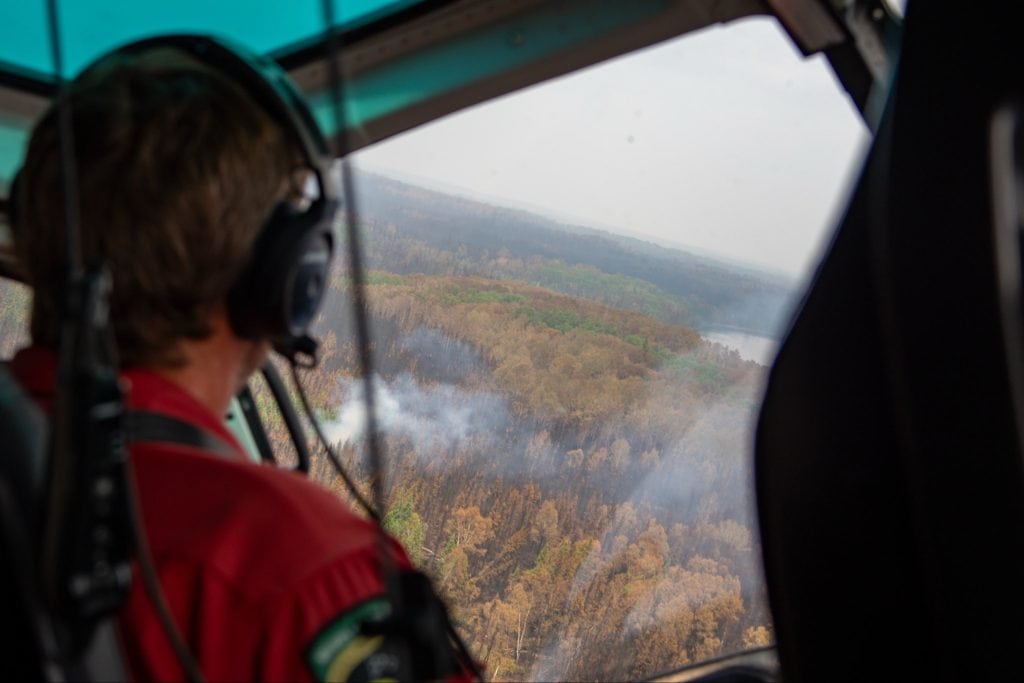
The wildfires that have ravaged northern Ontario put many First Nations communities at risk. Two of these communities are already completely destroyed.
First Nations leaders criticize the response of the province to this emergency. The First Nations leaders claim that the provincial government took too long to recognize the dangers facing the remote First Nations and jurisdictional problems prevent First Nations accessing emergency resources.
Many First Nations Chiefs have called for senior government officials to resign, and a public investigation into how the province responded in an emergency.
The plan was presented to Premier Ford by Grand Chief Alvin Fiddler, of Nishnawbe-Aski Nation, during the COVID-19 epidemic in summer 2021. It included an 82 page document that outlined how the northern Ontario region would be supported when faced with emergencies such as wildfires.
This plan was developed by the organization representing 51 First Nations in northern Ontario as a response to disasters that occurred between 2009 and 2019. These included both flooding and fires. The plan is spread over 27 pages. These past disasters were not on the same scale as the one that occurred this summer, when northern Ontario experienced what is now considered to be the most severe wildfire season in history.
This framework identified “deficiencies” and “gaps” for First Nation emergency management. The framework identified a number of “deficiencies and gaps” in emergency management for First Nation communities.
Without the plan’s 20 recommendations “need for robust and comprehensive First Nation Emergency Management will continue to increase.”
Fiddler said to The Narwhal, “That’s five years ago.” There’s no response.
Fiddler stated that everything highlighted in the Fiddler report is now coming to an end in north Ontario.
Two communities, Collins and Whitewater Lake First Nations, have completely burned to the ground in just 11 days. Local emergency officials, however, believe that this figure may be too low, as there’s no government-led system in place to track or support evacuations of remote Indigenous communities. According to Chiefs of Ontario, at least thirteen other communities have evacuation orders. Eight of these are First Nations. According to the Ministry of Natural Resources of Ontario, as of this publication, more than 170 wildfires were active in Northern Ontario.
The 562 wildfires this season (compared to 371 in last year’s average and 358 over the past 10 years) have burned an area that is almost the same size as Greater Toronto Area. Last week, the air quality was among the worst on the planet due to smoke from the fires.
The Narwhal reported that the fires “behave differently” than they used to. Sharon Bak is an emergency responder from Thunder Bay, with over 30 years’ experience at all levels, including provincially. There have been a lot more “hold your breath” moments than usual.
The weather forecasts began to look deadly as early as July 12. Thunder Bay was heading for a record-breaking week with temperatures that exceeded 40 C in many places.
Bak stated that “the signs were there.”
She added, “This was not the norm.” We’re ready for the fires in northern Ontario. They are expected. This is not the norm. Fires have been close to areas with critical infrastructure or where people reside. “We’ve seen fires that were going in one direction change directions overnight and move closer to people, as well as fires joining up.”
She said, “Those are some huge red flags indicating that there is a lot going on and that it needs to be watched.” The question is: “Who’s watching the clock?”
Local officials and Indigenous leaders claim that while the government has no control over the wildfires of 2026, it is in control over the wildfires’ consequences. These include how quickly warnings are sent out, whether the crews are adequately resourced and whether First Nations are supported when making evacuation decisions. While this wildfire season was a record-breaker, it may not last long. Wildfires are becoming more intense and severe every year as a result of global warming brought on by fossil fuel burning.
First Nations affected by the disaster have been forced to evacuate their homes, as they did not receive timely information and accurate from officials. They also had to find a place to escape on their own.
Due to this failure of the system, several chiefs have now called for senior officials in the government, including the director of the Ministry of Natural Resources’ aviation, fire, and emergency services, and assistant deputy minister responsible for fire operations, as well as an independent inquiry of the entire province.
The Narwhal asked detailed questions, but no one in the offices of the Premier or Minister of Natural Resources responded. Ford told reporters at a press conference on July 17, “We will supply everything they need and ensure their safety.”
“The emergency response both from Ontario and Canada has been completely inadequate,” said Chief Fiddler. I’ve had Zoom conversations with government officials, asking basic questions such as ‘What’s your capacity?’ What is your capacity? How many beds are available?
He said, “So far, they haven’t responded to us.” “Numbers are changing, and I understand that, but it’s important to have some baseline data. “We don’t know that information” is not an acceptable baseline, when homes and land are on fire.
First Nations of northern Ontario report a failure in government communication, and describe their own evacuation.
On July 13 at 2:30 pm, the band manager of Whitesand First Nation was informed about a fire that had broken out near their community. The Ministry of Natural Resources sent a helicopter for an investigation and then reported that there wasn’t a fire, despite the smoke visible, said Chief Lawrence Wanakamik to reporters.
The nation’s leaders began booking hotels and arranging transport to Thunder Bay by 4:00 pm. Several of the members began to leave shortly after.
A council member attended a meeting of the Ministry of Natural Resources an hour after his initial visit. He was assured that their community is safe, and he had nothing to be concerned about. According to Chief Wanakamik, the member had “requested assurances in written form” but did not receive them.
He added that at 6:30 pm, Elders recommended that the entire community evacuate, even though the Ministry claimed that it was not necessary to do so and only the “vulnerables” should be relocated. The ministry has not responded to any questions regarding this series of events.
Three hours later, the ministry announced a mandatory evacuation. The entire community had already left their homes by then.
On July 21, Chief Wanakamik said to reporters that it took “too long” to realize the danger. It also took too long for him to give a direction, and to order an evacuation. Whitesand’s preparation and decisions helped to prevent a dangerous situation becoming even worse. Elder Stella Watson died as a result of this experience.
Whitesand First Nation was not the only community affected by this failure of provincial response to emergencies. Helen Paavola, Collins or Namaygoosisagagun First Nation Chief, said that her community was the first one to evacuate, and did so with no notice or assistance. She said at the press conference that her community had been devastated by the forest fire which swept through the houses with speed and heat. My members barely made it out with their clothes on.
She said, “This entire community was reduced to ash.” It burned to the ground due to a province’s failure in monitoring. Further, it should be noted that the Emergency Management arm of the Province is also responsible for the disaster.
She said that her community was not recognized as a Canadian territory, even though it predated Canada. This means the community’s members cannot access disaster recovery programs at a time when they are most in need.
Whitewater Lake First Nation chief Pauline Drake said that her community, which has been completely destroyed, was evacuated by itself, and she added that it was only after the evacuation of their mother did they leave.
She said, “I wish I could go back in time and change things.” I wish that we could go back in time to be informed and turn the clock back. There’s an emergency in your neighborhood. Be ready.
All three chiefs and six other community representatives from communities affected by the wildfires in northern Ontario said no one had reached out to their communities, not Ford nor Greg Rickford, his Minister for Indigenous Affairs, or Mike Harris, Minister of Natural Resources. They also dispute Ford’s claim that Ontario has done a good job in fighting the fires.
In a press conference, Chief Wilfred king of Gull Bay First Nation said that the Premier may not have fully understood the magnitude of operational dysfunctions and systemic problems within the current Wildfire Management Structure. What he says is false. “He’s creating the story so that he could basically lie to Canadians, and lie to people in Ontario.”
He said that a total overhaul was needed.
Ford Government has not fully implemented recommendations of the auditor general.
Bak noted that this pattern of poor communication, a lackluster response and poor plan has been part of Ontario’s Emergency Response System for more than two decades. “All the gaps are visible now,” Bak added.
In a 2005 review of internal government processes, it was found that emergency funding and procedures were not sufficient. This review is cited by the 2017 auditor general in their report, which noted that the Cabinet Committee on Emergency Management had met only once over the past five years. The auditor general in 2022 made 30 suggestions to improve the system, citing that 15 percent of the fires between 2017 and 2021 took more than four hours for fire crews.
The report for 2022 stated that “effective emergency management can protect lives, property, and the environment.” The report said that more needs to be accomplished to better assess natural hazards to ensure the province can respond to environmental disasters in the future and avoid repeating past mistakes.
The auditor general reported that the government had “made very little progress or none at all” in implementing the majority of its recommendations.
Bak stated that the capacity of the system has been restricted for quite some time.
The chiefs claim that this has left the northern Ontario region particularly vulnerable, as it does not have a full-time coordinator for emergency management. They say there aren’t any resources that can be mobilized across a larger area if necessary. There is also no coordinated coordination system or regional response center. There is also no list of available resources for real-time response, such as hotels, donated services and goods, or a coordinated coordination system.
Bak stated that “the fires of this year have overwhelmed the communities more quickly.” Bak said that there were delays in recognizing the issue and providing the necessary resources.
Recent signs suggest that the trend is shifting.
The auditor general identified a structural problem in the emergency response system. Traditionally, it was handled by an independent government agency that reports to the solicitor general. In March 2025, the Ford administration elevated this to its own ministry with modernized legislation, resources, and employees. A new volunteer group called Ontario Corps was also created. The Ministry of Emergency Preparedness and Response collaborates with other Ministries depending on what type of crisis is occurring. In northern Ontario this includes the Ministry of Natural Resources which monitors and manages fires and forests.
Jill Dunlop, Minister of Emergency Preparedness at CBC As It happens said that safety is the focus for government response. She stated that the Ministry of Emergency Preparedness regularly performs “after action reviews” after emergencies, and any concerns about communication or coordination “will be taken into consideration as part this process”.
When asked why First Nations had been left in darkness during the most severe wildfires by one of her employees, she was pulled off air.
The emergency response system in First Nations is still broken
Ontario’s response to emergencies is also dependent on federal funding. This agreement assumes that provinces can respond effectively to disasters. Ottawa finances emergency responses to First Nations but Ontario has the final say on how they are executed.
Fiddler says that the First Nations’ lack of participation in the decision-making process is a major reason why the system has failed. According to the Nishnawbe Aski Nation report, Ontario’s emergency management system was designed for municipalities. First Nations do not fit into this model, either legally, structurally or financially.
First, the declaration of an emergency by a First Nation has no effect on the political system. It does not unlock resources or funding, nor do it force government officials to act.
The plan states that money is not being allocated to the correct areas. The plan uses federal data between 2012 and 2016 to show that Ontario received 31% of the national emergency funding allocated to First Nations. However, most went to recovery or response, rather than prevention or mitigation. The government consistently underestimates the cost of fire response. In the budget for 2025, Ford allocated $135 million to its emergency forest-firefighting fund. However, it ended up spending $271 million.
Human resources are another issue. Nishnawbe Aski Nation, in its plan, quotes the report of 2020’s auditor general. It states that by 2021, Ontario will have one field officer for every 1.8 million people, while B.C. has one per 137,000. In Alberta, one field officer is assigned to every 273,000 residents. They only appear during an emergency, which leaves little time for building trust or preparing communities.
According to Ontario’s emergency responses rules, the province will provide disaster aid after a municipality has self-funded emergency management in part through its property tax. This financing model does not support First Nations who do not have property taxes in Ontario.
Wildfires that rage in the north of Ontario can often block access to isolated communities. Wildfires can cut off a whole supply chain for food and medicines. Neskantaga First Nation has declared an emergency and begun to evacuate its residents.
The issues that are currently being played out in Northern Ontario have local residents and Indigenous people asking the same question: Why were we left alone?
Fiddler stated that Doug Ford spoke a great deal about the minerals and resources of our territory. Fiddler said that Ford comes to these areas for photo ops, ribbon cuttings and handshakes with the people of these communities. “But when it comes climate change, and the impacts of that on our communities, I’ve never heard him commit to anything.”
Ford said that he would propose a fire strategy for the country at this week’s meeting between First Ministers, Prime Minister Mark Carney and other officials in Charlottetown. Many people The Narwhal talked to said that this is not the answer; they see it as a way of passing blame. It’s especially important that northern Ontario does not heed the calls for a state of emergency in Ontario, which could theoretically free up resources.
Bak stated that “everything begins at the local levels, including responses to emergency situations like wildfires.” You think about what happened in Fort McMurray or Jasper and thank God that it didn’t happen here. Now that it has happened, it is clear we haven’t learned anything.
Last updated on July 23, 2020, 4:47 pm. The story was updated on July 23, 2026, at 4:47 p.m. ET to make it clear that this wildfire season is the worst ever in Ontario in terms of amount of burned land but not in lives lost.
PM office canada
Federal government declines to allow jets at Billy Bishop airport ‘at this stage’
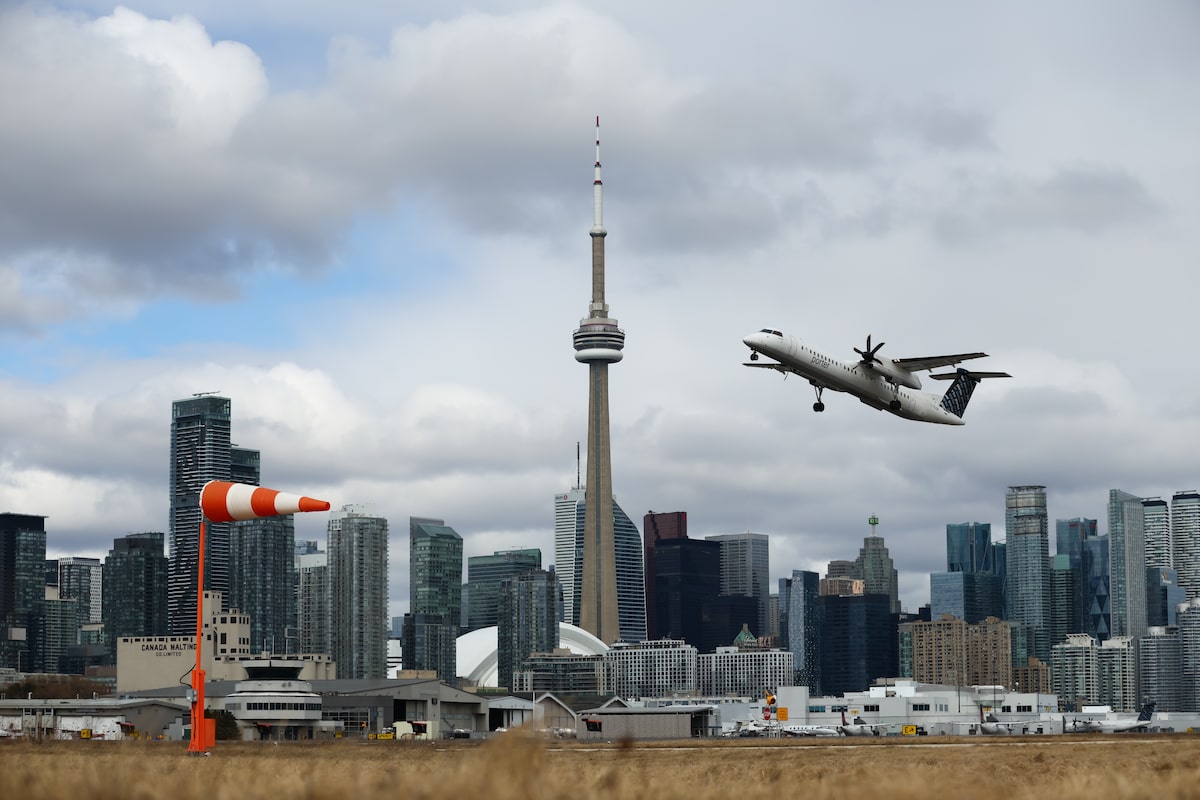
Ontario Premier Doug Ford has suffered a serious blow after the federal government rejected its plans to permit jets to land at Billy Bishop Airport on Toronto’s waterfront.
Steve MacKinnon, Transport Minister Steve MacKinnon stated in a Friday statement that expansion plans are not going ahead.
The federal consultations about the jets ended Friday. According to a government official, the overwhelming majority (87,000) of responses were from Toronto residents who did not support the expansion.
The Globe and Mail does not name the source because they are not allowed to publicly discuss the plans.
This decision has nothing to do with the expansion of the airport that is already underway.
Toronto has just agreed, in accordance with new Transport Canada regulations, to expand the runway buffer area.
Toronto Island Airport should grow
In a late-Friday statement, Mr. MacKinnon stated that Ottawa is currently focused on the expansion of safety.
At this time, I confirm that we are focusing exclusively on approved safety improvements, which are taking place and required for safe airport operations. He said that they are scheduled to be finished by mid-2027.
Toronto voices will help shape future plans for Billy Bishop Airport. We have received feedback from the public on many issues including transport, economy, noise, quality of life, and environmental protection.
The city of Toronto will pursue no plans which would cause noise pollution, environmental damage, or hinder the construction of much needed housing.
George Fallis says the benefits and costs of Billy Bishop Airport expansion are small.
Ford’s Office did not respond immediately to Friday night’s request for comment. According to a source in the Ontario government, Ottawa’s use of the phrase “at this time” does not mean that Ottawa has closed the door on jet expansion.
Ontario’s Premier made expanding Billy Bishop a top priority for his government. In a three-way agreement, the province has passed legislation to assume the stake of the city in Toronto. The federal government is also a party.
Toronto’s Mayor Olivia Chow thanked Mr. MacKinnon and Prime Minister Mark Carney for listening to Toronto residents who opposed the proposal.
She said, “Your tireless advocacy has made a significant difference” on X Friday night.
Ms. Chow stated that the province must return to Toronto the lands it has expropriated in order to continue its expansion plans for the airport.
We are asking the province to give back the land of the city now that the expansion has not moved forward. “We can work together to create a waterfront that will be enjoyed by future generations with parks, housing, and other amenities,” said Ms. Sherry.
Ford had previously stated that Carney was on board with the plan. The prime minister has called it an “interesting view,” but hasn’t formally endorsed it. Last month, he said that he had not yet formed an opinion about the proposal.
PM office canada
Trump vows tariffs to come for Canada over wildfire smoke that has drifted to U.S.
Donald Trump, the U.S. president, re-issued tariff threats on Canada Friday afternoon. He reiterated his intention to impose tariffs as a retaliation to wildfire smoke that drifted across the border to the United States.
Trump said to reporters in the Oval Office after making an announcement about American nuclear power, “We are going to put big tariffs on Canada due to the smoke.”
Trump did not give any details on the implementation of tariffs, despite making a similar statement a week earlier.
Trump said in the Oval Office that he “has told Canada to take action,” something he has also stated before.
This summer there have been massive wildfires across Canada, which forced communities to evacuate. There are also air quality alerts for several regions.
Mark Carney, the Prime Minister of Canada said this week he “made it very clear” to the U.S. President in his recent discussions that Canada is doing everything possible to contain the wildfires.
Carney said to CBC News that he conveyed to Trump the magnitude of the issue, including the “scale of the forest Canada has — eight times larger than Texas — and the fact that our drought conditions have stretched from Texas to Minnesota in American terms.”
Trump is not the only U.S. legislator who has criticised Canada for the aftermath of the wildfires.
Carney was recently accused by a few members of Congress in the U.S. of not maintaining forests properly to minimize the risks of fires.
A U.S. Senator this week said that recent comments from U.S. Republicans critical of Canada’s wildfire management were insulting and absurd.
Trump Administration favors tariffs
Laura Dawson, Executive Director of the Future Borders Coalition, and expert in Canada-U.S. Economic Relations, said on CBC Power & Politics, that Trump’s threats of tariffs related to wildfires against Canada are part of Trump’s penchant for “getting an effect.”
Dawson added, “This is a line which definitely gets people’s attention.”
She noted, however, that trade laws do not cover wildfire smoke and there is no legal basis for it.
The U.S. trade representative Jamieson Greer has not been able to find a way, despite his best efforts, to convert these [threats] in cross-border tariffs.
Trump has made it clear that he is a fan of tariffs. His administration has favored the use of tariffs throughout his second term, despite facing court setbacks regarding the U.S. Government’s ability to implement them.
Trump threatened earlier this week to apply 50 percent tariffs, effective August 19, on Canadian products worth billions of dollar.
PM office canada
‘Everything on the table’ as Canada plans response to US tariffs
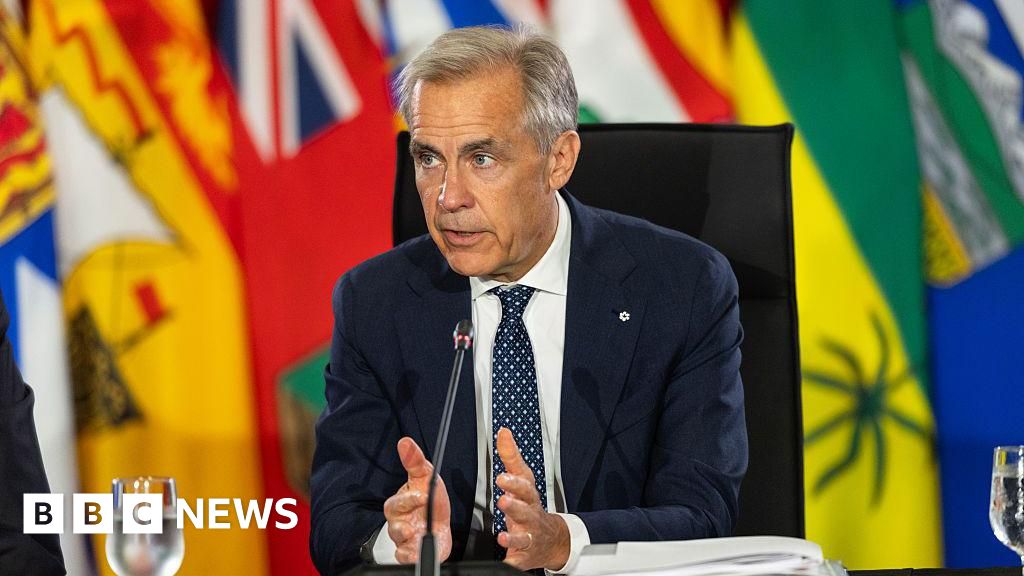
As the trade war between the US and Canada heats up, Canadian Prime Minister Mark Carney said “everything’s on the table” depending on how the talks go.
Carney made his comments after meeting with provincial and territorial officials on Thursday. They discussed a possible response to the Trump Administration’s announcement of new tariffs at 50% on about C$20bn worth of Canadian imports.
The trade negotiations with Washington will intensify before the 19th August when new US tariffs come into force.
Carney suggested that options include diversifying trade to avoid the US, and helping those sectors which are most vulnerable to tariffs.
He did not provide any details on possible punitive actions.
He said: “We will support Canadian families, workers and businesses.
On Monday the US announced new taxes, citing “unfair treatment” by Canada of US vehicles, dairy products and alcohol.
On the list are everyday consumer goods like hockey sticks and wine, but also industrial products such as cement. Some key exports will however be spared. These include energy, fish, minerals, and potash.
Negotiations between the two parties will last about one month before levies are implemented.
Carney stated that the deadline was “both” an attempt by the Trump Administration to exert pressure and a chance for the talks to progress.
The US announced new tariffs against 60 countries, including Canada. This was based on the claim that they had failed to adequately combat forced labor.
The North American Free Trade Agreement with Mexico (USMCA) exempts most Canadian products from these new labor levies.
Dominic LeBlanc, US-Canada trade minister said that Canada had one of “the most robust frameworks in the world to prevent and tackle forced labour”. Ottawa said it will continue its engagement with Washington regarding the issue.
The talks between Canada and the US to renew their free trade agreement have progressed slowly.
The US decided earlier this year not to renew USMCA under its current format, as they wanted to change the agreement that was reached in Trump’s first tenure in office.
US Trade Representative Jamieson Greer said on Wednesday to US legislators that he hoped to have interim agreements with Canada and Mexico available to consider before the end the year.
He admitted that some of the more difficult issues like US goals for stricter automotive origin rules and labor and environmental standards, could be delayed until next year.
PM office canada
Carney’s global quest for photo ops comes with crippling compromises

Content
This is Canada’s Trade Policy for you.
This content is reserved for subscribers
Get the latest news from around the world, including local and national stories.
Conrad Black and Barbara Kay among others have contributed exclusive articles. Special edition NP Platformed, First Reading and virtual events.
National Post offers unlimited online access.
National Post ePaper is an electronic version of the printed edition that you can view, comment and share on.
New York Times Crossword and other daily puzzles.
Support the local media
Subscribe to our Newsletter for more articles
Get the latest news from around the world, including local and national stories.
Conrad Black and Barbara Kay among others have contributed exclusive articles. Special edition NP Platformed, First Reading and virtual events.
National Post offers unlimited online access.
National Post ePaper is an electronic version of the printed edition that you can view, comment and share on.
New York Times Crossword and other daily puzzles.
Support the local media
Register / Sign in to Unlock More Articles
Sign up or create an account to continue reading.
One account allows you to access articles across Canada.
Comment and share your opinions.
Get additional articles each month.
Subscribe to email alerts from your favorite authors.
This article is free to read. Register now for unlocking.
Sign up or create an account to continue reading.
One account allows you to access articles across Canada
Comment and share your opinions
Get additional items per month
Subscribe to email newsletters from Authors You Love
Register or Sign in
Email Address
You can also find out more about
Content
The Canadian public’s opinion is a strange axiom. Mark Carney’s popularity ratings rise or fall when the public’s hatred of Donald Trump, President of the United States, is heightened. Carney is often seen posing alongside another foreign leader at a signing ceremony of a new free-trade agreement, while President Trump alienates America’s allies and friends around the globe with his belligerent trade policies.
Content
Video Recommended
This video could not be loaded. We are sorry.
Refresh your browser or
Click here to view more videos by our team.
Terry Glavin: Carney’s quest for global photo-ops brings crippling compromises
This video could not be loaded. We are sorry.
Refresh your browser or
Click here to view more videos by our team.
Content
Content
Carney deserves credit for his game. Carney is doing a good job of playing the game.
Content
The devil is in the detail. This is hidden in Carney’s desire to establish trade, security and investment partnerships with every country that will sign up. It’s not easy to keep track.
Content
In the sixteen months since Justin Trudeau handed over the keys of the Prime Minister’s Office, Carney and his cabinet ministers made 29 hurried visits to foreign capitals. Carney’s dozens of frameworks, concordats and memoranda of understanding have received less attention that Trump’s threat to tax Canada’s wildfires smoke or hockey sticks or whatever the latest eruption was about.
Content
Trap doors are hidden in even the larger deals, such as his “New World Order” strategic partnership, which is the foundation of this deal. The fact that the collaboration between the RCMP and Beijing’s Ministry of Public Security, which was ordered to be pursued in January last year, remains secret is already troubling. It’s also troubling how this secret memorandum will be used by Xi Jinping to justify his determination to extradite anyone who is deemed to sympathetic towards the Tibetans or Uyghurs under China’s “Ethnic Unity Law”.
Content
Content
What is going to happen when the trade war between Europe, China and China is a result of Liberal Party’s enthusiasm for closer cultural and economic ties?
Content
Continue reading
Content
This is not a situation where you can play both sides. Contrary to what the Liberal Party claims on a regular basis, China isn’t Canada’s largest trading partner. Europe is by far.
Content
The Europeans had hoped Trump’s return as President would pave the way for a united front to fight Beijing’s efforts to use its heavily subsidized industrial sector to erode Europe’s manufacturing base. Trump, instead of collaborating with the European Commission to block European exports, built a wall that imposed tariffs.
Content
Germany alone has lost 10,000 jobs per month due to China. China has increased its global manufacturing share from 6% in 2000 to 30% today, while Europe has seen their share drop to 17%. Over the last decade, China’s annual trade deficit has more than doubled to $400 billion. Jens Eskelund is the president of the EU Chamber of Commerce China. He compares this situation to that of a 400-metre long giant container ship with 24,000. It’s going to Europe, but coming back empty.
PM office canada
Alberta’s got a new plan for a southern pipeline to B.C.’s coast – it still won’t be easy
Shahin Dashtgard is a professor of sedimentology at Simon Fraser University. She holds a palmfull of muddied sand collected from the Fraser Valley, Delta, B.C.
The material known as “sub-surface” is weak, loose, and saturated with water. It’s one the biggest challenges in building Alberta’s new pipeline terminal at Roberts Bank on the southern shores of British Columbia, near Fraser River Estuary.
Dashtgard’s wet sand melts as he shakes it, and “almost runs like soup” through his fingertips. He is demonstrating liquefaction which can occur in the event of an earthquake.
He said, “That’s the problem with building over loose sand or sediment that is water-saturated.”
The route may diverge
Both the Prime Minister Mark Carney, and the Premier of Alberta Danielle Smith are bullish about a new pipeline route in Alberta that is currently being considered by the Major Projects Office. This pipeline would largely replicate the Trans Mountain corridor.
Smith and the B.C. government held a media conference in Calgary on the 2nd of July. Smith argued that the proposed pipeline was “the most efficient, cost-effective route” just hours after B.C. The North Coast Tanker Ban was confirmed.
Carney said to journalists in Calgary that the best route is through an existing pipeline, the Trans Mountain Corridor.
There’s still a large section of this proposed route which doesn’t yet exist. This deviation begins at Hope in B.C. and continues through the Fraser Valley to Roberts Bank, rather than Burrard Inlet, near Metro Vancouver, as it did with two other oil pipelines.
This preferred term has been a source of concern for many years.
Even if the project is selected as one of national importance by the deadline of October, environmental and seismic concerns, constraints of space, and local First Nations’ influence will determine the pace and direction.
Alberta acknowledged these long-standing concerns, noting that Roberts Bank, and land surrounding it, is the “highest sensitivity area” along the corridor, and “the Region will be concerned about oil spills and tanker traffic, as well as cumulative effects.”
Port expansion project
Roberts Bank has already been scrutinized to determine its suitability for another major project – Roberts Bank Terminal 2, an expansion of Vancouver’s Port of Vancouver that took more than a decade in planning and would boost the container handling capacity of the Port by over 30 percent.
According to the submission documents, pipelines and terminals at ports are about of similar size.
Vancouver Fraser Port Authority proponents have called for the project to be expedited. The only thing that is missing from the approval process for the port project is a federal permit issued under the Species at Risk Act.
CBC News, at an announcement event in mid-July announcing that the port expansion had been referred to the MPO, asked Port CEO Peter Xotta about the coexistence of the proposed pipeline terminal and the container expansion.
Xotta responded that the Port Expansion “is far more advanced” than the other two projects. He said they would work with MPO to iron out the details.
In a later statement, a spokesperson for the port told CBC News “it is important to remember that these two projects are separate.”
Environmentalists, however, say that technicalities such as this won’t affect how Pacific Salmons (salmons), Western Sandpipers (sandpipers) and Southern Resident Killer Whales will experience another terminal along these shores.
It’s frightening,” said Lucero González, a member of the environmental group Wilderness Committee who challenged the expansion of the container terminal in Federal Court.
Gonzalez said that if a pipeline was built along with the port expansion in British Columbia, this would represent a new development in project development as well as tanker traffic.
Alberta’s submission details its plans for mitigating the impact of pipeline infrastructure on aquatic species, which are federally protected.
The federal government will automatically approve the project if it is included in the Building Canada Act. A spokesperson for the MPO told CBC News that the pipeline may still require some authorizations and permits.
A spokesperson for the MPO noted that, because the Building Canada Act has listed the project as a Building Canada Project, the MPO will no longer be able to determine “whether” or “how” the project proceeds.
Seismic Issues
There’s also what’s below: The Fraser Valley Floor, which can become soft and squishy during an earthquake.
Trans Mountain, Canada’s Crown Corporation that owns 90 percent of the equity in this project, informed Canada’s National Energy Board in 2015 that the geological conditions surrounding the building of a maritime terminal on Roberts Bank will result in an increased footprint and capital costs compared to a terminal built in Burrard Inlet.
Trans Mountain stated in public documents that it submitted to NEB “the possibility of seismically-induced soil liquidification is an important question.” Trans Mountain also stated that it may need to take ground-improvement measures before the construction of the terminal and pipeline footprint.
Trans Mountain was contacted by CBC News to find out what has changed to make Roberts Bank the preferred site for their pipeline terminal.
Roberts Bank, a marine shipping corridor with existing safety infrastructure and a well-established marine shipping route was identified by the company as CBC’s reference to Alberta.
The project will be evaluated as it progresses to determine if there are any concerns about the site’s engineering.
Alberta proposes two routes for the pipeline from Hope (B.C.) to Roberts Bank. It says that the final route will be determined by community consultations.
Ribu Dhakal is an assistant professor of Civil Engineering and Civil Engineering at University of British Columbia.
He said the most significant challenge will be the well-known high risk of liquidation. They’re going have a hard time but it is possible.
Dhakal believes that different engineering solutions, such as trenching and compacting the soil beneath the project can reduce the risk, but they are likely to make the project complex and costly.
First Nations concerns
All of this is based on the titles and rights of several First Nations whose territories traditionally encompassed the land for the terminal. Alberta’s plan has not yet been endorsed by many, who are waiting for more information.
Tsawwassen First Nation is one of the groups that holds land near to the marine terminal for the pipeline.
In a press release, it stated that the consent to the port expansion proposal did not equate with support for the project.
Tsawwassen chief Laura Cassidy refused to be interviewed but gave a hint as to her government’s desire for further development of the Fraser River Delta at the news conference on July 16, announcing that the Port Expansion Project’s application for MPO listing.
She said that while the benefits of harvesting, culture, and environment may benefit all nations, it is most important for Tsawwassens to reap these impacts.
To say that we’re concerned is an understatement.


David Jonsson to Play T’Challa II
David Jonsson, T’Challa’s son, who appeared at the end Wakanda Forever, will be playing T’Challa’s adult son in Black Panther...


2026 WNBA All-Star Game score: Live updates as Caitlin Clark, A’ja Wilson team up in Chicago
Jonquel Jones, who is a member of Team Spoon and sits on the bench in the WNBA All-Star Game, is...


Courtney Stodden addresses Jason Alexander’s apology donation
Courtney Stodden expressed her gratitude to Jason Alexander after she criticized him for a “inappropriate comedy sketch” from 2012. Stodden...


Every Marvel Studios Hall-H Comic-Con 2026 Announcement & Reveal (Updated Live)
Marvel Studios has been at San Diego Comic-Con for two years now, and they always know how to win with...

Ted Danson admits personal struggles overshadowed the end of ‘Cheers’
You can now hear Fox News stories! Ted Danson gets real with his life as he nears the end of...


“The Odyssey” screenings at Regal King of Prussia impacted after 70mm IMAX projector goes down
Currently, one of only 41 cinemas around the globe screening Christopher Nolan’s “The Odyssey” 70mm IMAX is experiencing technical problems....


Marvel SDCC 2026 Live Coverage – All the news from the Marvel panel as it happens
Kevin Feige announced today that the only movies they will be showing at their panel are films. No VisionQuest, no...

Bargain buffet refuses to die while luxury dining takes over Vegas
There are few exceptions to the days when bargain buffets were used as a way of attracting Las Vegas gambling...


‘Neuromancer’ Trailer Introduced By Callum Turner At SDCC
Callum Turner stunned the audience at San Diego Comic-Con as he presented the teaser of Neuromancer on Saturday. The BAFTA-winning...


Billionaire Who Left His Wife For A Younger Woman Ordered To Pay Her Insane Amount In The ‘Divorce Of The Century’
Advertisement After one of South Korea’s most long-running and closely-watched divorces, billionaire Chey Tae Won was ordered to pay $645...
-

 BBC News World1 week ago
‘Send help rather than complain,’ Canada’s Ford tells US as wildfire smoke blankets parts of North America
-

 TravelNews1 week ago
As smoke from Canadian wildfires blankets the US, can wearing a mask help?
-

 Business2 weeks ago
A Majority of Americans Now Support Seizing Wealth From AI Industry
-

 Video2 weeks ago
Fed Chairman Warsh questioned about independence from Trump
-

 Entertainment2 weeks ago
Ariana Grande ‘confirms’ she’s back with ex after Ethan Slater split with lyric about ‘finding our way back’
-
 Business1 week ago
Ex-Fed advisor gets over three years in prison for lying about China ties
-
Business2 weeks ago
Over 2/3 of Americans Support Bernie Sanders-Style AI Stock Ownership Plan, Poll Shows
-
Tech1 week ago
Netflix stock tanks as Q3 revenue falls short: ‘Nothing here to get excited about’