
PM office canada
‘Everything on the table’ as Canada plans response to US tariffs
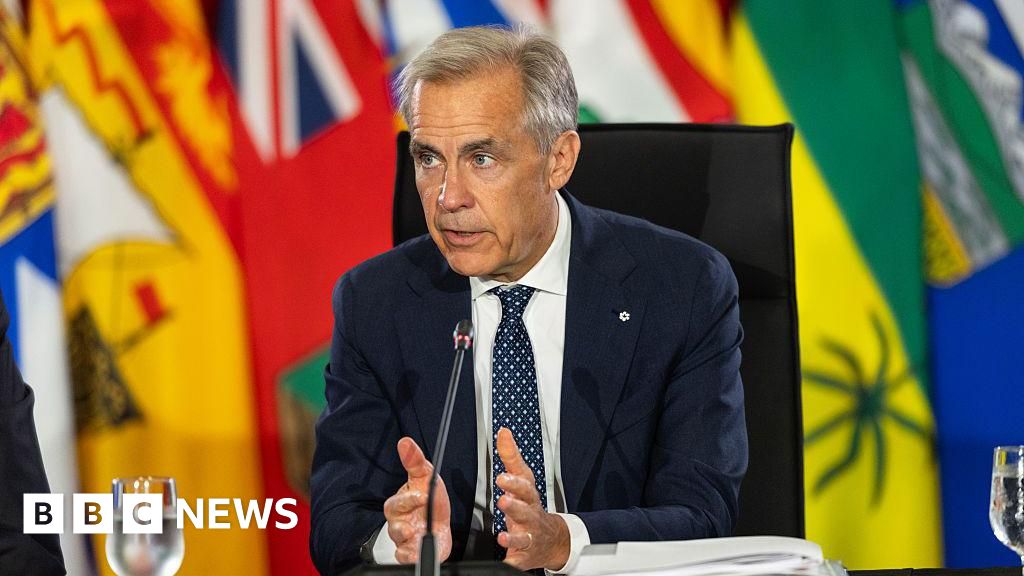
As the trade war between the US and Canada heats up, Canadian Prime Minister Mark Carney said “everything’s on the table” depending on how the talks go.
Carney made his comments after meeting with provincial and territorial officials on Thursday. They discussed a possible response to the Trump Administration’s announcement of new tariffs at 50% on about C$20bn worth of Canadian imports.
The trade negotiations with Washington will intensify before the 19th August when new US tariffs come into force.
Carney suggested that options include diversifying trade to avoid the US, and helping those sectors which are most vulnerable to tariffs.
He did not provide any details on possible punitive actions.
He said: “We will support Canadian families, workers and businesses.
On Monday the US announced new taxes, citing “unfair treatment” by Canada of US vehicles, dairy products and alcohol.
On the list are everyday consumer goods like hockey sticks and wine, but also industrial products such as cement. Some key exports will however be spared. These include energy, fish, minerals, and potash.
Negotiations between the two parties will last about one month before levies are implemented.
Carney stated that the deadline was “both” an attempt by the Trump Administration to exert pressure and a chance for the talks to progress.
The US announced new tariffs against 60 countries, including Canada. This was based on the claim that they had failed to adequately combat forced labor.
The North American Free Trade Agreement with Mexico (USMCA) exempts most Canadian products from these new labor levies.
Dominic LeBlanc, US-Canada trade minister said that Canada had one of “the most robust frameworks in the world to prevent and tackle forced labour”. Ottawa said it will continue its engagement with Washington regarding the issue.
The talks between Canada and the US to renew their free trade agreement have progressed slowly.
The US decided earlier this year not to renew USMCA under its current format, as they wanted to change the agreement that was reached in Trump’s first tenure in office.
US Trade Representative Jamieson Greer said on Wednesday to US legislators that he hoped to have interim agreements with Canada and Mexico available to consider before the end the year.
He admitted that some of the more difficult issues like US goals for stricter automotive origin rules and labor and environmental standards, could be delayed until next year.
PM office canada
Federal government declines to allow jets at Billy Bishop airport ‘at this stage’
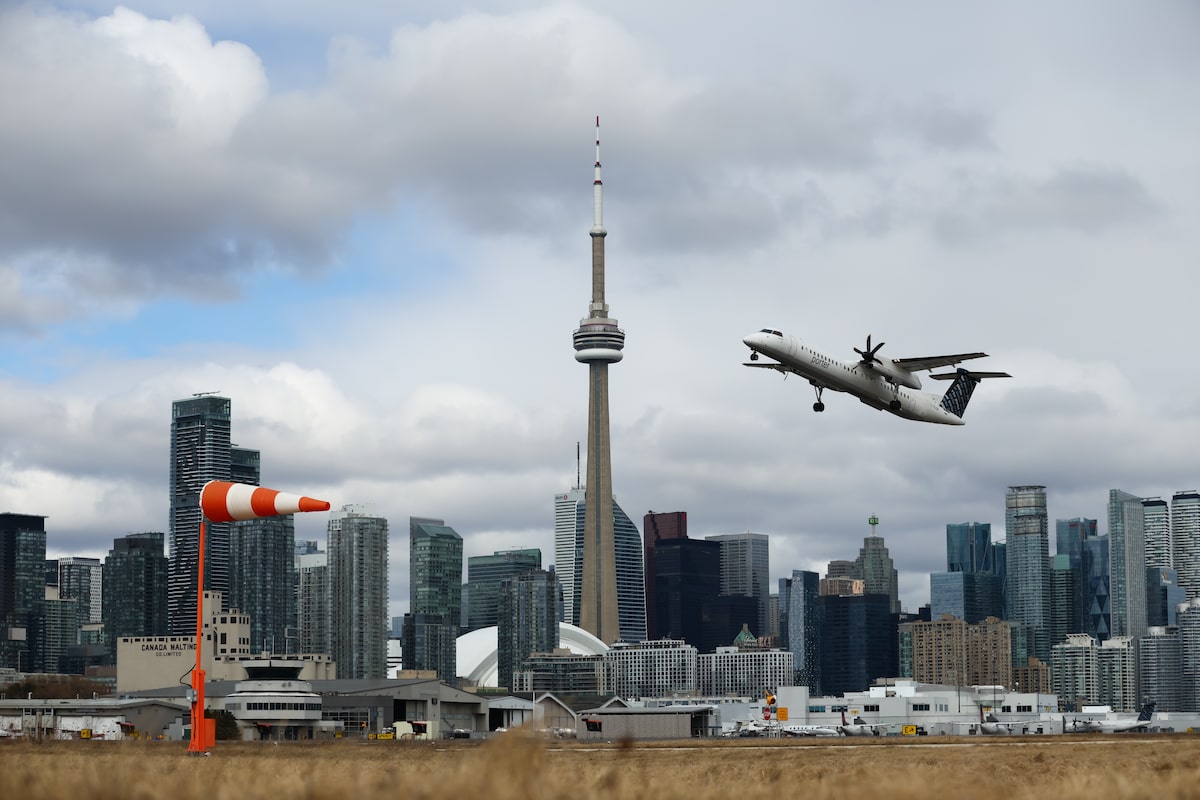
Ontario Premier Doug Ford has suffered a serious blow after the federal government rejected its plans to permit jets to land at Billy Bishop Airport on Toronto’s waterfront.
Steve MacKinnon, Transport Minister Steve MacKinnon stated in a Friday statement that expansion plans are not going ahead.
The federal consultations about the jets ended Friday. According to a government official, the overwhelming majority (87,000) of responses were from Toronto residents who did not support the expansion.
The Globe and Mail does not name the source because they are not allowed to publicly discuss the plans.
This decision has nothing to do with the expansion of the airport that is already underway.
Toronto has just agreed, in accordance with new Transport Canada regulations, to expand the runway buffer area.
Toronto Island Airport should grow
In a late-Friday statement, Mr. MacKinnon stated that Ottawa is currently focused on the expansion of safety.
At this time, I confirm that we are focusing exclusively on approved safety improvements, which are taking place and required for safe airport operations. He said that they are scheduled to be finished by mid-2027.
Toronto voices will help shape future plans for Billy Bishop Airport. We have received feedback from the public on many issues including transport, economy, noise, quality of life, and environmental protection.
The city of Toronto will pursue no plans which would cause noise pollution, environmental damage, or hinder the construction of much needed housing.
George Fallis says the benefits and costs of Billy Bishop Airport expansion are small.
Ford’s Office did not respond immediately to Friday night’s request for comment. According to a source in the Ontario government, Ottawa’s use of the phrase “at this time” does not mean that Ottawa has closed the door on jet expansion.
Ontario’s Premier made expanding Billy Bishop a top priority for his government. In a three-way agreement, the province has passed legislation to assume the stake of the city in Toronto. The federal government is also a party.
Toronto’s Mayor Olivia Chow thanked Mr. MacKinnon and Prime Minister Mark Carney for listening to Toronto residents who opposed the proposal.
She said, “Your tireless advocacy has made a significant difference” on X Friday night.
Ms. Chow stated that the province must return to Toronto the lands it has expropriated in order to continue its expansion plans for the airport.
We are asking the province to give back the land of the city now that the expansion has not moved forward. “We can work together to create a waterfront that will be enjoyed by future generations with parks, housing, and other amenities,” said Ms. Sherry.
Ford had previously stated that Carney was on board with the plan. The prime minister has called it an “interesting view,” but hasn’t formally endorsed it. Last month, he said that he had not yet formed an opinion about the proposal.
PM office canada
Trump vows tariffs to come for Canada over wildfire smoke that has drifted to U.S.
Donald Trump, the U.S. president, re-issued tariff threats on Canada Friday afternoon. He reiterated his intention to impose tariffs as a retaliation to wildfire smoke that drifted across the border to the United States.
Trump said to reporters in the Oval Office after making an announcement about American nuclear power, “We are going to put big tariffs on Canada due to the smoke.”
Trump did not give any details on the implementation of tariffs, despite making a similar statement a week earlier.
Trump said in the Oval Office that he “has told Canada to take action,” something he has also stated before.
This summer there have been massive wildfires across Canada, which forced communities to evacuate. There are also air quality alerts for several regions.
Mark Carney, the Prime Minister of Canada said this week he “made it very clear” to the U.S. President in his recent discussions that Canada is doing everything possible to contain the wildfires.
Carney said to CBC News that he conveyed to Trump the magnitude of the issue, including the “scale of the forest Canada has — eight times larger than Texas — and the fact that our drought conditions have stretched from Texas to Minnesota in American terms.”
Trump is not the only U.S. legislator who has criticised Canada for the aftermath of the wildfires.
Carney was recently accused by a few members of Congress in the U.S. of not maintaining forests properly to minimize the risks of fires.
A U.S. Senator this week said that recent comments from U.S. Republicans critical of Canada’s wildfire management were insulting and absurd.
Trump Administration favors tariffs
Laura Dawson, Executive Director of the Future Borders Coalition, and expert in Canada-U.S. Economic Relations, said on CBC Power & Politics, that Trump’s threats of tariffs related to wildfires against Canada are part of Trump’s penchant for “getting an effect.”
Dawson added, “This is a line which definitely gets people’s attention.”
She noted, however, that trade laws do not cover wildfire smoke and there is no legal basis for it.
The U.S. trade representative Jamieson Greer has not been able to find a way, despite his best efforts, to convert these [threats] in cross-border tariffs.
Trump has made it clear that he is a fan of tariffs. His administration has favored the use of tariffs throughout his second term, despite facing court setbacks regarding the U.S. Government’s ability to implement them.
Trump threatened earlier this week to apply 50 percent tariffs, effective August 19, on Canadian products worth billions of dollar.
PM office canada
Carney’s global quest for photo ops comes with crippling compromises
Content
This is Canada’s Trade Policy for you.
This content is reserved for subscribers
Get the latest news from around the world, including local and national stories.
Conrad Black and Barbara Kay among others have contributed exclusive articles. Special edition NP Platformed, First Reading and virtual events.
National Post offers unlimited online access.
National Post ePaper is an electronic version of the printed edition that you can view, comment and share on.
New York Times Crossword and other daily puzzles.
Support the local media
Subscribe to our Newsletter for more articles
Get the latest news from around the world, including local and national stories.
Conrad Black and Barbara Kay among others have contributed exclusive articles. Special edition NP Platformed, First Reading and virtual events.
National Post offers unlimited online access.
National Post ePaper is an electronic version of the printed edition that you can view, comment and share on.
New York Times Crossword and other daily puzzles.
Support the local media
Register / Sign in to Unlock More Articles
Sign up or create an account to continue reading.
One account allows you to access articles across Canada.
Comment and share your opinions.
Get additional articles each month.
Subscribe to email alerts from your favorite authors.
This article is free to read. Register now for unlocking.
Sign up or create an account to continue reading.
One account allows you to access articles across Canada
Comment and share your opinions
Get additional items per month
Subscribe to email newsletters from Authors You Love
Register or Sign in
Email Address
You can also find out more about
Content
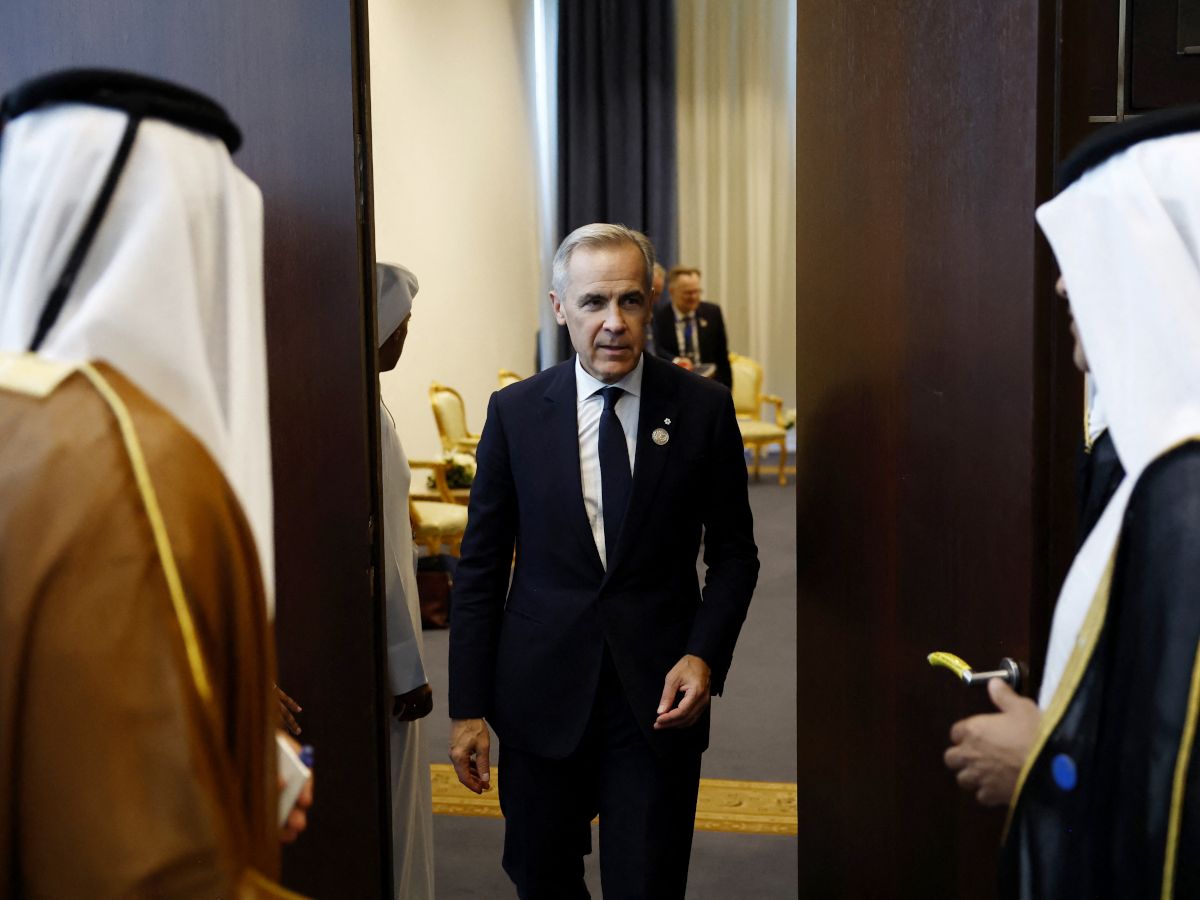
The Canadian public’s opinion is a strange axiom. Mark Carney’s popularity ratings rise or fall when the public’s hatred of Donald Trump, President of the United States, is heightened. Carney is often seen posing alongside another foreign leader at a signing ceremony of a new free-trade agreement, while President Trump alienates America’s allies and friends around the globe with his belligerent trade policies.
Content
Video Recommended
This video could not be loaded. We are sorry.
Refresh your browser or
Click here to view more videos by our team.
Terry Glavin: Carney’s quest for global photo-ops brings crippling compromises
This video could not be loaded. We are sorry.
Refresh your browser or
Click here to view more videos by our team.
Content
Content
Carney deserves credit for his game. Carney is doing a good job of playing the game.
Content
The devil is in the detail. This is hidden in Carney’s desire to establish trade, security and investment partnerships with every country that will sign up. It’s not easy to keep track.
Content
In the sixteen months since Justin Trudeau handed over the keys of the Prime Minister’s Office, Carney and his cabinet ministers made 29 hurried visits to foreign capitals. Carney’s dozens of frameworks, concordats and memoranda of understanding have received less attention that Trump’s threat to tax Canada’s wildfires smoke or hockey sticks or whatever the latest eruption was about.
Content
Trap doors are hidden in even the larger deals, such as his “New World Order” strategic partnership, which is the foundation of this deal. The fact that the collaboration between the RCMP and Beijing’s Ministry of Public Security, which was ordered to be pursued in January last year, remains secret is already troubling. It’s also troubling how this secret memorandum will be used by Xi Jinping to justify his determination to extradite anyone who is deemed to sympathetic towards the Tibetans or Uyghurs under China’s “Ethnic Unity Law”.
Content
Content
What is going to happen when the trade war between Europe, China and China is a result of Liberal Party’s enthusiasm for closer cultural and economic ties?
Content
Continue reading
Content
This is not a situation where you can play both sides. Contrary to what the Liberal Party claims on a regular basis, China isn’t Canada’s largest trading partner. Europe is by far.
Content
The Europeans had hoped Trump’s return as President would pave the way for a united front to fight Beijing’s efforts to use its heavily subsidized industrial sector to erode Europe’s manufacturing base. Trump, instead of collaborating with the European Commission to block European exports, built a wall that imposed tariffs.
Content
Germany alone has lost 10,000 jobs per month due to China. China has increased its global manufacturing share from 6% in 2000 to 30% today, while Europe has seen their share drop to 17%. Over the last decade, China’s annual trade deficit has more than doubled to $400 billion. Jens Eskelund is the president of the EU Chamber of Commerce China. He compares this situation to that of a 400-metre long giant container ship with 24,000. It’s going to Europe, but coming back empty.
PM office canada
Alberta’s got a new plan for a southern pipeline to B.C.’s coast – it still won’t be easy
Shahin Dashtgard is a professor of sedimentology at Simon Fraser University. She holds a palmfull of muddied sand collected from the Fraser Valley, Delta, B.C.
The material known as “sub-surface” is weak, loose, and saturated with water. It’s one the biggest challenges in building Alberta’s new pipeline terminal at Roberts Bank on the southern shores of British Columbia, near Fraser River Estuary.
Dashtgard’s wet sand melts as he shakes it, and “almost runs like soup” through his fingertips. He is demonstrating liquefaction which can occur in the event of an earthquake.
He said, “That’s the problem with building over loose sand or sediment that is water-saturated.”
The route may diverge
Both the Prime Minister Mark Carney, and the Premier of Alberta Danielle Smith are bullish about a new pipeline route in Alberta that is currently being considered by the Major Projects Office. This pipeline would largely replicate the Trans Mountain corridor.
Smith and the B.C. government held a media conference in Calgary on the 2nd of July. Smith argued that the proposed pipeline was “the most efficient, cost-effective route” just hours after B.C. The North Coast Tanker Ban was confirmed.
Carney said to journalists in Calgary that the best route is through an existing pipeline, the Trans Mountain Corridor.
There’s still a large section of this proposed route which doesn’t yet exist. This deviation begins at Hope in B.C. and continues through the Fraser Valley to Roberts Bank, rather than Burrard Inlet, near Metro Vancouver, as it did with two other oil pipelines.
This preferred term has been a source of concern for many years.
Even if the project is selected as one of national importance by the deadline of October, environmental and seismic concerns, constraints of space, and local First Nations’ influence will determine the pace and direction.
Alberta acknowledged these long-standing concerns, noting that Roberts Bank, and land surrounding it, is the “highest sensitivity area” along the corridor, and “the Region will be concerned about oil spills and tanker traffic, as well as cumulative effects.”
Port expansion project
Roberts Bank has already been scrutinized to determine its suitability for another major project – Roberts Bank Terminal 2, an expansion of Vancouver’s Port of Vancouver that took more than a decade in planning and would boost the container handling capacity of the Port by over 30 percent.
According to the submission documents, pipelines and terminals at ports are about of similar size.
Vancouver Fraser Port Authority proponents have called for the project to be expedited. The only thing that is missing from the approval process for the port project is a federal permit issued under the Species at Risk Act.
CBC News, at an announcement event in mid-July announcing that the port expansion had been referred to the MPO, asked Port CEO Peter Xotta about the coexistence of the proposed pipeline terminal and the container expansion.
Xotta responded that the Port Expansion “is far more advanced” than the other two projects. He said they would work with MPO to iron out the details.
In a later statement, a spokesperson for the port told CBC News “it is important to remember that these two projects are separate.”
Environmentalists, however, say that technicalities such as this won’t affect how Pacific Salmons (salmons), Western Sandpipers (sandpipers) and Southern Resident Killer Whales will experience another terminal along these shores.
It’s frightening,” said Lucero González, a member of the environmental group Wilderness Committee who challenged the expansion of the container terminal in Federal Court.
Gonzalez said that if a pipeline was built along with the port expansion in British Columbia, this would represent a new development in project development as well as tanker traffic.
Alberta’s submission details its plans for mitigating the impact of pipeline infrastructure on aquatic species, which are federally protected.
The federal government will automatically approve the project if it is included in the Building Canada Act. A spokesperson for the MPO told CBC News that the pipeline may still require some authorizations and permits.
A spokesperson for the MPO noted that, because the Building Canada Act has listed the project as a Building Canada Project, the MPO will no longer be able to determine “whether” or “how” the project proceeds.
Seismic Issues
There’s also what’s below: The Fraser Valley Floor, which can become soft and squishy during an earthquake.
Trans Mountain, Canada’s Crown Corporation that owns 90 percent of the equity in this project, informed Canada’s National Energy Board in 2015 that the geological conditions surrounding the building of a maritime terminal on Roberts Bank will result in an increased footprint and capital costs compared to a terminal built in Burrard Inlet.
Trans Mountain stated in public documents that it submitted to NEB “the possibility of seismically-induced soil liquidification is an important question.” Trans Mountain also stated that it may need to take ground-improvement measures before the construction of the terminal and pipeline footprint.
Trans Mountain was contacted by CBC News to find out what has changed to make Roberts Bank the preferred site for their pipeline terminal.
Roberts Bank, a marine shipping corridor with existing safety infrastructure and a well-established marine shipping route was identified by the company as CBC’s reference to Alberta.
The project will be evaluated as it progresses to determine if there are any concerns about the site’s engineering.
Alberta proposes two routes for the pipeline from Hope (B.C.) to Roberts Bank. It says that the final route will be determined by community consultations.
Ribu Dhakal is an assistant professor of Civil Engineering and Civil Engineering at University of British Columbia.
He said the most significant challenge will be the well-known high risk of liquidation. They’re going have a hard time but it is possible.
Dhakal believes that different engineering solutions, such as trenching and compacting the soil beneath the project can reduce the risk, but they are likely to make the project complex and costly.
First Nations concerns
All of this is based on the titles and rights of several First Nations whose territories traditionally encompassed the land for the terminal. Alberta’s plan has not yet been endorsed by many, who are waiting for more information.
Tsawwassen First Nation is one of the groups that holds land near to the marine terminal for the pipeline.
In a press release, it stated that the consent to the port expansion proposal did not equate with support for the project.
Tsawwassen chief Laura Cassidy refused to be interviewed but gave a hint as to her government’s desire for further development of the Fraser River Delta at the news conference on July 16, announcing that the Port Expansion Project’s application for MPO listing.
She said that while the benefits of harvesting, culture, and environment may benefit all nations, it is most important for Tsawwassens to reap these impacts.
To say that we’re concerned is an understatement.
PM office canada
Carney says he ‘should have been clearer’ about new Gordie Howe bridge agreement
Mark Carney, Prime Minister of Canada, says that he has “imperfectly described” the new agreement to open the Gordie-Howe International Bridge. The text of the deal appears to contradict the original description he gave.
Carney said that while attending the Calgary Stampede, shortly after the agreement was signed but before it was published in full text, the U.S. would receive a split of the bridge toll revenues after accounting for all operating costs and repaying debt.
The text of the deal, released late on Tuesday night and excluding any mention of Canada’s debt, seems to contradict this suggestion.
The Prime Minister was asked about this contradiction at a press conference held on Thursday. He said that he had “should have clarified” his comments in the past and the fact that the revenue split deal between the U.S. does not include debt repayment.
Could I have better explained it on a Sunday at Stampede with my cowboy hat? He said, “Yes, I would have been able to explain it better.”
According to the deal, which is described as “a proposed agreement in principle”, for the first fifteen years Canada will share half the net revenues of the bridge with an “economic development fund” “established by and controlled solely” by the U.S. Government.
The new agreement between Ottawa and Washington has been reached despite the fact that Canada and Michigan had originally agreed to construct a bridge in 2012.
In the original agreement Canada paid the $6.4 billion cost of construction and Canada would collect tolls up until that time. Then, the revenue was to be shared with Michigan.
Carney explained that his comments regarding debt repayment included in the agreement were intended to refer to the initial agreement with Michigan, even though Carney referred to the U.S. agreement’s 15-year time frame and repayment under the Michigan deal is estimated to last 50 years.
The prime minister stated that “there is no split of tolls in the [Michigan] Agreement which I mentioned, maybe imperfectly.”
Carney said that “less than five percent of the total cost to develop the bridge” is the price of this new agreement.
The Prime Minister’s Office told CBC News that the price of $6.4 billion would mean a cost maximum of $320 millions over 15 years or approximately $21,000,000 per year.
Carney’s initial description raised concerns from Opposition Conservatives, who demanded that the agreement be made public.
Kelly McCauley of the Conservative Party, who chairs the Government Operations Committee, announced on social media that next week he will convene a meeting to “launch an urgent investigation” into the Gordie-Howe Bridge Deal and misinformation given to Canadians.
Andrew Scheer, the leader of the Conservative House shortly after Carney’s press conference, told reporters that the Prime Minister should feel “embarrassed by” the U.S. deal.
He tried to conceal this information from Canadians. Scheer stated that this is yet another example where Mark Carney only delivers illusions to Canadians and no results.
U.S. delays opening
In February of this year, U.S. president Donald Trump posted a number of lies on social media about the bridge. He said he would not allow the bridge to be opened “until we are fully reimbursed by the United States for all that we have done.”
Ottawa and Washington had to reach a new agreement before the bridge could open in June. Trump said it was “a better deal.”
Scheer said it was a major concession and that the Liberals needed to explain the benefits of the deal for Canada.
Ontario Premier Doug Ford stated that the agreement was “critical” for the opening of the bridge and ensuring trade across the border.
Ford told Carney at a news conference that the prime minister had done a great job in negotiating this agreement, which saw $300 billion worth of goods cross the border.
It’s important for manufacturers to open this bridge. “He did an amazing job, and I want to thank you.”
Carney stated that the fund is intended to encourage traffic to the bridge.
On Monday, the bridge will open.


Every Marvel Studios Hall-H Comic-Con 2026 Announcement & Reveal (Updated Live)
Marvel Studios has been at San Diego Comic-Con for two years now, and they always know how to win with...

Ted Danson admits personal struggles overshadowed the end of ‘Cheers’
You can now hear Fox News stories! Ted Danson gets real with his life as he nears the end of...


“The Odyssey” screenings at Regal King of Prussia impacted after 70mm IMAX projector goes down
Currently, one of only 41 cinemas around the globe screening Christopher Nolan’s “The Odyssey” 70mm IMAX is experiencing technical problems....


Marvel SDCC 2026 Live Coverage – All the news from the Marvel panel as it happens
Kevin Feige has announced that they’ll only be showcasing movies at the panel today. So no VisionQuest or Daredevil: Born...

Bargain buffet refuses to die while luxury dining takes over Vegas
There are few exceptions to the days when bargain buffets were used as a way of attracting Las Vegas gambling...


‘Neuromancer’ Trailer Introduced By Callum Turner At SDCC
Callum Turner stunned the audience at San Diego Comic-Con as he presented the teaser of Neuromancer on Saturday. The BAFTA-winning...


Larry the Cable Guy Recovering After Scary Hospitalization
Larry the Cable Guy has recovered from a recent illness that landed him at the hospital. Larry’s rep tells TMZ...


LeBron James signs with Sixers as Philadelphia loads up with hopes of winning first title since 1983
LeBron James will be coming to Philadelphia. LeBron James, the four-time NBA champ and league’s top scorer of all time,...


Boosie Badazz Sued By Security Guard for Assault
Boosie is being sued for allegedly smashing a hookah glass over the head of a security guard. This lawsuit comes...
The First ‘Matchbox’ Movie Trailer Sure Is Something
Matchbox is the brand that continues to be a pipeline for movies. Die cast toys are best represented by slot...
-

 BBC News World1 week ago
‘Send help rather than complain,’ Canada’s Ford tells US as wildfire smoke blankets parts of North America
-

 TravelNews1 week ago
As smoke from Canadian wildfires blankets the US, can wearing a mask help?
-

 Business2 weeks ago
A Majority of Americans Now Support Seizing Wealth From AI Industry
-

 Video2 weeks ago
Fed Chairman Warsh questioned about independence from Trump
-

 Entertainment2 weeks ago
Ariana Grande ‘confirms’ she’s back with ex after Ethan Slater split with lyric about ‘finding our way back’
-
 Business1 week ago
Ex-Fed advisor gets over three years in prison for lying about China ties
-
Business2 weeks ago
Over 2/3 of Americans Support Bernie Sanders-Style AI Stock Ownership Plan, Poll Shows
-
Tech1 week ago
Netflix stock tanks as Q3 revenue falls short: ‘Nothing here to get excited about’