
HealthNews
Night Snack to Lower Cholesterol, According to Dietitians

Review by Dietitian Sarah Pflugradt Ph.D. RDN, CSCS
Important Points
Chia Seed Pudding, a late-night treat that is rich in protein and fiber, can be a healthy snack.
By removing cholesterol from the body, soluble fiber can help lower it.
To maintain a healthy cardiovascular system, eat a low-fat diet and avoid added sugars.
You are not the only one with high cholesterol. Millions of Americans suffer from this disease. High cholesterol (also known as hyperlipidemia) is defined by total blood cholesterol levels above 200mg/dl. It is one of the leading causes of heart disease and should be managed. Kathleen Benson RDN CSSD CPT says that keeping cholesterol in a healthy level can reduce the chance of plaque building up in the arteries. This, in turn, could lead to heart problems over time.
Healthy meals form the basis of any diet that lowers cholesterol. Even snacks eaten before going to bed can be beneficial, such as our Chia Seed Pudding. The pudding is packed with cholesterol-lowering ingredients, but it’s still light enough to not interfere with sleep. No wonder dietitians are huge fans. How it helps to keep your heart in good shape
The Benefits of Chia Seed Pudding for Lowering Cholesterol
The High Fiber Content
A high fiber diet can lower cholesterol. Meggie Connelly, M.S. RD, LDN, says that when she works with clients who are trying to lower their cholesterol, they focus on more fiber in the diet and healthy fats. Our Chia Seed Pudding is packed with fiber-rich chia seed and berries. Each serving contains 11 grams of fibre.
The fiber in chia seeds is a mixture of soluble and non-soluble. It’s soluble fibre that is responsible for chia seeds’ cholesterol-lowering properties. What is the reason? The reason?
This product is low in saturated fat
Research has revealed that food cholesterol does not always increase your cholesterol level. Saturated fat is the real problem, which can be found in red meat and processed meats, full-fat milk, and ghee and lard. The liver produces far more cholesterol when saturated fat is present.
This chia pudding contains only 1 gram saturated fat in each serving. You can substitute almond milk with other types of milk, such as soy or cashew milk, oat or oatmilk, or even low-fat milk.
This product contains plant protein
No matter if you suffer from high cholesterol, a snack with protein will keep you satisfied all night. This will keep you full all night long and control your blood sugar so that you don’t feel hungry in the morning, says Brannon Blount M.S. RDN.
When made in the original form, each serving of chia pudding contains 7 grams of proteins. Not just any protein. All the plant protein is in this pudding if you use plant milk. This plant protein has been associated with better heart health. The American Heart Association encourages us to include plant-based protein sources like chia seed and nuts in our daily diet. This pudding contains both.
What to look for in a heart-healthy bedtime snack
You don’t need to decide between your health and your hunger at night. Keep these things in mind when you head to the kitchen at night to quell hunger.
Combination of protein and fiber This is the magical duo. Benson says that fiber and protein, when combined or eaten with a variety of other foods, will help maintain a steady blood sugar level and promote satiety. This is important, because high blood sugar can cause diabetes and increase heart disease risks.
Easy-to-digest ingredients. You don’t want to disturb your sleep by eating something that upsets your stomach. You want to choose something that is light, easily digestible, and filling, but low in sugar and fat. Other than chia pud, cereals, oatmeal and popcorn with low-fat dairy are also great choices.
It should be easy to put together. It’s natural to feel a little decision fatigue after a busy day. Instead of reaching for empty calories, (like a bag of chips), opt for a nutrient dense snack that’s easy to prepare. Your late-night snacks should be easy and quick to prepare, such as a sandwich with peanut butter, sliced strawberries, and banana. Connelly suggests making your chia pud in advance. If you spend 30 minutes to make your late-night treat, you’re not likely to do it regularly.
The Experts’ Take
Snacking late at night may not be a good idea, but it can help you sleep. If you suffer from high cholesterol there are a few things to consider. Dietitians suggest choosing snacks that are high in protein, fiber and low in saturated fat if cholesterol is a concern. Chia Seed Pudding is a great option. Make some today. You can triple this recipe as the snack will remain fresh for three days in your refrigerator. Your heart will be grateful.
HealthNews
US has the widest morbidity gap as people live longer in poor health
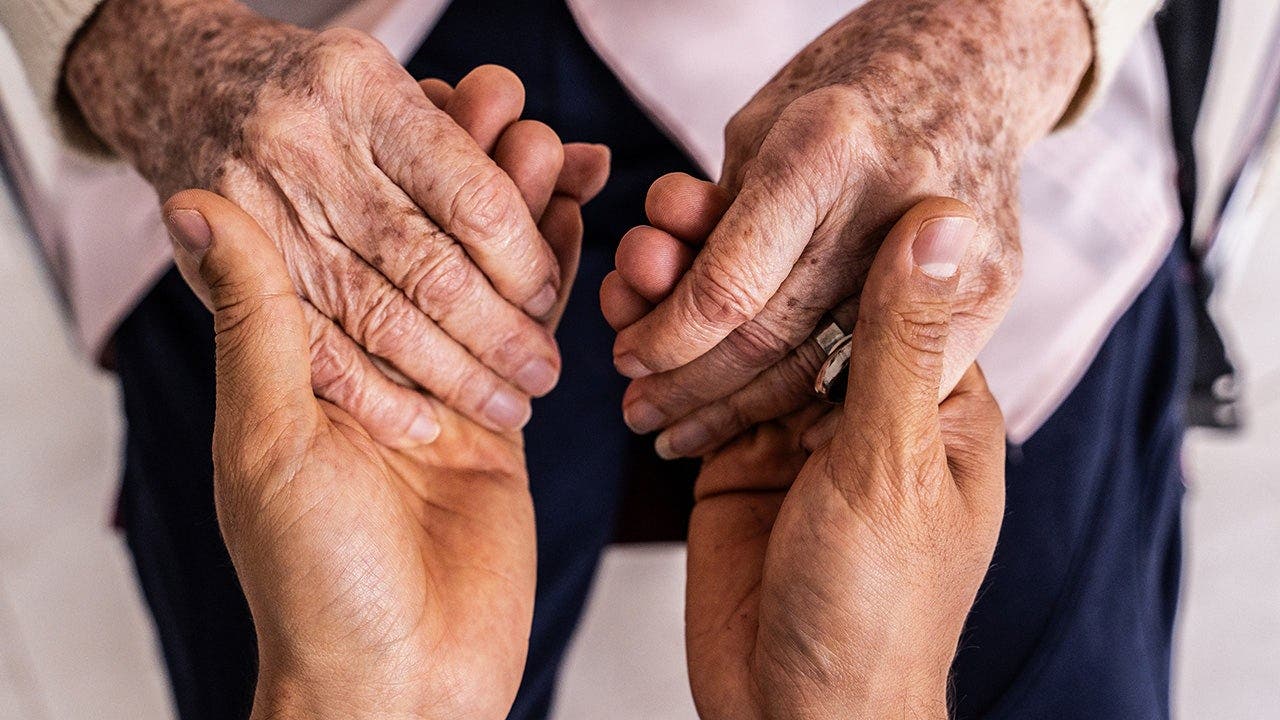
A recent study found that people are not only living longer but also battling more illnesses.
Researchers found that the “morbidity gaps” – the difference in the average number of people who are in bad health due to chronic conditions such as back pain, depression, or hearing loss – widened in 203 out of the 204 countries studied. The gap was most prominent in America.
Researchers at the Institute for Health Metrics and Evaluation at University of Washington found that in 2023 the average global life expectancy was 14*5%, up from 13*6% in the 1990s.
JANE SEYMOUR, 75, SHARES HOW SHE APPROACHES AGING WITH VITALITY: ‘BEST I CAN BE’
The morbidity gap in the United States is approximately 14 years or 17,8% of expected life expectancy.
Researchers reported that between 1990 and 2023 the global life expectancy increased by 64.6 to 73.8, while life expectancy for healthy people rose from 54.9 to 63.1.
CLICK HERE TO SEE MORE LIFESTYLE NEWS
They wrote: “Because survival gains consistently exceed gains in years of healthy life, more people live with chronic diseases and disabilities.”
Researchers found that the gap was widest in countries with the richest populations, where people have greater access to resources for extending life. The researchers found that women also live longer, yet spend more time in bad health.
Fox News Digital quoted Dr. Antony Chu as saying, “The most important thing I take away from this study isn’t that people live longer, but that we are better at delaying the death of people than at delaying their functional decline.”
He said that modern medicine had achieved “remarkable success” in the reduction of mortality due to cardiovascular disease, cancer and other infectious diseases. Many of these additional years have been spent with chronic pain and disability. They may also suffer from sensory loss or depression.
Test Yourself with Our Latest Lifestyle Quiz
Researchers examined data from the Global Burden of Disease covering 204 nations and territories between 1990-2023. Scientists observed in their The Lancet Public Health report that the main contributors to morbidity gaps were a few chronic and largely nonfatal diseases.
Around 57% of the years spent in poor health were due to musculoskeletal problems, including low back pain. Mental disorders such as anxiety and depression, hearing loss and falls, and non-communicable diseases. Other factors included obesity, high fasting blood glucose and an aging population.
Researchers noted that while the study reveals broad trends in health, it does not prove what causes people to live longer with poorer health.
The study’s senior author, Dr. Christopher Murray of the Institute for Health Metrics and Evaluation at the University of Washington School of Medicine, said, “Our results suggest that future improvements in population health won’t come from simply helping people to live longer but by helping them live better.”
Murray said that “progress should not be measured by life expectancy, but rather by healthspan (the number of healthy years), with more investment being made in chronic disease care, prevention and long-term management to decrease the years in which people are in bad health.”
Chu, a Fox News Digital contributor, said that the goal of extending life expectancy should be replaced by reducing morbidity, and maximising how many years people can remain cognitively, physically and socially healthy.
CLICK HERE FOR OUR LIFESTYLE NEWSLETTER
He said: “I believe that the future of medicine will not be adding more years to our lives, but rather adding more life to those years.” First, we must focus on maintaining function and not just reacting to diseases.
This involves routinely testing mobility, strength of muscles, hearing, cognitive ability, and general physical endurance. Chu stated that this could be just as crucial as monitoring blood glucose, cholesterol or pressure.
He said that “functional decline begins often years before the disability is obvious. This provides an opportunity to intervene earlier.”
Chu also said that the importance of musculoskeletal care should be emphasized.
He said that “progressive resistance exercise, fall prevention and maintenance of muscle strength, as well as early treatment for chronic back pain, should be core elements of preventive medicine, rather than just afterthoughts.” The impact of maintaining mobility on healthy ageing may be as great as that of preventing heart diseases.
Chu stated that mental health and social connections are also vital to the healthspan of an individual.
CLICK HERE TO DOWNLOAD FOX NEWS APP
He said that loneliness, depression and anxiety often reinforce each other, which accelerates physical decline, while reducing quality of life. Early treatment of these conditions can improve longevity and independence.
Chu, a child of immigrants who believes Americans overlook a cultural aspect of healthy ageing, says he is of the opinion that this often happens.
He said that in many cultures outside of the United States older adults still play a respected and active role as part of multigenerational family. They remain as mentors, caregivers and historians. The sense of belonging and purpose that is maintained may offer protection from loneliness, depression and identity loss.
Chu said that “by contrast, older Americans are experiencing increasing social isolation at a time when it is most crucial to maintain meaningful relationships.” Healthy aging does not depend solely on biology. It is influenced by human connections, community and purpose.
HealthNews
Scientists discover 1st known likely transmissible cancer in wild catfish

In 2013, the mystery started along Lake Memphremagog. This large, freshwater lake straddles Vermont and Quebec. Anglers began catching brown bullhead cats with black raised spots all over their body. According to a recent study in Nature, it was found that between 23% and 37% of the fish sampled were confirmed to have melanoma, which is a form of skin cancer.
In other regions, brown bullhead cats had previously been reported to have melanomas. However, the rate was not as high. At first, scientists suspected that environmental factors were to blame. The study found that Tropical Storm Irene caused major regional flooding, which led some experts to suspect pollution as the cause.
This new study suggests a different explanation: these cancerous cells could be transferred from catfish to catfish. This is the first time a fish cancer has been identified as being transmissible.
Is cancer ever contagious?
The American Cancer Society says that catching cancer is almost impossible. The cancer usually starts when the DNA of a person’s cells is damaged, they grow uncontrollably and develop a tumour. The cancer cannot be transmitted by touching or sharing food with someone who has it.
Cancer cells can be transmitted directly between people in rare cases and only under unusual circumstances. According to the American Cancer Society, cancer cells can be spread between people through organ and tissue transplants. However, this risk is extremely low. There have been rare cases of cancer that are related to pregnancy.
According to the American Cancer Society, certain infections like hepatitis B and human papillomavirus can be spread between people and may increase long-term cancer risk. The virus, and not cancer, is the cause of the spread in these situations.
A true transmissible form of cancer is a different concept. According to study authors, the cancer cells would need to move away from their original hosts and grow elsewhere. Scientists still don’t know how exactly this process occurs in brown bullhead catsfish, found in Lake Memphremagog.
The catfish mystery solved
Researchers examined affected catfish and found that the cancer was not caused by an infectious agent. This led them to examine the tumors more closely using whole genome sequencing. Whole-genome sequence is a DNA mapping technique.
The researchers compared the DNA of malignant melanoma found in these catfish to DNA taken from healthy tissue. The researchers found that tumors taken from different catfish samples were strikingly alike, but markedly distinct from those catfish. The tumors, in other words, appear to be the result of a single cancer cell line that has spread to different fishes, instead of occurring on their own.
Scientists are investigating the spread of cancer in this particular population. Brown bullheads have been known to congregate in large numbers during the spawning period, giving cancer cells an opportunity to spread from one fish to another. The exact path of transmission is not known.
The meaning of life for human beings
Lake Memphremagog provides drinking water for over 175,000 people. Scientists say that there’s no risk for this catfish-borne melanoma to spread to humans.
Scientists have stated that the cancer cells are not able to infect other species of fish and the water from the lake. There is also no proof that humans can contract cancer by consuming these fish.
The study found that previously unknown naturally transmissible diseases have also been detected in bivalve animals, including clams, mussels, Tasmanian Devils and dogs. Scientists can now add catfish as well to the list.
Researchers could benefit from this discovery by better understanding how cancer cells replicate and survive within their hosts, despite the presence of an immune system.
Researchers at the University of Manitoba have found that nature can still teach us unexpected things about cancer. This study on Lake Memphremagog’s catfish may be able to help them better understand how cancer cells spread and grow in unwelcome places.
HealthNews
26-year-old shares warning just months before dying of melanoma

Before she passed away from melanoma, a young woman in Texas sent an urgent message. She hopes that her story will help others.
Alondra said that she had just turned 19 years old when she first noticed the freckle on her forehead. Nobody told Alondra Sierra that it was a serious problem. The condition was left untreated too long.
The 26-year old said, “Now, I have metastatic stage four melanoma and fight for my life each day. Searching for treatments to save me could be the only thing that can help.” In a May video for Melanoma Awareness Month, she explained her situation.
Sierra underwent a number of treatments to combat her cancer, including immunology, radiotherapy, and surgery.
Skin cancer does not care about your age. Skin cancer doesn’t give a damn about your age or how fit you are. It does not wait. Please listen to this: Get uncomfortable. “Get checked”, she says in the video.
You need to have your skin checked from head-to-toe. “I don’t wish for your story to be the same as mine.”
Alondra’s Story
SIerra began to notice a new freckle on her forehead in 2019. In a TikTok clip, she revealed that the color had changed from dark to light.
She didn’t think cancer was a real possibility. She learned that she had melanoma three years later.
The most deadly type of skin cancer is melanoma, which grows rapidly and spreads to other organs. The most deadly skin cancer in America, it kills over 8500 people each year.
This cancer is increasing in frequency among young women.
Sierra’s cancer “grew rapidly” by the time she received her diagnosis, in 2022. She tried many procedures and treatments for the control of the cancer.
She said, “I wouldn’t be going through all of this if I just went to a doctor or dermatologist every year for my skin and nails check.”
She said that in 2024 she discovered the cancer spread to her whole body. This included her skull, her pelvis, her spine, her ribs and her stomach.
Her family reported that she began radiation therapy on her brain in June after she had started immunotherapy.
Final message
Sierra has made it her personal mission over the last four years to raise awareness of skin cancer and sun protection. She also believes in the importance skin checks.
She spoke out against UV artificial sources, such as lasers and nail lights, while promoting products to block it. While battling cancer, she fought for others’ education.
I wish that this month was a time of celebration. “I wish this month meant celebration. But it instead means survival. Sierra’s May video stated, “Unfortunately, this is my current reality.” May 1st marks the beginning of Melanoma Awareness Month. Many people don’t even notice. It’s advocacy, prevention and me. “It is about life and survival.”
She urges all people to thoroughly check their skin, which is the largest organ of the body.
You notice the mole or freckle but don’t check it. Every inch counts, from your head to behind your ears, to your back and breasts to feet to genitals.
Melanoma is detected by dermatologists using the ABCDE criteria. Spots with “A”symmetry and “B”order irregularity can be early signs.
Sierra graduated from college only a few years ago in 2024, the year that she discovered the cancer spread throughout her body. After living in the US for 23 years, Sierra became a US Citizen on March 1. Her radiation treatment had just finished a few days earlier, and she was still in a wheelchair.
By sharing the information that she wishes she had known, she hopes to help others catch cancer sooner than she did.
She said that early detection was not only important but also crucial.
HealthNews
Flight dehydration and bloating tips from health nutrition experts

Experts say that flying can be hard on your body. However, there are some simple nutritional rules you should adhere to to avoid common issues like dehydration and dry skin.
The dry cabin air is the main cause of dehydration.
Dehydration is not only thirst-causing, but can also cause headaches, fatigue, cramps in the muscles, and dizziness. Dehydration can cause confusion, fainting and headaches in more serious cases.
CLICK HERE TO SEE MORE LIFESTYLE NEWS
Experts say that travelers are at risk of making certain mistakes which can lead to dehydration. Most people travel with a minimum amount of liquids to reduce the number of bathroom stops.
Many people also choose foods which are greasy, salty and heavy. Caffeine and alcohol are also commonly consumed, and can cause bloating and constipation as well as dehydration and an electrolyte balance.
Experts in health recommend hydration before, during and following a flight. You can bring your own bottle of water that you sip and fill slowly, to avoid relying on the onboard drinks.
Lindsay Baker, director of the Gatorade Sport Science Institute told Eating Well that by the time your body feels thirsty it is already dehydrated. It is best to prepare ahead of time and ensure you’re well-hydrated prior to your journey. It is better to plan ahead and make sure you are well-hydrated before your trip.
CLICK HERE FOR OUR LIFESTYLE NEWSLETTER
Baker says that drinking water by itself may not suffice.
She said that your body requires electrolytes in order to retain the water.
You can find electrolytes in bananas, spinach, avocados as well as in tablets and drink mixes.
Gas in the stomach is also exacerbated by carbonated beverages, including soda, sparkling waters, and beer.
Experts say that excessive alcohol and caffeine consumption can cause dehydration, so it is best to avoid them when you fly.
Stephanie Smith, an Agora Health nutritionist specializing in women’s issues, said to CNT Travler, “if you want alcohol, choose something like one Bloody Mary. Tomato juice contains electrolytes and is antioxidant-rich.”
Reduced cabin pressure in airplanes may cause the gas to increase, causing bloating. Experts recommend avoiding foods that produce gas, including beans, lentils and broccoli.
Smaller, lighter meals are better for digestion than large meals that slow down the process.
Avoiding foods that are too sweet or salty is also a good idea. Foods high in sodium can cause temporary bloating and increase your thirst.
Test Yourself with Our Latest Lifestyle Quiz
Marra Burroughs is a registered dietitian and doctor of clinical nutrition. She told Travel + Leisure that people should avoid snacking on foods high in sugar or simple carbohydrates without balancing them with other macronutrients.
Burroughs said that traveling is already exhausting, but a carbohydrate-heavy meal can cause a crash and make it worse. If you are going to eat a high-sugar snack, it is best to pair it with a protein and fat to make it more balanced.
Avoid ultra-processed airport snacks and opt for protein-rich options like unsalted almonds, Greek yogurt and cheese sticks.
Travelers can stay hydrated by eating foods that are rich in water and nutrients, such as grapes, celery, watermelon or cucumbers.
CLICK HERE TO DOWNLOAD FOX NEWS APP
HealthNews
4 Moves to Rebuild Hip Strength After 60
Start here if getting out of a chair feels harder than it used to.
Getting out of a chair without a struggle is something most people take for granted, until one day it isn’t so easy anymore.
Michael Betts has spent almost 40 years as a personal trainer, and for the last 20 he’s been director and co-founder of TRAINFITNESS, the UK’s leading provider of in-person and online personal training courses. In that time, he’s seen the same pattern show up again and again: hip strength is one of the biggest predictors of independence past 60, and it’s also the area most people have neglected the longest.
The fix doesn’t require a gym membership. These four chair-based exercises, done just a few times a week, can rebuild hip strength faster than most people expect.
Common Hip Problems After 60
Weakness across the whole hip complex is the pattern Betts sees most often. The glutes are the biggest muscles in the body, but decades of sitting have switched them off in most people, and by 60 they’ve forgotten how to fire properly. The hip flexors at the front of the hip are the opposite problem: tight and overactive from all that sitting, which tugs on the lower back.
Then there’s the side of the hip, which almost nobody trains. The muscles on the outer hip, particularly the glute medius, are what stop the pelvis dropping to one side every time you take a step. When those muscles are weak, the whole body has to compensate, and knee pain, hip pain and lower back pain often show up together as a result.
Mobility loss is the other issue. External rotation, the ability to turn the leg outwards, is the range that goes first. Getting in and out of a car, putting socks on, stepping sideways to reach something. All of these need external rotation, and most people over 60 have lost more than they realize.
Underneath it all is the confidence problem. Weak hips lead to wobbles, wobbles lead to caution, caution leads to smaller movements, and smaller movements lead to more weakness. It’s a slow spiral, and the way out is to break it early.
Why Chairs Beat The Gym
Chairs are already in the room. That’s the first practical advantage. No commute, no membership, no waiting for a machine, no intimidation. And the friction to actually doing the work is what makes the biggest difference to whether change happens.
A chair is also a great progressive tool. You can start with the chair supporting most of your weight, progress to using it lightly for balance, and eventually do standing versions without any support at all. Gym machines don’t offer that same graded progression because they take stability out of the equation entirely.
Hip machines in gyms also train hip strength in isolation, with a padded seat holding everything else still. Real hip strength has to work in coordination with the rest of the body. Chair exercises train the hips while the trunk holds itself upright, which is much closer to what walking, standing, and climbing stairs demand.
Sit-To-Stand
This is the single most useful hip exercise for older adults. It trains the glutes, quads and hamstrings in the exact pattern of standing up from a chair, which is the marker most physios use to predict whether someone will stay independent. Do this well and everyday life gets easier almost straight away.
Muscles Trained: Glutes, quads, hamstrings
How to Do It:
Sit on a sturdy chair with feet flat on the floor, hip-width apart
Fold your arms across your chest, or hold them out in front for balance
Lean slightly forward at the hips
Push through the heels and squeeze the bottom muscles to stand all the way up
Sit back down slowly, taking 3 seconds
Recommended Sets and Reps: 10 to 15 reps
Common Mistakes to Avoid:
Rocking backward to build momentum, then throwing yourself up to stand
Losing the muscle work by relying on momentum instead of control
Form Tip: If you can’t stand up without rocking, use a slightly higher chair or a firm cushion until you can.
Seated March
This wakes up the hip flexors and trains the trunk to stay tall while the leg moves. It’s the pattern that keeps a normal stride length as you age, which is one of the biggest predictors of remaining independent.
Muscles Trained: Hip flexors, core and trunk stabilizers
How to Do It:
Sit tall on a sturdy chair, feet flat on the floor
Rest your hands lightly on the sides of the chair for balance if needed
Lift one knee up towards the chest, as high as comfortable
Lower with control
Lift the other knee
Alternate for 20 lifts total, 10 each side
Recommended Sets and Reps: 20 lifts total (10 each side)
Common Mistakes to Avoid:
Slumping backward as the knee comes up
Letting the trunk drop out of the work
Form Tip: Keep the spine long and the chest tall throughout the movement.
Standing Side Leg Lift
This trains the glute medius, the muscle on the outer hip that stops the pelvis dropping when you walk. It’s the muscle almost no adult over 60 has trained on purpose, and rebuilding it makes an immediate difference to balance and stride.
Muscles Trained: Glute medius (outer hip)
How to Do It:
Stand behind a sturdy chair, both hands lightly on the back
Stand tall, feet hip-width apart
Keeping the leg straight and the toes pointing forward, lift one leg out to the side, no more than 30 degrees
Hold for a moment, then lower under control
Do 10 reps on one side, then swap
Recommended Sets and Reps: 10 reps per side
Common Mistakes to Avoid:
Leaning the trunk in the opposite direction to get the leg higher
Letting the body sway instead of staying upright
Form Tip: A small controlled lift with the trunk still is worth ten times a big lift with the body swaying.
Standing Hip Extension
This targets the glute max, the largest muscle in the body, in the exact pattern used when walking uphill or climbing stairs. Almost every client over 60 has a weak glute max, and rebuilding it takes load off the lower back for the rest of the day.
Muscles Trained: Glute max
How to Do It:
Stand behind a sturdy chair, both hands lightly on the back
Stand tall with a soft bend in the supporting knee
Keeping the working leg straight, sweep it backward, squeezing the glute at the top
Only go as far as you can without arching the lower back
Lower with control
Do 10 reps on one side, then swap
Recommended Sets and Reps: 10 reps per side
Common Mistakes to Avoid:
Arching the lower back to swing the leg further behind you
Prioritizing range of motion over the glute squeeze
Form Tip: Two inches with a strong glute squeeze beats a foot with the back doing the work.
Safety Tips And Precautions
Anyone with recent hip surgery, a hip or knee replacement in the last 12 months, or an active diagnosis of arthritis in the hip should speak to their GP or physio before starting. If you’ve been given specific movements to avoid after surgery, follow that advice first, and use these exercises to fill the gaps rather than override it.
Anyone with balance problems severe enough that they’ve fallen in the last 6 months should also check in with a doctor. Standing exercises are a good long-term answer for balance, but only once someone has ruled out other causes of falls, like blood pressure drops or inner ear issues.
For everyone, the standard safety rules apply:
Sharp pain is the stop signal
A steady muscle burn is fine
Numbness or tingling down a limb means stop and get it looked at
Dizziness on standing means slow down, sit down, and check in with the doctor if it happens more than once
The chair itself has to be sturdy. No wheels, no folding chairs, no chairs that flex when you lean on them. A solid dining chair is the best piece of kit for all four moves.
How Often To Do These
Three days a week is the sensible starting point. Four to five days is better once you’ve been doing them for a fortnight and know your body handles it well. Daily is fine too, because the loading is low.
Start with two sets of 10 to 12 reps for each of the four exercises. That takes around 12 minutes including short rests, which is realistic for most people. Rest 30 to 45 seconds between sets, or a bit longer if you need it.
After a fortnight, add a third set. After a month, hold the top of each rep for 2 seconds to build strength further, especially on the leg lifts and hip extensions. The extra hold is where the real change starts to compound.
What Results To Expect
6254a4d1642c605c54bf1cab17d50f1e
By the end of the first fortnight, most people notice that getting out of a chair takes less effort. That’s usually the first sign, and it’s a genuine measurable strength change, not just feeling more energized.
By 4 weeks, walking feels different. The stride lengthens because the hips are firing properly, the pelvis stops dropping to one side, and people often report they’re keeping up with faster walkers without noticing. Family members sometimes comment that you look steadier.
By 6 weeks, day-to-day tasks start to feel easier. Standing up from a low sofa, getting into and out of a car, stepping over a bath edge. These are the movements that creep up on you around 60, and they’re the ones that respond first to hip work.
Strength gains at the 6-week mark are typically 30 to 50 percent on the sit-to-stand, which is a lot. The bit that matters most is what happens next. Keep doing the work through months 2 and 3, and the hip strength keeps building, along with the balance and confidence that come with it.


Every Marvel Studios Hall-H Comic-Con 2026 Announcement & Reveal (Updated Live)
Marvel Studios has been at San Diego Comic-Con for two years now, and they always know how to win with...

Ted Danson admits personal struggles overshadowed the end of ‘Cheers’
You can now hear Fox News stories! Ted Danson gets real with his life as he nears the end of...


“The Odyssey” screenings at Regal King of Prussia impacted after 70mm IMAX projector goes down
Currently, one of only 41 cinemas around the globe screening Christopher Nolan’s “The Odyssey” 70mm IMAX is experiencing technical problems....


Marvel SDCC 2026 Live Coverage – All the news from the Marvel panel as it happens
Kevin Feige has announced that they’ll only be showcasing movies at the panel today. So no VisionQuest or Daredevil: Born...


Bargain buffet refuses to die while luxury dining takes over Vegas
There are few exceptions to the days when bargain buffets were used as a way of attracting Las Vegas gambling...


‘Neuromancer’ Trailer Introduced By Callum Turner At SDCC
Callum Turner stunned the audience at San Diego Comic-Con as he presented the teaser of Neuromancer on Saturday. The BAFTA-winning...


Larry the Cable Guy Recovering After Scary Hospitalization
Larry the Cable Guy has recovered from a recent illness that landed him at the hospital. Larry’s rep tells TMZ...


LeBron James signs with Sixers as Philadelphia loads up with hopes of winning first title since 1983
LeBron James will be coming to Philadelphia. LeBron James, the four-time NBA champ and league’s top scorer of all time,...


Boosie Badazz Sued By Security Guard for Assault
Boosie is being sued for allegedly smashing a hookah glass over the head of a security guard. This lawsuit comes...
The First ‘Matchbox’ Movie Trailer Sure Is Something
Matchbox is the brand that continues to be a pipeline for movies. Die cast toys are best represented by slot...
-

 BBC News World1 week ago
‘Send help rather than complain,’ Canada’s Ford tells US as wildfire smoke blankets parts of North America
-

 TravelNews1 week ago
As smoke from Canadian wildfires blankets the US, can wearing a mask help?
-

 Business2 weeks ago
A Majority of Americans Now Support Seizing Wealth From AI Industry
-

 Video2 weeks ago
Fed Chairman Warsh questioned about independence from Trump
-

 Entertainment2 weeks ago
Ariana Grande ‘confirms’ she’s back with ex after Ethan Slater split with lyric about ‘finding our way back’
-

 Business1 week ago
Ex-Fed advisor gets over three years in prison for lying about China ties
-
Business2 weeks ago
Over 2/3 of Americans Support Bernie Sanders-Style AI Stock Ownership Plan, Poll Shows
-
Tech1 week ago
Netflix stock tanks as Q3 revenue falls short: ‘Nothing here to get excited about’